Buy 1 oz Gold Bars Online
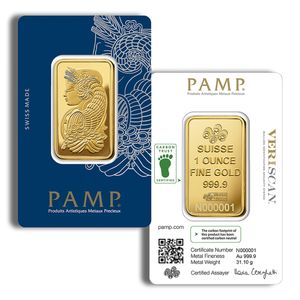
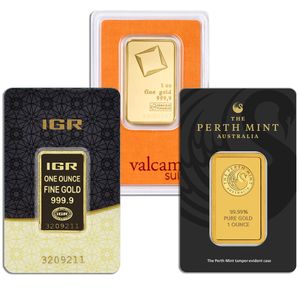
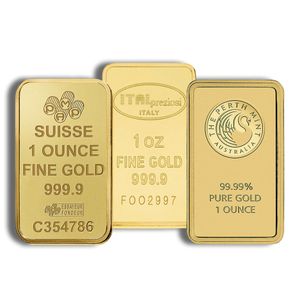
Our catalog of 1 oz gold bars brings together some of the most recognized names in the global bullion market, including PAMP Suisse, Valcambi, Perth Mint, Argor-Heraeus, Credit Suisse, Johnson Matthey, Royal Canadian Mint, Rand Refinery, Geiger Edelmetalle, Engelhard, and The Royal Mint, among others. Each listing reflects a genuine product available for purchase, ranging from individually carded assay bars to cast formats and specialty designs like the PAMP Suisse Lady Fortuna and the Argor-Heraeus Kinebar.
The selection spans multiple countries of origin, packaging types, and finishing styles, giving buyers the flexibility to choose based on preference, brand familiarity, or pricing efficiency. Random brand options are also available for buyers who prioritize metal content over a specific mint name. Every product in this section contains exactly one troy ounce of gold at .9999 fine purity.
Bullion Standard operates as a transparent marketplace, which means pricing is tied to real-time market conditions and structured to give buyers clear visibility into what they are actually paying relative to spot. Whether you are purchasing a single bar or building a larger position, the goal here is straightforward access to a recognized and liquid product at competitive terms.
What Are 1 oz Gold Bars?
A 1 oz gold bar is a rectangular piece of refined gold containing exactly one troy ounce of gold, typically struck or cast to .9999 fine purity. Unlike gold coins, which are issued by sovereign mints and carry legal tender status, gold bars are produced by private refineries and commercial mints whose reputations are built on assay accuracy, purity consistency, and manufacturing quality. The bar format has long been the preferred choice of buyers who want maximum metal content relative to the premium paid.
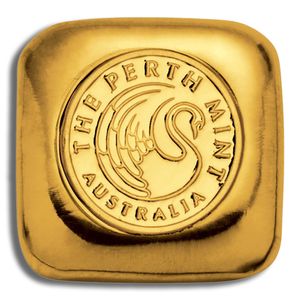
Within the one-ounce category, two primary formats exist: minted bars and cast bars. Minted bars are stamped or pressed from refined blanks to achieve precise dimensions and a cleaner finish, and they are commonly sealed in tamper-evident assay cards. Cast bars are poured directly from molten metal and tend to carry a rougher, more industrial appearance. The Perth Mint cast bar in our catalog is a notable example of this format, appreciated by buyers who value straightforward metal content in a traditional presentation.
The one-ounce size sits at a practical intersection of affordability and substance. It is small enough to buy incrementally but large enough to carry meaningful metal content without excessive handling. Compared to fractional bars or larger formats like 10 oz or kilo bars, the one-ounce bar strikes a balance that appeals to a broad range of buyers across different experience levels and purchasing goals.
History and Background
The production of refined gold bars dates to the earliest organized refineries of the 19th century, when industrial smelting processes made it practical to standardize gold into tradeable rectangular units. Refineries in Switzerland, the United Kingdom, the United States, and South Africa emerged as the dominant producers through the late 1800s and early 1900s, establishing the purity benchmarks and assay practices that still define the industry today. The London Bullion Market Association, formed in 1987, played a significant role in formalizing good delivery standards that continue to shape global bar production.
The one-ounce format specifically gained broad commercial traction through the 1970s and 1980s as gold ownership became legal again for American citizens following decades of restriction. Refineries like Engelhard and Johnson Matthey became household names in the domestic market during this era, producing bars that remain collectible today among buyers who track vintage hallmarks. Swiss refineries including PAMP, Valcambi, Credit Suisse, and Argor-Heraeus built their global reputations during the same period, becoming the standard-bearers for minted assay bar production internationally.
Today, the one-ounce gold bar is one of the most actively traded physical gold products in the global wholesale market. Its standardization, broad recognition, and competitive premium structure have made it a core product across dealer networks, online marketplaces, and institutional channels. The refineries and mints represented in this catalog reflect decades of accumulated market credibility.
Purity, Weight, and Specifications
Every bar in this section is refined to .9999 fineness, meaning the gold content is 99.99% pure. This purity level is the current commercial standard for investment-grade gold bars and is the benchmark used across the major Swiss refineries, the Perth Mint, the Royal Canadian Mint, and most other recognized producers. Some older bars, particularly vintage Engelhard pieces, were produced at .999 fineness, though the products listed here reflect the modern .9999 standard.
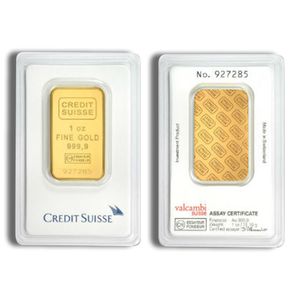
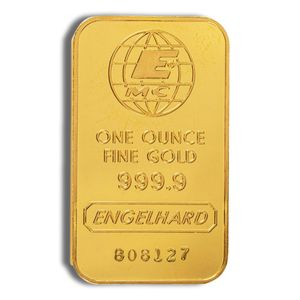
Weight is measured in troy ounces, a unit of measurement used exclusively in the precious metals industry. One troy ounce equals approximately 31.1 grams, which is meaningfully heavier than a standard avoirdupois ounce used in everyday commerce. Each bar in this catalog contains exactly one troy ounce of gold, and physical dimensions vary by manufacturer. For reference, the Credit Suisse bar measures approximately 41mm x 24mm x 1.86mm, while the Engelhard bar is notably larger at 50mm x 29mm x 2.5mm despite containing the same one troy ounce of metal.
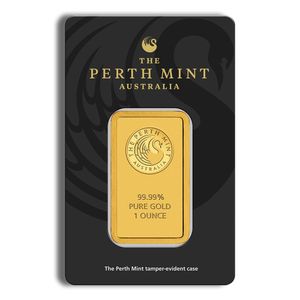
Most minted bars carry stamped markings that confirm the manufacturer, weight, purity, and a unique serial number. Assay cards reinforce this verification by providing a sealed, tamper-evident record of the bar's specifications at the time of production. Serial numbers on assay-carded bars allow for individual product traceability, which adds an additional layer of documentation that many buyers find reassuring when purchasing or reselling.
Available Brands, Mints, and Product Variations
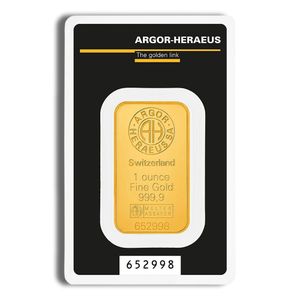
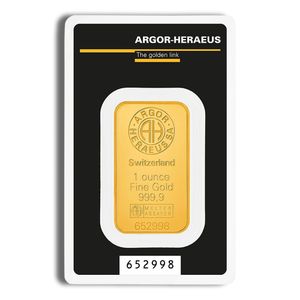
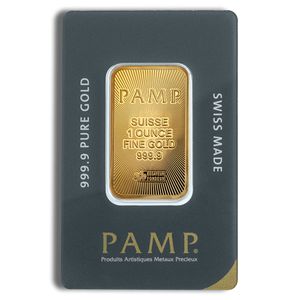
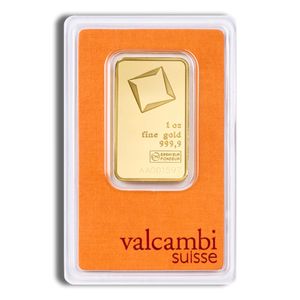
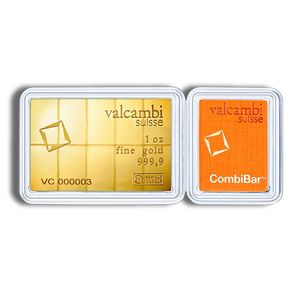
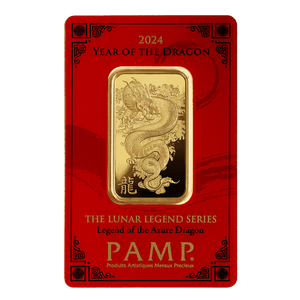
The Swiss refineries in this catalog represent the most internationally recognized names in minted gold bar production. PAMP Suisse is well known for the Lady Fortuna design on its assay-carded bars, as well as specialty releases like the Lady Fortuna Carbon Neutral edition and the Lunar Series Azure Dragon bar. Valcambi, also headquartered in Switzerland, produces both standard minted bars and the CombiBar format, a segmented 10 x 1/10 oz grid bar that can be separated into individual fractional units. Argor-Heraeus produces both a standard assay-carded bar and the Kinebar, which features a distinctive kinegram holographic security element on the reverse. Credit Suisse rounds out the Swiss offerings with a consistently traded bar that remains one of the most recognizable in the North American market.
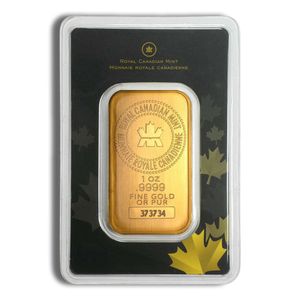
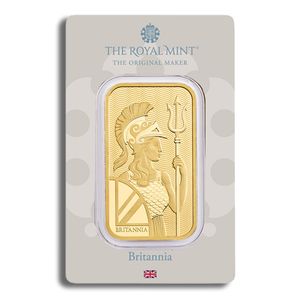
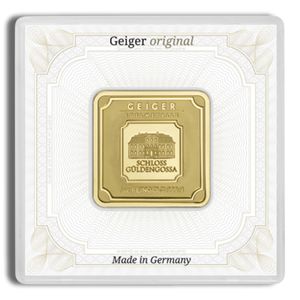
Outside Switzerland, the Perth Mint contributes both a minted assay-carded bar and a cast bar, offering buyers two distinct finishing styles from a single government-owned facility. The Royal Canadian Mint produces a minted bar known for its clean design and tight manufacturing tolerances. The Royal Mint Britannia bar, produced in Great Britain, brings British hallmarking and design tradition to the minted bar format. Rand Refinery in South Africa and Geiger Edelmetalle in Germany round out the international offerings with their own assay-carded minted bars.
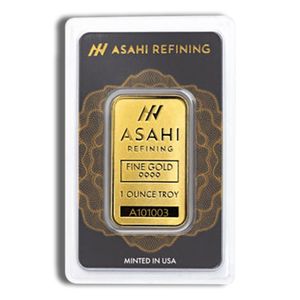
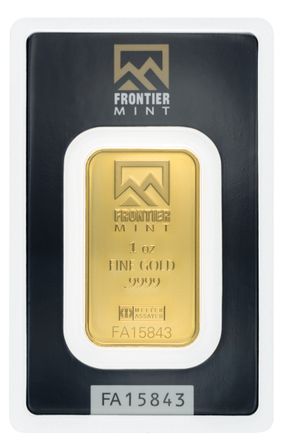
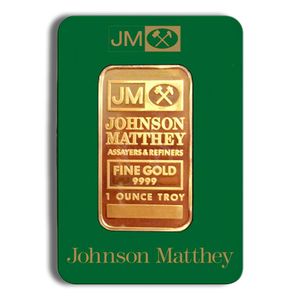
American producers represented here include Johnson Matthey, Engelhard, and Asahi Refining, each with distinct histories in the domestic market. Johnson Matthey and Engelhard bars in particular carry strong recognition among buyers familiar with pre-2000s American bullion production. Asahi Refining, which acquired the North American operations of Johnson Matthey in 2015, now operates one of the most modern refining facilities in the country. The catalog also includes Istanbul Gold Refinery bars under the IGR brand, as well as Frontier Mint bars produced by Argor-Heraeus and various random brand options for buyers focused purely on metal content and pricing.
Pricing, Premiums, and Market Factors
The price of a 1 oz gold bar is determined by combining the current spot price of gold with a per-ounce premium that reflects manufacturing costs, distribution margins, packaging, and market demand for a specific product. Spot price represents the underlying commodity value of gold in the global market and fluctuates continuously during trading hours. The premium represents everything above that baseline and varies meaningfully depending on the brand, format, and condition of the bar being purchased.
Swiss-minted bars from PAMP Suisse and Valcambi, as well as government-affiliated producers like the Perth Mint and the Royal Canadian Mint, typically carry slightly higher premiums than random brand options due to their global recognition and demand in the resale market. Assay-carded bars generally command a modest premium over non-carded equivalents because the packaging provides documented authentication and tends to be preferred in resale channels. Cast bars like the Perth Mint cast bar often trade at slightly lower premiums than minted equivalents, reflecting simpler production processes rather than lower quality.
Bullion Standard's pricing is tied to real-time market conditions and is structured to reflect actual wholesale market dynamics rather than inflated retail margins. Each product page displays both the ask price and the current bid, giving buyers transparency into the full spread rather than just the purchase price. This bid/ask structure is central to how we present pricing, and it allows buyers to evaluate the complete cost of ownership before committing to a purchase. For buyers who transact frequently or in larger quantities, Bullion Standard Pro provides access to near-wholesale pricing that narrows the spread further.
Condition, Packaging, and What to Expect
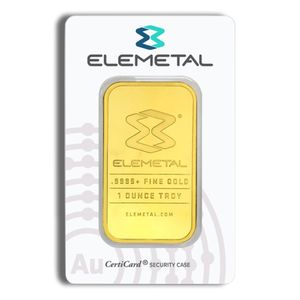
Most 1 oz gold bars in this catalog are sold sealed within tamper-evident assay cards, also referred to as assay packaging or blister packs. These cards enclose the bar in a hard plastic housing that displays the bar's specifications on the face or reverse and is typically sealed at the edges in a way that makes tampering visible. Receiving a bar in original, sealed assay packaging is the standard expectation for the majority of products listed here.
Some bars, particularly vintage pieces like Engelhard or Johnson Matthey, may be sold outside of assay packaging or in condition ranges described as good delivery, circulated, or varying cosmetically. Minor surface marks, handling scuffs, or light toning are considered normal and acceptable for bars that have moved through the market over time. These cosmetic differences do not affect gold content or purity but are worth understanding before purchase. Product descriptions and condition notes are provided where applicable to set clear expectations.
Random brand listings ship with a bar from whatever recognized refinery or mint is currently available in inventory at the time of order fulfillment. The bar will meet the stated purity and weight specifications, but the specific manufacturer cannot be guaranteed in advance. This option is best suited to buyers whose priority is gold content and price efficiency rather than a specific brand or design. Year of production on most standard bars is also subject to availability and is not guaranteed unless explicitly stated in the listing.
Authenticity and Verification
Authentic 1 oz gold bars from recognized refineries and mints carry several layers of built-in verification. Assay cards provide a factory-sealed confirmation of purity and weight at the time of production, and serial numbers allow individual bars to be traced within a manufacturer's production records. The Argor-Heraeus Kinebar adds a kinegram holographic element that is difficult to replicate and serves as a visible security feature that can be evaluated without removing the bar from its packaging.
Bullion Standard verifies authenticity, weight, and purity for every product before it reaches a customer. Products sourced through our purchasing and wholesale channels are evaluated by our team using industry-standard verification methods, and any product that does not meet authenticity standards is rejected from inventory. Our A rating with the Better Business Bureau and membership in the American Numismatic Association and the National Coin and Bullion Association reflect a long-standing commitment to product integrity and marketplace trust.
For buyers who want an additional layer of independent verification, third-party testing services using XRF analysis or ultrasonic thickness testing are widely available through assay labs and some local dealers. While assay card packaging provides a strong baseline of confidence, buyers who purchase bars outside of original packaging or through secondary market channels may find independent verification worthwhile for high-value transactions.
Liquidity and Resale Considerations
Gold bars in the one-ounce size are among the most liquid physical gold products in the global market. Their standardized weight, universally recognized purity, and consistent production from established refineries make them straightforward to price and trade across dealer networks, online platforms, and direct buyer channels. A one-ounce bar from PAMP Suisse, Valcambi, or the Perth Mint can be quoted and transacted quickly in most markets without the need for additional authentication or negotiation beyond current market pricing.
Bars that retain their original assay card packaging tend to resell more efficiently than loose bars because the sealed packaging removes ambiguity about condition and provides a ready reference for specifications. Widely recognized brands like Credit Suisse, Argor-Heraeus, and the Royal Canadian Mint typically attract competitive bids across multiple buyer channels, while lesser-known or regional refineries may have a narrower market. This is not a reflection of metal quality but of how broadly a specific product is recognized within the resale ecosystem.
Understanding the likely resale environment before making a purchase is worth considering as part of the overall buying decision. Bullion Standard's two-way market structure allows customers to sell back into the same platform where they purchased, providing a consistent and transparent outlet for liquidation. The bid price displayed on each product page reflects current wholesale market conditions and gives buyers a realistic view of what resale looks like relative to the purchase price.
Storage and Security
One troy ounce of gold in bar form is a compact and relatively easy product to store. A single bar or small accumulation of assay-carded bars fits comfortably in a quality home safe rated for both theft and fire resistance. For buyers storing a more substantial position, a dedicated bullion-rated safe or professional vault service provides additional security and may also support insurance coverage that a standard homeowner's policy might not extend to precious metals above a certain value.
Bars stored in original assay packaging should remain in that packaging whenever possible. The tamper-evident seal is part of the bar's provenance documentation, and removing a bar from its assay card can reduce its recognizability and resale efficiency. For bars sold without assay cards, individual hard plastic holders or archival-safe protective sleeves help prevent surface damage during storage or handling.
Environmental conditions matter more than many buyers anticipate. Gold is chemically inert and does not tarnish or corrode, but prolonged exposure to humidity or contaminants can affect the packaging and, in the case of unsealed bars, may leave fingerprints or surface films that affect appearance. Storing bars in a stable, low-humidity environment away from direct sunlight preserves both the metal and its packaging over time.
Selling and Buyback Options
Selling a 1 oz gold bar through Bullion Standard is designed to be a straightforward process. Customers initiate a sell transaction through our platform, lock in a buyback price based on current wholesale bid pricing, and ship the product using our prepaid and insured shipping process. Once the bar is received and verified against the stated specifications, payment is issued promptly through the customer's preferred method.
Buyback pricing reflects real-time market conditions rather than fixed or arbitrary dealer spreads. Products that arrive in original sealed assay packaging, from widely recognized manufacturers, and in the expected condition are processed and priced efficiently. Bars that have been removed from assay cards, show significant surface damage, or originate from less commonly traded refineries may be subject to additional review or adjusted pricing that reflects their position in the wholesale market.
Bullion Standard Pro members benefit from tighter spreads on both sides of the transaction, which means the gap between the purchase price and the current buyback value is narrower than standard retail terms. For buyers who are actively managing a position or who anticipate selling within a defined timeframe, this structure provides a more transparent picture of the actual round-trip cost of owning physical gold. We believe the selling side of the transaction deserves as much attention before a purchase as the buying side does.
Why Buy 1 oz Gold Bars?
The one-ounce bar format offers a combination of premium efficiency and practical standardization that is difficult to match across other gold product types. Because bars carry lower manufacturing overhead than government-issued coins, the premium above spot is typically tighter, meaning buyers acquire more metal content relative to the total amount spent. For buyers focused on cost-per-ounce rather than collector appeal or legal tender status, the bar format consistently delivers competitive acquisition terms.
From a storage standpoint, one-ounce bars are space-efficient and easy to organize. A meaningful quantity of gold can be accumulated in a physically small footprint, which simplifies both storage logistics and eventual resale handling. Assay-carded bars in particular stack neatly and maintain their documentation integrity without requiring additional packaging or labeling.
The diversity of brands represented in this catalog also gives buyers real optionality. Someone who prefers Swiss-made precision from a globally recognized refinery can select PAMP Suisse or Valcambi. A buyer who values government-affiliated production might gravitate toward the Perth Mint or the Royal Canadian Mint. Buyers who simply want to maximize metal per dollar spent have access to random brand options at the tightest available premiums. That range of choices, within a single product size and purity standard, reflects what makes the one-ounce gold bar a durable core product for the physical gold market.
Why Buy from Bullion Standard?
Bullion Standard was founded in 2010 and has grown from a San Diego-based operation into a nationally recognized online precious metals marketplace by keeping pricing transparency and customer trust at the center of every decision. Our catalog is sourced from established mints, refineries, wholesalers, and distributors, and every product is verified for authenticity, weight, and purity before fulfillment. We carry an A rating with the Better Business Bureau and hold active memberships in the American Numismatic Association and the National Coin and Bullion Association.
Our pricing model reflects real-time market conditions and is structured to provide genuine clarity rather than the layered complexity that characterizes much of the traditional dealer market. The bid/ask spread displayed on each product page gives buyers full visibility into both the purchase price and the current buyback value, allowing the complete transaction to be evaluated before any commitment is made. That kind of transparency is core to how we operate and shapes the entire purchasing experience.
We support a wide range of payment options, including Visa, Mastercard, American Express, Discover, PayPal, bank-connected payments through Plaid, wire transfer, paper check, and cryptocurrency through BitPay. Orders are fulfilled reliably with secure, insured shipping, and our customer service team is available to support questions throughout the buying and selling process. The experience is designed to feel like a well-organized marketplace built around informed buyers, not a high-pressure sales environment.
Get Near-Spot Pricing with Bullion Standard Pro
Bullion Standard Pro is designed for buyers who want access to the pricing efficiency of the wholesale market without the institutional requirements that typically come with it. Members transact at live executable wholesale bid and ask prices across the catalog, including 1 oz gold bars from the refineries and mints listed here. Rather than paying retail-adjusted spreads, Pro members see prices that reflect actual wholesale market conditions as they shift in real time.
The platform does not apply additional dealer markups on top of those wholesale prices. Premiums and spreads fluctuate based on supply, demand, and underlying market liquidity rather than fixed retail pricing structures. For buyers who are accumulating meaningful positions or who purchase gold on a recurring basis, the cumulative effect of tighter spreads on both the buy and sell side can be significant over time.
Beyond pricing, Bullion Standard Pro provides members with access to portfolio valuation based on live wholesale bid pricing, historical premium analytics, spread analysis, liquidity metrics, and proprietary market intelligence tools that help buyers evaluate products using objective data. The goal is to give serious buyers the kind of market visibility that has historically been available only to institutional participants, applied specifically to the physical precious metals market they are already active in.

 (833) 278-4653