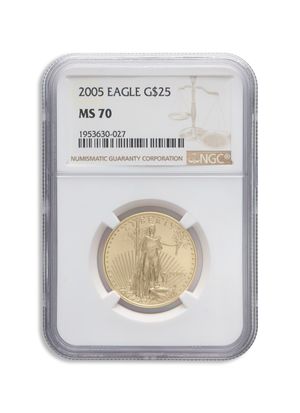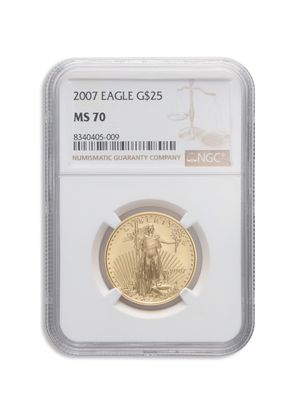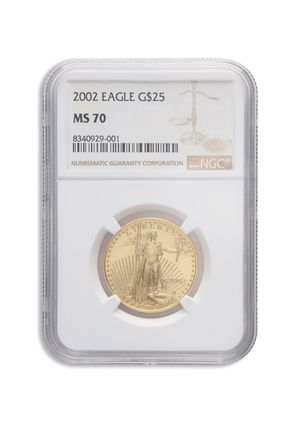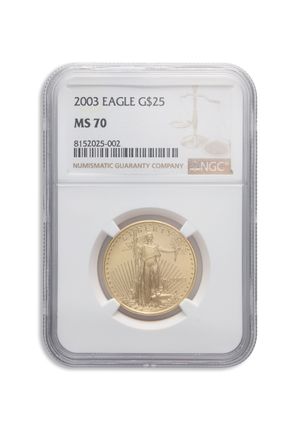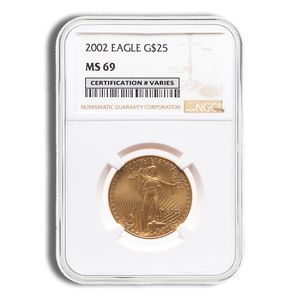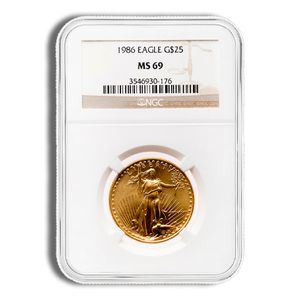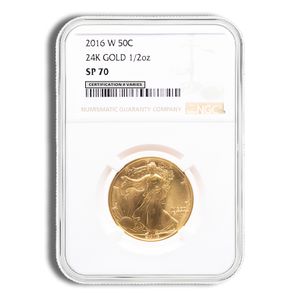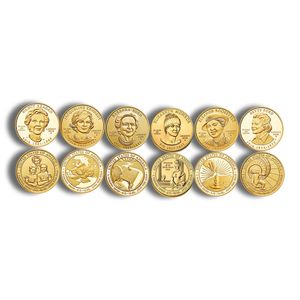
As low as: $2,133.37
As low as: $2,138.45
As low as: $2,128.29
As low as: $2,072.42
As low as: $2,060.23
As low as: $2,087.66
As low as: $2,062.26
As low as: $2,077.50
Our catalog of 1/2 oz gold coins brings together some of the most recognizable government-issued bullion programs available today. You'll find the American Gold Eagle from the United States Mint, the Gold Canadian Maple Leaf from the Royal Canadian Mint, the Gold Kangaroo from The Perth Mint, the Gold Philharmonic from the Austrian Mint, the Gold Britannia from The Royal Mint, and the Gold Krugerrand from the South African Mint. Each coin contains a half troy ounce of gold and represents a nationally backed program with established global recognition.
Products are available in both dated annual releases and random year options, depending on what fits your priorities. Random year offerings are priced to reflect standard market premiums without the added cost of a specific date, making them a practical choice for buyers focused on metal content. Sealed packaging variants are available for select products like the Canadian Maple Leaf, which ships in its original mint-sealed protective format.
Bullion Standard displays live pricing on each product page alongside the bid/ask spread, so you can evaluate the full cost of ownership rather than just the sticker price. Whether you're adding a dated 2025 or 2026 issue or a more cost-efficient random year option, the information you need to make a confident decision is visible before you buy.
A 1/2 oz gold coin contains exactly one-half troy ounce of fine gold, though the total coin weight may be slightly higher depending on the alloy used. Coins like the American Gold Eagle and the Gold Krugerrand are struck from 22-karat gold, meaning they incorporate copper and silver in the alloy to improve durability. By contrast, coins such as the Gold Kangaroo, Gold Philharmonic, and Gold Maple Leaf are struck from 24-karat gold at .9999 fine purity, which gives them a distinctive warm, deep tone.
Half-ounce coins occupy a practical middle ground between the 1 oz standard and smaller fractional sizes like the quarter-ounce or tenth-ounce. They offer more flexibility in terms of partial liquidation or gifting without the proportionally higher premiums that tend to accompany very small fractional coins. Buyers who want meaningful gold weight without committing to a full ounce at a time often gravitate toward this size.
Government-issued gold coins in this weight class carry legal tender status in their respective countries of origin, though their market value is determined by gold content rather than face value. That government backing, combined with the consistent production standards maintained by the issuing mints, contributes to their broad recognition across the global bullion market.
The modern gold bullion coin market began taking shape in the 1960s and 1970s, when private ownership of physical gold became more accessible in many countries following decades of restrictions. The South African Krugerrand, introduced in 1967, was the first coin specifically designed for gold bullion investment and set a template that mints around the world would follow in subsequent decades. Its 22-karat composition and focus on gold content rather than numismatic value helped establish the framework for what a modern bullion coin program could look like.
The American Gold Eagle launched in 1986 after Congress passed the Gold Bullion Coin Act, establishing the West Point Mint as the primary production facility. That same decade saw Canada introduce the Gold Maple Leaf and Austria develop the Philharmonic series, both of which used .9999 fine gold as a point of competitive differentiation. Australia's Kangaroo program, administered by The Perth Mint, followed in the late 1980s and became notable for its annually changing reverse designs. The Royal Mint's Britannia gold series extended a design tradition dating back centuries into the modern bullion format.
Half-ounce denominations were incorporated into most of these programs from their early years, recognizing that buyers wanted access to the same government-backed products in sizes that allowed more granular buying and partial liquidation. Over time, the 1/2 oz format has remained a consistent part of the annual production runs for all major sovereign gold coin programs, maintaining its place in the broader bullion market alongside full-ounce and fractional alternatives.
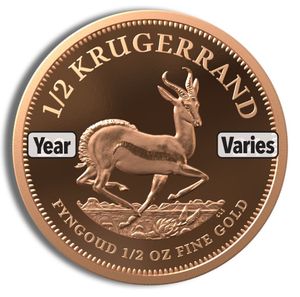
The majority of 1/2 oz gold coins in our catalog are struck to .9999 fine purity, including the Gold Kangaroo, Gold Philharmonic, Gold Maple Leaf, and Gold Britannia. This means they contain 99.99% pure gold with minimal base metal content. The American Gold Eagle and South African Krugerrand are produced to a .9167 fine standard, which translates to 22-karat gold. Despite the lower purity percentage, both coins still contain exactly one-half troy ounce of fine gold per the specifications of their respective programs.
A troy ounce is the standard unit of measurement used throughout the precious metals industry and differs slightly from the avoirdupois ounce used in everyday commerce. One troy ounce equals approximately 31.1 grams, making a 1/2 oz gold coin approximately 15.55 grams of fine gold content. Total coin weight for 22-karat coins will be somewhat higher due to the copper and silver alloy components.
Each coin is struck with identifying inscriptions that typically include the weight, purity, and year of issue on either the obverse or reverse face. Mints like The Perth Mint and the Royal Canadian Mint have also incorporated micro-engraved security features into recent issues to facilitate authentication and reduce counterfeiting risks.
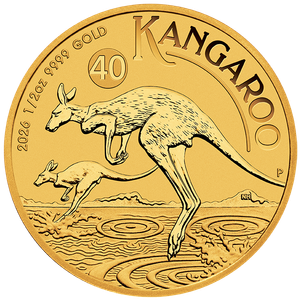
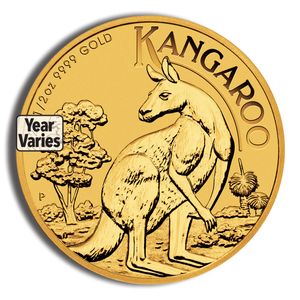
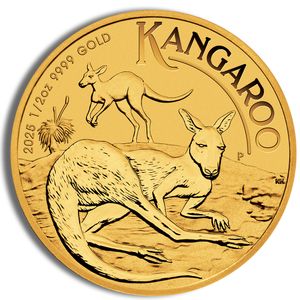
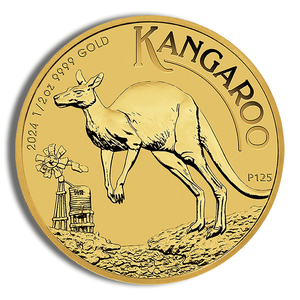
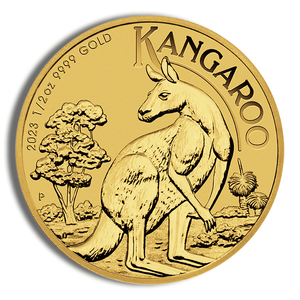
The Gold Kangaroo is produced by The Perth Mint in Western Australia and has been issued annually since the late 1980s. It is one of Australia's flagship gold coin programs, recognizable for its changing kangaroo reverse design each year and struck from .9999 fine gold. Both random year and dated 2024, 2025, and 2026 versions are available in our catalog. The Perth Mint is a government-owned enterprise backed by the government of Western Australia and is regarded as one of the world's premier precious metals refineries and mints.
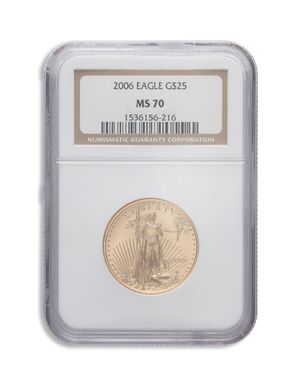
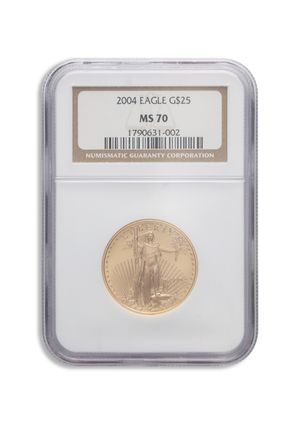
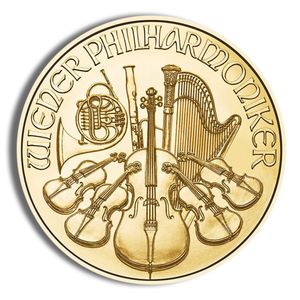
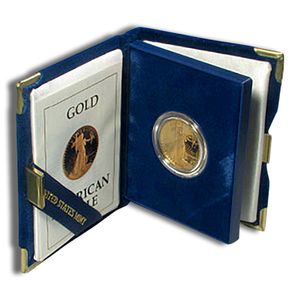
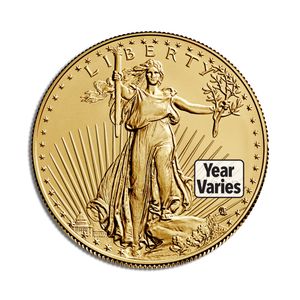
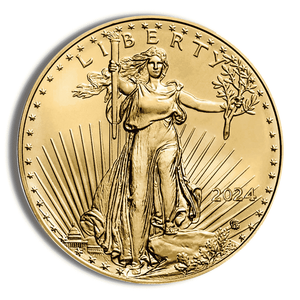
The American Gold Eagle, struck by the United States Mint at the West Point facility, features Augustus Saint-Gaudens' iconic Liberty obverse and a family of eagles reverse designed by Miley Busiek. It is produced in 22-karat gold and is one of the most widely recognized coins in the global bullion market. Dated 2024, 2025, and 2026 releases are available alongside a random year option. The Austrian Philharmonic, issued by the Austrian Mint in Vienna, features the Musikverein pipe organ and orchestral instruments and is struck from .9999 fine gold. A random year option is listed in the catalog for buyers less focused on a specific date.
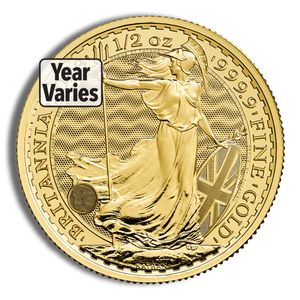
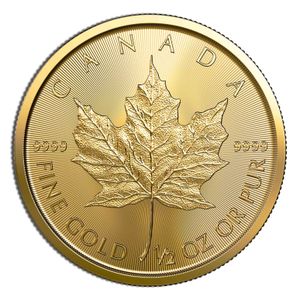
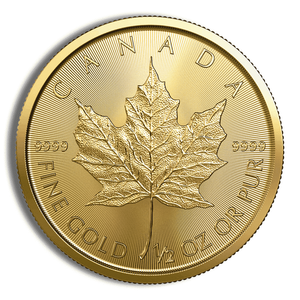
The Royal Canadian Mint produces the Gold Maple Leaf in .9999 fine gold with a maple leaf reverse that has become one of the most recognized bullion designs in the world. Select listings, including the 2025 and 2026 issues, ship in sealed original mint packaging. The Gold Britannia from The Royal Mint, the Gold Krugerrand from the South African Mint, and the Royal Canadian Mint's Maple Leaf round out the selection with random year options priced at standard market premiums without the cost associated with specific dates.
Every 1/2 oz gold coin is priced relative to the spot price of gold, which is the real-time market rate for one troy ounce of fine gold on international commodity exchanges. The premium is the amount paid above spot and reflects costs associated with production, distribution, dealer margins, and market demand. Half-ounce coins typically carry higher premiums per troy ounce than full-ounce coins, which reflects the fixed overhead of coin production spread across a smaller gold content.
Premiums vary across coin programs for several reasons. Coins produced in lower mintage quantities or those with design changes that increase collector interest may command higher premiums. Sealed packaging formats, such as the Maple Leaf with original mint packaging, can also influence pricing. Dated coins from the current or upcoming year may carry slightly higher premiums than random year equivalents, though the metal content is identical. Market conditions, global demand for specific programs, and mint availability all factor into how premiums move over time.
Bullion Standard structures pricing to reflect real-time market conditions rather than static dealer markups. Each product page displays both the ask price and the bid price, giving buyers a clear view of the spread between what they'd pay and what a potential buyback would yield at current market prices. This transparency allows buyers to evaluate the true cost of ownership from the outset rather than discovering the spread only when it's time to sell.
All 1/2 oz gold coins in our catalog are graded Brilliant Uncirculated unless otherwise noted, meaning they have not been placed into circulation and are in original mint condition. BU coins may show minor contact marks from handling during the minting and packaging process, which is normal and does not indicate damage or a reduction in grade relative to what the market expects for bullion-grade product.
Random year products are sourced from available inventory and may include coins from various production years. The specific year issued will vary and is not guaranteed. These coins are appropriate for buyers whose primary focus is gold content rather than a particular date. Coins shipped as random year are individually selected from verified stock and are not expected to show significant wear beyond what is typical for BU bullion product.
Certain products ship with added packaging protections. The Canadian Maple Leaf offerings in sealed packaging arrive in their original mint-sealed format, which provides additional assurance regarding condition and origin. Coins without sealed packaging may arrive in individual coin flips, tubes, or similar protective formats depending on sourcing. Shipping packaging is handled securely, with discreet outer presentation to protect both the product and the privacy of the buyer.
Every product sold through Bullion Standard is verified for authenticity, weight, and purity before it reaches a customer. We source directly from reputable mints, authorized distributors, and established wholesale channels, which significantly reduces the risk of counterfeit or substandard product entering our inventory. Products that do not meet our verification standards are not offered for sale.
Government-issued coins benefit from the quality controls and security features built into each mint's production process. The Royal Canadian Mint has incorporated laser micro-engraved security marks into recent Maple Leaf issues that require magnification to observe. The Perth Mint uses a variety of authentication technologies on current-year Kangaroo coins. These production-level security measures complement our own verification procedures at the point of sourcing and receipt.
Bullion Standard is an authorized dealer for both PCGS and NGC and maintains memberships with the American Numismatic Association and the National Coin and Bullion Association. Buyers who require third-party certified products can explore graded options within our catalog. For standard bullion-grade coins, our internal verification process is designed to ensure that what arrives at your door matches the product specifications listed on the page.
The coins available in this section of our catalog are among the most widely recognized and actively traded gold bullion coins in the world. The American Gold Eagle, Gold Maple Leaf, Gold Kangaroo, Gold Philharmonic, Gold Britannia, and Gold Krugerrand all carry established reputations that translate into broad dealer acceptance across the United States and internationally. That recognition directly affects how easily a coin can be sold and at what relative price.
Widely traded coins from established sovereign mints tend to generate more competitive buyback pricing than obscure or limited-mintage products because dealers can easily verify and resell them into an existing secondary market. Random year coins and dated issues generally trade at similar buyback rates, though current-year issues may carry marginally stronger demand in certain market conditions. Sealed or original mint packaging, where retained, can also support buyback pricing by providing additional verification of condition and origin.
Understanding resale conditions before purchasing is part of evaluating the true cost of owning a product. The bid/ask spread displayed on each Bullion Standard product page gives buyers a concrete reference point for the gap between current purchase cost and current liquidation value, which allows for more informed decision-making at the time of purchase rather than at the time of sale.
Half-ounce gold coins are compact and relatively easy to store compared to larger formats, but they still require thoughtful storage planning to protect against physical damage, environmental exposure, and unauthorized access. For modest holdings, a quality home safe rated for both theft and fire resistance provides a reasonable baseline. Wall safes and floor safes anchored to the structure of the home offer stronger physical security than portable units.
Coins stored outside of sealed mint packaging should be handled carefully to avoid surface contact. Gold is a relatively soft metal, and even minor contact from fingers or abrasive surfaces can leave marks that may affect appearance and, in some cases, buyback grade assessments. Handling with clean cotton gloves or by the coin's edge is standard practice. Coin capsules or protective flips offer individual storage solutions that minimize handling damage over time.
For larger accumulations, professional vault storage through a third-party depository may offer a practical combination of security, insurance coverage, and accessibility. Bank safety deposit boxes are another option for buyers who prefer institutional-level security without ongoing storage fees. Regardless of the method chosen, keeping a documented record of purchase receipts, product details, and storage location is advisable for both insurance and estate planning purposes.
Bullion Standard operates as a two-way market, meaning customers can sell gold coins back through the same platform where they were purchased. The buyback process is designed to be straightforward: you request a quote, lock in a price based on current market conditions, and ship your coins using our insured shipping guidelines. Once received and verified, payment is processed promptly through your preferred method.
Buyback pricing is influenced by several factors, including the specific coin program, current gold spot prices, market demand for the product, packaging condition, and the coin's physical state. Coins in original sealed packaging, or in clearly BU condition without significant contact marks, generally receive stronger buyback offers. Products from established programs like the American Gold Eagle, Gold Maple Leaf, and Gold Kangaroo benefit from active secondary market demand, which tends to support more competitive buyback pricing relative to less commonly traded formats.
Because buyback pricing is tied to live wholesale market conditions, the price offered at the time of sale will reflect current market dynamics rather than the price paid at purchase. Bullion Standard Pro members have access to live executable wholesale bid pricing, which provides real-time visibility into current buyback market rates before initiating a sale. This transparency is central to how we approach the selling side of the transaction, treating it with the same clarity we apply to the buying process.
The half-ounce format provides a practical balance between meaningful gold content and flexibility in how that content can be allocated or liquidated. Buyers who want access to full-ounce coin programs without committing a full ounce per transaction find the 1/2 oz size allows more granular decisions over time. It's also a format that lends itself to gifting, where a single coin represents a substantial and recognizable form of physical gold without being prohibitively large in terms of cost.
Government backing adds a dimension of recognizability that generic rounds or privately produced bars do not provide. Coins from the United States Mint, Royal Canadian Mint, Perth Mint, Austrian Mint, Royal Mint, and South African Mint are accepted in bullion markets globally, which contributes to their liquidity and the confidence of both buyers and dealers when they change hands. That recognition is built into the product itself rather than dependent on documentation or certificates.
The variety of programs available in this weight class also gives buyers the ability to diversify across design traditions, minting countries, and purity standards within the same half-ounce category. Whether the preference is for the 22-karat durability of the American Eagle and Krugerrand or the .9999 fine purity of the Maple Leaf, Philharmonic, Kangaroo, or Britannia, the 1/2 oz format provides access to the full range of the world's most established sovereign gold coin programs.
Bullion Standard was founded in San Diego in 2010 on the principle that transparency and informed decision-making should be the foundation of every precious metals transaction. We've grown from a regional operation into a nationally recognized online marketplace not by applying high-pressure sales tactics, but by building a platform where pricing is clear, products are verified, and the information you need to make a confident decision is accessible before you commit to a purchase.
Every product we sell is authenticated and verified before shipment. We source from established mints, authorized distributors, and reputable wholesale channels, and we hold ourselves accountable through our A rating with the Better Business Bureau, our membership in the American Numismatic Association and the National Coin and Bullion Association, and our status as an authorized dealer for both PCGS and NGC. That accountability is not incidental to how we operate; it's central to the trust we've built with customers over more than a decade.
Checkout is designed to be secure and straightforward, with support for Visa, Mastercard, American Express, Discover, PayPal, bank-connected payments through Plaid, wire transfer, paper check, and cryptocurrency through BitPay. Fulfillment is handled with care and discretion, and our customer service team is available to support questions at every stage of the process. Our two-way market model means you're not just buying from us; you're building a relationship with a marketplace designed to serve you on both sides of the transaction.
Bullion Standard Pro is designed for buyers who want to transact closer to wholesale market prices rather than standard retail pricing structures. Members gain access to live, executable wholesale bid and ask pricing across a broad range of products, including the 1/2 oz gold coins in our catalog. Unlike retail pricing models that layer fixed dealer markups on top of spot, Pro pricing fluctuates naturally with underlying market conditions, allowing the spread between buy and sell prices to reflect real-time supply and demand rather than predetermined margins.
Members can also view live portfolio valuations using executable wholesale bid pricing rather than estimated retail values, which gives a more accurate picture of current liquidation value. Combined with access to historical premium analysis, premium percentile rankings, spread analysis, and other proprietary market intelligence tools, Pro membership provides the kind of analytical visibility that has traditionally been available only to institutional or wholesale-level participants in the precious metals market.
For buyers who purchase gold coins regularly or who place significant emphasis on pricing efficiency, the difference between retail and near-wholesale execution can be meaningful over time. Bullion Standard Pro is built around the idea that physical precious metals buyers deserve access to the same pricing transparency and market intelligence commonly found in other financial markets. If you're serious about understanding what you're paying, what you own, and what it's worth at any given moment, Pro membership provides the tools to do exactly that.