As low as: $59.40
As low as: $59.55
As low as: $58.90
As low as: $57.14
As low as: $57.04
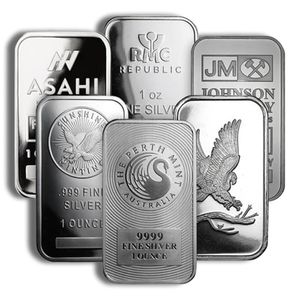
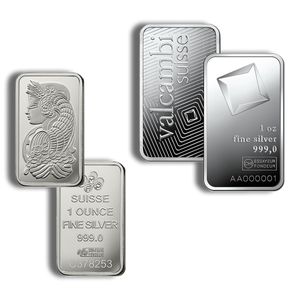
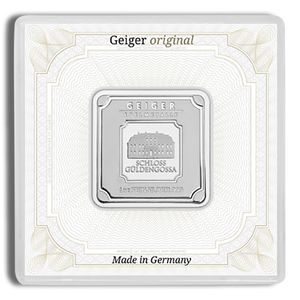
Our catalog of 1 oz silver bars brings together some of the most recognized names in the refining and minting industry alongside practical secondary market options for buyers focused on silver content over brand premium. You'll find offerings from storied refiners like Engelhard and Johnson Matthey, alongside bars from The Perth Mint featuring the iconic Kangaroo design, art bars, Buffalo design bars, and random brand options suited to buyers who prioritize silver content at competitive premiums.
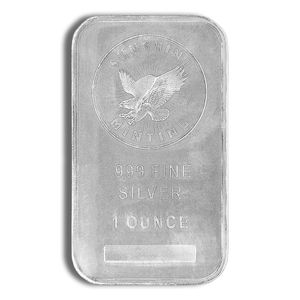
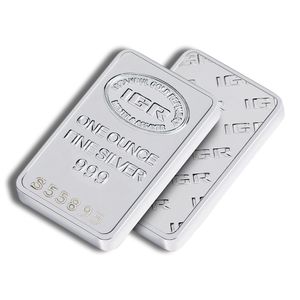
Packaging formats range from sealed assay cards, such as the IGR Metals bar and the Sunshine Mint SMI bar in sealed packaging, to loose secondary market bars available at tighter spreads. Whether you're building a position in physical silver gradually or sourcing recognizable refinery bars, this section of our catalog is built around transparent pricing, verified authenticity, and clear product descriptions so you know exactly what you're purchasing before you check out.
Bullion Standard operates as a two-way market, which means we're not only here to sell silver bars but also to purchase them back. That approach shapes how we present pricing, how we structure our catalog, and how we think about the products we carry. Every bar listed here is priced in real time against live spot silver, with premiums clearly disclosed so you can evaluate the full cost of ownership rather than focusing on price alone.
A 1 oz silver bar is a privately minted or refinery-produced rectangular piece of silver weighing exactly one troy ounce, typically stamped with the producer's name or logo, the weight, and the purity. Unlike government-issued silver coins, silver bars carry no legal tender face value and derive their worth entirely from their silver content and, to varying degrees, their brand recognition in the wholesale market.
The one-troy-ounce format is the most accessible and widely traded bar size in the silver market. It occupies a practical middle ground between fractional silver products and larger formats like 5 oz or 10 oz bars. The smaller size makes individual bars easy to handle, verify, store, and transact, which contributes to their broad appeal among buyers who want physical silver in a recognizable, standardized format without committing to the capital required for larger bar sizes.
Silver bars differ from silver rounds primarily in their form factor. Rounds are coin-shaped, while bars take a flat rectangular profile. Both are privately produced and priced primarily on silver content, but bars tend to have a more industrial character and are often associated with well-known refiners whose stamps carry weight in the wholesale market. Art bars, like those in our catalog, blend the practical format of a silver bar with more visually distinctive design work.
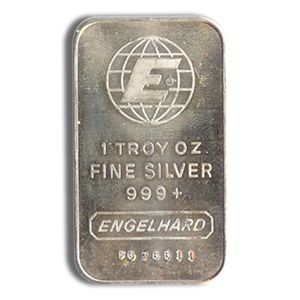
The production of silver bars by private refiners became industrialized in the mid-twentieth century, driven by growing demand for a standardized, assayable form of silver that could be efficiently traded between institutions, dealers, and industrial buyers. Refiners like Engelhard Industries and Johnson Matthey were among the earliest and most influential producers, establishing hallmarks that became broadly recognized across the global wholesale silver market. Their bars circulated widely in commercial and investment channels, and today vintage Engelhard and Johnson Matthey bars retain a collector following that often exceeds what raw silver content alone would command.
The London Bullion Market Association helped formalize standards around silver bar production, setting specifications for good delivery bars that rippled down into the broader market and encouraged consistency across refinery output. While good delivery bars operate at a much larger scale than the 1 oz format, the standards around purity marking, weight accuracy, and producer accountability shaped expectations across bar sizes. The proliferation of smaller retail-format bars, including the 1 oz size, followed naturally as the retail silver market expanded through the 1970s and into subsequent decades.
More recent decades have brought a wider range of producers into the market, including government-affiliated mints like The Perth Mint and smaller private mints operating at regional scale. The expansion of online precious metals retailing in the 2000s and 2010s significantly increased access to bar products from international producers, making it straightforward for retail buyers in the United States to purchase bars from Australian, European, and Asian refiners alongside domestic options.
The standard purity for 1 oz silver bars is .999 fine silver, meaning 99.9% pure silver content. This is the most common purity level across the products in our catalog, including bars from Engelhard, Johnson Matthey, The Perth Mint, and the random brand secondary market options. Some bars, particularly those produced by larger refiners or government-affiliated mints, may carry .9999 fine purity, though .999 remains the market standard for the overwhelming majority of silver bar products.
Weight is measured in troy ounces, which is the standard unit of measurement across the precious metals industry. One troy ounce equals approximately 31.1 grams, which differs from the avoirdupois ounce used in everyday commerce. All bars listed in this section of our catalog weigh exactly one troy ounce of silver. Responsible producers stamp the weight directly onto the bar surface alongside the purity marking and the refiner's name or logo, providing a basic layer of authentication that buyers and dealers can reference at a glance.
Assay cards, used with products like the IGR Metals bar and the Sunshine Mint SMI bar in sealed packaging, provide an additional layer of certification. The assay card or sealed blister pack typically includes the bar's weight, purity, serial number where applicable, and the assaying authority's confirmation of specifications. Bars presented in original sealed assay packaging are generally easier to transact in secondary markets because the tamper-evident enclosure provides visual confirmation that the bar has not been altered since leaving the producer.
The Engelhard 1 oz silver bar is one of the most historically significant products in our catalog. Engelhard bars produced during the refiner's active years carry strong name recognition in the secondary market, and collectors often seek specific design variations including the Prospector design and the industrial logo bar. The random design listing reflects the reality that Engelhard bars surface in secondary channels in several configurations, and the specific design cannot always be guaranteed in advance.
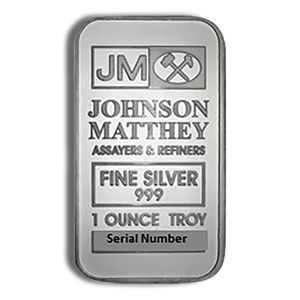
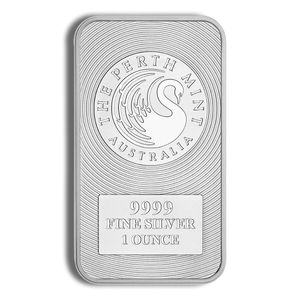
Johnson Matthey bars occupy a similar position in the market. JM bars were produced across multiple eras and facility locations, and like Engelhard, they carry a level of wholesale market credibility that translates into strong recognizability when selling or trading. The Perth Mint's Kangaroo bar brings government-mint production standards and a distinctive design to the format, appealing to buyers who want an internationally recognized mint's stamp on their silver rather than a private refiner's mark.
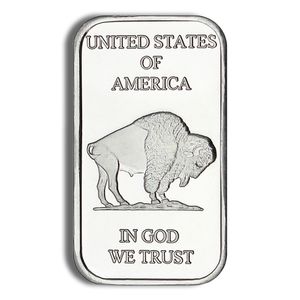
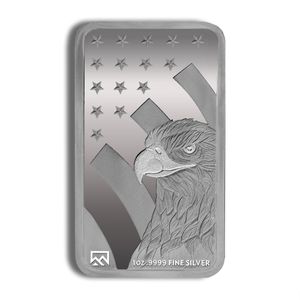
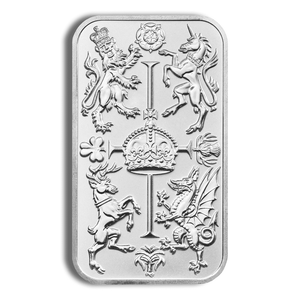
The catalog also includes several products oriented toward buyers who prioritize silver content over brand specificity. The random brand secondary market bar, Buffalo design bar, and general random brand 1 oz bar allow buyers to acquire silver at premiums that typically run tighter than named-brand refinery bars. The Sunshine Mint SMI bar in sealed packaging and the IGR Metals bar in assay card offer a middle ground, providing sealed presentation and producer identification without the premium associated with legacy refiners. The American Flag Eagle design bar from Frontier Mint and The Royal Celebration bar add design variety for buyers interested in the aesthetic dimension of silver bar collecting.
The price of any 1 oz silver bar is anchored to the spot price of silver, which moves continuously based on global trading activity across futures markets, wholesale dealer networks, and institutional channels. The premium paid above spot reflects a range of factors including the producer's reputation, the bar's packaging format, current supply conditions in the retail market, and buyer demand for specific brands or designs. Premiums on 1 oz bars are generally higher than those on larger bar formats because production and handling costs are spread across a smaller amount of silver.
Named-brand refinery bars from Engelhard and Johnson Matthey often carry premiums that exceed those on generic or random brand silver, driven by collector demand and strong secondary market recognition. Perth Mint bars typically command a modest premium above generic silver based on the mint's government affiliation and international recognizability. Bars in sealed assay packaging, like those from IGR and Sunshine Mint, may carry a slight premium over loose bars due to the added assurance the sealed enclosure provides. Secondary market random brand bars tend to trade at the tightest premiums because buyers are acquiring silver content without paying for a specific producer's name.
Bullion Standard's pricing is structured around live spot silver, with premiums displayed transparently so buyers can see exactly what they're paying above the underlying metal price. Our bid/ask spread on each product page reflects current market conditions and evolves as supply, demand, and wholesale pricing shift. Understanding both sides of the transaction, what you pay to acquire silver and what you can expect to receive when you sell, is central to how we think about pricing transparency on this platform.
Secondary market silver bars, including the random brand and Engelhard random design listings, are sourced through dealer networks, estate channels, and wholesale markets. These bars arrive in varying cosmetic conditions. Minor surface marks, light toning, contact marks, and small scratches are entirely normal for bars that have previously circulated and do not affect silver content or purity. Buyers purchasing secondary market products should expect cosmetic variation rather than pristine presentation.
Bars in original sealed assay packaging, such as the IGR Metals and Sunshine Mint SMI listings, arrive in their original manufacturer enclosures. These sealed products provide a higher level of presentation consistency and the additional assurance of tamper-evident packaging. If the seal on an assay card is intact upon receipt, the bar inside has not been removed or replaced since leaving the producer's facility.
Random brand and random design listings reflect real inventory variability. When a specific design cannot be predetermined, the listing will indicate this clearly. Buyers selecting these options are purchasing silver content from a legitimate producer, with the understanding that the specific brand, design era, or visual variation will be determined by current inventory. Our team will always fulfill these orders with products that meet the specified weight and purity standards.
Every bar in our catalog is verified for weight, purity, and authenticity before it reaches a customer. Bullion Standard sources products from reputable mints, refiners, wholesalers, and distributors, and all incoming inventory goes through a review process before being listed or fulfilled. We do not list products we cannot confidently authenticate.
The most reliable indicators of authenticity on a silver bar are the producer's stamp, weight marking, and purity designation struck directly into the bar surface. Well-known refiners like Engelhard and Johnson Matthey have distinctive hallmark styles that experienced dealers can identify. Sunshine Mint bars incorporate a proprietary micro-engraved security feature visible under a lens, providing an additional layer of counterfeit deterrence that can be verified without specialized laboratory equipment.
Bars presented in original sealed assay cards carry the assaying institution's confirmation of specifications, and the integrity of the sealed enclosure itself serves as a visual authentication indicator. For buyers with concerns about specific bars, industry-standard verification methods include weight testing on calibrated scales, dimensional measurement, and ultrasonic or XRF testing for purity confirmation. Bullion Standard's status as an authorized PCGS and NGC dealer and our A Better Business Bureau rating reflect the standards we apply to sourcing and verification across our entire catalog.
Liquidity in the silver bar market varies meaningfully depending on brand recognition, bar format, and condition. Named-brand refinery bars from Engelhard and Johnson Matthey are among the most liquid silver products in secondary dealer networks because their hallmarks are immediately recognizable to experienced buyers and dealers across the country. The Perth Mint Kangaroo bar benefits from international recognition that extends the potential resale audience beyond domestic channels.
Generic and random brand silver bars trade primarily on silver content and are generally accepted by dealers at or near silver spot, reflecting their limited brand premium in secondary markets. Buyers purchasing these products typically accept tighter premiums on acquisition in exchange for the expectation of tighter spreads on resale. Art bars and commemorative designs like The Royal Celebration bar may have a narrower secondary market audience, as their appeal often depends on collector interest rather than purely on silver content.
Bars in original sealed assay packaging tend to be more straightforward to resell because the packaging provides immediate visual confidence to prospective buyers. Once a bar has been removed from its assay card, the packaging assurance is lost and the bar trades as a loose secondary market product. Preserving original packaging where possible is a practical consideration for buyers who anticipate eventually selling through dealer channels.
One-ounce silver bars are compact and relatively easy to store securely, though silver's density means that even a modest accumulation of bars carries meaningful weight. A home safe rated for fire and theft resistance is one of the most common solutions for buyers holding smaller quantities of silver. The flat profile of silver bars makes them easy to stack efficiently, and many buyers use small protective sleeves or velvet pouches to prevent surface contact between bars during storage.
Bars in sealed assay packaging should be stored in conditions that protect the plastic enclosure from cracking or yellowing over time. Extreme temperature fluctuations, direct sunlight, and high humidity can degrade plastic assay card materials, so a stable indoor environment in a secure container is preferable to attic or basement storage where conditions fluctuate significantly. Silver itself is susceptible to toning when exposed to sulfur compounds in the air, and while toning does not affect silver content, buyers who want to preserve the appearance of their bars should store them away from materials that off-gas sulfur, including many common rubber products and certain paper types.
For buyers accumulating larger quantities, third-party vault storage and bank safe deposit boxes offer alternatives to home storage. Allocated vault storage through a recognized precious metals custodian provides insurance coverage and professional security infrastructure that home storage typically cannot match. The choice between home and institutional storage generally comes down to the quantity held, the buyer's insurance situation, and individual preferences around accessibility and control.
Bullion Standard operates as a two-way market, meaning customers can sell silver bars back into our system using the same platform they used to purchase them. Our purchasing team evaluates incoming silver based on current wholesale bid pricing, product type, brand, condition, and packaging, with buyback prices displayed transparently so sellers can assess the offer against prevailing market conditions before committing to a transaction.
Named-brand refinery bars typically receive buyback pricing that reflects their stronger secondary market demand. An Engelhard or Johnson Matthey bar in recognizable condition will generally command a tighter spread than a generic random brand bar, because demand for these specific products is more robust among dealers and collectors alike. Bars in original sealed assay packaging typically receive more favorable buyback consideration than the same bar presented loose, particularly for products like the IGR Metals or Sunshine Mint SMI bars where the sealed enclosure is part of the product's value proposition.
Understanding buyback pricing before making a purchase is part of how Bullion Standard approaches pricing transparency. Rather than treating the sell side as an afterthought, we encourage buyers to consider the expected bid price alongside the ask price at the time of purchase. This bid/ask spread, displayed on each product page, gives buyers a realistic picture of the full round-trip cost of ownership rather than focusing exclusively on the acquisition premium.
The 1 oz silver bar format offers a practical combination of affordability, standardization, and flexibility that makes it one of the most widely purchased silver formats in the retail market. The relatively low per-unit cost compared to gold or platinum bars of similar format allows buyers to accumulate physical silver incrementally, adding one or a few bars at a time rather than committing to a single large purchase. This incremental approach suits buyers at many different budget levels.
Silver's industrial demand profile adds a layer of relevance beyond what gold typically provides. Silver is a critical material in photovoltaic solar panel manufacturing, electronics, medical applications, and a broad range of industrial processes. This industrial consumption creates ongoing demand for physical silver that operates independently of investment or collector demand, and it's reflected in the depth of the silver market relative to smaller commodity markets.
The format also offers meaningful flexibility at the point of resale. One-ounce bars can be sold individually or in small groups, making it easier to liquidate a portion of a silver position without selling everything at once. Larger bars require selling a single larger unit of value in one transaction, while 1 oz bars allow for more granular control over how much silver is brought to market at any given time. For buyers who value that kind of flexibility, the 1 oz format offers a practical structural advantage over larger bar sizes.
Bullion Standard was founded in 2010 in San Diego, California with a focus on transparency, pricing integrity, and building long-term trust with customers. Unlike high-pressure sales environments common in parts of the precious metals industry, our platform is designed to function as a genuine marketplace where pricing is transparent, products are clearly described, and buyers have access to the information they need to make informed decisions. That philosophy hasn't changed as we've grown into a nationally recognized online dealer.
Every product we sell has been verified for authenticity, weight, and purity before it reaches a customer. Our sourcing relationships with reputable mints, refiners, wholesalers, and distributors allow us to maintain consistent product quality across our catalog. We carry an A rating from the Better Business Bureau, hold membership in the American Numismatic Association and the National Coin and Bullion Association, and serve as an authorized dealer for both PCGS and NGC. These affiliations reflect the standards we've built our reputation around.
Payment flexibility, reliable fulfillment, and responsive customer service are core parts of the experience. Customers can pay by credit card, PayPal, bank-connected payments through Plaid, wire transfer, paper check, or cryptocurrency through BitPay. Our two-way market structure means that when you're ready to sell, Bullion Standard is positioned to provide competitive buyback pricing within the same ecosystem where you made your original purchase. That continuity is something we deliberately designed into how our business operates.
Bullion Standard Pro is designed for buyers who want to transact closer to the wholesale market rather than at standard retail premiums. Members gain access to live, executable wholesale bid and ask pricing across a broad range of precious metals products, including silver bars. Because Pro pricing reflects real-time supply and demand in the wholesale market rather than fixed retail markups, the spreads members see are tighter and more responsive to actual market conditions.
Unlike the traditional dealer model where markups are layered on top of spot, Bullion Standard Pro members transact directly at executable wholesale prices. This means premiums and bid/ask spreads fluctuate based on underlying market dynamics rather than being set at a fixed retail level. For buyers acquiring silver bars regularly or in meaningful quantities, the pricing efficiency available through Pro can represent a meaningful difference in the total cost of accumulation over time.
Pro members also gain access to proprietary market intelligence tools including historical premium analysis, premium percentile rankings, spread analysis, liquidity metrics, and real-time portfolio valuation using live wholesale bid pricing. These tools are designed to help members evaluate products using objective market data rather than marketing claims, giving them a clearer picture of how individual silver bar products are priced and traded at the wholesale level. For buyers who want to understand the silver market more deeply rather than simply transact within it, Bullion Standard Pro provides a level of analytical transparency that's difficult to find elsewhere in the retail precious metals market.