Buy Gold Bars Online
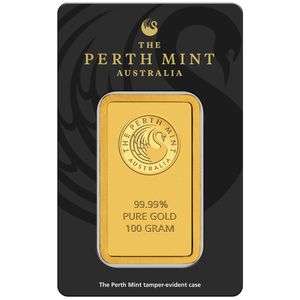
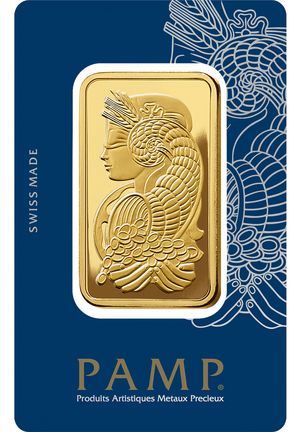
Our catalog of gold bars spans one of the widest selections available from a single U.S.-based precious metals dealer, covering weights from 1/2 gram all the way through 1 kilogram and beyond. Whether you're looking for a 1 oz gold bar from PAMP Suisse, a 100 gram bar from the Perth Mint, or a 10 oz cast bar from Asahi Refining, the options here reflect genuine depth across mints, refineries, weights, and packaging formats.
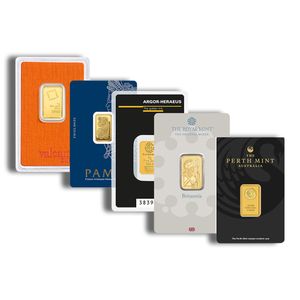
Every product listed comes from recognized global refineries including Argor-Heraeus, Valcambi, Geiger Edelmetalle, Istanbul Gold Refinery, Johnson Matthey, Engelhard, and the Royal Canadian Mint, among others. Packaging varies by product, with many bars available in sealed assay cards and others sold as cast bars without encapsulation. Random brand options are also available at each major weight for buyers prioritizing metal content over brand specificity.
Bullion Standard operates as a transparent two-way marketplace, meaning the same platform where you purchase is the same platform where you can sell. Pricing reflects real-time market conditions rather than fixed retail markups, and each product page displays the current bid/ask spread so you can evaluate the full cost of ownership before committing to a purchase.
What Are Gold Bars?
Gold bars are refined gold products produced by accredited mints and refineries and sold primarily based on their metal content rather than numismatic or legal tender value. They differ from gold coins in that they carry no government-issued face value and are not struck as currency. Instead, their market value is almost entirely derived from their gold content, weight, and purity, with premiums above spot reflecting manufacturing costs, brand recognition, and packaging.
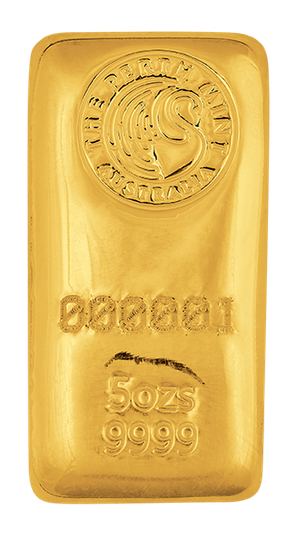
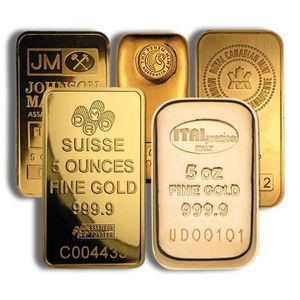
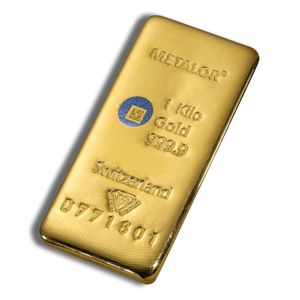
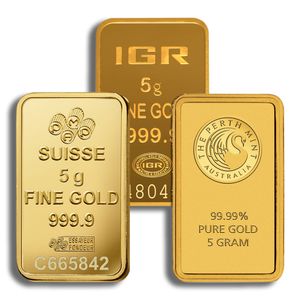
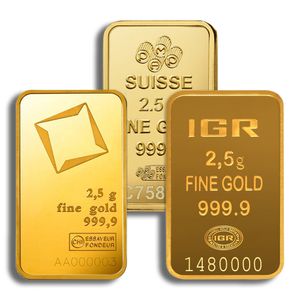
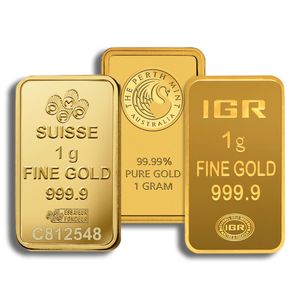
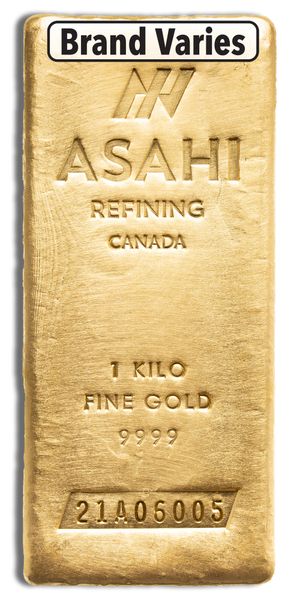
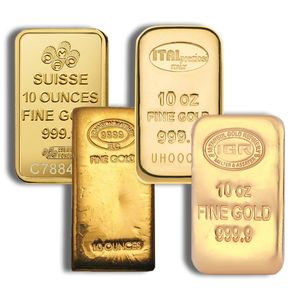
Bars are produced in two primary formats. Minted bars are precision-cut from gold blanks and feature polished or frosted surfaces with stamped designs, weight, purity, and serial numbers. Cast bars are poured from molten gold into molds and tend to have a rougher, more industrial appearance. Both formats carry the same metal content at equivalent weights, but minted bars typically carry slightly higher premiums due to their manufacturing complexity and presentation.
Buyers choose gold bars for a number of practical reasons. The premium structure for bars is generally more efficient than coins at comparable weights, particularly as bar size increases. Larger bars like 10 oz, 100 gram, and 1 kilogram formats tend to carry the tightest premiums relative to spot, making them a practical choice for buyers who want maximum metal per dollar spent. Fractional bars from 1/2 gram through 1/4 oz provide access to smaller quantities of gold while maintaining the efficiency and standardization of the bar format.
History and Background
The gold bar as a commercial product evolved from the centuries-old practice of assaying and trading raw bullion. As global trade expanded during the 19th and early 20th centuries, standardized bar production became essential for banking, central reserve systems, and cross-border settlement. The London Bullion Market Association established specifications for what would become the internationally recognized "good delivery" bar, a standard still used today for 400-troy-ounce bars traded at the wholesale level.
The modern retail gold bar market took shape largely in the 1970s and 1980s, when major Swiss refineries including Argor-Heraeus, Valcambi, and PAMP began producing smaller, consumer-accessible bars in weights ranging from 1 gram to 1 kilogram. These refineries invested in precision minting technology and tamper-evident assay card packaging, transforming the gold bar from a purely institutional product into something widely accessible to individual buyers. American refineries and distributors including Engelhard and Johnson Matthey also played a significant role in developing the U.S. retail market during this period.
Over the following decades, additional mints and refineries from Australia, Germany, Turkey, Canada, and the United Kingdom expanded the global supply of retail gold bars. The Perth Mint, Royal Canadian Mint, Geiger Edelmetalle, and Istanbul Gold Refinery all established strong market recognition with individual buyers. Today, the retail gold bar market reflects a mature and well-supplied ecosystem built on standardization, refinery accreditation, and widely accepted assay verification practices.
Purity, Weight, and Specifications
The vast majority of retail gold bars carry a purity of .9999 fine, meaning 99.99% gold content. This purity level has become the standard across virtually all major modern refineries and mints and is the purity you'll find across essentially our entire gold bar catalog. Some older secondary market bars, particularly from Johnson Matthey and Engelhard, may carry .999 fine purity, though .9999 remains the dominant modern standard.
Weight conventions vary by product line. Swiss and European refineries typically produce gram-weight bars including 1 gram, 2 gram, 2.5 gram, 5 gram, 10 gram, 20 gram, 50 gram, and 100 gram formats alongside metric kilogram bars. American and Australian mints more commonly produce troy ounce bars in 1/10 oz, 1/4 oz, 1/2 oz, 1 oz, 10 oz, and other fractional or whole troy ounce weights. One troy ounce equals 31.1035 grams, so gram-weight and troy ounce bars are not interchangeable at round numbers despite the occasional overlap in similar weights.
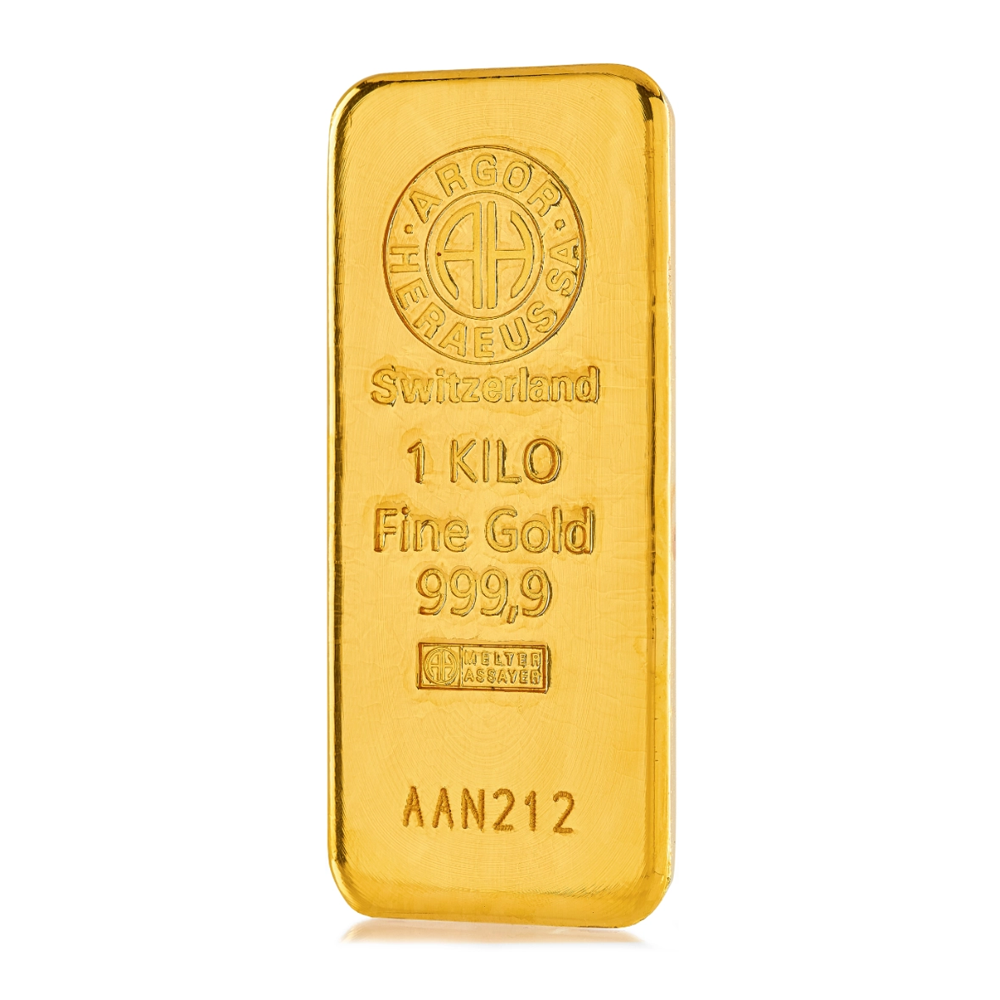
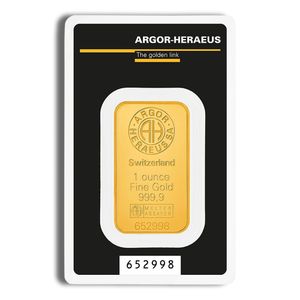
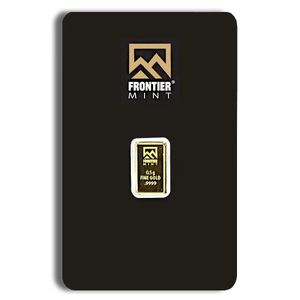
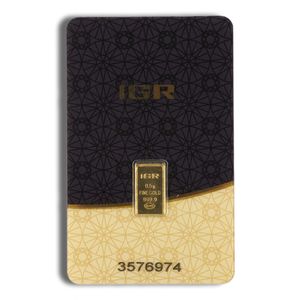
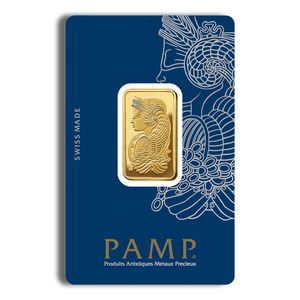
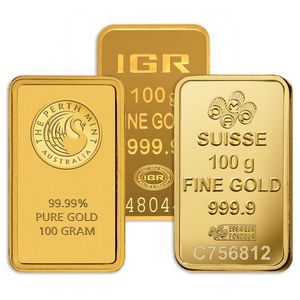
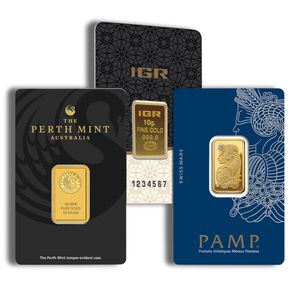
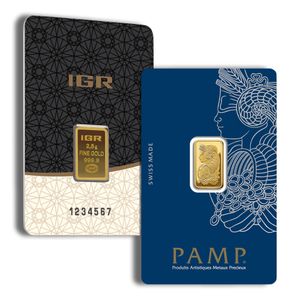
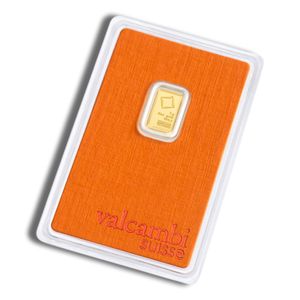
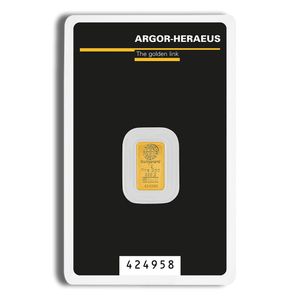
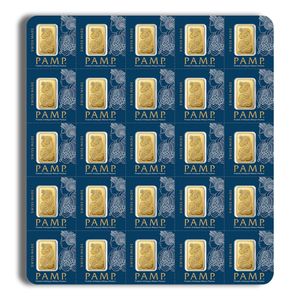
Minted bars typically carry stamped or engraved markings that include the refinery name, bar weight, metal purity, and in many cases a unique serial number. Assay cards add an additional layer of verification by enclosing the bar in a tamper-evident sealed card that confirms the bar's specifications and origin. Dimensional specifications vary by refinery and product line, and specific measurements for individual bars are listed on each product page where available.
Available Brands, Mints, and Product Variations
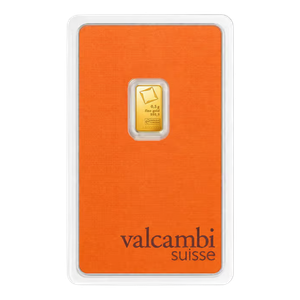
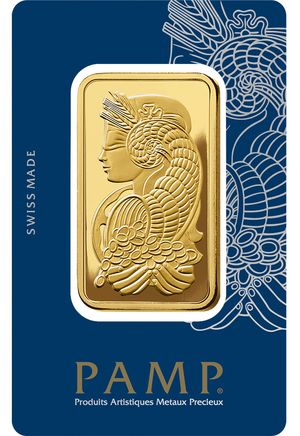
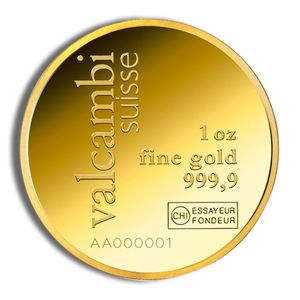
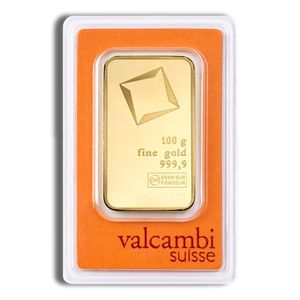
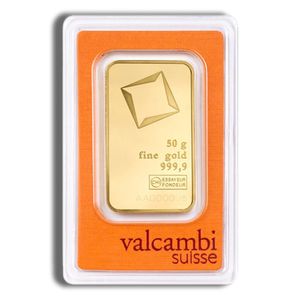
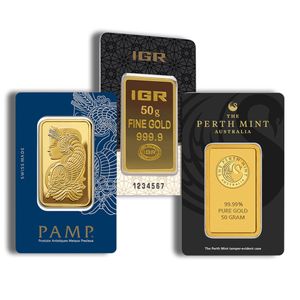
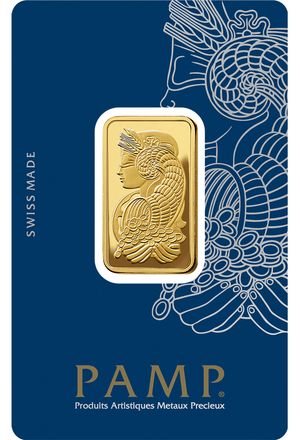
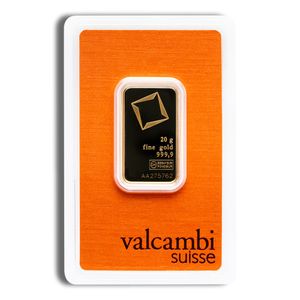
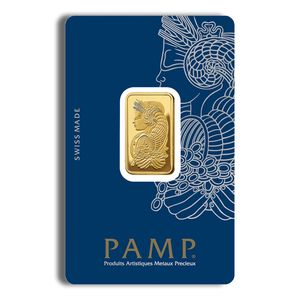
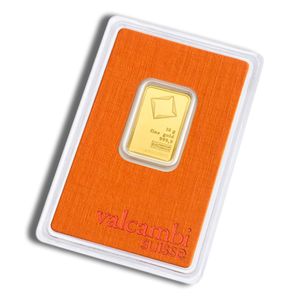
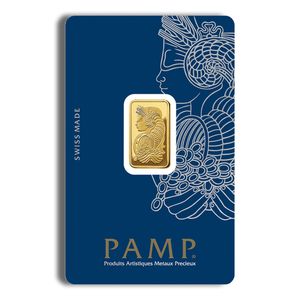
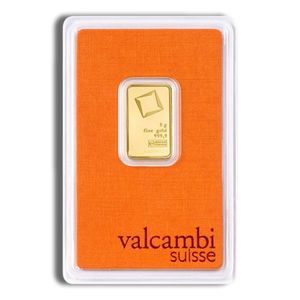
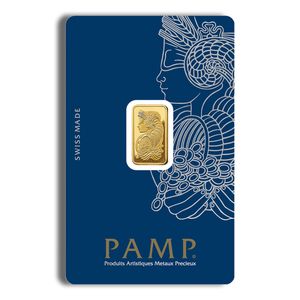
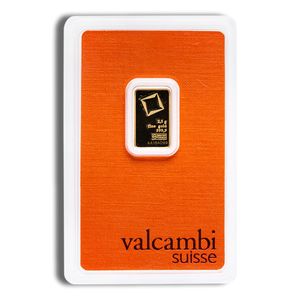
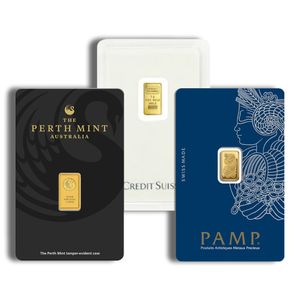
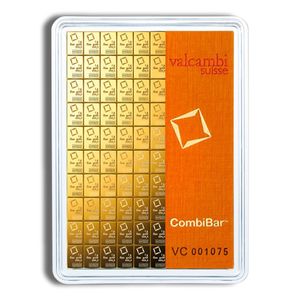
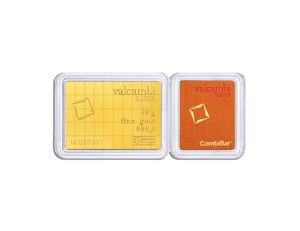
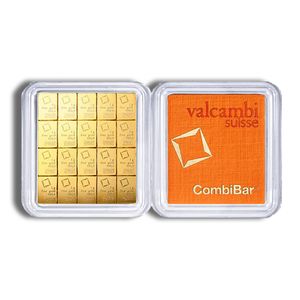
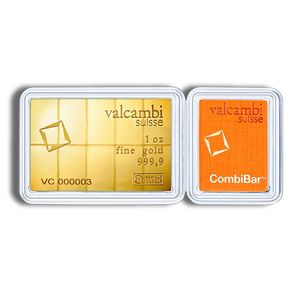
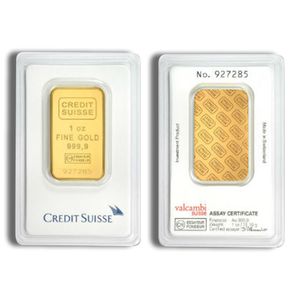
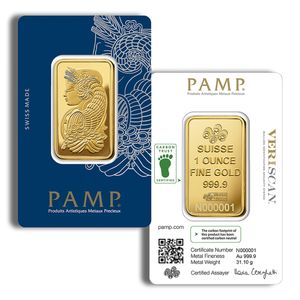
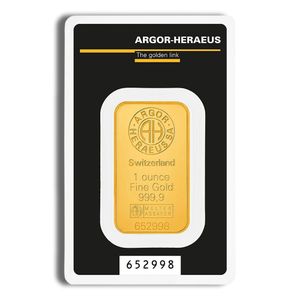
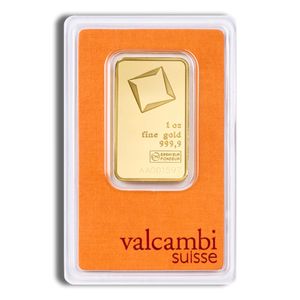
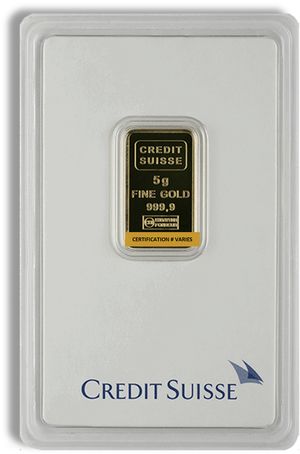
Swiss refineries dominate the retail gold bar market in terms of global recognition, and our catalog reflects that breadth. Argor-Heraeus bars are available in gram weights from 1 gram through 1 kilogram and in 1 oz and fractional troy ounce sizes, with minted bars sold in sealed assay card packaging. Valcambi bars span a similar weight range and include the distinctive CombiBar format, which consists of a single bar subdivided into individual 1 gram or 1/10 oz segments that can be separated without tools. PAMP Suisse is represented across gram and troy ounce weights with their widely recognized Lady Fortuna design and carbon neutral bar variants. Credit Suisse bars, produced at the Valcambi refinery, appear in the catalog in 5 oz, 10 oz, and related sizes.
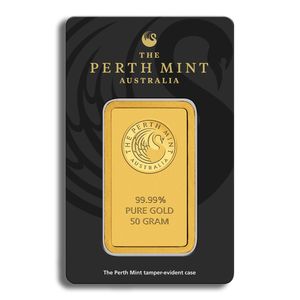
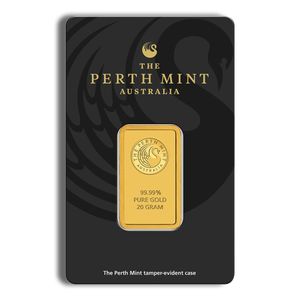
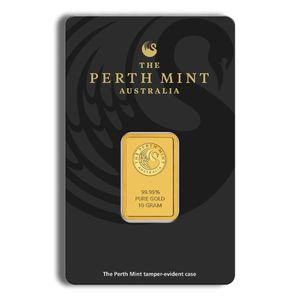
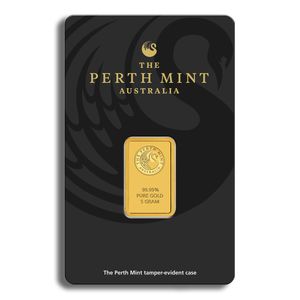
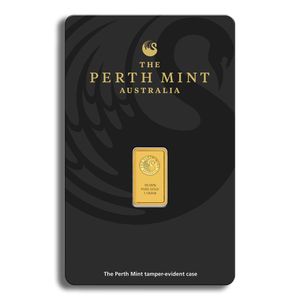
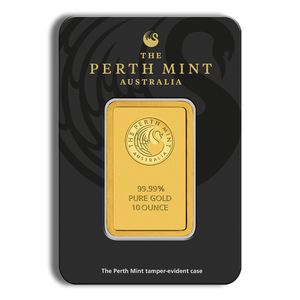
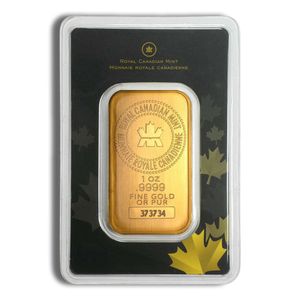
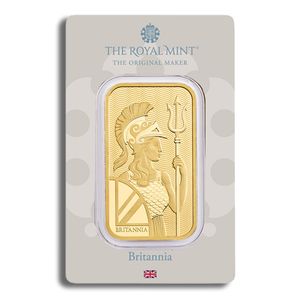
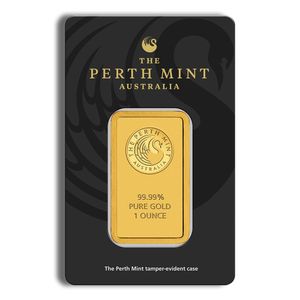
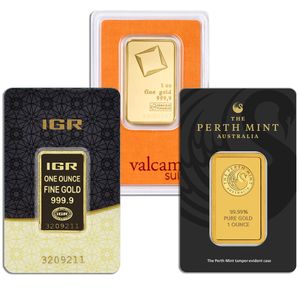
German refinery Geiger Edelmetalle offers a distinctive square-format bar design in weights from 1 gram through 100 grams, along with the Geiger Multicard multi-bar format. Istanbul Gold Refinery bars from Turkey are available across gram and troy ounce weights and consistently represent a value-oriented option within the broader catalog. The Perth Mint contributes both minted assay card bars and cast bar options in 1 gram, 5 gram, 10 gram, 20 gram, 100 gram, and 1 oz and 10 oz sizes. The Royal Canadian Mint and the Royal Mint of Great Britain, the latter with its Britannia bar design, round out the government-affiliated refinery options available.
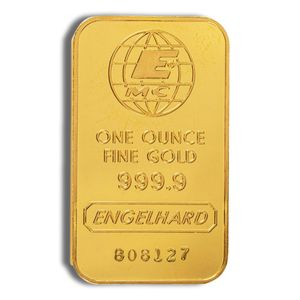
American-branded bars including Engelhard and Johnson Matthey are available as secondary market products in 1 oz and 10 oz sizes. These bars carry strong recognition in the domestic secondary market and remain popular with buyers familiar with their production history. Random brand options at weights including 1/2 gram, 1 gram, 10 gram, 1 oz, 10 oz, and 100 gram provide an efficient way to acquire gold at tighter premiums when specific brand preference is less important than metal content and weight.
Pricing, Premiums, and Market Factors
Gold bar pricing is built from two components: the spot price of gold and the premium charged above that spot price. The spot price reflects the current per-troy-ounce wholesale market price for unallocated gold and changes continuously during global trading hours. The premium covers the refinery's production costs, assay and packaging expenses, distribution margins, and dealer operating costs. Understanding both components gives you a complete picture of what you're actually paying per troy ounce of gold.
Premiums vary significantly across bar sizes and brands. Larger bars carry lower per-ounce premiums because manufacturing and packaging costs are spread across more metal. A 1 kilogram bar from Argor-Heraeus will carry a meaningfully lower premium per ounce than a 1 gram bar from the same refinery. Among same-weight bars, brand recognition, packaging quality, and secondary market demand all influence the premium. Swiss refinery bars from PAMP Suisse, Valcambi, and Argor-Heraeus generally carry slightly higher premiums than bars from less internationally recognized sources due to their broader global liquidity.
Bullion Standard displays the current bid/ask spread on each product page, which reflects the difference between the price to buy and the price at which we will buy back that product. Narrower spreads indicate more efficient pricing and greater market liquidity for that specific product. This transparency allows buyers to evaluate not just the purchase price but the realistic cost of the full round-trip transaction before making a decision, which is a core part of how we approach pricing across our marketplace.
Condition, Packaging, and What to Expect
Minted gold bars sold in assay card packaging are delivered sealed in their original tamper-evident enclosures. The assay card confirms the bar's weight, purity, and origin and is an important part of the product's presentation and resale value. Bars in assay cards should be stored in their original packaging to preserve their condition and maintain straightforward resaleability.
Cast bars do not typically come in assay card packaging. Products like the Perth Mint 1 oz cast bar are delivered in protective plastic capsules or sealed bags rather than the flat carded format common to minted bars. Cosmetic variation is normal for cast bars and does not affect metal content or purity. Minor surface marks, flow lines, or color variation are characteristic of the casting process and are expected rather than indicative of a defect.
Random brand products, such as the random brand 1 oz or 10 gram options in our catalog, are sourced from a rotating pool of reputable refineries and will arrive in varying brands and designs at our discretion. Year of production and specific brand cannot be guaranteed for random products. All random brand bars are verified for authenticity, weight, and purity before shipment, and you will receive a product that meets the listed specifications regardless of brand.
Authenticity and Verification
Every gold bar sold through Bullion Standard is verified for authenticity, weight, and purity before it reaches a customer. Our sourcing relationships with accredited mints, refineries, wholesalers, and distributors provide the foundation for product integrity, and our internal verification processes add a further layer of confirmation before shipment. Bullion Standard maintains an A rating with the Better Business Bureau and is a member of both the American Numismatic Association and the National Coin and Bullion Association.
Assay cards serve as manufacturer-certified documentation that a bar meets its stated specifications. They incorporate security features including holograms, microtext, and tamper-evident seals that make alteration or counterfeiting significantly more difficult. A bar in an intact, unaltered assay card can generally be verified by its packaging alone. If a seal is broken or a card shows signs of tampering, the bar should be treated as requiring independent verification before resale.
For bars without assay card packaging, standard industry verification methods include weight verification using a calibrated scale, dimensional measurement, and non-destructive testing techniques such as ultrasonic testing or XRF analysis, which measures elemental composition without damaging the bar. We are authorized dealers for both PCGS and NGC, and our team applies professional-grade verification standards consistent with industry best practices across all products we handle.
Liquidity and Resale Considerations
Gold bars are among the most widely traded physical precious metals products in the global market, and broadly recognized refinery brands move with greater ease than obscure or unfamiliar products. Bars from major Swiss refineries like PAMP Suisse, Valcambi, and Argor-Heraeus, as well as products from the Perth Mint, Royal Canadian Mint, and other globally recognized mints, are accepted by dealers and buyback programs across the international market. This broad recognizability translates directly into easier resale and tighter bid/ask spreads.
Bar size also affects liquidity in practical terms. The 1 oz bar is the most widely traded retail gold bar format in the United States and globally, offering strong market depth and competitive buyback pricing. Larger bars, while carrying lower purchase premiums, can be slightly less flexible in terms of partial liquidation since they require selling the entire bar at once. Fractional gram bars are convenient for small purchases but tend to carry wider percentage spreads relative to their metal content due to higher per-unit production costs.
Condition and packaging matter at the point of resale. Bars in original sealed assay cards typically receive stronger buyback pricing than bars with broken seals or no card at all, since they allow buyers to quickly verify the product without additional testing. Maintaining original packaging is one of the simplest ways to preserve a bar's full resale potential over time.
Storage and Security
Gold bars are compact and dense, which makes them relatively straightforward to store even at significant quantities. A basic fireproof home safe rated for burglary resistance provides adequate security for modest holdings and keeps bars accessible without reliance on third-party custodians. Home storage requires thoughtful attention to insurance coverage, as standard homeowner's or renter's policies often have strict limits on precious metals coverage.
Allocated vault storage through a third-party provider offers an alternative for larger holdings or buyers who prefer not to manage physical security at home. Professional vault facilities maintain segregated or allocated storage options, typically with insurance built into the storage fee structure. For bars kept in assay card packaging, flat storage in a moisture-controlled environment helps prevent condensation from affecting the packaging over time.
Bank safe deposit boxes are a widely used option for moderate-sized holdings, though they come with access limitations tied to banking hours and offer no FDIC insurance coverage for physical assets stored inside. For fractional gram bars, which are physically small, a well-organized storage system using labeled capsules or sealed bags prevents misplacement and makes inventory easier to track. Larger bars like 1 kilogram products are heavy enough that secure mounting or shelf support within a safe is worth considering to prevent movement or damage during handling.
Selling and Buyback Options
Selling gold bars back into the market is straightforward when working with established dealers who operate transparent two-way pricing. Bullion Standard's buyback program allows customers to sell products directly through the same platform where they purchased, using competitive bid pricing that reflects current wholesale market conditions. Our purchasing team evaluates products based on weight, purity, brand recognition, packaging condition, and real-time market pricing rather than applying arbitrary fixed discounts.
Products in original sealed assay card packaging generally receive the strongest buyback pricing because they can be verified quickly and resold with confidence. Random brand bars, bars with broken seals, or bars missing original documentation may receive adjusted pricing to reflect the additional verification steps required. The bid price for any specific product is displayed on its product page and reflects current market conditions, allowing sellers to compare what they paid against the current buyback price at any time.
Timing and product selection both influence the practical outcome of a sale. Products with strong global brand recognition and wide market acceptance, such as 1 oz PAMP Suisse bars or Perth Mint minted bars, tend to receive competitive bids from multiple dealers, which supports price discovery. Less recognized products or those in poor condition may face a narrower pool of buyers. Bullion Standard Pro members benefit from live executable wholesale bid pricing that reflects real-time market depth across the products we trade, giving sellers greater visibility into current liquidation values before initiating a transaction.
Why Buy Gold Bars?
Gold bars consistently carry lower premiums above spot than comparably weighted gold coins, making them a practical choice for buyers who want to maximize their metal content per dollar spent. At larger sizes, the premium efficiency becomes even more pronounced. A 100 gram bar or 1 kilogram bar typically carries a significantly tighter spread to spot than a fractional coin of equivalent metal content, which is why larger bars are the preferred format for buyers prioritizing cost efficiency over numismatic or legal tender characteristics.
The format also offers strong storage density. Because bars are flat and stackable, they can be stored compactly in safes and vault environments without wasted space. This practicality at scale makes bars a preferred format for buyers accumulating meaningful quantities of gold, where efficient storage and straightforward inventory management are genuine priorities.
Standardization is another meaningful advantage. Gold bars from accredited refineries are produced to consistent specifications, which simplifies verification, valuation, and resale. A 1 oz PAMP Suisse Lady Fortuna bar in an original assay card is immediately recognized by dealers globally, requiring no special authentication steps beyond confirming the seal integrity. This universal recognizability makes the bar format one of the most straightforward physical gold products to buy, hold, and eventually sell within a transparent dealer market.
Why Buy from Bullion Standard?
Bullion Standard was founded in San Diego in 2010 with a straightforward objective: to build a precious metals marketplace that buyers can trust. Our A Better Business Bureau rating, ANA membership, NCBA membership, and authorized dealer status with PCGS and NGC reflect a consistent commitment to product authenticity and customer confidence built over more than a decade of operation. Every product in our catalog is sourced from reputable mints, refineries, and wholesalers and verified before it ships.
Transparent pricing is embedded into how our platform works. Rather than obscuring the full cost of a transaction, we display the bid/ask spread on each product page so buyers can see both sides of the market before purchasing. This structure is unusual in a retail precious metals context, where pricing opacity is common. Our two-way marketplace model means you can purchase and sell within the same ecosystem using consistent, market-oriented pricing rather than navigating separate dealers with different standards.
Our payment options cover Visa, Mastercard, American Express, Discover, PayPal, bank-connected payments through Plaid, wire transfer, check, and cryptocurrency through BitPay. Fulfillment is handled with a focus on reliability and security, and our customer service team is structured to provide genuine support rather than directing buyers through scripted responses. The experience is built around the principle that trust in this industry is earned through consistency, not claims.
Get Near-Spot Pricing with Bullion Standard Pro
Bullion Standard Pro gives members access to live executable wholesale bid and ask pricing across a broad range of gold bars and other precious metals products. Unlike standard retail pricing structures, Pro pricing reflects real-time wholesale market conditions without additional dealer markups applied on top of the wholesale level. This means the premiums and spreads members see fluctuate based on actual supply, demand, and liquidity rather than fixed retail pricing tiers.
Members also gain access to proprietary analytics including historical premium tracking, premium percentile rankings, spread analysis, liquidity metrics, and market sentiment indicators. These tools allow members to evaluate whether a specific gold bar is trading at a historically tight or wide premium relative to its own history, which adds meaningful context that static product listings don't provide. Portfolio valuation for Pro members uses live wholesale bid pricing rather than estimated retail values, giving a more accurate picture of what holdings are actually worth at current market conditions.
For buyers who purchase gold bars with meaningful frequency or in larger quantities, the pricing efficiency available through Pro can represent a material difference in cost per ounce over time. The platform is designed to bring the transparency and analytical rigor typically associated with institutional financial markets to the physical bullion market, where that level of accessible data has historically been difficult to find. Whether you're evaluating a single 1 oz bar or comparing premiums across multiple kilogram-weight products, Pro gives you the market intelligence to make decisions based on objective data rather than assumptions.

 (833) 278-4653