2026 1 Oz Gold American Buffalo - BU
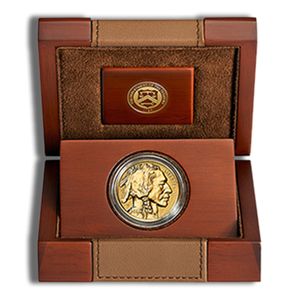
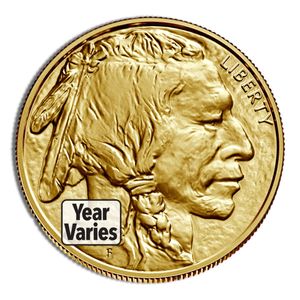
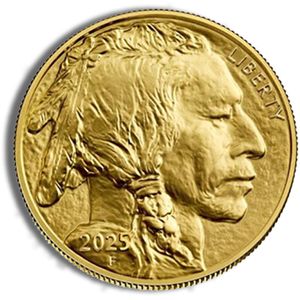
1 Oz Gold American Buffalo - BU (Random Year)
Buy American Gold Buffalos Online

Our catalog of American gold buffalos spans the full range of offerings produced by the United States Mint, from BU bullion strikes and annual proof releases to the rare 2008 fractional coin sets and the 2013 reverse proof issue. Whether you're looking for a random year bullion coin for straightforward gold ownership or a specific dated proof with its original government box and certificate of authenticity, the options here reflect the complete commercial and collector landscape for this series.

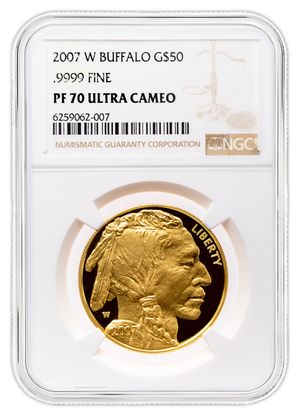
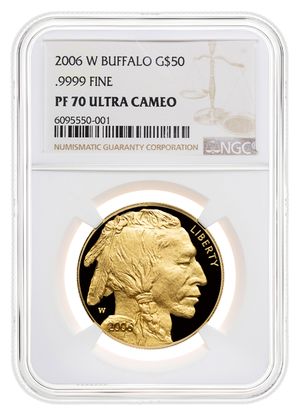
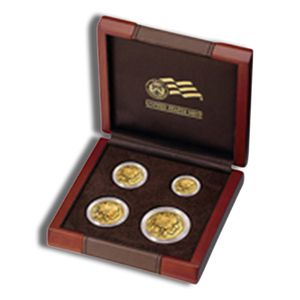
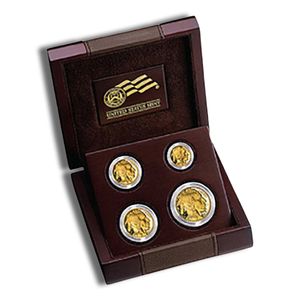
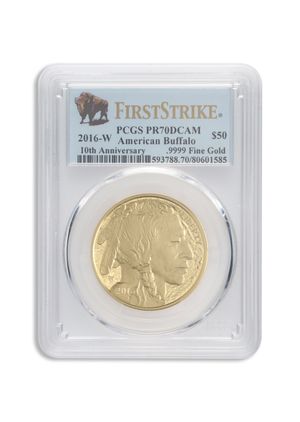
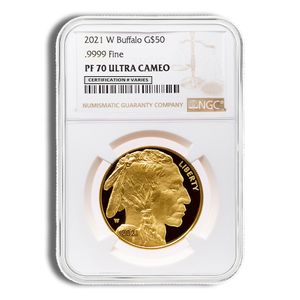
Available formats include standard 1 oz brilliant uncirculated coins, 1 oz proof strikes dated from 2006 through 2025, and the historically significant 2008 fractional series in 1/10 oz, 1/4 oz, and 1/2 oz weights. A four-coin proof set from 2008 combining all four fractional denominations is also represented. Products are offered in both raw and third-party certified form, including NGC PF70 graded examples for collectors focused on certified condition.

Bullion Standard operates as a transparent precious metals marketplace with competitive bid and ask pricing displayed directly on each product page. Understanding both the acquisition cost and the expected resale value is part of how we approach pricing, and that philosophy applies directly to the american gold buffalo series, where product-specific premiums can vary meaningfully across years, formats, and grades.

What Are American Gold Buffalos?

American gold buffalos are 24-karat gold coins struck by the United States Mint and authorized under the Presidential $1 Coin Act of 2005. They carry a nominal face value of fifty dollars and are legal tender in the United States, though their market value is determined entirely by their gold content and the prevailing premium structure for the series. The standard format is a 1 oz coin struck from .9999 fine gold, making it one of the purest government-issued gold coins available from a major sovereign mint.

What distinguishes the american gold buffalo from other government-issued gold coins, including the American Gold Eagle, is the purity level. Gold Eagles are struck to .9167 fineness and alloyed for durability, while the Buffalo uses four-nines fine gold with no alloy additions. This places it alongside coins like the Canadian Gold Maple Leaf and the Australian Gold Kangaroo in terms of gold purity, and it matters both to buyers who prioritize purity and to certain international markets that require .9999 fineness for settlement or trade.

Buyers typically approach this series from one of two directions: pure bullion acquisition focused on gold content, or year-specific collecting driven by proof quality and packaging. The product grid reflects both audiences, offering raw BU coins at more efficient premiums alongside annual proof releases in their original mint packaging with certificates of authenticity.

History and Background

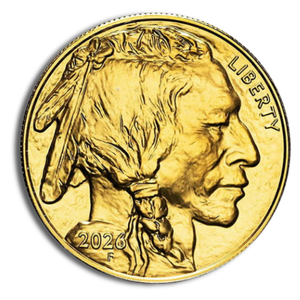
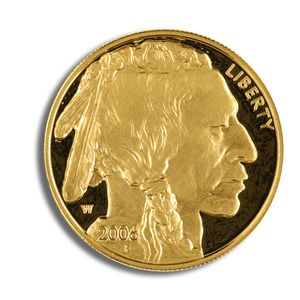
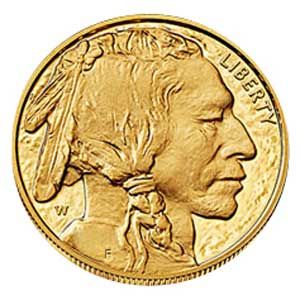
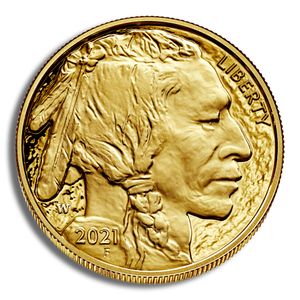
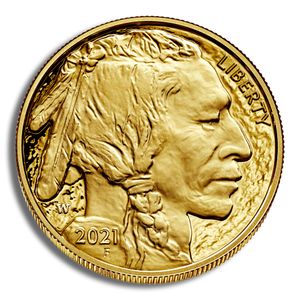
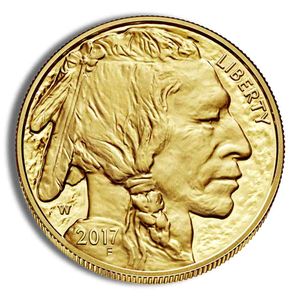
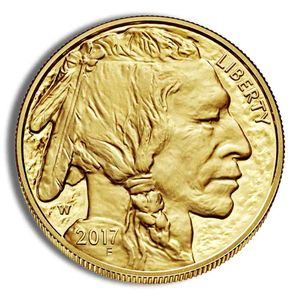
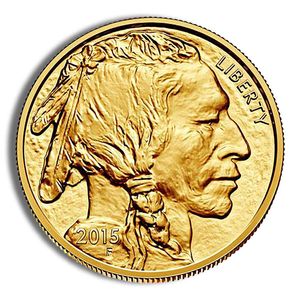
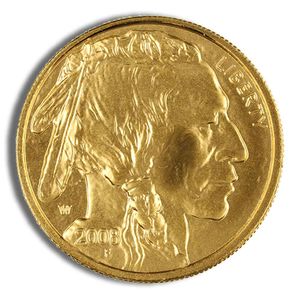
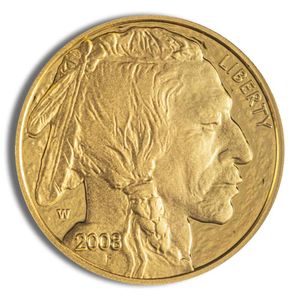
The American gold buffalo made its debut in 2006 as the first 24-karat gold coin ever produced by the United States Mint for public sale. The coin's design is adapted directly from James Earle Fraser's iconic 1913 Buffalo nickel, using the same obverse portrait of a Native American composite figure and the same reverse image of an American bison standing on a mound. The choice to revive this design for the nation's first .9999 gold coin gave the series an immediate cultural and numismatic identity that set it apart from purely bullion-focused offerings.

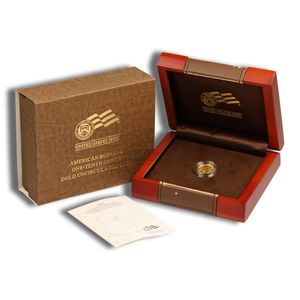
The early years of the program, from 2006 through 2008, were particularly notable for the range of products introduced. The West Point Mint struck proof coins beginning in the first year, and in 2008 the Mint expanded the program to include burnished uncirculated and proof versions in four denominations: 1 oz, 1/2 oz, 1/4 oz, and 1/10 oz. This expansion was short-lived. Production of the fractional coins was discontinued after 2008 due to limited demand relative to production costs, making that year's fractional strikes the only ones ever produced in the series.

The program resumed a more streamlined structure from 2009 onward, focusing primarily on the 1 oz bullion strike and the 1 oz proof coin. A notable departure came in 2013 when the Mint issued a reverse proof alongside the standard proof, creating a two-coin anniversary release that marked the program's first significant commemorative variation. Annual proof production has continued through the present, with the series consistently drawing both bullion-focused buyers and date collectors.

Purity, Weight, and Specifications

The american gold buffalo is struck to a fineness of .9999, meaning 99.99% pure gold with no alloying metals added. Each standard coin contains exactly one troy ounce of gold, translating to 31.1035 grams. The coin measures 32.7 millimeters in diameter and has a reeded edge. These specifications are consistent across all years of bullion production and have been maintained without change since the series began in 2006.

Fractional coins produced in 2008 followed the same .9999 purity standard in reduced weights. The 1/2 oz coin contains 15.552 grams of gold, the 1/4 oz contains 7.776 grams, and the 1/10 oz contains 3.110 grams. Each denomination carries its own face value and diameter, though all use the same obverse and reverse design as the 1 oz coin. Proof coins across all years and denominations carry the "W" mint mark designating production at the West Point Mint.

The "W" mint mark is an important identifier for proof and burnished uncirculated issues. Bullion strikes in BU condition are also produced at West Point but are distributed through authorized purchasers without carrying a visible mint mark on the coin itself. This distinction is noted in product specifications where applicable and is relevant both for collectors tracking production attribution and for buyers confirming product authenticity.

Available Brands, Mints, and Product Variations

All american gold buffalo coins are produced exclusively by the United States Mint, with proof and burnished uncirculated issues struck specifically at the West Point facility in New York. Unlike many bullion categories where competing private mints offer similar formats, the buffalo series is a government-issued program with a single issuing authority, which gives it a clearly defined production record and consistent standards across all years.

Within the series, the primary variations come from format and finish rather than manufacturer. Bullion strikes designated as BU represent the standard commercial issue intended for gold ownership at competitive premiums. Proof coins are struck using polished dies and specially prepared planchets, producing a mirrored background field with frosted design elements, and these are sold in government packaging with a certificate of authenticity. Burnished uncirculated coins, produced only in 2008, used hand-loaded blanks for a distinct surface finish that falls between the bullion and proof presentations.

The 2013 reverse proof is one of the more commercially significant variations in the catalog. On a reverse proof, the finish relationship is inverted compared to a standard proof, with frosted fields and mirrored design elements. The 2013 reverse proof was issued as part of a two-coin set marking the program's anniversary, and it represents the only reverse proof strike in the series to date. Certified examples, including the NGC PF70 graded coins available in our catalog, document that distinction through independent verification of both finish and condition.

Pricing, Premiums, and Market Factors

Like all gold coins, the american gold buffalo is priced relative to the spot price of gold, with a premium added above that base value. For standard BU bullion coins, premiums are driven primarily by mint production costs, dealer margins, and current supply and demand within the wholesale market. Proof coins carry higher premiums reflecting their lower mintage, specialized production process, and collector-oriented packaging, and year-specific dated proofs can trade at meaningfully different levels depending on original mintage figures and current secondary market demand.

Fractional coins from 2008 occupy a distinct pricing position. Because they were produced only once and are no longer being minted, their premiums reflect both the gold content and the secondary market dynamics of a discontinued program. The four-coin proof sets from that year similarly carry premiums that go beyond raw gold value, reflecting the completeness of the set, the condition of the packaging, and the overall scarcity of the format in the market today.

Bullion Standard displays live bid and ask pricing on each product page, giving buyers a direct view of both acquisition cost and current buyback value before completing a purchase. This transparency reflects our broader philosophy that understanding the full cost of ownership, including the spread between what you pay and what you can sell for, is essential information rather than something to be obscured. Premiums on well-recognized government issues like the buffalo tend to compress more efficiently in liquid market conditions, though that relationship shifts with demand, inventory levels, and overall gold market activity.

Condition, Packaging, and What to Expect

BU bullion coins are distributed in mint tubes or individual protective packaging and have not been cleaned, polished, or artificially treated. Minor contact marks, light bag marks, or surface variations are entirely normal for uncirculated bullion coins that have been handled during production and packaging. These do not affect the coin's gold content and are expected characteristics of commercially distributed bullion, not defects.

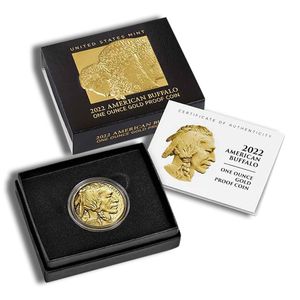
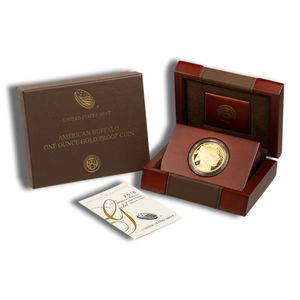
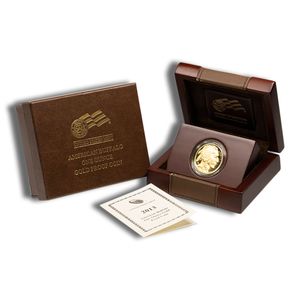
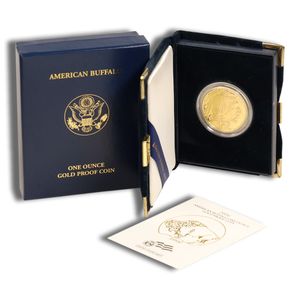
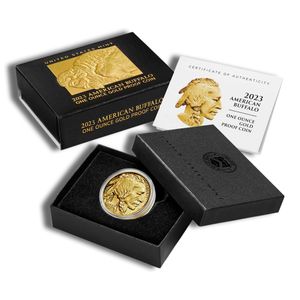
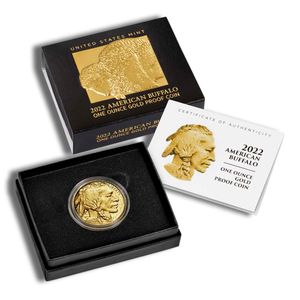
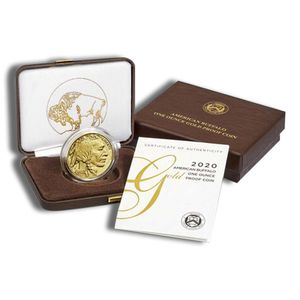
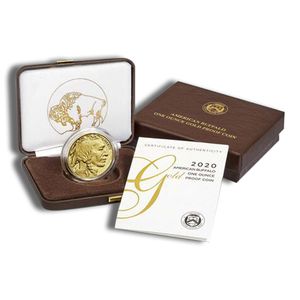
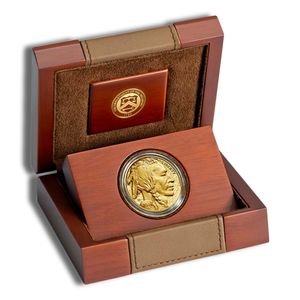
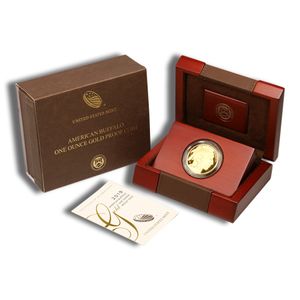
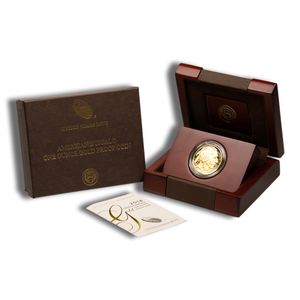
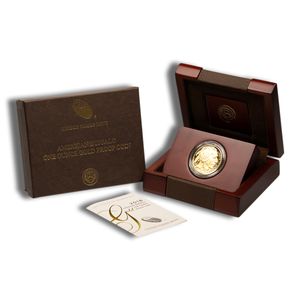
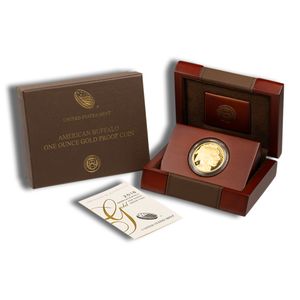
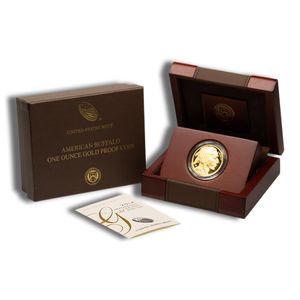
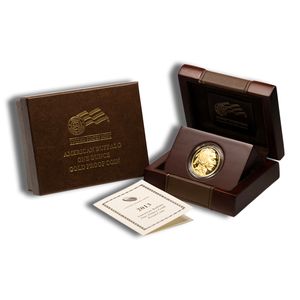
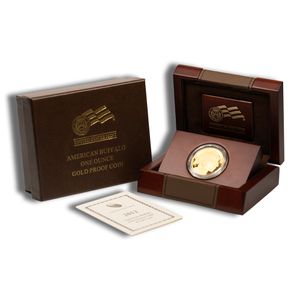
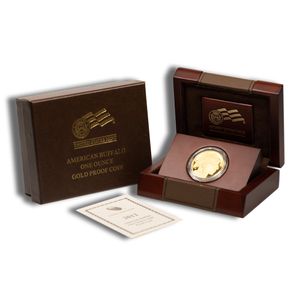
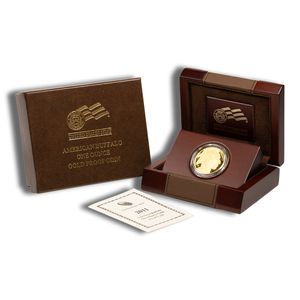
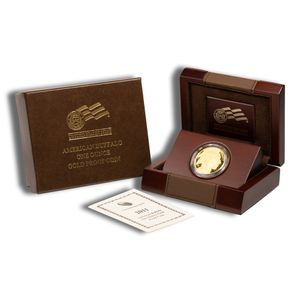
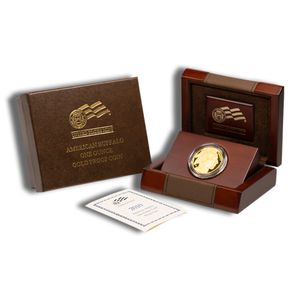
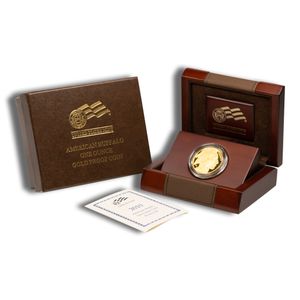
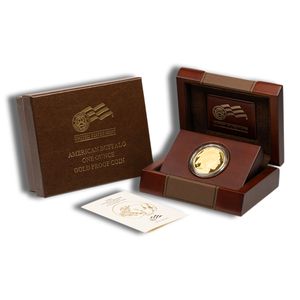
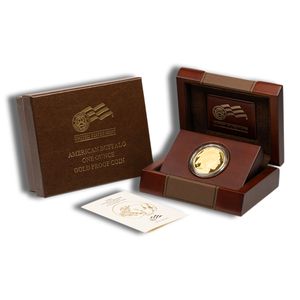
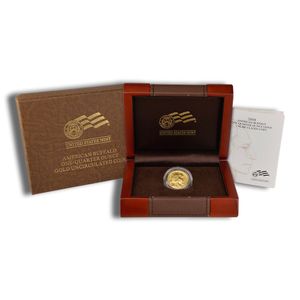
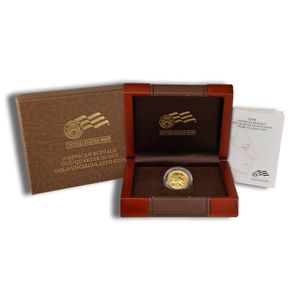
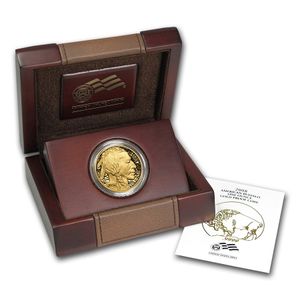
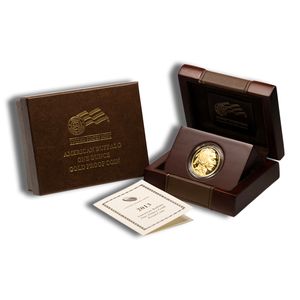
Proof coins in our catalog are presented with their original government-issued box and certificate of authenticity unless otherwise noted. The box and COA are standard components of the original mint packaging and are part of what distinguishes a complete proof issue from a coin sold without its original presentation. Buyers of dated proof coins should note that packaging condition can affect resale value in collector-oriented markets, so handling and storage of original boxes is worth considering.

Random year BU coins are fulfilled from available inventory without a specific date guarantee. The coin shipped may be from any year of production at the discretion of our fulfillment team based on current stock. Impaired or cull-condition coins, designated clearly in the product listing, will show visible signs of wear, contact, or surface issues beyond what is normal for BU examples. These are priced accordingly and are appropriate for buyers focused purely on gold content rather than presentation.

Authenticity and Verification

American gold buffalos produced by the United States Mint carry inherent authenticity assurances tied directly to their issuing authority. The Mint employs rigorous production controls, proprietary die preparation, and established quality standards for every coin that leaves its facilities. Each proof coin comes with a certificate of authenticity issued by the Mint itself, which documents the specific issue and confirms it was struck under official government authorization.

Bullion Standard verifies the authenticity, weight, and purity of every product before it enters our inventory. Our sourcing network includes authorized mint distributors, reputable wholesalers, and established industry suppliers. Products are handled under controlled conditions and inspected as part of our standard fulfillment process. Certified examples in our catalog, such as NGC-graded PF70 coins, have been independently authenticated and encapsulated by a third-party grading service, adding an additional layer of documented verification for buyers who prioritize certified condition.

For buyers seeking to confirm authenticity on their own, the american gold buffalo has several physical characteristics that serve as baseline reference points: precise weight, specific diameter and thickness, correct design details matching the Fraser Buffalo nickel source imagery, reeded edge, and for proof coins, the "W" mint mark. Professional verification services and reputable dealers with in-house testing capabilities offer additional options for buyers who want independent confirmation on secondary market purchases.

Liquidity and Resale Considerations

The american gold buffalo ranks among the most liquid government-issued gold coins available in the domestic market. Issued by the United States Mint with a well-established production history dating back to 2006, the series is immediately recognizable to dealers, collectors, and institutional buyers across the country and internationally. This recognition matters practically when it comes time to sell, since widely traded coins with consistent specifications are easier to transact quickly and at competitive prices than obscure or limited-distribution products.

Standard 1 oz BU bullion coins trade closest to spot and carry the tightest spreads within the series because of their volume and uniformity. Dated proof coins and fractional issues occupy a somewhat different resale environment where collector interest, packaging integrity, and year-specific factors influence the market. The 2008 fractional coins and proof sets, the 2013 reverse proof, and early-year proof strikes from 2006 and 2007 tend to attract both bullion buyers and numismatically oriented buyers, which can support premiums but also means resale pricing is more condition and packaging sensitive.

Understanding resale dynamics before purchasing is part of evaluating any bullion acquisition honestly. The spread between the buy price and the expected sell price represents the real cost of ownership, and that spread varies between formats within this series. Bullion Standard's product pages display both bid and ask pricing so buyers can assess that relationship at the time of purchase rather than discovering it afterward.

Storage and Security

Standard 1 oz bullion coins are compact and well-suited for a variety of storage approaches. Individual coins are typically shipped in protective capsules or flips, and in quantity they may arrive in mint tubes. Keeping coins in their original protective packaging preserves surface condition and reduces handling-related marks, which matters more for proof coins and certified slabs than for raw bullion strikes but is a reasonable practice across the board.

For home storage, a quality fireproof safe rated for burglary resistance provides a reasonable baseline for securing smaller bullion holdings. Bank safe deposit boxes offer an alternative with institutional-grade physical security, though they come with access limitations and are not covered by FDIC insurance. Professional vault storage through third-party precious metals depositories is worth considering for larger holdings or for buyers who want segregated or allocated storage with formal documentation.

Proof coins in their original government boxes require particular attention to humidity and temperature consistency. Fluctuations in moisture can affect both the coin's finish and the condition of cardboard box components over time. Storing proof sets in their original packaging inside a climate-controlled environment, ideally within a sealed container or storage sleeve, reduces exposure to the environmental factors that degrade presentation condition over the long term.

Selling and Buyback Options

Selling american gold buffalo coins back into the market follows a straightforward process for standard bullion formats. Dealers quote buyback prices based on current spot gold, the specific product, its condition, and the presence or absence of original packaging. For BU bullion coins, the buyback price is closely tied to the wholesale bid for gold at that moment, with product-specific premiums factored in based on current demand. Proof coins with their original box and COA typically receive better buyback pricing than the same coin sold without packaging, particularly for desirable years and formats.

Bullion Standard operates a two-way market, meaning customers can both purchase and sell precious metals within the same platform. Our buyback pricing is competitive and reflects real-time wholesale bid conditions rather than fixed or formulaic dealer quotes. The same transparency we apply to purchase pricing extends to our buyback process, with current bid pricing displayed on product pages so sellers can evaluate the offer relative to live market conditions before committing.

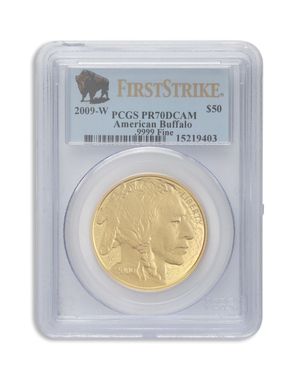
Products submitted for buyback are reviewed by our purchasing team, which accounts for condition, packaging completeness, year, format, and current market liquidity in determining the final offer. Certified coins in NGC or PCGS holders are evaluated with their grade documentation taken into account, which can influence buyback pricing for premium-condition issues. Customers who have maintained original packaging on proof coins and stored their bullion in protective holders will generally find the resale process more straightforward and the pricing more favorable than those presenting damaged or incomplete items.

Why Buy American Gold Buffalos?

The primary appeal of the american gold buffalo for most buyers is the combination of government issuance and .9999 gold purity. As the only gold coin produced by the United States Mint at this fineness level, it offers the legal tender backing and institutional credibility of a sovereign coin alongside a purity standard that meets the requirements of markets that specifically require four-nines fine gold. That combination is not replicated by any other U.S.-issued gold coin.

The series also offers meaningful format variety within a single program. A buyer focused on cost-efficient gold ownership can select a random year BU coin at relatively tight premiums. A buyer interested in annual dated releases can collect proof coins with their original government packaging. And a buyer seeking numismatically significant coins can pursue specific years like the 2008 fractionals, the 2013 reverse proof, or early-year proof issues that carry additional market significance beyond their gold content alone.

Design recognition is another practical factor. The James Earle Fraser buffalo nickel imagery is one of the most familiar in American numismatics, and its presence on this coin lends an immediate visual identity that most buyers and dealers recognize on sight. That recognition contributes to the coin's liquidity and makes it one of the more approachable government gold coins for buyers entering the market for the first time as well as experienced collectors adding to existing holdings.

Why Buy from Bullion Standard?

Bullion Standard was founded in 2010 and has spent over a decade building a reputation around pricing transparency, product authenticity, and straightforward customer relationships. We're headquartered in San Diego, California, and we source our products from authorized mint distributors, established wholesalers, and reputable industry suppliers. Every item we ship is verified for authenticity, weight, and purity before fulfillment, and we maintain an A rating with the Better Business Bureau alongside active memberships in the American Numismatic Association and the National Coin and Bullion Association.

Our platform is designed around a two-way market model that puts equal emphasis on buying and selling. Rather than treating liquidity as an afterthought, we display live bid and ask pricing on each product page so customers understand both sides of the transaction before committing. This approach reflects a broader philosophy: better information leads to better decisions, and our job is to provide that information clearly rather than obscure it.

Payment flexibility, responsive customer service, and reliable fulfillment round out the practical experience. We accept Visa, Mastercard, American Express, Discover, PayPal, bank payments through Plaid, wire transfer, paper check, and cryptocurrency through BitPay. As authorized dealers for both PCGS and NGC, we're equipped to assist with certified product purchases and can support customers across the full range of graded and raw bullion formats available in our catalog.

Get Near-Spot Pricing with Bullion Standard Pro

Bullion Standard Pro gives members direct access to live, executable wholesale bid and ask pricing across our catalog, including the full american gold buffalo lineup. Unlike standard retail pricing structures that apply fixed dealer markups, Pro pricing allows premiums and spreads to float naturally with real-time wholesale market conditions. The result is a more efficient pricing environment where what you pay and what you can sell for are both grounded in live market data rather than static dealer margins.

For buyers who transact regularly or who are price-sensitive on larger acquisitions, the tighter spreads available through Pro can meaningfully reduce the cost of ownership over time. Members also gain access to proprietary market intelligence tools, including historical premium analysis, spread tracking, liquidity metrics, and portfolio valuation using live wholesale bid pricing. These tools provide context that goes well beyond a simple price quote, helping members evaluate individual products based on objective market data.

Portfolio valuation within Bullion Standard Pro uses executable wholesale bid pricing rather than estimated retail values, giving members a realistic picture of current liquidation value at any point in time. For buyers holding multiple years of proof coins, fractional issues, and BU bullion coins across the buffalo series, that kind of transparent, real-time valuation is a practical advantage that the traditional dealer model has rarely offered. The platform is designed to bring the analytical clarity common in conventional financial markets into the physical precious metals space, and Pro membership is where that capability is most fully realized.