Buy 1 Kilo Gold Bars Online
Our catalog of 1 kilo gold bars brings together some of the most widely recognized names in the global bullion market, including Argor-Heraeus, Metalor, and Valcambi, all operating out of Switzerland and refining gold to a fineness of .9999. Each bar in this selection contains exactly 32.1507 troy ounces of fine gold, making the kilo format one of the most standardized and globally accepted large-bar sizes available to retail buyers. Whether you're looking at a specific brand or exploring a COMEX and LBMA deliverable option across various mints, you'll find straightforward, transparent pricing on every listing.
Bullion Standard is a San Diego-based precious metals marketplace built on pricing transparency and informed decision-making. The products visible in this section reflect real wholesale sourcing from refineries that operate under internationally recognized quality standards, and every item is verified for authenticity, weight, and purity before it ships. Our goal is to make buying a 1 kilo gold bar feel like a clear, well-informed transaction rather than a confusing negotiation.
Pricing on each listing reflects real-time spot market conditions, and our product pages display bid and ask spreads so you can evaluate the full cost of ownership before committing. This level of transparency is central to how Bullion Standard operates across our entire catalog.
What Are 1 Kilo Gold Bars?
A 1 kilo gold bar is exactly what the name describes: a bar of refined gold weighing one kilogram, or 1,000 grams, which translates to approximately 32.15 troy ounces of fine metal. The kilo format sits above the common 10 oz bar but below the 400 oz Good Delivery bar used in institutional trading, placing it in a practical range for serious buyers who want meaningful metal content without the scale of a commercial-grade bar.
These bars are produced in two primary formats: cast and minted. Cast bars are poured directly into molds, giving them a rougher, more industrial appearance with natural surface variation. Minted bars are cut from rolled sheets and machine-finished to a higher standard of uniformity. Both formats in this catalog are cast, which is traditional for kilo-sized bars from Swiss refineries and reflects the manufacturing approach favored at this weight range for efficiency and consistency.
Buyers typically choose the kilo bar format because it offers better premium efficiency than smaller fractional weights while remaining more accessible than larger commercial bars. It's a format that trades well in both the retail and professional wholesale markets and is recognized by dealers and institutional buyers worldwide.
History and Background
The kilo bar has deep roots in the global gold trade, particularly in European and Asian markets where it became a standard unit of commerce long before the modern retail bullion industry developed. Swiss refineries played a central role in establishing the kilo bar as a benchmark for purity and consistency, with Argor-Heraeus, Metalor, and Valcambi each contributing to the refinement of production standards that are now accepted across the LBMA and COMEX systems.
Switzerland became the dominant center for gold refining during the 20th century, processing a substantial portion of the world's mined gold supply and exporting finished bars to central banks, commercial institutions, and private buyers globally. The refineries operating there developed reputations not just for technical precision but for the credibility their hallmarks carry in international trading. A bar stamped by Argor-Heraeus or Valcambi is recognized without question in virtually every bullion market on the planet.
The kilo bar's adoption within the COMEX and LBMA delivery system further cemented its place as a globally liquid format. Products approved for delivery on these exchanges must meet strict specifications for weight, purity, and refinery accreditation, which is why COMEX and LBMA deliverable kilo bars carry particular significance in the marketplace today.
Purity, Weight, and Specifications
Every 1 kilo gold bar in this catalog carries a purity of .9999 fine gold, which represents 99.99% pure gold content. This is the highest purity commonly produced in bar form and is the standard used by all three Swiss refineries featured here. The metal content of 32.1507 troy ounces is consistent across all listings, reflecting the precise troy weight equivalent of one kilogram.
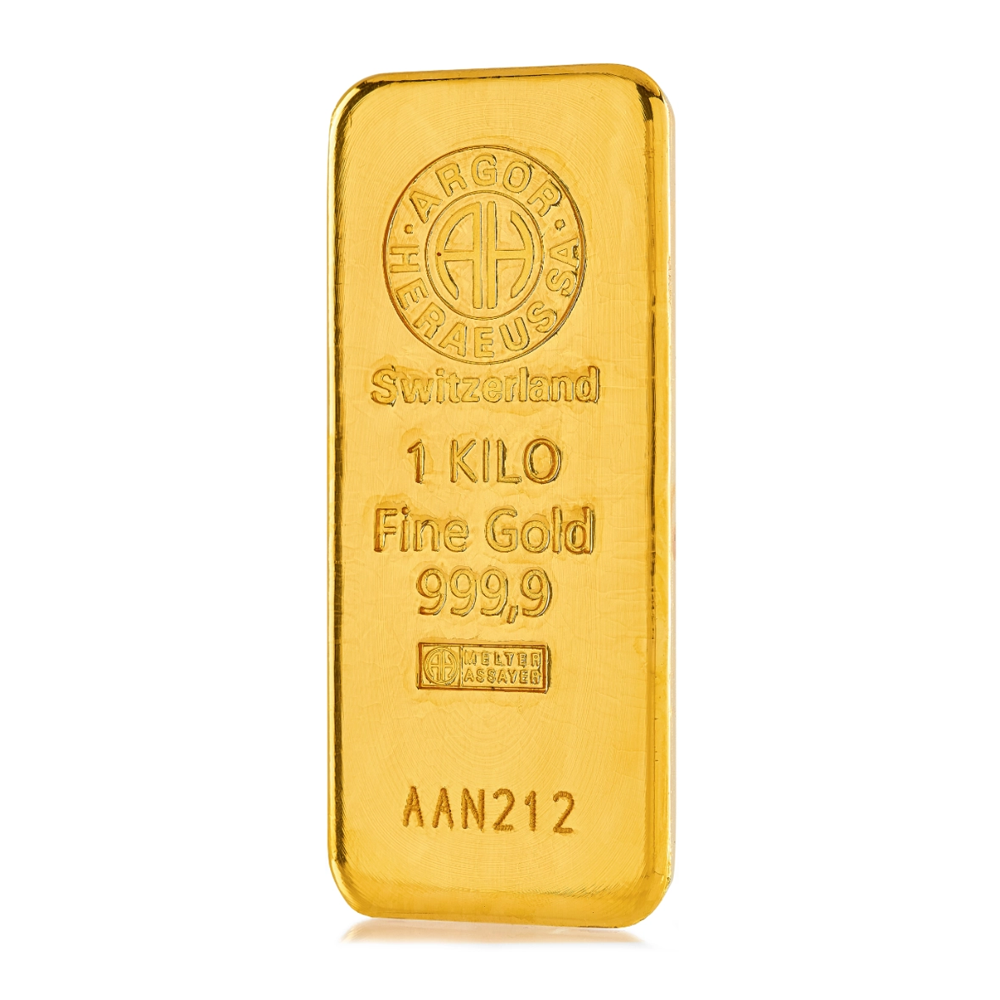
Each bar is stamped with the refinery's hallmark, the fineness level, the weight in grams or kilograms, and typically a unique serial number. The serial number is particularly important at this size because it allows individual bars to be tracked, authenticated, and verified through refinery records. Cast bars from Argor-Heraeus, for example, include the refinery's logo alongside the fineness and serial markings directly on the bar surface.
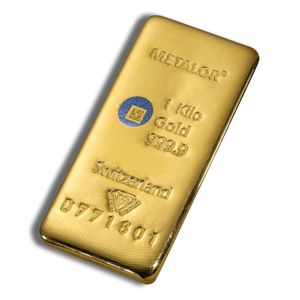
Dimensions vary slightly by manufacturer. The Argor-Heraeus bar measures approximately 117.5mm in length, 52mm in width, and 9mm in thickness. The Metalor bar runs very close to those figures at 117mm by 52mm. These dimensions are useful to know when planning storage, as kilo bars require more physical space than standard 1 oz formats and should be stored accordingly.
Available Brands, Mints, and Product Variations
The catalog currently features four distinct options at the kilo weight. The Argor-Heraeus bar is a cast product manufactured in Switzerland with a thickness of 9mm and full serial markings, produced by one of the most respected names in the global refining industry. Argor-Heraeus operates under partial ownership of Heraeus, one of the world's largest precious metals companies, and its bars are accepted on all major bullion exchanges.
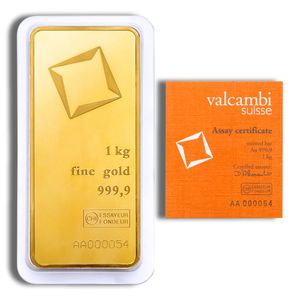
The Metalor kilo bar is another Swiss cast option with near-identical dimensions to the Argor-Heraeus product. Metalor Technologies has been refining precious metals since 1852 and holds LBMA good delivery accreditation, making its bars immediately recognizable to wholesale buyers. The Valcambi option is also Swiss-origin and carries .9999 fineness, though it's listed simply as a bar format without the cast designation, reflecting Valcambi's ability to produce across multiple finishing styles.
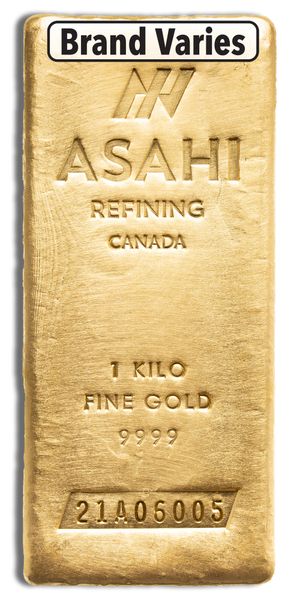
The fourth option is the 1 kilo gold bar in a random brand format, explicitly listed as COMEX and LBMA deliverable. This listing is suited for buyers whose primary concern is metal content and deliverability rather than a specific refinery brand. The bar will carry .9999 fineness and will originate from a reputable manufacturer, but the specific mint is not guaranteed. This can be an efficient entry point at the kilo level when brand preference is secondary to price and deliverability.
Pricing, Premiums, and Market Factors
The price of a 1 kilo gold bar is tied directly to the live spot price of gold, with a premium added to cover refining, assay, distribution, and dealer costs. Kilo bars generally carry lower premiums per troy ounce than smaller formats like 1 oz or fractional bars, which reflects the economy of scale associated with producing and distributing larger units. That premium efficiency is one of the main practical reasons buyers move up to the kilo format from smaller weights.
Premium levels across the four listings in this catalog can vary based on brand recognition, availability, and current wholesale supply conditions. Bars from Argor-Heraeus and Metalor tend to command consistent demand due to their refinery reputations, which can influence their premium relative to a random brand option. The random brand COMEX and LBMA deliverable bar often carries the tightest premium because it prioritizes metal content over brand specificity, appealing to buyers focused primarily on spot-equivalent exposure.
Bullion Standard displays bid and ask pricing on each product page so buyers can evaluate spreads in real time before purchasing. This reflects our commitment to pricing transparency rather than presenting a single retail number without context. Understanding the spread between acquisition cost and current wholesale bid value gives buyers a complete picture of what they're actually paying to hold a position in physical gold at the kilo level.
Condition, Packaging, and What to Expect
Cast kilo bars are typically delivered in a protective plastic sleeve or sealed assay packaging depending on the manufacturer. Argor-Heraeus and Metalor bars are commonly accompanied by a certificate of assay, which includes the bar's serial number, weight, and fineness and serves as official documentation of the product's authenticity and specifications. This documentation is worth preserving for resale purposes.
Because these are cast bars, minor surface irregularities, small scratches, or slight variations in appearance are entirely normal and do not affect the bar's gold content or value. Cast bars are not manufactured to the same cosmetic standard as minted bars, and expecting a mirror finish or flawless surface would be inconsistent with the format. The appearance of a cast bar reflects the production process rather than any defect in quality.
The random brand option will arrive in acceptable condition with appropriate assay or packaging documentation from the supplying refinery, though the specific brand and accompanying materials will vary. What remains constant is the metal content, purity, and COMEX or LBMA deliverable status of the bar. Buyers should expect packaging that is functional and protective rather than presentation-oriented.
Authenticity and Verification
Every 1 kilo gold bar sold through Bullion Standard is verified for authenticity, weight, and purity before shipment. Products sourced from accredited refineries like Argor-Heraeus, Metalor, and Valcambi carry hallmarks that are globally recognized and verifiable through refinery databases using the serial number stamped directly on the bar. That serial traceability is a significant anti-counterfeiting feature at the kilo level, as each bar can be cross-referenced against production records.
The assay certificate that accompanies many of these bars serves as an additional layer of documentation, confirming that the bar has passed the refinery's own quality control process. These certificates are produced by the refinery itself and are not generic documents. They're tied to the specific bar through its serial number, which is why keeping the certificate intact and with the bar matters for long-term ownership and resale.
Bullion Standard sources products from reputable mints, refineries, wholesalers, and distributors and maintains authentication standards across our entire catalog. We are a member of the American Numismatic Association and the National Coin and Bullion Association, and our processes reflect the standards those organizations expect of their member dealers. Buyers can purchase with confidence that the products they receive have been sourced and handled responsibly.
Liquidity and Resale Considerations
The kilo bar format is recognized in virtually every significant bullion market worldwide, from retail dealers to professional trading desks. Bars carrying hallmarks from Argor-Heraeus, Metalor, or Valcambi are particularly liquid because their purity and authenticity are broadly accepted without requiring additional verification in most commercial settings. This level of recognition matters when the time comes to sell, as it reduces friction in the resale process.
COMEX and LBMA deliverable bars occupy a specific tier of liquidity because they meet the accreditation standards required for delivery on regulated commodity exchanges. This makes them acceptable to a wider institutional audience than generic or non-accredited bars, which can support tighter bid pricing from dealers when buyers are ready to sell. For buyers purchasing at the kilo level with an eye toward eventual resale, the deliverable designation is a meaningful practical distinction.
Random brand kilo bars can be slightly less liquid than named-brand products in certain retail contexts, as some buyers and dealers prefer the assurance of a recognized refinery stamp. However, if the bar is COMEX or LBMA deliverable and carries .9999 fineness, its wholesale recognition remains strong. Understanding these distinctions before purchase is part of evaluating which product best fits your ownership timeline and eventual exit strategy.
Storage and Security
A single 1 kilo gold bar represents a substantial concentration of value in a relatively compact physical form, which makes thoughtful storage a practical necessity rather than an optional consideration. Home safes rated for burglary and fire resistance are a common solution for buyers who want immediate physical access, though the unit should be securely bolted to a structural surface and not simply placed on a shelf or in a closet.
Third-party vault storage is worth considering for buyers holding multiple kilo bars or who prefer not to keep significant metal at a residential address. Segregated vault accounts allow individual bars to be stored separately under your name rather than commingled with other customer holdings, and many professional vault services provide insurance as part of the storage arrangement. Allocated storage with serial number tracking is particularly well-suited to kilo bars because the serial numbers allow specific bars to be identified within a vault inventory.
Regardless of storage method, keeping the original assay packaging and certificate intact is important. Storing a kilo bar loose without its documentation may not affect its metal content, but it can complicate resale by removing the chain of custody that buyers and dealers use to verify the bar's provenance. Protective sleeves, capsules designed for kilo-sized bars, or the original sealed packaging are all appropriate ways to maintain the bar's condition during storage.
Selling and Buyback Options
Selling a 1 kilo gold bar back into the market is straightforward when the product originates from a recognized Swiss refinery and carries intact documentation. Dealers and institutional buyers are familiar with bars from Argor-Heraeus, Metalor, and Valcambi and can typically process buyback transactions efficiently without extended verification delays. The assay certificate, if present, supports a clean transaction by confirming the bar's serial number, weight, and fineness match what's being presented.
Buyback pricing is determined by the live wholesale bid price for the product at the time of sale, adjusted for factors including the bar's brand, condition, packaging, and current market demand. Bars with recognizable hallmarks and intact assay documentation consistently attract the most competitive bids because they're easiest to verify and redistribute within the wholesale market. A bar sold without its original documentation may still be purchased, but it may require additional testing, which can affect both the processing time and the bid offered.
Bullion Standard operates as a two-way market, meaning we maintain active buying and selling operations rather than functioning exclusively as a retailer. Our purchasing team evaluates kilo gold bars using current wholesale bid pricing, and the process is designed to be transparent and operationally straightforward. Customers considering a sale can review our current buyback pricing before making any decisions, which reflects our broader philosophy that liquidity should be understood before a purchase is made, not only at the point of sale.
Why Buy 1 Kilo Gold Bars?
The kilo bar format occupies a practical middle ground in the gold market. It carries meaningfully lower premiums per troy ounce than 1 oz or fractional bar sizes, making it an efficient way to accumulate gold metal content relative to what you pay above spot. For buyers whose primary focus is on the amount of gold they're acquiring rather than the collectibility of individual coins or the flexibility of fractional units, the kilo bar delivers better premium economics without requiring the institutional scale of a 400 oz Good Delivery bar.
The format also offers storage efficiency. A single kilo bar holds 32.15 troy ounces of gold in a compact, uniform shape that stores cleanly in a safe, vault, or secure container. Compared to holding the equivalent value in 1 oz bars or coins, a single kilo bar reduces the number of individual items to track, store, insure, and manage. That simplicity has real practical value over time, particularly for buyers building a larger physical position.
Swiss-origin bars from refineries like those featured in this catalog carry global recognition that supports broad resale access. Whether you're selling to a domestic dealer, a professional trading desk, or an international buyer, a .9999 fine kilo bar from an LBMA-accredited Swiss refinery is broadly understood and accepted. That recognition, combined with the serial traceability and assay documentation typical of these products, makes the kilo format a well-established choice for serious gold buyers.
Why Buy from Bullion Standard?
Bullion Standard has been operating as a precious metals marketplace since 2010, and our approach has always centered on transparency rather than pressure. We display live bid and ask pricing on product pages, source from accredited refineries and authorized distributors, and verify every product for authenticity before it ships. The experience is structured to give buyers the information they need to make confident decisions rather than to obscure costs or complicate the process.
We maintain an A rating with the Better Business Bureau and are active members of both the American Numismatic Association and the National Coin and Bullion Association. These affiliations reflect our commitment to operating within the professional standards the industry expects of a reputable dealer. Our customers can also choose from a wide range of payment options, including Visa, Mastercard, American Express, Discover, PayPal, bank-connected payments, wire transfer, paper check, and cryptocurrency payments through BitPay, which removes friction from the purchasing process regardless of how you prefer to transact.
Our two-way market structure means we're equally focused on the selling side of the transaction as the buying side. We believe customers should understand their exit options before they commit to a purchase, not only when they decide to sell. That philosophy, combined with our data-driven pricing environment and responsive customer support, is what distinguishes Bullion Standard from a conventional retail dealer model.
Get Near-Spot Pricing with Bullion Standard Pro
Bullion Standard Pro is designed for buyers who want direct access to live, executable wholesale pricing rather than standard retail margins. Members transact at wholesale bid and ask prices that reflect real-time supply and demand conditions across the broader bullion market, without the additional dealer markups applied in the conventional retail model. For buyers purchasing at the kilo level, where even small premium differences translate into meaningful dollar amounts, that pricing efficiency can be significant.
Pro members also gain access to proprietary market intelligence tools including historical premium analysis, premium percentile rankings, spread analysis, and liquidity metrics that provide objective data for evaluating individual products. Rather than relying on marketing claims or intuition, members can compare kilo bar options across the catalog using measurable market indicators. This kind of analytical visibility is typically available only to institutional participants or professional traders in traditional financial markets.
Portfolio valuation through Bullion Standard Pro reflects live executable wholesale bid pricing rather than estimated retail values, giving members a more realistic view of their holdings at any given moment. For buyers managing a meaningful position in kilo gold bars, that distinction between retail valuation and true liquidation value is an important one. Bullion Standard Pro is built to close that information gap and bring a higher standard of market transparency to the physical bullion buying experience.

 (833) 278-4653