Buy 10 oz Gold Bars Online
Our catalog of 10 oz gold bars brings together some of the most recognized names in the global bullion market, including Asahi Refining, PAMP Suisse, Valcambi, Credit Suisse, Perth Mint, Johnson Matthey, Engelhard, and IGR Metals. Each product carries 10 troy ounces of .9999 fine gold and represents a meaningful position for buyers looking to acquire physical metal at a scale that balances premium efficiency with practical handling.
The selection spans both cast and minted formats, with several options packaged in assay cards that provide an added layer of authentication and presentation integrity. Whether you're drawn to the clean precision of a PAMP Suisse Lady Fortuna minted bar, the industrial heritage of an Engelhard or Johnson Matthey bar, or the accessible pricing of a random brand option, this portion of our catalog reflects genuine product diversity at the 10-ounce weight class.
Bullion Standard sources these bars from reputable mints, refineries, and established wholesale channels. Every product is verified for authenticity, weight, and purity before fulfillment, and our pricing reflects real-time market conditions rather than static retail markups.
What Are 10 oz Gold Bars?
A 10 oz gold bar contains exactly ten troy ounces of refined gold and is produced to a recognized purity standard, typically .9999 fine, which corresponds to 99.99% gold content. This weight class sits between the more frequently traded 1 oz bar and the larger, institutionally oriented kilo bar, making it a practical middle ground for buyers who want meaningful volume without the capital commitment of a full kilo.
These bars come in two primary production formats: cast and minted. Cast bars are produced by pouring molten gold into molds, which results in a slightly irregular, textured surface that carries a raw, industrial character. Minted bars are cut from a rolled gold sheet and finished with a refined, polished surface, often displaying more detailed engravings, fine typography, and a higher-quality visual presentation. Both formats carry the same gold content; the difference lies in production method, aesthetics, and typically, premium level.
Buyers drawn to this weight class often prioritize premium efficiency over the collectibility that drives coin purchases, and the standardized format makes these bars straightforward to evaluate, store, and eventually resell within established bullion markets.
History and Background
The modern gold bar as a tradeable bullion product traces its roots to the development of industrial refining in the nineteenth and early twentieth centuries. As refineries in the United States, Switzerland, and the United Kingdom developed the capacity to produce standardized gold products with consistent purity, the bar format became the backbone of wholesale gold trading, central bank reserves, and later, private ownership markets that expanded significantly after the 1974 legalization of gold ownership for American citizens.
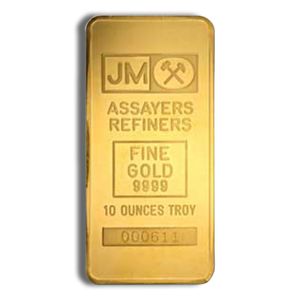
The refineries that produce many of the bars in our catalog have lengthy operational histories. Engelhard, founded in the United States, became one of the most recognized names in North American precious metals refining before its acquisition by BASF in 2006. Johnson Matthey, a British company with origins dating to 1817, built a global reputation across precious metals refining and industrial chemistry. PAMP Suisse and Valcambi both emerged from Switzerland's deep tradition of precious metals banking and refining, while Perth Mint has operated under Australian government charter since 1899. Asahi Refining, which now operates the former Johnson Matthey precious metals refining facilities in North America, has continued that tradition of producing LBMA-recognized bars.
The 10-ounce bar became particularly relevant in private bullion markets during the 1980s and 1990s as retail bullion ownership grew and buyers sought products that offered more gold content per transaction than a single-ounce bar without requiring the liquidity of kilo or 100 oz formats. Today, it remains a well-recognized standard in the secondary market and is supported by a broad ecosystem of dealers, wholesalers, and institutional buyers.
Purity, Weight, and Specifications
Every 10 oz gold bar in our catalog carries a purity of .9999 fine gold, meaning the gold content is 99.99% pure with a maximum of one part per ten thousand attributable to trace elements. This is the recognized standard for modern investment-grade gold bars and meets or exceeds the purity requirements set by the London Bullion Market Association (LBMA) for good delivery products.
Weight is measured in troy ounces, which differ from standard avoirdupois ounces. One troy ounce equals approximately 31.1035 grams, meaning a 10 oz gold bar contains roughly 311 grams of fine gold. Physical dimensions vary by manufacturer and format. Minted bars in our catalog typically measure approximately 60 x 35 mm in length and width, with thickness ranging from around 7 to 10 mm depending on the producer. Cast bars may differ slightly in shape due to the nature of the production process.
Each bar is stamped with the refiner's hallmark, gold purity, weight, and in most cases a unique serial number. Assay-packaged bars include a certificate of authenticity that confirms these specifications and provides a documented chain of custody from the producing refinery. Serial numbers on bars such as the PAMP Suisse and Valcambi products allow for individual verification and add a layer of traceability not present on all bullion products.
Available Brands, Mints, and Product Variations
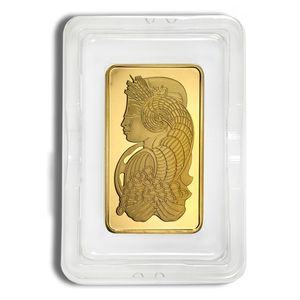
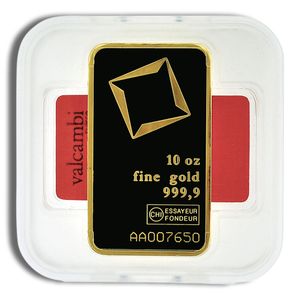
The range of producers represented in our 10 oz gold bar catalog reflects the global nature of the refined gold market. Swiss producers PAMP Suisse and Valcambi are both associated with Valcambi's Geneva-area refinery, which holds LBMA accreditation and operates as one of the largest gold refineries in the world. The PAMP Suisse Lady Fortuna bar is among the most recognizable minted bar designs in the global market, featuring the Roman goddess of fortune and packaged in a sealed assay card with serial number. Valcambi's bar carries similar packaging and purity credentials with a more subdued visual presentation.
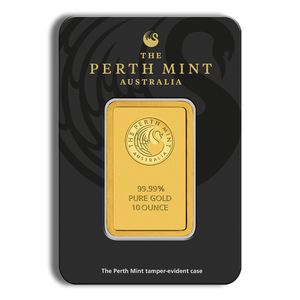
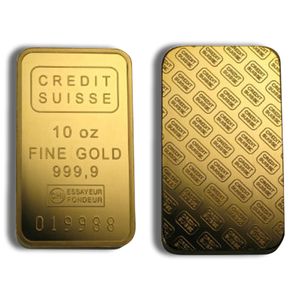
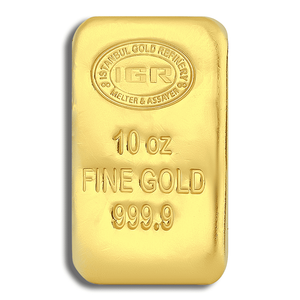
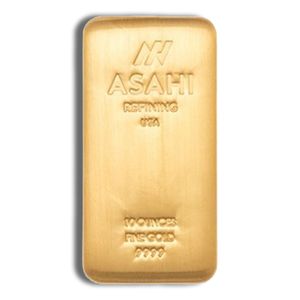
Credit Suisse bars, though branded under the Swiss banking group, are also produced by Valcambi and share the same production standards as Valcambi's own branded products. Perth Mint bars originate from the Western Australian government-owned refinery and come sealed in assay packaging with the Mint's internationally recognized swan hallmark. Asahi Refining and Johnson Matthey represent two of the most historically significant American market refiners, with Asahi producing a cast-format bar and Johnson Matthey's bars carrying a legacy that remains well recognized among secondary market buyers. The IGR Metals bar is produced by Istanbul Gold Refinery in Turkey, a refiner that holds LBMA accreditation and serves buyers seeking recognized international products at competitive premiums.
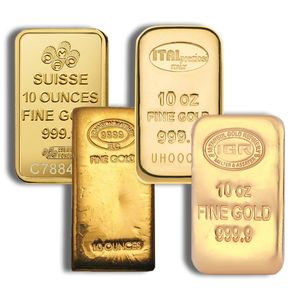
For buyers who prioritize gold content over brand preference, the random brand 10 oz gold bar option offers .9999 fine gold from a mix of recognized refiners at typically lower premiums. The specific brand shipped will vary depending on available inventory, but all products meet the same purity and weight standards as the named-brand alternatives in the catalog.
Pricing, Premiums, and Market Factors
The price of any 10 oz gold bar is driven primarily by the spot price of gold, which fluctuates continuously based on global trading activity across futures markets, OTC markets, and physical exchanges. The premium above spot represents the additional cost associated with refining, fabrication, packaging, and distribution. At the 10-ounce weight class, premiums are typically lower on a per-ounce basis than those found on smaller bars or coins, reflecting the reduced relative fabrication cost of a larger product.
Premium levels across this catalog vary based on producer reputation, format, and packaging. Minted bars packaged in assay cards generally carry slightly higher premiums than cast bars or raw minted bars, reflecting the added cost of tamper-evident packaging and the individualized assay documentation. Named-brand products from producers like PAMP Suisse, Perth Mint, and Johnson Matthey tend to command stronger recognition premiums in both the primary and secondary markets compared to lesser-known or regional refiners.
Bullion Standard's pricing is structured around real-time market conditions, and our product pages display both the buy price and the bid price, giving buyers a complete view of the transaction rather than just the acquisition cost. Understanding the spread between what you pay and what you can sell for is essential context when evaluating any bullion purchase, and our transparent pricing model is built to make that relationship visible from the start.
Condition, Packaging, and What to Expect
10 oz gold bars are sold in bullion condition, meaning they are evaluated based on gold content rather than surface perfection. Minor handling marks, light scuffs, or cosmetic imperfections are considered normal and do not affect purity, weight, or resale value in standard bullion markets. Buyers accustomed to coin grading standards should understand that raw bars are not typically graded for surface condition unless they have been submitted to a third-party certification service.
Several products in our catalog are sealed in assay packaging, including those from PAMP Suisse, Valcambi, Credit Suisse, and Perth Mint. These bars arrive in their original, factory-sealed assay cards, which include the bar's serial number, weight, and purity on the packaging. Opening the assay card is not recommended, as it may affect the bar's resale liquidity in certain buyer segments that specifically seek sealed, assay-verified products.
Cast bars, such as the Asahi Refining product, typically arrive without assay card packaging and may show the natural surface texture characteristics of the casting process. These are normal attributes of cast production and are expected by buyers familiar with this format. Random brand products will ship in whatever packaging the specific bar was produced with, which may or may not include assay documentation.
Authenticity and Verification
Counterfeit gold bars exist in the market, and buyers should understand the verification standards that distinguish authentic products from fraudulent ones. Legitimate 10 oz gold bars from accredited refiners carry clearly stamped hallmarks, accurate weight and purity designations, and in most cases, serial numbers that can be cross-referenced with the issuing refinery. Assay-packaged bars provide an additional layer of documentation that supports the chain of custody from the point of production.
Bullion Standard verifies the authenticity, weight, and purity of every product before it reaches a customer. Our sourcing practices draw from established mints, refineries, and vetted wholesale distributors, and our internal verification processes are designed to identify non-conforming products before they enter our fulfillment pipeline. We maintain memberships with the American Numismatic Association and the National Coin and Bullion Association, and we are an authorized dealer for both PCGS and NGC, reflecting our commitment to product integrity across our entire catalog.
For buyers who want additional assurance on high-value purchases, submitting bars to a third-party testing service such as XRF analysis or ultrasound testing is an option available through professional assay labs. However, for bars purchased directly from recognized dealers through established wholesale channels, the refinery hallmarks, assay documentation, and dealer verification processes provide substantial authentication confidence under normal market conditions.
Liquidity and Resale Considerations
Market liquidity for 10 oz gold bars is generally strong, though it varies meaningfully by brand and format. Bars produced by globally recognized refineries such as PAMP Suisse, Valcambi, Perth Mint, and Credit Suisse carry broad name recognition in both domestic and international secondary markets, which typically supports easier resale and tighter bid/ask spreads relative to lesser-known producers. Johnson Matthey and Engelhard bars remain well recognized among North American bullion buyers, particularly in the secondary market where buyers familiar with the legacy of these refiners actively seek them out.
Sealed, assay-packaged bars tend to attract a wider buyer base than loose or previously opened products, particularly for buyers who prioritize documented authenticity. While breaking an assay seal does not affect gold content, it does eliminate the benefit of factory-sealed verification for future buyers and can narrow the pool of interested purchasers in certain resale channels.
Understanding resale dynamics before purchasing is part of a complete evaluation process. At Bullion Standard, bid pricing is displayed on each product page alongside the ask price, making it possible to assess both the cost of acquisition and the current buyback value at the time of purchase. This visibility into the spread gives buyers a more accurate sense of the actual cost of ownership for any specific product in current market conditions.
Storage and Security
A single 10 oz gold bar weighs approximately 311 grams, meaning even a small quantity of these bars represents a substantial combined weight and value. Storage planning should account for both physical security and environmental conditions. At home, a high-quality, fire-resistant safe that is anchored to the structure of the building provides a reasonable baseline for security. Safes rated for fire and designed with bolt-down capacity offer significantly better protection than portable or lightweight models.
For buyers holding larger quantities, professional vault storage through a third-party depository offers segregated or allocated storage options with insurance coverage, regular auditing, and institutional-grade physical security. Several established depositories serve the retail bullion market in the United States and provide storage services for both individual and institutional customers at reasonable annual costs relative to the value of the holdings.
Assay-packaged bars should be stored in a way that protects the integrity of the sealed packaging, as punctures, moisture exposure, or compression damage can compromise the tamper-evident features. Avoid storing bars in conditions with high humidity or significant temperature fluctuation, as these can cause minor surface changes on exposed metal over extended periods. Keeping bars in their original packaging where possible is generally the simplest and most effective way to maintain both condition and documentation integrity.
Selling and Buyback Options
Selling 10 oz gold bars follows a straightforward process in most established dealer and wholesale channels. Widely recognized brands such as PAMP Suisse, Valcambi, Perth Mint, and Credit Suisse typically receive competitive bids from dealers due to their global recognition and broad buyer demand. Johnson Matthey and Engelhard bars attract strong interest in the North American market specifically, where their historical presence creates consistent secondary market demand among buyers who recognize the legacy brands.
At Bullion Standard, our two-way market model means customers can sell directly back to us through our buyback program. Buyback pricing is based on current wholesale market conditions and reflects the product's brand, condition, format, and packaging. Assay-sealed bars in original packaging tend to receive more favorable consideration than opened or damaged products, and widely recognized refiners generally receive tighter spreads than regional or less familiar brands. Our purchasing team evaluates products based on current market demand and live pricing, ensuring that sellers receive competitive bids grounded in real-time market data.
Bullion Standard Pro members have access to live executable wholesale bid pricing, which provides a current and precise view of liquidation values across individual products in their portfolios. This real-time bid visibility allows sellers to evaluate market conditions and timing with the same quality of pricing information available at the wholesale level, rather than relying on estimated or delayed price indications.
Why Buy 10 oz Gold Bars?
The 10 oz weight class offers a meaningful reduction in per-ounce premium compared to smaller bar and coin formats without requiring the capital concentration of a kilo bar. For buyers focused on maximizing gold content per dollar spent above spot, this size represents a practical balance between premium efficiency and position size. The per-ounce cost of fabrication spreads across a larger weight, which translates directly into lower premiums relative to single-ounce or fractional alternatives.
The physical dimensions of a 10 oz bar also make for straightforward storage planning. Multiple bars stack cleanly, occupy modest space in a safe or vault, and can be organized without specialized storage equipment. This simplicity is appealing to buyers who prefer a clean, low-complexity approach to holding physical gold without the handling complexity of large quantities of coins or rounds.
The range of producers available at this weight class also provides flexibility. Whether a buyer prioritizes globally recognized branding, Swiss refinement standards, Australian government-backed production, or simply the lowest premium on .9999 fine gold, the 10 oz market accommodates that range of priorities. That producer diversity, combined with the weight class's established secondary market presence, makes 10 oz gold bars a functional and well-supported format for physical gold ownership.
Why Buy from Bullion Standard?
Bullion Standard has operated as a trusted precious metals dealer since 2010, building a nationally recognized marketplace from our San Diego, California headquarters by centering the business on pricing transparency, product integrity, and straightforward customer relationships. Our A rating with the Better Business Bureau and active membership in the ANA and NCBA reflect a consistent commitment to ethical business practices across more than a decade of operation.
Our pricing model is designed to give buyers a complete view of the transaction rather than just the purchase price. Bid and ask prices are displayed on every product page, allowing buyers to see the spread and understand the true cost of ownership at the time of purchase. This reflects our belief that transparency before the transaction is more valuable than a polished checkout experience that obscures meaningful pricing information.
Every product we sell is verified for authenticity, weight, and purity before shipment. We source from recognized mints, refineries, and vetted wholesale channels, and our fulfillment process is designed around security and reliability. Customers can pay using a wide range of methods including major credit cards, PayPal, bank-connected payments through Plaid, wire transfer, paper check, and cryptocurrency through BitPay, making the purchasing process flexible while maintaining the security standards that high-value transactions require.
Get Near-Spot Pricing with Bullion Standard Pro
Bullion Standard Pro provides members with direct access to live, executable wholesale bid and ask pricing across our precious metals catalog. Rather than applying fixed retail markups on top of wholesale market prices, the Pro platform allows members to transact at pricing that reflects real-time supply and demand within the wholesale bullion market. Premiums and spreads fluctuate naturally based on current market conditions, giving members a more accurate and responsive view of how individual products are priced at the wholesale level.
For buyers who acquire gold at meaningful scale or who prioritize pricing efficiency above other considerations, the difference between standard retail premiums and near-wholesale execution can be substantial over time. Pro members see tighter spreads on both the buy and sell side, and portfolio valuations are calculated using live executable bid pricing rather than estimated retail values. This provides a more realistic picture of what holdings are actually worth under current market conditions.
Beyond pricing, Bullion Standard Pro includes access to proprietary market intelligence tools covering historical premium analysis, premium percentile rankings, spread analysis, liquidity metrics, buy/sell ratio indicators, and broader wholesale market activity. These tools are designed to help members evaluate products using objective data rather than marketing claims, supporting more informed decisions across both the acquisition and liquidation sides of physical gold ownership.

 (833) 278-4653