Silver Bars | Bullion Standard
Buy Silver Bars Online
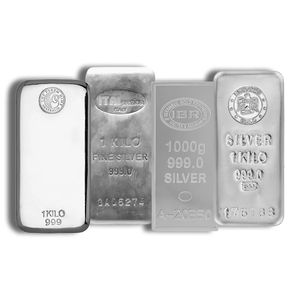
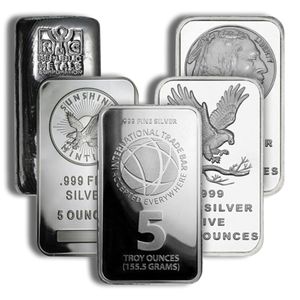
Our silver bars catalog spans one of the broadest selections available from a single U.S.-based precious metals dealer, covering weights from 1 gram all the way up to 1,000 troy ounces. Whether you're looking for a 1 oz minted bar in an assay card, a 100 oz cast bar for efficient stacking, or a 1 kilo piece from a globally recognized refinery like Geiger Edelmetalle, Valcambi, or the Royal Canadian Mint, you'll find it represented here. Formats include both cast and minted finishes, sealed packaging, assay-verified cards, CombiBar configurations, and sculptural pieces from Argentia Precious Metals.
Bullion Standard operates as a transparent two-way marketplace, which means pricing is structured to reflect real-time market conditions rather than layered dealer markups. Every product on this page is sourced from reputable mints, refineries, and authorized distributors, and each has been verified for authenticity, weight, and purity before it becomes available to purchase.
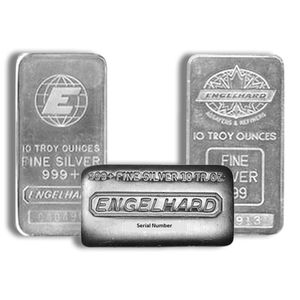
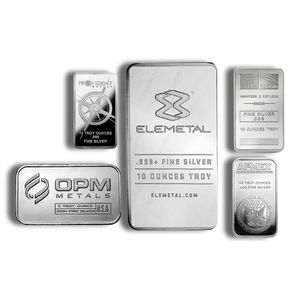
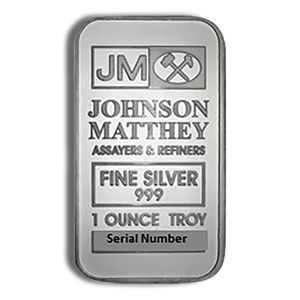
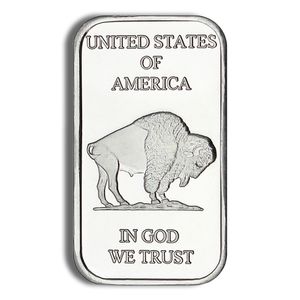
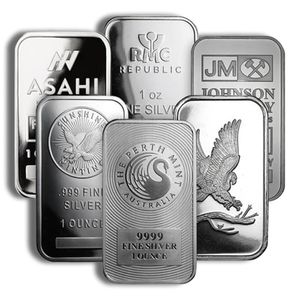
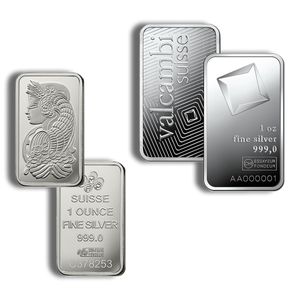
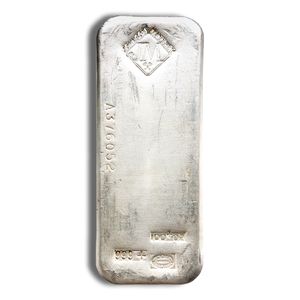
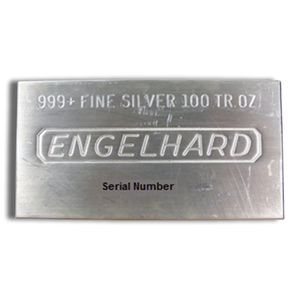
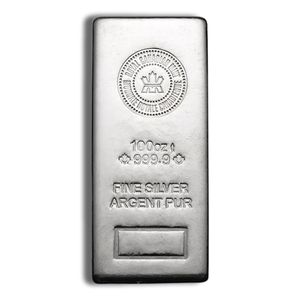
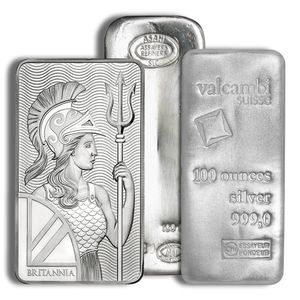
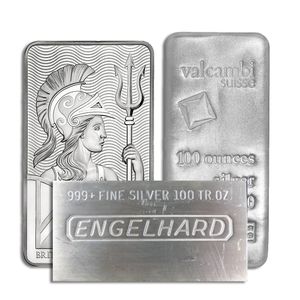
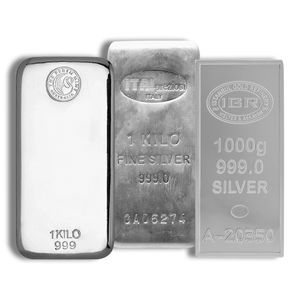
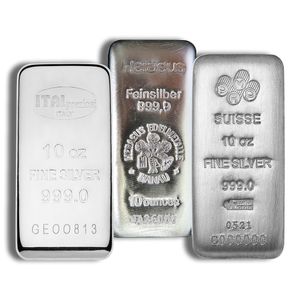
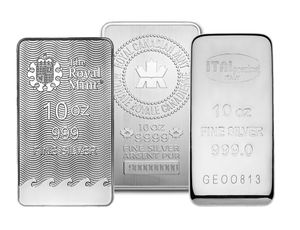
The product grid above reflects the full range of what we carry across the silver bar segment, including name-brand options from Johnson Matthey, Engelhard, PAMP Suisse, Asahi Refining, IGR Metals, Sunshine Mint, and The Royal Mint, as well as generic and random-brand options for buyers prioritizing silver content over specific branding. That breadth reflects a deliberate sourcing philosophy: different buyers have different priorities, and our catalog is designed to serve them all.
What Are Silver Bars?
Silver bars are rectangular pieces of refined silver produced by mints and refineries to standardized purity and weight specifications. Unlike government-issued silver coins, which carry a face value and are struck for circulation or legal tender purposes, silver bars are produced purely for their metal content. They're recognized globally as one of the most straightforward and cost-efficient ways to acquire physical silver.
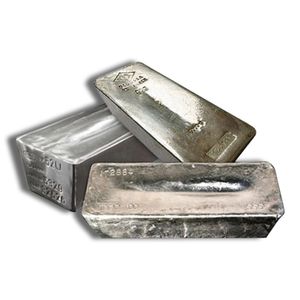
The two primary production methods are cast and minted. Cast bars are formed by pouring molten silver into molds, which gives them a rougher, industrial appearance with natural surface variation. Minted bars are stamped or die-pressed from rolled silver blanks, producing a cleaner finish with sharper edges and more detailed design work. Both carry identical metal content at equivalent weights, though minted bars typically carry a slightly higher premium due to the additional production costs involved.
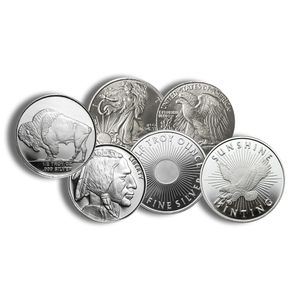
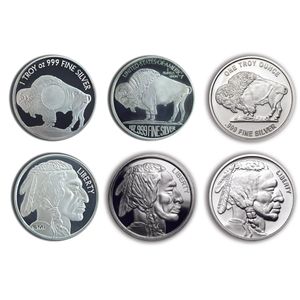
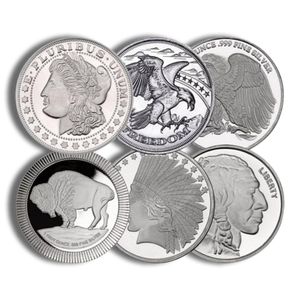
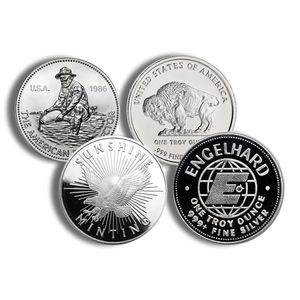
Silver bars also differ from silver rounds, which are privately minted, coin-shaped pieces that carry no legal tender status. Rounds can resemble coins in shape and appearance but are technically closer to bars in terms of their market positioning and liquidity profile. Understanding these distinctions matters when evaluating the premium you're paying and the resale market available to you when you eventually decide to sell.
History and Background
The commercial silver bar market as it exists today developed largely in the second half of the twentieth century, driven by the growth of commodity exchanges, the expansion of industrial silver demand, and the emergence of private refineries capable of producing standardized bars at scale. Institutions like Johnson Matthey and Engelhard played an outsized role in establishing the formats that became industry norms, particularly the 100 oz and 1,000 oz sizes that remain central to exchange-deliverable contracts through COMEX and the London Bullion Market Association.
Smaller retail-oriented bar weights, including 1 oz, 10 oz, and 1 kilo formats, became more widely available as the private bullion market expanded during the 1970s and 1980s following the end of the Bretton Woods system and increasing retail interest in physical metals ownership. European refineries like Geiger Edelmetalle and Valcambi helped establish the market for precision-minted assay-packaged bars, which added a layer of tamper-evident verification that became a meaningful selling point for retail buyers. PAMP Suisse, based in Switzerland, helped extend the premium bar segment further by combining refinery-grade purity with distinctive minted designs.
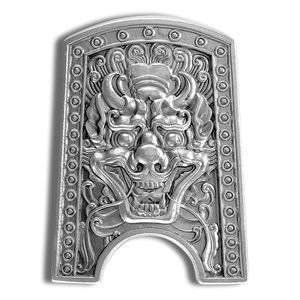
More recent decades have seen significant expansion in both the variety of bar producers and the weight options available to retail buyers. Refineries operating out of Turkey, Canada, Australia, and the United States have joined longer-established European houses in the global silver bar market. The emergence of specialty products like the Argentia Precious Metals sculptural bars and Valcambi CombiBars reflects a market that has matured considerably beyond simple industrial casting and into a more differentiated product ecosystem.
Purity, Weight, and Specifications
The vast majority of silver bars available in the modern bullion market carry a purity of either .999 fine or .9999 fine silver. The .999 standard, also referred to as three-nines fine, has historically been the most common purity level for cast bars and many minted products. The .9999 standard, or four-nines fine, is increasingly common among premium minted bars produced by facilities like the Royal Canadian Mint, Perth Mint, Valcambi, and Frontier Mint, among others represented in our catalog.
Silver is measured in troy ounces, which differ from the standard avoirdupois ounce used in everyday commerce. One troy ounce equals approximately 31.1 grams, which is why a 1 kilo bar contains approximately 32.15 troy ounces of silver. This distinction matters when comparing products across different weight units, since bars listed in grams and bars listed in ounces are operating on different measurement scales. Our product listings display both the metric weight and the troy ounce equivalent to help clarify this.
Bars produced by established refineries typically carry stamped markings that include the producer's name or hallmark, the weight, purity, and often a unique serial number for larger sizes. Assay-packaged bars include a sealed card or certificate that confirms these specifications and provides tamper-evident protection. Larger commercial bars, including 100 oz and 1,000 oz sizes, are produced to exchange-deliverable specifications that require compliance with COMEX or LBMA good delivery standards, which govern weight tolerances, purity, and producer accreditation.
Available Brands, Mints, and Product Variations
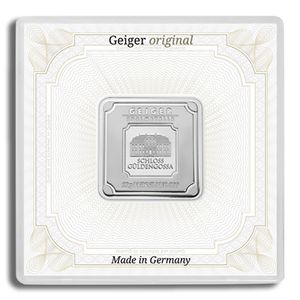
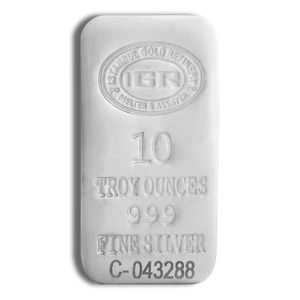
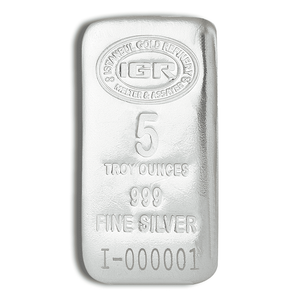
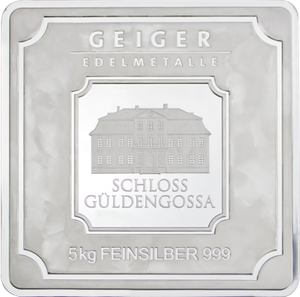
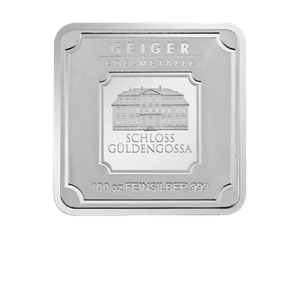
Our silver bars catalog draws from a wide range of globally recognized refineries and mints. Geiger Edelmetalle, based in Germany, is particularly well represented, with products spanning 1 gram through 100 oz in both assay card and sealed packaging configurations. Their distinctive square minted format and consistent quality have made Geiger bars recognizable within the retail bullion market. Istanbul Gold Refinery, known commercially as IGR Metals and operating out of Turkey, offers cast and minted bars across multiple weights with a consistent .999 purity standard and, in many cases, assay card packaging.
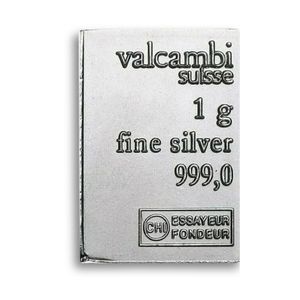
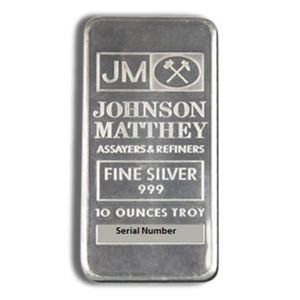
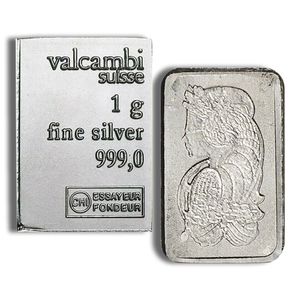
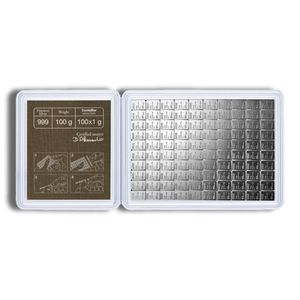
Johnson Matthey and Engelhard are two of the most historically significant names in the North American silver bar market, and both are represented here across 1 oz, 10 oz, and 100 oz sizes. Their products often carry collector-level interest due to limited current availability, as both companies have significantly reduced or ceased retail bar production. Valcambi, a Swiss-based precious metals refiner, is represented through both standard cast bars and their CombiBar format, which allows a 100-gram bar to be broken into individual 1-gram or 10-gram segments. PAMP Suisse rounds out the Swiss presence with their 10 oz cast bar.
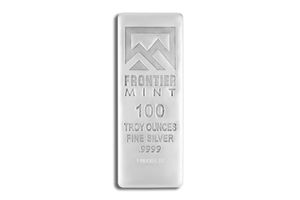
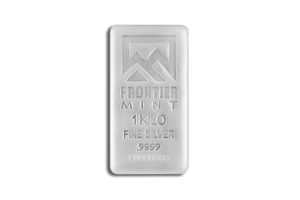
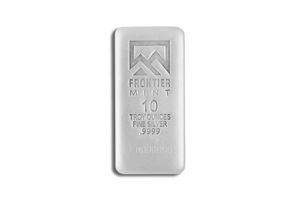
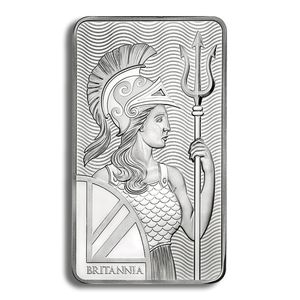
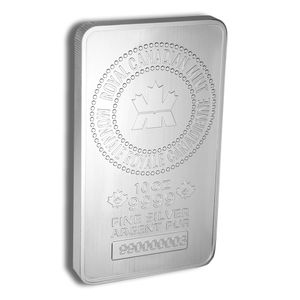
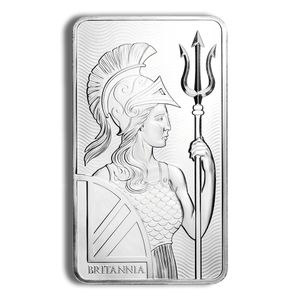
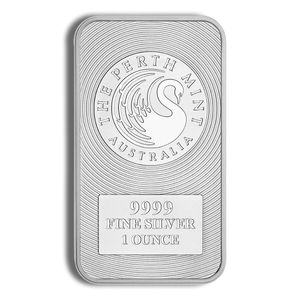
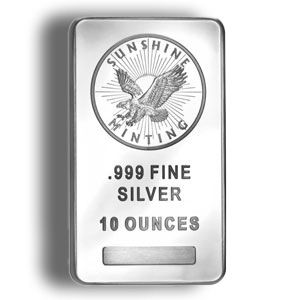
Premium minted options include bars from the Royal Canadian Mint, The Royal Mint of Great Britain, and Perth Mint, each carrying .9999 purity and institutional-level production standards. Frontier Mint, based in the United States, provides a range of cast bars with both sandblast and mirrored finishes across 1 kilo, 10 oz, and 100 oz weights, all at .9999 purity. Asahi Refining and Sunshine Mint represent additional U.S.-based production, with both offering 10 oz and 100 oz bars at .999 fine. For buyers who prioritize silver content over specific branding, our random-brand options across 1 oz, 10 oz, 100 gram, and 1 kilo weights offer a practical, premium-efficient alternative sourced from recognized producers.
Pricing, Premiums, and Market Factors
The price of any silver bar reflects the current spot price of silver plus a premium that varies based on several factors. Production method is one of the most consistent drivers: minted bars with detailed finishes and assay packaging carry higher premiums than comparable cast bars, since the additional fabrication steps involved translate directly into higher production costs. A 1 oz minted bar from the Perth Mint will almost always carry a higher premium than a 1 oz cast bar from a generic producer, even though both contain the same amount of silver.
Weight plays an equally important role. Larger bars such as 100 oz and 1,000 oz sizes carry lower premiums per ounce because the fixed production and handling costs are distributed across more metal. This is why buyers focused on minimizing their cost per troy ounce of silver often gravitate toward larger format bars. At the same time, larger bars are less liquid in the retail resale market, since the higher absolute cost per unit narrows the pool of potential buyers. Finding the right balance between premium efficiency and practical liquidity depends on your specific priorities.
Mint reputation and product recognizability also influence premiums meaningfully. Bars from well-known producers like Johnson Matthey, Engelhard, the Royal Canadian Mint, and Valcambi tend to command tighter spreads and stronger secondary market interest because they're immediately recognizable to dealers and buyers worldwide. At Bullion Standard, our pricing reflects real-time market conditions, and every product page displays the bid/ask spread so buyers can evaluate the full cost of ownership on both sides of the transaction before committing.
Condition, Packaging, and What to Expect
Cast silver bars are produced through a process that naturally results in surface variation. Minor blemishes, flow lines, and surface irregularities are characteristic of the casting process and should be expected as part of the product. They do not affect weight, purity, or market value. Minted bars, by contrast, are produced to tighter cosmetic standards and generally arrive with cleaner surfaces and sharper definition, though minor handling marks from production and packaging are not unusual.
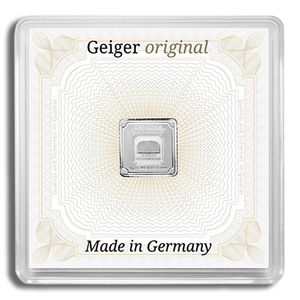
Many of the bars in our catalog arrive in sealed or assay-packaged formats that preserve the product in its original condition. Geiger's assay card packaging, for example, provides tamper-evident protection while displaying the bar's weight, purity, and producer information. RCM and Perth Mint bars frequently arrive in sealed polypropylene packaging. Products listed as sealed packaging should be received in that condition. Products listed without assay protection, including many cast bar and random-brand options, will arrive loose or in standard protective sleeves.
Random-brand and random-year products are purchased as-is and may arrive from any producer within the category description. These listings are designed for buyers who prioritize silver content and recognize that variety in branding or year has no impact on melt value. Secondary market options, which are also present in our catalog, may show signs of prior handling consistent with circulated condition and are priced to reflect that.
Authenticity and Verification
Every silver bar sold through Bullion Standard is sourced from reputable mints, refineries, authorized wholesalers, and established distributors. All products undergo verification for authenticity, weight, and purity before being made available for purchase. We are an authorized dealer for PCGS and NGC, and our sourcing relationships span the full range of producers represented in our catalog.
Assay card packaging provides one of the most reliable forms of tamper-evident product authentication available in the retail bullion market. When the original seal is intact, it confirms the bar has not been opened or substituted since leaving the producing facility. For cast bars and larger format products that arrive without assay cards, dimensional verification, density testing, and hallmark inspection are standard components of the authentication process.
The broader bullion market relies on a combination of producer reputation, physical specification verification, and market familiarity to establish authenticity. Bars from globally recognized producers like Valcambi, PAMP Suisse, the Royal Canadian Mint, and Johnson Matthey carry well-documented physical characteristics that make verification more straightforward. For buyers who want additional assurance, third-party verification services are available through NGC and PCGS for eligible products. Our team is also available to answer questions about specific products, their sourcing, and our verification process.
Liquidity and Resale Considerations
Liquidity in the silver bar market varies considerably depending on the product. Widely recognized formats from established producers, particularly 1 oz, 10 oz, 100 oz, and 1,000 oz bars, tend to be the most straightforward to resell because they're immediately familiar to dealers and buyers across the market. Bars from globally traded refineries like Asahi Refining, Engelhard, Johnson Matthey, Valcambi, and the Royal Canadian Mint generally move with more efficiency than obscure or specialty products.
Larger bars are typically more efficient from a premium standpoint but can be less flexible to resell, since their higher unit price limits the available buyer pool in the retail market. A 1,000 oz bar, for instance, is exchange-deliverable and trades efficiently in the institutional market but requires more deliberate planning to liquidate at the retail level. Smaller bars, including 1 oz and 10 oz sizes, offer more transactional flexibility for retail sellers, since they can be sold individually or in partial quantities.
Random-brand products and generic bars are generally priced closer to melt value and resell in the same range, which means they offer less premium upside when markets are active but also fewer surprises in terms of what to expect at resale. Specialty items, sculptural bars, and limited-run products may carry niche collector interest that is less consistent and harder to predict than standardized products from major refineries.
Storage and Security
Physical silver requires more storage space per dollar of metal value than gold, platinum, or palladium, which makes storage planning a more active part of ownership. A single 100 oz silver bar weighs just over six pounds and takes up meaningful space, and buyers accumulating larger positions across multiple bars need to account for both volume and weight when evaluating storage options. This is worth thinking through before purchase, not after.
Home safes rated for both fire and theft protection are a practical option for smaller positions. The safe should be secured to the structure of the home to prevent removal, and placement in a discreet location is advisable. For larger holdings, third-party vault storage through a private vaulting facility or bank safe deposit box offers a higher level of physical security at a recurring cost. Many institutional buyers of 100 oz and 1,000 oz bars use allocated vault storage as a matter of course.
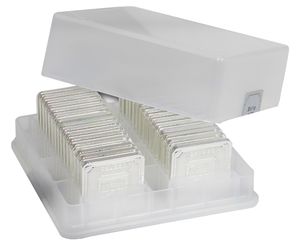
Preserving original packaging protects both the product condition and its resale presentation. Assay-packaged bars should remain sealed if possible, since breaking the seal reduces the tamper-evident value of the packaging even if the bar itself is undamaged. Cast bars stored loosely should be kept in a low-humidity environment to minimize surface tarnish, which does not affect purity or weight but can affect cosmetic presentation. Padded or compartmentalized storage trays can prevent bars from scratching each other during handling.
Selling and Buyback Options
Bullion Standard operates as a two-way market, meaning we actively purchase silver bars from customers in addition to selling them. Our buyback pricing is structured around real-time market conditions and reflects current wholesale bid levels rather than arbitrary dealer-set prices. Before purchasing any product, buyers can view the current bid price directly on the product page, which gives a realistic picture of where that product would trade in the current market if sold back today.
Buyback pricing is influenced by several factors specific to each product. Mint recognition plays a significant role, since bars from well-known producers like the Royal Canadian Mint, Valcambi, Asahi Refining, and Engelhard are more immediately familiar to our purchasing team and tend to attract stronger bids. Condition and original packaging also matter, particularly for minted bars and assay-packaged products where intact seals preserve the product's verification value. Cast bars and random-brand products are typically evaluated on metal content and weight accuracy.
The process of selling silver bars back to Bullion Standard is designed to be straightforward. Customers can initiate a sell request through the platform, lock in a price based on current market conditions, and ship their metals using our secure, fully insured shipping process. Our purchasing team handles verification and payment on receipt. Understanding this process in advance, and reviewing the bid/ask spread before purchase, helps set realistic expectations on both sides of the transaction.
Why Buy Silver Bars?
Silver bars offer one of the most cost-efficient entry points into physical silver ownership. Compared to government-issued silver coins, bars typically carry lower premiums above spot because they're produced without legal tender requirements, specialized die work for collectible designs, or the overhead associated with sovereign mint programs. For buyers who want to maximize the amount of silver acquired per dollar spent, bars are generally the more efficient format.
Silver itself has a significant industrial demand profile that distinguishes it from gold. It's a critical material in photovoltaic solar panels, medical devices, electronics, and electrical components, with industrial applications consuming a meaningful share of annual global silver supply. That underlying demand provides context for silver's behavior as a commodity and helps explain why silver bar premiums can fluctuate based on supply chain dynamics and refinery capacity in addition to financial market conditions.
The format diversity within the silver bar segment also gives buyers meaningful flexibility. A first-time buyer might start with a few 1 oz or 10 oz bars to understand the market. Someone building a larger position might concentrate in 100 oz bars to reduce the per-ounce premium. A buyer who values divisibility might prefer a Valcambi CombiBar that can be separated into individual gram segments as needed. That range of options within a single category allows the same product type to serve very different buying strategies.
Why Buy from Bullion Standard?
Bullion Standard was founded in 2010 and has grown from a San Diego-based operation into a nationally recognized precious metals marketplace by prioritizing transparency at every stage of the transaction. Our pricing reflects real-time market conditions and is displayed alongside the current bid price for each product, so buyers can evaluate the full cost of ownership on both sides before making a decision. That's a level of pricing clarity that isn't standard across the industry, and it's central to how we operate.
Our sourcing relationships span the full range of producers visible in this catalog, from globally accredited refineries like Valcambi and PAMP Suisse to U.S.-based producers like Asahi Refining, Frontier Mint, and Sunshine Mint. Every product is verified for authenticity, weight, and purity before it's made available. We maintain an A rating with the Better Business Bureau, hold memberships with the American Numismatic Association and the National Coin and Bullion Association, and are authorized dealers for both PCGS and NGC.
Checkout is supported by a broad range of payment methods, including Visa, Mastercard, American Express, Discover, PayPal, bank-connected payments through Plaid, wire transfer, check, and cryptocurrency through BitPay. Fulfillment is handled with a focus on security and reliability, and our customer service team is accessible throughout the buying and post-purchase process. We've structured the entire experience around the idea that you should feel informed, not pressured, and that buying physical silver should be a straightforward, well-supported transaction.
Get Near-Spot Pricing with Bullion Standard Pro
Bullion Standard Pro is designed for buyers who want direct access to wholesale market pricing without the additional markups typical of the retail dealer model. Members transact at live, executable wholesale bid and ask prices that reflect real-time supply and demand across the physical silver market. Rather than working with fixed retail pricing structures, Pro members see how individual product premiums and spreads move with actual market conditions.
For silver bars specifically, where premiums above spot can vary considerably across product types and sizes, having access to live wholesale pricing provides a meaningful advantage. Members can evaluate which products offer the tightest bid/ask spreads at any given moment, compare premiums across bar weights and producers, and execute purchases and sales at prices that reflect current wholesale market conditions rather than static retail lists. That kind of price transparency is particularly useful for buyers making larger purchases or managing an ongoing silver position over time.
Bullion Standard Pro also includes access to a range of proprietary market intelligence tools, including historical premium analysis, spread tightness metrics, liquidity indicators, and portfolio valuation based on live wholesale bid pricing. These tools are designed to help members understand how individual silver bar products behave in the market over time, what premiums have looked like historically, and where current pricing sits relative to broader market conditions. For buyers who want to approach the silver bar market with more data and less guesswork, Pro provides that infrastructure in a single platform.

 (833) 278-4653