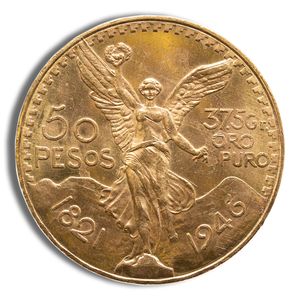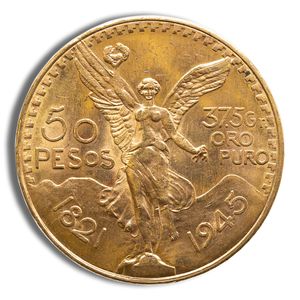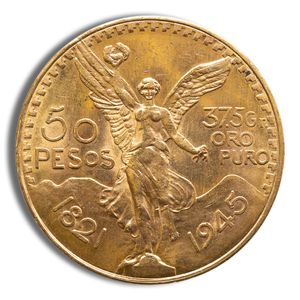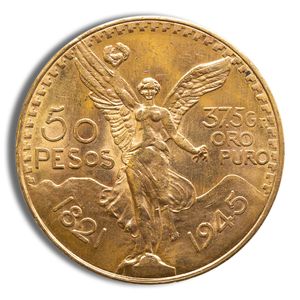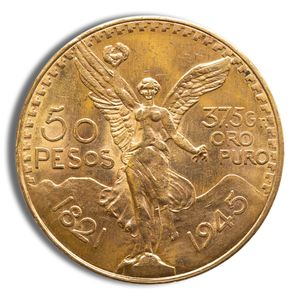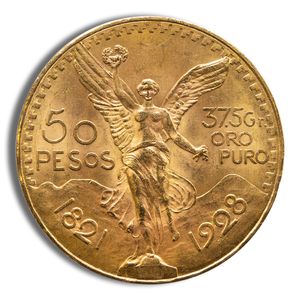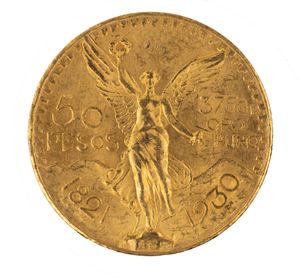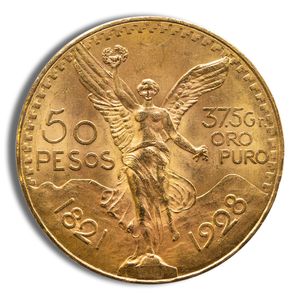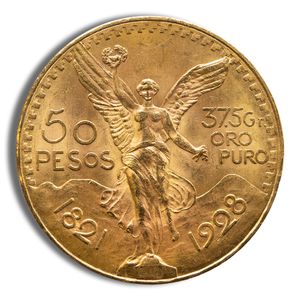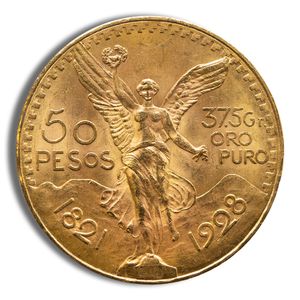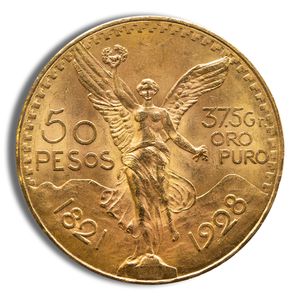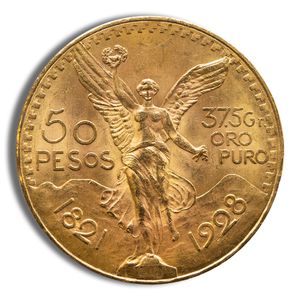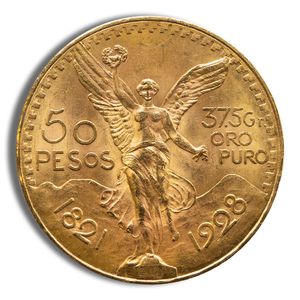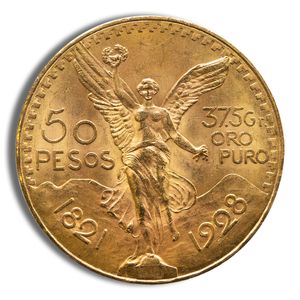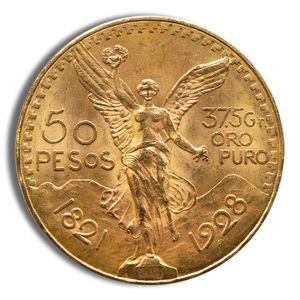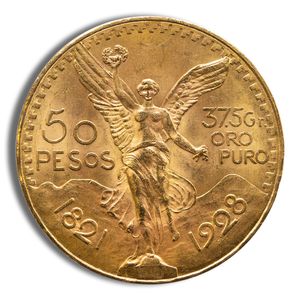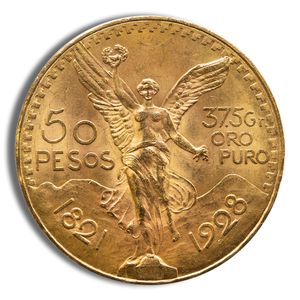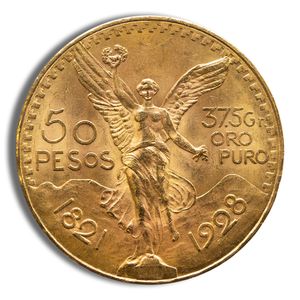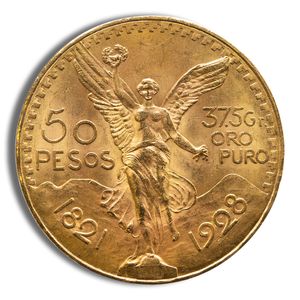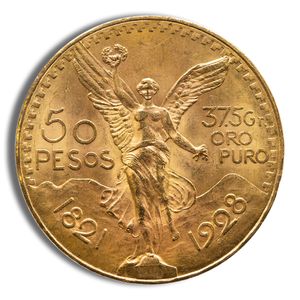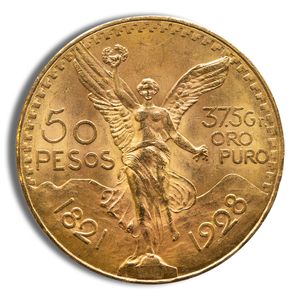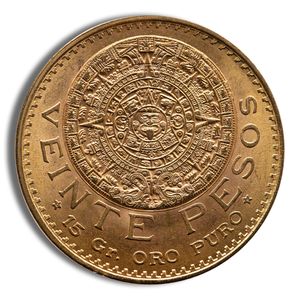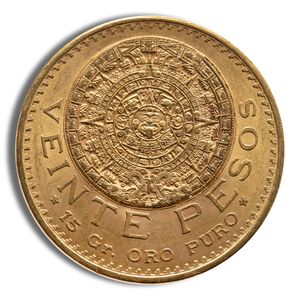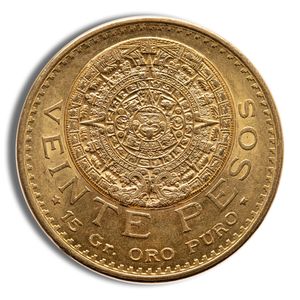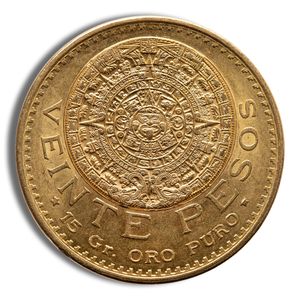
Uruguay Gold 5 Peso - XF+ (Random Year)
Tunisia Gold 20 Francs - XF+ (Random Year)

Chile 100 Peso Gold Coin - XF+ (Random Year)
1915 Austria Gold 4 Ducat Restrike - AU+
1915 Austria Gold 1 Ducat Restrike - AU+
Russia 15 Roubles Gold Coin

Buy Vintage World Gold Coins Online

Our catalog of vintage world gold coins spans dozens of countries, mints, and historical periods, offering collectors and buyers access to some of the most recognizable gold coin types ever produced. From the Austrian Mint's restrike coronas and ducats to the Royal Canadian Mint's confederation commemoratives, the selection reflects a broad cross-section of global minting traditions. Whether you're looking for a 1915 100 Corona restrike, a Belgium 20 Francs Leopold II, or a Netherlands 10 Guilder, the products here represent genuine gold content in historically grounded formats.

Each coin in the catalog is priced against real-time spot prices and carries clearly stated weights, purities, and condition grades. Products range from sub-0.1 troy ounce pieces like the Germany 5 Mark and Finland 10 Markkaa up to larger holdings like the Peru 100 Soles at over 1.35 troy ounces. Many are listed as random year, meaning the specific date will vary at the time of shipment, which is standard practice for this product type and does not affect gold content or purity.

Bullion Standard's two-way market structure applies to vintage world gold coins just as it does to modern bullion. Buyers can evaluate both acquisition premiums and expected resale values before committing to a purchase, making it straightforward to understand the true cost of ownership from the start.

What Are Vintage World Gold Coins?

Vintage world gold coins are circulated or restrike gold coins originally issued by sovereign governments, empires, or national mints during a historical period, typically ranging from the mid-1800s through the mid-20th century. They differ from modern bullion coins in that they were produced for monetary circulation rather than as investment products, though many are now traded primarily on the basis of their gold content. The term "vintage" generally implies age, historical origin, and the character that comes with coins tied to specific governments, rulers, or monetary systems.

Restrikes are a distinct subcategory worth understanding clearly. A restrike is a coin produced using original or reproduction dies, often decades after the original mintage, to meet collector and bullion demand. Austrian Mint restrikes of the 1915 Corona series are among the most widely recognized examples. These coins carry the original date but are minted in a later period, and their production quality is typically very high. Original-date circulated pieces, such as the Belgium Leopold II 20 Francs or the Russian Nicholas II 10 Roubles, are older and may show signs of handling consistent with actual monetary use.

Buyers are drawn to this format for a variety of reasons. Some prioritize the historical and aesthetic character these coins carry. Others focus on the efficient gold content relative to premium, particularly in larger denomination pieces. The format also tends to attract buyers who want gold holdings with recognizable international pedigrees rather than generic modern rounds or bars.

History and Background

The 19th century saw a broad international shift toward gold-standard monetary systems, with most major European powers and their colonial territories issuing gold coins as official currency. France's Latin Monetary Union, established in 1865, standardized gold fineness at .900 across member nations, which directly explains why so many European coins of this era share the same purity. Belgium, Italy, Switzerland, and France all produced 20 Franc gold coins to this standard, and coins from these countries remain widely traded today.

The Austro-Hungarian Empire produced a particularly deep catalog of gold coinage, including the Corona series and the Ducat, which traces its lineage back to medieval Venice. The Austrian Mint continued striking Ducats and Corona coins as restrikes well into the 20th century to meet persistent international demand, particularly from Middle Eastern and South Asian markets where these coins were trusted as portable gold holdings. This restrike tradition continues, which is why 1915-dated Austrian pieces are still available new today.

South American nations including Colombia, Peru, Chile, Uruguay, and Argentina produced their own gold coinage during the late 19th and early 20th centuries, often using European minting partners or domestically established facilities. Cuba's gold Pesos were minted at the United States Mint under post-independence monetary arrangements. Russia issued gold Roubles under the Imperial Mint through the end of the Tsarist period and later produced commemorative gold coins, including the 1980 Moscow Olympics 100 Roubles series. This geographic and historical breadth is part of what gives the vintage world gold coin market its depth.

Purity, Weight, and Specifications

The majority of vintage world gold coins in this catalog carry a fineness of .900, meaning 90% pure gold, which was the dominant monetary gold standard during the era most of these coins were produced. A smaller number, including coins from Colombia, Peru, South Africa, Saudi Arabia, and Turkey, carry .9167 fineness, equivalent to 22-karat gold and consistent with the British sovereign standard. The Austrian Ducat coins, both the 1 Ducat and 4 Ducat, are struck to .9867 fineness, one of the highest purity levels found in any historical gold coin.

Troy weight is the standard used to express gold content in all bullion markets. One troy ounce equals 31.1035 grams. The coins in this catalog range from just under 0.06 troy ounces for the Germany 5 Mark up to 1.3544 troy ounces for the Peru 100 Soles. Many fall in the 0.18 to 0.25 troy ounce range, which corresponds to the standard 20 Franc or equivalent denomination size used by most European monetary gold coins of the era. This consistency across countries makes comparison straightforward when evaluating gold content relative to premium.

Coin specifications are fixed by original mint standards rather than modern bullion conventions, so diameter and thickness vary considerably from one issue to another. The gold content figures listed on each product page reflect the actual troy ounce weight of pure gold in each coin, regardless of total coin weight, and are the figures used in pricing calculations.

Available Brands, Mints, and Product Variations

The Austrian Mint in Vienna is the most heavily represented institution in this catalog, producing the Corona series, the Ducat series, the Florin and Franc denominations, and the Schilling series, as well as restrike production for the Netherlands Ducat and Turkey's 100 Kurush. Austrian Mint gold is well-regarded for consistent quality and precise specifications. The Kremnica Mint in Slovakia, historically part of Hungary, struck the Hungarian Korona series and produced the 1908 Hungary 100 Korona restrike found here.

The Royal Canadian Mint is represented by three distinct products: the 1967 Confederation $20 commemorative at .9 fineness, the 1977-1986 half ounce $100 series in 22-karat gold, and the 1987-2005 quarter ounce $100 series in 14-karat (.585 fineness) gold. These Canadian pieces are a useful reminder that gold content and face denomination do not always correspond neatly, and buyers should verify the troy ounce figures rather than assume weight from denomination alone. The Monnaie de Paris produced French-standard coins for Tunisia and Monaco, as well as the Uruguay 5 Peso. The Buenos Aires Mint, Chilean Mint, Lima Mint, and Columbian Mint all appear with their respective South American national coinage.

Several products in the catalog are listed as random year, which means the year of issue will be selected based on current inventory at the time of shipment. This is standard for high-volume vintage coin products and does not affect gold content, purity, or condition grade. Products with specific dates, such as the 1915 Austrian restrikes or the 1980 Moscow Olympics commemorative, ship with the stated date. Condition grades range from XF (Extremely Fine) through AU (About Uncirculated) to BU (Brilliant Uncirculated), and each product is clearly graded in the listing.

Pricing, Premiums, and Market Factors

Vintage world gold coins are priced using real-time gold spot prices as the baseline, with a premium added above spot to account for minting costs, sourcing, handling, and market demand for the specific product. Because these coins were not designed as modern bullion products, their premiums can differ meaningfully from those on standardized modern coins or bars. Rarity, historical significance, condition grade, and the reputation of the originating mint all contribute to where a specific coin trades relative to its gold melt value.

Condition grade has a direct impact on pricing. A BU restrike of the 1915 100 Corona commands a different premium than an XF-graded circulated piece of comparable gold content. Restrikes, despite carrying historical dates, are produced to consistent modern quality standards and often trade at premiums closer to standard bullion. Original circulated pieces with documented historical provenance can carry higher premiums depending on collector demand and market supply. Denomination size also matters: larger denomination coins like the 1908 Hungary 100 Korona or the Monaco 100 Franc carry more gold per coin and can offer tighter percentage premiums than smaller fractional pieces.

Bullion Standard's pricing is updated in real time to reflect current spot conditions. The bid/ask spread displayed on each product page represents the full picture of cost and expected resale value, which we believe is a more complete way to evaluate any gold purchase. Premiums naturally fluctuate with wholesale market activity, and products with deeper liquidity tend to exhibit tighter spreads over time.

Condition, Packaging, and What to Expect

Vintage world gold coins arrive in a variety of packaging formats depending on their origin and production type. Modern restrikes from the Austrian Mint, such as the 1915 Corona or Ducat series, typically ship in protective plastic capsules or flips and present with the clean, consistent appearance expected from BU-graded material. Older circulated coins, including random year pieces from European, South American, or Middle Eastern sources, may show light wear, handling marks, or minor surface contact consistent with their grade. This is expected and consistent with XF or AU designations, which indicate coins that have seen circulation but retain strong detail.

Random year products are selected from current inventory, and the specific date cannot be guaranteed or requested. Buyers should expect coins that fall within the listed date range or, in cases where only a general era is implied, are representative of the product type. The gold content, purity, and condition grade remain consistent with what is listed regardless of the year received. Some coins may arrive in individual holders, others in small batches depending on how they are sourced and stored at the wholesale level.

Coins graded BU should display no meaningful wear and retain their original mint luster. XF-graded coins will show slight wear on high points but remain sharp and well-defined. AU pieces fall between these two benchmarks. Buyers unfamiliar with circulated coin grading standards can reference widely available numismatic grading guides, and Bullion Standard's customer support team is available to address specific product questions before purchase.

Authenticity and Verification

Authenticating vintage world gold coins requires attention to weight, dimensions, and surface characteristics specific to each coin type. Known specifications, including precise diameter, thickness, and troy ounce content, can be verified against published mint references and established numismatic standards. Bullion Standard verifies all products for authenticity, weight, and purity before shipping. Any coin that does not meet the specifications of its listed product is not offered for sale.

For restrikes produced by active mints like the Austrian Mint, authentication is supported by the mint's own quality control processes and publicly available specifications. For older circulated pieces sourced through established wholesale channels, authentication relies on physical inspection by experienced numismatists alongside weight and dimensional verification. Electronic verification methods, including XRF (X-ray fluorescence) analysis, are commonly used in the industry to confirm gold content and detect base-metal counterfeits without damaging the coin's surface.

As an authorized dealer for both PCGS and NGC, Bullion Standard can facilitate professional third-party grading and certification for buyers who want additional documentation on specific coins. Certified slabbed pieces carry the grading service's guarantee of authenticity and condition, which can be particularly relevant for higher-value vintage coins where originality and grade carry meaningful pricing implications.

Liquidity and Resale Considerations

Market recognition drives liquidity for vintage world gold coins more directly than almost any other factor. Coins from well-established programs, such as the Austrian Corona and Ducat series, the British-standard South African Rand coinage, and the Latin Monetary Union 20 Franc types from Belgium, Italy, and Switzerland, are recognized and actively traded by dealers worldwide. This international familiarity makes it relatively straightforward to sell these pieces through dealer channels, online marketplaces, or auction platforms.

Lesser-known issues or coins from smaller or more obscure minting programs may be recognized primarily in their country of origin or within specialized numismatic circles. This doesn't mean they lack value relative to their gold content, but buyers should understand that resale speed and premium recovery may vary depending on who the likely buyers are and how actively those specific coins trade. Condition also plays a meaningful role in resale: BU-graded restrikes and well-preserved circulated pieces consistently attract stronger bids than heavily worn examples of equivalent gold weight.

Standardized gold content and consistent purity make the gold melt value a reliable floor across all products in this catalog. Regardless of coin type or country of origin, the underlying gold content is priced against the same spot market, which provides a baseline that simplifies resale negotiations and dealer buyback evaluations.

Storage and Security

Most vintage world gold coins are compact enough to store efficiently in standard coin holders, capsules, or protective flips. Individual capsules help prevent surface contact that could accelerate wear on BU-graded pieces, which matters more for collector-oriented purchases than for strictly bullion-focused holdings. Circulated coins are less sensitive to minor handling but still benefit from clean, dry storage to prevent oxidation or surface degradation over time.

Home storage in a quality fireproof and waterproof safe is a practical option for smaller holdings. For larger collections or higher-value groupings, allocated vault storage through a reputable third-party provider offers enhanced physical security and, in many cases, insurance coverage specifically structured for precious metals. Bank safe deposit boxes are another option, though coverage limitations and access restrictions during banking hours can be relevant considerations depending on individual needs.

Temperature and humidity control matter more for numismatic-grade coins than for standard bullion, but maintaining a stable environment is good practice regardless. Excessive humidity can cause spotting on gold surfaces over time, and frequent handling without cotton gloves can introduce oils that affect surface appearance. Keeping coins in their original capsules or protective holders whenever possible is the simplest way to preserve condition.

Selling and Buyback Options

Bullion Standard maintains an active purchasing program for vintage world gold coins, and our team regularly evaluates buyback pricing based on current spot levels, product type, condition, and wholesale market activity. The two-way market structure means buyers can get a clear picture of expected resale value at the time of purchase rather than discovering it only when they're ready to sell. Bid pricing for many products is displayed directly on the product page and reflects real-time wholesale market conditions.

When selling back to Bullion Standard, the process involves submitting a sell request through our platform, receiving a quote based on current market conditions, and shipping the coins to our facility once the transaction is confirmed. Products are inspected upon receipt for weight, purity, and condition before final payment is issued. Coins that arrive in the condition described receive payment consistent with the agreed-upon quote. Discrepancies in condition or packaging relative to what was represented can affect the final settlement, which is standard across all dealer buyback programs.

Buyers who hold coins in their original capsules or holders, maintain BU grades in protected condition, and retain any original packaging documentation generally receive the most competitive buyback pricing. Widely recognized coins in good condition from reputable mints tend to settle faster and at tighter spreads, which reflects their stronger wholesale demand and easier resale into secondary markets.

Why Buy Vintage World Gold Coins?

The appeal of this format comes from the combination of genuine gold content and historical character that modern bullion products simply cannot replicate. Each coin in this catalog represents an actual piece of monetary history, whether it's a Belgian 20 Francs struck during the reign of Leopold II, a Russian Imperial Mint Rouble bearing the likeness of Nicholas II, or a Chilean 100 Peso from a national mint with over a century of continuous operation. That context doesn't inflate the price the way rare numismatic coins do, but it does make the holding more tangible and meaningful to many buyers.

For buyers focused primarily on gold content, several vintage world gold coins offer competitive premiums relative to their troy ounce weight, particularly in the larger denomination pieces. A 1908 Hungary 100 Korona restrike containing nearly a full troy ounce of gold, or the Monaco 100 Franc approaching a full troy ounce, can represent efficient gold acquisition in a format with international pedigree. The diversity of weights across this catalog also allows buyers to build holdings across a range of denomination sizes, from sub-0.1 oz pieces up to multi-ounce coins.

The global scope of the catalog, spanning Europe, South America, the Middle East, Scandinavia, and beyond, reflects gold's role as a universal monetary metal across cultures and centuries. That breadth also supports portfolio diversification across minting traditions and coin types without requiring a collector-level commitment to any single series or country.

Why Buy from Bullion Standard?

Bullion Standard has been operating as a full-service precious metals marketplace since 2010, built on the principle that informed buyers make better decisions and become longer-term customers. Our San Diego-based team sources products through established wholesale channels and verifies every item for authenticity, weight, and purity before it's offered for sale. Our A BBB rating, ANA membership, NCBA affiliation, and authorized dealer status with both PCGS and NGC reflect a sustained commitment to operating with integrity across every part of the business.

Pricing is transparent and updated in real time. Rather than obscuring premiums or hiding resale expectations, we display bid/ask spreads on product pages so buyers can see the full picture before committing. This includes vintage world gold coins, where pricing can be more nuanced than standard modern bullion. Our educational resources and customer support team are available to help buyers understand product-specific details, condition grades, and market factors before and after a purchase is made.

Payment flexibility, secure checkout, and reliable fulfillment complete the experience. Customers can pay by credit card, bank transfer, check, wire, PayPal, or cryptocurrency through BitPay. Orders are fulfilled from verified inventory with appropriate packaging to ensure coins arrive in the condition described. Our goal is a buying experience that feels straightforward and trustworthy from the first click through to delivery and beyond.

Get Near-Spot Pricing with Bullion Standard Pro

Bullion Standard Pro gives members access to live, executable wholesale bid and ask pricing across the precious metals catalog, including vintage world gold coins. Rather than applying fixed retail markups, the Pro platform is structured around real-time wholesale market prices that reflect actual supply and demand conditions. This means premiums and spreads fluctuate naturally with the market, and members can see how each product is priced at the wholesale level rather than working from estimated retail figures.

For buyers who purchase vintage world gold coins regularly or in meaningful quantities, the pricing efficiency available through Pro can reduce the gap between acquisition cost and resale value. Historical premium data, spread analysis, and liquidity metrics are available for many products, allowing members to evaluate how a specific coin has traded over time relative to current market conditions. That kind of analytical depth is rarely available in the physical precious metals market, and it provides a more objective basis for comparing products across the catalog.

Portfolio valuation through Bullion Standard Pro uses live executable wholesale bid pricing rather than estimated retail values, giving members a more accurate picture of what their holdings are worth at any given moment based on what the wholesale market would actually pay. For buyers holding a diversified range of vintage world gold coins across multiple countries and denominations, that real-time visibility into portfolio liquidity is a meaningful operational advantage.