Buy Platinum Bars Online
Our platinum bars catalog spans a wide range of weights, brands, and packaging formats to accommodate buyers at every level of experience and purchasing intent. From 1 gram minted bars in individual assay cards to 1 kilogram cast bars for those seeking maximum platinum content per transaction, the selection reflects the full breadth of the modern platinum bar market. Brands including Argor-Heraeus, PAMP Suisse, Valcambi, and Engelhard are represented alongside competitively priced random brand options in both assayed and unassayed formats.
Bullion Standard operates as a transparent two-way marketplace, meaning you can both purchase and sell platinum bars within the same platform. Each product page displays real-time pricing structured around current wholesale market conditions, with bid and ask spreads visible at the point of purchase. This approach reflects our commitment to pricing clarity rather than opaque markups.
Whether you're sourcing a single 1 oz platinum bar from a recognized Swiss refinery or adding a larger format bar to an existing position, the catalog is built to give you the information needed to make a confident, well-informed decision before checkout.
What Are Platinum Bars?
Platinum bars are refined bullion products produced by private mints and refineries to a standardized level of purity, typically 0.9995 or 0.9999 fine platinum. Unlike platinum coins, which are produced by sovereign mints and carry a legal tender designation, platinum bars are commercially issued products valued primarily for their metal content and refinery credibility. They are available in minted and cast formats, with minted bars featuring a cleaner, more refined surface finish and cast bars offering a more industrial appearance with fewer production steps.
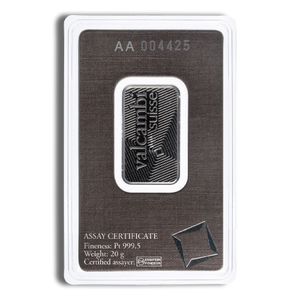
Minted platinum bars, which represent the majority of products in our catalog, are precision-struck from rolled platinum blanks and typically come sealed in an assay card that verifies the bar's weight, purity, and authenticity. This format appeals to buyers who prioritize presentation and third-party verification alongside metal content. Larger format bars, including 10 oz, 100 gram, 500 gram, and 1 kilogram options, are generally cast or die-struck without the card packaging common to smaller minted bars.
Platinum bars occupy a practical middle ground between platinum coins and raw industrial platinum. They carry lower premiums than coins in most market conditions, trade efficiently across the wholesale market, and are produced in weight increments that make them easy to accumulate and track by metal content.
History and Background
Platinum has a relatively short history as a commercial bullion product compared to gold and silver, but the foundations of the modern platinum bar market trace back to the mid-twentieth century when private refineries began standardizing platinum products for industrial and investor use. Switzerland emerged as the dominant production center, with refineries such as Valcambi, PAMP, and Argor-Heraeus developing minted bar formats that set the benchmark for quality and consistency across the global market.
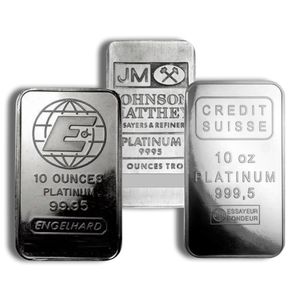
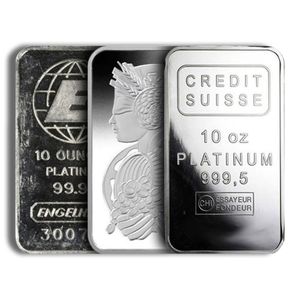
Engelhard, the American refinery and chemical company, played a significant role in establishing platinum bars as a recognizable bullion product in North America during the latter half of the twentieth century. Their sealed bar format became a trusted standard in the domestic market, and vintage Engelhard platinum bars from that era continue to be recognized and traded today. The consolidation of the refinery industry over subsequent decades concentrated platinum bar production among a smaller number of major producers, which helped improve standardization but also reduced the variety of branded bars available on the market.
The growth of the platinum investment market in the 2000s and 2010s brought greater product diversity, including fractional gram bars, multi-bar CombiBar formats, and assay card packaging designed to improve authentication. Today, the platinum bar market is served by a handful of globally recognized refineries alongside a broader secondary market of generic and random brand bars that trade efficiently based on metal content alone.
Purity, Weight, and Specifications
The majority of platinum bars available in our catalog carry a purity of 0.9995 fine platinum, which is the prevailing industry standard for commercially produced platinum bullion. Certain bars, including the 1 oz Argor-Heraeus minted bar, are refined to 0.9999 fineness, representing the highest practical purity level available in this format. Both purity grades are widely accepted in the wholesale market and meet the specifications required for most institutional and investor use cases.
Weight increments in this catalog range from 1 gram at the smallest to 1 kilogram at the largest, with intermediate options including 2.5 gram, 5 gram, 10 gram, 20 gram, 50 gram, 100 gram, 500 gram, 1/10 oz, and 10 oz bars. Troy ounce-denominated bars express metal content in standard troy ounces, where one troy ounce equals approximately 31.1035 grams. Gram-denominated bars express weight directly in metric units, which simplifies cross-referencing against the platinum spot price quoted in troy ounces per unit.
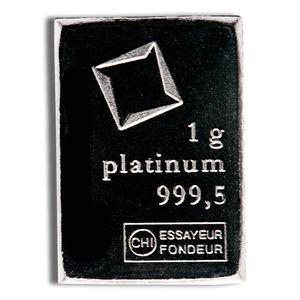
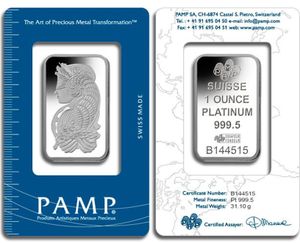
Assay markings on minted bars typically include the refinery name or logo, the weight designation, the purity expressed as a decimal or percentage, and in many cases a unique serial number or production batch identifier. Larger bars from established refineries may also carry an LBMA-approved hallmark, which is a recognized standard in the international bullion market. Physical dimensions vary by producer and weight class; specific measurements including thickness, length, and width are listed in the product specifications where available.
Available Brands, Mints, and Product Variations
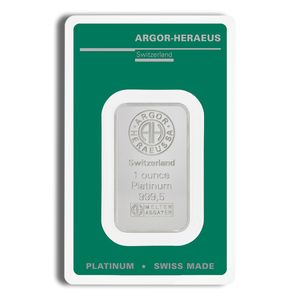
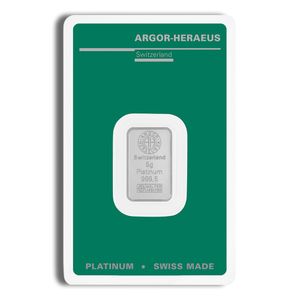
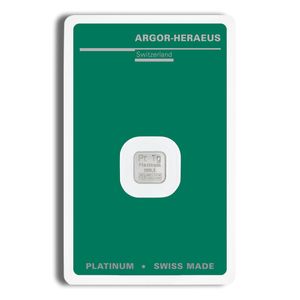
The catalog features platinum bars from several of the most respected refineries in the world. Argor-Heraeus, based in Mendrisio, Switzerland, produces minted platinum bars with clean struck finishes and is recognized globally for consistent quality across its product line. The 1 gram and 5 gram Argor-Heraeus platinum bars in our catalog come in assay card packaging, with the 1 oz bar refined to 0.9999 fineness, reflecting the refinery's precision manufacturing standards.
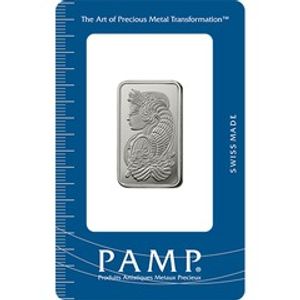
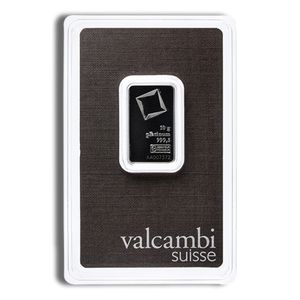
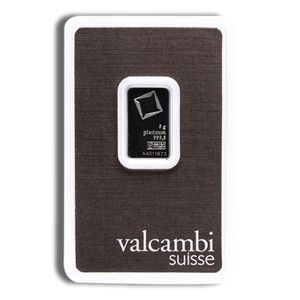
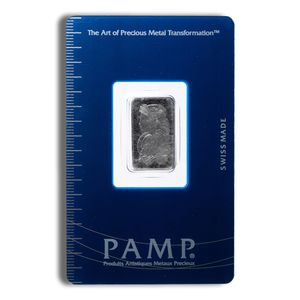
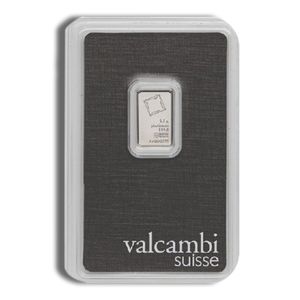
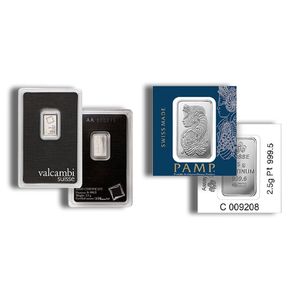
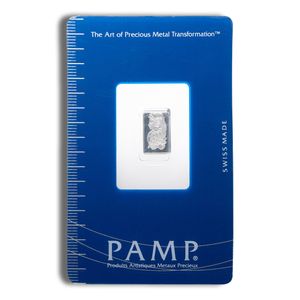
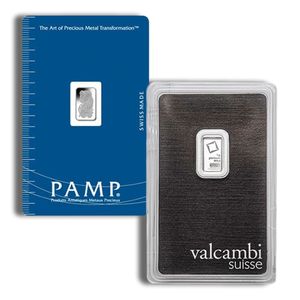
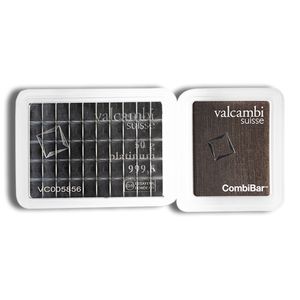
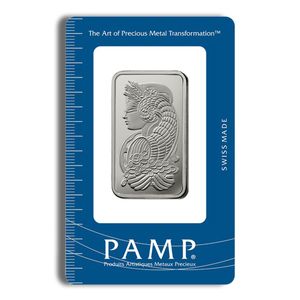
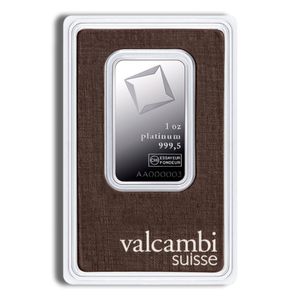
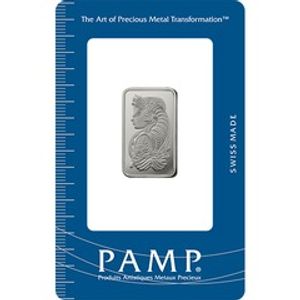
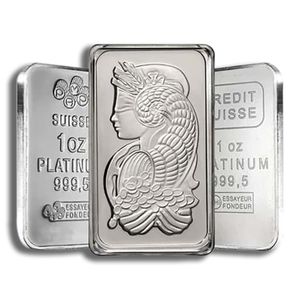
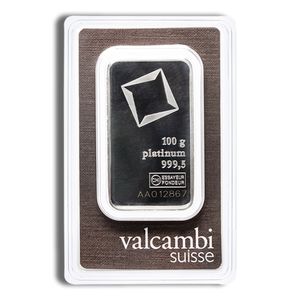
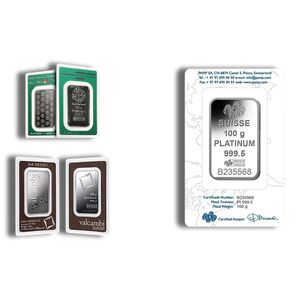
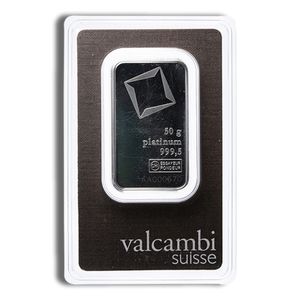
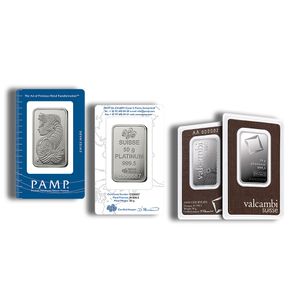
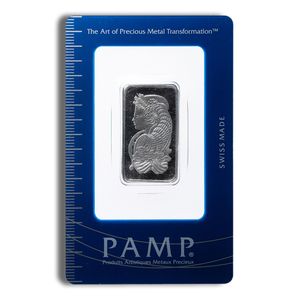
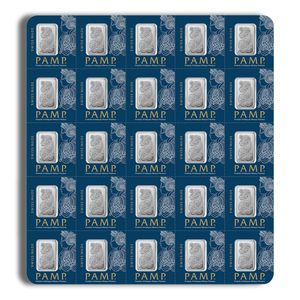
PAMP Suisse is another Swiss producer with a strong market reputation built largely around its Lady Fortuna design, which appears on minted bars across multiple metals including platinum. The 1 oz and 1 gram PAMP Lady Fortuna platinum bars in our catalog are among the most recognizable minted bar formats in the global market. PAMP also produces the MultiGram format, represented here by the 25 x 1 gram platinum bar, which allows buyers to acquire twenty-five individually separable 1 gram bars within a single assay card. Valcambi, also Swiss, contributes a broad range of gram-denominated bars from 1 gram through 100 grams, as well as the 50 x 1 gram CombiBar format, which functions similarly to the PAMP MultiGram and allows individual gram segments to be broken apart from the larger unit.
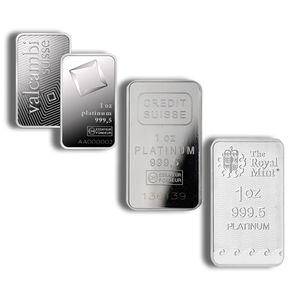
Engelhard, a legacy American refinery, is represented by a 1 oz sealed bar that carries historical significance in the North American platinum market. Random brand options are available across most weight classes, including both assayed and non-assayed formats, and are priced to reflect the metal content rather than a specific brand premium. These products are suited to buyers who prioritize platinum content per dollar over refinery branding and are comfortable holding generic bullion within their overall position.
Pricing, Premiums, and Market Factors
Platinum bar pricing is derived from the spot price of platinum, expressed in troy ounces, with a premium added to cover refining, minting, distribution, and dealer margin. Premiums vary across products based on a combination of factors including bar size, refinery brand, packaging format, and current supply conditions in the wholesale market. Smaller bars such as 1 gram and 2.5 gram formats typically carry higher premiums relative to metal content than larger bars, reflecting the additional production cost per unit of platinum refined and minted at that scale.
Brand recognition also influences premium levels. Bars from Argor-Heraeus, PAMP Suisse, and Valcambi generally trade at a modest premium over generic or random brand equivalents, reflecting the refinery's established reputation and the additional assurance that comes with a recognized producer hallmark. Assay card packaging adds a marginal cost but also improves resale confidence, which can reduce effective bid/ask spreads over time. Non-assayed bars, particularly in larger formats, trade more on metal content alone and are priced accordingly.
Bullion Standard displays live bid and ask pricing on each product page, allowing buyers to evaluate the full cost structure before committing to a purchase. The spread between the buying and selling price reflects current market conditions rather than fixed retail markups, and this transparency extends to the buyback side of the transaction as well. Platinum's relatively thin trading volume compared to gold and silver means that premiums and spreads can be more sensitive to short-term supply and demand shifts, making real-time pricing visibility particularly relevant for this metal.
Condition, Packaging, and What to Expect
Most platinum bars in our catalog arrive in new condition, sealed in their original mint or refinery packaging. Minted bars from Argor-Heraeus, PAMP Suisse, and Valcambi are typically encased in individual assay card packaging that has been heat-sealed or tamper-evident at the refinery level. This packaging should be received intact and undamaged. Bars ordered within the assay card should always be kept in that packaging, as removal can affect resale value and eliminates the third-party authentication the card provides.
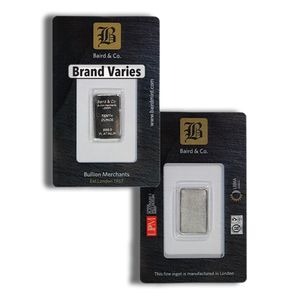
Random brand products, including those listed as both assayed and non-assayed, are sourced from various refiners and distributors. Assayed random brand bars will arrive in some form of sealed packaging, though the specific brand or design may differ from what is pictured. Non-assayed random brand bars will arrive without assay card packaging and may show minor handling marks or surface variation consistent with their unpackaged condition. These are genuine bullion products verified for weight and purity, but they are not presented in sealed mint packaging.
Larger format bars such as 10 oz, 100 gram, 500 gram, and 1 kilogram options are generally shipped in protective packaging appropriate for their size. Minor surface contact marks or casting lines on large bars are considered normal and do not affect the bar's bullion value. All products are shipped in discrete, secure packaging from our San Diego, California fulfillment operation to protect both the product and the privacy of the shipment.
Authenticity and Verification
Every platinum bar sold through Bullion Standard has been verified for authenticity, weight, and purity before it is made available for purchase. Products sourced from PAMP Suisse, Valcambi, Argor-Heraeus, and other recognized refineries carry mint-applied assay cards or sealed packaging that serve as the first layer of verification. These assay cards are not simply marketing materials; they are refinery-issued certificates that attest to the specific bar's metal content and production specifications.
For products without assay packaging, including random brand bars and larger cast bars, Bullion Standard applies internal verification procedures to confirm that products meet the weight and purity standards described in each listing. This includes physical testing methods appropriate to the product type. We maintain sourcing relationships with reputable mints, refineries, wholesalers, and authorized distributors, and do not offer products whose provenance or authenticity cannot be substantiated through our procurement process.
Buyers seeking additional verification for high-value platinum bars can use several industry-standard methods including professional XRF (X-ray fluorescence) analysis, ultrasonic testing, and density testing. Major refineries including PAMP Suisse and Valcambi also incorporate security features into their assay cards, such as Veriscan technology and holographic elements, that allow bar-level authentication using digital tools provided directly by the refinery.
Liquidity and Resale Considerations
Platinum bars from established refineries like PAMP Suisse, Valcambi, and Argor-Heraeus trade with greater ease across the wholesale market compared to lesser-known or generic brands, simply because buyers and dealers recognize the refinery name and trust the associated assay certification. The 1 oz platinum bar format is generally the most liquid weight class within this catalog, as it aligns with widely understood trading conventions and is priced accessibly for a broad range of buyers and dealers.
Larger bars such as the 100 gram, 500 gram, and 1 kilogram formats are more commonly transacted within institutional or wholesale channels, where buyers have the capacity and appetite for larger single units. These formats can take longer to move in a retail resale context, particularly outside of dealer buyback programs. Keeping bars in their original sealed assay packaging is among the most important practical steps to preserving resale value, as intact packaging confirms authenticity without requiring the buyer to conduct independent verification.
Non-assayed and random brand bars are entirely resalable, but they typically command slightly lower buyback prices than branded and assayed equivalents under the same market conditions. Understanding this distinction before purchase helps set realistic expectations about the full transaction cycle. Bullion Standard's two-way market structure is designed to provide buyback pricing that reflects current wholesale market conditions rather than arbitrary dealer-set discounts.
Storage and Security
Platinum bars are dense for their size, which makes physical storage relatively straightforward compared to equivalent values in silver. A small home safe rated for fireproofing and secured to a wall or floor provides adequate protection for modest quantities of platinum bars, particularly smaller gram-denominated formats that take up minimal space. For assay-carded bars, maintaining the original packaging is important from both a security and resale standpoint, so storage solutions should be sized to avoid compressing or damaging the cards.
For larger format bars or substantial quantities, allocated vault storage through a professional precious metals custodian offers a higher level of physical security and typically includes insurance coverage. Many buyers who hold platinum in meaningful quantities use segregated vault storage to maintain clear title over specific bars while reducing the personal security burden of home storage. Bank safe deposit boxes are also an option, though they generally do not carry insurance coverage for contents and access may be restricted to banking hours.
Regardless of storage method, platinum should be kept away from harsh chemicals and abrasive materials that can damage bar surfaces or packaging. Minted bars are particularly susceptible to surface marks if handled frequently without care. Using cotton or nitrile gloves when handling unpackaged bars is a reasonable precaution, especially for branded bars where surface presentation can affect perceived condition at the time of resale.
Selling and Buyback Options
Selling platinum bars back into the market follows a straightforward process when the products are in recognizable condition and from established producers. Bullion Standard maintains an active purchasing program for platinum bars across the weight classes featured in this catalog. Buyback pricing is based on current platinum spot prices adjusted for the specific product's liquidity, brand recognition, condition, and packaging status. Bars in original sealed assay card packaging from recognized refineries like PAMP Suisse, Valcambi, and Argor-Heraeus typically receive the most favorable buyback terms.
Random brand and non-assayed bars are also purchased through our buyback program, though pricing reflects the additional verification steps sometimes required and the narrower buyer pool for unbranded platinum products. Condition matters across all formats. Bars with significant surface damage, missing packaging, or unclear provenance may be subject to additional review before buyback pricing is confirmed. Our purchasing team evaluates each transaction based on current market conditions and the specific characteristics of the product being sold.
Our two-way market model is designed to make the resale process as transparent as the initial purchase. Live buyback pricing is visible through the platform alongside ask pricing, which gives sellers a realistic picture of current market value before initiating a transaction. Rather than waiting until the point of sale to understand what a product is worth in the current market, buyers can monitor bid pricing over time as part of an informed ownership experience.
Why Buy Platinum Bars?
Platinum bars appeal to buyers primarily because they offer direct exposure to platinum's metal content with a lower premium structure than minted coins. The bar format is straightforward: the price reflects the metal, the refinery, and the packaging, without the additional cost of sovereign mint production, legal tender designation, or collectible design premiums. For buyers whose primary interest is the metal itself, bars typically represent the most cost-efficient format available in the platinum market.
Platinum also carries significant industrial relevance, which distinguishes it from purely monetary metals. Catalytic converters in gasoline and hydrogen fuel cell vehicles remain the largest industrial application of platinum globally, and the metal is also used in chemical production, petroleum refining, glass manufacturing, medical devices, and electronics. This underlying industrial demand creates a persistent base of commercial consumption that exists independently of investment market activity, which gives platinum's pricing dynamics a different character compared to gold or silver.
The range of weights available in this catalog, from 1 gram increments up to 1 kilogram, gives buyers flexibility to match purchase size to their specific budget and accumulation strategy. Fractional gram bars allow entry at lower dollar amounts, while larger bars minimize per-ounce premiums for buyers comfortable with the reduced liquidity that comes with higher individual unit values. The CombiBar and MultiGram formats add a further dimension by combining the efficiency of larger platinum weight with the flexibility of individually divisible units.
Why Buy from Bullion Standard?
Bullion Standard was founded in 2010 with the goal of creating a more transparent and straightforward way to buy and sell physical precious metals. Based in San Diego, California, we've built our reputation over more than a decade on pricing integrity, product authenticity, and customer service that doesn't rely on pressure tactics or hidden costs. Our A rating with the Better Business Bureau and membership in the American Numismatic Association and the National Coin and Bullion Association reflect a long-term commitment to operating professionally within the industry.
Every platinum bar sold through our platform is sourced from reputable mints, refineries, and authorized distributors, and each product is verified for authenticity, weight, and purity before it becomes available for purchase. Live bid and ask pricing is displayed on every product page, including the platinum bars in this catalog, so buyers can see the real-time cost structure rather than navigating opaque pricing systems. Payment options include Visa, Mastercard, American Express, Discover, PayPal, bank-connected payments through Plaid, wire transfer, paper check, and cryptocurrency through BitPay, giving customers flexibility at checkout without sacrificing security.
Our two-way market model sets us apart from traditional dealers who primarily focus on selling. By maintaining competitive buyback pricing within the same platform where products are purchased, we give customers the ability to evaluate both sides of a platinum transaction before committing to a purchase. This is how we believe a modern precious metals marketplace should operate: with full transparency on both the acquisition cost and the exit path.
Get Near-Spot Pricing with Bullion Standard Pro
Bullion Standard Pro is designed for buyers who want to transact at wholesale market pricing rather than standard retail premiums. Members gain access to live, executable bid and ask pricing derived directly from wholesale market conditions, without the additional dealer markups applied in a conventional retail structure. For platinum bars, where premiums and spreads can vary meaningfully across products and market conditions, access to wholesale-level pricing can represent a meaningful improvement in overall transaction efficiency.
Pro members can also monitor real-time portfolio valuations based on live wholesale bid pricing rather than estimated retail values, which provides a more accurate picture of current liquidation value. Proprietary analytics tools available within the Pro platform include historical premium data, spread analysis, liquidity metrics, and market sentiment indicators that allow members to evaluate platinum bar products using objective market data rather than marketing claims. This analytical layer is particularly relevant in a market like platinum, where supply dynamics and industrial demand can create pricing shifts that aren't immediately visible from spot price movements alone.
For buyers who accumulate platinum bars over time, the combination of near-spot execution pricing and real-time market intelligence available through Bullion Standard Pro creates a more efficient purchasing environment than the traditional retail dealer model. The platform is built around the principle that better information leads to better decisions, and that access to the kind of pricing transparency common in traditional financial markets should be available to physical precious metals buyers as well.

 (833) 278-4653