Buy 1 Kilo Silver Bars Online
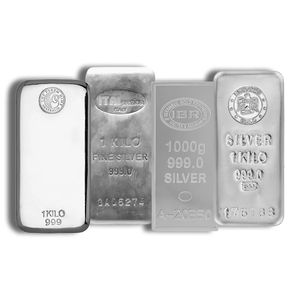
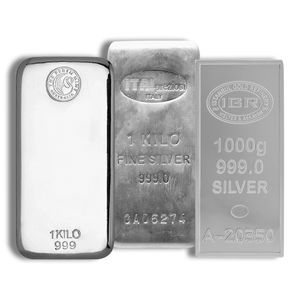
Our catalog of 1 kilo silver bars brings together some of the most recognized refiners and private mints in the global bullion market, including Valcambi, Geiger Edelmetalle, Frontier Mint, Istanbul Gold Refinery, Italpreziosi, and Argentia Precious Metals. Each bar contains 1,000 grams of silver, equivalent to approximately 32.15 troy ounces, and is available in a range of formats including cast and minted styles. For buyers who prefer flexibility, random brand options are also available at competitive premiums.
Bullion Standard is a San Diego-based precious metals marketplace committed to pricing transparency and straightforward transactions. Every product in our catalog is sourced from reputable refineries and verified for authenticity, weight, and purity before fulfillment. Whether you're looking for a specific brand or simply the most competitive price on a kilo bar, our platform is built to help you make an informed decision with full visibility into costs.
Pricing on each product page reflects real-time market conditions, and our two-way market structure means you can both purchase and sell within the same ecosystem. The bid/ask spread is displayed directly on product pages so you understand the full picture before committing to a purchase, not just the acquisition cost.
What Are 1 Kilo Silver Bars?
A 1 kilo silver bar is a standardized bullion bar containing exactly 1,000 grams of silver, a weight that places it firmly in the mid-to-large category of silver bar formats. Larger than the common 10 oz bar and smaller than the 100 oz format, the kilo bar occupies a practical middle ground for buyers who want meaningful silver content in a compact, manageable size. At roughly 32.15 troy ounces per bar, the kilo format delivers efficient metal content per unit while remaining easy to handle and store.
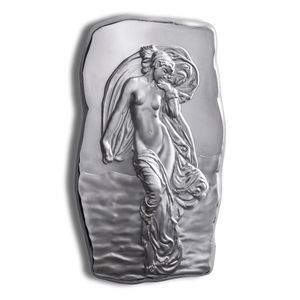
These bars are available in two primary production formats: cast and minted. Cast bars are produced by pouring molten silver into molds, resulting in a simpler, more industrial appearance that typically carries lower fabrication premiums. Minted bars, like the Argentia Sculpture series, are die-struck with finer detail and often include artistic design elements, making them appealing to both bullion buyers and collectors. Most kilo bars in our catalog are cast format from established international refiners.
The kilo format is widely recognized across global wholesale and retail bullion markets. It is commonly traded between dealers, institutions, and private buyers, which contributes to its broad market acceptance and reliable resale pathways. Buyers drawn to this format often prioritize cost efficiency per troy ounce over the smaller premium advantages associated with 100 oz bars, while still maintaining a practical, storable unit size.
History and Background
The metric kilo bar format gained prominence as bullion trading expanded internationally during the latter half of the twentieth century. While troy-ounce-based weights dominated markets in the United States and United Kingdom, the metric system provided a more natural unit of measure across European and Asian markets. Refineries in Switzerland, Germany, and Italy were early adopters of the kilo format, and producers like Valcambi and Geiger Edelmetalle helped establish it as a globally accepted bullion standard alongside the London Good Delivery bar.
Silver's industrial relevance accelerated demand for standardized bar formats across a wide range of market participants during the twentieth century. As photographic, electronics, and later solar manufacturing industries expanded their consumption of refined silver, refineries producing kilo bars in high-purity formats found consistent commercial demand alongside the retail investment market. This dual demand from industrial and private buyers helped solidify the kilo bar as a trusted format for refined silver distribution.
The growth of private mints in North America over the past two decades has added further depth to the kilo bar market. Producers like Frontier Mint and Argentia Precious Metals expanded the range of available styles, finishes, and design aesthetics, offering buyers more options beyond the traditional cast bar. Today, the 1 kilo silver bar is produced by refineries across four continents and traded through both wholesale and retail channels worldwide.
Purity, Weight, and Specifications
The bars in our catalog carry one of two standard purity levels: .999 fine silver and .9999 fine silver. The .999 standard, meaning 999 parts silver per 1,000, is the most common purity for kilo silver bars and is accepted across virtually all wholesale and retail bullion markets. The .9999 four-nines standard represents an additional level of refinement and is found on bars from Argentia Precious Metals and Frontier Mint. Both purities are fully recognized and widely tradeable.
Each bar contains 1,000 grams of silver, which converts to approximately 32.15 troy ounces using the standard conversion of one troy ounce equaling 31.1035 grams. Physical dimensions vary by producer. Bar lengths across our catalog range from roughly 111 mm to 129.5 mm, widths from approximately 53 mm to 86 mm, and thicknesses from 12 mm to 17.8 mm depending on the refinery and production format. These dimensional differences are normal across different producers and do not affect the silver content or purity of the bar.
Most bars include stamped or engraved markings indicating the producer's name or logo, silver purity, weight designation, and in many cases a unique serial number. Serial numbers are particularly common on bars from established refineries and provide an additional layer of traceability. Some bars, particularly those produced in minted format, may also include assay certification as part of their packaging.
Available Brands, Mints, and Product Variations
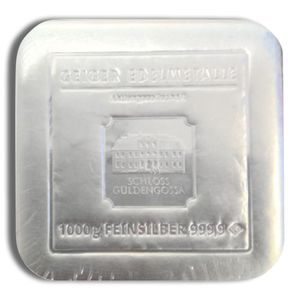
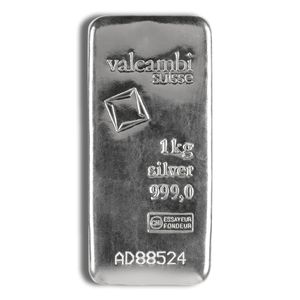
Valcambi, based in Switzerland and one of the most recognized refineries in the global precious metals market, produces a clean cast kilo bar in .999 fine silver. The Valcambi bar is a staple of the international wholesale market and carries strong resale recognition across dealer networks. Germany's Geiger Edelmetalle offers a cast kilo bar that reflects the refinery's longstanding reputation for precise fabrication, also at .999 purity. Both bars are produced to consistent tolerances and command reliable market recognition.
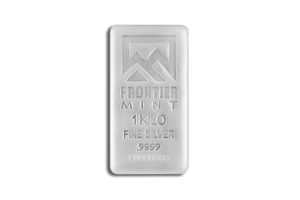
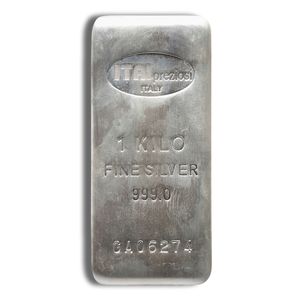
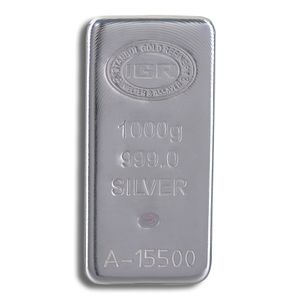
Istanbul Gold Refinery, operating under the IGR brand, produces a .999 fine cast kilo bar sourced from Turkey. IGR is a well-regarded refinery with LBMA affiliation and broad market acceptance. Italy's Italpreziosi, another LBMA-recognized refinery, offers a cast .999 kilo bar that is widely circulated in European and international bullion markets. Frontier Mint, based in the United States, produces a distinctive sandblast finish cast bar in .9999 purity, offering a visually differentiated option with American provenance.
The Argentia Precious Metals kilo bar stands apart from standard cast offerings. Produced in Canada to .9999 purity, it features an artistic minted design depicting a woman with a flowing gown, making it a crossover product between decorative silver and standard bullion. For buyers who prefer pricing flexibility over brand specificity, our catalog also includes random brand kilo bars, which may ship from any of the recognized refineries in our inventory at the time of purchase.
Pricing, Premiums, and Market Factors
The price of a 1 kilo silver bar is calculated from the spot price of silver, quoted in troy ounces, multiplied by the bar's metal content of approximately 32.15 troy ounces, plus a fabrication and dealer premium. Premiums on kilo bars tend to be lower on a per-ounce basis compared to smaller bar and coin formats because the larger unit size distributes fabrication costs more efficiently across a greater silver content. This makes the kilo format an appealing option for buyers focused on cost-per-ounce efficiency.
Premium levels vary across products based on several factors. Minted bars with artistic designs, such as the Argentia Sculpture bar, typically carry higher premiums than cast bars from industrial refineries due to additional production costs. Brand recognition also plays a role: bars from highly liquid refineries like Valcambi and Geiger tend to hold tighter premiums in the secondary market due to their broad dealer acceptance. Bars with .9999 purity may carry a slight premium over .999 bars depending on market conditions and buyer preference.
Bullion Standard displays the bid/ask spread directly on each product page, providing clear visibility into the gap between purchase price and current buyback value. This transparency allows buyers to evaluate the complete cost of ownership rather than focusing solely on the acquisition premium. Our pricing reflects real-time wholesale market conditions, and our two-way market structure is designed to keep spreads as competitive as market conditions allow.
Condition, Packaging, and What to Expect
Cast silver bars, including most of the kilo bars in our catalog, are produced through a process that naturally results in minor surface variation. Small scratches, flow lines, and surface marks are characteristic of the casting process and are not considered defects. Buyers should expect cast bars to arrive with some degree of cosmetic variation that reflects normal manufacturing and handling. This is standard across the industry and does not affect the bar's silver content, purity, or market acceptability.
Packaging varies by producer. Some bars ship in individual protective sleeves, plastic wrapping, or branded assay packaging, while others arrive loose or in multi-bar outer cartons. The Frontier Mint bar, for example, is packaged with an outer pack quantity of twenty units, and the Geiger bar is packaged in quantities of sixteen. Random brand bars may arrive in varied packaging formats consistent with standard dealer inventory handling. Minted bars like the Argentia Sculpture bar are typically presented with more protective or branded packaging due to their design-forward nature.
When ordering random brand kilo bars, the specific brand or refinery shipped will vary based on current inventory. All random brand products meet the purity and weight specifications listed on the product page, and every bar in our catalog is verified before fulfillment regardless of brand or packaging format.
Authenticity and Verification
Every 1 kilo silver bar sold through Bullion Standard is sourced from refineries, wholesalers, and distributors with established market credibility. Products are verified for authenticity, weight, and purity prior to fulfillment as part of our standard inventory process. We source from refineries that include verifiable markings such as stamped purity, weight designation, producer identification, and in many cases individual serial numbers that support post-purchase verification.
Several refineries represented in our catalog, including Valcambi, Geiger Edelmetalle, Istanbul Gold Refinery, and Italpreziosi, hold recognition from the London Bullion Market Association (LBMA) or other international refining bodies. LBMA-recognized refineries are subject to independent audits and must meet defined standards for silver content and refinery practices, providing buyers with an additional layer of institutional assurance. Frontier Mint and Argentia Precious Metals operate under private mint standards with established market track records.
For buyers who wish to independently verify a bar after purchase, common methods include magnetic slide testing, ultrasonic thickness testing, and specific gravity measurement. Serial numbers, where present, can sometimes be cross-referenced with the issuing refinery. Assay-packaged bars provide an additional layer of certification at the point of manufacture, and we recommend preserving that packaging intact when received to maintain documentation of the bar's provenance.
Liquidity and Resale Considerations
The 1 kilo silver bar format is broadly recognized across global dealer networks, making it one of the more liquid private bullion formats available to retail buyers. Bars from LBMA-affiliated refineries such as Valcambi, Geiger Edelmetalle, IGR, and Italpreziosi are particularly well-suited to resale through wholesale and institutional channels because their production standards are internationally recognized. This recognition generally supports competitive resale pricing relative to bars from less widely known producers.
Resale environments for kilo bars include bullion dealers, secondary market platforms, and direct buyer-to-buyer transactions. Dealer buyback programs are typically the most accessible option, with pricing tied to current spot prices and adjusted based on the bar's condition, packaging, brand, and the dealer's current inventory needs. Bars with intact serial numbers and original packaging tend to receive the most favorable resale treatment because they are easier for dealers to authenticate and resell efficiently.
Random brand bars are generally resold based on silver content rather than brand-specific premium, which means their resale pricing is closely tied to the current wholesale spot-based bid. Buyers should factor this into their decision-making when comparing branded and unbranded options. Understanding the bid/ask spread at the time of purchase provides the clearest picture of where resale value stands relative to the acquisition cost.
Storage and Security
A single 1 kilo silver bar is compact enough to store in a standard home safe or a bank safe deposit box, but the weight and density of silver becomes a practical consideration as quantities grow. Multiple kilo bars stored together represent meaningful combined weight and value, so storage solutions should be selected with both physical security and environmental protection in mind. A quality fire-rated safe bolted to a structural surface is one of the more practical home storage approaches for a growing kilo bar position.
Silver is susceptible to toning and surface oxidation when exposed to humidity, airborne sulfur compounds, or prolonged contact with reactive materials. Storing kilo bars in protective sleeves, airtight containers, or sealed plastic bags within a low-humidity environment helps minimize surface changes over time. While toning does not affect a bar's silver content or purity, cosmetic changes can sometimes influence resale presentation, particularly for minted bars where surface appearance is part of the product's appeal.
Third-party vault storage is a practical option for buyers accumulating larger quantities of kilo bars. Allocated storage through a reputable vault provider keeps bars in a professionally secured, climate-controlled environment without the logistical demands of home storage. For buyers holding significant silver weight, the cost of vault storage is often modest relative to the peace of mind and security it provides.
Selling and Buyback Options
Bullion Standard operates a two-way market, meaning customers can sell silver bars back into our platform using competitive, market-driven buyback pricing. Our purchasing team evaluates products based on current spot prices, product type, mint recognition, condition, and packaging integrity. The process is designed to be straightforward: customers initiate a sell request, receive a buyback quote based on current market conditions, and ship their bars to our facility following our standard selling process.
Bars from widely recognized refineries, including Valcambi, Geiger Edelmetalle, IGR, and Italpreziosi, typically receive the most efficient buyback treatment due to their broad dealer acceptance and straightforward verification. Bars with intact serial numbers, original packaging, and no significant physical damage are processed most efficiently. Condition matters less for cast bars where surface variation is expected, but significant physical damage or altered markings can affect the buyback evaluation.
Understanding the buyback value before purchasing is a central part of the Bullion Standard philosophy. We display the bid/ask spread on every product page so buyers can evaluate the relationship between purchase price and current resale value before completing a transaction. Liquidity should be considered at the point of purchase, not only when it's time to sell, and our platform is built to make that evaluation as straightforward as possible.
Why Buy 1 Kilo Silver Bars?
The kilo format delivers one of the more efficient per-ounce acquisition costs among silver bar sizes commonly available to private buyers. At approximately 32.15 troy ounces per bar, the kilo format spreads fabrication costs across enough metal content to produce noticeably lower premiums than 1 oz or 10 oz bars while remaining far more accessible and practical than 100 oz formats. For buyers focused on maximizing silver content per dollar spent, the kilo bar is a logical choice.
Silver carries meaningful industrial demand that distinguishes it from gold within the broader precious metals market. Solar panel manufacturing, electronics, medical devices, and water purification all rely on refined silver in significant volumes. This underlying industrial consumption provides a separate demand foundation that exists independent of investment buying. The refineries producing most of the kilo bars in our catalog, particularly those with LBMA recognition, serve industrial customers alongside retail bullion buyers, which reflects the metal's broad commercial relevance.
From a storage efficiency standpoint, kilo bars stack cleanly and store compactly relative to their silver content. A modest collection of kilo bars takes up far less space than an equivalent weight in silver coins or rounds, making them practical for buyers who prioritize storage density. Their standardized weight and broadly recognized purity also make them straightforward to verify and resell, supporting the kind of market recognition that matters when it's time to convert bars back into liquidity.
Why Buy from Bullion Standard?
Bullion Standard was founded in San Diego in 2010 with a clear focus on pricing transparency and long-term customer trust. Over the years we've grown into a nationally recognized online precious metals marketplace by operating on a simple premise: customers deserve to understand exactly what they're paying, what they're buying, and what their silver is worth when they decide to sell. That philosophy is reflected in how our platform is built, from real-time pricing to the bid/ask spread displayed on every product page.
Every product in our catalog is sourced from reputable refineries, mints, wholesalers, and distributors, and verified for authenticity, weight, and purity before reaching our customers. We maintain an A rating with the Better Business Bureau and hold memberships with the American Numismatic Association and the National Coin and Bullion Association. We're also authorized dealers for both PCGS and NGC, reflecting our commitment to product authenticity and professional standards across our entire catalog.
Our checkout process supports a wide range of payment methods including Visa, Mastercard, American Express, Discover, PayPal, bank-connected payments through Plaid, wire transfer, paper check, and cryptocurrency via BitPay. Fulfillment is handled with care, and our customer service team is available to support buyers before, during, and after the transaction. We believe the experience of buying physical silver should feel like working with a transparent, professionally operated marketplace, and we've built Bullion Standard to reflect that standard at every step.
Get Near-Spot Pricing with Bullion Standard Pro
Bullion Standard Pro is designed for buyers who want direct access to wholesale market pricing without the traditional retail dealer markup structure. Members transact at live executable wholesale bid and ask prices that reflect real-time supply and demand conditions within the professional bullion market. Rather than applying fixed dealer premiums on top of indicative pricing, the Pro platform allows bid/ask spreads to move naturally based on actual market conditions, giving members a more accurate picture of where silver is genuinely trading at any given moment.
For buyers accumulating kilo bars regularly, the pricing efficiency available through Bullion Standard Pro can be meaningful over time. Access to live wholesale pricing on products like the Valcambi, Geiger, and IGR kilo bars, combined with portfolio valuation based on live executable bid pricing rather than estimated retail values, gives members a clearer view of their actual holdings. Rather than relying on retail price estimates, Pro members see their silver valued at what the wholesale market would currently pay.
The platform also provides access to proprietary market intelligence tools including historical premium analysis, spread tightness metrics, liquidity indicators, and buy/sell ratio data that can help buyers evaluate specific products more objectively. For anyone purchasing 1 kilo silver bars with regularity or building a more significant silver position, Bullion Standard Pro is designed to provide the kind of market transparency and pricing efficiency that has traditionally been available only to institutional and wholesale market participants.

 (833) 278-4653