Buy 100 Oz Silver Bars Online
Our catalog of 100 oz silver bars brings together some of the most recognized names in the global bullion market, including Engelhard, Johnson Matthey, Royal Canadian Mint, Geiger Edelmetalle, The Royal Mint, Frontier Mint, Asahi Refining, IGR Metals, and Valcambi. Each of these producers has earned a distinct reputation in the wholesale silver market, and their 100 oz bars remain among the most actively traded large-format silver products available to buyers today.
Alongside branded bars, we also carry 100 oz silver bars in a random brand format, which offers a practical option for buyers who prioritize silver content and cost efficiency over a specific manufacturer. Whether you're drawn to a particular refinery's reputation or simply looking to acquire 100 troy ounces of .999 fine silver at a competitive premium, this section of our catalog is designed to give you clear, side-by-side access to available options.
Bullion Standard is built around pricing transparency and a two-way market structure, meaning the same platform where you purchase a bar is also where you can sell it back. Every listing reflects real-time market conditions, and our product pages include bid/ask spread data so you can evaluate the complete cost of ownership before committing to a purchase.
What Are 100 Oz Silver Bars?
A 100 oz silver bar is a large-format silver bullion product weighing exactly 100 troy ounces. Troy ounces are the standard unit of measure in precious metals, slightly heavier than the avoirdupois ounce used in everyday commerce, and 100 troy ounces translates to approximately 6.86 pounds. At this size, the bar format becomes one of the most cost-efficient ways to own physical silver in quantity.
Compared to 1 oz bars or rounds, 100 oz bars carry a lower premium per ounce because the production cost is spread across a larger silver content. They occupy a practical middle ground between the 10 oz bar, which is easier to handle and store in smaller spaces, and the 1,000 oz institutional bar, which is significantly heavier and less practical for individual buyers. The 100 oz size is widely recognized across both retail and wholesale silver markets.
Buyers typically choose 100 oz silver bars when they want meaningful silver exposure at a reduced per-ounce cost without committing to the weight and handling complexity of a 1,000 oz bar. These bars are also straightforward to store and insure, making them a practical format for buyers building a physical silver position over time.
History and Background
The 100 oz silver bar emerged as a standardized commercial format during the mid-twentieth century as industrial and institutional demand for silver grew alongside the modern refining industry. Refineries like Engelhard and Johnson Matthey, both of which produced silver in multiple commercial formats, helped establish the 100 oz bar as a recognizable and widely accepted unit within the silver trade. Their marks became synonymous with consistent assay standards and reliable purity, which is why their bars remain collectible and actively traded decades later.
The broader silver bar market grew substantially during the 1970s and 1980s as private bullion ownership expanded in the United States following the end of the Bretton Woods system and the deregulation of gold and silver ownership. During this period, domestic refineries produced large volumes of 100 oz bars to meet demand from buyers entering the physical silver market. Engelhard bars from this era, particularly hand-poured and extruded formats, are now recognized as vintage bullion with strong secondary market recognition.
Over the following decades, international mints and refineries entered the 100 oz segment. The Royal Canadian Mint, Valcambi in Switzerland, Geiger Edelmetalle in Germany, and more recently Frontier Mint and Asahi Refining brought new production standards, including precision-minted finishes and enhanced security features, to a format that had long been dominated by cast production methods. Today the 100 oz silver bar is one of the most widely recognized large-format silver products traded globally.
Purity, Weight, and Specifications
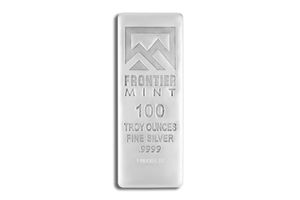
The majority of 100 oz silver bars in our catalog carry a silver purity of .999, which indicates 99.9% fine silver. The Frontier Mint bar is an exception, carrying a purity of .9999, or four-nines fineness, which represents 99.99% pure silver. Both standards are fully accepted across the global silver market, and the practical difference in silver content between the two purity levels is minimal at this weight.
Each bar is stamped with its weight, purity, and the producer's hallmark or assay mark. Many bars also carry a unique serial number, particularly those from internationally recognized refineries. Serial numbers serve as an authentication tool and can be useful during resale or insurance documentation. The assay mark confirms that the bar has been tested and certified to meet the stated specifications by the producing refinery.
Troy weight is the standard across all silver bars regardless of origin. One troy ounce equals approximately 31.1 grams, making a 100 oz silver bar approximately 3,110 grams or just over 6.86 pounds. This weight is standardized across producers, and any bar meeting the .999 or .9999 fineness standard and weighing 100 troy ounces qualifies as good delivery in most silver trading contexts.
Available Brands, Mints, and Product Variations
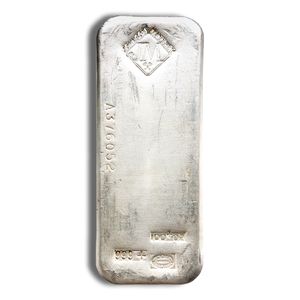
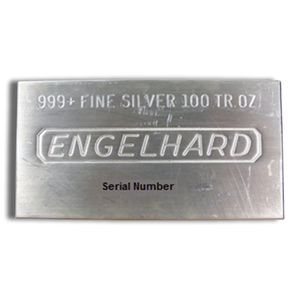
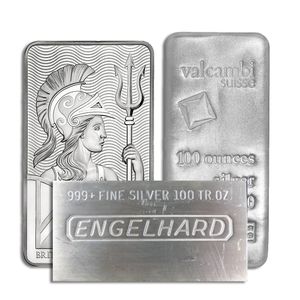
The Engelhard 100 oz silver bar is one of the most recognized vintage silver products in existence. Available in hand-poured, cast, and extruded formats, these bars were produced during the height of Engelhard's refining operations and carry a strong following in the secondary market. Their appearance varies by production method, with hand-poured examples showing organic surface textures that differ noticeably from the cleaner lines of extruded bars.
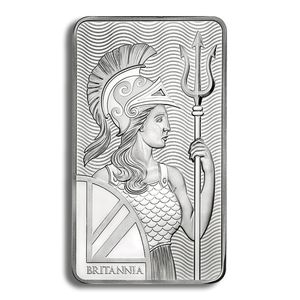
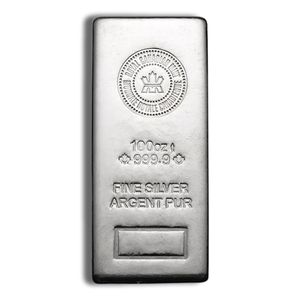
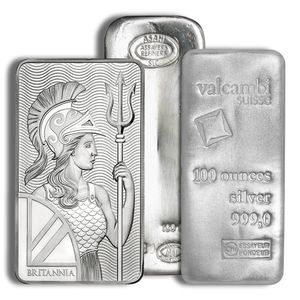
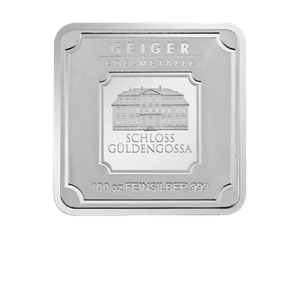
Johnson Matthey is another refinery whose 100 oz bars carry significant name recognition. Like Engelhard, JM bars are considered legacy bullion and are actively sought in the secondary market. The Royal Canadian Mint and The Royal Mint Britannia bar represent government-affiliated production at this weight, with the Britannia bar carrying the distinctive design elements associated with the UK's Royal Mint program. Geiger Edelmetalle, the German refinery, produces its 100 oz bar in a sealed format, which helps preserve condition and supports authentication.
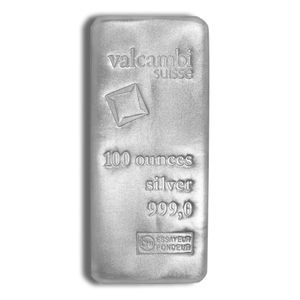
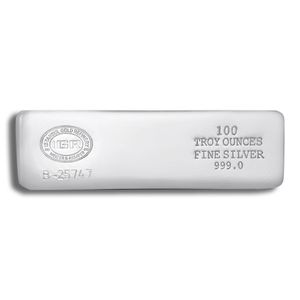
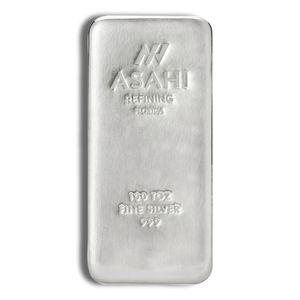
Frontier Mint offers a sandblast finish variant at .9999 fineness, which gives the bar a matte, frosted appearance that distinguishes it visually from polished or cast alternatives. Asahi Refining, IGR Metals, and Valcambi round out the branded options, each bringing different production origins and surface styles. The random brand listing provides a cost-efficient alternative for buyers who are primarily focused on silver content and are comfortable receiving a bar from one of several recognized producers rather than a specific name.
Pricing, Premiums, and Market Factors
The price of a 100 oz silver bar is determined by the current spot price of silver plus a premium that reflects production costs, packaging, brand recognition, and current market supply and demand. Spot silver is traded continuously on global markets and serves as the baseline from which all physical silver products are priced. Premiums on 100 oz bars are generally lower on a per-ounce basis than smaller silver formats, which is one of the primary reasons buyers choose this size.
Brand plays a meaningful role in pricing at this weight. Bars from Engelhard and Johnson Matthey, for example, often carry elevated premiums due to collector demand and secondary market recognition, even though their silver content is identical to bars from newer producers. Government-affiliated products like the Royal Canadian Mint bar and The Royal Mint Britannia bar may also carry slight premium differences relative to generic or lesser-known refinery bars. Condition, production era, and whether a bar is sealed or assay-certified can all affect the premium a specific bar commands.
Bullion Standard displays bid and ask pricing on each product page, giving buyers a clear picture of what they'll pay to acquire a bar and what the current buyback value looks like at the time of purchase. This transparency reflects our belief that understanding the full spread, not just the ask price, is essential to making an informed purchasing decision. Premiums and spreads evolve over time as wholesale market conditions, inventory availability, and buyer demand shift.
Condition, Packaging, and What to Expect
100 oz silver bars are produced using two primary methods: cast and minted. Cast bars are poured into molds and cooled, resulting in a somewhat irregular surface texture that varies from bar to bar. Minted bars are produced from rolled silver sheet cut to precise dimensions, giving them cleaner edges and more uniform surfaces. Both formats are fully acceptable in the silver market, and neither production method affects the silver content or purity.
Some bars ship with individual assay cards that confirm the bar's weight, purity, and serial number. Sealed bars, such as the Geiger offering in our catalog, arrive in factory packaging designed to protect the bar's condition and provide additional authentication assurance. Other bars, particularly vintage Engelhard and JM examples, are typically traded loose without original packaging, which is standard for secondary market bullion of that era.
Buyers should expect minor handling marks, surface scuffs, or storage-related toning on secondary market bars. These cosmetic variations are normal and have no effect on silver content or resale value in most trading contexts. Random brand bars will be fulfilled from available inventory across recognized producers, so the specific brand received may vary. If you require a specific brand or assay card, it's best to select one of the individually listed products rather than the random brand option.
Authenticity and Verification
Authenticity is a fundamental concern in the large-format silver bar market. 100 oz bars are a known target for counterfeiting, particularly vintage examples from well-known refineries. Proper verification involves checking the bar's weight, dimensions, and purity markings against the specifications published by the producing refinery. Density testing, including the use of ultrasonic devices, is a reliable non-destructive method for detecting tungsten-core or silver-plated counterfeits.
Bars with intact serial numbers can often be cross-referenced against refinery records or dealer databases. Sealed and assay-certified bars carry additional built-in authentication, since tampering with the packaging is visible upon inspection. Geiger Edelmetalle's sealed bar format is a good example of a production standard designed specifically to support long-term authenticity confidence.
Bullion Standard verifies all products for authenticity, weight, and purity before they reach our customers. We source from reputable mints, refineries, wholesalers, and authorized distributors, and our purchasing and authentication processes are built around the same standards applied across the professional bullion trade. Our A BBB rating, ANA membership, and NCBA affiliation reflect the seriousness with which we approach product integrity.
Liquidity and Resale Considerations
100 oz silver bars are among the more liquid large-format silver products in the secondary market. The format is widely recognized by dealers, refineries, and institutional buyers globally, which supports its resale accessibility compared to obscure or non-standard formats. Bars from well-known producers, particularly Engelhard, Johnson Matthey, Johnson Matthey, Royal Canadian Mint, and Valcambi, tend to be easier to sell quickly and at tighter spreads because buyers are familiar with them and confident in their purity.
Intact packaging and accompanying assay cards improve resale conditions for bars where original documentation exists. A Geiger bar that arrives sealed is generally easier to liquidate at a clean price than a bar with broken or missing packaging. For vintage bars like Engelhard or JM, collector demand in the secondary market can support premiums above generic silver content, though this varies with market conditions.
The random brand listing is generally liquid as well, provided the bar received is from a recognizable refinery. Bars from obscure or unrecognized producers can occasionally present friction during resale, which is worth considering if packaging clarity or brand recognition is a priority for your purchasing decision.
Storage and Security
At roughly 6.86 pounds per bar, a single 100 oz silver bar is manageable to handle but meaningful in weight when multiples are stored together. Home storage in a quality fire-resistant safe is a practical option for smaller quantities. The safe should be properly anchored and rated for both fire and theft resistance. For buyers storing larger quantities, third-party vault storage through an insured precious metals depository provides an added layer of security and eliminates concerns about home storage logistics.
Bank safe deposit boxes are sometimes used for silver bar storage, though they typically lack the capacity for multiple large bars and may not be covered by FDIC insurance for the stored contents. Dedicated precious metals depositories offer allocated and segregated storage options that allow specific bars to be assigned to your account, which is particularly relevant if you own serialized or assay-certified bars where the individual identity of the product matters.
Silver is susceptible to toning and surface oxidation when exposed to humidity, sulfur-bearing compounds, or air over extended periods. Keeping bars in their original sealed packaging where applicable, or storing them in airtight containers with anti-tarnish materials, helps preserve surface condition over time. While toning does not affect silver content or resale value in most cases, maintaining original packaging is a good practice for bars where assay documentation is part of the product's value.
Selling and Buyback Options
Selling a 100 oz silver bar back into the market is straightforward when the bar is from a recognized producer and its specifications can be easily confirmed. Most professional bullion dealers, including Bullion Standard, maintain active buyback programs for large-format silver bars. The buyback price is based on current spot silver prices and the specific product's wholesale bid value, which reflects factors such as brand recognition, condition, packaging, and current market liquidity.
Bars that arrive with intact assay cards, sealed packaging, or verifiable serial numbers are typically processed more efficiently during the buyback evaluation. Vintage bars like Engelhard and JM are well-understood by our purchasing team and generally move through the process cleanly. Random brand bars are accepted as well, subject to standard authentication and weight verification. Bars in heavily damaged condition or those with removed or altered markings may require additional review.
Bullion Standard operates a two-way market, meaning you can initiate a sell request through the same platform where you purchased. Our purchasing team provides competitive buyback pricing based on live wholesale bid pricing, and the process is designed to be transparent and operationally straightforward. Buyers who understand both the purchase premium and the current buyback spread before acquiring a bar are better positioned to evaluate the full cost of ownership from the start.
Why Buy 100 Oz Silver Bars?
The primary appeal of 100 oz silver bars is premium efficiency. Compared to smaller silver formats like 1 oz bars or rounds, the per-ounce cost of production is lower at the 100 oz scale, and that efficiency is typically passed through to the buyer in the form of a reduced premium above spot. For buyers who want meaningful silver exposure with a lower cost per ounce than smaller denominations, the 100 oz bar is a logical format choice.
Silver's role in industrial applications adds another dimension to its market dynamics. Silver is used extensively in electronics, photovoltaics, medical equipment, and advanced manufacturing, which creates ongoing industrial consumption that distinguishes it from gold's more purely monetary demand profile. This consistent industrial offtake supports underlying silver demand independent of retail bullion activity.
From a storage standpoint, 100 oz bars are efficient relative to the silver content they represent. A single bar holds 100 troy ounces in a compact, stackable form that takes up far less space than an equivalent silver content in coins or rounds. For buyers who prioritize silver density per unit of storage space, the bar format at this weight delivers a practical advantage.
Why Buy from Bullion Standard?
Bullion Standard has operated as a trusted precious metals marketplace since 2010, built on a straightforward principle: pricing and product information should be transparent, and customers should have access to the data they need to make informed decisions. That philosophy drives every part of our platform, from real-time pricing and bid/ask spread visibility to the product research tools available across our catalog.
We source products from reputable mints, refineries, and authorized distributors, and every item is verified for authenticity, weight, and purity before it ships. Our A BBB rating, ANA membership, and NCBA affiliation reflect years of consistent performance and a commitment to operating by the standards the industry expects from a trusted dealer. We're also authorized dealers for both PCGS and NGC, which supports our capabilities across both the bullion and numismatic sides of the market.
Our two-way market structure sets us apart from traditional retail bullion dealers. You can buy and sell within the same platform at competitive pricing, with full visibility into current buyback values before you ever make a purchase. We support a wide range of payment methods including Visa, Mastercard, American Express, Discover, PayPal, bank-connected payments through Plaid, wire transfer, paper check, and cryptocurrency through BitPay, so the buying process is as convenient as it is transparent.
Get Near-Spot Pricing with Bullion Standard Pro
Bullion Standard Pro is designed for buyers who want to transact at wholesale-level pricing rather than standard retail premiums. Members gain access to live, executable wholesale bid and ask pricing across our catalog, including 100 oz silver bars. Unlike retail pricing structures that incorporate fixed dealer markups, Pro pricing allows premiums and spreads to fluctuate naturally based on real-time wholesale market conditions.
For buyers acquiring 100 oz silver bars, where per-ounce cost efficiency is already a key consideration, the ability to transact closer to wholesale pricing can make a meaningful difference in overall acquisition cost. Pro members also benefit from live portfolio valuation based on current wholesale bid pricing, which provides a more realistic picture of liquidation value than estimates based on retail ask prices.
The platform extends beyond pricing alone. Pro members have access to historical premium analysis, spread analysis, liquidity metrics, and other proprietary market intelligence tools designed to provide a more complete picture of how individual products are priced and traded within the wholesale silver market. For buyers who take a data-driven approach to physical silver, Bullion Standard Pro is built around the same transparency and analytical depth that characterizes the rest of our platform.

 (833) 278-4653