Buy 20 Franc European Gold Coins Online
Our catalog of 20 franc European gold coins spans more than a century of minting history, bringing together some of the most recognizable gold coinage ever produced on the European continent. You'll find circulated examples from France, Belgium, Switzerland, Austria, and Tunisia, issued across a range of historically significant reigns and republics. Each coin in our catalog contains 0.1867 troy ounces of gold at 90% purity, making them consistent and easily comparable from one product to the next.
From Napoleon I-era issues struck at the Monnaie de Paris to Swiss Helvetia coins from Swissmint and Leopold II-era Belgian francs from the Royal Belgian Mint, the selection here reflects the depth and variety that serious buyers look for in this format. Products are available individually, and many carry XF (Extremely Fine) or AU (About Uncirculated) grades, offering buyers a range of circulated condition options depending on their priorities.
Bullion Standard sources these coins through established wholesale channels and presents pricing transparently against live spot gold. Whether you're adding a specific reign or nationality to your holdings or simply acquiring gold in this historically grounded format, the information and pricing you need to make a confident decision are available without the guesswork.
What Are 20 Franc European Gold Coins?
The 20 franc gold coin was the standard monetary unit of the Latin Monetary Union, a 19th-century currency framework that unified coinage specifications across France, Belgium, Switzerland, Italy, and eventually other nations. Each coin was struck to contain 5.81 grams of gold at 90% fineness, yielding approximately 0.1867 troy ounces of actual gold content. Because every member nation adhered to the same specifications, these coins were effectively interchangeable in commerce and remain dimensionally consistent to this day.
Buyers choose this format for a few distinct reasons. The 0.1867 oz gold content sits in fractional territory, meaning these coins offer a lower per-unit price point compared to one-ounce gold coins while still carrying significant historical character. Unlike modern fractional gold coins, which are produced primarily for the bullion market, 20 franc pieces were circulating monetary instruments used across Europe for over a century, giving them a depth of historical authenticity that purely bullion-focused products don't replicate.
These are raw, circulated coins rather than graded slabs or proof issues. They trade primarily on the basis of their gold content and condition, though specific reigns and design types can carry modest premiums reflecting relative scarcity or collector interest. Their consistent specifications, widely recognized origin countries, and established market presence make them a practical format for buyers seeking fractional gold with genuine historical character.
History and Background
The Latin Monetary Union was established in 1865 through an agreement between France, Belgium, Switzerland, and Italy, with several other nations joining over subsequent decades. The union standardized gold and silver coinage across member states, requiring that 20 franc gold coins conform to a shared specification: a diameter of approximately 21 millimeters, a weight of 6.45 grams, and a gold fineness of 900 parts per thousand. This standardization allowed coins from one nation to circulate freely in another, creating one of the earliest examples of a multinational currency system in the modern era.
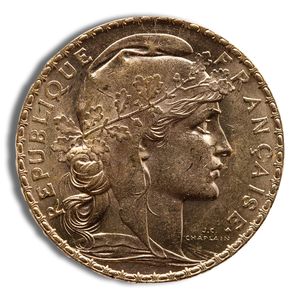
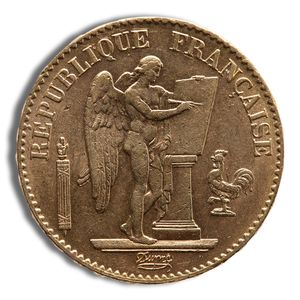
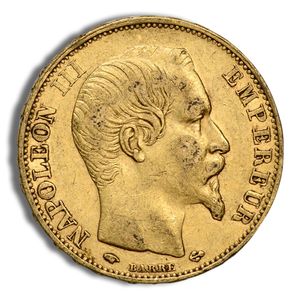
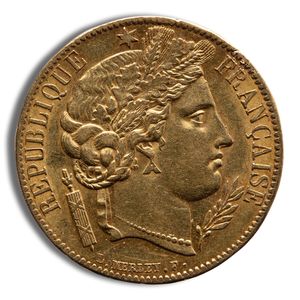
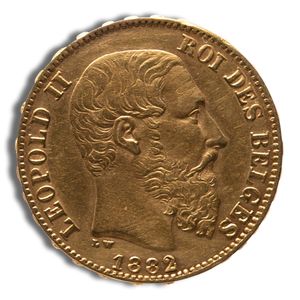
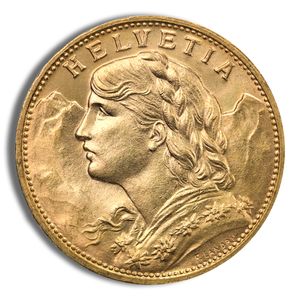
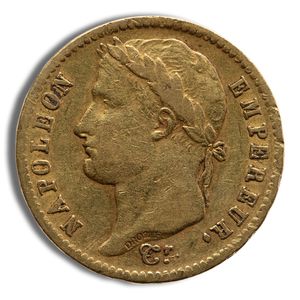
France was the most prolific producer, with the Monnaie de Paris issuing 20 franc coins continuously from the Napoleonic period through the early 20th century under a succession of monarchs, emperors, and republics. The coinage design changed with each regime, producing a remarkably varied visual record of French political history, from the laureate portraits of Napoleon I and Napoleon III to the allegorical figures of Ceres and the Lucky Angel, and finally to the Gallic Rooster design that defined the Third Republic issues. Switzerland's Swissmint contributed the Helvetia designs beginning in the 1880s, while the Royal Belgian Mint issued coins bearing the likeness of Leopold II beginning in the late 1860s.
The Latin Monetary Union formally dissolved in 1927, but the coins it produced remained in circulation and continued to trade as bullion in European markets long afterward. By the mid-20th century, they had transitioned almost entirely into the role they occupy today: standardized fractional gold coins with a well-established secondary market, recognized and traded by dealers across Europe and North America.
Purity, Weight, and Specifications
Every 20 franc European gold coin in our catalog is struck to the same Latin Monetary Union standard: 90% gold fineness (expressed as 0.900), with an actual gold content of 0.1867 troy ounces. The gross weight of each coin is approximately 6.45 grams, with a diameter of 21 millimeters for most French and Swiss issues and 21.4 millimeters for Belgian examples. Thickness generally falls between 1.2 and 1.4 millimeters depending on the issuing mint.
The 90% purity level places these coins slightly below the .9999 or .999 fineness of modern bullion coins, but this standard was universal across all Latin Monetary Union members and has never affected the coins' recognizability or acceptance in the global bullion trade. The remaining 10% alloy content is typically copper, which contributed to the coins' durability in circulation and is responsible for the warm golden tone often visible on well-preserved examples.
No assay cards or certificates accompany these coins, as they predate modern assay packaging conventions. Authentication relies instead on dimensional verification, weight testing, and familiarity with the specific design characteristics of each issuing mint. Experienced dealers and buyers identify genuine examples by their precise weight, diameter, edge reeding, and design detail consistency.
Available Brands, Mints, and Product Variations
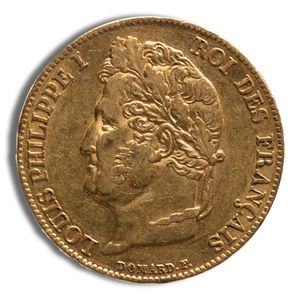
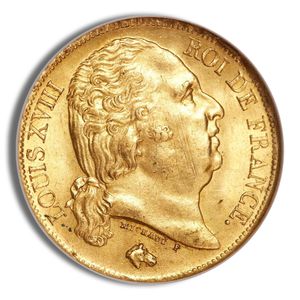
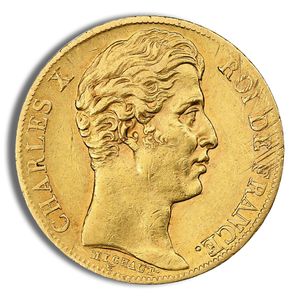
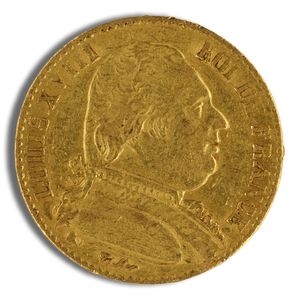
The Monnaie de Paris accounts for the majority of products in our catalog, having struck 20 franc gold coins across eight distinct design types spanning from 1807 through 1914. These include Napoleon I issues, two separate Louis XVIII series, Charles X coinage, Louis Philippe pieces, the Ceres design of the Second Republic, Napoleon III coins of the Second Empire, the Lucky Angel of the early Third Republic, and the Gallic Rooster that closed out French 20 franc production. Each of these types is listed separately in our catalog, allowing buyers to select based on design period or reign rather than acquiring a completely random year and type.
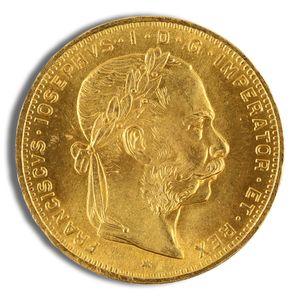
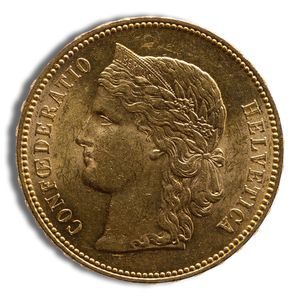
Switzerland is represented by two Swissmint series: the Helvetica design struck between 1883 and 1896, and the more widely known Helvetia design produced from 1897 through 1949. Both Swiss series are graded AU (About Uncirculated) and carry slightly different physical specifications, with a thickness of 1.4 millimeters compared to the 1.3-millimeter profile of French issues. The Royal Belgian Mint's Leopold II coins, struck between 1867 and 1882, round out the core European offerings alongside the Austrian Mint's 8 Florin / 20 Franc pieces, which conform to the same gold content standard and were designed for direct equivalency within the Latin Monetary Union framework. A Tunisian 20 franc coin produced by the Monnaie de Paris under French administration is also available for buyers interested in the broader reach of Latin Monetary Union-standard coinage.
All products in this section are random year within the stated date range, meaning the specific year you receive will vary based on available inventory. Each date range corresponds to a specific design type, so you'll know which reign or design era your coin represents even without knowing the exact strike year in advance.
Pricing, Premiums, and Market Factors
Like all gold bullion products, 20 franc European gold coins are priced against the live spot price of gold, with a premium added to cover sourcing, verification, handling, and dealer margin. Because these coins are circulated historical pieces rather than newly minted bullion, their premiums are influenced by factors beyond spot alone, including relative scarcity of specific design types, grade, and current demand within the collector and bullion markets.
In general, the most widely circulated types, particularly French Roosters, Helvetia coins, and Napoleon III pieces, tend to carry tighter premiums due to their greater market availability and higher trading volume. Rarer or shorter-run designs, such as the Ceres coins of 1849 to 1851 or the Leopold II Belgian issues, may carry modestly higher premiums reflecting their relative scarcity in the wholesale market. Grade also plays a meaningful role: AU-graded coins typically command a slight premium over XF examples of the same design type.
Bullion Standard prices these coins transparently against real-time gold spot, and each product page displays the bid/ask spread so buyers can evaluate the complete cost of ownership before purchasing. Our two-way market structure means the same platform where you buy can also provide competitive buyback pricing when you're ready to sell, which is a meaningful consideration when evaluating the true cost of fractional gold in circulated form.
Condition, Packaging, and What to Expect
All 20 franc gold coins in our catalog are circulated, meaning they show wear consistent with their historical use as monetary currency. XF-graded examples retain clear design detail with light to moderate wear on high points. AU pieces show only slight friction and may exhibit original mint luster in protected areas. Neither grade indicates a collector-quality presentation piece; these are bullion-grade circulated coins valued primarily for their gold content.
Products arrive loose rather than in assay packaging or capsules, which is standard for this category of historical gold coinage. You should expect light handling marks, minor contact abrasions, and surface toning consistent with age and circulation history. These characteristics are entirely normal and do not affect the coin's gold content or market acceptability. Coins showing unusual damage, excessive scratching, or cleaning may occasionally be encountered in the broader market, but Bullion Standard applies verification standards designed to exclude coins in unacceptable condition.
Because these are random year products within each stated date range, you will not be able to select a specific strike year at the time of purchase. The date range listed on each product page defines the design type you'll receive. If a specific year matters for your purposes, we recommend reaching out to our customer service team to discuss availability before placing your order.
Authenticity and Verification
Authenticating Latin Monetary Union gold coins relies on a combination of physical verification methods that have been well established within the numismatic and bullion trade for generations. Genuine coins conform to precise weight and dimensional tolerances, and any meaningful deviation from the 6.45-gram gross weight or the 21-millimeter diameter is a strong indicator of a non-genuine piece. Diameter, thickness, edge reeding pattern, and die characteristics are all consistent within each issuing mint's production runs, making physical comparison against known genuine examples a reliable identification method.
Bullion Standard verifies every coin for authenticity, weight, and purity as part of our standard intake and sourcing process. We source from reputable wholesalers, distributors, and established market participants with traceable provenance, and our team applies verification procedures appropriate to historical gold coinage. As an authorized dealer for both PCGS and NGC and a member of the American Numismatic Association, we operate within a framework of professional standards that informs how we evaluate and present these products.
While modern anti-counterfeiting features like microprinting or security edge lettering are not present on coins produced in the 19th and early 20th centuries, the precision of original mint production combined with careful physical verification provides a reliable basis for authenticity determination. Buyers who want an additional layer of third-party assurance for specific pieces can pursue independent grading through PCGS or NGC, both of which certify historical gold coinage.
Liquidity and Resale Considerations
The 20 franc gold coin format benefits from genuine global market recognition built over more than a century of trade. These coins are bought and sold by dealers across Europe, North America, and beyond, and they are accepted as a recognized gold bullion format by a wide range of wholesale buyers. The Latin Monetary Union standard they represent is well understood, and the consistent 0.1867 oz gold content makes pricing and conversion straightforward for any experienced dealer or buyer.
Among the various design types, French Roosters and Swiss Helvetia coins tend to have the broadest market recognition and the most active secondary market in the United States and Europe. Napoleon-era coins and Belgian Leopold II pieces are somewhat less common but remain recognized and tradable within the standard wholesale market. The Austrian 8 Florin / 20 Franc pieces occupy a slightly narrower market niche due to the dual denomination designation, though the gold content and physical specifications are equivalent.
Condition and original packaging, or the absence of it, factor into resale as well. Coins in higher circulated grades generally command slightly better buyback pricing than heavily worn examples of the same type. Because these coins arrive loose without assay packaging, resale is evaluated purely on the physical characteristics of the coin itself rather than on packaging integrity, which simplifies the resale process for buyers who handle and store their coins over time.
Storage and Security
At 21 millimeters in diameter, 20 franc gold coins are compact and easy to store in volume. Standard-size coin tubes and coin flips accommodate this format well, and many buyers opt for protective capsules to limit surface contact and reduce the likelihood of additional wear during storage. Because these are already circulated coins, the incremental cosmetic impact of careful handling is minimal, but proper storage still matters for maintaining overall condition.
Home safes rated for fire and burglary resistance are a practical choice for moderate quantities of fractional gold. For larger accumulations, allocated vault storage through a professional precious metals depository provides a more secure option, typically with insurance coverage and third-party verification of holdings. Bank safe deposit boxes are another commonly used option, though they lack the insurance and round-the-clock access that dedicated vault services provide.
Avoid storing loose coins in environments with high humidity or exposure to chemicals, both of which can accelerate toning and surface degradation even in gold alloy coins containing copper. Keeping coins in individual flips or capsules within a sealed container is a straightforward way to protect them from environmental exposure without significant cost or complexity.
Selling and Buyback Options
Selling 20 franc European gold coins is a relatively straightforward process given their standardized specifications and broad market recognition. Dealer buyback pricing is typically calculated as a percentage of the current spot gold price, adjusted for the coin's specific type, grade, and condition. Higher-grade examples and more widely traded design types generally attract the most competitive buyback offers, while coins in heavily worn condition or from less commonly traded series may see modest adjustments.
Bullion Standard operates a two-way market, meaning you can sell these coins back through the same platform where you purchased them. Our purchasing team evaluates each product based on current wholesale market conditions, the specific design type and issuing mint, and the physical condition of the coins presented. Because these are circulated pieces without assay packaging, the evaluation process is based entirely on the physical coin, which our team is experienced in assessing accurately and efficiently.
Understanding your expected resale value before purchasing is a meaningful part of evaluating any bullion product, and Bullion Standard's transparent bid/ask pricing on each product page is designed to give you that visibility upfront. Members of Bullion Standard Pro have access to live executable wholesale bid pricing, which provides a real-time view of current liquidation values and allows for more precise portfolio valuation than estimated retail prices alone can offer.
Why Buy 20 Franc European Gold Coins?
For buyers seeking fractional gold with genuine historical character, the 20 franc format offers a combination of attributes that few other options match. The 0.1867 oz gold content puts the per-unit cost well below a full-ounce gold coin while still representing meaningful gold exposure in a compact, durable form. Unlike modern fractional gold coins, these pieces carry over a century of minting history and reflect real monetary use across European economies, which gives them a tangibility that purely commercial bullion products don't replicate.
The range of available design types, spanning French monarchs and republics, Swiss allegorical figures, Belgian royalty, and Austrian dual-denomination coinage, gives buyers flexibility to build a geographically and historically varied collection within a single consistent gold specification. Each design type is struck to the same Latin Monetary Union standard, making comparisons straightforward and portfolio tracking simple.
The format is also practical from a storage and divisibility standpoint. Compact dimensions, established dealer recognition, and a well-developed secondary market mean these coins are easy to store, straightforward to appraise, and accessible to sell when the time comes. For buyers who want gold in a format that combines fractional practicality with genuine historical depth, the 20 franc European gold coin remains a well-suited option.
Why Buy from Bullion Standard?
Bullion Standard has operated as a trusted precious metals marketplace since 2010, building its reputation on pricing transparency, authentic sourcing, and a customer-first approach that prioritizes informed decision-making over high-pressure sales tactics. Every product we carry is verified for authenticity, weight, and purity before it reaches our customers, and our sourcing relationships are maintained with established wholesalers, distributors, and market participants who meet our standards for reliability and traceability.
Our A rating with the Better Business Bureau, membership in both the American Numismatic Association and the National Coin and Bullion Association, and status as an authorized dealer for PCGS and NGC reflect the professional standards we hold ourselves to across every aspect of the business. Customers can purchase with confidence knowing they're working with a nationally recognized, fully accountable dealer rather than an anonymous marketplace listing.
Flexible payment options including Visa, Mastercard, American Express, Discover, PayPal, bank-connected payments through Plaid, wire transfer, paper check, and cryptocurrency through BitPay make it easy to complete transactions in the way that works best for you. Secure fulfillment, responsive customer service, and our two-way market model, where you can both buy and sell within the same ecosystem, make Bullion Standard a practical long-term partner rather than a one-time transaction vendor.
Get Near-Spot Pricing with Bullion Standard Pro
Bullion Standard Pro is designed for buyers who want direct access to the wholesale pricing layer of the precious metals market. Members transact at live executable wholesale bid and ask prices rather than fixed retail markups, which means premiums and spreads reflect actual supply and demand conditions in real time rather than a static dealer pricing structure. For buyers acquiring fractional gold like 20 franc coins with any regularity, this can translate into meaningfully more efficient pricing over time.
The platform also provides live portfolio valuation using executable wholesale bid pricing rather than estimated retail values, which gives members a more accurate and realistic picture of what their holdings are worth at any given moment. Proprietary market intelligence tools, including historical premium analysis, spread tracking, and liquidity metrics, allow members to evaluate specific products and market conditions using objective data rather than intuition or marketing claims.
For buyers who want greater transparency into how 20 franc European gold coins are priced and traded at the wholesale level, Bullion Standard Pro provides that visibility in a structured, data-driven format. The goal is to reduce the information gap that has historically existed between retail buyers and wholesale market participants, making the experience of buying, holding, and selling physical gold more transparent and more efficient for everyone involved.

 (833) 278-4653