 (833) 278-4653


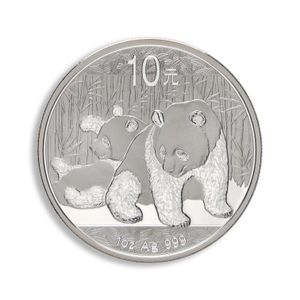
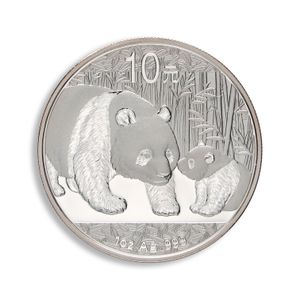
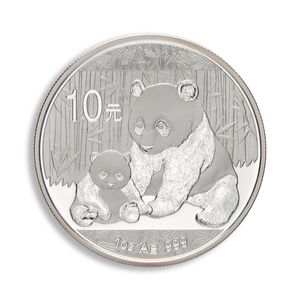

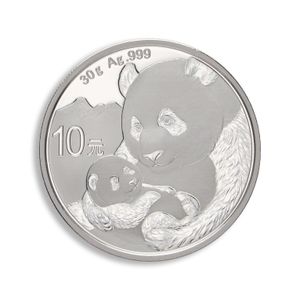

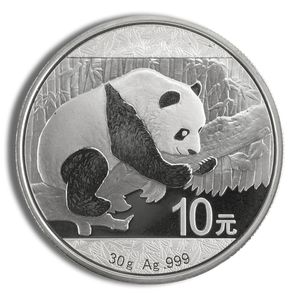

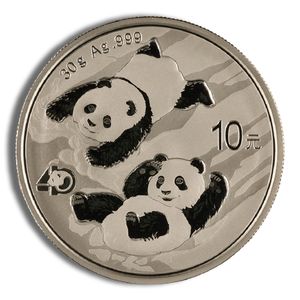

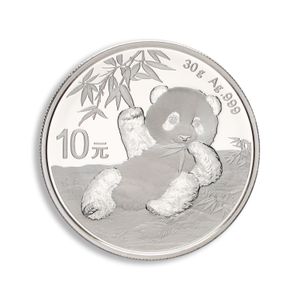
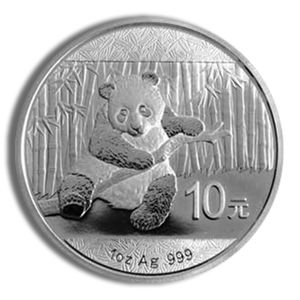
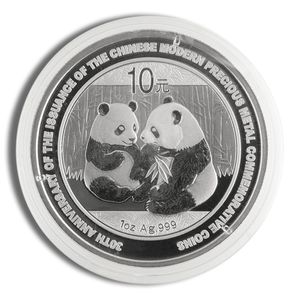


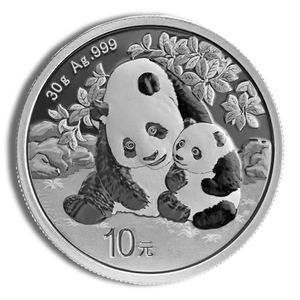
Buy Chinese Silver Pandas Online
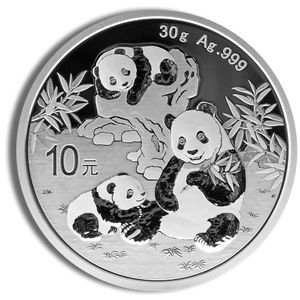
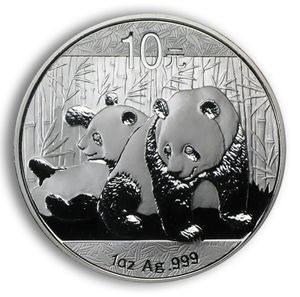
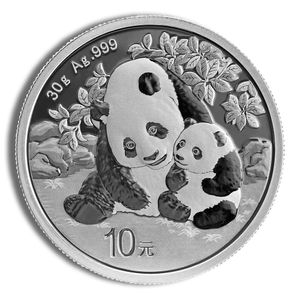
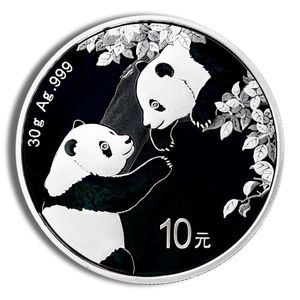
Our catalog of chinese silver pandas spans decades of production from the Central Mint of China, covering both the classic 1 oz format issued through 2015 and the 30 gram standard that replaced it beginning in 2016. You'll find specific-year coins from 2002 through 2025 alongside random year options in both sizes, giving buyers flexibility whether they're focused on a particular vintage or simply want competitive pricing on a widely recognized silver coin.
Every coin in this catalog is struck to a purity of 0.999 fine silver, carries a face denomination of 10 Yuan, and measures 40mm in diameter. Packaging formats range from individual coins and capsule-protected pieces to mint tubes holding 15 or 30 coins and sealed master boxes. At Bullion Standard, pricing reflects live spot conditions without unnecessary complexity, and the bid/ask spread displayed on each product page makes the complete transaction picture clear before any purchase is made.
Whether you're filling a date run, adding a specific year, or sourcing coins in bulk through tube or box quantities, this catalog covers the full modern range of China Mint silver panda production in one place.
What Are Chinese Silver Pandas?
Chinese silver pandas are government-issued bullion coins produced by the Central Mint of China, one of China's primary state-operated mint facilities. Each coin features the iconic giant panda design on the reverse, which changes annually, making each year's release visually distinct from all others. The obverse carries the Hall of Prayer for Good Harvests at the Temple of Heaven in Beijing, a design that has remained largely consistent throughout the series.
Unlike some bullion coins that maintain a fixed reverse design year after year, the changing panda imagery gives these coins an added dimension for date-specific collectors while still functioning as straightforward silver bullion for buyers focused on metal content. They carry legal tender status in China and are recognized internationally within the wholesale and retail silver markets.
The silver panda occupies a space between pure bullion and collectible coinage. The annual design changes attract collectors who track each year's release, while the standardized purity, weight, and government backing keep them relevant as a bullion product. That dual appeal is part of what sustains demand for both current-year coins and back-dated issues.
History and Background
The Chinese silver panda series launched in 1983, making it one of the earlier government-backed silver bullion coin programs in the modern era. Production expanded steadily through the 1980s and 1990s as international interest in Chinese bullion grew alongside broader participation in the global silver market. By the 2000s, the series had established a consistent following across North America, Europe, and Asia.
Through 2015, the standard silver panda was struck to a weight of 1 troy ounce. Beginning with the 2016 issue, the China Mint transitioned to a 30 gram standard, aligning with a broader metric-based approach used across several Chinese government coin programs. The 30 gram weight equates to approximately 0.9645 troy ounces, a distinction that matters when comparing metal content across different years. Both weight standards are represented in this catalog.
The annual design change policy, formalized as a consistent program feature, became one of the more recognized characteristics of the panda series within the collector community. Each year's panda motif is unique, which has driven active secondary market trading for specific dates. Coins from earlier years, including issues like the 2002 and 2009 coins available here, carry an additional dimension beyond their silver content due to their age within the series.
Purity, Weight, and Specifications
All silver pandas in this catalog are struck to a fineness of 0.999, meaning 99.9% pure silver content. The 1 oz coins issued through 2015, including all years represented from 2002 to 2015, contain exactly one troy ounce of silver and measure 40mm in diameter. Thickness varies slightly between earlier and later issues, with pre-2016 coins typically measuring 2.98mm, while the 2002 coin is noted at 2.7mm for the random year version.
The 30 gram coins introduced in 2016 contain 0.9645 troy ounces of silver. They share the same 40mm diameter as the 1 oz predecessors, with a thickness of 2.9mm for most recent issues. The face denomination across both weight standards is 10 Yuan. Coins are struck in brilliant uncirculated (BU) condition as the standard production grade for the series.
Inner tube quantities differ between the two weight formats: 1 oz coins are typically packaged in tubes of 30, while 30 gram coins come in tubes of 15. Full box quantities follow accordingly, with 1 oz coins packing 900 per master box and 30 gram coins at 450. These packaging structures are relevant for buyers calculating per-coin pricing at the tube or box level.
Available Brands, Mints, and Product Variations
Every coin in this catalog is produced by the Central Mint of China, also referred to as the China Mint, the state-operated institution responsible for official Chinese government coin production. The China Mint operates facilities across multiple locations within China, and coins from different years may carry varying mint marks. Random year products in this catalog are noted as carrying various mint marks, reflecting that sourcing may draw from different production years and facilities.
The catalog spans a meaningful date range, from the 2002 1 oz coin through the current 2025 30 gram issue, with most years between 2010 and 2025 represented as individual year-specific coins. Two random year options are also available: the 1 oz random year coin in BU condition and the 30 gram random year coin offered individually in capsule. Random year products are sourced from existing inventory and are priced accordingly, typically offering a cost-efficient entry point when a specific year is not required.
The BU finish across all products reflects standard mint production quality: struck from polished blanks with clean fields and sharp relief, but not the mirrored surface associated with proof coinage. Each coin is the official government-issued product, not a privately struck round or replica, which matters for recognition across wholesale and retail bullion markets.
Pricing, Premiums, and Market Factors
Silver panda pricing is driven by the live spot price of silver combined with a per-coin premium that reflects production costs, distribution, packaging, and current market demand. The premium structure for silver pandas tends to sit above many generic silver rounds but is broadly competitive with other government-issued silver coins of similar size and recognition. Year-specific coins, particularly older dates like the 2002 or 2009 issues, may carry premiums that reflect their relative scarcity in the secondary market compared to current-year production.
The shift from 1 oz to 30 grams in 2016 introduced a small but real difference in metal content per coin, which affects direct price comparisons between pre-2016 and post-2015 issues. Buyers comparing pricing across years should account for this weight distinction rather than assuming equivalent metal content. The 30 gram format also carries a slightly different premium dynamic in the secondary market compared to the 1 oz standard, which can influence resale pricing.
At Bullion Standard, premiums are tied to real-time market conditions and are not inflated through fixed retail markup structures. The bid/ask spread shown on each product page reflects both the acquisition cost and the current wholesale buyback level, giving buyers a transparent view of the true cost of ownership before committing to a purchase. This structure is particularly useful when comparing year-specific coins at different price points within the same catalog.
Condition, Packaging, and What to Expect
All silver pandas in this catalog are graded BU, meaning they leave the mint without circulation and arrive in the condition the China Mint produces them. BU is the standard production grade for the series and should not be confused with proof or specimen coinage. Minor surface marks or contact points visible under close inspection are normal for BU bullion coins and do not affect the coin's silver content, authenticity, or bullion value.
Most coins ship in their original mint packaging: tubes for bulk quantities or individual capsules where specified. The random year 30 gram coin is listed as available in capsule, offering an added layer of surface protection for individual pieces. Specific-year coins are typically shipped in their standard mint tube packaging when ordered in quantity, or as individual coins depending on the order configuration.
Random year products will ship as available from current inventory. The year received will be a genuine China Mint silver panda in BU condition, though the specific date cannot be guaranteed. If a particular year is important for your collection or purpose, the year-specific listings in this catalog are the appropriate choice.
Authenticity and Verification
Silver pandas are official government-issued coins produced under the authority of the People's Republic of China. The China Mint applies standard anti-counterfeiting measures to production, and the coins carry identifying characteristics including specific die work, edge reeding, and dimensional tolerances that can be cross-referenced against known authentic examples. Experienced dealers and grading services maintain reference data for each year's production.
Bullion Standard sources products directly from reputable mints, authorized distributors, and established wholesale market participants. Every product is verified for authenticity, weight, and purity prior to fulfillment. Our sourcing standards are designed to ensure that customers receive genuine mint-issued coins, not replicas, counterfeits, or improperly described products.
For collectors or buyers seeking a formal third-party opinion on a specific coin's authenticity and grade, both PCGS (Professional Coin Grading Service) and NGC (Numismatic Guaranty Company) provide grading and encapsulation services for silver pandas. Bullion Standard is an authorized dealer for both services. Certified examples carry a tamper-evident holder and a formal grade designation, which can provide additional assurance and facilitate resale in markets that prefer certified coinage.
Liquidity and Resale Considerations
Silver pandas are internationally recognized within the bullion and numismatic communities, with active trading in North American, European, and Asian markets. The combination of government issuance, consistent purity, and the annual design change creates demand across both the bullion and collector segments. That dual demand base generally supports resale recognition compared to privately struck silver rounds with less established market presence.
Current-year 30 gram coins tend to trade with tighter spreads and broader market participation than older or scarcer dates. Back-dated issues, particularly from the 1 oz era, may carry numismatic premiums that push pricing further from spot, which can work in either direction depending on market conditions at the time of resale. Buyers should understand that coins carrying a premium above spot at the time of purchase may or may not retain that premium in the secondary market.
Standardized purity, mint origin, and widely recognized packaging formats all contribute positively to resale ease. Coins purchased in original mint tubes and maintained in that condition typically attract the most straightforward dealer and secondary market interest. Individual coins that have been removed from packaging or show excessive surface damage may face more variation in resale pricing.
Storage and Security
Silver pandas are sensitive to the same environmental factors that affect all silver products: humidity, airborne sulfur compounds, and prolonged skin contact can cause toning or surface spotting over time. Coins stored in original mint tubes or capsules are meaningfully better protected than loose coins, and maintaining original packaging is generally advisable for anyone with an interest in long-term condition preservation.
For home storage, a quality fireproof safe rated for both fire and water resistance is the practical standard. Coin tubes and capsules stack efficiently and take up relatively little space compared to bar formats, making silver pandas manageable even in larger quantities. For holdings above a few hundred ounces, third-party vault storage through an insured depository provides a more scalable and professionally secured environment.
Bank safe deposit boxes remain an accessible option for smaller quantities, though coverage and access conditions vary by institution. Regardless of where coins are stored, keeping them in their original packaging and away from reactive materials like rubber bands or PVC-containing plastics reduces the risk of surface degradation over time.
Selling and Buyback Options
Silver pandas are actively purchased by bullion dealers, numismatic buyers, and through secondary market platforms. The China Mint's government backing and the annual design program give these coins a level of recognition that supports consistent dealer interest. Current-year 30 gram coins in original tube or capsule packaging typically attract the most competitive buyback offers due to their standardization and active wholesale market presence.
Factors that influence buyback pricing include the coin's year, condition, original packaging, current spot price, and prevailing wholesale market demand for that specific date. Older coins or those carrying numismatic premiums may be evaluated differently than current-year bullion-focused production. Coins in damaged or heavily toned condition will generally receive less favorable terms than those maintained in original mint condition.
Bullion Standard operates as a two-way market, meaning customers can sell silver pandas back through the same platform where they purchased them. Our purchasing team provides competitive wholesale-referenced buyback pricing, and the process is designed to be straightforward without unnecessary friction. The bid pricing shown on each product page is a live reference point for understanding current resale value relative to the ask, giving sellers a transparent starting point before initiating a transaction.
Why Buy Chinese Silver Pandas?
The annual design change is the most distinctive feature of the silver panda program relative to other government silver coins. Unlike series where the reverse design remains static for years, each panda release offers a unique image, which sustains collector interest and year-to-year demand in a way that purely uniform bullion products do not. For buyers who want a silver coin with more visual variety across a date run, the panda series delivers that in a government-backed format.
Silver itself carries meaningful industrial demand across electronics, solar panel manufacturing, medical applications, and other technology-driven sectors. That underlying demand contributes to silver's market activity independent of purely financial factors. Silver pandas provide exposure to physical silver while also connecting buyers to one of the more widely recognized and actively traded government coin programs in Asia.
The availability of both the historical 1 oz format and the current 30 gram standard across multiple years gives buyers flexibility in how they approach the series. Whether the goal is to acquire a specific year, build a complete date run, or simply purchase current-production coins at competitive premiums, the catalog accommodates different priorities within a single consistent program.
Why Buy from Bullion Standard?
Bullion Standard was founded in 2010 and has spent over a decade building a reputation grounded in pricing transparency and verified product sourcing. Every silver panda sold through our platform has been confirmed for authenticity, weight, and purity, and our sourcing relationships run through reputable mints, authorized distributors, and established wholesale market participants. We hold an A rating with the Better Business Bureau and maintain active memberships with the American Numismatic Association and the National Coin and Bullion Association.
Our pricing model is built around real-time market conditions rather than fixed retail structures. The bid/ask spread shown on every product page reflects both sides of the transaction simultaneously, giving buyers a complete view of the cost of ownership before making a decision. That level of transparency is central to how we operate and directly reflects our belief that informed buyers make better decisions.
Checkout is supported by a wide range of payment methods including Visa, Mastercard, American Express, Discover, PayPal, bank-connected payments through Plaid, wire transfer, paper check, and cryptocurrency through BitPay. Fulfillment is handled through a reliable operational structure with secure packaging and responsive post-purchase support. Our goal is to make purchasing silver pandas, and every other product in our catalog, feel more like transacting through a transparent marketplace than navigating a traditional high-pressure sales environment.
Get Near-Spot Pricing with Bullion Standard Pro
Bullion Standard Pro is designed for buyers who want to transact closer to wholesale market levels. Members access live executable wholesale bid and ask pricing across the catalog, including silver pandas, with no additional dealer markup or fixed retail spread applied on top. Pricing reflects real-time supply and demand within the wholesale silver market, so what you see is what the market is actually offering, not an internally adjusted retail figure.
For buyers who purchase silver pandas regularly or in meaningful quantities, the pricing efficiency available through Pro can be significant over time. Because premiums and spreads fluctuate based on live market conditions rather than fixed retail structures, members can act quickly when pricing conditions are favorable without waiting for manual quote adjustments or promotional pricing windows.
Pro members also gain access to proprietary market intelligence tools that provide context beyond the current spot price, including historical premium analysis, spread tightness metrics, liquidity indicators, and wholesale market activity data. For anyone building a position in chinese silver pandas across multiple dates or weight formats, that additional analytical layer can support more informed purchasing decisions based on observable market data rather than assumptions.