Pre-1933 Gold Coins for Sale
Buy Pre-1933 Gold Coins Online
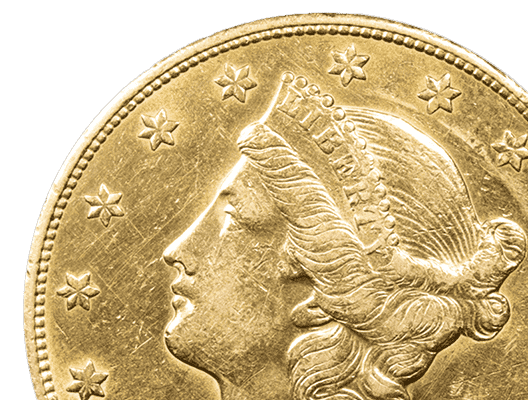
Our catalog of pre-1933 gold coins spans some of the most historically significant pieces ever produced by the United States Mint, ranging from the petite $1 gold pieces to the commanding $20 Liberty Double Eagle. Whether you're sourcing a circulated example for its gold content or a certified mint-state coin graded by NGC or PCGS, the selection here covers the full spectrum of condition, denomination, and design series.
Denominations include the $1 gold Liberty Type 1, $1 gold Princess Type 2, $1 gold Indian Type 3, $2.5 Liberty and Indian Quarter Eagles, $10 Liberty and Indian Eagles, and $20 Liberty Double Eagles. Each series is offered across multiple grade tiers, from cleaned and low-grade examples to professionally certified coins graded MS61 through MS65 by NGC and PCGS. Raw circulated examples graded VF, XF, AU, and BU are also available throughout the catalog.
Bullion Standard sources these coins through reputable wholesale channels and verifies each piece for authenticity, weight, and purity before fulfillment. Pricing is tied directly to real-time market conditions, and our platform is structured to give buyers a clear view of the premium they're paying relative to spot gold at the time of purchase.
What Are Pre-1933 Gold Coins?
Pre-1933 gold coins are genuine United States legal tender gold coins produced by the U.S. Mint before President Franklin D. Roosevelt issued Executive Order 6102 in April 1933, which effectively ended private gold coin ownership for most Americans. These coins were struck in .900 fine gold and circulated as everyday currency, making them both monetary artifacts and tangible gold holdings simultaneously.
What distinguishes this category from modern bullion coins is the combination of genuine historical circulation, classic American artistry, and inherent gold content. A $20 Liberty Double Eagle contains 0.9675 troy ounces of gold. A $10 Eagle contains 0.4837 troy oz, a $2.5 Quarter Eagle holds 0.1209 troy oz, and the $1 gold pieces carry 0.0483 troy oz each. These standard weights have remained consistent across grading services and wholesale markets for decades.
Buyers in this market fall into two broad groups: those primarily focused on gold content and those drawn to the numismatic history and condition premiums of graded examples. Both approaches are well supported by the range of options in this catalog, which spans raw circulated coins at modest premiums all the way to certified gem-quality pieces carrying meaningful numismatic value above spot.
History and Background
The United States began producing gold coinage in earnest following the Coinage Act of 1792, which established the dollar as the foundation of American monetary policy. Over the next century and a half, the U.S. Mint struck gold coins across denominations from the single-dollar piece to the double eagle, circulating them as functional currency backed by the gold standard. Designs evolved over time, moving through Liberty Head, Indian Head, and other iconic motifs that reflected both changing artistic sensibilities and broader national identity.
The $1 gold coin was produced in three distinct types from 1849 through 1889, transitioning from the small Liberty Type 1 through the larger Princess Type 2 and finally the refined Indian Type 3 design. Quarter Eagles, Half Eagles, Eagles, and Double Eagles similarly evolved through multiple design series as engravers at the Philadelphia, San Francisco, New Orleans, Denver, and Carson City Mints worked to balance aesthetics with the practical demands of commerce coinage.
Production came to an abrupt halt in 1933 when the Roosevelt administration moved the country off the domestic gold standard. Coins already in circulation or in transit were subject to recall, though many survived in private hands, were exported abroad, or entered collector markets over subsequent decades. Today, pre-1933 U.S. gold coins trade across a well-established market spanning raw circulated examples, certified numismatic coins, and everything in between.
Purity, Weight, and Specifications
All pre-1933 U.S. gold coins in this catalog are struck in .900 fine gold, also expressed as 90% purity. The remaining 10% consists primarily of copper, which was added to improve durability during circulation. This alloy composition is consistent across all denominations and design types, and it remains a recognized standard within the wholesale precious metals market.
Troy ounce content varies by denomination. The $1 gold pieces contain 0.0483 troy oz of pure gold. The $2.5 Quarter Eagles contain 0.1209 troy oz, the $10 Eagles contain 0.4837 troy oz, and the $20 Double Eagles contain 0.9675 troy oz. These figures are the basis for spot-price-referenced valuations across all grades and conditions.
Certified coins carry a slab label from either NGC or PCGS that specifies the coin's grade, certification number, and in most cases a brief description of any notable characteristics. Raw examples are sold by grade designation only, without third-party encapsulation. All products in this catalog are sold with their stated denomination, design type, gold weight, and purity clearly disclosed.
Available Brands, Mints, and Product Variations
Every coin in this catalog was produced by the United States Mint, which operated across multiple facilities during the pre-1933 era. Coins may originate from any of the historically active mint locations including Philadelphia, San Francisco, New Orleans, Denver, Carson City, Charlotte, and Dahlonega, depending on the year and denomination. Since all products here are offered as random-year selections, the specific mint mark will vary by piece received.
The catalog covers six distinct design series: the $1 Liberty Type 1 and $1 Princess Type 2 and $1 Indian Type 3, the $2.5 Liberty Quarter Eagle and $2.5 Indian Quarter Eagle, the $10 Liberty Eagle and $10 Indian Eagle, and the $20 Liberty Double Eagle. Within each series, buyers can choose from uncertified circulated grades (Cleaned/Low Grade, VF, XF, AU, and BU) or certified mint-state grades (MS61 through MS65) graded by either NGC or PCGS.
The availability of both NGC and PCGS certification options across most series gives buyers flexibility based on personal preference or intended resale channel. NGC and PCGS are the two most widely recognized third-party grading services in the numismatic world, and coins certified by either service trade readily across dealer networks, auction platforms, and collector markets globally.
Pricing, Premiums, and Market Factors
The base price of any pre-1933 gold coin is anchored to its gold content value relative to the current spot price of gold. A $20 Double Eagle, for example, carries a gold melt value close to one troy ounce, making it relatively easy to track against the broader gold market. Smaller denominations like the $1 gold pieces contain a fraction of a troy ounce and may carry proportionally higher premiums due to their desirability, smaller surviving population, and stronger collector demand relative to their gold weight.
Premiums above spot fluctuate based on several overlapping factors: the coin's grade and condition, whether it's certified by NGC or PCGS, the series and design type, overall market demand for pre-1933 coinage, and current wholesale supply levels. A certified MS65 Indian Quarter Eagle commands a substantially higher premium than a circulated VF example of the same coin, not simply because of condition but because gem-quality survivors in a particular series may be genuinely scarce.
Bullion Standard's pricing reflects real-time market conditions and is displayed transparently on each product page, including the bid/ask spread. This allows buyers to evaluate not just the acquisition cost but the full picture of what they're paying and what the current resale value looks like. Understanding both sides of that equation is central to how our platform is built.
Condition, Packaging, and What to Expect
Raw, uncertified pre-1933 gold coins are typically sold individually without original packaging. Cleaned or low-grade examples may show evidence of previous cleaning, polishing, environmental exposure, or heavy wear consistent with decades of circulation. VF and XF examples will show moderate to light wear on high points with most design details remaining intact. AU coins retain sharp detail with only traces of wear on the highest relief areas. BU examples show no wear but may carry minor contact marks or bag marks consistent with unsorted coin inventory.
Certified NGC and PCGS coins arrive in their original sealed plastic slabs, which are tamper-evident and include the coin's grade, certification number, and identifying information. These slabs protect the coin from handling damage and environmental exposure and should not be cracked open unless necessary, as removing a coin from its slab typically reduces its market value and eliminates third-party authentication.
All products are offered as random-year selections unless otherwise specified. The specific year and mint mark of the coin you receive will vary based on available inventory at the time of shipment. Condition and grade will match the product listing exactly, but year selection is not guaranteed.
Authenticity and Verification
Pre-1933 U.S. gold coins have been counterfeited over the years, and authenticity is a legitimate concern for any serious buyer. Certified coins graded by NGC or PCGS carry the strongest authentication guarantee in the market. Both services employ expert numismatists who examine coins for authenticity, grade, and originality before sealing them in numbered, tamper-evident holders. The certification number on each slab can be verified directly through the NGC or PCGS online registries.
For raw, uncertified examples, authentication relies on physical characteristics including correct weight, diameter, edge reeding, and the specific die characteristics associated with genuine U.S. Mint production. Bullion Standard verifies all products for authenticity and gold content before shipping. As an authorized dealer for both NGC and PCGS, our team is trained to identify non-genuine pieces and they do not reach customers.
Buyers who have concerns about a specific coin after receipt are encouraged to contact our customer service team. We take authenticity seriously and maintain strict sourcing standards consistent with our membership in the American Numismatic Association and the National Coin and Bullion Association.
Liquidity and Resale Considerations
Pre-1933 U.S. gold coins are among the most widely traded numismatic gold products in the United States. Their long history, government-issued origin, and well-established grading standards make them recognizable to dealers, auction houses, and collectors across the country. Major series like the $20 Liberty Double Eagle and the $10 Indian Eagle trade regularly in both the retail and wholesale markets, and NGC/PCGS-certified examples in particular move efficiently through established channels.
Liquidity can vary meaningfully by series, denomination, and grade. Certified gem-quality coins may appeal to a more specialized collector base, while lower-grade circulated examples trade more broadly based on their gold melt value. The $20 Double Eagle series, given its high gold content and wide collector recognition, generally represents one of the more liquid pre-1933 options in the market. Smaller denominations like the $1 gold pieces may carry stronger premiums but appeal to a narrower buyer pool.
Condition and certification status also influence how quickly a coin can be resold and at what price. Raw coins typically sell at lower premiums than certified examples of the same series and grade, but they also carry lower acquisition costs. Understanding the relationship between what you pay and what the resale market supports is an important part of evaluating any pre-1933 purchase.
Storage and Security
Certified pre-1933 gold coins in NGC or PCGS slabs benefit from the protection of their encapsulation, which guards against handling damage, environmental moisture, and surface contamination. Slabs should still be stored away from direct sunlight, extreme temperature swings, and humid environments. A quality home safe rated for fire and theft resistance is a practical baseline for smaller collections.
Raw circulated coins without third-party encapsulation should be handled carefully by the edges to avoid contact marks and fingerprinting. Acid-free coin holders, mylar flips, or individual coin capsules offer basic protection during storage. Avoid PVC-based holders, which can cause chemical reactions that damage gold surfaces over time.
For larger holdings or high-value certified coins, third-party vault storage through an insured precious metals depository provides an additional layer of security and coverage. Bank safe deposit boxes are another option, though they typically lack the specialized climate controls of dedicated bullion storage facilities. Whatever storage method you choose, maintaining consistent documentation of your holdings including certification numbers for graded coins is a sound practice.
Selling and Buyback Options
Bullion Standard operates as a two-way market, meaning customers can both purchase and sell pre-1933 gold coins within the same platform. This is by design. We believe that liquidity should be a consideration before a purchase is made, not only when it's time to exit a position. Our buyback pricing reflects current wholesale market conditions for each product and is updated in real time alongside our ask prices.
Factors that influence what a coin will bring at buyback include the denomination and series, the grade and certification status, the certification service (NGC vs PCGS), whether the original slab is intact, current wholesale demand for that specific coin type, and overall gold spot price at the time of sale. Certified coins in original slabs typically receive stronger buyback pricing than raw examples of comparable condition, since certification removes authentication uncertainty from the transaction.
To initiate a sale, customers can submit a quote request through our platform. Our purchasing team reviews the submission, confirms current market pricing, and provides a buyback offer based on live wholesale bid levels. The process is straightforward and designed to be transparent, with clear pricing tied directly to observable market data rather than discretionary dealer judgment.
Why Buy Pre-1933 Gold Coins?
Pre-1933 U.S. gold coins offer something that modern bullion coins generally can't: a direct physical connection to the monetary history of the United States. These pieces circulated as actual currency within living memory and represent a documented chapter in how Americans used gold as money. For buyers who value that authenticity, there's a meaningful difference between a pre-1933 Double Eagle and a modern bullion coin, even if both contain roughly the same amount of gold.
The range of available grades and price points also makes this market accessible at multiple levels of commitment. A circulated $1 Indian Type 3 in VF condition can be acquired at a modest premium above its small gold content, while a certified MS65 example of the same type represents a more specialized purchase driven by numismatic rarity and condition scarcity. Buyers can work through different parts of the market depending on their priorities and budget.
The combination of .900 fine gold content, U.S. Mint origin, third-party grading availability, and deep collector demand creates a product category with genuine depth. Pre-1933 gold coins are recognized and traded across dealer networks, auction platforms, and private markets in ways that broadly mirror the liquidity characteristics of other major numismatic gold categories.
Why Buy from Bullion Standard?
Bullion Standard was founded in 2010 and has grown into a nationally recognized precious metals marketplace by operating on a straightforward principle: customers deserve transparent pricing, verified products, and a buying experience that doesn't feel like a sales environment. That philosophy shapes how we source coins, how we display pricing, and how we support customers after purchase.
As an authorized dealer for both NGC and PCGS, we're equipped to verify the authenticity and grade of certified coins we handle. Every product in our catalog, certified or raw, is reviewed for authenticity, weight, and purity before it ships. Our platform displays real-time pricing tied directly to market conditions, and each product page includes a visible bid/ask spread so buyers can evaluate the full cost of ownership, not just the ask price.
We maintain an A rating with the Better Business Bureau and hold active memberships in the American Numismatic Association and the National Coin and Bullion Association. Customers can pay using Visa, Mastercard, American Express, Discover, PayPal, bank-connected payments via Plaid, wire transfer, paper check, or cryptocurrency through BitPay. Our goal is to make buying pre-1933 gold coins feel like a transparent, well-supported transaction from start to finish.
Get Near-Spot Pricing with Bullion Standard Pro
Bullion Standard Pro gives members access to live, executable wholesale bid and ask pricing across a broad range of precious metals, including pre-1933 gold coins. Rather than relying on fixed retail price structures, Pro members transact directly at wholesale market prices that fluctuate based on real-time supply and demand. This means premiums and bid/ask spreads reflect actual market conditions rather than a layered dealer markup.
For buyers who purchase pre-1933 gold coins with any regularity, the pricing efficiency available through Bullion Standard Pro can make a meaningful difference over time. Members also gain access to historical premium analysis, spread analytics, liquidity metrics, and portfolio valuation tools that use live wholesale bid pricing rather than estimated retail values. This creates a more realistic view of what a portfolio is actually worth in the current market.
The broader goal of Bullion Standard Pro is to bring the kind of analytical transparency common in traditional financial markets to the physical precious metals space. Pre-1933 gold coins, like any actively traded asset, have pricing dynamics that change over time based on supply, demand, certification population reports, and wholesale market activity. Having access to that data in a structured, real-time format allows for more informed decisions at every stage of the buying and selling process.

 (833) 278-4653