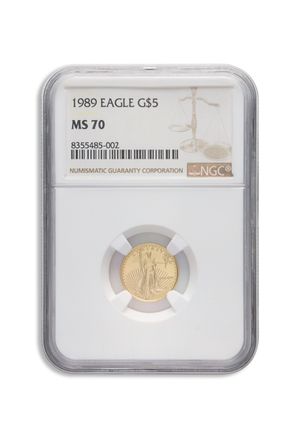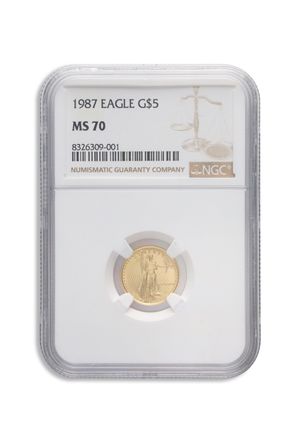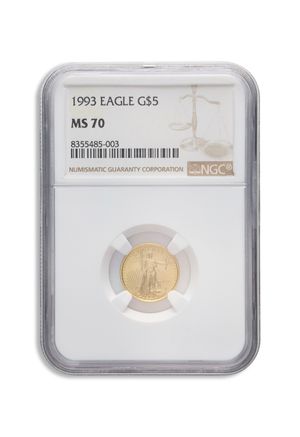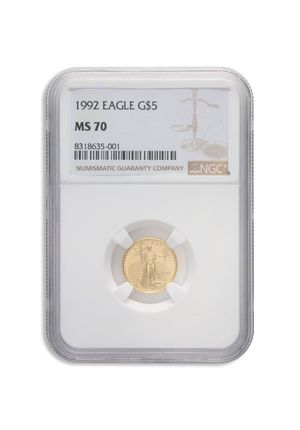
As low as: $1,570.10
As low as: $3,242.87
As low as: $3,122.75
As low as: $2,034.83
As low as: $4,067.63
As low as: $2,037.88
As low as: $1,968.70
As low as: $984.95
Our catalog of commemorative gold coins brings together a curated selection of United States Mint issues spanning multiple decades, programs, and collector series. Whether you're looking at the iconic 2016-W centennial gold coins honoring the Mercury Dime, Walking Liberty Half Dollar, and Standing Liberty Quarter, the historically significant 2014-W JFK Half Dollar gold coin, or earlier programs like the Library of Congress bimetallic issue and the American Eagle anniversary sets, there's meaningful depth across both raw and certified options.
Products are available in a range of weights from 1/10 oz to 3 oz and in multiple finishing and certification formats. Many items come with original U.S. Mint packaging including box and certificate of authenticity, while others are available in NGC- or PCGS-certified holders graded as high as SP70, PF70, and PR70. Several listings are offered as random-year selections, which can present genuine value for buyers focused on gold content over specific issue years.

Bullion Standard is a San Diego-based precious metals marketplace committed to transparent pricing and straightforward purchasing. Our catalog reflects real-time market conditions, and each listing is sourced through reputable distributors and verified before fulfillment. The goal here isn't a high-pressure sales experience. It's a clean, informative environment where buyers can compare products and make confident decisions.
Commemorative gold coins are officially sanctioned issues produced by a government mint to honor a person, event, institution, or anniversary of cultural or national significance. Unlike standard bullion coins produced primarily for precious metal content, commemorative issues are typically authorized under specific legislative acts and minted in limited quantities, which often results in distinct designs, packaging standards, and collector appeal that differ from routine bullion releases.
In the United States, these coins are produced by the U.S. Mint under congressional authorization and frequently carry legal tender face values, though their actual market value is driven by gold content and collector demand rather than denomination. Programs range from single-coin releases tied to specific anniversaries, such as the 2014-W JFK gold half dollar marking the 50th anniversary of that coin's introduction, to multi-coin anniversary sets like the 2006-W 20th Anniversary American Eagle three-coin set or the 1995-W 10th Anniversary Proof Eagle set.
Buyers are drawn to this format for a combination of reasons. The limited-mintage nature of many commemorative issues makes them inherently scarcer than standard bullion, and the historical or thematic framing adds a layer of meaning that routine coins don't carry. At the same time, the gold content provides a tangible baseline value that connects these pieces to the broader precious metals market regardless of collector demand.
The United States has a long history of commemorative coinage dating back to the late 19th century, though the modern era of commemorative gold coins took shape with the American Numismatic Association Centennial Gold Eagle in 1986 and expanded significantly through the 1990s and 2000s as Congress authorized a growing number of programs tied to cultural milestones, presidential anniversaries, and Olympic events. These early modern issues established the format conventions still in use today: West Point Mint production, .900 fine gold composition for $5 issues, and original mint packaging with certificates of authenticity.
The First Spouse Gold Coin Program, launched in 2007, introduced .9999 fine gold to the commemorative format, a higher purity standard that distinguished those half-ounce releases from earlier commemorative issues. The 2016 Centennial Gold Coin Program brought a new level of attention to the category by reproducing three classic early 20th century coin designs, the Adolph Weinman Mercury Dime, the Hermon MacNeil Standing Liberty Quarter, and the Weinman Walking Liberty Half Dollar, in 24-karat gold at fractional weights corresponding to the original denominations. These three releases generated significant collector and bullion buyer demand and remain among the most recognized modern commemorative gold issues produced by the U.S. Mint.
More recent programs, including the 2018-W American Liberty gold coin and the 2021 designer proof set, reflect the Mint's continued interest in commemorative formats as a way to connect gold coinage with American artistic and historical tradition. The consistent production at the West Point Mint, often with the "W" mint mark, has made that facility synonymous with premium U.S. commemorative gold output.
Commemorative gold coins from the U.S. Mint are produced in two primary purity standards depending on the program. Older modern commemoratives, including $5 and $10 denominations issued through much of the 1980s, 1990s, and 2000s, use .900 fine gold, which is 90% gold by composition. This purity level aligns with the historical gold coin standard used in U.S. coinage prior to 1933. Newer programs, particularly the First Spouse series, the 2016 Centennial coins, and later American Liberty issues, are struck in .9999 fine gold, the same four-nines purity used in the American Gold Buffalo series.
Weights across the catalog span from 1/10 troy oz for the Mercury Dime Centennial and American Liberty issues, through 1/4 oz for the Standing Liberty Centennial, 1/2 oz for the Walking Liberty Centennial and First Spouse series, 3/4 oz for the JFK gold half dollar, and full 1 oz pieces for arts medals and anniversary sets. Multi-coin sets may carry combined gold content of 1.85 oz or as much as 3 oz depending on composition. All weights are expressed in troy ounces, the standard unit of measure across the precious metals industry, where one troy ounce equals approximately 31.1 grams.
Coins struck at the West Point Mint carry the "W" mint mark and are produced with quality control standards that make them suitable for both raw presentation and certified grading. Proof strikes feature mirrored fields and frosted devices produced through a multiple-pass die process, while uncirculated issues offer a strong strike without the full proof finish. Both formats meet the specifications published in each program's authorizing legislation.
Every product in this portion of our catalog originates with the United States Mint, which is the sole authorized producer of U.S. commemorative gold coinage. The West Point Mint in New York, designated by the "W" mint mark, is responsible for the vast majority of these issues and has been the primary facility for U.S. gold coin production since the 1980s. The consistency of West Point production quality is one reason these coins are readily recognized across the dealer and collector marketplace.
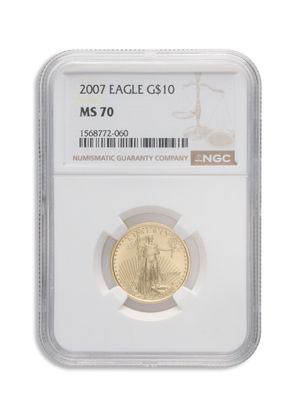
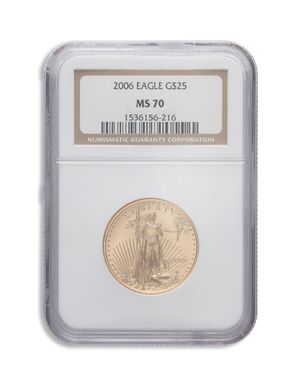
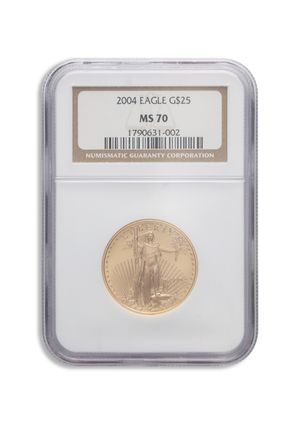
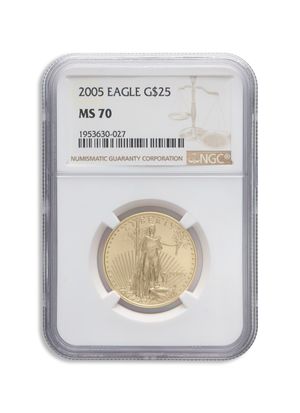
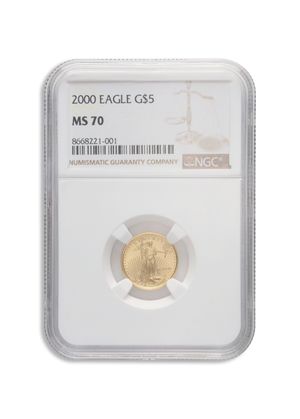
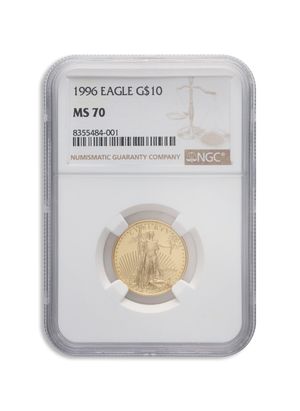
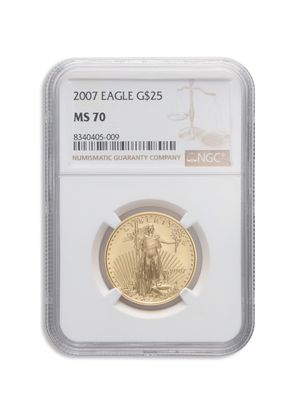
Certified options are available through both NGC and PCGS, the two most recognized independent grading services in the numismatic industry. Graded examples in this catalog reach SP69 and SP70 for the 2016 Centennial coins, and PF69, PF70, PR69, and PR70 for proof issues including the 2014-W JFK coin and the 2018-W American Liberty. The distinction between SP (specimen or special mint finish) and PF or PR (proof) designations reflects the specific strike type. Higher numeric grades, particularly 70s, indicate coins with no post-production imperfections visible under 5x magnification according to each service's standards.
Raw products, those without third-party grading, are available in both original U.S. Mint packaging and as standalone pieces. Multi-coin sets, including the 2006-W 20th Anniversary three-coin Eagle set and the 2008-W Double Prosperity two-coin set pairing an American Eagle with an American Buffalo, are offered with box and certificate of authenticity as issued. Random-year listings for the U.S. Mint Commemorative Arts Medals and the $5 and $10 modern commemoratives provide access to gold content at potentially tighter premiums when a specific year isn't required.
The price of any commemorative gold coin reflects two components: the underlying spot price of gold and the premium above spot driven by production costs, program scarcity, collector demand, grading status, and current market conditions. Unlike standard bullion gold such as 1 oz American Eagles or Gold Buffalos, commemorative gold premiums tend to be higher because mintage figures are typically lower and original packaging, certification, and historical significance all factor into what buyers are willing to pay.
Certified coins command additional premiums over raw counterparts, with the spread between a PF69 and PF70 sometimes being substantial depending on population reports and current collector demand. The 2016 Centennial series, for example, drew strong buyer interest at release and has maintained meaningful premiums in the secondary market. Rarer issues like the 1995-W 10th Anniversary Proof Eagle set carry higher premiums reflecting limited original mintage and the complexity of the set itself. By contrast, random-year commemorative $5 gold pieces or arts medals offer a more accessible entry point for buyers focused primarily on gold content.
At Bullion Standard, pricing reflects real-time market conditions and is structured for transparency. Each product page displays a bid/ask spread, which reflects both the purchase price and the current buyback price under live market conditions. Understanding both sides of that equation before purchasing is part of what separates an informed transaction from one made on price alone.
Products listed as BU (Brilliant Uncirculated) with box and COA are shipped in original U.S. Mint packaging as close to original presentation condition as possible. This typically means a velvet-lined presentation box accompanied by a printed certificate of authenticity identifying the coin's specifications and authorizing legislation. These packages are the standard delivery format for U.S. Mint commemorative coins at the retail level and are generally expected by buyers of these programs.
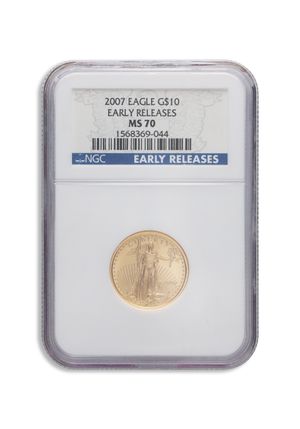
Certified coins arrive in sealed NGC or PCGS plastic holders, also referred to as slabs, which protect the coin from handling and environmental exposure while displaying the grade, certification number, and coin identification on the label. Random label designations indicate that the specific label design inside the holder, such as a special edition or first-strike designation, is not guaranteed and may vary by available inventory.
Random-year products are fulfilled from available inventory and the specific year cannot be requested or guaranteed. These listings are appropriate for buyers focused on gold content or program type rather than a specific date. Minor surface marks or handling from original packaging are considered normal for BU-graded coins that have not been independently certified. Buyers expecting collector-grade perfection should consider certified options where the grade is objectively documented by a third-party service.
All products in our catalog are sourced through reputable U.S. Mint-authorized distributors and verified for authenticity, weight, and purity before reaching customers. The United States Mint employs sophisticated anti-counterfeiting measures including reeded or lettered edge treatments, precise die-struck designs with fine detail that is difficult to reproduce at scale, and specific alloy compositions that can be verified through density and XRF testing.
Third-party certification through NGC or PCGS provides an additional layer of independent verification. Both services employ trained numismatists and use physical examination protocols to authenticate coins before assigning grades. Once encapsulated, a coin's authenticity is backed by the grading service's guarantee, and the certification number can be verified directly through each service's online registry.
Bullion Standard maintains an A rating with the Better Business Bureau and is an authorized dealer for both PCGS and NGC. We are also members of the American Numismatic Association and the National Coin and Bullion Association. These affiliations reflect a commitment to sourcing and selling only authenticated products through channels that meet industry standards for integrity and professional conduct.
U.S. Mint commemorative gold coins occupy a middle ground between standard bullion and numismatic collectibles in terms of market liquidity. The gold content provides a floor value that tracks with spot price, but actual resale pricing is also influenced by collector demand, grading status, original packaging completeness, and whether the specific issue has maintained secondary market interest. High-profile programs like the 2016 Centennial coins and the JFK gold half dollar tend to trade more actively than lower-profile $5 commemoratives with less name recognition.
Certified coins, particularly those graded PF70 or SP70, typically appeal to a narrower but often more motivated segment of the market, which can affect how quickly a seller finds a buyer at their target price. Raw coins with original box and COA intact have broader resale access and are accepted by most coin dealers, auction platforms, and online marketplaces. Missing boxes or certificates of authenticity can reduce resale value, particularly for commemorative issues where original presentation is part of the product's identity.
It's worth noting that not all commemorative gold coins trade with the same ease or at the same spread as standard bullion formats. Buyers who prioritize straightforward liquidity may find that products with higher mintages and broader name recognition, such as the Centennial series, offer more predictable resale environments than obscure single-year issues with thin secondary market activity.
Commemorative gold coins, particularly those in original U.S. Mint packaging, benefit from storage conditions that protect both the coin and the presentation box from humidity, temperature swings, and physical damage. A fireproof home safe is a practical starting point for moderate holdings, and most retail safes are designed to accommodate standard mint presentation boxes without requiring modification.
Certified coins in NGC or PCGS slabs are durable and do not require additional coin holders, though keeping them in a padded or rigid storage case reduces the risk of label scratching or slab cracking. For larger collections or higher-value holdings, third-party vault storage offers climate-controlled environments with insurance coverage and physical security that exceeds what most home setups can provide. Bullion-focused vault facilities are available through several nationally recognized providers and are worth considering as a collection grows.
Fractional coins, including the 1/10 oz Mercury Dime Centennial and 1/4 oz Standing Liberty issues, are smaller and easier to misplace than full ounce coins. Keeping these in their original capsules or certified holders and organizing them within a dedicated storage container reduces handling risk and makes inventory management more straightforward over time.
Selling commemorative gold coins back into the market involves a process that looks somewhat different from liquidating standard bullion. Dealers evaluating these coins for buyback will consider current gold spot price, product type and mintage, grading status, condition, and whether original packaging including the box and certificate of authenticity is present. Missing components or visible damage can meaningfully affect the price a dealer is willing to offer, particularly for programs where collector completeness is part of the value proposition.
Bullion Standard operates a two-way market structure, which means customers can sell precious metals back through the same platform where they purchased them. Our purchasing team evaluates products based on current market pricing, condition, and product-specific demand, and buyback prices are displayed transparently on each product page in the form of live bid pricing. This structure is designed to make the selling process as clear as the buying process, with pricing that reflects real-time wholesale market conditions rather than arbitrary dealer margins.
For certified coins, the grade and certification number allow our team to verify the product quickly, which generally streamlines the evaluation process. Graded coins in high-population grades may carry different buyback dynamics than coins in low-population grades where collector demand creates a more specialized market. Understanding these factors before purchasing, rather than only at the point of sale, is an important part of making a well-informed acquisition decision.
The appeal of commemorative gold coins sits at the intersection of gold ownership and historical documentation. These are pieces with a defined story, whether that's the 50th anniversary of the Kennedy half dollar, the centennial of three beloved American coin designs, or the celebration of a significant national institution. That context doesn't change the gold content, but it does shape how these coins are perceived, traded, and held over time in ways that standard bullion rounds and bars simply aren't.
For buyers who already own standard bullion and are looking to add variety without moving into purely numismatic territory, commemorative gold offers a middle path. The gold content remains measurable and market-priced, the coins are produced by the U.S. Mint to well-documented specifications, and the grading ecosystem through NGC and PCGS provides objective quality documentation for buyers who want that certainty. Multi-coin sets and anniversary programs also offer a collecting dimension that single-coin bullion purchases don't replicate.
Fractional weights across this catalog, from 1/10 oz to 3/4 oz, also make commemorative gold accessible at price points below a full ounce purchase, which can be meaningful for buyers building a position incrementally or looking for gift-appropriate gold items that carry more presentation value than a standard bullion round.
Bullion Standard has operated as a nationally recognized precious metals marketplace since 2010, building a reputation grounded in pricing transparency, verified sourcing, and a customer experience designed around informed decision-making rather than sales pressure. Our catalog is backed by sourcing from reputable U.S. Mint-authorized distributors, and every product is authenticated before it ships. That process isn't a formality. It reflects a core operating principle that every transaction needs to be one the customer can trust completely.
Our platform is structured around clarity. Bid and ask pricing is displayed on each product page, payment options are broad and clearly communicated, and our team is accessible for questions before and after a purchase. Accepted payment methods include Visa, Mastercard, American Express, Discover, PayPal, bank-connected payments through Plaid, wire transfer, paper check, and cryptocurrency through BitPay. Our two-way market model means we're as focused on the selling side of the transaction as the buying side, which shapes how we approach pricing and customer relationships from the start.
We maintain an A rating with the Better Business Bureau and hold active memberships in the American Numismatic Association and the National Coin and Bullion Association. As an authorized dealer for both NGC and PCGS, we're equipped to source, verify, and support the full range of certified products in our catalog. The platform is built for buyers who take their purchases seriously and want a marketplace that meets that standard.
Bullion Standard Pro is designed for buyers who want direct access to wholesale market pricing without the markups typical of the traditional retail dealer model. Members transact at live, executable wholesale bid and ask prices that reflect real-time supply and demand within the precious metals market, rather than fixed retail pricing structures that don't adjust with market conditions. This creates a meaningfully more efficient pricing environment for repeat buyers and price-conscious purchasers.
The platform also provides access to proprietary market intelligence tools, including historical premium analysis, premium percentile rankings, spread analysis, liquidity metrics, and buy/sell ratio indicators. For commemorative gold buyers specifically, these tools can help evaluate whether a given certified coin or anniversary set is trading at a historically wide or tight premium relative to spot, which is information that's difficult to access without aggregated wholesale market data. Portfolio valuation through Pro uses live executable wholesale bid pricing rather than estimated retail values, giving members a more realistic picture of current liquidation value at any given moment.
Members also gain access to product research tools that allow comparison across the catalog using metrics like spread tightness, historical premiums, and liquidity rankings. For a category like commemorative gold, where premiums can vary substantially between programs, grading tiers, and issue years, having objective comparative data available at the point of decision is a material advantage over relying on marketing descriptions alone. Bullion Standard Pro is built around the principle that better information leads to better decisions, and that principle applies as directly to commemorative gold as it does to any other product in the market.