Gold Coins | Bullion Standard
Buy Gold Coins Online
Our catalog of gold coins covers a wide range of historic American issues struck by the United States Mint, spanning denominations from the $1 gold dollar to the $20 Liberty Double Eagle. Whether you're looking for a circulated example in VF or XF condition, a raw BU piece, or a certified coin graded by NGC or PCGS, the selection here is built to serve buyers across the full spectrum of grade and budget.
Products in this section include the $1 Gold Liberty Type 1, $1 Gold Indian Type 3, $1 Gold Princess Type 2, $2.5 Classic Head and Liberty Quarter Eagle, $2.5 Indian Quarter Eagle, $10 Liberty Eagle, $10 Indian Eagle, and the $20 Liberty Double Eagle, among others. Each coin type is available in multiple conditions and, in many cases, across both raw and third-party certified formats. Random year availability is clearly noted across the catalog, giving buyers a straightforward understanding of what to expect before purchasing.
Bullion Standard operates as a transparent marketplace, which means pricing reflects real market conditions rather than inflated retail markups. Whether you're sourcing gold coins for their metal content, their numismatic character, or a combination of both, this catalog is structured to help you compare options clearly and transact with confidence.
What Are Gold Coins?
Gold coins are government-issued or historically minted coins that derive their value primarily from their gold content, though their numismatic characteristics, grade, and historical scarcity also influence how they're priced in the marketplace. Unlike gold bars or rounds, coins were produced as legal tender and carry a face denomination, even if their current market value far exceeds that nominal figure. This distinction matters to buyers who place importance on government backing, recognized design lineage, and established market familiarity.
The coins available in this catalog are classic American gold issues, not modern bullion coins. These are pre-1933 United States Mint coins produced during eras when gold circulated as everyday currency. They range from tiny $1 gold pieces weighing just 0.0483 troy ounces to the substantial $20 Double Eagle at nearly a full troy ounce of gold. The appeal of these coins comes from a combination of factors: their historical significance, their recognized design types, and the way their premiums reflect both metal content and collector demand relative to grade.
Certified examples graded by NGC or PCGS carry a numeric Sheldon scale grade, typically ranging from MS61 through MS65 in this catalog, which provides a standardized condition assessment that removes ambiguity from the buying process. Raw coins graded as VF, XF, AU, or BU are described using traditional numismatic terminology and are priced accordingly. Circulated, cleaned, or otherwise low-grade examples are also available for buyers primarily focused on gold content over numismatic presentation.
History and Background
The United States produced gold coinage continuously from 1795 through 1933, when President Franklin D. Roosevelt signed Executive Order 6102, effectively ending the domestic circulation of gold coins and requiring most gold coin holdings to be surrendered to the Federal Reserve. That singular moment in American monetary history created the supply conditions that define the pre-1933 gold coin market today. Surviving examples carry genuine historical weight because they were produced as circulating currency during a formative period of American economic expansion.
Each coin type in this catalog has its own production history. The $1 gold series was struck from 1849 through 1889 and evolved across three distinct types, including the Liberty Type 1, the Princess Type 2, and the Indian Type 3. The $2.5 Quarter Eagle and $10 Eagle denominations were produced in Liberty Head and Indian Head designs at multiple U.S. Mint facilities, including Philadelphia, New Orleans, Denver, and San Francisco, resulting in a wide range of mintmark varieties and survival rates across the grade spectrum. The $20 Liberty Double Eagle, produced from 1850 through 1907, remains one of the most recognized and widely traded pre-1933 American gold coins in the market.
The modern collectible and bullion market for pre-1933 U.S. gold coins matured significantly following the legalization of private gold ownership in 1974 and the subsequent growth of third-party grading services like NGC and PCGS in the late 1980s. Standardized grading fundamentally changed how these coins are bought and sold by providing a common language for condition assessment, improving price transparency, and making it easier to transact across the wholesale and retail markets.
Purity, Weight, and Specifications
All pre-1933 U.S. gold coins were struck to a purity of 0.900 fine gold, meaning 90% gold content with 10% copper alloy added for durability. This standard applies consistently across every denomination in this catalog, from the small $1 gold dollar to the $20 Double Eagle. The alloy composition gives these coins a slightly warmer color than modern 24-karat bullion coins and contributes to their well-known durability as circulating currency.
Gold content varies by denomination. The $1 gold dollar contains 0.0483 troy ounces of gold, the $2.5 Quarter Eagle contains approximately 0.1209 troy ounces, and the $10 Eagle contains approximately 0.4837 troy ounces. The $20 Liberty Double Eagle contains 0.9675 troy ounces, making it the closest equivalent to a modern one-troy-ounce gold coin in this catalog. Diameter and thickness also vary by denomination and coin type, with specifications listed on individual product pages for reference.
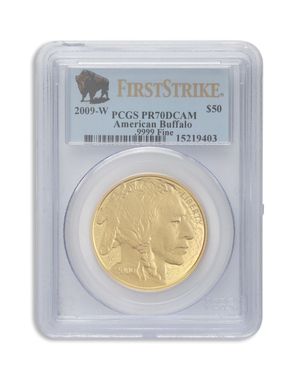
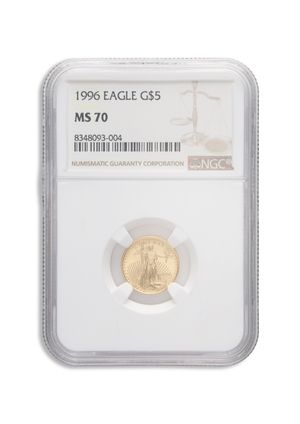
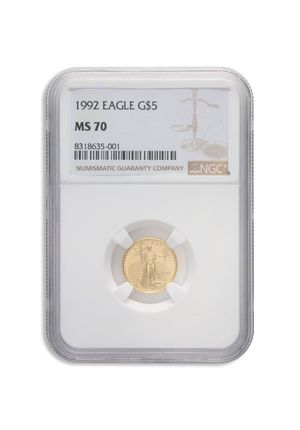
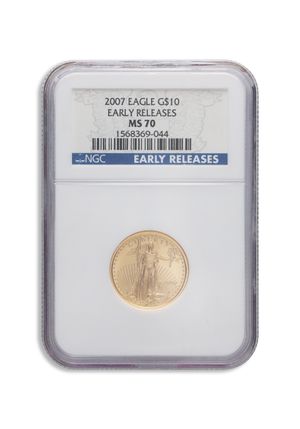
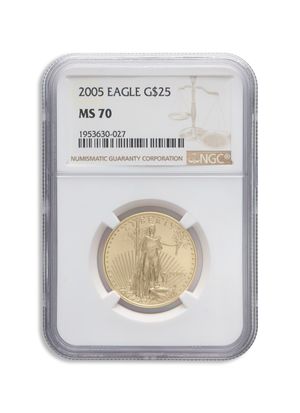
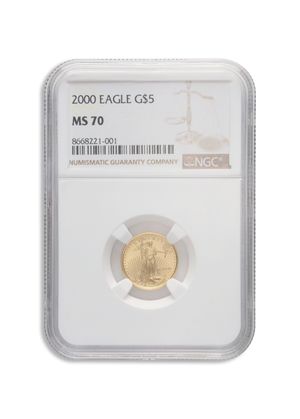
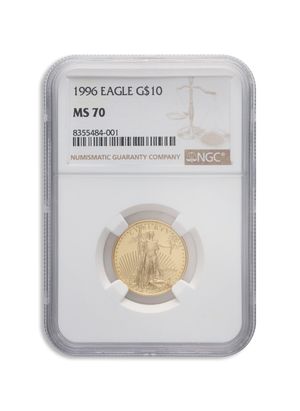
For certified coins, the grading label from NGC or PCGS serves as the authoritative statement of both authenticity and condition. Numeric grades from MS61 through MS65 indicate the degree of preservation, with higher grades reflecting fewer contact marks, better luster retention, and overall superior eye appeal. These certifications are issued by the two most widely recognized independent grading services in the industry, and encapsulated coins are sealed in tamper-evident holders that protect the coin while making the grade clearly visible.
Available Brands, Mints, and Product Variations
Every coin in this catalog was produced by the United States Mint, which operated several branch facilities during the 19th and early 20th centuries. Depending on the coin type and year, examples may have been struck at the Philadelphia, New Orleans, Carson City, Denver, or San Francisco Mint. Because these are random year products, the specific mintmark on any given coin will vary, which is reflected clearly in the product listings. Buyers who require a specific date or mintmark should note that availability is subject to stock and those purchases would fall outside the scope of random year inventory.
Grading service variations represent a meaningful part of how this catalog is organized. For eligible coin types, buyers can choose between NGC and PCGS certified examples, each at grades from MS61 through MS65. Both services are widely accepted in the numismatic marketplace, though some collectors develop preferences based on holder style, grading standards, or resale considerations within specific niches. Raw examples graded as VF, XF, AU, and BU are also available across most coin types, offering price-conscious buyers access to the same coin designs at lower premiums.
The catalog also includes cull or low-grade examples across multiple coin types. These are described as cleaned or low grade and are appropriate for buyers who are primarily interested in the gold content rather than the numismatic presentation. Cleaned coins typically trade at lower premiums to spot due to reduced collector demand, making them an option for buyers whose primary concern is acquiring gold at a modest cost above the melt value. All product variations are clearly distinguished in the catalog, and condition expectations are stated upfront.
Pricing, Premiums, and Market Factors
The price of a gold coin reflects two overlapping components: the current spot price of gold and the premium that the market assigns based on condition, rarity, grade, coin type, and third-party certification status. For pre-1933 U.S. gold coins, premiums can vary considerably across the grade spectrum. A cull example of a $1 Indian Type 3 will trade much closer to its melt value, while an NGC MS65-graded example of the same design carries a substantially higher premium that reflects the relative scarcity of coins surviving in gem-quality condition.
Denomination matters as well. Larger coins like the $10 Eagle and $20 Double Eagle contain significantly more gold and are typically priced with narrower percentage premiums over spot than the smaller dollar denominations. The $1 gold dollar, at just 0.0483 troy ounces, commands higher percentage premiums due to the fixed costs of production, certification, and handling relative to the smaller metal content. Understanding this dynamic helps buyers evaluate the true cost per ounce of gold across different product types.
Bullion Standard's pricing is tied to real-time market conditions and updated continuously to reflect current spot levels. The bid/ask spread displayed on each product page gives buyers a clear view of both the acquisition cost and the expected resale value at the time of purchase. This transparency is central to how Bullion Standard operates and reflects a broader commitment to helping buyers understand the complete economics of a transaction rather than just the purchase price.
Condition, Packaging, and What to Expect
Raw coins in grades VF through BU are shipped without slabs or encapsulation. These coins may show expected signs of wear consistent with their stated grade and are not individually sealed in protective plastic. BU examples should display original mint luster but may exhibit light contact marks consistent with handling and storage, which is typical for uncertified uncirculated coins. These are not imperfections specific to Bullion Standard's sourcing but rather standard expectations for the grade category.
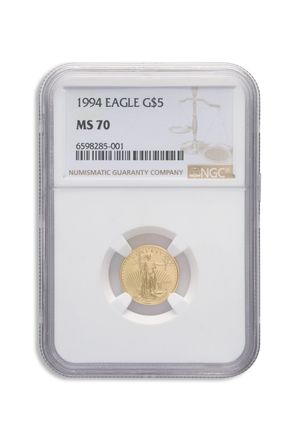
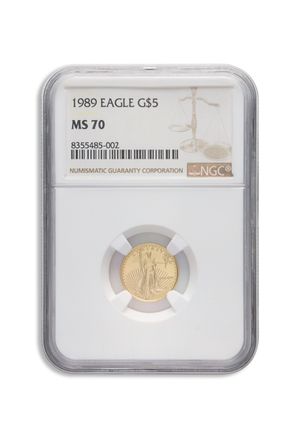
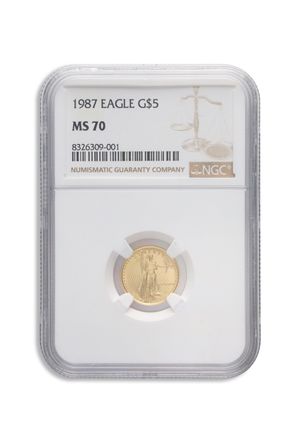
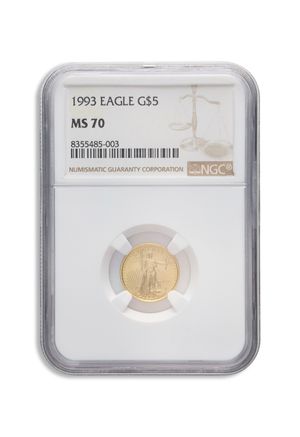
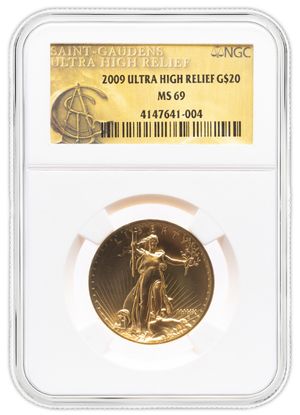
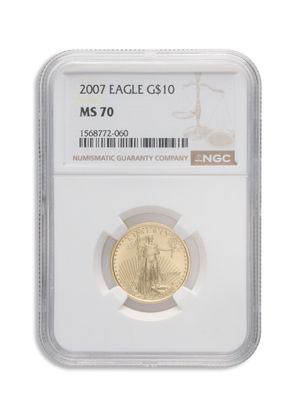
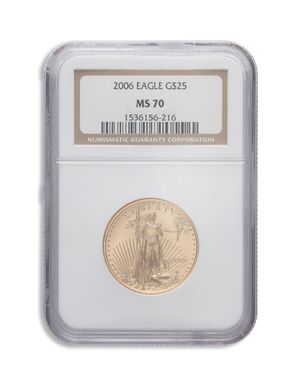
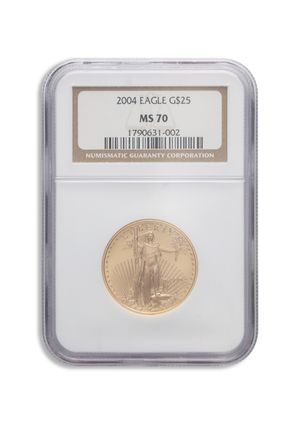
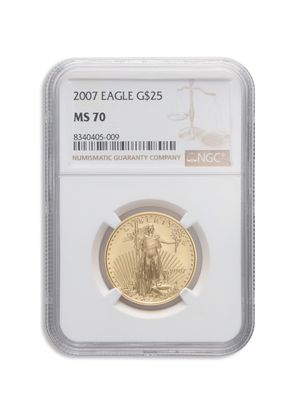
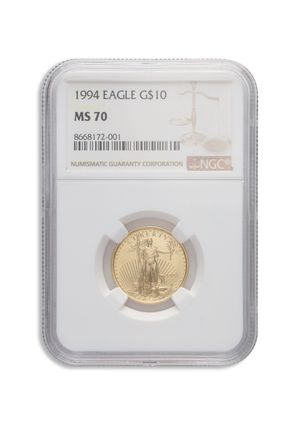
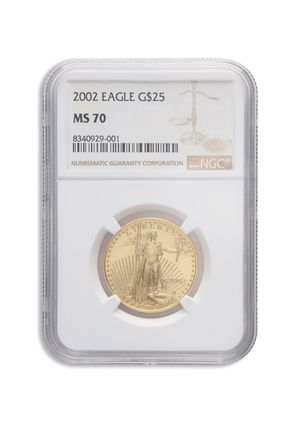
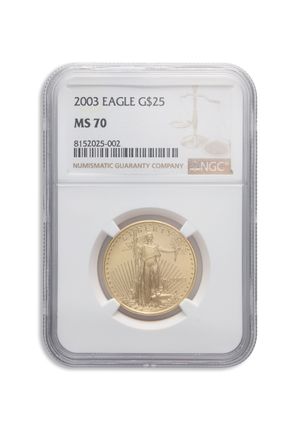
NGC and PCGS certified coins arrive in their original tamper-evident plastic holders, also known as slabs, with the grade and certification number clearly displayed on the label. These holders protect the coin from further handling damage and allow for easy visual inspection without removing the coin from its protective encapsulation. Buyers should not break open certified holders, as doing so voids the certification and reduces the coin's marketability.
Because this catalog includes random year products, the specific date on any given coin cannot be guaranteed. The coin received will be a genuine example of the stated type in the stated condition, selected from available inventory. Buyers who place orders on random year products should not expect a specific date or mintmark and should plan accordingly. Cull and cleaned examples are shipped as-is, and no representations are made regarding eye appeal or surface quality beyond the stated grade classification.
Authenticity and Verification
All coins sold by Bullion Standard are verified for authenticity before shipping. Pre-1933 U.S. gold coins are well-documented in the numismatic literature, with established weight standards, diameter specifications, and design characteristics that make authentication a systematic process for experienced evaluators. Coins are sourced from reputable wholesale distributors and vetted before entering inventory.
For NGC and PCGS certified coins, authentication has already been completed by the grading service and is reflected in the certification. Each certified coin carries a unique certification number that can be verified through the respective grading service's online database, providing an additional layer of transparency for buyers who want independent confirmation of the coin's grade and authenticity. This lookup process is free and publicly accessible through NGC's VerifyNGC and PCGS's CoinFacts tools.
Bullion Standard is an authorized dealer for both NGC and PCGS, which reflects our operational commitment to sourcing and handling certified coins in a way that meets the standards these organizations require of their dealer network. We also maintain an A rating with the Better Business Bureau and membership in the American Numismatic Association and the National Coin and Bullion Association, all of which reflect our standing in the industry and our commitment to professional, transparent business practices.
Liquidity and Resale Considerations
Pre-1933 U.S. gold coins occupy a well-established position in the numismatic and bullion marketplace. These are recognized coin types with active dealer networks, auction house participation, and established price references that make them relatively straightforward to resell compared to more obscure or foreign coin types. The $10 Indian Eagle, $10 Liberty Eagle, and $20 Liberty Double Eagle are among the most commonly traded pre-1933 U.S. gold coins, with broader dealer interest and more active price discovery than smaller or rarer denominations.
Certified coins generally trade more efficiently in resale environments than raw coins because the grade has been independently verified. A slab from NGC or PCGS eliminates much of the uncertainty that arises when selling a raw coin, and certified coins often achieve more consistent pricing within a given grade level. This is especially relevant in the MS63-through-MS65 range, where the difference between grade levels has a meaningful impact on market value.
Cull and cleaned coins are the least liquid segment of this catalog. While they can be sold based on their gold content, they generally do not attract numismatic premiums and compete primarily on melt value. Buyers purchasing these coins primarily for gold content should factor this into their expectations when considering resale. Condition and certification status remain among the most important variables in determining how easily a coin can be sold and at what spread relative to spot.
Storage and Security
Certified coins in slabs require minimal storage preparation since the holder provides physical protection from contact damage and environmental exposure. Slabs should be stored upright or in foam-lined storage boxes to prevent scratching the holder surface and to maintain clear label legibility over time. Avoid stacking slabs horizontally without protective separation, as the edge of one holder can abrade the surface of another.
Raw coins should be handled by the edges only and stored in individual coin flips, 2x2 cardboard holders, or airtite capsules appropriate for each coin's diameter. Pre-1933 U.S. gold coins with 90% gold content are more resistant to environmental tarnishing than silver coins, but exposure to humidity and airborne contaminants over long periods can still affect surfaces, particularly on higher-grade BU examples. Storing raw coins in a cool, dry environment and avoiding repeated handling is the most straightforward way to preserve their condition.
For larger holdings, a home safe bolted to the structure of the building or a third-party vault service provides meaningful security improvements over unprotected storage. Bank safe deposit boxes are another option for smaller collections, though access depends on bank operating hours and institutional policies. The appropriate storage approach depends on the size of the holding, the grade of the coins involved, and the buyer's own security priorities. Insuring physical precious metals holdings is worth considering regardless of which storage method is used.
Selling and Buyback Options
Bullion Standard operates as a two-way market, which means the same platform where you buy gold coins is also where you can sell them back into the market. This structure is intentional. Liquidity is a consideration that deserves attention before a purchase, not just when it's time to exit a position. Our purchasing team buys a wide range of pre-1933 U.S. gold coins, and competitive buyback pricing is available for most of the coin types listed in this catalog.
Buyback pricing is influenced by the same factors that drive acquisition pricing: the current spot price of gold, the coin's denomination, its grade and condition, whether it's certified by NGC or PCGS, and current demand in the wholesale market. Higher-grade certified examples and coins with stronger market recognition generally receive the most competitive buyback offers. Cleaned or cull coins are purchased primarily based on their gold content, and buyers should factor this into their expectations when selling that segment of inventory.
The process of selling to Bullion Standard is designed to be straightforward. Sellers submit details about their coins, receive a quote reflecting current market conditions, and complete the transaction through a secure and documented process. Having coins in their original certified holders, with condition and authenticity already verified, streamlines the process and typically results in more efficient pricing. Our goal is to make the selling experience as transparent and predictable as the buying experience.
Why Buy Gold Coins?
Pre-1933 U.S. gold coins occupy a distinct position relative to modern bullion products. They carry a documented history, recognized design lineage, and government-issue provenance that makes them appealing to buyers who want something more substantial than a generic bar or round. The fact that these coins were produced as circulating currency and survived more than a century of use adds a dimension that purely modern products cannot replicate.
For buyers focused on gold content, denominations like the $10 Eagle and $20 Double Eagle offer relatively efficient metal delivery within the pre-1933 segment. The $20 Liberty Double Eagle at 0.9675 troy ounces is close enough to a full ounce that it functions practically like a 1 oz gold coin for many buyers, with the added dimension of numismatic history. Smaller denominations like the $1 gold dollar and $2.5 Quarter Eagle offer a way to acquire gold in fractional amounts with recognized coin designs, though premiums per ounce are proportionally higher.
Certified coins provide grade-specific pricing clarity that raw coins do not. Buyers who prioritize known condition, documented authenticity, and resale efficiency in numismatic channels often find that NGC or PCGS certified examples are worth the premium over raw alternatives. The ability to verify the grade and certification number independently is a meaningful safeguard that adds structure to what would otherwise be a judgment call about coin quality.
Why Buy from Bullion Standard?
Bullion Standard was founded in 2010 in San Diego, California, and has grown into a nationally recognized online precious metals marketplace by operating on a straightforward principle: buyers deserve transparent pricing, reliable sourcing, and honest information. Our catalog of pre-1933 U.S. gold coins is sourced from reputable wholesale channels, verified for authenticity and condition, and priced to reflect real-time market conditions rather than arbitrary retail markups.
We are an authorized dealer for both NGC and PCGS, which means certified coins in our inventory have passed through sourcing channels that meet the standards these organizations require of their dealer network. Our A rating with the Better Business Bureau, along with membership in the ANA and NCBA, reflects the operational standards we hold ourselves to across every transaction. These are not marketing claims but industry affiliations with established accountability requirements.
The platform is designed to be more than a place to browse and purchase. Bid/ask spreads are displayed on product pages so buyers can see both the acquisition cost and the expected resale value at the time of purchase. Payment flexibility includes Visa, Mastercard, American Express, Discover, PayPal, bank-connected payments through Plaid, wire transfer, paper check, and cryptocurrency through BitPay. Fulfillment is handled securely, and customer support is accessible for questions before, during, and after a transaction.
Get Near-Spot Pricing with Bullion Standard Pro
Bullion Standard Pro is designed for buyers who want direct access to wholesale market pricing rather than standard retail pricing structures. Members transact at live, executable wholesale bid and ask prices, which means premiums and spreads fluctuate based on actual market supply and demand rather than fixed retail margins. For buyers who transact regularly or who are particularly focused on pricing efficiency, this structure provides a meaningful improvement in cost per ounce relative to the standard retail market.
The platform also provides members with access to proprietary market intelligence tools, including historical premium analysis, premium percentile rankings, spread analysis, liquidity metrics, and buy/sell ratio indicators, among others. These tools are designed to help buyers evaluate gold coins beyond their current price by providing context about how premiums, spreads, and market activity have changed over time. For pre-1933 U.S. gold coins, where premiums can shift meaningfully based on collector demand and wholesale market conditions, this kind of data-driven perspective can help buyers identify when pricing conditions are relatively favorable.
Portfolio valuation within Bullion Standard Pro uses live executable wholesale bid pricing, so members can view the current liquidation value of their holdings based on actual market conditions rather than estimated retail figures. This provides a more realistic picture of portfolio liquidity and current market value, which is particularly relevant for a category like pre-1933 gold coins where market pricing can diverge from simple spot-based calculations. For buyers who take a longer-term view of their precious metals holdings, Bullion Standard Pro offers the analytical infrastructure to support more informed decision-making across the buying and selling process.

 (833) 278-4653