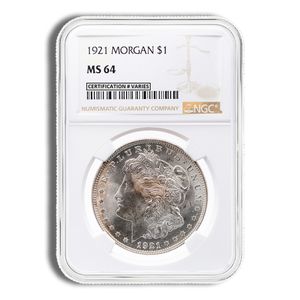
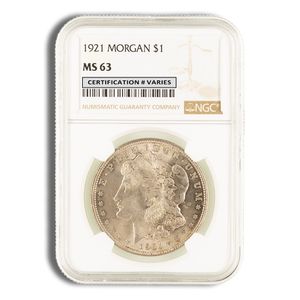
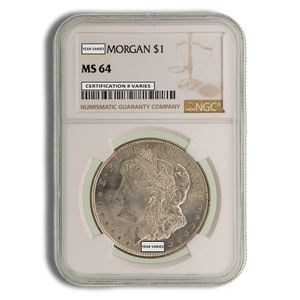
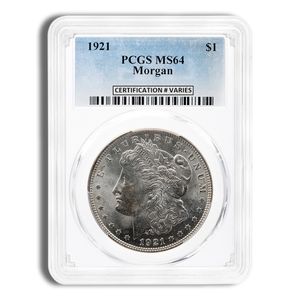
Overview of 1921 Morgan Silver Dollar NGC MS66 Toned
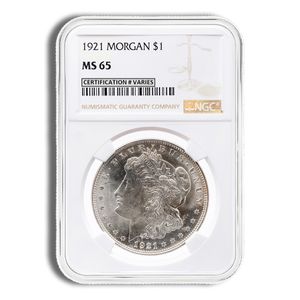
The 1921 Morgan Silver Dollar graded MS66 by NGC represents the final year of the original Morgan series and one of the most widely recognized coins in American numismatic history. Struck in .900 fine silver with a total weight of 0.7734 troy ounces, this coin carries the full weight and purity standard established by the Coinage Act of 1873 and maintained throughout the series run. At the MS66 grade, this example sits firmly in the gem mint state tier, indicating exceptional preservation with only minimal, non-distracting contact marks under close examination. The presence of natural toning adds a distinct visual layer that makes this particular example stand apart from untoned counterparts of similar technical quality.
We present this coin as part of our numismatic inventory alongside certified examples from other years and series, giving collectors a straightforward way to locate high-grade Morgans within a single marketplace.
History and Background
The Morgan dollar takes its name from George T. Morgan, the British-born engraver hired by the United States Mint in 1876 who designed the coin from scratch following a manda…
Overview of 1921 Morgan Silver Dollar NGC MS66 Toned
The 1921 Morgan Silver Dollar graded MS66 by NGC represents the final year of the original Morgan series and one of the most widely recognized coins in American numismatic history. Struck in .900 fine silver with a total weight of 0.7734 troy ounces, this coin carries the full weight and purity standard established by the Coinage Act of 1873 and maintained throughout the series run. At the MS66 grade, this example sits firmly in the gem mint state tier, indicating exceptional preservation with only minimal, non-distracting contact marks under close examination. The presence of natural toning adds a distinct visual layer that makes this particular example stand apart from untoned counterparts of similar technical quality.
We present this coin as part of our numismatic inventory alongside certified examples from other years and series, giving collectors a straightforward way to locate high-grade Morgans within a single marketplace.
History and Background
The Morgan dollar takes its name from George T. Morgan, the British-born engraver hired by the United States Mint in 1876 who designed the coin from scratch following a mandate to create a new silver dollar. The series debuted in 1878 and was minted across multiple facilities, including Philadelphia, New Orleans, San Francisco, Carson City, and Denver, with production halted in 1904 before briefly resuming in 1921. That final year of production is historically distinct because it coincided with the passage of the Pittman Act, which authorized the melting of hundreds of millions of earlier Morgan dollars and mandated that replacement coins be struck from domestically mined silver.
The 1921 issue was produced in enormous quantities across the Philadelphia, Denver, and San Francisco mints, making it one of the most available date and mint combinations within the series. Despite the high mintage, finding examples in true gem condition remains a genuine challenge, particularly for pieces that have developed desirable original toning over the past century. The Morgan series as a whole is among the most studied and collected series in American coinage, and the 1921 issue serves as the natural endpoint of that legacy.
Design and Aesthetics
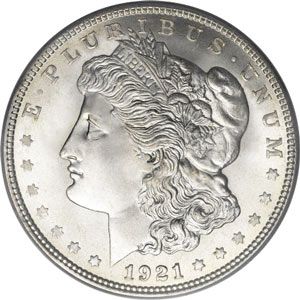
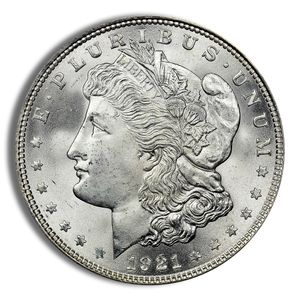
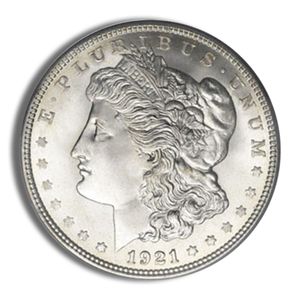
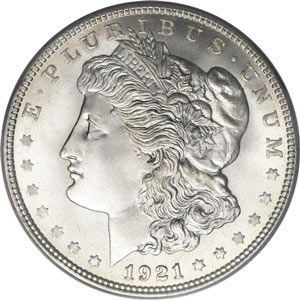
The obverse of the Morgan dollar features a left-facing portrait of Lady Liberty designed using Anna Willess Williams as Morgan's primary model, a detail that became well known after the coin's release. Liberty wears a Phrygian cap adorned with wheat and cotton, with the inscriptions LIBERTY arching above and the date centered below the portrait. Thirteen stars flank the design along the rim, representing the original colonies.
The reverse presents a heraldic eagle with wings spread, clutching arrows and an olive branch in its talons, with a ribbon bearing the motto E PLURIBUS UNUM above. The inscriptions UNITED STATES OF AMERICA and the denomination ONE DOLLAR complete the reverse field. The overall composition reflects the high-relief, classically inspired engraving style that has made this design one of the most admired in the American series.
On this particular example, natural toning adds a layer of color and depth across the coin's surfaces that purely technical grading cannot fully capture. Original toning patterns on Morgan dollars are the result of decades of chemical interaction between the silver surfaces and their storage environment, and collectors frequently place a meaningful premium on coins where that toning appears original and well-distributed rather than artificially applied.
Authenticity and Product Integrity
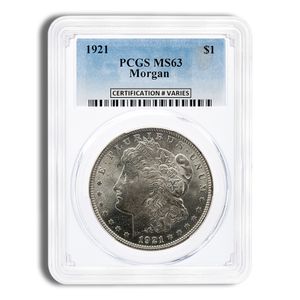
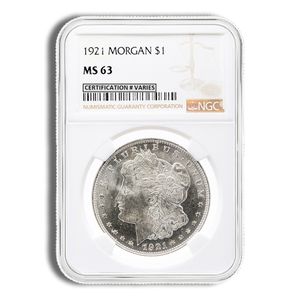
NGC certification provides independent verification of both the coin's authenticity and its assigned grade. Each NGC-graded coin is examined by multiple specialists before being encapsulated in a tamper-evident holder, which displays the coin's grade, series, date, and certification number. That certification number can be cross-referenced directly through NGC's online registry to confirm the holder's legitimacy.
As an authorized NGC dealer, we are positioned to offer certified coins with full confidence in the grading service's standards and processes. The NGC holder itself functions as a physical authentication document, preserving the coin's surface condition while allowing full visual examination without removal. For a coin like this 1921 Morgan, where originality of toning is a meaningful part of its appeal and value, third-party certification provides an important layer of assurance that the toning has been reviewed and accepted as part of the graded example.
Condition and Packaging
MS66 on the NGC scale places this coin in the gem mint state category, one step above the more commonly encountered MS65 grade. At this level, strike quality is sharp and luster is fully original, with any contact marks being minimal in size and limited in number, positioned so as not to distract from the overall visual impression. For a coin of this age produced in large quantities and handled extensively throughout its early life, reaching MS66 reflects genuine scarcity at the high end of the preservation spectrum.
NGC-graded coins ship in their original certified holders. The tamper-evident plastic slab protects the coin's surfaces and preserves the assigned grade without requiring any additional handling or storage materials. This coin will arrive encapsulated exactly as graded, with the NGC label and certification details intact and verifiable.
Pricing and Market Factors
The base metal value of this coin is anchored to the current spot price of silver, which reflects live market conditions for .900 fine silver at a weight of 0.7734 troy ounces. However, the total price of this particular example reflects significantly more than raw metal content. Certified numismatic coins carry premiums that are driven by grade, originality, collector demand, and the specific population of surviving examples at a given grade level.
For MS66 Morgan dollars, the premium above melt value can be substantial and varies depending on how many examples NGC and PCGS have graded at or above that level for a given date and mint. Natural toning introduces an additional layer of market complexity, as collector preferences for toned versus untoned specimens can shift the price meaningfully in either direction depending on the quality and distribution of the color. Our pricing reflects current wholesale market conditions for coins of this grade and category rather than a fixed markup applied uniformly across the numismatic inventory.
Selling and Liquidity
Morgan dollars represent one of the most liquid segments of the numismatic market. The series has an enormous collector base, active dealer networks, and strong representation at major auction houses, making resale straightforward relative to many other numismatic categories. High-grade, NGC-certified examples attract attention from both registry set collectors and type coin buyers, which supports broader demand across market conditions.
We operate a two-way market that supports both buying and selling, giving customers a practical path to liquidate certified numismatic holdings without being forced to seek outside buyers independently. For coins like this 1921 Morgan, where NGC certification provides standardized grading and authentication, the resale process is more transparent than for raw uncertified examples, because the assigned grade gives potential buyers an objective reference point from which to evaluate the coin.
Why Buy This 1921 Morgan Silver Dollar NGC MS66 Toned?
The 1921 Morgan in MS66 occupies a narrow tier within the series where quality becomes genuinely difficult to find, particularly on examples that have retained original surfaces. The combination of a high gem grade and accepted natural toning creates a coin that appeals to a broader range of collectors than a purely technical, white-surface example at the same grade level. Toned Morgans with well-distributed, original color are actively sought by specialists who focus on the aesthetic dimension of the series alongside grade.
From a purely practical standpoint, NGC certification eliminates the authentication uncertainty that affects raw coin transactions. The coin's weight, purity, and silver content are fixed by its original United States Mint specifications, while the grade and toning originality have been independently reviewed and confirmed. For a collector building a high-grade Morgan set or a buyer seeking a standout individual example, this combination of grade, certification, and character is difficult to replicate at a lower price point.
Why Buy from Bullion Standard?
We have built our platform around the principle that transparency earns long-term trust, and that applies equally to numismatic coins as it does to bullion products. Our authorized dealer status with both NGC and PCGS allows us to handle certified coins with direct access to grading services and registries, and we verify every certified product against NGC's and PCGS's online databases before it reaches a customer. Our A rating with the Better Business Bureau and memberships in both the American Numismatic Association and the National Coin and Bullion Association reflect the standards we hold ourselves to across the entire catalog.
Numismatic buyers deserve the same pricing clarity and market transparency that bullion buyers expect. We present our pricing in a way that reflects real market conditions rather than opaque dealer margins, and our two-way market model means we are prepared to be on both sides of a transaction. That approach encourages us to price competitively from the start rather than hoping customers overlook the spread when it eventually comes time to sell.
Get Near-Spot Pricing with Bullion Standard Pro
Bullion Standard Pro gives members access to live, executable wholesale bid and ask pricing across our catalog, including certified numismatic products. For coins like this 1921 Morgan MS66, where premiums above melt are driven by collector demand, population reports, and market sentiment, having visibility into real-time wholesale pricing provides a meaningful advantage over relying on static retail price comparisons. Members can also use our proprietary product research tools to compare premium levels, bid/ask spreads, and historical pricing trends across the numismatic and bullion markets simultaneously.
Portfolio valuation through Bullion Standard Pro reflects live wholesale bid pricing rather than estimated retail values, giving members a realistic picture of their holdings at current market liquidation levels. For numismatic coins, where the gap between retail ask and wholesale bid can be substantially wider than for standard bullion, understanding that spread in real time is a meaningful part of managing a collection with a long-term perspective.
Flexible and Secure Payment Options
We support a wide range of payment methods to make the buying and selling process as convenient and secure as possible. Customers can complete purchases using Visa, Mastercard, American Express, or Discover, as well as PayPal, bank-connected payments through Plaid, wire transfer, paper check, or cryptocurrency via BitPay. Every transaction is processed through a secure platform with protections in place at each stage of the checkout and fulfillment process. Whether you are buying a single certified coin or adding multiple pieces to an existing collection, the process is designed to be straightforward and secure from start to finish.
Overview of 1921 Morgan Silver Dollar NGC MS66 Toned
The 1921 Morgan Silver Dollar graded MS66 by NGC represents the final year of the original Morgan series and one of the most widely recognized coins in American numismatic history. Struck in .900 fine silver with a total weight of 0.7734 troy ounces, this coin carries the full weight and purity standard established by the Coinage Act of 1873 and maintained throughout the series run. At the MS66 grade, this example sits firmly in the gem mint state tier, indicating exceptional preservation with only minimal, non-distracting contact marks under close examination. The presence of natural toning adds a distinct visual layer that makes this particular example stand apart from untoned counterparts of similar technical quality.
We present this coin as part of our numismatic inventory alongside certified examples from other years and series, giving collectors a straightforward way to locate high-grade Morgans within a single marketplace.
History and Background
The Morgan dollar takes its name from George T. Morgan, the British-born engraver hired by the United States Mint in 1876 who designed the coin from scratch following a manda…
Overview of 1921 Morgan Silver Dollar NGC MS66 Toned
The 1921 Morgan Silver Dollar graded MS66 by NGC represents the final year of the original Morgan series and one of the most widely recognized coins in American numismatic history. Struck in .900 fine silver with a total weight of 0.7734 troy ounces, this coin carries the full weight and purity standard established by the Coinage Act of 1873 and maintained throughout the series run. At the MS66 grade, this example sits firmly in the gem mint state tier, indicating exceptional preservation with only minimal, non-distracting contact marks under close examination. The presence of natural toning adds a distinct visual layer that makes this particular example stand apart from untoned counterparts of similar technical quality.
We present this coin as part of our numismatic inventory alongside certified examples from other years and series, giving collectors a straightforward way to locate high-grade Morgans within a single marketplace.
History and Background
The Morgan dollar takes its name from George T. Morgan, the British-born engraver hired by the United States Mint in 1876 who designed the coin from scratch following a mandate to create a new silver dollar. The series debuted in 1878 and was minted across multiple facilities, including Philadelphia, New Orleans, San Francisco, Carson City, and Denver, with production halted in 1904 before briefly resuming in 1921. That final year of production is historically distinct because it coincided with the passage of the Pittman Act, which authorized the melting of hundreds of millions of earlier Morgan dollars and mandated that replacement coins be struck from domestically mined silver.
The 1921 issue was produced in enormous quantities across the Philadelphia, Denver, and San Francisco mints, making it one of the most available date and mint combinations within the series. Despite the high mintage, finding examples in true gem condition remains a genuine challenge, particularly for pieces that have developed desirable original toning over the past century. The Morgan series as a whole is among the most studied and collected series in American coinage, and the 1921 issue serves as the natural endpoint of that legacy.
Design and Aesthetics
The obverse of the Morgan dollar features a left-facing portrait of Lady Liberty designed using Anna Willess Williams as Morgan's primary model, a detail that became well known after the coin's release. Liberty wears a Phrygian cap adorned with wheat and cotton, with the inscriptions LIBERTY arching above and the date centered below the portrait. Thirteen stars flank the design along the rim, representing the original colonies.
The reverse presents a heraldic eagle with wings spread, clutching arrows and an olive branch in its talons, with a ribbon bearing the motto E PLURIBUS UNUM above. The inscriptions UNITED STATES OF AMERICA and the denomination ONE DOLLAR complete the reverse field. The overall composition reflects the high-relief, classically inspired engraving style that has made this design one of the most admired in the American series.
On this particular example, natural toning adds a layer of color and depth across the coin's surfaces that purely technical grading cannot fully capture. Original toning patterns on Morgan dollars are the result of decades of chemical interaction between the silver surfaces and their storage environment, and collectors frequently place a meaningful premium on coins where that toning appears original and well-distributed rather than artificially applied.
Authenticity and Product Integrity
NGC certification provides independent verification of both the coin's authenticity and its assigned grade. Each NGC-graded coin is examined by multiple specialists before being encapsulated in a tamper-evident holder, which displays the coin's grade, series, date, and certification number. That certification number can be cross-referenced directly through NGC's online registry to confirm the holder's legitimacy.
As an authorized NGC dealer, we are positioned to offer certified coins with full confidence in the grading service's standards and processes. The NGC holder itself functions as a physical authentication document, preserving the coin's surface condition while allowing full visual examination without removal. For a coin like this 1921 Morgan, where originality of toning is a meaningful part of its appeal and value, third-party certification provides an important layer of assurance that the toning has been reviewed and accepted as part of the graded example.
Condition and Packaging
MS66 on the NGC scale places this coin in the gem mint state category, one step above the more commonly encountered MS65 grade. At this level, strike quality is sharp and luster is fully original, with any contact marks being minimal in size and limited in number, positioned so as not to distract from the overall visual impression. For a coin of this age produced in large quantities and handled extensively throughout its early life, reaching MS66 reflects genuine scarcity at the high end of the preservation spectrum.
NGC-graded coins ship in their original certified holders. The tamper-evident plastic slab protects the coin's surfaces and preserves the assigned grade without requiring any additional handling or storage materials. This coin will arrive encapsulated exactly as graded, with the NGC label and certification details intact and verifiable.
Pricing and Market Factors
The base metal value of this coin is anchored to the current spot price of silver, which reflects live market conditions for .900 fine silver at a weight of 0.7734 troy ounces. However, the total price of this particular example reflects significantly more than raw metal content. Certified numismatic coins carry premiums that are driven by grade, originality, collector demand, and the specific population of surviving examples at a given grade level.
For MS66 Morgan dollars, the premium above melt value can be substantial and varies depending on how many examples NGC and PCGS have graded at or above that level for a given date and mint. Natural toning introduces an additional layer of market complexity, as collector preferences for toned versus untoned specimens can shift the price meaningfully in either direction depending on the quality and distribution of the color. Our pricing reflects current wholesale market conditions for coins of this grade and category rather than a fixed markup applied uniformly across the numismatic inventory.
Selling and Liquidity
Morgan dollars represent one of the most liquid segments of the numismatic market. The series has an enormous collector base, active dealer networks, and strong representation at major auction houses, making resale straightforward relative to many other numismatic categories. High-grade, NGC-certified examples attract attention from both registry set collectors and type coin buyers, which supports broader demand across market conditions.
We operate a two-way market that supports both buying and selling, giving customers a practical path to liquidate certified numismatic holdings without being forced to seek outside buyers independently. For coins like this 1921 Morgan, where NGC certification provides standardized grading and authentication, the resale process is more transparent than for raw uncertified examples, because the assigned grade gives potential buyers an objective reference point from which to evaluate the coin.
Why Buy This 1921 Morgan Silver Dollar NGC MS66 Toned?
The 1921 Morgan in MS66 occupies a narrow tier within the series where quality becomes genuinely difficult to find, particularly on examples that have retained original surfaces. The combination of a high gem grade and accepted natural toning creates a coin that appeals to a broader range of collectors than a purely technical, white-surface example at the same grade level. Toned Morgans with well-distributed, original color are actively sought by specialists who focus on the aesthetic dimension of the series alongside grade.
From a purely practical standpoint, NGC certification eliminates the authentication uncertainty that affects raw coin transactions. The coin's weight, purity, and silver content are fixed by its original United States Mint specifications, while the grade and toning originality have been independently reviewed and confirmed. For a collector building a high-grade Morgan set or a buyer seeking a standout individual example, this combination of grade, certification, and character is difficult to replicate at a lower price point.
Why Buy from Bullion Standard?
We have built our platform around the principle that transparency earns long-term trust, and that applies equally to numismatic coins as it does to bullion products. Our authorized dealer status with both NGC and PCGS allows us to handle certified coins with direct access to grading services and registries, and we verify every certified product against NGC's and PCGS's online databases before it reaches a customer. Our A rating with the Better Business Bureau and memberships in both the American Numismatic Association and the National Coin and Bullion Association reflect the standards we hold ourselves to across the entire catalog.
Numismatic buyers deserve the same pricing clarity and market transparency that bullion buyers expect. We present our pricing in a way that reflects real market conditions rather than opaque dealer margins, and our two-way market model means we are prepared to be on both sides of a transaction. That approach encourages us to price competitively from the start rather than hoping customers overlook the spread when it eventually comes time to sell.
Get Near-Spot Pricing with Bullion Standard Pro
Bullion Standard Pro gives members access to live, executable wholesale bid and ask pricing across our catalog, including certified numismatic products. For coins like this 1921 Morgan MS66, where premiums above melt are driven by collector demand, population reports, and market sentiment, having visibility into real-time wholesale pricing provides a meaningful advantage over relying on static retail price comparisons. Members can also use our proprietary product research tools to compare premium levels, bid/ask spreads, and historical pricing trends across the numismatic and bullion markets simultaneously.
Portfolio valuation through Bullion Standard Pro reflects live wholesale bid pricing rather than estimated retail values, giving members a realistic picture of their holdings at current market liquidation levels. For numismatic coins, where the gap between retail ask and wholesale bid can be substantially wider than for standard bullion, understanding that spread in real time is a meaningful part of managing a collection with a long-term perspective.
Flexible and Secure Payment Options
We support a wide range of payment methods to make the buying and selling process as convenient and secure as possible. Customers can complete purchases using Visa, Mastercard, American Express, or Discover, as well as PayPal, bank-connected payments through Plaid, wire transfer, paper check, or cryptocurrency via BitPay. Every transaction is processed through a secure platform with protections in place at each stage of the checkout and fulfillment process. Whether you are buying a single certified coin or adding multiple pieces to an existing collection, the process is designed to be straightforward and secure from start to finish.
This website uses cookies for analytics and to deliver personalized content. By continuing to
use our site, you acknowledge that you have read and agree to our Privacy Policy and Cookie
Policy.
Current Quantities Available
Unfortunately, we only have 0
of
this item in
stock.
Please call us at (833) 278-4653
or email us at support@bullionstandard.com
if you wish to purchase a larger quantity than what is available on our website.
We can often locate additional quantities.

 (833) 278-4653

.png)