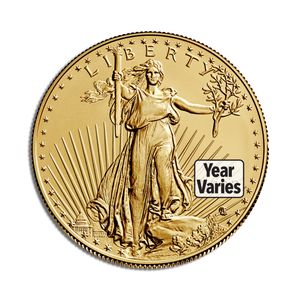
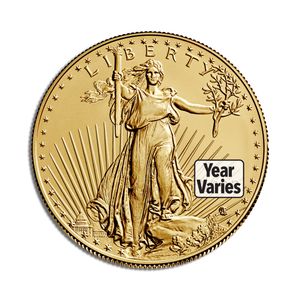
The 1999-W Gold American Eagle Unfinished Proof Die in the 1/10 oz denomination is one of the most recognized error-related rarities in the modern American Eagle series. Struck at the West Point Mint, this coin contains 0.1 troy ounces of gold at .9167 fineness and carries a five-dollar face value. What sets it apart from a standard bullion issue is the die it was struck with: production staff mistakenly used unfinished proof dies, resulting in a coin with surface characteristics that differ noticeably from both standard bullion strikes and fully prepared proof specimens.
This example has been certified MS69 by PCGS, reflecting a near-perfect mint state specimen with exceptional strike quality and surface preservation. We carry this coin for collectors and advanced buyers who understand the significance of this production anomaly within the context of the Gold Eagle program.
The Gold American Eagle program was authorized by the Gold Bullion Coin Act of 1985 and entered circulation in 1986, marking the first time the United States government issued a gold coin for public sale since the
…The 1999-W Gold American Eagle Unfinished Proof Die in the 1/10 oz denomination is one of the most recognized error-related rarities in the modern American Eagle series. Struck at the West Point Mint, this coin contains 0.1 troy ounces of gold at .9167 fineness and carries a five-dollar face value. What sets it apart from a standard bullion issue is the die it was struck with: production staff mistakenly used unfinished proof dies, resulting in a coin with surface characteristics that differ noticeably from both standard bullion strikes and fully prepared proof specimens.
This example has been certified MS69 by PCGS, reflecting a near-perfect mint state specimen with exceptional strike quality and surface preservation. We carry this coin for collectors and advanced buyers who understand the significance of this production anomaly within the context of the Gold Eagle program.
The Gold American Eagle program was authorized by the Gold Bullion Coin Act of 1985 and entered circulation in 1986, marking the first time the United States government issued a gold coin for public sale since the suspension of the gold standard. The series was designed to give American buyers access to domestic gold in a government-backed format with guaranteed weight, content, and purity. West Point quickly became the primary production facility for the program, earning the "W" mint mark found on proof and special issues.
The 1999 Unfinished Proof Die error occurred during a transitional production period at the West Point Mint. When the U.S. Mint began retooling its coin production processes that year, some dies intended for proof preparation were used to strike coins before the full finishing process was completed. The result was a coin with a visual texture that sits between a standard bullion finish and the frosted cameo relief of an intentional proof strike. The Mint did not officially publicize the error, and the coins entered circulation through normal distribution channels before the anomaly was widely identified.
The 1999-W Unfinished Proof Die has since become a recognized variety among serious Gold Eagle collectors. Its accidental nature, combined with the limited number of confirmed specimens at higher grade levels, has made it a persistent subject of interest in numismatic research and auction markets.
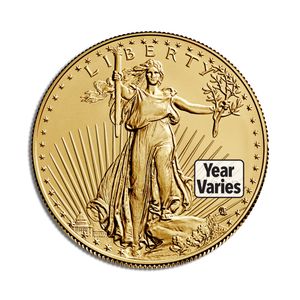
The obverse features Augustus Saint-Gaudens' iconic striding Liberty, adapted from his original 1907 double eagle design. Liberty walks forward holding a torch in her right hand and an olive branch in her left, with the Capitol building in the background and rays of sunlight emanating from below. The composition conveys forward momentum and national confidence, and it remains one of the most artistically respected designs in American coinage.
The reverse was designed by sculptor Miley Busiek and depicts a male eagle in flight carrying an olive branch toward a nest where a female eagle and hatchlings await. This family grouping is unique to the American Eagle gold series and distinguishes it visually from other major sovereign gold programs. The denomination, weight, and purity are inscribed on the reverse along with "United States of America."
On the Unfinished Proof Die variety, the coin's surfaces display characteristics that differentiate it from a standard bullion strike. The fields lack the full mirror-like depth of an intentional proof, while the devices show a degree of detail refinement not typical of a standard uncirculated bullion strike. This intermediate surface texture is the defining visual signature of the variety and can be observed under proper magnification.
At 1/10 oz, this coin sits at the smallest standard denomination in the Gold American Eagle lineup and carries an accessible entry point relative to full-ounce issues. For collectors focused specifically on the 1999 Unfinished Proof Die variety, the 1/10 oz format is one of four denominations in which the error was produced, alongside the 1/4 oz, 1/2 oz, and 1 oz coins.
Its small physical size does not diminish its numismatic significance. The graded and encapsulated format makes it straightforward to store, handle, and display without risk to the coin's surfaces or grade designation.
This coin has been graded and certified MS69 by the Professional Coin Grading Service (PCGS), one of the two most widely respected third-party grading services in the numismatic industry. PCGS authentication involves physical examination, variety attribution, and encapsulation in a tamper-evident holder that displays the grade, variety designation, and a unique certification number verifiable through PCGS's online database. The holder itself functions as the primary guarantee of authenticity and condition.
We are an authorized dealer for both PCGS and NGC, which positions us to accurately represent certified coins and provide buyers with confidence in the authenticity of graded material. Every certified coin we carry is handled according to standards that preserve slab integrity, ensuring the holder and grade are delivered exactly as represented.
MS69 is the second-highest grade achievable on the Sheldon numerical scale for mint state coins, awarded to specimens with virtually flawless surfaces and only the most minor imperfections visible under magnification. At this grade level, the coin exhibits a sharp, well-defined strike with no distracting blemishes. For the Unfinished Proof Die variety, an MS69 designation from PCGS signals a coin that represents the top of the available population for most buyers.
This coin ships in its original PCGS tamper-evident slab. The grading holder serves as permanent packaging and provides physical protection, grade documentation, and variety attribution in a single format. No additional holder or storage is needed, and the slab should not be cracked open, as doing so voids the certification and eliminates third-party authentication.
The base metal value of this coin is anchored to the current spot price of gold, reflecting 0.1 troy ounces at .9167 purity. Beyond the metal content, the premium on this coin is driven by its status as a recognized numismatic rarity rather than by standard bullion dynamics. The 1999-W Unfinished Proof Die is not priced like a typical fractional Gold Eagle because demand for it comes from a collector audience rather than a bullion buyer looking for the lowest premium over spot.
PCGS population data, recent auction results, and overall collector demand within the Gold Eagle variety community all influence where this coin trades. At the MS69 level, the coin occupies a position near the top of the certified population, which tends to support a more stable pricing floor than lower-grade examples. Our pricing reflects live gold spot conditions as well as the numismatic market dynamics specific to this variety.
The 1999-W Unfinished Proof Die is recognized among specialized Gold Eagle collectors and numismatic dealers who actively track certified varieties. Its PCGS certification makes it straightforward to authenticate and transfer, which supports liquidity within the collector market. The coin's documented variety status and consistent presence in major auction archives contribute to a reasonably established trading history.
We operate a two-way market, meaning customers who purchase this coin through us have a known avenue for selling when the time comes. For graded numismatic material, buyback pricing accounts for both the underlying gold value and the current collector market for the specific variety and grade. Understanding both components before purchase gives a more complete picture of the total cost of ownership.
This coin occupies a specific and well-documented niche within the American Eagle series as a production error that was never intentionally created, never officially acknowledged at the time of release, and never replicated. For collectors building a comprehensive Gold Eagle registry set or focusing on notable twentieth-century U.S. Mint varieties, it is a necessary inclusion. Its combination of historical context, variety rarity, and high-grade PCGS certification makes it a meaningful acquisition for a focused collection.
The 1/10 oz denomination in MS69 is a practical format for buyers who want certified exposure to this variety without committing to the larger capital outlay of the full-ounce version. It carries the same variety designation and the same certification standards, making it a genuine representation of the error in a size that suits a wider range of collectors.
We have built our reputation on transparency, accurate product representation, and a buying experience that treats customers as informed adults rather than targets for high-pressure sales tactics. Our A rating with the Better Business Bureau, membership in the American Numismatic Association and the National Coin and Bullion Association, and authorized dealer status with both PCGS and NGC reflect the standards we hold ourselves to across every transaction.
For graded numismatic material like this coin, our authorized dealer relationship with PCGS matters. It means we understand how to represent certified coins accurately, handle slabs with appropriate care, and support customers who have questions about grade, variety attribution, or market positioning. Our two-way market model also ensures that selling, not just buying, is part of the conversation from the start.
Bullion Standard Pro gives members access to live executable wholesale bid and ask pricing across our catalog, including graded numismatic material. For a coin like this, where pricing reflects both gold spot and a collector premium, Pro's real-time portfolio valuation tools use current wholesale bid pricing to show what holdings are actually worth at the wholesale level, rather than using estimated retail values that can obscure real liquidation conditions.
Pro also includes proprietary product research tools that allow members to evaluate coins using objective data, including premium history, bid/ask spread analysis, and liquidity metrics. These tools are particularly useful when evaluating numismatic premiums over time, helping members understand how market conditions and collector demand influence pricing across the certified coin market.
We support a broad range of payment methods to make every transaction straightforward and secure. Accepted options include Visa, Mastercard, American Express, Discover, PayPal, bank-connected payments through Plaid, wire transfer, paper check, and cryptocurrency payments through BitPay. Each method is supported by transaction security protocols designed to protect buyers at every stage of the purchase process.
Whether you prefer a traditional card payment or a digital transfer, the checkout experience is structured to be clear and reliable from confirmation through fulfillment. Customers with questions about payment options or order status have access to our support team throughout the process.
Product ID: BST-0011559E75
| Year | 1999 |
|---|---|
| Precious Metal Type | Gold |
| Bullion Coin Type | Eagle |
| Format | Coin |
| Country of Origin | United States |
| Brand/Mint | U.S. Mint |
| Mint Mark | W - West Point |
| Purity | 0.9167 |
| Weight | 0.1 oz |
| Thickness (mm) | 1.26 mm |
| Diameter (mm) | 16.5 mm |
| Grade | MS69 |
| Grading Service | PCGS |
The 1999-W Gold American Eagle Unfinished Proof Die in the 1/10 oz denomination is one of the most recognized error-related rarities in the modern American Eagle series. Struck at the West Point Mint, this coin contains 0.1 troy ounces of gold at .9167 fineness and carries a five-dollar face value. What sets it apart from a standard bullion issue is the die it was struck with: production staff mistakenly used unfinished proof dies, resulting in a coin with surface characteristics that differ noticeably from both standard bullion strikes and fully prepared proof specimens.
This example has been certified MS69 by PCGS, reflecting a near-perfect mint state specimen with exceptional strike quality and surface preservation. We carry this coin for collectors and advanced buyers who understand the significance of this production anomaly within the context of the Gold Eagle program.
The Gold American Eagle program was authorized by the Gold Bullion Coin Act of 1985 and entered circulation in 1986, marking the first time the United States government issued a gold coin for public sale since the
…The 1999-W Gold American Eagle Unfinished Proof Die in the 1/10 oz denomination is one of the most recognized error-related rarities in the modern American Eagle series. Struck at the West Point Mint, this coin contains 0.1 troy ounces of gold at .9167 fineness and carries a five-dollar face value. What sets it apart from a standard bullion issue is the die it was struck with: production staff mistakenly used unfinished proof dies, resulting in a coin with surface characteristics that differ noticeably from both standard bullion strikes and fully prepared proof specimens.
This example has been certified MS69 by PCGS, reflecting a near-perfect mint state specimen with exceptional strike quality and surface preservation. We carry this coin for collectors and advanced buyers who understand the significance of this production anomaly within the context of the Gold Eagle program.
The Gold American Eagle program was authorized by the Gold Bullion Coin Act of 1985 and entered circulation in 1986, marking the first time the United States government issued a gold coin for public sale since the suspension of the gold standard. The series was designed to give American buyers access to domestic gold in a government-backed format with guaranteed weight, content, and purity. West Point quickly became the primary production facility for the program, earning the "W" mint mark found on proof and special issues.
The 1999 Unfinished Proof Die error occurred during a transitional production period at the West Point Mint. When the U.S. Mint began retooling its coin production processes that year, some dies intended for proof preparation were used to strike coins before the full finishing process was completed. The result was a coin with a visual texture that sits between a standard bullion finish and the frosted cameo relief of an intentional proof strike. The Mint did not officially publicize the error, and the coins entered circulation through normal distribution channels before the anomaly was widely identified.
The 1999-W Unfinished Proof Die has since become a recognized variety among serious Gold Eagle collectors. Its accidental nature, combined with the limited number of confirmed specimens at higher grade levels, has made it a persistent subject of interest in numismatic research and auction markets.
The obverse features Augustus Saint-Gaudens' iconic striding Liberty, adapted from his original 1907 double eagle design. Liberty walks forward holding a torch in her right hand and an olive branch in her left, with the Capitol building in the background and rays of sunlight emanating from below. The composition conveys forward momentum and national confidence, and it remains one of the most artistically respected designs in American coinage.
The reverse was designed by sculptor Miley Busiek and depicts a male eagle in flight carrying an olive branch toward a nest where a female eagle and hatchlings await. This family grouping is unique to the American Eagle gold series and distinguishes it visually from other major sovereign gold programs. The denomination, weight, and purity are inscribed on the reverse along with "United States of America."
On the Unfinished Proof Die variety, the coin's surfaces display characteristics that differentiate it from a standard bullion strike. The fields lack the full mirror-like depth of an intentional proof, while the devices show a degree of detail refinement not typical of a standard uncirculated bullion strike. This intermediate surface texture is the defining visual signature of the variety and can be observed under proper magnification.
At 1/10 oz, this coin sits at the smallest standard denomination in the Gold American Eagle lineup and carries an accessible entry point relative to full-ounce issues. For collectors focused specifically on the 1999 Unfinished Proof Die variety, the 1/10 oz format is one of four denominations in which the error was produced, alongside the 1/4 oz, 1/2 oz, and 1 oz coins.
Its small physical size does not diminish its numismatic significance. The graded and encapsulated format makes it straightforward to store, handle, and display without risk to the coin's surfaces or grade designation.
This coin has been graded and certified MS69 by the Professional Coin Grading Service (PCGS), one of the two most widely respected third-party grading services in the numismatic industry. PCGS authentication involves physical examination, variety attribution, and encapsulation in a tamper-evident holder that displays the grade, variety designation, and a unique certification number verifiable through PCGS's online database. The holder itself functions as the primary guarantee of authenticity and condition.
We are an authorized dealer for both PCGS and NGC, which positions us to accurately represent certified coins and provide buyers with confidence in the authenticity of graded material. Every certified coin we carry is handled according to standards that preserve slab integrity, ensuring the holder and grade are delivered exactly as represented.
MS69 is the second-highest grade achievable on the Sheldon numerical scale for mint state coins, awarded to specimens with virtually flawless surfaces and only the most minor imperfections visible under magnification. At this grade level, the coin exhibits a sharp, well-defined strike with no distracting blemishes. For the Unfinished Proof Die variety, an MS69 designation from PCGS signals a coin that represents the top of the available population for most buyers.
This coin ships in its original PCGS tamper-evident slab. The grading holder serves as permanent packaging and provides physical protection, grade documentation, and variety attribution in a single format. No additional holder or storage is needed, and the slab should not be cracked open, as doing so voids the certification and eliminates third-party authentication.
The base metal value of this coin is anchored to the current spot price of gold, reflecting 0.1 troy ounces at .9167 purity. Beyond the metal content, the premium on this coin is driven by its status as a recognized numismatic rarity rather than by standard bullion dynamics. The 1999-W Unfinished Proof Die is not priced like a typical fractional Gold Eagle because demand for it comes from a collector audience rather than a bullion buyer looking for the lowest premium over spot.
PCGS population data, recent auction results, and overall collector demand within the Gold Eagle variety community all influence where this coin trades. At the MS69 level, the coin occupies a position near the top of the certified population, which tends to support a more stable pricing floor than lower-grade examples. Our pricing reflects live gold spot conditions as well as the numismatic market dynamics specific to this variety.
The 1999-W Unfinished Proof Die is recognized among specialized Gold Eagle collectors and numismatic dealers who actively track certified varieties. Its PCGS certification makes it straightforward to authenticate and transfer, which supports liquidity within the collector market. The coin's documented variety status and consistent presence in major auction archives contribute to a reasonably established trading history.
We operate a two-way market, meaning customers who purchase this coin through us have a known avenue for selling when the time comes. For graded numismatic material, buyback pricing accounts for both the underlying gold value and the current collector market for the specific variety and grade. Understanding both components before purchase gives a more complete picture of the total cost of ownership.
This coin occupies a specific and well-documented niche within the American Eagle series as a production error that was never intentionally created, never officially acknowledged at the time of release, and never replicated. For collectors building a comprehensive Gold Eagle registry set or focusing on notable twentieth-century U.S. Mint varieties, it is a necessary inclusion. Its combination of historical context, variety rarity, and high-grade PCGS certification makes it a meaningful acquisition for a focused collection.
The 1/10 oz denomination in MS69 is a practical format for buyers who want certified exposure to this variety without committing to the larger capital outlay of the full-ounce version. It carries the same variety designation and the same certification standards, making it a genuine representation of the error in a size that suits a wider range of collectors.
We have built our reputation on transparency, accurate product representation, and a buying experience that treats customers as informed adults rather than targets for high-pressure sales tactics. Our A rating with the Better Business Bureau, membership in the American Numismatic Association and the National Coin and Bullion Association, and authorized dealer status with both PCGS and NGC reflect the standards we hold ourselves to across every transaction.
For graded numismatic material like this coin, our authorized dealer relationship with PCGS matters. It means we understand how to represent certified coins accurately, handle slabs with appropriate care, and support customers who have questions about grade, variety attribution, or market positioning. Our two-way market model also ensures that selling, not just buying, is part of the conversation from the start.
Bullion Standard Pro gives members access to live executable wholesale bid and ask pricing across our catalog, including graded numismatic material. For a coin like this, where pricing reflects both gold spot and a collector premium, Pro's real-time portfolio valuation tools use current wholesale bid pricing to show what holdings are actually worth at the wholesale level, rather than using estimated retail values that can obscure real liquidation conditions.
Pro also includes proprietary product research tools that allow members to evaluate coins using objective data, including premium history, bid/ask spread analysis, and liquidity metrics. These tools are particularly useful when evaluating numismatic premiums over time, helping members understand how market conditions and collector demand influence pricing across the certified coin market.
We support a broad range of payment methods to make every transaction straightforward and secure. Accepted options include Visa, Mastercard, American Express, Discover, PayPal, bank-connected payments through Plaid, wire transfer, paper check, and cryptocurrency payments through BitPay. Each method is supported by transaction security protocols designed to protect buyers at every stage of the purchase process.
Whether you prefer a traditional card payment or a digital transfer, the checkout experience is structured to be clear and reliable from confirmation through fulfillment. Customers with questions about payment options or order status have access to our support team throughout the process.