Buy American Silver Eagle Coins Online
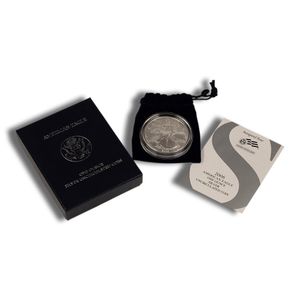
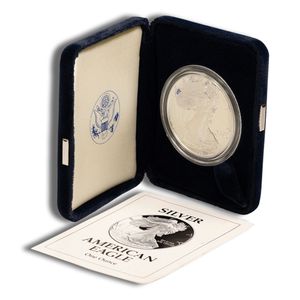
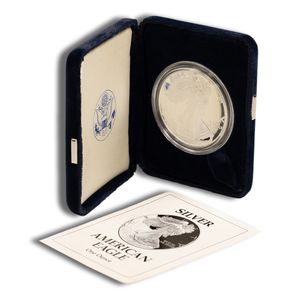
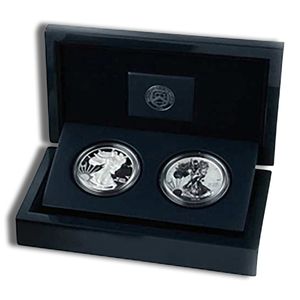
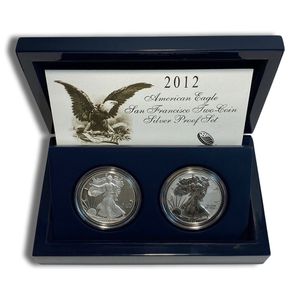
Our catalog of american silver eagle coins spans every year of the series from 1986 through the present, covering a wide range of grades, finishes, and packaging options. Whether you're looking for a raw brilliant uncirculated example, a professionally certified MS69 or MS70 from NGC or PCGS, or an original proof issue from the San Francisco or Philadelphia Mint complete with its original box and certificate of authenticity, you'll find the specific coin you need here. Multi-coin sets including the 41-coin complete date run graded by NGC are also available for collectors or buyers seeking comprehensive year-by-year representation in a single transaction.
Every american silver eagle coin listed on Bullion Standard is sourced from reputable distributors and verified for authenticity, weight, and purity before it ships. Pricing is updated in real time to reflect current silver spot prices and wholesale market conditions, so what you see reflects the actual market rather than outdated retail markups. The goal is straightforward: a transparent place to buy one of the most recognized silver coin series ever produced by the United States Mint.
From single-year date coins to graded registry-quality specimens, the depth of this catalog is designed to serve buyers across the full spectrum of interest, whether that's accumulating silver by the ounce, completing a date set, or acquiring a specific certified grade for a particular purpose.
What Are American Silver Eagle Coins?
American silver eagles are government-issued one troy ounce silver coins produced by the United States Mint under the Liberty Coin Act of 1985. Each coin is struck from .999 fine silver, carries a nominal face value of one dollar, and is backed by the U.S. government for its weight, purity, and silver content. That combination of legal tender status and guaranteed specifications distinguishes them from privately minted silver rounds, which carry no government backing despite often similar physical characteristics.
The series is produced in two primary formats: bullion strikes intended for silver buyers and investors, and proof strikes aimed at collectors. Bullion coins are struck at the West Point Mint and carry no mint mark on most years, while proof versions have been issued from the San Francisco and Philadelphia Mints as well as West Point, each with their own distinct mint mark designations. The 1986-S, 1987-S through 1992-S, and subsequent proof issues from Philadelphia and West Point each represent distinct collector variants with their own pricing characteristics and relative scarcity.
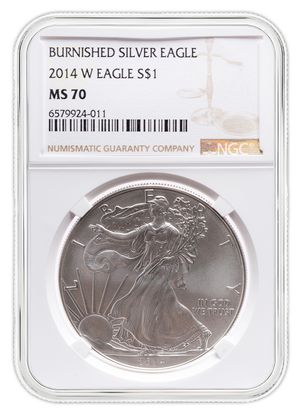
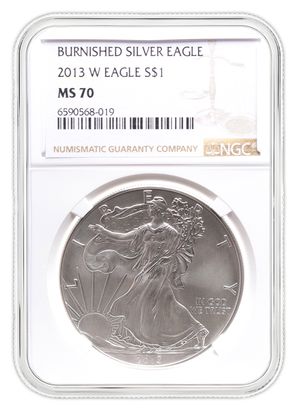
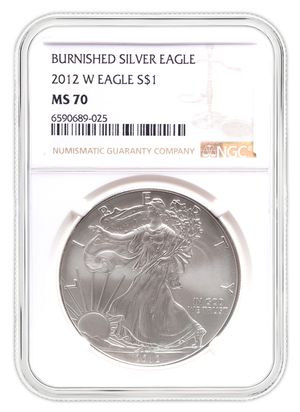
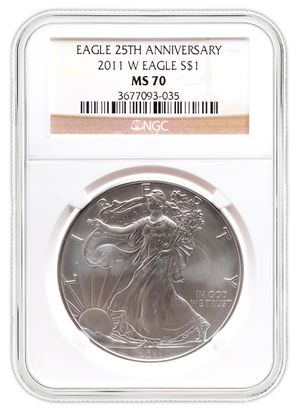
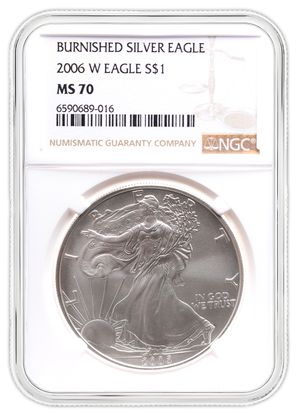
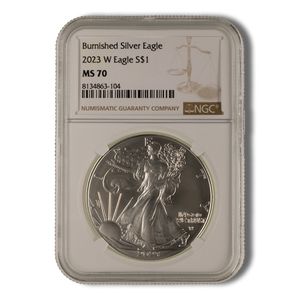
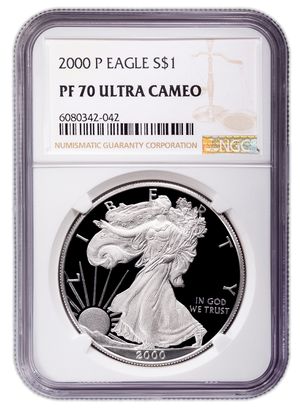
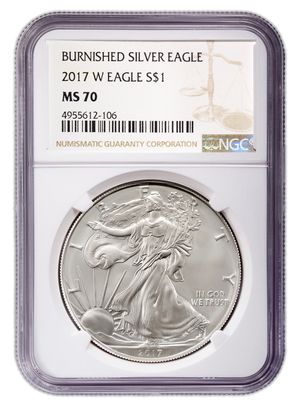
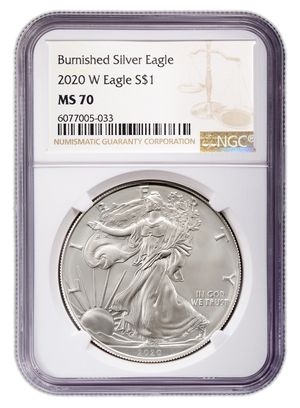
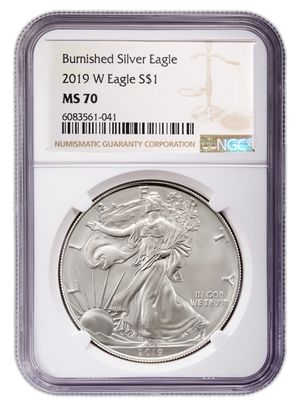
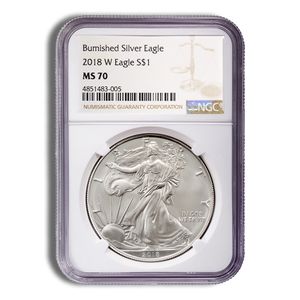
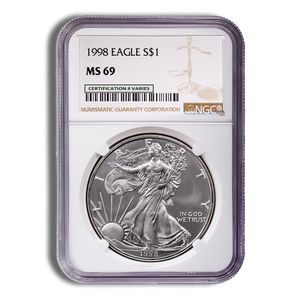
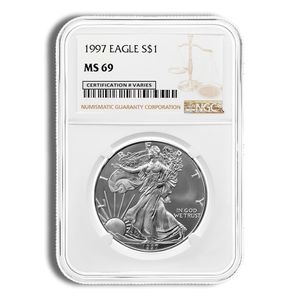
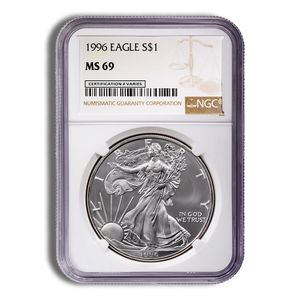
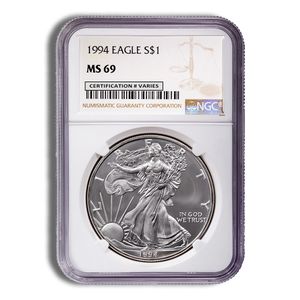
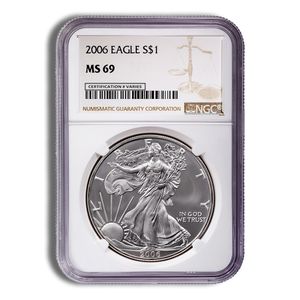
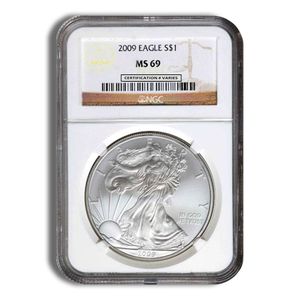
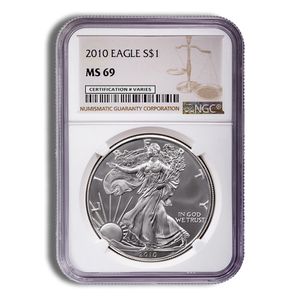
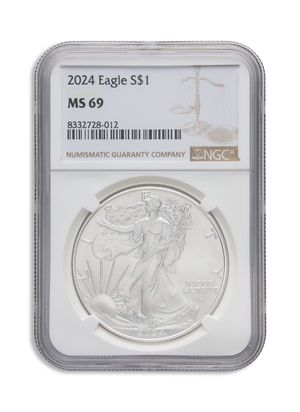
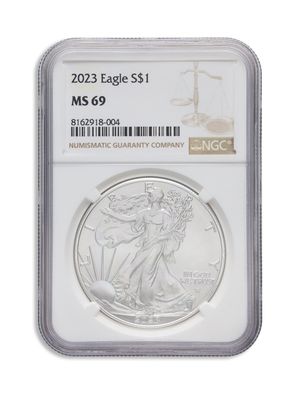
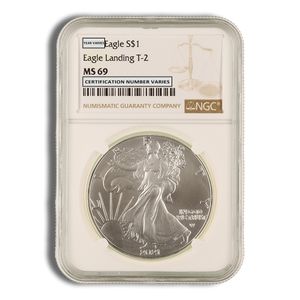
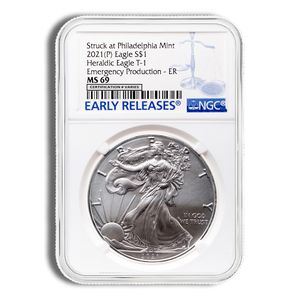
Certified examples graded by NGC or PCGS occupy a distinct segment of the market. Grades of MS69 and MS70 for bullion strikes, and PF69 or PF70 for proofs, reflect the striking quality and surface condition of individual coins as evaluated by professional numismatic grading services. Certified coins are encapsulated in tamper-evident slabs that preserve their condition and make their grade immediately verifiable to any buyer or reseller in the market.
History and Background
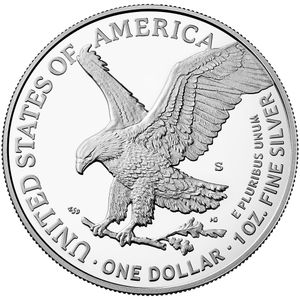
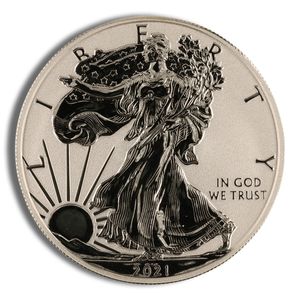
The american silver eagle program launched in 1986, making it one of the longest-running government silver bullion programs in the world. The coin's design draws directly from Adolph A. Weinman's 1916 Walking Liberty half dollar obverse, a motif widely regarded as one of the most elegant in American coinage history. The reverse, originally designed by John Mercanti, depicts a heraldic eagle with a shield and was updated beginning with the 2021 issue to feature a new reverse design by Emily Damstra showing an eagle in flight carrying an oak branch.
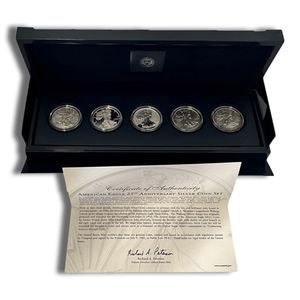
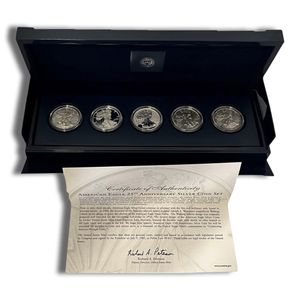
In its early years, the series was minted in relatively modest quantities compared to the volumes produced after the early 2000s. Coins from 1986 through the mid-1990s, particularly the 1986 and 1996 issues, are notable for lower original mintage figures that have made them more sought after in high grades over time. The 1995-W proof, struck exclusively for inclusion in the 10th Anniversary five-coin gold and silver set and never sold individually, stands as the series' most recognized low-mintage rarity and commands a significant premium in both raw and certified form.
Mintage volumes grew substantially through the 2000s and into the 2010s as retail demand for silver bullion expanded. Annual production at times exceeded 40 million coins, reflecting the coin's dominant position in the global government silver bullion market. The transition to a new reverse design in 2021 also coincided with changes to the coin's edge lettering and security features, adding another layer of distinction for date-run collectors and variety enthusiasts.
Purity, Weight, and Specifications
Every american silver eagle, regardless of year or mint, contains exactly one troy ounce of .999 fine silver. The coin has a diameter of 40.6 millimeters and a reeded edge on bullion strikes, with the 2021 and later issues incorporating additional anti-counterfeiting edge lettering as part of a security upgrade. The nominal face value is one U.S. dollar, though the coin's market price is driven entirely by silver spot prices and prevailing premiums rather than its legal tender denomination.
Proof versions share the same silver content and diameter but are struck multiple times with polished dies on specially prepared planchets, producing a mirrored field and frosted relief that distinguishes them visually from bullion strikes. Both formats carry the standard .999 fine silver purity designation, though some collector-oriented special issues over the years have been produced with .9999 fine silver. For the coins represented in this catalog, the standard .999 purity applies across the bullion and proof lines unless otherwise noted in the individual product listing.
Available Brands, Mints, and Product Variations
All american silver eagle coins are produced by the United States Mint, which operates facilities at West Point, San Francisco, and Philadelphia relevant to this series. Bullion strikes carry the West Point facility's production but historically display no mint mark, while proof issues from San Francisco display an "S" mint mark, Philadelphia issues display a "P," and West Point proof issues display a "W." The 1995-W proof represents the most prominent West Point proof issue within the series and is listed separately given its distinct market position.
Grading service variations are a significant structural element of this catalog. NGC-graded examples in MS69, MS70, PF69, and PF70 represent coins individually evaluated and encapsulated by the Numismatic Guaranty Company, one of the two most widely recognized grading services in the numismatic market. PCGS-certified coins graded MS69 and PR69 similarly carry the Professional Coin Grading Service's evaluation, with PCGS being the other dominant grading service in the industry. Bullion Standard is an authorized dealer for both NGC and PCGS, which ensures the certified coins in this catalog have been properly sourced and handled throughout the chain of custody.
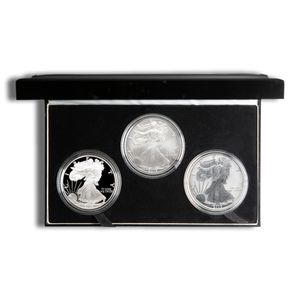
Raw, uncertified brilliant uncirculated examples are listed separately from graded coins, typically at lower premiums, and represent standard bullion-grade coins without professional evaluation. Impaired condition listings reflect coins that have experienced surface wear or contact marks beyond normal handling and are priced accordingly. Multi-coin sets, including the 40-coin 1986 through 2024 NGC MS69 set and the 41-coin 1986 through 2025 equivalent, offer a structured way to acquire a complete or near-complete date run in a single purchase at a combined price reflecting the set's overall market value.
Pricing, Premiums, and Market Factors
The base price of any american silver eagle is anchored to the silver spot price, which fluctuates continuously during market hours. Premiums above spot vary meaningfully depending on the coin's year, grade, certification, condition, and whether it is a bullion strike or proof. Raw bullion-grade coins generally carry the tightest premiums, while MS70 and PF70 certified examples carry substantially higher premiums reflecting the scarcity of coins that achieve perfect grades under professional evaluation.
Low-mintage years from the early part of the series command structurally higher premiums than high-mintage modern issues, even at equivalent grades, because fewer coins exist across the entire market. The 1996 issue, for example, had the lowest mintage of any bullion-strike american silver eagle in the series, which influences its premium relative to nearby date coins. Proof issues with original box and certificate of authenticity intact typically carry stronger resale characteristics than those without original packaging, since completeness is a recognized factor in collector-oriented markets.
Bullion Standard's pricing reflects real-time spot conditions and is structured to give buyers a clear picture of the premium they're paying at the moment of purchase. Each product page displays bid and ask pricing, which represents both the current acquisition cost and the current buyback value simultaneously. This two-sided pricing model is designed to give buyers a more complete understanding of total cost of ownership rather than focusing exclusively on the purchase price in isolation.
Condition, Packaging, and What to Expect
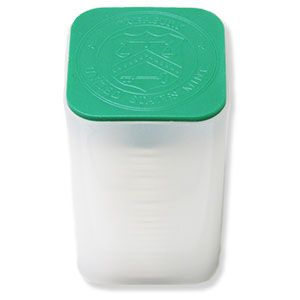
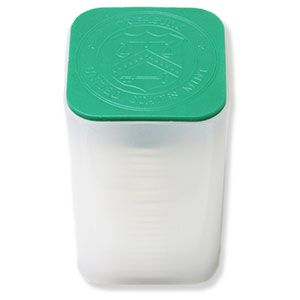
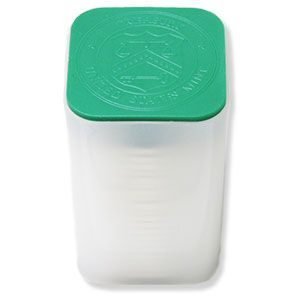
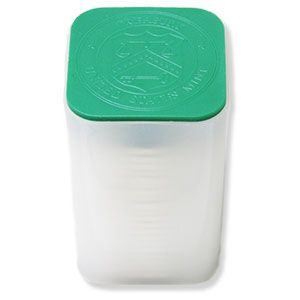
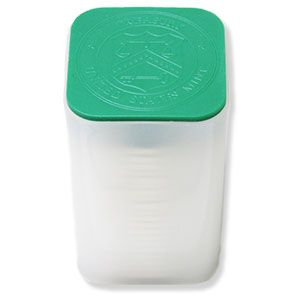
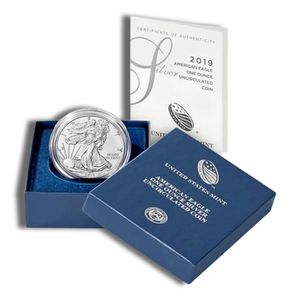
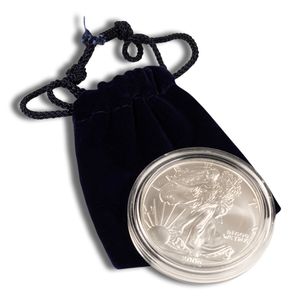
Brilliant uncirculated bullion strikes are typically received in protective capsules or tubes, depending on how they were acquired from the mint or distributor. Individual coins are often supplied in clear flips or acrylic capsules, while multi-coin lots may arrive in the original Mint-sealed tubes containing 20 coins each. Surface marks, minor contact points, and small handling imperfections are normal and expected on raw bullion coins and do not affect silver content or weight.
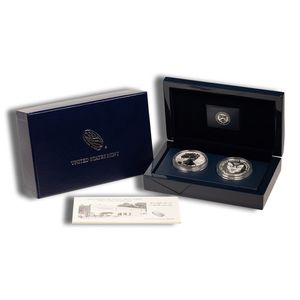
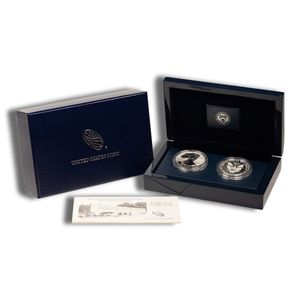
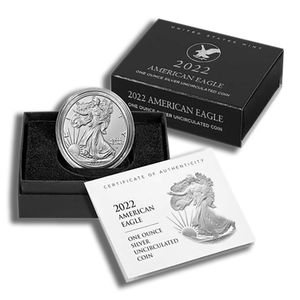
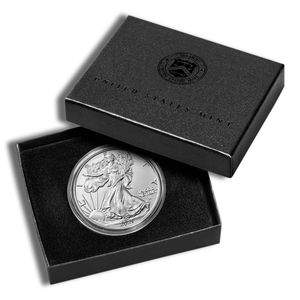
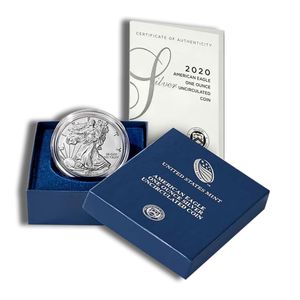
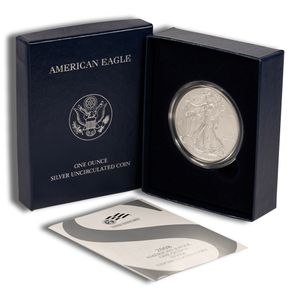
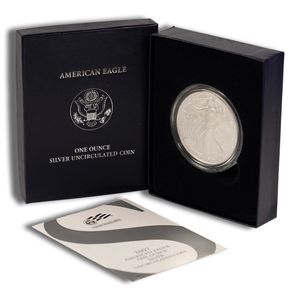
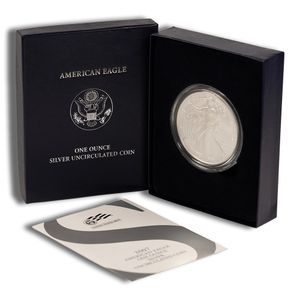
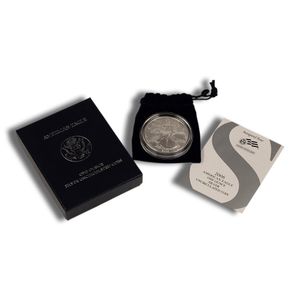
Proof coins originally issued with a presentation box and certificate of authenticity are listed as such and should arrive with those components intact. Coins described as "impaired condition" have experienced more significant surface wear or contact damage than is typical for their issue and are priced to reflect that condition accurately. Buyers should review individual product descriptions carefully when condition is a relevant consideration for their purposes.
Certified coins in NGC or PCGS slabs arrive in their sealed holders with no additional packaging required, as the slab itself provides physical protection and verification. Multi-coin sets are typically shipped in protective outer packaging designed to prevent movement and contact damage during transit. Bullion Standard's fulfillment process includes secure, discreet packaging on all shipments to protect both the product and the buyer's privacy.
Authenticity and Verification
Every american silver eagle produced by the United States Mint is struck from refined silver sourced to meet the official .999 fine standard, and the Mint's production processes incorporate anti-counterfeiting measures at the planchet and striking level. Beginning with the 2021 redesign, additional security features were introduced to the coin's edge, making modern issues easier to distinguish from counterfeit examples. Older dates carry the design consistency of decades of Mint production, which experienced dealers and grading services use as a baseline for authentication.
Certified coins offer the strongest form of third-party verification available in the numismatic market. Both NGC and PCGS encapsulate authenticated coins in tamper-evident holders with the coin's certification number on file in their online registries, allowing anyone to independently verify a specific coin's grade and authenticity by looking up the serial number on the slab. Bullion Standard's status as an authorized dealer for both grading services reflects its commitment to sourcing certified coins through proper channels.
Raw bullion coins sourced by Bullion Standard are verified for authenticity and specifications before being listed. Every product goes through a receiving process that confirms weight, physical characteristics, and condition before it becomes available on the platform. Buyers who want an additional layer of assurance can submit raw coins to NGC or PCGS through Bullion Standard's dealer account for certification, which provides an independently verified grade and permanent encapsulation.
Liquidity and Resale Considerations
The american silver eagle is among the most liquid silver bullion products in the global market. Its government issue status, standardized specifications, and decades of consistent production mean it's recognized and traded by virtually every bullion dealer, auction house, and coin shop in the United States. That broad market familiarity translates to practical advantages when it comes time to sell, since buyers across the entire spectrum from individual collectors to institutional wholesale purchasers are comfortable transacting in the series.
Certified examples, particularly MS69 and MS70 coins for high-demand years, tend to trade in an established secondary market with observable price histories available through auction records and dealer price guides. Raw bullion examples trade largely on silver content plus a standard premium, making their resale environment relatively predictable and comparable to other major government silver bullion programs. Coins that retain their original proof packaging, including box and certificate of authenticity, are easier to place in collector markets where completeness carries weight.
Liquidity can vary across the date range. Modern-year issues with high mintages are among the most actively traded silver products available and typically find buyers quickly at competitive prices. Early-series issues and low-mintage dates have a more specialized collector audience, though that same specialization can support stronger premiums in properly maintained condition. Understanding these distinctions before a purchase is part of making a well-informed decision, and Bullion Standard's bid and ask pricing displayed on each product page provides a real-time indication of current market liquidity for individual coins.
Storage and Security
Individual american silver eagles stored in capsules or slabs are well protected against surface damage as long as they're kept in a stable environment free from excessive humidity, rapid temperature swings, or exposure to airborne sulfur compounds, which can accelerate toning on silver surfaces. Raw coins stored loose in tubes should be kept upright in a sealed container to minimize contact and movement between coins. Airtight capsules are an affordable and widely available option for longer-term individual coin storage.
Larger holdings, particularly for buyers accumulating tubes or rolls of bullion strikes, benefit from fireproof home safes rated for both fire and theft. Safe deposit boxes at financial institutions provide an alternative for buyers who prefer third-party physical security, though accessibility is limited to banking hours. Purpose-built precious metals storage vaults offer insured, professional-grade options for substantial holdings, with some services providing allocated storage that keeps individual coins or lots segregated from other depositors' holdings.
Certified coins in NGC or PCGS holders require no additional preparation for storage beyond keeping the slab away from sources of impact, heat, and direct sunlight. The polycarbonate holder material resists most environmental exposure, though long-term UV exposure can cause cosmetic yellowing of the plastic over many years. Storing slabbed coins in rigid protective boxes or foam-lined cases designed specifically for numismatic slabs provides the best combination of organization and physical protection for larger certified collections.
Selling and Buyback Options
Selling american silver eagles back into the market is a straightforward process given the series' widespread recognition. Bullion Standard maintains a two-way market structure, meaning the same platform used to purchase coins also supports the buyback process. Customers looking to sell can submit coins for review through Bullion Standard's purchasing team, which evaluates each product based on type, grade, certification status, condition, packaging, and current wholesale market pricing. The process is designed to be operationally clear and free from the ambiguity that can arise when selling through less transparent channels.
Buyback pricing reflects real-time wholesale bid levels rather than fixed dealer-determined values, which means the price offered for a coin at any given moment reflects actual market conditions. Certified coins in high grades from widely recognized services like NGC and PCGS typically receive stronger bids than raw examples of equivalent dates, due to the additional market confidence the certification provides. Coins with original proof packaging intact, such as box and certificate of authenticity, are evaluated with that completeness factored into the buyback assessment.
Understanding the spread between the price paid to acquire a coin and the current buyback value is one of the most practical pieces of information a buyer can have before completing a purchase. Bullion Standard displays both bid and ask pricing on each product page specifically to give buyers that visibility upfront. For buyers who transact with any frequency, Bullion Standard Pro provides access to live wholesale bid pricing that reflects executable market levels rather than indicative estimates, giving a more precise picture of current liquidation value across the portfolio.
Why Buy American Silver Eagle Coins?
The american silver eagle's government-backed status sets it apart from privately minted silver products in a meaningful way. Each coin's silver content, purity, and weight are guaranteed by the United States government, which removes a layer of uncertainty that exists with rounds or bars produced by private mints. For buyers who prioritize recognizability and market acceptance above all else, that government backing carries practical value that extends throughout the entire ownership period.
The series also offers a level of format flexibility that few silver bullion programs can match. Buyers can choose from raw bullion strikes, original government proof sets, professionally certified examples in grades from MS69 through MS70 and PF69 through PF70, and complete multi-year sets spanning the full 1986 to present date run. That range of options means the program accommodates buyers with very different objectives in a single, highly standardized product family.
Silver's dual role as both a monetary metal and an industrial material contributes to its sustained demand across multiple market segments. Silver is essential in electronics manufacturing, solar panel production, medical applications, and a range of industrial processes that create consistent underlying demand beyond the bullion market alone. The american silver eagle captures that base demand through its silver content while adding a layer of numismatic and collector interest through its design legacy and certified grade market, making it one of the most broadly traded silver products available anywhere in the market today.
Why Buy from Bullion Standard?
Bullion Standard was founded in 2010 in San Diego, California, with a straightforward premise: the precious metals market should operate with the same pricing transparency and market clarity that buyers expect in more established financial markets. That philosophy has shaped every aspect of how the platform is built, from real-time spot-based pricing and visible bid/ask spreads on every product page to a two-way market structure that treats selling as thoughtfully as buying.
Every coin listed in this catalog is verified for authenticity, weight, and purity before it reaches a customer. Bullion Standard is an authorized dealer for both NGC and PCGS, which means certified coins have been sourced through proper channels with full chain-of-custody accountability. The company maintains an A rating with the Better Business Bureau and holds active membership in both the American Numismatic Association and the National Coin and Bullion Association, reflecting a consistent commitment to professional standards over more than a decade of operation.
The checkout and fulfillment experience is designed to be secure and straightforward, with payment options including Visa, Mastercard, American Express, Discover, PayPal, bank-connected payments through Plaid, wire transfer, paper check, and cryptocurrency through BitPay. Shipments are handled with discreet, secure packaging, and customer support is available for any questions that arise before, during, or after a purchase. The goal at every step is to make the experience feel like a transparent marketplace rather than a high-pressure sales environment, because building long-term trust is the only approach that makes sense in this industry.
Get Near-Spot Pricing with Bullion Standard Pro
Bullion Standard Pro is designed for buyers who want direct access to live executable wholesale pricing across the silver bullion market. Rather than purchasing at fixed retail price structures, Pro members transact at real-time wholesale bid and ask levels without additional dealer markups or dealer spreads applied on top of those prices. For buyers who accumulate american silver eagles with any regularity, the difference between retail pricing and executable wholesale pricing can be meaningful over time.
Beyond pricing efficiency, Bullion Standard Pro provides access to proprietary market intelligence tools that help members evaluate premiums, bid/ask spreads, liquidity, and historical pricing trends across specific products. For a series as broad and data-rich as the american silver eagle, those tools allow members to identify which dates, grades, and formats are trading at historically tight or wide premiums relative to the broader market at any given point. Portfolio valuation within the Pro platform uses live wholesale bid pricing rather than estimated retail values, giving members a more accurate picture of what their holdings could realistically return if liquidated under current market conditions.
The platform is built around the idea that better information leads to better decisions, and that buyers who understand what they're paying and what they can realistically expect to receive when they sell are in a structurally stronger position than those who don't. Bullion Standard Pro is designed to provide that information in a clear, data-driven format that reflects the actual mechanics of the wholesale precious metals market rather than simplified retail assumptions. For buyers serious about how they engage with the silver market, Pro membership is the most direct path to that level of transparency.

 (833) 278-4653