Pre-1965 90% silver coins represent one of the most recognized and widely traded categories in the physical silver market. Struck by the United States Mint from a composition of 90% silver and 10% copper, these coins carry $1 in combined face value and contain approximately 0.715 troy ounces of silver. The "any denominations" designation reflects the reality that this type of lot may include dimes, quarters, half dollars, or a combination of all three, depending on availability at the time of fulfillment.
Commonly referred to as "junk silver" within the trade, these coins are anything but junk in terms of metal content or market acceptance. Their value is driven entirely by silver content rather than numismatic premium, which makes them a practical choice for buyers focused on tangible metal at accessible price points. We carry these coins in $1 face value increments, making it straightforward to calculate and scale a position based on silver content alone.
The coins that fall into the 90% silver category were minted by the United States Mint across a range of denominations throughout much o
…Pre-1965 90% silver coins represent one of the most recognized and widely traded categories in the physical silver market. Struck by the United States Mint from a composition of 90% silver and 10% copper, these coins carry $1 in combined face value and contain approximately 0.715 troy ounces of silver. The "any denominations" designation reflects the reality that this type of lot may include dimes, quarters, half dollars, or a combination of all three, depending on availability at the time of fulfillment.
Commonly referred to as "junk silver" within the trade, these coins are anything but junk in terms of metal content or market acceptance. Their value is driven entirely by silver content rather than numismatic premium, which makes them a practical choice for buyers focused on tangible metal at accessible price points. We carry these coins in $1 face value increments, making it straightforward to calculate and scale a position based on silver content alone.
The coins that fall into the 90% silver category were minted by the United States Mint across a range of denominations throughout much of the 19th and early 20th centuries, continuing through 1964. Dimes, quarters, and half dollars all shared the same 90% silver composition during this period, which means decades of circulated coinage now serves as a direct historical record of U.S. monetary history.
The transition away from silver content began formally with the Coinage Act of 1965, which eliminated silver from dimes and quarters entirely and reduced the silver content of half dollars. This legislation effectively ended the era of circulating U.S. silver coinage and drew a clear historical line between pre-1965 coins and everything that followed. That cut-off date has since become one of the most universally understood reference points in the bullion market.
Over the decades since, pre-1965 90% silver coins have developed a distinct identity within the precious metals trade. Circulated and accumulated through normal commerce, these coins now exist in aggregate quantities that support an active secondary market, with pricing tied directly to the silver spot price rather than collector demand or mintage figures.
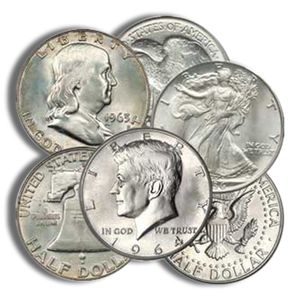
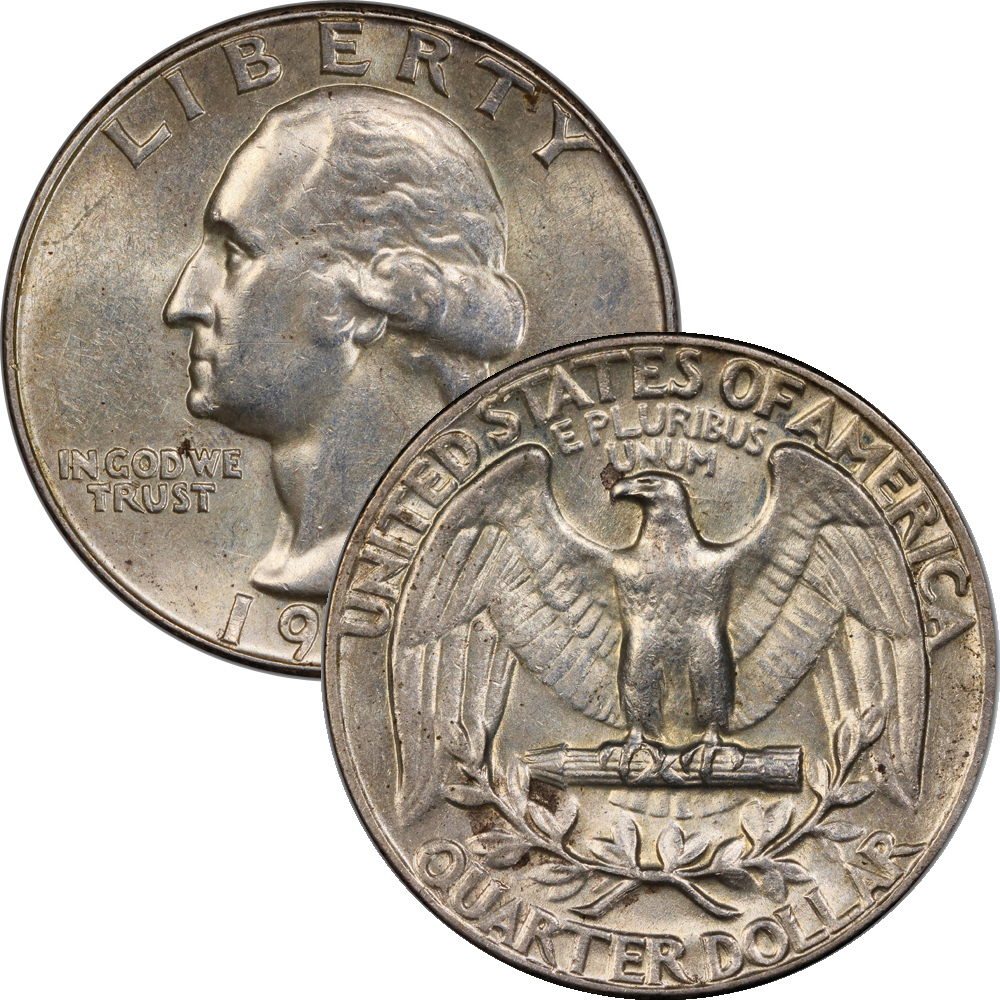
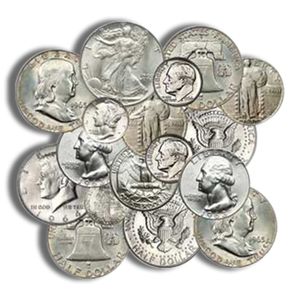
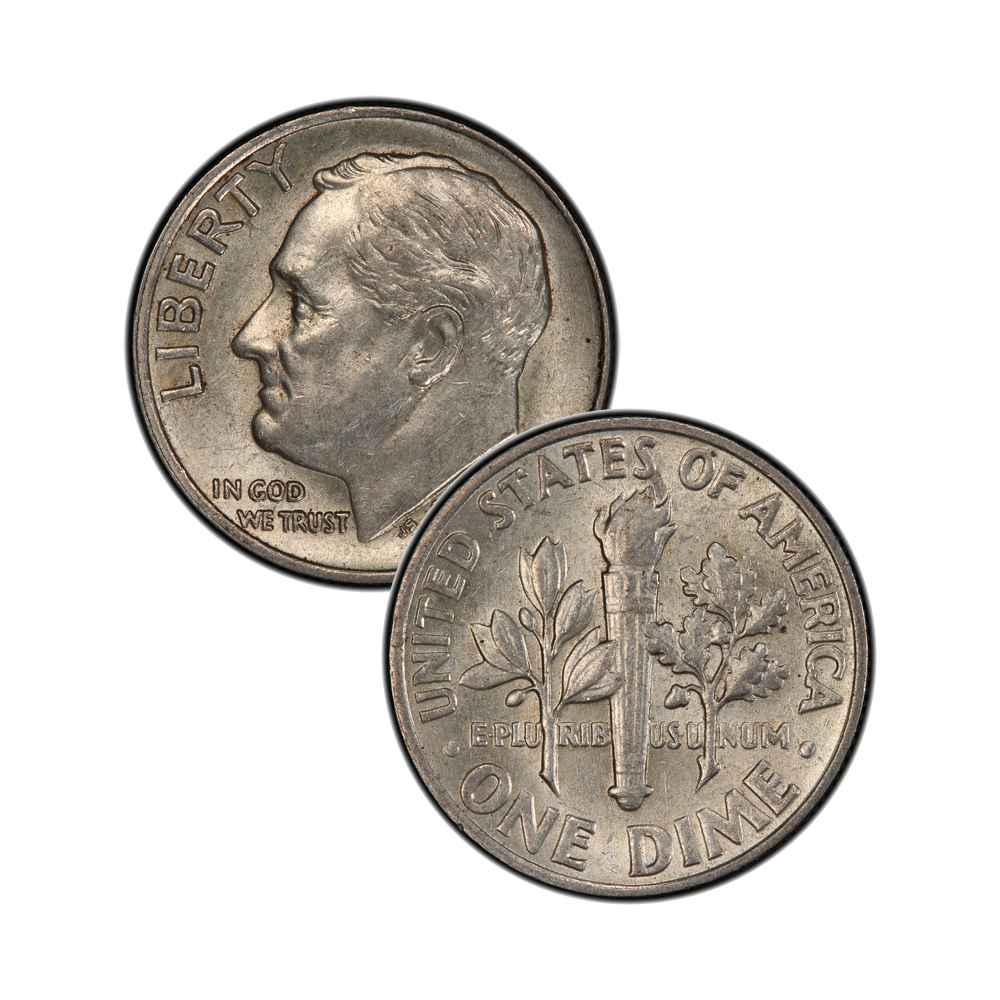
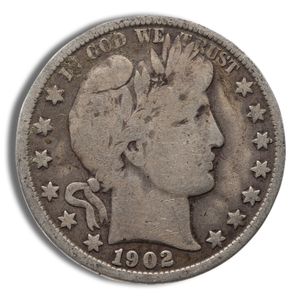
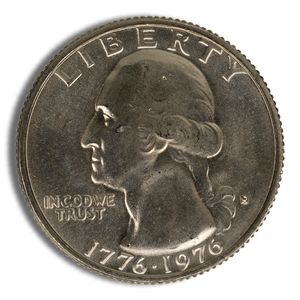
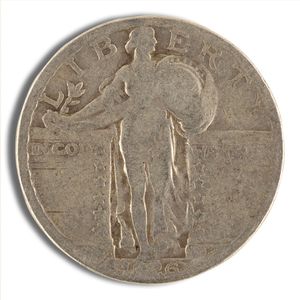
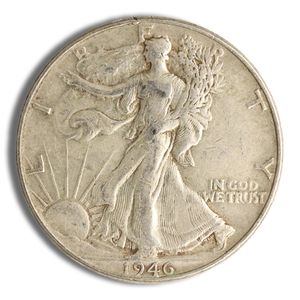
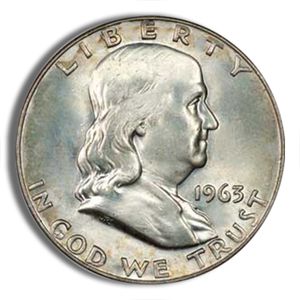
Because lots designated as "any denominations" may include dimes, quarters, or half dollars from multiple decades, the specific designs within a given lot can vary considerably. Dimes may display the Mercury or Roosevelt portrait; quarters may feature the Washington obverse introduced in 1932 alongside various pre-1932 Liberty designs; half dollars may show Walking Liberty, Franklin, or Kennedy imagery depending on their year of issue.
Regardless of the specific denomination or era, these coins share the visual language of mid-century American coinage: portrait-style obverses framing iconic American figures or allegorical representations of liberty, with reverse designs incorporating eagles, torches, shields, and heraldic elements common to U.S. coinage of the period. Inscriptions including "In God We Trust," "Liberty," "E Pluribus Unum," and the denomination are standard across the series.
Given their circulated grade, these coins display the natural wear expected from coins that passed through everyday commerce. Edge detail may be softened, surface relief reduced, and luster largely absent, though the design elements remain identifiable on most pieces. Buyers purchasing for silver content rather than numismatic appeal will find the condition entirely appropriate for this product category.
At $1 face value and approximately 0.715 troy ounces of silver, this product offers a flexible entry point into physical silver ownership without committing to a full troy ounce or larger denomination. The fractional nature of individual coins within the lot also supports practical handling, since individual dimes, quarters, and halves can be separated or allocated without any additional processing.
This format suits buyers who want divisible silver that can be managed in small increments. The combination of widely recognized denominations and a direct link to a known silver content per face value dollar makes the math straightforward and the product easy to work with at any quantity.
Pre-1965 U.S. silver coinage benefits from one of the most well-documented and widely understood authentication frameworks in the bullion market. The physical specifications of these coins, including diameter, weight, and composition, are publicly documented by the United States Mint and have been consistent across production runs spanning decades. Authentication relies on weight verification and visual confirmation of genuine strike characteristics, both of which are well-established within the trade.
Every product we handle is verified for authenticity, weight, and purity before it reaches our customers. We maintain authorized dealer relationships with both PCGS and NGC, which reflects the standards we apply across our broader catalog. While pre-1965 junk silver is not typically submitted for third-party grading given its nature as a bullion product, the authentication benchmarks for this coinage type are among the most reliable in the market.
These coins are graded Average Circulated, which accurately reflects coins that entered general circulation and accumulated normal wear over time. Surface detail will vary across pieces in a given lot, but all coins meet the metal content standards associated with genuine pre-1965 U.S. 90% silver coinage. Buyers should expect honest, well-worn coins consistent with decades of use rather than collector-quality examples.
At the $1 face value quantity, coins typically ship in a protective plastic flip to prevent additional handling wear during transit. Larger face value purchases are generally packaged in canvas bags, which is the standard format for junk silver across the wholesale and retail market. The bag format is functional, industry-standard, and reflects how this product has always been stored and transported within the trade. Exact packaging configuration may vary depending on the quantity purchased and available stock at the time of fulfillment.
Pricing for 90% silver coins is derived directly from the spot price of silver, applied against the known silver content per face value dollar. The standard reference used across the market is approximately 0.715 troy ounces of silver per $1 face value, which accounts for the weight reduction from circulation. Premiums on junk silver tend to be among the thinner available for any silver product, which reflects both the secondary market origin of the coins and the absence of a new-issue manufacturing premium.
Premiums can fluctuate based on supply and demand conditions in the wholesale market. When physical silver demand spikes or when circulated 90% coinage becomes harder to source in quantity, premiums can widen meaningfully above spot. Conversely, when supply is ample, these coins tend to trade at or very near spot levels. Our pricing reflects real-time market conditions and is structured to provide clear visibility into what you are paying relative to the underlying metal value.
Pre-1965 90% silver coins are among the most liquid silver products in the U.S. market. Dealers, wholesalers, and private buyers recognize this product category universally, and the silver content per face value is understood without explanation across the entire trade. That level of recognition supports a consistently active secondary market regardless of broader market conditions.
We operate a two-way market that allows customers to both purchase and sell precious metals within the same ecosystem. Liquidity is something we believe should be considered before a purchase is made, not only when it is time to sell. For a product category as widely accepted as 90% silver coinage, that consideration works in the seller's favor relative to many other silver formats. Our competitive buyback pricing reflects current wholesale market conditions and is available alongside live bid pricing for members of Bullion Standard Pro.
Few silver products combine market accessibility, universal recognition, and divisibility as effectively as pre-1965 U.S. 90% silver coinage. The fact that each coin carries a government-issued denomination with a known, documented silver composition removes ambiguity from the transaction entirely. Buyers do not need to rely on mint branding or third-party certification to establish what they are holding; the coinage itself carries that verification.
The thin premium structure relative to other silver products is a practical advantage for buyers focused on acquiring silver content efficiently. At the same time, the divisibility of individual denominations within a lot provides flexibility that a single large-format bar or round cannot match. For buyers who prioritize recognizability and straightforward pricing over collector appeal, this product category remains one of the most straightforward ways to hold physical silver.
We have built our reputation on transparent pricing, honest product representation, and a buying experience designed to give customers the information they need rather than obscuring it. Our pricing reflects live market conditions, and we display bid/ask spreads on product pages so customers can evaluate both the cost to acquire and the expected value on resale before making a decision. That kind of clarity is central to how we operate.
Our A rating with the Better Business Bureau reflects the standards we hold ourselves to across every transaction. We are members of both the American Numismatic Association and the National Coin and Bullion Association, and we are authorized dealers for PCGS and NGC. Every product we handle is verified for authenticity and metal content, and our fulfillment and customer service operations are built around reliability and responsiveness. We support a two-way market, meaning customers can sell back to us using competitive buyback pricing within the same platform where they purchase.
Bullion Standard Pro gives members access to live, executable wholesale bid and ask pricing across our catalog, including 90% silver coinage. Because junk silver premiums are closely tied to real-time wholesale supply and demand, having direct visibility into executable market pricing rather than static retail quotes provides a meaningful advantage for buyers managing cost basis or evaluating timing. Members can also view portfolio valuations based on current wholesale bid prices, which reflects a more realistic picture of liquidation value than estimated retail figures.
The platform's proprietary analytics tools allow members to track premium trends, assess bid/ask spreads, and compare products across the catalog using objective market data. For a product category like 90% silver coins where thin premiums and active trading make pricing efficiency especially relevant, these tools support more informed decisions on both the buy and sell sides of the transaction.
We support a wide range of payment methods to make purchasing straightforward and secure. Customers can pay using Visa, Mastercard, American Express, or Discover, as well as PayPal, bank-connected payments through Plaid, wire transfer, paper check, or cryptocurrency via BitPay. Each option is designed to accommodate different buyer preferences while maintaining the transaction security that physical precious metals purchases require.
Our checkout process is built around clarity and ease of use, with payment method fees and processing details disclosed upfront so there are no surprises at the final step. Whether you are completing a single purchase or building a larger position over time, we make it simple to transact confidently using the payment method that works best for you.
Volume Discount Pricing Orders paid by debit card, credit card, and PayPal are an item's full list price and receive no discount. Orders paid by cryptocurrency receive a 3% discount from an item's full list price. Orders paid by eCheck (ACH), paper check, and bank wire receive a 4% discount from an item's full list price.
| Quantity | (e)Check/Wire | Crypto | CC/PayPal |
|---|---|---|---|
| 1 - 19 | $43.41 | $44.32 | $45.22 |
| 20 - 99 | $43.20 | $44.10 | $45.00 |
| 100 - 499 | $42.99 | $43.88 | $44.78 |
| 500 - 999 | $42.77 | $43.67 | $44.56 |
| 1000+ | $42.56 | $43.45 | $44.33 |
1+
|
$41.77 | $42.64 | $43.51 |
Product ID: BST-0000523ABA
| Random Year Status | Random Year |
|---|---|
| Precious Metal Type | Silver |
| Format | Coin |
| Country of Origin | United States |
| Brand/Mint | U.S. Mint |
| Mint Mark | Various |
| Purity | 0.9 |
| Weight | 0.715 oz |
| Grade | Circulated |
Pre-1965 90% silver coins represent one of the most recognized and widely traded categories in the physical silver market. Struck by the United States Mint from a composition of 90% silver and 10% copper, these coins carry $1 in combined face value and contain approximately 0.715 troy ounces of silver. The "any denominations" designation reflects the reality that this type of lot may include dimes, quarters, half dollars, or a combination of all three, depending on availability at the time of fulfillment.
Commonly referred to as "junk silver" within the trade, these coins are anything but junk in terms of metal content or market acceptance. Their value is driven entirely by silver content rather than numismatic premium, which makes them a practical choice for buyers focused on tangible metal at accessible price points. We carry these coins in $1 face value increments, making it straightforward to calculate and scale a position based on silver content alone.
The coins that fall into the 90% silver category were minted by the United States Mint across a range of denominations throughout much o
…Pre-1965 90% silver coins represent one of the most recognized and widely traded categories in the physical silver market. Struck by the United States Mint from a composition of 90% silver and 10% copper, these coins carry $1 in combined face value and contain approximately 0.715 troy ounces of silver. The "any denominations" designation reflects the reality that this type of lot may include dimes, quarters, half dollars, or a combination of all three, depending on availability at the time of fulfillment.
Commonly referred to as "junk silver" within the trade, these coins are anything but junk in terms of metal content or market acceptance. Their value is driven entirely by silver content rather than numismatic premium, which makes them a practical choice for buyers focused on tangible metal at accessible price points. We carry these coins in $1 face value increments, making it straightforward to calculate and scale a position based on silver content alone.
The coins that fall into the 90% silver category were minted by the United States Mint across a range of denominations throughout much of the 19th and early 20th centuries, continuing through 1964. Dimes, quarters, and half dollars all shared the same 90% silver composition during this period, which means decades of circulated coinage now serves as a direct historical record of U.S. monetary history.
The transition away from silver content began formally with the Coinage Act of 1965, which eliminated silver from dimes and quarters entirely and reduced the silver content of half dollars. This legislation effectively ended the era of circulating U.S. silver coinage and drew a clear historical line between pre-1965 coins and everything that followed. That cut-off date has since become one of the most universally understood reference points in the bullion market.
Over the decades since, pre-1965 90% silver coins have developed a distinct identity within the precious metals trade. Circulated and accumulated through normal commerce, these coins now exist in aggregate quantities that support an active secondary market, with pricing tied directly to the silver spot price rather than collector demand or mintage figures.
Because lots designated as "any denominations" may include dimes, quarters, or half dollars from multiple decades, the specific designs within a given lot can vary considerably. Dimes may display the Mercury or Roosevelt portrait; quarters may feature the Washington obverse introduced in 1932 alongside various pre-1932 Liberty designs; half dollars may show Walking Liberty, Franklin, or Kennedy imagery depending on their year of issue.
Regardless of the specific denomination or era, these coins share the visual language of mid-century American coinage: portrait-style obverses framing iconic American figures or allegorical representations of liberty, with reverse designs incorporating eagles, torches, shields, and heraldic elements common to U.S. coinage of the period. Inscriptions including "In God We Trust," "Liberty," "E Pluribus Unum," and the denomination are standard across the series.
Given their circulated grade, these coins display the natural wear expected from coins that passed through everyday commerce. Edge detail may be softened, surface relief reduced, and luster largely absent, though the design elements remain identifiable on most pieces. Buyers purchasing for silver content rather than numismatic appeal will find the condition entirely appropriate for this product category.
At $1 face value and approximately 0.715 troy ounces of silver, this product offers a flexible entry point into physical silver ownership without committing to a full troy ounce or larger denomination. The fractional nature of individual coins within the lot also supports practical handling, since individual dimes, quarters, and halves can be separated or allocated without any additional processing.
This format suits buyers who want divisible silver that can be managed in small increments. The combination of widely recognized denominations and a direct link to a known silver content per face value dollar makes the math straightforward and the product easy to work with at any quantity.
Pre-1965 U.S. silver coinage benefits from one of the most well-documented and widely understood authentication frameworks in the bullion market. The physical specifications of these coins, including diameter, weight, and composition, are publicly documented by the United States Mint and have been consistent across production runs spanning decades. Authentication relies on weight verification and visual confirmation of genuine strike characteristics, both of which are well-established within the trade.
Every product we handle is verified for authenticity, weight, and purity before it reaches our customers. We maintain authorized dealer relationships with both PCGS and NGC, which reflects the standards we apply across our broader catalog. While pre-1965 junk silver is not typically submitted for third-party grading given its nature as a bullion product, the authentication benchmarks for this coinage type are among the most reliable in the market.
These coins are graded Average Circulated, which accurately reflects coins that entered general circulation and accumulated normal wear over time. Surface detail will vary across pieces in a given lot, but all coins meet the metal content standards associated with genuine pre-1965 U.S. 90% silver coinage. Buyers should expect honest, well-worn coins consistent with decades of use rather than collector-quality examples.
At the $1 face value quantity, coins typically ship in a protective plastic flip to prevent additional handling wear during transit. Larger face value purchases are generally packaged in canvas bags, which is the standard format for junk silver across the wholesale and retail market. The bag format is functional, industry-standard, and reflects how this product has always been stored and transported within the trade. Exact packaging configuration may vary depending on the quantity purchased and available stock at the time of fulfillment.
Pricing for 90% silver coins is derived directly from the spot price of silver, applied against the known silver content per face value dollar. The standard reference used across the market is approximately 0.715 troy ounces of silver per $1 face value, which accounts for the weight reduction from circulation. Premiums on junk silver tend to be among the thinner available for any silver product, which reflects both the secondary market origin of the coins and the absence of a new-issue manufacturing premium.
Premiums can fluctuate based on supply and demand conditions in the wholesale market. When physical silver demand spikes or when circulated 90% coinage becomes harder to source in quantity, premiums can widen meaningfully above spot. Conversely, when supply is ample, these coins tend to trade at or very near spot levels. Our pricing reflects real-time market conditions and is structured to provide clear visibility into what you are paying relative to the underlying metal value.
Pre-1965 90% silver coins are among the most liquid silver products in the U.S. market. Dealers, wholesalers, and private buyers recognize this product category universally, and the silver content per face value is understood without explanation across the entire trade. That level of recognition supports a consistently active secondary market regardless of broader market conditions.
We operate a two-way market that allows customers to both purchase and sell precious metals within the same ecosystem. Liquidity is something we believe should be considered before a purchase is made, not only when it is time to sell. For a product category as widely accepted as 90% silver coinage, that consideration works in the seller's favor relative to many other silver formats. Our competitive buyback pricing reflects current wholesale market conditions and is available alongside live bid pricing for members of Bullion Standard Pro.
Few silver products combine market accessibility, universal recognition, and divisibility as effectively as pre-1965 U.S. 90% silver coinage. The fact that each coin carries a government-issued denomination with a known, documented silver composition removes ambiguity from the transaction entirely. Buyers do not need to rely on mint branding or third-party certification to establish what they are holding; the coinage itself carries that verification.
The thin premium structure relative to other silver products is a practical advantage for buyers focused on acquiring silver content efficiently. At the same time, the divisibility of individual denominations within a lot provides flexibility that a single large-format bar or round cannot match. For buyers who prioritize recognizability and straightforward pricing over collector appeal, this product category remains one of the most straightforward ways to hold physical silver.
We have built our reputation on transparent pricing, honest product representation, and a buying experience designed to give customers the information they need rather than obscuring it. Our pricing reflects live market conditions, and we display bid/ask spreads on product pages so customers can evaluate both the cost to acquire and the expected value on resale before making a decision. That kind of clarity is central to how we operate.
Our A rating with the Better Business Bureau reflects the standards we hold ourselves to across every transaction. We are members of both the American Numismatic Association and the National Coin and Bullion Association, and we are authorized dealers for PCGS and NGC. Every product we handle is verified for authenticity and metal content, and our fulfillment and customer service operations are built around reliability and responsiveness. We support a two-way market, meaning customers can sell back to us using competitive buyback pricing within the same platform where they purchase.
Bullion Standard Pro gives members access to live, executable wholesale bid and ask pricing across our catalog, including 90% silver coinage. Because junk silver premiums are closely tied to real-time wholesale supply and demand, having direct visibility into executable market pricing rather than static retail quotes provides a meaningful advantage for buyers managing cost basis or evaluating timing. Members can also view portfolio valuations based on current wholesale bid prices, which reflects a more realistic picture of liquidation value than estimated retail figures.
The platform's proprietary analytics tools allow members to track premium trends, assess bid/ask spreads, and compare products across the catalog using objective market data. For a product category like 90% silver coins where thin premiums and active trading make pricing efficiency especially relevant, these tools support more informed decisions on both the buy and sell sides of the transaction.
We support a wide range of payment methods to make purchasing straightforward and secure. Customers can pay using Visa, Mastercard, American Express, or Discover, as well as PayPal, bank-connected payments through Plaid, wire transfer, paper check, or cryptocurrency via BitPay. Each option is designed to accommodate different buyer preferences while maintaining the transaction security that physical precious metals purchases require.
Our checkout process is built around clarity and ease of use, with payment method fees and processing details disclosed upfront so there are no surprises at the final step. Whether you are completing a single purchase or building a larger position over time, we make it simple to transact confidently using the payment method that works best for you.