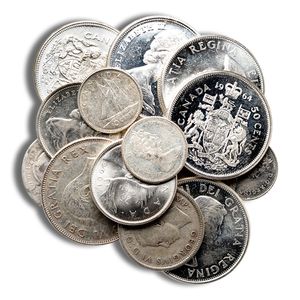
The 50% silver Canadian dollar is a circulated silver coin issued by the Royal Canadian Mint between 1971 and 1991. Each coin contains 0.337 troy ounces of silver at a purity of .500, making it a recognized secondary-market silver product widely traded among collectors and bullion buyers alike. These coins carry legal tender status in Canada and represent one of the more accessible silver formats available in the North American market.
We carry these coins in average circulated condition, reflecting their history as currency in active use. For buyers looking to accumulate physical silver at a lower per-ounce cost relative to newly minted products, the 50% silver Canadian dollar offers a practical entry point with a tangible connection to Canadian monetary history.
Canada issued silver dollar coins throughout much of the twentieth century, gradually reducing the silver content over time in response to rising metal prices and changing monetary policy. The one-dollar coin transitioned to a 50% silver composition in 1968, and this standard was maintained through 1991, when the Royal Canadian Mint discontinued
…The 50% silver Canadian dollar is a circulated silver coin issued by the Royal Canadian Mint between 1971 and 1991. Each coin contains 0.337 troy ounces of silver at a purity of .500, making it a recognized secondary-market silver product widely traded among collectors and bullion buyers alike. These coins carry legal tender status in Canada and represent one of the more accessible silver formats available in the North American market.
We carry these coins in average circulated condition, reflecting their history as currency in active use. For buyers looking to accumulate physical silver at a lower per-ounce cost relative to newly minted products, the 50% silver Canadian dollar offers a practical entry point with a tangible connection to Canadian monetary history.
Canada issued silver dollar coins throughout much of the twentieth century, gradually reducing the silver content over time in response to rising metal prices and changing monetary policy. The one-dollar coin transitioned to a 50% silver composition in 1968, and this standard was maintained through 1991, when the Royal Canadian Mint discontinued silver content in the dollar coin entirely with the introduction of the Loonie in the late 1980s replacing the paper dollar note format.
The Royal Canadian Mint, established in 1908, has long been recognized for producing coins to high standards of precision and quality. During the period covered by this series, the Mint produced millions of these dollar coins for circulation, giving them a wide distribution and a level of market familiarity that supports their continued recognition in the secondary precious metals market.
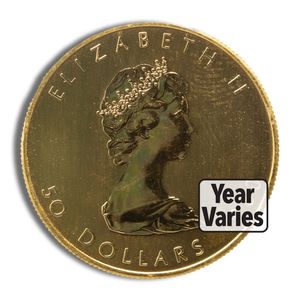
The obverse of the 50% silver Canadian dollar features an effigy of Queen Elizabeth II, with the portrait evolving across the production run to reflect updated official likenesses. The inscriptions identify the issuing authority and the year of issue, consistent with Canadian coinage conventions of the era.
The reverse design changed at various points during the 1971 to 1991 production period, with commemorative and special-issue reverses appearing alongside the standard voyageur canoe design that became emblematic of the Canadian dollar. The voyageur reverse, depicting a common loon in some iterations and a canoe scene in others, carries strong national symbolism and is immediately recognizable to anyone familiar with Canadian currency of that period.
As circulated coins, individual pieces will show varying degrees of wear to the design's higher relief areas, including portrait detail and reverse imagery. This surface wear is expected given the grade and does not alter the coin's silver content.
At 0.337 troy ounces of silver per coin, the 50% silver Canadian dollar occupies a practical middle ground between small fractional pieces and full one-ounce formats. This size makes individual coins affordable at virtually any silver price level, which suits buyers who prefer to accumulate silver incrementally rather than in larger single purchases.
The fractional format also provides flexibility for buyers who want to hold silver in smaller, more divisible units. Coins at this size are straightforward to store, handle, and exchange, without the premium typically associated with smaller government-minted fractional coins in proof or uncirculated condition.
These coins were produced by the Royal Canadian Mint under the standards of the Canadian government, with composition and weight controlled to established specifications throughout the production run. The .500 silver purity is consistent across the series, and the government-issued origin provides a baseline of authentication that secondary-market buyers and dealers recognize and rely upon.
Every product we handle is verified for authenticity, weight, and purity before it is made available for purchase. Our authorized dealer relationships with PCGS and NGC further support our ability to identify and handle genuine numismatic and bullion material accurately. For well-established government-issued coins like this series, the combination of consistent specifications and widespread market familiarity makes authentication straightforward.
These coins are graded average circulated, meaning they have seen genuine use as currency and will display signs of handling, contact, and wear consistent with that history. Detail on high-relief design elements such as the portrait and reverse imagery will be reduced, and surfaces will reflect the natural patina that develops over decades of circulation. The grade is applied honestly and reflects what a buyer should expect to receive.
Individual coins ship in protective plastic flips to prevent additional contact damage during transit. Larger quantities ship in tubes or bags consistent with standard secondary-market packaging for circulated silver dollars. Because these coins originate from the secondary market, minor contact marks, surface toning, and handling signs are expected and do not affect the silver content or market value of the product.
Pricing for the 50% silver Canadian dollar is tied directly to the spot price of silver, with the per-coin value reflecting the 0.337 troy ounces of actual silver content. Premiums on circulated secondary-market silver coins tend to run lower than those on newly minted bullion products, since they trade primarily on metal value rather than on collector demand or mint production costs.
Factors such as overall silver market conditions, current availability of circulated Canadian silver on the secondary market, and broader demand for fractional silver all influence the premium at any given time. Our pricing reflects real-time market conditions and is structured to provide straightforward clarity rather than layered complexity.
The 50% silver Canadian dollar is a well-established product in the North American secondary silver market. Dealers, collectors, and bullion buyers are broadly familiar with the series, its composition, and its silver content, which supports consistent demand and relatively efficient resale conditions. The standardized government-issued origin and known purity make these coins easy to evaluate at the point of sale.
We operate a two-way market, meaning customers can both purchase and sell precious metals within our platform using competitive buyback pricing. Understanding the likely resale value of a product before purchasing is something we actively encourage, and our bid pricing for circulated Canadian silver is updated to reflect current wholesale market conditions.
For buyers focused on accumulating physical silver efficiently, the 50% silver Canadian dollar offers genuine metal content at premiums that typically run lower than those on modern sovereign bullion coins. The coins carry the credibility of Royal Canadian Mint issuance and legal tender status, and the series is widely recognized across North American precious metals markets.
The circulated format suits buyers whose priority is silver content per dollar spent rather than collector-grade presentation. The combination of government-backed origin, standardized composition, and secondary-market pricing makes this a practical choice for stacking physical silver at scale without paying the markup associated with proof or mint-state products.
We have built our platform around the principle that buyers deserve transparent pricing, honest product descriptions, and a consistent experience on both sides of the transaction. Our pricing reflects live market conditions and is structured to give you a clear picture of what you are paying and what you can expect in return when you decide to sell. We hold an A rating with the Better Business Bureau, are members of the American Numismatic Association and the National Coin and Bullion Association, and maintain authorized dealer relationships with both PCGS and NGC.
Every product we offer is verified for authenticity and accuracy before it reaches our customers. Our sourcing draws from reputable mints, refineries, wholesalers, and distributors, and our two-way market model means liquidity is built into how we operate rather than treated as an afterthought. From payment processing through fulfillment and post-purchase support, the experience is designed to be straightforward, secure, and built on long-term trust rather than short-term transaction pressure.
Bullion Standard Pro gives members access to live, executable wholesale bid and ask pricing across a wide range of products, including secondary-market silver like the 50% silver Canadian dollar. Because circulated silver coins trade primarily on metal value, understanding where the wholesale market is pricing them in real time is particularly relevant for buyers evaluating premiums and spread efficiency. Pro members can see exactly how these coins are priced at the wholesale level without encountering additional dealer markups layered on top.
Portfolio valuation through Bullion Standard Pro uses live wholesale bid pricing rather than estimated retail values, giving members a realistic view of current liquidation values across their holdings. Combined with proprietary analytics covering premium trends, bid/ask spreads, and market activity, Pro provides the kind of objective market data that supports more informed decisions when buying or selling secondary-market silver.
We support a broad range of payment methods to make purchasing as straightforward as possible. Buyers can complete transactions using Visa, Mastercard, American Express, Discover, PayPal, bank-connected payments through Plaid, wire transfer, paper check, or cryptocurrency through BitPay. Each option is processed with the same emphasis on security and reliability that runs through every part of our platform.
Whether you prefer the speed of a wire transfer, the convenience of a major credit card, or the flexibility of cryptocurrency, we have structured our payment infrastructure to accommodate a wide range of preferences without compromising transaction security or order reliability.
Volume Discount Pricing Orders paid by debit card, credit card, and PayPal are an item's full list price and receive no discount. Orders paid by cryptocurrency receive a 3% discount from an item's full list price. Orders paid by eCheck (ACH), paper check, and bank wire receive a 4% discount from an item's full list price.
| Quantity | (e)Check/Wire | Crypto | CC/PayPal |
|---|---|---|---|
| 1 - 19 | $20.95 | $21.38 | $21.82 |
| 20 - 99 | $20.85 | $21.28 | $21.71 |
| 100 - 499 | $20.74 | $21.17 | $21.61 |
| 500 - 999 | $20.64 | $21.07 | $21.50 |
| 1000+ | $20.54 | $20.97 | $21.39 |
1+
|
$20.16 | $20.57 | $20.99 |
Product ID: BST-001997B355
| Random Year Status | Random Year |
|---|---|
| Precious Metal Type | Silver |
| Format | Coin |
| Country of Origin | Canada |
| Brand/Mint | Royal Canadian Mint |
| Purity | 0.5 |
| Weight | 0.337 oz |
| Thickness (mm) | 2.95 mm |

| Diameter (mm) | 36 mm |
| Grade | Circulated |
The 50% silver Canadian dollar is a circulated silver coin issued by the Royal Canadian Mint between 1971 and 1991. Each coin contains 0.337 troy ounces of silver at a purity of .500, making it a recognized secondary-market silver product widely traded among collectors and bullion buyers alike. These coins carry legal tender status in Canada and represent one of the more accessible silver formats available in the North American market.
We carry these coins in average circulated condition, reflecting their history as currency in active use. For buyers looking to accumulate physical silver at a lower per-ounce cost relative to newly minted products, the 50% silver Canadian dollar offers a practical entry point with a tangible connection to Canadian monetary history.
Canada issued silver dollar coins throughout much of the twentieth century, gradually reducing the silver content over time in response to rising metal prices and changing monetary policy. The one-dollar coin transitioned to a 50% silver composition in 1968, and this standard was maintained through 1991, when the Royal Canadian Mint discontinued
…The 50% silver Canadian dollar is a circulated silver coin issued by the Royal Canadian Mint between 1971 and 1991. Each coin contains 0.337 troy ounces of silver at a purity of .500, making it a recognized secondary-market silver product widely traded among collectors and bullion buyers alike. These coins carry legal tender status in Canada and represent one of the more accessible silver formats available in the North American market.
We carry these coins in average circulated condition, reflecting their history as currency in active use. For buyers looking to accumulate physical silver at a lower per-ounce cost relative to newly minted products, the 50% silver Canadian dollar offers a practical entry point with a tangible connection to Canadian monetary history.
Canada issued silver dollar coins throughout much of the twentieth century, gradually reducing the silver content over time in response to rising metal prices and changing monetary policy. The one-dollar coin transitioned to a 50% silver composition in 1968, and this standard was maintained through 1991, when the Royal Canadian Mint discontinued silver content in the dollar coin entirely with the introduction of the Loonie in the late 1980s replacing the paper dollar note format.
The Royal Canadian Mint, established in 1908, has long been recognized for producing coins to high standards of precision and quality. During the period covered by this series, the Mint produced millions of these dollar coins for circulation, giving them a wide distribution and a level of market familiarity that supports their continued recognition in the secondary precious metals market.
The obverse of the 50% silver Canadian dollar features an effigy of Queen Elizabeth II, with the portrait evolving across the production run to reflect updated official likenesses. The inscriptions identify the issuing authority and the year of issue, consistent with Canadian coinage conventions of the era.
The reverse design changed at various points during the 1971 to 1991 production period, with commemorative and special-issue reverses appearing alongside the standard voyageur canoe design that became emblematic of the Canadian dollar. The voyageur reverse, depicting a common loon in some iterations and a canoe scene in others, carries strong national symbolism and is immediately recognizable to anyone familiar with Canadian currency of that period.
As circulated coins, individual pieces will show varying degrees of wear to the design's higher relief areas, including portrait detail and reverse imagery. This surface wear is expected given the grade and does not alter the coin's silver content.
At 0.337 troy ounces of silver per coin, the 50% silver Canadian dollar occupies a practical middle ground between small fractional pieces and full one-ounce formats. This size makes individual coins affordable at virtually any silver price level, which suits buyers who prefer to accumulate silver incrementally rather than in larger single purchases.
The fractional format also provides flexibility for buyers who want to hold silver in smaller, more divisible units. Coins at this size are straightforward to store, handle, and exchange, without the premium typically associated with smaller government-minted fractional coins in proof or uncirculated condition.
These coins were produced by the Royal Canadian Mint under the standards of the Canadian government, with composition and weight controlled to established specifications throughout the production run. The .500 silver purity is consistent across the series, and the government-issued origin provides a baseline of authentication that secondary-market buyers and dealers recognize and rely upon.
Every product we handle is verified for authenticity, weight, and purity before it is made available for purchase. Our authorized dealer relationships with PCGS and NGC further support our ability to identify and handle genuine numismatic and bullion material accurately. For well-established government-issued coins like this series, the combination of consistent specifications and widespread market familiarity makes authentication straightforward.
These coins are graded average circulated, meaning they have seen genuine use as currency and will display signs of handling, contact, and wear consistent with that history. Detail on high-relief design elements such as the portrait and reverse imagery will be reduced, and surfaces will reflect the natural patina that develops over decades of circulation. The grade is applied honestly and reflects what a buyer should expect to receive.
Individual coins ship in protective plastic flips to prevent additional contact damage during transit. Larger quantities ship in tubes or bags consistent with standard secondary-market packaging for circulated silver dollars. Because these coins originate from the secondary market, minor contact marks, surface toning, and handling signs are expected and do not affect the silver content or market value of the product.
Pricing for the 50% silver Canadian dollar is tied directly to the spot price of silver, with the per-coin value reflecting the 0.337 troy ounces of actual silver content. Premiums on circulated secondary-market silver coins tend to run lower than those on newly minted bullion products, since they trade primarily on metal value rather than on collector demand or mint production costs.
Factors such as overall silver market conditions, current availability of circulated Canadian silver on the secondary market, and broader demand for fractional silver all influence the premium at any given time. Our pricing reflects real-time market conditions and is structured to provide straightforward clarity rather than layered complexity.
The 50% silver Canadian dollar is a well-established product in the North American secondary silver market. Dealers, collectors, and bullion buyers are broadly familiar with the series, its composition, and its silver content, which supports consistent demand and relatively efficient resale conditions. The standardized government-issued origin and known purity make these coins easy to evaluate at the point of sale.
We operate a two-way market, meaning customers can both purchase and sell precious metals within our platform using competitive buyback pricing. Understanding the likely resale value of a product before purchasing is something we actively encourage, and our bid pricing for circulated Canadian silver is updated to reflect current wholesale market conditions.
For buyers focused on accumulating physical silver efficiently, the 50% silver Canadian dollar offers genuine metal content at premiums that typically run lower than those on modern sovereign bullion coins. The coins carry the credibility of Royal Canadian Mint issuance and legal tender status, and the series is widely recognized across North American precious metals markets.
The circulated format suits buyers whose priority is silver content per dollar spent rather than collector-grade presentation. The combination of government-backed origin, standardized composition, and secondary-market pricing makes this a practical choice for stacking physical silver at scale without paying the markup associated with proof or mint-state products.
We have built our platform around the principle that buyers deserve transparent pricing, honest product descriptions, and a consistent experience on both sides of the transaction. Our pricing reflects live market conditions and is structured to give you a clear picture of what you are paying and what you can expect in return when you decide to sell. We hold an A rating with the Better Business Bureau, are members of the American Numismatic Association and the National Coin and Bullion Association, and maintain authorized dealer relationships with both PCGS and NGC.
Every product we offer is verified for authenticity and accuracy before it reaches our customers. Our sourcing draws from reputable mints, refineries, wholesalers, and distributors, and our two-way market model means liquidity is built into how we operate rather than treated as an afterthought. From payment processing through fulfillment and post-purchase support, the experience is designed to be straightforward, secure, and built on long-term trust rather than short-term transaction pressure.
Bullion Standard Pro gives members access to live, executable wholesale bid and ask pricing across a wide range of products, including secondary-market silver like the 50% silver Canadian dollar. Because circulated silver coins trade primarily on metal value, understanding where the wholesale market is pricing them in real time is particularly relevant for buyers evaluating premiums and spread efficiency. Pro members can see exactly how these coins are priced at the wholesale level without encountering additional dealer markups layered on top.
Portfolio valuation through Bullion Standard Pro uses live wholesale bid pricing rather than estimated retail values, giving members a realistic view of current liquidation values across their holdings. Combined with proprietary analytics covering premium trends, bid/ask spreads, and market activity, Pro provides the kind of objective market data that supports more informed decisions when buying or selling secondary-market silver.
We support a broad range of payment methods to make purchasing as straightforward as possible. Buyers can complete transactions using Visa, Mastercard, American Express, Discover, PayPal, bank-connected payments through Plaid, wire transfer, paper check, or cryptocurrency through BitPay. Each option is processed with the same emphasis on security and reliability that runs through every part of our platform.
Whether you prefer the speed of a wire transfer, the convenience of a major credit card, or the flexibility of cryptocurrency, we have structured our payment infrastructure to accommodate a wide range of preferences without compromising transaction security or order reliability.