Buy Gram Gold Bars Online
Our catalog of gram gold bars spans one of the broadest selections available from a single U.S.-based dealer, covering weights from 1/2 gram through 500 grams and sourced from some of the most recognized refineries operating today. Whether you're looking at a 1 gram gold bar from PAMP Suisse, a 10 gram bar from Valcambi, or a 100 gram bar from the Perth Mint, every option available here is priced against live market conditions with the kind of transparency that makes side-by-side comparison genuinely useful.
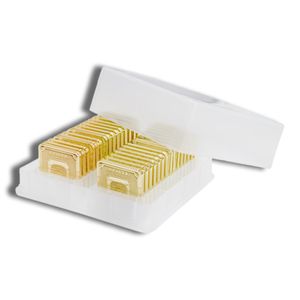
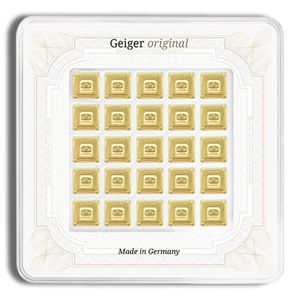
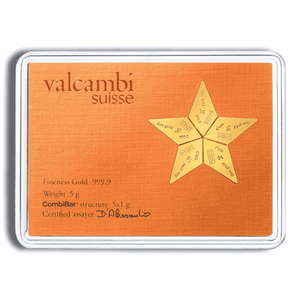
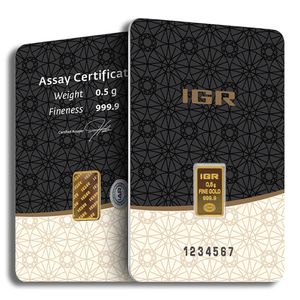
The selection includes individual bars in assay cards, multi-bar formats like the Valcambi CombiBar and Geiger Multicard, and random brand options for buyers whose primary concern is gold content rather than a specific mint. Packaging variations, assay-card included versus loose formats, and weight increments from fractional to large cast bars are all represented across the grid above.
Bullion Standard is headquartered in San Diego, California and has been operating since 2010 with a focus on pricing integrity and straightforward transactions. Every product in this catalog is sourced from verified mints, refineries, and distributors, and verified for authenticity, weight, and purity before it ships.
What Are Gram Gold Bars?
Gram gold bars are minted or cast gold bars measured and sold by the metric gram rather than the troy ounce. This format is widely used internationally and allows buyers to acquire precise amounts of gold in smaller, more accessible denominations than the traditional one troy ounce bar. A single gram equals approximately 0.03215 troy ounces, which makes gram-denominated bars particularly useful for those building positions gradually or looking to hold fractional quantities without working in troy ounce fractions.
The format ranges from ultra-fractional options like 1/2 gram and 1 gram bars, which are among the smallest gold bars commercially produced, up to larger gram-denominated bars in the 10, 20, 50, 100, 250, and 500 gram range. Multi-bar products like combibars and multicards fall within this category as well, combining multiple 1 gram segments into a single assay-sealed sheet that can be separated into individual pieces without compromising purity or authenticity.
Gram bars differ from troy ounce bars primarily in the unit of measurement and, for the smaller denominations, in size and handling characteristics. Their compact format makes them easy to store and transport, and their metric weight system aligns with how gold is commonly denominated in international markets outside the United States.
History and Background
Metric gram-denominated gold bars became commercially viable alongside the industrialization of precious metals refining in the twentieth century. Swiss refineries were among the earliest to standardize small gram bars for international distribution, and names like Valcambi, PAMP Suisse, and Argor-Heraeus emerged as dominant producers as global demand for accessible gold products grew through the latter half of the 1900s. These Swiss operations built reputations for precise metallurgical standards and tamper-evident packaging that helped establish gram bars as a trusted format across both institutional and retail markets.
The assay card, which seals a bar inside a tamper-evident enclosure along with a certificate of authenticity, became standard practice during this era and remains one of the defining characteristics of the gram bar market today. As demand for fractional gold broadened internationally, refineries began developing more elaborate formats. Valcambi's CombiBar, introduced in the early 2010s, extended the concept further by creating a perforated sheet of 1 gram gold segments that could be broken apart individually while retaining their assay integrity as a whole.
More recently, the gram bar market has expanded to include a broader range of mint sources, including government-operated facilities such as the Perth Mint and the Royal Mint, which traditionally focused on coin production. The entry of these institutions into the gram bar space added another tier of credibility and design variety to a market that had historically been dominated by private Swiss refineries.
Purity, Weight, and Specifications
The overwhelming majority of gram gold bars available in this catalog carry a purity of .9999 fine gold, which is equivalent to 24-karat gold and represents the standard for modern investment-grade bullion. A small number of products, including certain Geiger bars, carry a .999 fine purity designation, which is slightly lower but still considered a high-quality bullion standard. Both purities are clearly specified on the product's assay card or packaging, and buyers should confirm purity before purchasing if it is a primary concern.
Weights in this catalog are expressed in grams for the smaller denominations and correspond precisely to their labeled gram weights. The 1 gram bar contains exactly 1 gram of .9999 fine gold, while a 100 gram bar contains 100 grams, and so on. Troy ounce equivalents are displayed alongside gram weights on each product page to help buyers cross-reference with spot price quotes, which are typically denominated in troy ounces. Each bar is also marked with its weight, purity, and the producing mint or refinery's name, logo, or assay stamp, which serves as a primary authentication marker.
Bars produced by major Swiss refineries and government mints typically carry serial numbers on either the bar itself or its assay card, particularly for larger denominations. Smaller gram bars, particularly those under 5 grams, may not carry individual serial numbers due to their size, but their authenticity is still certified through the assay card packaging in which they are sealed.
Available Brands, Mints, and Product Variations
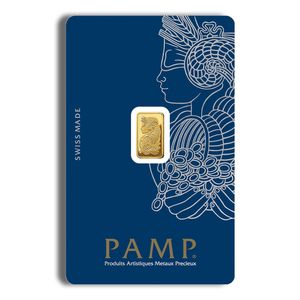
The brands represented in this catalog include some of the most established names in the global bullion refining industry. PAMP Suisse, based in Castel San Pietro, Switzerland, is perhaps the most widely recognized gram bar producer in the world, known for its Lady Fortuna design and its Veriscan anti-counterfeiting system, which allows individual bars to be verified against a database using microscopic surface mapping. Valcambi Suisse, also Swiss-based, produces both standard gram bars and the CombiBar format in denominations ranging from 5 grams to 100 grams, each divisible into individual 1 gram segments. Argor-Heraeus rounds out the Swiss trio and is particularly known for its kinebar holographic technology used on select products.
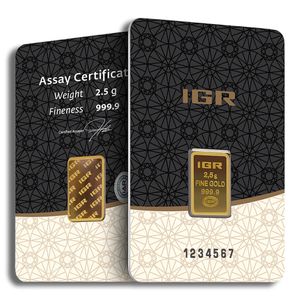
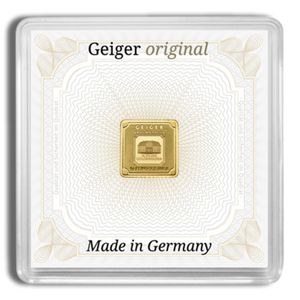
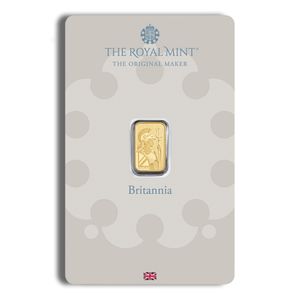
Government mint offerings include the Perth Mint from Australia, which produces gram bars under its internationally recognized brand with a reputation for quality and a sovereign-backed guarantee of purity and weight, and the Royal Mint from the United Kingdom, which offers a 1 gram Britannia-themed bar. Istanbul Gold Refinery, marketed as IGR Metals, provides a Turkish refinery perspective at competitive premiums across the 1/2 gram through 100 gram weight range. Geiger Edelmetalle from Germany offers gram bars and multicard formats with their own distinctive design aesthetic, while Credit Suisse appears in the 5 gram size for buyers familiar with that brand from legacy Swiss bar production.
For buyers less focused on a specific mint, random brand options are available across most gram weights in both assay-card and loose formats. These products deliver the same .9999 fine gold content in bars sourced from various reputable refineries without the premium associated with a specific branded design. Multi-bar formats such as the Valcambi CombiBar 20x1g, 50x1g, and 100x1g, the PAMP MultiGram 25x1g, the Geiger Multicard 25x1g, and the Argor-Heraeus Goldseed 10x1g provide a convenient way to hold multiple gram-sized pieces within a single sealed assay package.
Pricing, Premiums, and Market Factors
Gold is priced globally in troy ounces, and the spot price forms the baseline for all gram bar pricing. Because a gram is approximately 1/31.1 of a troy ounce, the per-gram gold value is calculated by dividing the current spot price by 31.1035. The premium above that value, expressed either as a dollar amount or a percentage, varies based on the bar's weight, brand, packaging format, and current supply and demand conditions in the wholesale market.
Smaller gram bars generally carry higher percentage premiums than larger ones because the fixed costs associated with production, packaging, and distribution are spread over a smaller gold content. A 1 gram bar typically carries a meaningfully higher premium per troy ounce than a 100 gram bar from the same refinery. This premium compression as weight increases is one reason why buyers whose primary goal is gold content efficiency tend to favor larger gram denominations. Branded products from PAMP Suisse or the Perth Mint also carry a premium above comparable generic or random brand bars due to their international recognition, anti-counterfeiting features, and consistent resale demand.
Bullion Standard displays pricing in real time against live spot prices, and bid and ask spreads are visible on individual product pages so buyers can assess the full cost of ownership rather than just the purchase price. This transparency into both acquisition cost and expected resale value is central to how the platform operates, reflecting the view that understanding the spread is as important as understanding the premium. Market conditions, wholesale supply availability, and mint production cycles all influence where premiums trade at any given time.
Condition, Packaging, and What to Expect
Most gram gold bars in this catalog are sold in their original assay card packaging, which is a sealed enclosure, typically made of plastic or a foil-backed card stock, that holds the bar and includes a certificate of authenticity. Assay-sealed products arrive in the same condition in which they left the producing facility, and the tamper-evident seal confirms that the packaging has not been opened since production. Buyers should never attempt to open assay card packaging, as doing so will reduce the product's resale value and remove the manufacturer's certification.
Products listed as having no assay card, or labeled as random brand, are loose bars that have been removed from their original packaging or were produced without assay packaging. These products carry the same purity and weight specifications but lack the sealed enclosure. Minor surface marks, toning, or handling wear are considered normal for loose bullion and do not affect the gold content. Buyers who prioritize packaging integrity should select assay-card products explicitly.
Random brand and random year listings indicate that the specific refinery or production year may vary from what is pictured, depending on current inventory. The bar you receive will meet the listed purity and weight specifications regardless of which brand or year is shipped. Multi-bar formats like combibars and multicards arrive as a single sealed assay sheet and should be stored as a complete unit to preserve their integrity.
Authenticity and Verification
Gram gold bars produced by established refineries and mints carry multiple layers of authentication built into the product itself. Assay card packaging is the first line of verification, as the tamper-evident seal confirms the bar has not been removed or substituted since leaving the producing facility. The bar itself will carry stamped or engraved markings indicating its weight, purity, and the issuing refinery's logo or trademark, all of which can be cross-referenced against known specifications for that product.
PAMP Suisse bars produced with Veriscan technology can be individually verified through PAMP's online portal, which maps the microscopic surface texture of each bar and stores it in a database at the time of production. This creates a fingerprint-level verification system that makes duplication effectively impossible. Other manufacturers use holographic security features, such as the Argor-Heraeus kinebar design, or produce bars with micro-engraved serial numbers that can be confirmed through the refinery's records.
Every product sourced and sold by Bullion Standard is verified for authenticity, weight, and purity before shipping. We source from reputable mints, refineries, authorized distributors, and wholesalers, and our authentication process is part of the standard fulfillment workflow rather than an optional step. Bullion Standard maintains an A rating with the Better Business Bureau and is a member of both the American Numismatic Association and the National Coin and Bullion Association.
Liquidity and Resale Considerations
Gram gold bars from established refineries such as PAMP Suisse, Valcambi, Argor-Heraeus, the Perth Mint, and IGR Metals trade in active wholesale and retail markets worldwide. Products from these manufacturers are recognizable to dealers, wholesalers, and private buyers across international markets, which makes them easier to sell relative to obscure or unfamiliar brands. This broad recognition supports more consistent bid pricing and reduces the friction involved in finding a buyer when you are ready to sell.
Larger gram denominations, specifically 50 gram, 100 gram, and above, tend to have tighter bid/ask spreads relative to their gold value than smaller fractional bars, reflecting greater trading efficiency at scale. The smallest denominations, particularly 1 gram and 1/2 gram bars, carry wider relative spreads because the per-unit costs of selling are proportionally higher against their gold content. This does not mean small gram bars are illiquid, but it is a practical consideration when evaluating the total cost of ownership for fractional formats.
Assay-sealed packaging meaningfully supports resale value. A bar in its original, unopened assay card from PAMP Suisse or Valcambi is easier to sell and typically commands a better bid than the same bar without its original packaging. Maintaining packaging integrity from purchase through eventual sale is one of the most straightforward ways to preserve the product's full resale potential.
Storage and Security
Gram gold bars, particularly the smaller denominations, are easy to store compactly due to their size and flat profile when sealed in assay cards. A meaningful quantity of gold can be stored in a very small footprint, making them well-suited to home safes, lockboxes, and bank safe deposit boxes. For buyers holding larger gram bars in the 50 gram, 100 gram, 250 gram, or 500 gram range, a quality floor safe bolted to the structure of the home or a third-party vault service provides a more appropriate level of security.
Assay card packaging provides adequate protection against scratches and surface contact for most storage conditions, but bars in loose format should be stored in protective sleeves or pouches to prevent abrasion. Gold does not oxidize or corrode under normal conditions, but exposure to chemicals, humidity, or rough handling can affect surface appearance. Keeping loose bars in climate-controlled storage helps maintain their cosmetic condition over time.
For buyers accumulating a larger portfolio of gram bars, third-party allocated vault storage through a recognized vaulting service provides professional-grade security with insurance and audit capabilities. This option separates the storage risk from the home environment and is worth considering for holdings that exceed the practical limits of personal storage solutions. Regardless of method, documenting your holdings with purchase records, assay card photographs, and serial numbers creates an important reference in the event of theft or loss.
Selling and Buyback Options
Selling gram gold bars follows a straightforward process through established dealers, and the key variables that influence your buyback price are product type, brand recognition, packaging condition, weight, and current market pricing. Bars in their original assay card packaging from recognized refineries like PAMP Suisse, Valcambi, and the Perth Mint typically receive the strongest bids because they require minimal verification and are easy to resell into the wholesale market. Random brand or loose bars are still actively purchased but may be subject to additional verification steps and slightly lower bids depending on the dealer.
Bullion Standard operates a two-way market structure, meaning customers can sell back their precious metals through the same platform where they purchased them. The buyback process is designed to be operationally straightforward, with live bid pricing displayed on product pages so you can evaluate offers in real time against current market conditions. This eliminates the guesswork that often accompanies dealer buyback transactions and reflects our broader philosophy that liquidity should be transparent before a purchase is ever made.
Bullion Standard Pro members receive buyback pricing based on live executable wholesale bid prices, which provides a more precise and market-aligned valuation than estimated retail buyback quotes. Whether you are selling a single 1 gram bar or a larger position in 100 gram bars, the platform is designed to provide consistent, data-driven pricing rather than arbitrary dealer discretion. Condition, packaging integrity, and product type all factor into final buyback offers, and products that arrive in verifiable, original packaging are processed most efficiently.
Why Buy Gram Gold Bars?
Gram bars offer the flexibility to buy gold in precise metric increments, which is useful for buyers who prefer to work in internationally standardized weights rather than troy ounce fractions. For someone purchasing gold gradually over time, gram denominations provide a logical structure that avoids the need to calculate fractional troy ounce equivalents. The range of available weights, from 1/2 gram up through 500 grams, also means you can size purchases to your specific budget without rounding to the nearest quarter or half troy ounce.
Multi-bar formats like the CombiBar and Multicard are a distinctive feature of the gram bar market that doesn't exist in the same way at the troy ounce level. These products allow you to hold multiple individually separable gram bars as a single sealed assay unit, which can be divided later if needed. This built-in divisibility makes them practical for buyers who want larger gram holdings with the optionality to transact in smaller pieces in the future.
The sheer variety of mints and refineries producing gram bars also gives buyers meaningful options for balancing premium efficiency against brand preference. A random brand 10 gram bar in assay from a reputable but unspecified refinery will typically carry a lower premium than a PAMP Suisse 10 gram Lady Fortuna bar, but both deliver the same .9999 fine gold content. That transparency allows buyers to make informed trade-offs rather than defaulting to the most recognized name simply because it's the most visible.
Why Buy from Bullion Standard?
Bullion Standard was built around the belief that buying and selling physical gold should feel like a transparent market transaction rather than a negotiation with asymmetric information. Pricing on every product page reflects live market conditions, and the bid/ask spread is displayed so buyers can evaluate total cost of ownership rather than just the sticker price. That kind of structural clarity is central to how this platform operates and distinguishes it from dealers who present premiums in isolation.
Every gram gold bar shipped from Bullion Standard has been sourced from verified refineries, mints, wholesalers, and authorized distributors and confirmed for authenticity, weight, and purity. Our team takes product verification seriously because trust in the authenticity of what you receive is non-negotiable in this industry. The A rating with the Better Business Bureau, active membership in the ANA and NCBA, and authorized dealer status with PCGS and NGC all reflect a commitment to operating at a higher standard of accountability than the industry typically requires.
The buying experience is supported by flexible payment options including Visa, Mastercard, American Express, Discover, PayPal, bank-connected payments through Plaid, wire transfer, paper check, and cryptocurrency through BitPay. Secure checkout, reliable fulfillment, and accessible customer service are standard features, not premium add-ons. And because Bullion Standard operates a two-way market, your relationship with the platform doesn't end at the point of purchase. Whether you are buying, holding, or eventually selling, the same transparent infrastructure supports the entire lifecycle of your gold ownership.
Get Near-Spot Pricing with Bullion Standard Pro
Bullion Standard Pro gives members access to live, executable wholesale bid and ask pricing across the full catalog of gram gold bars, allowing purchases to be made at market prices that reflect real-time supply and demand rather than fixed retail markups. Unlike the standard retail dealer model, Pro does not apply additional dealer markups or dealer spreads on top of wholesale pricing. Premiums and bid/ask spreads fluctuate based on actual market conditions, which means members see how individual products are priced and traded at the wholesale level rather than paying a static margin above spot.
For buyers who purchase gram gold bars with any regularity, the pricing efficiency available through Pro can make a meaningful difference in total acquisition cost over time, particularly for products like 1 gram and 2.5 gram bars where retail premiums can be proportionally significant. Access to real-time portfolio valuation using live executable wholesale bid pricing also provides a more accurate picture of current holdings than retail-value estimates, which tend to overstate what you would actually receive in a sale.
The Pro platform also includes proprietary market intelligence tools, historical premium analytics, premium percentile rankings, spread analysis, and liquidity metrics that allow members to evaluate gram bars using objective data rather than marketing claims. When you are comparing a PAMP Suisse 10 gram bar against a Valcambi 10 gram bar or assessing whether the current premium on a 50 gram Perth Mint bar is high or low relative to historical norms, these tools provide the context that most retail platforms simply don't offer. The goal is to make the gram gold bar market as transparent and analytically accessible as any other financial instrument you would research before committing capital.

 (833) 278-4653