Buy Platinum Online
Our platinum catalog covers a wide range of formats, weights, and origins, from fractional bars in assay cards to full-ounce sovereign coins from some of the most respected mints in the world. Whether you're looking for a 1 gram platinum bar from Argor-Heraeus, a 1 oz platinum American Eagle from the United States Mint, or an Australian Platinum Kangaroo from The Perth Mint, the selection here reflects the breadth of the modern platinum bullion market. Products are sourced from established refiners and sovereign mints across multiple countries, providing genuine variety in both format and manufacturer.
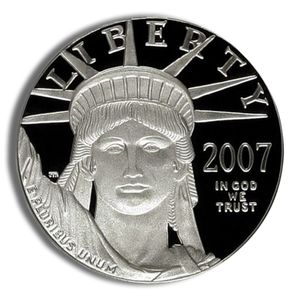
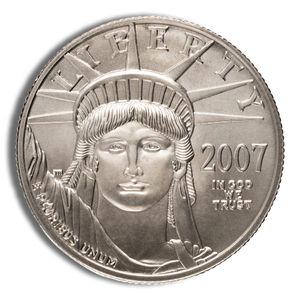
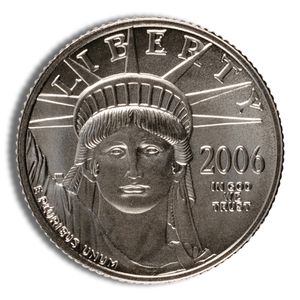
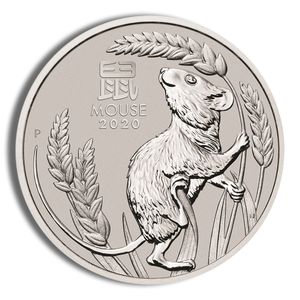
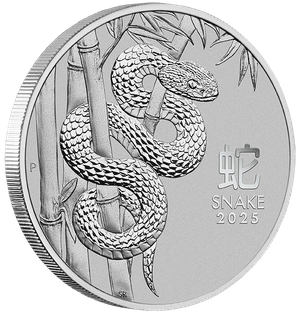
Beyond standard bullion bars and coins, the catalog includes certified options from NGC and PCGS, proof-finish American Eagles with original box and COA, burnished issues from 2006 through 2008, limited releases like the Perth Mint's Lunar Series and Queen's Beast coins from the Royal Mint, and graded examples in MS70 and SP70. Bullion Standard operates as a transparent two-way marketplace, meaning customers can both purchase and sell platinum within the same platform using competitive, market-reflective pricing.
Pricing across our platinum listings reflects real-time spot market conditions and is structured to minimize unnecessary complexity. Each product page displays the current bid and ask, giving buyers a clear view of the cost to acquire and the expected resale value before committing to a purchase.
What Are Platinum Bullion Products?
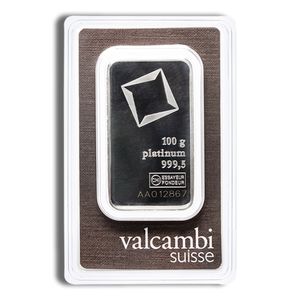
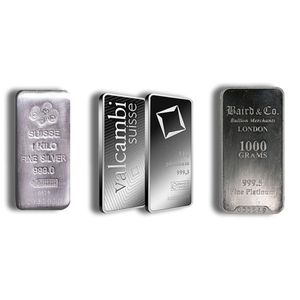
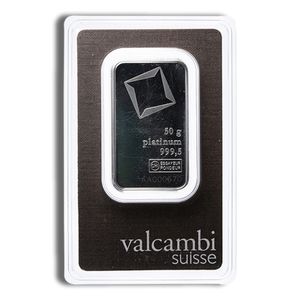
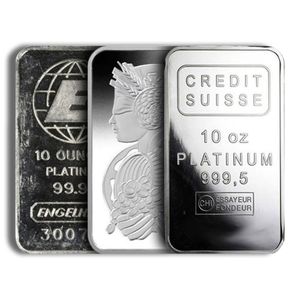
Platinum bullion products are physical pieces of refined platinum metal produced to established weight and purity standards and sold at prices tied to the current spot market. They come in two primary formats: bars and coins. Platinum bars are produced by private refineries such as Valcambi Suisse, PAMP Suisse, and Argor-Heraeus and are sold in gram-based or troy ounce weights, often accompanied by assay cards that certify their specifications. Platinum coins are struck by government-authorized mints and typically carry a nominal face value, though their market value is derived from their platinum content rather than their denomination.
Fractional platinum products, including 1/10 oz, 1/4 oz, and 1/2 oz coins and bars, offer buyers a way to acquire platinum in smaller increments. Full-ounce and multi-ounce formats appeal to buyers who prioritize premium efficiency and storage density. Some products, particularly graded or proof-finish coins, carry additional premiums that reflect their collector appeal, limited mintages, or certification costs beyond the base metal value.
Choosing between coins and bars often comes down to recognizability, premium tolerance, and intended use. Coins from sovereign mints tend to carry slightly higher premiums but benefit from broader global name recognition. Bars from established refineries generally offer tighter premiums relative to spot and are well-suited for buyers who prioritize platinum content over design or numismatic characteristics.
History and Background
Platinum has been known to Western science since the early 18th century, though pre-Columbian civilizations in South America worked with naturally occurring platinum-gold alloys long before European discovery. The metal was formally isolated and characterized by European chemists in the 1700s, and its unusual physical properties, extreme density, high melting point, and resistance to corrosion, quickly distinguished it from all other known metals. Industrial applications emerged gradually through the 19th and early 20th centuries, primarily in laboratory equipment and chemical manufacturing.
The modern platinum bullion market developed later than those for gold and silver. South Africa became the world's dominant producer of platinum group metals through the growth of its mining industry in the 20th century, and today still accounts for the majority of global platinum supply. The introduction of catalytic converters in automobiles during the 1970s and 1980s created substantial and sustained industrial demand that fundamentally shaped platinum's price behavior and market characteristics. This industrial dimension distinguishes platinum from gold in meaningful ways, since its price is influenced not only by financial demand but also by automotive production cycles, emissions regulation, and petrochemical refining activity.
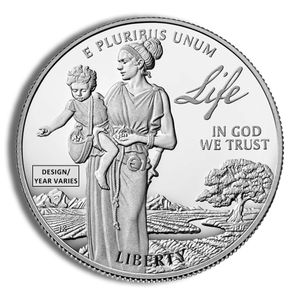
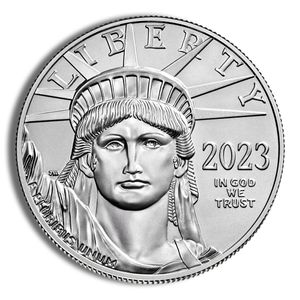
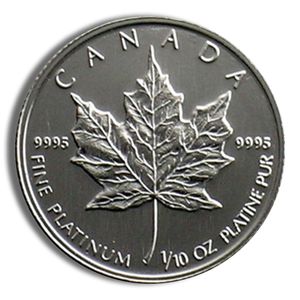
Government-issued platinum bullion coins began appearing in the 1980s. The Isle of Man Noble was among the earliest, followed by the Australian Koala and the Canadian Platinum Maple Leaf. The United States Mint launched the Platinum American Eagle in 1997, which remains one of the most recognized platinum coins in the world. These programs helped formalize the retail platinum market and brought broader investor awareness to the metal as a distinct bullion category separate from gold and silver.
Purity, Weight, and Specifications
The vast majority of platinum bullion products available today are refined to a purity of .9995, meaning 99.95% pure platinum. Some products, including certain bars from Argor-Heraeus and a select number of proof coins, meet or exceed .9999 purity. A small number of older or specialty items may carry a .999 fineness, which remains acceptable for many purposes but sits marginally below the most common standard in the modern market. Each product's purity is stamped directly on the bar or coin and is further documented on the accompanying assay card where applicable.
Weight conventions in the platinum market follow the troy ounce system, where one troy ounce equals approximately 31.1035 grams. Gram-based bars are also common, particularly from Swiss refiners, and the catalog here includes options at 1 gram, 2.5 grams, 10 grams, 20 grams, 100 grams, and 1 kilogram. Fractional coins are typically denominated in fractions of a troy ounce, most commonly 1/10 oz, 1/4 oz, 1/2 oz, and 1/20 oz. The kilo bar represents the largest format in our catalog, containing just over 32.15 troy ounces of platinum.
Assay markings on platinum bars typically include the refinery's name or logo, the weight in both grams and troy ounces, the fineness, and a unique serial number on larger bars. Coins carry the issuing mint's mark, the year of issue, and the face value denomination of the issuing country. These specifications serve both as authentication markers and as standardized identifiers that facilitate pricing and resale across the market.
Available Brands, Mints, and Product Variations
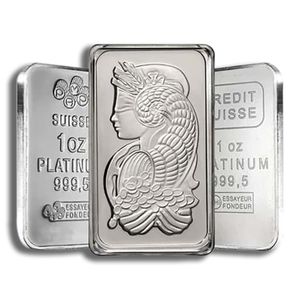
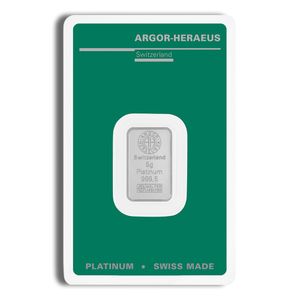
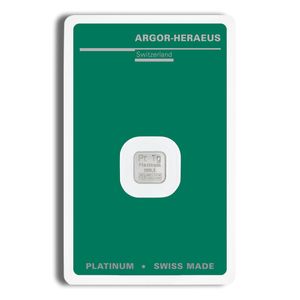
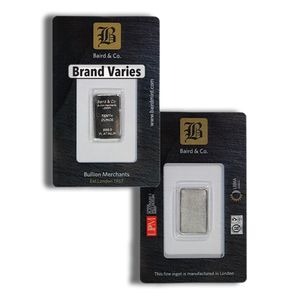
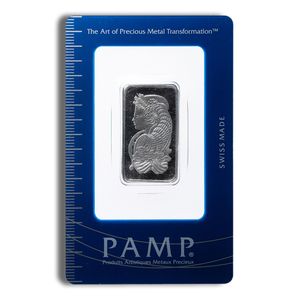
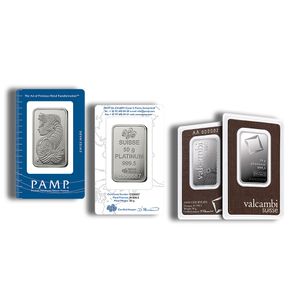
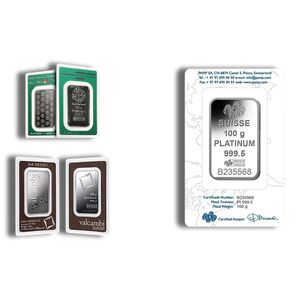
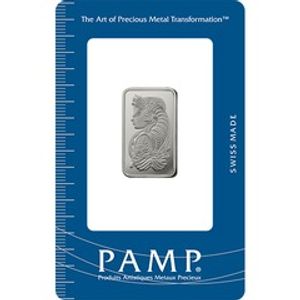
The bar segment of our catalog is anchored by three of the most respected Swiss refineries in the industry: Valcambi Suisse, PAMP Suisse, and Argor-Heraeus. Valcambi offers bars across a full weight range from 1 gram through 100 grams and 1 oz, all sealed in assay cards. PAMP's Lady Fortuna design appears in both 1 gram and 1 oz formats and is among the most widely recognized platinum bar designs in the market. Argor-Heraeus bars are characterized by clean, minimalist finishing and the refinery's reputation for precise metallurgical standards. Random brand options are also available across multiple weights for buyers who prioritize metal content over manufacturer branding.
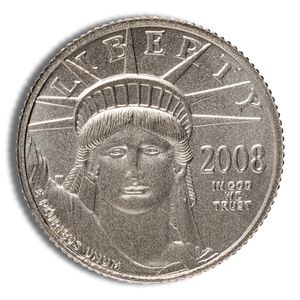
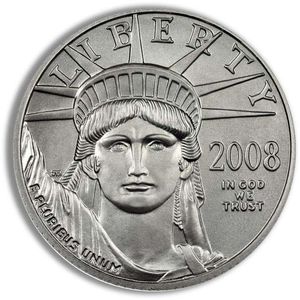
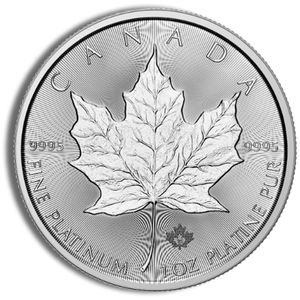
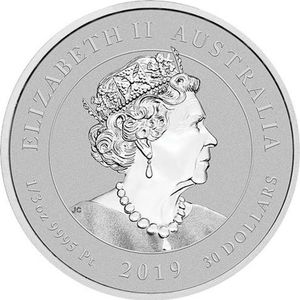
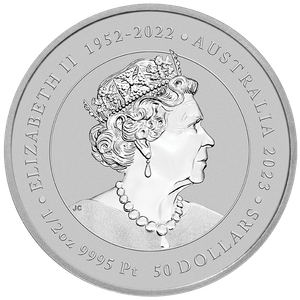
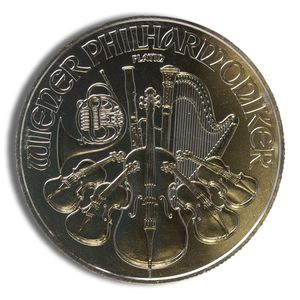
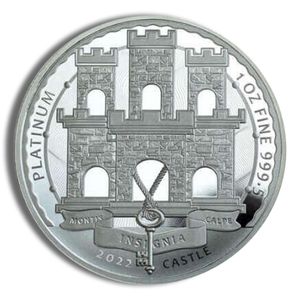
The coin segment draws from a broad range of sovereign mints. The United States Mint's Platinum American Eagle is available in full-ounce and fractional sizes, including BU random-year issues and specific dated releases. The Perth Mint contributes multiple designs including the Platinum Kangaroo, Koala, Platypus, and Lunar Series coins. The Royal Canadian Mint's Platinum Maple Leaf appears across fractional denominations from 1/20 oz through 1 oz. Additional sovereign options include the Austrian Philharmonic, Great Britain Britannia, Isle of Man Noble, and specialty releases from the South African Mint, the Royal Mint, and Pobjoy Mint. The catalog also features limited commemorative pieces including the 2019 Australian Bottlenose Dolphin, the 2023 Lunar Rabbit, and the 2022 Queen's Beast White Greyhound of Richmond.
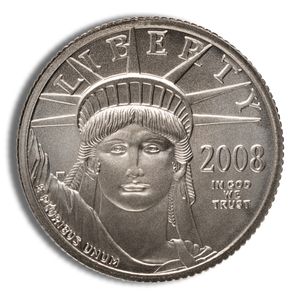
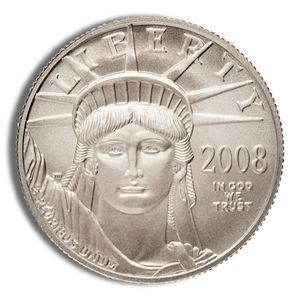
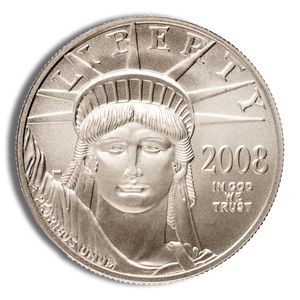
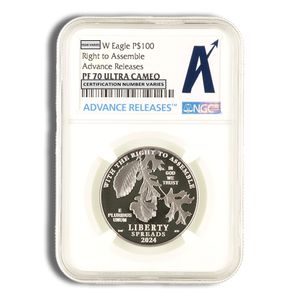
Certified products occupy a distinct tier within the catalog. NGC-graded MS70 and PCGS SP70 examples are available across the 2006-W, 2007-W, and 2008-W burnished Platinum American Eagle series in all four denominations. These certified pieces are encapsulated in tamper-evident holders that document the grade and authenticate the coin through the grading service's own verification process. Proof-finish American Eagles with original box and certificate of authenticity round out the collector-oriented segment of the catalog.
Pricing, Premiums, and Market Factors
Platinum is priced in US dollars per troy ounce on global commodity markets under the symbol XPT. The spot price represents the current market value for immediate delivery of one troy ounce of refined platinum and serves as the baseline from which all bullion premiums are calculated. Retail premiums reflect the additional costs involved in producing, distributing, and selling physical platinum products, including fabrication costs, packaging, dealer margins, and supply chain overhead.
Premiums vary meaningfully across product types. Gram-denominated bars typically carry higher per-ounce premiums than full-ounce bars because the production cost of small bars is spread across less metal content. Fractional coins carry similarly elevated premiums for the same reason. Full-ounce coins from sovereign mints often command higher premiums than comparable bars due to their legal tender status, design, and collector familiarity, while random brand bars with no assay card sit at the lower end of the premium spectrum. Certified coins in MS70 or SP70 carry premiums that reflect both the underlying metal value and the grading service cost, and their pricing tends to be less directly tied to the spot market than standard bullion products.
Platinum's pricing dynamics are also influenced by industrial factors in ways that differ from gold. Automotive manufacturing activity, particularly demand for catalytic converters, represents a significant portion of total platinum demand and can shift the market independent of financial demand. Supply is concentrated in a small number of producing regions, which introduces additional sensitivity to mining output, labor conditions, and geopolitical factors. Bullion Standard's pricing reflects these real-time market conditions, and the bid/ask spread displayed on each product page provides buyers with clear visibility into both the acquisition cost and the current wholesale resale value before completing a purchase.
Condition, Packaging, and What to Expect
Most platinum bars in our catalog are supplied sealed in assay cards, which are rigid or semi-rigid packaging units that encase the bar and display its specifications. Assay-carded bars are considered the standard presentation format for Swiss refinery products and should arrive with the assay seal intact. A small number of bar listings are designated as "no assay card," meaning the bar is delivered without original packaging. These products carry the same purity and weight specifications but may show minor handling marks consistent with storage outside of protective packaging.
Bullion coins are typically delivered in protective flips, mint-issued capsules, or original mint tubes. Random year products are fulfilled from available inventory and may include any year the product has been produced, though all coins meet the specifications listed. Proof and burnished coins sold as cap-only are delivered in the original mint capsule without the accompanying wooden or velvet box and certificate of authenticity. Full presentation set listings include the box and COA as described.
Certified coins arrive in NGC or PCGS tamper-evident plastic slabs with the grade, certification number, and coin information clearly labeled. Cosmetic handling marks on certified coins have already been evaluated and factored into the assigned grade, so the encapsulated condition represents the grading service's final assessment. All products are inspected prior to shipment to confirm they meet the specifications listed on the product page.
Authenticity and Verification
Counterfeiting in the platinum market is less prevalent than in gold or silver but remains a genuine concern, particularly for high-value full-ounce and multi-ounce products. Platinum's density closely matches gold in some contexts, making weight-based verification alone insufficient for large bars. Reputable products carry assay documentation from the producing refinery or mint, and assay cards include specifications that can be cross-referenced against the physical piece. Swiss refiners such as Valcambi, PAMP, and Argor-Heraeus have established global reputations and produce bars with consistent, verifiable markings.
Sovereign mint coins carry anti-counterfeiting features that vary by issuer. The Perth Mint uses micro-laser engraving and visual security elements on many of its platinum coins. The United States Mint's Platinum Eagle series includes reeded edges and design details specific to each year's issue. For certified products, NGC and PCGS provide online verification tools that allow anyone to confirm a coin's authenticity and grade using the certification number printed on the slab.
Bullion Standard sources all products through established channels including authorized distributors, sovereign mints, and vetted wholesale partners. Every product that passes through our fulfillment process is verified for authenticity, weight, and purity before it reaches the customer. Our status as an authorized dealer for both PCGS and NGC, combined with our A Better Business Bureau rating, reflects our commitment to product integrity and consistent sourcing standards.
Liquidity and Resale Considerations
Platinum's liquidity profile differs from gold in several important respects. The market for physical platinum is smaller, and not all product formats trade with the same ease or at the same spreads. Full-ounce coins from major sovereign mints, particularly the Platinum American Eagle, the Platinum Maple Leaf, and the Platinum Kangaroo, tend to carry the broadest dealer recognition and the most consistent resale demand. Bars from well-established Swiss refiners occupy a similar position in the bar segment of the market.
Fractional products are generally resaleable but may trade at wider spreads relative to their full-ounce counterparts due to the higher per-ounce premium structure that characterizes smaller denominations. Specialty and commemorative coins, including limited edition releases and older dated series, may be more difficult to resell at competitive prices outside of collector-focused markets. Certified coins in high grades can command significant premiums in numismatic contexts, but their resale liquidity is tied more to collector demand than to the spot platinum market.
Choosing widely recognized products in standard formats is generally the most straightforward approach to maintaining resale accessibility. Standardized weights, established mint origins, and intact original packaging all contribute to a smoother resale experience across most dealer and marketplace environments.
Storage and Security
Platinum's high density means that even a relatively small quantity by weight occupies minimal physical space. A full ounce of platinum is smaller than a comparable gold coin due to density differences, and kilo bars are compact enough to store alongside other bullion in standard secure containers. This space efficiency makes platinum particularly well-suited to home safe storage for buyers who hold modest quantities.
For larger holdings, third-party vault storage provides professional security, insurance coverage, and environmental controls that are difficult to replicate in a home setting. Bank safe deposit boxes offer a middle-ground option for buyers who want off-site storage without the cost of a full vault program, though availability varies by institution and insurance coverage is typically the holder's responsibility. Regardless of storage method, keeping platinum products in their original assay cards or capsules reduces the risk of surface damage and simplifies verification at the time of resale.
Environmental exposure is less of a concern for platinum than for silver, which tarnishes readily. Platinum does not oxidize or corrode under normal conditions, and long-term storage does not require the same level of humidity control necessary for silver products. That said, avoiding contact with hard surfaces and keeping coins and bars in protective holders remains advisable to preserve their appearance and presentation integrity.
Selling and Buyback Options
Selling platinum bullion follows a similar process to purchasing it, with pricing driven by the current spot market and adjusted based on the specific product being sold. Dealer buyback pricing reflects the wholesale bid for a given product, which accounts for the metal's spot value, the product's format and recognizability, its condition, whether original packaging is intact, and current market demand for that specific item. Products from well-known mints and refineries in standard formats and intact original packaging typically receive the most competitive buyback offers.
Condition plays a meaningful role in buyback pricing, particularly for coins. Uncirculated coins in original capsules or assay cards are generally valued more consistently than pieces with visible handling marks or missing packaging. Certified coins are typically assessed based on the assigned grade rather than raw visual inspection, which can simplify the resale process for high-grade examples. Proof and burnished issues with original box and COA may attract attention from collectors, though buyback pricing for these items depends on market demand at the time of sale.
Bullion Standard operates as a two-way market, meaning customers can sell platinum back to us directly using our buyback program alongside purchasing within the same platform. Our purchasing team provides transparent buyback pricing that reflects current wholesale bid levels, and the process is designed to be straightforward and efficient. For customers using Bullion Standard Pro, live executable wholesale bid pricing is accessible in real time, giving sellers a clear view of current market conditions before initiating a transaction.
Why Buy Platinum?
Platinum occupies a distinct position in the precious metals market. Unlike gold and silver, which are driven primarily by financial and monetary demand, platinum's market is shaped in meaningful part by industrial consumption, particularly in automotive catalytic converters, chemical refining, petroleum processing, and increasingly in hydrogen fuel cell technology. This industrial demand base gives platinum a different fundamental market structure than other precious metals, which some buyers find appealing from a diversification standpoint.
Supply concentration adds another dimension to platinum's market characteristics. The vast majority of global platinum production comes from a small number of mines in South Africa, with meaningful secondary output from Russia and Zimbabwe. This geographic concentration creates sensitivity to mining disruptions, labor developments, and political factors that can influence supply availability in ways that differ substantially from gold or silver markets. Buyers who want exposure to a metal with a distinct supply profile relative to other bullion choices often find platinum worth considering for that reason alone.
From a practical standpoint, platinum's high density means that its physical footprint is compact relative to its value, which simplifies storage. The format flexibility available in our catalog, from fractional gram bars through kilo bars and fractional through full-ounce sovereign coins, allows buyers to tailor their purchases to specific budget increments and storage preferences. The availability of recognized sovereign mint products alongside refined bars provides genuine choice across the premium and format spectrum.
Why Buy from Bullion Standard?
Bullion Standard has been operating as a precious metals marketplace since 2010, and our approach from the beginning has been built on transparency rather than high-pressure sales tactics. We display real-time bid and ask pricing on every product page, so buyers can evaluate both the acquisition cost and the expected resale value before completing a purchase. This structure reflects our belief that the full transaction, not just the purchase price, deserves clarity.
Our product sourcing draws from reputable sovereign mints, established refineries, and vetted wholesale distributors. Every product is verified for authenticity, weight, and purity before it reaches a customer, and our status as an authorized dealer for both PCGS and NGC provides additional assurance for buyers of certified products. Our A rating with the Better Business Bureau and membership in the American Numismatic Association and the National Coin and Bullion Association reflect our commitment to professional and ethical business practices.
The purchasing experience is designed to be convenient and secure. Payment options include major credit and debit cards, PayPal, bank-connected payments through Plaid, wire transfer, paper check, and cryptocurrency through BitPay. Fulfillment is handled through reliable shipping partners, and our customer service team is accessible for questions before, during, and after the purchase. Our two-way market model means customers can return to sell when they're ready, without needing to navigate a separate resale process outside of the platform they used to buy.
Get Near-Spot Pricing with Bullion Standard Pro
Bullion Standard Pro is designed for buyers who want to transact closer to the wholesale level. Members gain access to live executable wholesale bid and ask pricing across a broad range of platinum products, including the bars and coins listed in our catalog. Unlike standard retail pricing structures, Pro pricing reflects real-time supply and demand in the wholesale platinum market without the application of additional dealer markups or fixed retail spreads. This allows premiums and bid/ask spreads to move naturally based on actual market conditions rather than static pricing tiers.
Beyond pricing efficiency, Bullion Standard Pro provides members with a suite of market intelligence tools that can support more informed purchasing decisions. These include historical premium analysis, premium percentile rankings, spread tightness metrics, liquidity indicators, buy/sell ratio data, and wholesale market activity analytics. For platinum specifically, where supply dynamics and industrial demand can shift pricing conditions rapidly, having access to real-time wholesale market data provides a meaningfully different perspective than relying on standard retail price lists alone.
Portfolio valuation through Bullion Standard Pro uses live executable wholesale bid pricing rather than estimated retail values, giving members a realistic view of their holdings' current liquidation value. For buyers who are actively managing a platinum position or evaluating when to add or reduce, this level of transparency into real-time pricing and portfolio value represents a meaningful operational advantage over the standard retail experience.

 (833) 278-4653