 (833) 278-4653


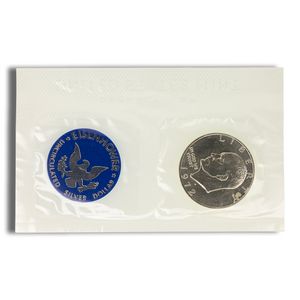
Buy Eisenhower Dollars Online
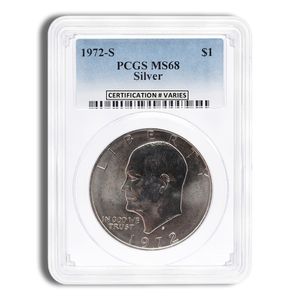
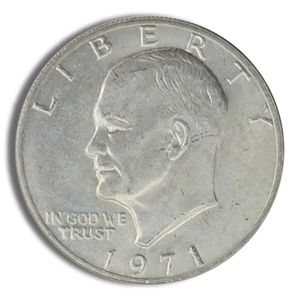
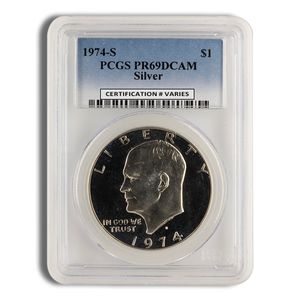
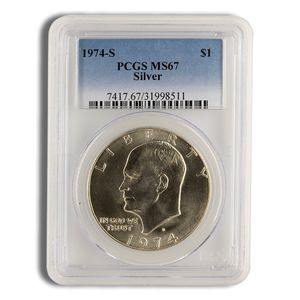
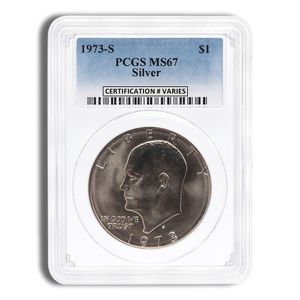
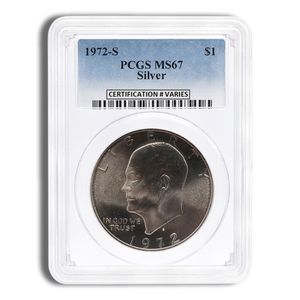
Our catalog of eisenhower dollars covers the full range of options available to both date collectors and silver bullion buyers. You'll find PCGS-certified examples in high mint state grades, including MS67 and MS68 specimens from the 1972-S and 1973-S issues, alongside a 1974-S proof dollar graded PR69 by PCGS. For buyers focused on silver content over grade, we also carry raw, uncertified 40% silver eisenhower dollars in brilliant uncirculated, about uncirculated, and average circulated or cull condition, including sealed-packaging examples issued by the United States Mint.
Every coin listed here contains 0.316 troy ounces of silver, making the weight consistent across the entire lineup regardless of date or grade tier. That consistency makes comparison straightforward for buyers who prioritize silver content alongside numismatic quality. At Bullion Standard, pricing reflects real-time market conditions, and product pages display the bid/ask spread so you can evaluate the full cost of ownership before committing to a purchase.
Whether you're building a date set of 40% silver coins or pursuing a high-grade PCGS-certified example for a registry or type set, our catalog is structured to serve both goals without pressure or ambiguity.
What Are Eisenhower Dollars?
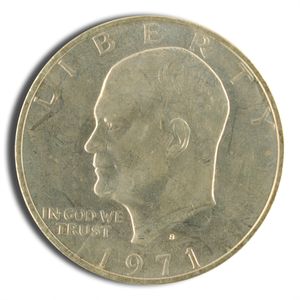
Eisenhower dollars are large-diameter United States coins struck from 1971 through 1978 and named in honor of President Dwight D. Eisenhower, who passed away in 1969. The obverse features a portrait of Eisenhower, and the reverse depicts an eagle landing on the moon, a design inspired by the Apollo 11 mission insignia. They were the first dollar coins produced by the United States Mint since the Peace Dollar series ended in 1935.
Circulation-strike eisenhower dollars produced for general commerce were made from a copper-nickel clad composition with no silver content. The silver-bearing versions were struck at the San Francisco Mint and released in two formats: 40% silver uncirculated coins sold in blue envelopes and 40% silver proof coins sold in brown boxes. The proof issues have a distinctive mirror-like field with frosted design elements and were never intended for circulation. The clad business strikes and the silver collector issues occupy different markets, and it's the 40% silver San Francisco pieces that appear throughout our catalog.
The coins have a diameter of 38.1 millimeters, the same as a traditional silver dollar, which makes them physically imposing compared to modern coinage. That size, combined with their limited silver content and collector-focused production history, gives them a distinct position between purely bullion-driven purchases and numismatic collecting.
History and Background
Congress authorized the eisenhower dollar in 1970, and production began in 1971. The legislation creating the coin included a provision allowing the San Francisco Mint to produce a limited number of 40% silver versions for collectors, a compromise struck because the Treasury and Congress had already transitioned circulating coinage to base metal by 1965. The Coinage Act of 1965 had eliminated silver from dimes and quarters entirely, and reduced the silver content in half dollars to 40% before eliminating it there as well. The eisenhower dollar program gave collectors a silver option outside the circulation system.
The San Francisco Mint produced silver eisenhower dollars annually from 1971 through 1974, covering each of the first four years of the series. The series also includes the 1976 Bicentennial dollar, which was struck in both clad and 40% silver versions with a special dual-date reverse design celebrating the nation's 200th anniversary. Production of the eisenhower dollar ended in 1978 when Congress began planning a smaller-diameter coin, which eventually became the Susan B. Anthony dollar introduced in 1979.
In the decades since, high-grade certified examples of the San Francisco silver issues have attracted growing attention from registry set collectors. PCGS and NGC population reports show that coins grading MS67 and above are genuinely scarce across most dates, and the MS68 tier is exceptionally rare. That scarcity at the top of the grade scale has made certified examples considerably more interesting to advanced collectors than the underlying silver content alone would suggest.
Purity, Weight, and Specifications
The 40% silver eisenhower dollars in our catalog contain 0.316 troy ounces of pure silver per coin. The actual silver purity is 40%, with the remaining composition consisting of copper. This is distinct from the 90% silver used in pre-1965 U.S. coinage. The total coin weight is approximately 24.59 grams, with the silver-bearing core bonded between outer copper-nickel cladding layers, though the San Francisco silver issues do not use clad construction in the traditional sense but rather a silver-copper alloy throughout.
The coins carry a diameter of 38.1 millimeters and a reeded edge, consistent with traditional U.S. dollar coin specifications. PCGS-graded examples are encapsulated in tamper-evident plastic holders, commonly called slabs, which display the coin's grade, certification number, and other relevant data on the label. Proof coins are distinguished from business strikes by their production method, involving slower, multiple-strike pressing on specially prepared polished dies, resulting in sharp detail and reflective surfaces.
Buyers evaluating silver content should note that the 0.316 troy ounce figure applies uniformly across all 40% silver eisenhower dollars in our catalog regardless of date, grade, or certification status. The silver content does not change based on condition, though the premium above melt value can vary substantially depending on certification, grade, and date scarcity.
Available Brands, Mints, and Product Variations
All silver eisenhower dollars in our catalog were produced by the United States Mint at the San Francisco facility, identified by the "S" mint mark on the obverse. The San Francisco Mint handled collector and proof coinage during this era specifically because the facility had the equipment and standards to produce the quality expected of non-circulating commemorative and silver coins. Date-specific certified offerings include the 1972-S in MS67 and MS68, the 1973-S in MS67, and the 1974-S in both MS67 and PR69.
PCGS, the Professional Coin Grading Service, certified the coins appearing in our catalog. PCGS is one of the two primary third-party grading services recognized across the numismatic market, and its holders are widely accepted in both collector and dealer communities. The encapsulated format protects coins from handling damage and provides an independently verified grade that removes subjectivity from the transaction. Bullion Standard is an authorized PCGS dealer, which supports consistent sourcing of accurately represented certified coins.
For buyers less focused on grade, we carry raw uncertified 40% silver eisenhower dollars in three condition tiers: brilliant uncirculated examples in their original sealed United States Mint packaging, about uncirculated coins in AU-plus condition from random years, and average circulated or cull examples where the priority is silver content over appearance. The random-year products do not guarantee a specific date, though all are 40% silver San Francisco issues consistent with the specifications listed above.
Pricing, Premiums, and Market Factors
The price of any eisenhower dollar with silver content starts with the spot price of silver, which fluctuates continuously based on global supply and demand, currency movements, and commodity market activity. The premium above spot varies considerably depending on the coin's grade, certification status, and date. A cull or circulated example trades close to its silver melt value, while a PCGS MS68 1972-S commands a significant numismatic premium that has little direct relationship to the silver spot price on a given day.
For the uncertified, raw silver examples in our catalog, premiums reflect condition tier, packaging, and the modest collector demand for the eisenhower dollar series in lower grades. Brilliant uncirculated coins in original sealed mint packaging carry slightly higher premiums than loose AU or circulated examples because the packaging preserves the original presentation. Certified MS67 and MS68 examples carry premiums driven primarily by population scarcity at those grade levels relative to collector demand, which can shift independently of silver prices.
At Bullion Standard, our pricing reflects real-time market conditions and is updated continuously. Each product page displays the bid/ask spread, giving buyers a transparent view of both the acquisition cost and the current buyback pricing. That structure helps buyers understand the complete economics of the transaction rather than focusing exclusively on the premium at the moment of purchase.
Condition, Packaging, and What to Expect
PCGS-certified coins arrive encapsulated in their original PCGS holders. The holder itself is tamper-evident, and the grade displayed on the label reflects PCGS's independent assessment. These coins will not be removed from their slabs and should be stored and handled accordingly. Any surface marks, luster characteristics, or strike qualities that influenced the grade are already accounted for within the certification.
The sealed-packaging brilliant uncirculated product comes in the original United States Mint blue envelope or equivalent sealed presentation, consistent with how these coins were originally sold to the public. These are random-year examples, meaning you will receive a coin from within the production range of the silver eisenhower series but without a guaranteed specific date. The about uncirculated random-year coins are loose, unpackaged, and show light circulation wear consistent with the AU grade tier. The circulated and cull-grade coins may show heavier wear, scratches, or other contact marks but retain their full silver content.
All products are verified for authenticity and silver content before shipping. Cosmetic variation within the described condition range is normal and expected, particularly for circulated and cull examples where the grade is defined by silver content and basic recognizability rather than surface preservation.
Authenticity and Verification
PCGS certification provides the most straightforward authentication path for the certified eisenhower dollars in our catalog. Each slab carries a unique certification number that can be verified through PCGS's online population registry, confirming that the coin matches its described grade and has not been tampered with. The tamper-evident holder design means any attempt to open or alter the slab will be visually apparent.
For uncertified raw examples, Bullion Standard verifies authenticity through weight, diameter, and visual inspection prior to listing and fulfillment. Genuine 40% silver eisenhower dollars have specific weight and magnetic properties that distinguish them from base metal counterfeits. Our sourcing comes from the United States Mint directly or through reputable numismatic wholesalers and distributors with established track records.
As an authorized PCGS dealer and member of both the American Numismatic Association and the National Coin and Bullion Association, Bullion Standard operates within established industry standards for product verification and authenticity representation. Every coin we sell is backed by our commitment to accurate description and verified sourcing before it reaches the customer.
Liquidity and Resale Considerations
Eisenhower dollars occupy a relatively niche segment of the silver coin market compared to products like American Silver Eagles or 90% junk silver, which trade in much higher volume with tighter spreads. The silver melt value provides a liquidity floor for all 40% silver examples, meaning even heavily circulated coins retain a baseline resale value tied to the current silver spot price. That floor makes them easier to liquidate than purely numismatic coins with no intrinsic metal content.
For certified examples in high grades, liquidity is more specific to the numismatic market. MS67 and MS68 PCGS-graded eisenhower dollars trade primarily through coin dealers, auction platforms such as Heritage Auctions and Stack's Bowers, and the online numismatic marketplace. Demand at those grade levels is real but narrower than for mass-market bullion products. Buyers should understand that resale timelines and achievable prices for premium certified coins depend more on finding the right buyer than on spot price movement.
The uncertified lower-grade examples sell quickly in bulk or melt contexts where dealers and buyers are focused on silver content. These trade similarly to other 40% silver coins, and their resale is generally straightforward in dealer buyback programs or secondary markets where silver content is the primary value driver.
Storage and Security
PCGS-slabbed eisenhower dollars should be stored upright or flat in a controlled environment away from direct sunlight, humidity, and temperature extremes. The plastic holder provides meaningful protection against contact damage, but long-term storage in a secure, climate-controlled environment remains the best practice for preserving both the coin and the slab's integrity. Purpose-built slab boxes or padded coin storage cases are widely available and appropriate for this format.
Raw uncertified coins, particularly those in original sealed United States Mint packaging, should be kept in their original envelopes or holders whenever possible, as the original packaging contributes to the coin's presentation value and resale appeal. Loose circulated examples can be stored in coin tubes, 2x2 flips, or coin storage bags appropriate for the quantity held.
For larger holdings, a home safe rated for fire and theft resistance provides reasonable protection. Bank safe deposit boxes are another option, though access is limited to banking hours. For significant collections, third-party vault storage through a dedicated precious metals storage provider offers enhanced security with insurance coverage. The right storage approach depends on the quantity held, the grade of the material, and the buyer's access needs.
Selling and Buyback Options
Bullion Standard operates a two-way market, meaning customers can sell eisenhower dollars back through the same platform where they purchased them. Buyback pricing for silver-content coins is tied to the current silver spot price adjusted for the product's melt value, condition, and market demand. Certified high-grade examples are evaluated on both their silver content and their numismatic market value, with buyback offers reflecting the applicable market for each grade tier.
Condition and packaging matter in the buyback process. Original sealed-packaging brilliant uncirculated coins, PCGS-slabbed examples in original holders, and coins in strong recognizable condition will generally receive more favorable treatment than heavily worn, damaged, or altered material. Buyers who preserve coins in their original state from the point of purchase simplify the resale process considerably.
The bid price displayed on each Bullion Standard product page reflects current executable buyback pricing, giving sellers a transparent starting point before initiating a transaction. Our purchasing team works within established market pricing rather than arbitrary dealer discretion, and the process is designed to be clear and efficient for customers who have previously purchased from us or are selling comparable material.
Why Buy Eisenhower Dollars?
For silver buyers, eisenhower dollars offer a direct connection to U.S. Mint production with a verified silver content of 0.316 troy ounces per coin. The 40% silver composition makes them a distinct category within the broader spectrum of U.S. silver coinage, sitting between the 90% silver coins produced before 1965 and the .999 fine silver bullion coins like the American Silver Eagle introduced in 1986. Buyers who want genuine U.S. government-issued silver outside the premium-heavy Eagle market often find the eisenhower dollar series a practical alternative.
For collectors, the series offers genuine scarcity at the top of the grade scale. PCGS population data shows that MS68 examples are genuinely rare across most dates, and even MS67 coins represent a small fraction of surviving examples. The series is compact enough to be assembled without excessive expense in lower grades but presents a real challenge at the registry level, which sustains collector interest over time.
The combination of silver intrinsic value and numismatic interest gives eisenhower dollars a dual nature that not every coin series provides. A cull example is still silver. A high-grade certified coin is something considerably more specific to the collector market. That range of options within a single series accommodates buyers with different priorities without requiring them to choose a fundamentally different product type.
Why Buy from Bullion Standard?
Bullion Standard has been operating as a U.S.-based precious metals dealer since 2010, building a reputation grounded in pricing transparency and reliable fulfillment rather than high-pressure sales. As an authorized PCGS dealer and a member of both the American Numismatic Association and the National Coin and Bullion Association, we maintain the sourcing relationships and professional standards necessary to represent certified numismatic material accurately. Every product we list has been verified for authenticity, weight, and purity before reaching our customers.
Our pricing structure is built around real-time market data rather than fixed retail markups that obscure the relationship between your purchase price and the market. The bid/ask spread displayed on each product page reflects current conditions and gives buyers a complete view of what they're paying and what they'd receive if they sold today. That transparency is a deliberate part of how we operate, not a feature added as an afterthought.
Our platform supports a wide range of payment methods, including Visa, Mastercard, American Express, Discover, PayPal, bank-connected payments through Plaid, wire transfer, paper check, and cryptocurrency through BitPay. Fulfillment is handled with a focus on secure packaging and reliable delivery, and our customer service team is available to support you through both the buying and selling process. Bullion Standard holds an A rating with the Better Business Bureau, a reflection of our consistent commitment to customer-first service since our founding.
Get Near-Spot Pricing with Bullion Standard Pro
Bullion Standard Pro is designed for buyers who want direct access to live wholesale bid and ask pricing across our full catalog, including silver eisenhower dollars at every grade tier. Rather than transacting at fixed retail prices with embedded dealer markups, Pro members execute at live wholesale market prices that reflect actual supply and demand conditions. Premiums and spreads fluctuate naturally based on market activity rather than static pricing structures, which means members see a more accurate picture of what products are actually worth in the wholesale market at any given moment.
For buyers who purchase regularly or hold meaningful quantities of silver coinage, the pricing efficiency of Bullion Standard Pro has a measurable impact on both acquisition costs and resale values. Portfolio valuations within the platform use live executable wholesale bid pricing rather than estimated retail values, giving members a more realistic view of their current liquidation value. That distinction matters when you're making decisions based on what your holdings are actually worth rather than what they might sell for under ideal retail conditions.
Pro members also gain access to proprietary market intelligence tools, including historical premium analysis, spread tightness metrics, and buy/sell ratio indicators that help contextualize current pricing relative to historical norms. These tools are particularly useful for buyers evaluating whether current premiums on certified or uncertified eisenhower dollars represent reasonable entry points relative to historical ranges. The objective is to replace assumptions with data and give members the analytical foundation to make more informed purchasing and selling decisions.