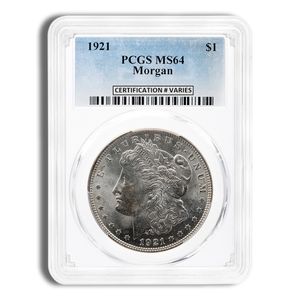
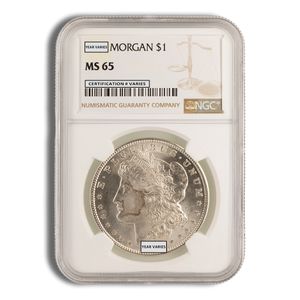
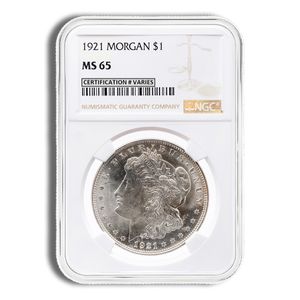
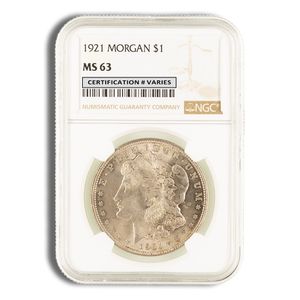
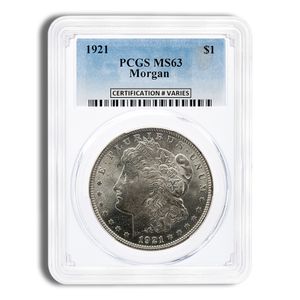
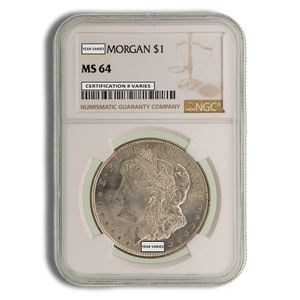
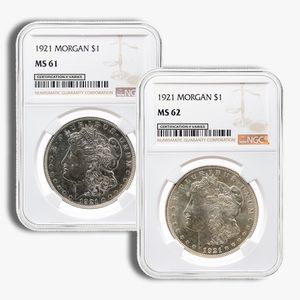
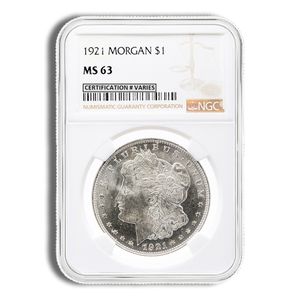
The 1921 Morgan Silver Dollar is one of the most recognized coins in American numismatic history, and this example has been professionally graded MS65 by the Professional Coin Grading Service (PCGS) with a toned designation. Struck in .900 fine silver with a total weight of 0.7734 troy ounces, the Morgan dollar carries legal tender status as a product of the United States Mint. The MS65 grade places this coin firmly in gem uncirculated territory, meaning it exhibits strong luster, sharp strike definition, and only the most minimal surface disturbances allowable at that tier.
The toned designation refers to natural color development across the coin's surface, a characteristic that collectors actively seek and that can significantly influence market value depending on the quality and originality of the toning. We carry this coin as a certified example for buyers looking to acquire a high-grade Morgan dollar with aesthetic character backed by third-party authentication.
The Morgan dollar was first struck in 1878, designed by George T. Morgan and issued by the United States Mint as a response to the
…The 1921 Morgan Silver Dollar is one of the most recognized coins in American numismatic history, and this example has been professionally graded MS65 by the Professional Coin Grading Service (PCGS) with a toned designation. Struck in .900 fine silver with a total weight of 0.7734 troy ounces, the Morgan dollar carries legal tender status as a product of the United States Mint. The MS65 grade places this coin firmly in gem uncirculated territory, meaning it exhibits strong luster, sharp strike definition, and only the most minimal surface disturbances allowable at that tier.
The toned designation refers to natural color development across the coin's surface, a characteristic that collectors actively seek and that can significantly influence market value depending on the quality and originality of the toning. We carry this coin as a certified example for buyers looking to acquire a high-grade Morgan dollar with aesthetic character backed by third-party authentication.
The Morgan dollar was first struck in 1878, designed by George T. Morgan and issued by the United States Mint as a response to the Bland-Allison Act, which mandated large-scale silver coinage from domestically mined silver. The series ran through 1904, then was briefly revived in 1921 before being succeeded by the Peace dollar later that same year. The 1921 Morgan is unique within the series because it was produced across three mint facilities and represented the final chapter of a design that had defined American silver coinage for over two decades.
Production in 1921 was substantial, driven by the Pittman Act of 1918, which required the Treasury to remelt hundreds of millions of silver dollars and replace them with newly struck coins. As a result, 1921 Morgan dollars were minted in enormous quantities relative to earlier dates, though high-grade gem examples with quality toning remain far less common than the raw mintage figures suggest. The year stands as both an endpoint and a milestone in American coinage history.
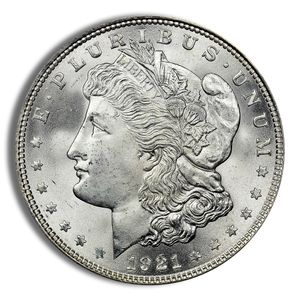
The obverse of the Morgan dollar features a left-facing portrait of Lady Liberty, modeled after Anna Willess Williams and engraved by Morgan with a naturalistic, classically influenced style. The portrait is ringed by thirteen stars representing the original colonies, with the date at the base and the inscription "E PLURIBUS UNUM" along the upper arc. The design conveyed a deliberate departure from the more idealized representations of Liberty common to earlier American coinage.
The reverse depicts a heraldic eagle with wings spread, clutching arrows and an olive branch, encircled by the inscriptions "UNITED STATES OF AMERICA" and "ONE DOLLAR," with "IN GOD WE TRUST" above the eagle's head. The composition is bold and symmetrical, and on well-struck 1921 examples the eagle's breast feathers and Liberty's hair above the ear serve as primary indicators of strike quality. For toned examples, the coloration on both obverse and reverse can range from peripheral champagne and gold to full iridescent rainbow patterns, each unique to that particular coin's storage history.
This coin has been independently graded and encapsulated by PCGS, one of the two most widely respected grading services in the numismatic industry. PCGS certification includes physical examination by multiple professional graders, tamper-evident sonically sealed holders, and a certification number that allows buyers to verify the coin's grade and designation directly through PCGS's online registry. The MS65 Toned designation reflects a holistic assessment of luster, strike, surface preservation, and the originality and quality of the toning present.
We are an authorized dealer for both PCGS and NGC, which informs how we evaluate, handle, and represent certified coins within our catalog. Buyers can trust that the certification on this coin is genuine and that the PCGS holder has not been tampered with or replaced. The encapsulation also protects the coin's surfaces and toning from environmental exposure, preserving the characteristics that earned the grade.
MS65 represents gem uncirculated status within the Sheldon numerical grading scale. A coin at this level was never placed into circulation and exhibits above-average luster and strike for the issue, with only two or three small contact marks or hairlines visible to the naked eye and none in focal areas. The toned designation adds a layer of collector interest that is evaluated alongside the numerical grade, confirming that the toning was assessed as original and aesthetically positive rather than artificial or distracting.
This coin ships in its original PCGS sonically sealed holder, which serves as both a protective enclosure and a permanent authentication record. The holder itself is the standard presentation format for a certified numismatic coin, and no additional packaging modifications are made that would compromise its integrity. The grade, designation, and certification number are clearly printed on the label inside the holder.
Pricing for a PCGS MS65 Toned 1921 Morgan dollar is driven by a combination of silver spot price and the numismatic premium associated with the coin's grade, certification, and toning quality. While the underlying silver content provides a price floor, the numismatic premium above melt value is the more significant pricing variable for a gem-grade certified example. That premium reflects collector demand, the relative scarcity of high-grade toned examples, and current market conditions within the numismatic community.
Toned Morgan dollars at the gem level can command meaningfully higher premiums than their untoned counterparts when the color is original and visually striking. The relationship between spot price and numismatic premium can shift over time as collector demand and overall market sentiment evolve. Our pricing reflects current market conditions and is structured to provide clarity on what you are paying and why.
PCGS-certified Morgan dollars in gem grades are among the more actively traded numismatic coins in the secondary market, with strong demand from both collectors and dealers. The combination of a recognizable series, a trusted certification service, and a well-defined grading tier makes resale straightforward compared to raw or problem coins. Buyers, dealers, and auction platforms across the country are familiar with exactly what an MS65 designation from PCGS represents.
We operate a two-way market that allows customers to both purchase and sell certified numismatic coins within the same platform. Understanding the relationship between acquisition cost and current wholesale bid pricing is central to evaluating any coin purchase, and our platform is designed to provide that transparency before and after the transaction takes place.
The 1921 Morgan dollar occupies a distinctive place in the series as the final-year issue before the design was retired, which gives it historical significance beyond its metal content alone. At the MS65 grade, this coin surpasses the typical gem threshold and represents an example where eye appeal, strike, and luster are above average for the date. The toned designation adds a further layer of collector appeal that is difficult to replicate or fabricate, and PCGS's assessment provides confidence that the coloration is natural and original.
For buyers seeking a certified silver coin that carries both numismatic character and a well-supported secondary market, the MS65 Morgan in a PCGS holder checks several practical criteria at once. The series is deeply familiar to collectors at every level of the hobby, which contributes to consistent and widespread recognition across the dealer and auction marketplace.
We have been operating as a precious metals dealer since 2010 and have built our reputation around transparent pricing, honest product representation, and a customer experience that prioritizes long-term trust over short-term sales pressure. Our authorized dealer status with PCGS and NGC means we handle certified coins with an understanding of the standards those certifications represent and the responsibility that comes with representing them accurately.
Our A rating with the Better Business Bureau and active memberships in the American Numismatic Association and the National Coin and Bullion Association reflect a consistent commitment to professional standards across both the bullion and numismatic sides of our business. We do not apply unnecessary complexity to our pricing and we support customers through both sides of the transaction, whether they are buying or selling. Responsive customer service, secure fulfillment, and a straightforward experience are the foundation of how we operate.
Bullion Standard Pro gives members access to live, executable wholesale bid and ask pricing, which allows them to evaluate the real-time relationship between spot price and the numismatic premium carried by certified coins like this one. Rather than relying on static price estimates or marketing-driven valuations, Pro members can see how the market is actually pricing a given product at the wholesale level and make purchasing decisions based on that transparency. For toned certified coins where premium variability can be significant, that kind of pricing visibility is particularly useful.
Pro also includes real-time portfolio valuation using current wholesale bid pricing, proprietary market intelligence tools, and product research capabilities that allow members to compare premiums, bid/ask spreads, and liquidity across the broader catalog. The goal is to replace assumptions with observable data so that buyers can evaluate what they own and what they are considering purchasing using the same objective information available to professional market participants.
We support a wide range of payment methods to make the purchase process straightforward and secure. Accepted options include Visa, Mastercard, American Express, Discover, PayPal, bank-connected payments through Plaid, wire transfer, paper check, and cryptocurrency via BitPay. Each method is supported with the same emphasis on transaction security and fulfillment reliability that defines the rest of our operation.
Product ID: BST-0021549527
| Year | 1921 |
|---|---|
| Precious Metal Type | Silver |
| Bullion Coin Type | Morgan Dollar |
| Format | Coin |
| Country of Origin | United States |
| Brand/Mint | U.S. Mint |
| Mint Mark | Various |
| Purity | 0.9 |
| Weight | 0.7734 oz |
| Thickness (mm) | 2.4 mm |
| Diameter (mm) | 38.1 mm |
| Inner Pack (Quantity) | 20 |
| Grade | MS65 |
| Grading Service | PCGS |
The 1921 Morgan Silver Dollar is one of the most recognized coins in American numismatic history, and this example has been professionally graded MS65 by the Professional Coin Grading Service (PCGS) with a toned designation. Struck in .900 fine silver with a total weight of 0.7734 troy ounces, the Morgan dollar carries legal tender status as a product of the United States Mint. The MS65 grade places this coin firmly in gem uncirculated territory, meaning it exhibits strong luster, sharp strike definition, and only the most minimal surface disturbances allowable at that tier.
The toned designation refers to natural color development across the coin's surface, a characteristic that collectors actively seek and that can significantly influence market value depending on the quality and originality of the toning. We carry this coin as a certified example for buyers looking to acquire a high-grade Morgan dollar with aesthetic character backed by third-party authentication.
The Morgan dollar was first struck in 1878, designed by George T. Morgan and issued by the United States Mint as a response to the
…The 1921 Morgan Silver Dollar is one of the most recognized coins in American numismatic history, and this example has been professionally graded MS65 by the Professional Coin Grading Service (PCGS) with a toned designation. Struck in .900 fine silver with a total weight of 0.7734 troy ounces, the Morgan dollar carries legal tender status as a product of the United States Mint. The MS65 grade places this coin firmly in gem uncirculated territory, meaning it exhibits strong luster, sharp strike definition, and only the most minimal surface disturbances allowable at that tier.
The toned designation refers to natural color development across the coin's surface, a characteristic that collectors actively seek and that can significantly influence market value depending on the quality and originality of the toning. We carry this coin as a certified example for buyers looking to acquire a high-grade Morgan dollar with aesthetic character backed by third-party authentication.
The Morgan dollar was first struck in 1878, designed by George T. Morgan and issued by the United States Mint as a response to the Bland-Allison Act, which mandated large-scale silver coinage from domestically mined silver. The series ran through 1904, then was briefly revived in 1921 before being succeeded by the Peace dollar later that same year. The 1921 Morgan is unique within the series because it was produced across three mint facilities and represented the final chapter of a design that had defined American silver coinage for over two decades.
Production in 1921 was substantial, driven by the Pittman Act of 1918, which required the Treasury to remelt hundreds of millions of silver dollars and replace them with newly struck coins. As a result, 1921 Morgan dollars were minted in enormous quantities relative to earlier dates, though high-grade gem examples with quality toning remain far less common than the raw mintage figures suggest. The year stands as both an endpoint and a milestone in American coinage history.
The obverse of the Morgan dollar features a left-facing portrait of Lady Liberty, modeled after Anna Willess Williams and engraved by Morgan with a naturalistic, classically influenced style. The portrait is ringed by thirteen stars representing the original colonies, with the date at the base and the inscription "E PLURIBUS UNUM" along the upper arc. The design conveyed a deliberate departure from the more idealized representations of Liberty common to earlier American coinage.
The reverse depicts a heraldic eagle with wings spread, clutching arrows and an olive branch, encircled by the inscriptions "UNITED STATES OF AMERICA" and "ONE DOLLAR," with "IN GOD WE TRUST" above the eagle's head. The composition is bold and symmetrical, and on well-struck 1921 examples the eagle's breast feathers and Liberty's hair above the ear serve as primary indicators of strike quality. For toned examples, the coloration on both obverse and reverse can range from peripheral champagne and gold to full iridescent rainbow patterns, each unique to that particular coin's storage history.
This coin has been independently graded and encapsulated by PCGS, one of the two most widely respected grading services in the numismatic industry. PCGS certification includes physical examination by multiple professional graders, tamper-evident sonically sealed holders, and a certification number that allows buyers to verify the coin's grade and designation directly through PCGS's online registry. The MS65 Toned designation reflects a holistic assessment of luster, strike, surface preservation, and the originality and quality of the toning present.
We are an authorized dealer for both PCGS and NGC, which informs how we evaluate, handle, and represent certified coins within our catalog. Buyers can trust that the certification on this coin is genuine and that the PCGS holder has not been tampered with or replaced. The encapsulation also protects the coin's surfaces and toning from environmental exposure, preserving the characteristics that earned the grade.
MS65 represents gem uncirculated status within the Sheldon numerical grading scale. A coin at this level was never placed into circulation and exhibits above-average luster and strike for the issue, with only two or three small contact marks or hairlines visible to the naked eye and none in focal areas. The toned designation adds a layer of collector interest that is evaluated alongside the numerical grade, confirming that the toning was assessed as original and aesthetically positive rather than artificial or distracting.
This coin ships in its original PCGS sonically sealed holder, which serves as both a protective enclosure and a permanent authentication record. The holder itself is the standard presentation format for a certified numismatic coin, and no additional packaging modifications are made that would compromise its integrity. The grade, designation, and certification number are clearly printed on the label inside the holder.
Pricing for a PCGS MS65 Toned 1921 Morgan dollar is driven by a combination of silver spot price and the numismatic premium associated with the coin's grade, certification, and toning quality. While the underlying silver content provides a price floor, the numismatic premium above melt value is the more significant pricing variable for a gem-grade certified example. That premium reflects collector demand, the relative scarcity of high-grade toned examples, and current market conditions within the numismatic community.
Toned Morgan dollars at the gem level can command meaningfully higher premiums than their untoned counterparts when the color is original and visually striking. The relationship between spot price and numismatic premium can shift over time as collector demand and overall market sentiment evolve. Our pricing reflects current market conditions and is structured to provide clarity on what you are paying and why.
PCGS-certified Morgan dollars in gem grades are among the more actively traded numismatic coins in the secondary market, with strong demand from both collectors and dealers. The combination of a recognizable series, a trusted certification service, and a well-defined grading tier makes resale straightforward compared to raw or problem coins. Buyers, dealers, and auction platforms across the country are familiar with exactly what an MS65 designation from PCGS represents.
We operate a two-way market that allows customers to both purchase and sell certified numismatic coins within the same platform. Understanding the relationship between acquisition cost and current wholesale bid pricing is central to evaluating any coin purchase, and our platform is designed to provide that transparency before and after the transaction takes place.
The 1921 Morgan dollar occupies a distinctive place in the series as the final-year issue before the design was retired, which gives it historical significance beyond its metal content alone. At the MS65 grade, this coin surpasses the typical gem threshold and represents an example where eye appeal, strike, and luster are above average for the date. The toned designation adds a further layer of collector appeal that is difficult to replicate or fabricate, and PCGS's assessment provides confidence that the coloration is natural and original.
For buyers seeking a certified silver coin that carries both numismatic character and a well-supported secondary market, the MS65 Morgan in a PCGS holder checks several practical criteria at once. The series is deeply familiar to collectors at every level of the hobby, which contributes to consistent and widespread recognition across the dealer and auction marketplace.
We have been operating as a precious metals dealer since 2010 and have built our reputation around transparent pricing, honest product representation, and a customer experience that prioritizes long-term trust over short-term sales pressure. Our authorized dealer status with PCGS and NGC means we handle certified coins with an understanding of the standards those certifications represent and the responsibility that comes with representing them accurately.
Our A rating with the Better Business Bureau and active memberships in the American Numismatic Association and the National Coin and Bullion Association reflect a consistent commitment to professional standards across both the bullion and numismatic sides of our business. We do not apply unnecessary complexity to our pricing and we support customers through both sides of the transaction, whether they are buying or selling. Responsive customer service, secure fulfillment, and a straightforward experience are the foundation of how we operate.
Bullion Standard Pro gives members access to live, executable wholesale bid and ask pricing, which allows them to evaluate the real-time relationship between spot price and the numismatic premium carried by certified coins like this one. Rather than relying on static price estimates or marketing-driven valuations, Pro members can see how the market is actually pricing a given product at the wholesale level and make purchasing decisions based on that transparency. For toned certified coins where premium variability can be significant, that kind of pricing visibility is particularly useful.
Pro also includes real-time portfolio valuation using current wholesale bid pricing, proprietary market intelligence tools, and product research capabilities that allow members to compare premiums, bid/ask spreads, and liquidity across the broader catalog. The goal is to replace assumptions with observable data so that buyers can evaluate what they own and what they are considering purchasing using the same objective information available to professional market participants.
We support a wide range of payment methods to make the purchase process straightforward and secure. Accepted options include Visa, Mastercard, American Express, Discover, PayPal, bank-connected payments through Plaid, wire transfer, paper check, and cryptocurrency via BitPay. Each method is supported with the same emphasis on transaction security and fulfillment reliability that defines the rest of our operation.