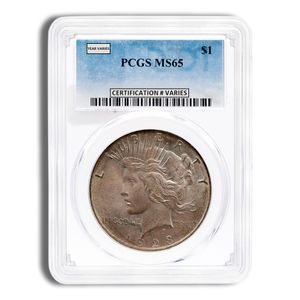
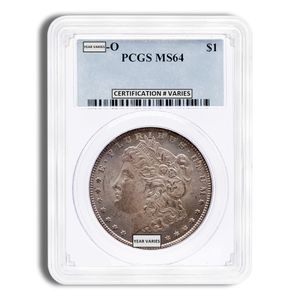
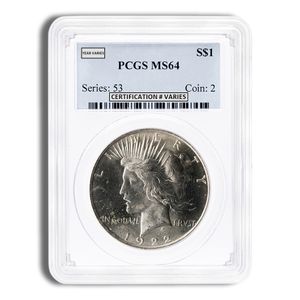
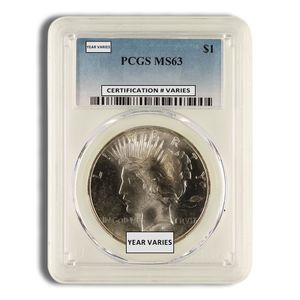
Buy PCGS Silver Dollars Online
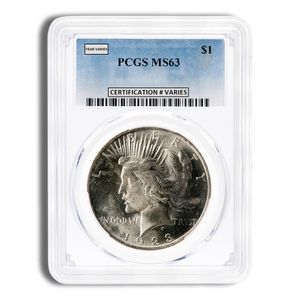
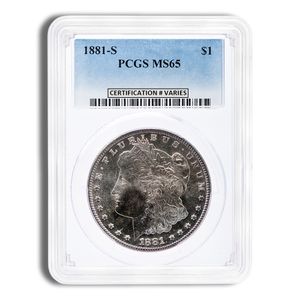
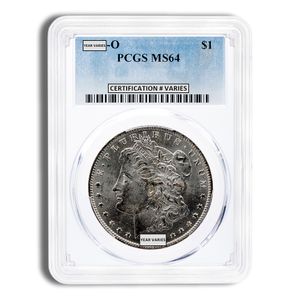
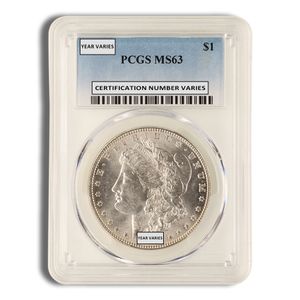
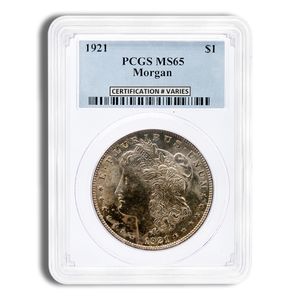
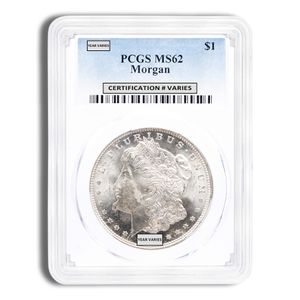
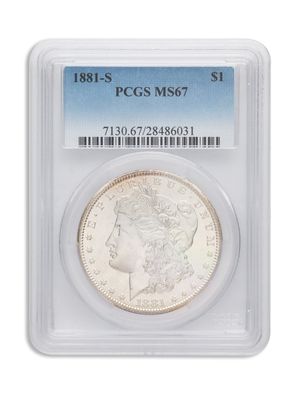
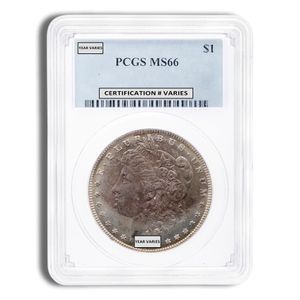
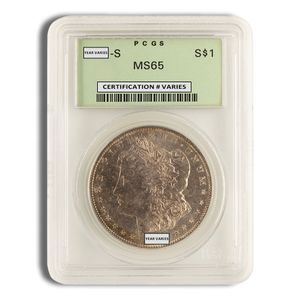
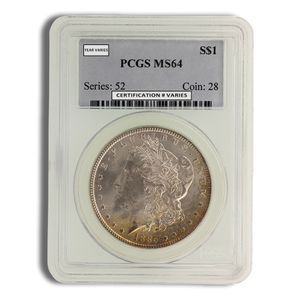
Our catalog of PCGS silver dollars brings together some of the most recognized and actively traded certified coins in the American numismatic market. You'll find Morgan silver dollars spanning the classic 1878 to 1904 date range, the final-year 1921 Morgan, and Peace silver dollars in random-year selections, all graded and encapsulated by the Professional Coin Grading Service. Each coin is available across a meaningful range of certified grades, from MS60 through MS67 depending on the series, with both standard and toned designations offered throughout.
Bullion Standard operates as a transparent, two-way precious metals marketplace, and our certified coin inventory reflects the same pricing discipline applied across the rest of our platform. Whether you're looking for a competitively graded MS63 Morgan or a gem-quality MS66 Peace dollar, the prices you see are tied to real-time market conditions rather than arbitrary markups. Our catalog is sourced through vetted wholesale channels, and every coin has been verified through the PCGS certification process before it ever reaches our customers.
As an authorized PCGS dealer, Bullion Standard is positioned to source, verify, and price these coins with confidence. The breadth of the selection here reflects genuine market availability across grades, series, and toning designations rather than a curated showroom of cherry-picked examples.
What Are PCGS Silver Dollars?
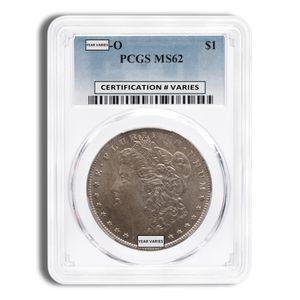
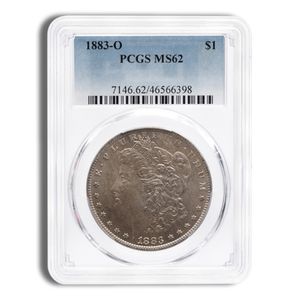
PCGS silver dollars are United States silver dollar coins that have been submitted to, authenticated by, and graded by the Professional Coin Grading Service. PCGS is one of the two dominant third-party grading services in the numismatic market, alongside NGC, and its grades carry significant weight in both collector and dealer pricing. Once graded, a coin is sealed in a hard plastic holder called a slab, which protects the coin from environmental exposure and physical handling while displaying the grade, certification number, and coin description.
The coins in this section are graded on the Sheldon numerical scale, which runs from 1 through 70. The products here span the Mint State range, from MS60 at the lower end of uncirculated quality through gem and superb gem designations at MS65 and above. Higher grades represent coins with progressively fewer contact marks, better strike quality, and stronger luster. Toned designations indicate coins that have developed natural surface coloration over time, a characteristic that some collectors actively seek while others prefer original white surfaces.
These are distinct from raw or ungradated silver dollars in that the certification process removes subjectivity from the grading equation. When you purchase an MS64 PCGS Morgan, you're buying a coin that has been assessed by a professional grading team using industry-standard criteria, not a coin graded by the seller. That distinction carries real market value and affects both pricing and resale expectations.
History and Background
The Morgan silver dollar was first struck in 1878 following the passage of the Bland-Allison Act, which required the Treasury to purchase and coin significant quantities of domestic silver. Designed by George T. Morgan, the coin features a portrait of Lady Liberty on the obverse and a heraldic eagle on the reverse. Production spanned multiple mint facilities, including Philadelphia, New Orleans, Carson City, and San Francisco, before the series ended in 1904. A brief revival occurred in 1921 before the design was replaced by the Peace dollar later that same year.
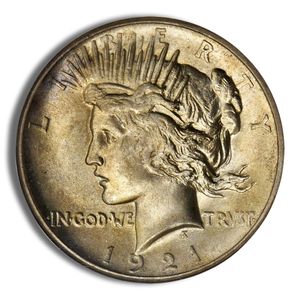
The Peace silver dollar was introduced in December 1921 to commemorate the end of World War I. Designed by sculptor Anthony de Francisci, the coin features a forward-facing portrait of Liberty on the obverse and a perched eagle on the reverse. Peace dollar production ran through 1935, though several years in that span were struck in relatively limited quantities, making certain dates considerably more scarce than others. Random-year Peace dollars in this catalog represent the market's standard approach to offering certified examples without committing to specific dates that carry elevated premiums.
PCGS was founded in 1986 and fundamentally changed how coins were bought and sold in the United States by standardizing grading and introducing the encapsulated holder. Before third-party grading existed, transactions depended heavily on the reputation of the seller and the buyer's own grading ability. The PCGS certification system created a more liquid and trustworthy secondary market, particularly for higher-grade examples where small grade differences translate into substantial pricing shifts. That market infrastructure is still the backbone of how certified U.S. coins trade today.
Purity, Weight, and Specifications
Both Morgan and Peace silver dollars share the same core specifications. Each coin contains 0.7734 troy ounces of pure silver, struck at a composition of 90% silver and 10% copper, giving them a gross weight of 26.73 grams. The copper content was added for durability during circulation, as pure silver is too soft to withstand the demands of everyday use. The coins measure 38.1 millimeters in diameter and carry a reeded edge, consistent across both series and all mint facilities.
The 90% silver purity is widely recognized in the bullion market and contributes to the liquidity of these coins beyond purely numismatic channels. While the certified grades drive much of the pricing premium above melt value, the underlying silver content provides a baseline floor that keeps them relevant to bullion-oriented buyers as well. At 0.7734 troy ounces per coin, the silver weight is straightforward to calculate relative to current spot prices.
PCGS slabs include a certification number printed on the label, which allows buyers to verify authenticity directly through the PCGS database. The label also identifies the coin's date range or specific date, mint mark, denomination, and grade designation, along with any special designations such as toning. The rigid plastic holder is sonically sealed during encapsulation and cannot be reopened without breaking the case, which helps ensure the coin's grade and identity are not altered after certification.
Available Brands, Mints, and Product Variations
All coins in this section were struck by the United States Mint, the sole issuer of Morgan and Peace silver dollars during their respective production runs. Mint marks on individual coins may indicate production at the Philadelphia, New Orleans, San Francisco, Carson City, or Denver facilities, though specific mint marks vary by year. When purchasing date-range or random-year products, the specific mint mark is determined by availability within the wholesale market at the time of fulfillment.
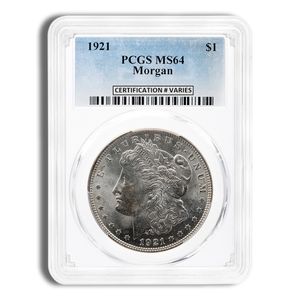
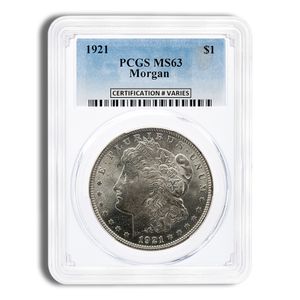
The Morgan dollar offerings here cover both the 1878 to 1904 date range and the separately listed 1921 date, which is treated as its own product line due to its distinct market characteristics. The 1921 Morgan was struck in significantly higher quantities than most earlier dates, which influences its market pricing relative to earlier-date examples. Peace dollars are offered as random-year selections across all grades, reflecting the typical wholesale market approach to this series.
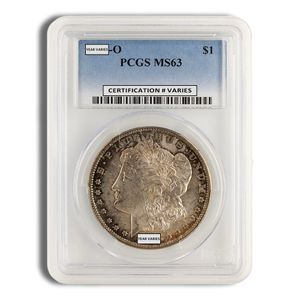
Within each date range, the catalog distinguishes between standard grades and toned designations. Toning on Morgan and Peace dollars is a natural patina that develops as the coin's silver surface reacts with sulfur and other compounds in its environment over decades. PCGS does not penalize natural toning on its grading scale, and coins with attractive, even toning often trade at premiums relative to their non-toned counterparts. The toned designations in this catalog provide a distinct product line for buyers who specifically seek or prefer toned examples.
Pricing, Premiums, and Market Factors
PCGS silver dollar pricing reflects a combination of the coin's underlying silver melt value, the numismatic premium associated with its series and date, the certified grade, and current market demand for that specific grade within the collector and dealer community. Silver spot price provides the baseline, but the numismatic component is generally the dominant driver for higher-grade certified coins. A PCGS MS66 Morgan carries a considerably different market value than an MS63 example of the same date, and those grade differentials become more pronounced as grades increase.
Premiums also reflect the toning designation. Naturally toned coins graded by PCGS at attractive toning levels are recognized by the collector market and can command premiums over equivalent white-coin examples, though the magnitude of that premium is market-dependent and varies over time. Standard, non-toned examples of the same grade tend to trade with somewhat more predictable pricing because their market is deeper and more liquid.
Bullion Standard's pricing structure is tied to real-time market conditions, and the bid/ask spread displayed on each product page reflects the current relationship between acquisition cost and the expected resale value within our marketplace. For certified coins, that spread incorporates both the silver content and the numismatic market dynamics specific to each series, grade, and designation. Understanding the spread alongside the purchase price gives a more complete picture of the true cost of ownership, which is a core part of how our platform is designed to operate.
Condition, Packaging, and What to Expect
All coins in this section are delivered in their original PCGS holders. The encapsulated slab is the product as certified, and coins are not removed from their holders prior to shipment. PCGS holders are rigid, tamper-evident plastic cases that fully protect the coin's surfaces from contact and environmental exposure during storage and transit. No additional protective packaging is necessary for the coin itself, though orders are shipped in protective outer packaging to prevent damage to the slab during delivery.
For date-range Morgan dollars and random-year Peace dollars, the specific date and mint mark received will depend on available inventory at the time of fulfillment. The grade and PCGS certification are guaranteed as described in the product listing, but date and mint mark selection is at our discretion within the eligible range. Buyers who require a specific date or mint mark should not assume that a date-range or random-year listing will fulfill that need.
Toned coins can vary considerably in the character of their toning. PCGS grades toned coins based on the overall quality of the coin's surfaces and strike, and the toning designation on the label does not imply a specific color or pattern. Some toned examples exhibit subtle golden iridescence, while others may show deeper blues, purples, or russet tones. The appearance of a specific toned coin is subject to what is available within our wholesale sourcing channels at the time of your order.
Authenticity and Verification
Every coin in this section has been authenticated and graded by the Professional Coin Grading Service, and Bullion Standard is an authorized PCGS dealer. PCGS employs a multi-stage authentication process conducted by professional numismatists, and coins that fail to meet authenticity or quality standards are not certified. The sonically sealed holder cannot be reopened without visible damage, providing physical assurance that the certified coin has not been tampered with after grading.
Each PCGS-certified coin carries a unique certification number printed on the holder's label. Buyers can enter this number directly into the PCGS online verification database to confirm the coin's certification details, including the grade, date, and any special designations. This independent verification process is available to anyone, regardless of where the coin was purchased, and represents one of the foundational trust mechanisms in the certified coin market.
As a United States-based precious metals dealer with an A Better Business Bureau rating and memberships in the American Numismatic Association and the National Coin and Bullion Association, Bullion Standard maintains sourcing relationships that prioritize authenticity and compliance. Every product is verified before fulfillment, and our authorized PCGS dealer status means we operate within the professional framework that the grading service itself has established for its distribution network.
Liquidity and Resale Considerations
Morgan and Peace silver dollars certified by PCGS are among the most actively traded certified U.S. coins in the numismatic market. The series are well-documented, deeply researched, and widely recognized by dealers, auction houses, and collectors across the country. That broad recognition supports liquidity across a range of resale environments, from dealer buyback programs to major numismatic auction platforms. PCGS certification specifically enhances this liquidity by providing a standardized, verifiable grade that buyers in the secondary market can rely on.
Higher grades within the Mint State range generally trade in deeper markets at the MS63 and MS64 levels, where populations are larger and buyer demand is broad. At MS65 and above, populations thin and premiums widen, which can affect both liquidity and pricing stability. MS66 and MS67 certified Morgans trade in more specialized markets where collector demand and population report data play a larger role in determining value.
Toned coins can be highly liquid when the toning is natural and visually appealing, but they trade in a more specialized segment of the market compared to original white examples. Buyers considering toned coins should understand that their resale audience, while enthusiastic, is narrower than the market for standard certified examples of the same grade.
Storage and Security
PCGS slabs offer meaningful physical protection for the coins they contain, but proper storage conditions still matter. The hard plastic holder shields the coin's surfaces from contact damage and handling, but extended exposure to high humidity, extreme temperatures, or direct sunlight can affect both the holder and, over time, the coin within it. Storing slabs in a cool, dry, climate-controlled environment is the baseline recommendation for any certified coin collection.
For smaller collections, a quality home safe rated for both fire and theft resistance provides adequate security. The rigid, standardized dimensions of PCGS slabs make them easy to store in dedicated coin boxes or trays designed for certified holders, which prevent slabs from shifting or stacking in ways that could cause label wear or cosmetic damage to the holder. Avoid storage in areas prone to moisture or temperature fluctuation, such as basements or attics.
Larger holdings or high-value certified coins may warrant professional vault storage or a bank safety deposit box. These options reduce both environmental risk and security exposure while keeping coins accessible when needed. Bullion Standard does not offer storage services, but our team can provide general guidance on reputable third-party storage solutions that are commonly used within the certified coin market.
Selling and Buyback Options
Bullion Standard operates as a two-way market, meaning we actively purchase PCGS silver dollars in addition to selling them. Our buyback pricing reflects real-time wholesale market conditions and the specific grade, series, and designation of each coin. Toned coins, random-year examples, and coins at different grade levels are each evaluated on their own merits rather than through a single blanket pricing formula. The bid prices displayed on our product pages reflect current market conditions and should be reviewed at the time of any selling decision.
The condition of the PCGS holder matters in the buyback process. Coins in cracked, damaged, or compromised slabs may be subject to recertification requirements before they can be repriced and relisted, which can affect the net proceeds of a sale. Coins in original, uncompromised holders with matching certification numbers that verify correctly through the PCGS database proceed through our buyback process more efficiently. Maintaining the integrity of the slab is in the seller's interest.
For customers looking to sell certified silver dollars, our purchasing team evaluates submissions based on current market pricing, population data, and the specific characteristics of the coin and holder. Our goal is to provide a straightforward, transparent process that reflects the current wholesale market rather than an opaque or arbitrary dealer offer. We encourage sellers to check our live bid pricing on the relevant product pages as a starting point before initiating a transaction.
Why Buy PCGS Silver Dollars?
The appeal of PCGS-certified Morgan and Peace silver dollars comes from the combination of a standardized, verifiable grade and the deep collector recognition that both series carry. Unlike raw silver dollars, where grade is subjective and condition is self-reported by the seller, PCGS-certified examples remove that uncertainty. You know precisely what you're buying, and the secondary market knows precisely what you're holding when it comes time to sell.
The Morgan and Peace dollar series also benefit from a century-long history of collector interest that has produced extensive population data, pricing records, and market research. That depth of documentation supports more informed purchasing decisions than many other certified coin categories. PCGS population reports, for example, provide detailed data on how many coins have been certified at each grade level, which helps buyers understand relative scarcity within the certified universe.
For buyers who value both the physical silver content and the numismatic premium, these coins offer a product format that participates in both the bullion market and the collector market simultaneously. At lower grades, the melt value provides a meaningful floor relative to the numismatic premium. At higher grades, the numismatic premium becomes the primary driver, and the underlying silver content becomes a secondary consideration. That flexibility in how the product is evaluated and traded gives certified silver dollars a broad appeal across different buyer profiles.
Why Buy from Bullion Standard?
Bullion Standard was founded in 2010 in San Diego, California, and has grown into a nationally recognized precious metals marketplace by consistently prioritizing transparency, pricing integrity, and honest customer relationships. Our position as an authorized PCGS dealer means we source certified coins through the professional networks that the grading service itself sanctions, and every product is verified before it ships. We don't treat authenticity as a marketing claim; we treat it as an operational requirement.
Our pricing is tied to real-time market conditions and is designed to give buyers a clear picture of both the acquisition cost and the expected resale value within our marketplace. The bid/ask spread displayed on each product page is a direct reflection of current market dynamics, not a static number set at the convenience of a dealer margin. That transparency extends to our buyback program, where the same market-oriented approach applies to the sell side of any transaction.
We maintain an A rating with the Better Business Bureau and hold active memberships in the American Numismatic Association and the National Coin and Bullion Association. Our customers can reach a responsive support team with questions about sourcing, certification, shipping, or the selling process. Payment options include Visa, Mastercard, American Express, Discover, PayPal, bank-connected payments through Plaid, wire transfer, paper check, and cryptocurrency through BitPay, giving buyers practical flexibility at checkout. The entire experience is built to feel like a marketplace you can trust, not a high-pressure sales environment.
Get Near-Spot Pricing with Bullion Standard Pro
Bullion Standard Pro is our membership platform designed to provide access to live, executable wholesale bid and ask pricing across our product catalog. For buyers who purchase certified coins with any regularity, the pricing efficiency available through Pro can meaningfully reduce the spread between what you pay and what the wholesale market reflects in real time. Unlike standard retail pricing structures, Pro pricing is not subject to additional dealer markups; members transact directly at executable wholesale market prices.
Beyond pricing, Bullion Standard Pro provides members with real-time portfolio valuation based on live wholesale bid pricing rather than estimated retail values. For a holding like PCGS-certified silver dollars, where grade distinctions meaningfully affect value, having a portfolio tool that reflects actual wholesale market conditions provides a more accurate picture of current liquidation value than any static retail estimate could. Members can also access proprietary analytics tools, including premium history, spread analysis, and liquidity metrics, that help evaluate certified coin pricing relative to historical norms and current wholesale market conditions.
The platform is designed for buyers who want to engage with the physical precious metals market at a more sophisticated level, with access to the kind of data and pricing transparency that professional market participants rely on. For frequent buyers of PCGS silver dollars or any other certified coin categories, the combination of near-spot execution, market intelligence tools, and portfolio analytics represents a meaningful upgrade over the standard retail purchasing experience. Details on membership tiers and current Pro pricing are available on the Bullion Standard Pro page.

 (833) 278-4653