Overview of the 1878-1904 Morgan Silver Dollar (NGC MS65 Toned)
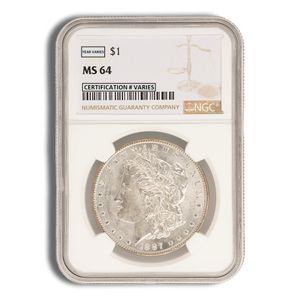
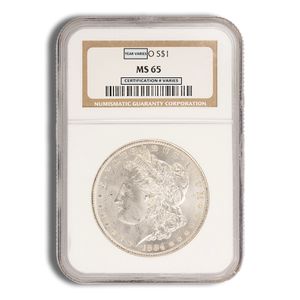
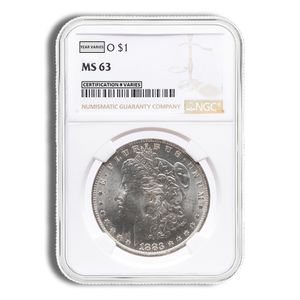
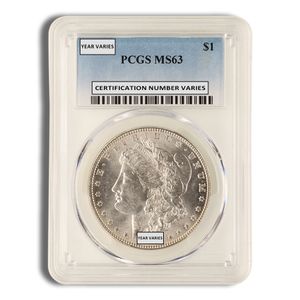
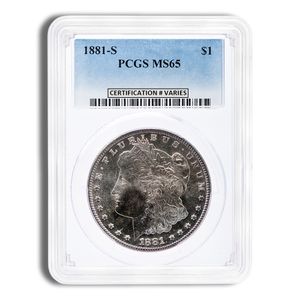
The Morgan Silver Dollar is one of the most recognized coins in American numismatic history, and the pre-1921 issues from 1878 through 1904 represent the original production run before the series was briefly revived. Struck in .900 fine silver with a total weight of 0.7734 troy ounces, each coin carries 26.73 grams of silver content alongside a copper alloy composition. These coins were produced across multiple United States Mint facilities during the late 19th and early 20th centuries, with the specific mint of origin reflected in mintmarks appearing on the reverse. We offer this example as graded MS65 by NGC, representing a gem uncirculated specimen within a third-party certified holder.
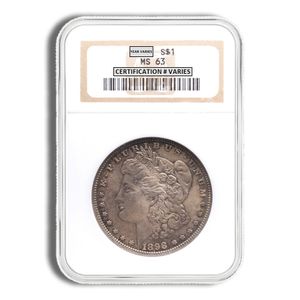
The MS65 designation from NGC places this coin firmly in gem territory, meaning it retains full mint luster, sharp strike definition, and only the most minor contact marks that are barely visible under magnification. The "toned" designation adds another dimension entirely, as original toning on a Morgan Dollar can transform an already attractive coin into something genuinely striking.
History and Background
The Morgan Dollar take…
Overview of the 1878-1904 Morgan Silver Dollar (NGC MS65 Toned)
The Morgan Silver Dollar is one of the most recognized coins in American numismatic history, and the pre-1921 issues from 1878 through 1904 represent the original production run before the series was briefly revived. Struck in .900 fine silver with a total weight of 0.7734 troy ounces, each coin carries 26.73 grams of silver content alongside a copper alloy composition. These coins were produced across multiple United States Mint facilities during the late 19th and early 20th centuries, with the specific mint of origin reflected in mintmarks appearing on the reverse. We offer this example as graded MS65 by NGC, representing a gem uncirculated specimen within a third-party certified holder.
The MS65 designation from NGC places this coin firmly in gem territory, meaning it retains full mint luster, sharp strike definition, and only the most minor contact marks that are barely visible under magnification. The "toned" designation adds another dimension entirely, as original toning on a Morgan Dollar can transform an already attractive coin into something genuinely striking.
History and Background
The Morgan Dollar takes its name from George T. Morgan, the British-born assistant engraver at the United States Mint who designed the coin. Congress authorized the series through the Bland-Allison Act of 1878, which mandated the Treasury purchase silver and strike it into dollars as a concession to Western mining interests and silver advocates. The coin entered circulation that same year and was produced continuously at several mints, including Philadelphia, New Orleans, San Francisco, and Carson City, before the series was halted in 1904 when silver reserves fell short.
Each mint facility during this era carried its own production characteristics, and experienced collectors often differentiate between issues not just by date but by mint of origin. The Carson City issues, for example, have long commanded a premium among enthusiasts due to lower mintages and the romantic history of that Nevada facility. San Francisco strikes are frequently noted for their sharpness and quality, while New Orleans coins exhibit their own distinct production tendencies.
The Morgan Dollar era captured a formative period in American economic and political history, when monetary policy, silver coinage, and westward expansion were deeply intertwined. That historical weight contributes to the coin's enduring appeal well beyond its silver content.
Design and Aesthetics
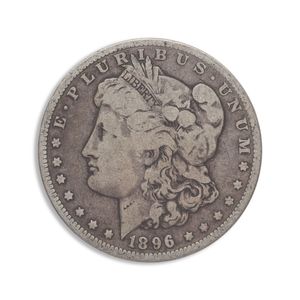
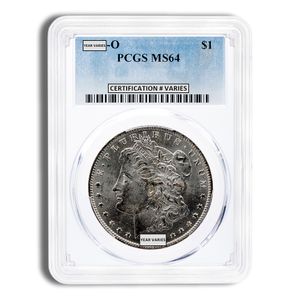
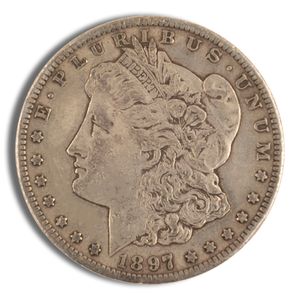
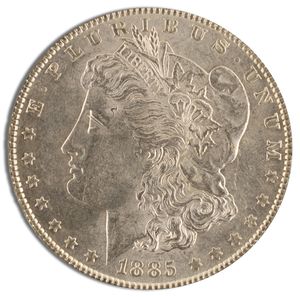
The obverse of the Morgan Dollar features a left-facing portrait of Liberty, modeled after Philadelphia schoolteacher Anna Willess Williams. Morgan's portrait is remarkably detailed for the era, with fine hair strands, a Phrygian cap, and a coronet inscribed with "LIBERTY." The inscription "E PLURIBUS UNUM" arcs above the portrait, flanked by eight stars on the left and five on the right, with the date positioned beneath.
The reverse presents a heraldic eagle with outstretched wings, clutching an olive branch and bundle of arrows in its talons. A ribbon above the eagle bears the inscription "IN GOD WE TRUST," while "UNITED STATES OF AMERICA" and the denomination "ONE DOLLAR" complete the reverse design. The eagle's breast is covered by a shield, and the overall composition conveys the formal authority that defined American coinage of the period.
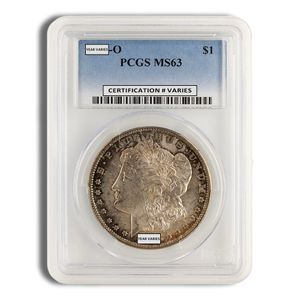
What distinguishes an MS65 toned example is the way original toning interacts with the coin's surviving mint luster. Depending on the specific piece, toning can range from soft golden and champagne hues to deep blues, purples, and russets. Original toning that developed naturally over decades is regarded by numismatists as a desirable attribute rather than a flaw, and on a gem-grade Morgan, it adds visual complexity that uncirculated untoned examples simply cannot replicate.
Authenticity and Product Integrity
Each coin in this listing has been independently graded and authenticated by NGC, the Numismatic Guaranty Company, which is one of the two preeminent third-party grading services in the world. NGC assigns grades based on strike quality, luster, surface preservation, and eye appeal, and encapsulates coins in tamper-evident holders that protect them from environmental exposure and handling damage. The MS65 grade is awarded only to coins that meet strict standards for gem uncirculated quality.
We are an authorized dealer for NGC, which means our customers can purchase NGC-certified coins with confidence that the grade and authentication have been independently verified by an established grading authority. The NGC holder itself includes security features designed to deter counterfeiting and label tampering. For a coin series as widely collected and, historically, as widely counterfeited as the Morgan Dollar, third-party certification is not simply a convenience but a meaningful safeguard.
Condition and Packaging
The MS65 grade indicates a gem uncirculated coin with full original mint luster and a surface quality that places it among the finer survivors of its issue year and mint. At this grade level, any contact marks present are minor and not immediately obvious to the naked eye. The toned designation means the coin's surfaces have developed natural coloration over time, which NGC has assessed as original and consistent with the overall grade assigned.
Because this coin is NGC-certified, it ships in its sealed NGC plastic slab, which serves as both protective encapsulation and the coin's authentication document. No additional flips or tubes are involved. The slab travels within appropriate protective packaging to ensure it arrives without damage to the holder or label.
Pricing and Market Factors
Pricing for an NGC MS65 toned Morgan Dollar reflects several compounding factors beyond the underlying silver spot price. The coin's numismatic premium is driven primarily by its certified grade, the specific date and mint combination, and the character of the toning itself. Unlike raw bullion coins, which trade in tight ranges around spot, gem-grade certified Morgans carry premiums shaped by collector demand, population report data from NGC, and the overall condition rarity of the specific issue.
Toning adds a subjective but meaningful layer to pricing. Coins with vibrant, original, and visually appealing toning consistently attract stronger collector interest than their untoned counterparts at the same grade level, assuming the toning is natural rather than artificially induced. Our pricing reflects current market conditions, and we display bid and ask information directly on our product pages so buyers can evaluate the full picture of what they are acquiring and what it would return in a resale environment.
Selling and Liquidity
Pre-1921 Morgan Dollars graded MS65 by NGC occupy a well-established position in the numismatic market. Both the series itself and the NGC certification infrastructure are widely recognized by dealers, auction houses, and collectors across the country. The NGC label and encapsulation make it straightforward for buyers and sellers to agree on the basic parameters of what is being exchanged, which reduces friction in secondary market transactions.
We operate a two-way market, meaning customers who purchase coins through us can also sell them back into our platform. Liquidity for certified Morgan Dollars at the gem level is generally supported by consistent collector demand, though it can vary by specific date, mint, and the visual qualities of the toning. Understanding the bid/ask spread for any given coin before purchasing gives buyers a realistic picture of the true cost of ownership, which is exactly what we present transparently on each product page.
Why Buy the 1878-1904 Morgan Silver Dollar (NGC MS65 Toned)?
The pre-1921 Morgan Dollar in NGC MS65 with original toning occupies a distinct space between bullion and collector coin, appealing to buyers who want the substance of a major American silver coin elevated by numismatic quality and visual character. At the MS65 level, survivors are genuinely scarcer than their MS63 or MS64 counterparts, particularly for certain date and mint combinations, which means the certified grade reflects something meaningful rather than merely a marketing label.
Original toning on a certified gem-grade Morgan Dollar is treated by the numismatic community as an attribute that enhances rather than diminishes the coin, especially when the coloration is complex and naturally developed. For collectors who appreciate both historical significance and visual individuality, this combination is difficult to replicate with raw or lower-grade alternatives. The Morgan Dollar series itself carries universal recognition across the collecting community, making these coins relatively easy to discuss, research, and trade in any dealer or auction environment.
Why Buy from Bullion Standard?
We hold authorized dealer status with both NGC and PCGS, which shapes how we source, handle, and represent certified coins across our platform. Buyers can rely on the integrity of the NGC label without reservations about how a certified coin was treated or stored prior to listing. Our A rating with the Better Business Bureau and memberships in the American Numismatic Association and the National Coin and Bullion Association reflect the standards we hold ourselves to across every transaction.
Our pricing structure is built around transparency. We display bid and ask spreads directly on product pages so buyers can evaluate the acquisition cost and resale context together, rather than discovering the spread only when they decide to sell. We believe informed decisions produce better outcomes for everyone, and that starts with presenting accurate, real-time market data rather than simplified retail pricing that obscures the full picture.
Get Near-Spot Pricing with Bullion Standard Pro
Bullion Standard Pro gives members access to live, executable wholesale bid and ask pricing across precious metals products, including certified numismatic coins like pre-1921 Morgan Dollars. For buyers who are active in the collector coin market, having visibility into real wholesale market pricing provides a meaningful advantage when evaluating whether a specific certified coin is priced fairly relative to current market conditions. Pro members can also access historical premium data and spread analysis tools that help contextualize what a given grade and toning profile has commanded over time.
Portfolio valuation through Pro uses live wholesale bid pricing rather than estimated retail values, giving members a more realistic view of what their certified holdings would return in a current liquidation scenario. These tools are designed to reduce information asymmetry and help buyers approach even specialized numismatic purchases with the same analytical discipline they would apply to any other asset in their holdings.
Flexible and Secure Payment Options
We support a broad range of payment methods to accommodate buyers at every level of the market. Accepted options include Visa, Mastercard, American Express, and Discover, as well as PayPal, bank-connected payments through Plaid, wire transfer, paper check, and cryptocurrency payments processed through BitPay. Every transaction is handled with security and clarity as priorities, and our checkout process is designed to be straightforward whether you are purchasing a single certified coin or managing a larger acquisition.
Volume Discount Pricing
Orders paid by debit card, credit card, and PayPal are an item's full
list
price
and receive no discount. Orders paid by cryptocurrency receive a 3%
discount
from an item's full list price. Orders paid by eCheck (ACH), paper
check,
and
bank wire receive a 4% discount from an item's full list price.
In Stock
Ships within 1 business day of cleared payment
Select Your Quantity
For Non-Members:
Free shipping on orders
$497+
.
PRO
Pro Member Delivery:
$23.97 flat-rate, true
wholesale pricing. Free shipping on orders
$10,000+.
Product ID: BST-0021036500
Specifications
Random Year Status
Random Year
Precious Metal Type
Silver
Bullion Coin Type
Morgan Dollar
Format
Coin
Country of Origin
United States
Brand/Mint
U.S. Mint
Mint Mark
Various
Purity
0.9
Weight
0.7734 oz
Thickness (mm)
2.4
mm
Diameter (mm)
38.1
mm
Inner Pack (Quantity)
20
Grade
MS65
Grading Service
NGC
Product Details
Overview of the 1878-1904 Morgan Silver Dollar (NGC MS65 Toned)
The Morgan Silver Dollar is one of the most recognized coins in American numismatic history, and the pre-1921 issues from 1878 through 1904 represent the original production run before the series was briefly revived. Struck in .900 fine silver with a total weight of 0.7734 troy ounces, each coin carries 26.73 grams of silver content alongside a copper alloy composition. These coins were produced across multiple United States Mint facilities during the late 19th and early 20th centuries, with the specific mint of origin reflected in mintmarks appearing on the reverse. We offer this example as graded MS65 by NGC, representing a gem uncirculated specimen within a third-party certified holder.
The MS65 designation from NGC places this coin firmly in gem territory, meaning it retains full mint luster, sharp strike definition, and only the most minor contact marks that are barely visible under magnification. The "toned" designation adds another dimension entirely, as original toning on a Morgan Dollar can transform an already attractive coin into something genuinely striking.
History and Background
The Morgan Dollar take…
Overview of the 1878-1904 Morgan Silver Dollar (NGC MS65 Toned)
The Morgan Silver Dollar is one of the most recognized coins in American numismatic history, and the pre-1921 issues from 1878 through 1904 represent the original production run before the series was briefly revived. Struck in .900 fine silver with a total weight of 0.7734 troy ounces, each coin carries 26.73 grams of silver content alongside a copper alloy composition. These coins were produced across multiple United States Mint facilities during the late 19th and early 20th centuries, with the specific mint of origin reflected in mintmarks appearing on the reverse. We offer this example as graded MS65 by NGC, representing a gem uncirculated specimen within a third-party certified holder.
The MS65 designation from NGC places this coin firmly in gem territory, meaning it retains full mint luster, sharp strike definition, and only the most minor contact marks that are barely visible under magnification. The "toned" designation adds another dimension entirely, as original toning on a Morgan Dollar can transform an already attractive coin into something genuinely striking.
History and Background
The Morgan Dollar takes its name from George T. Morgan, the British-born assistant engraver at the United States Mint who designed the coin. Congress authorized the series through the Bland-Allison Act of 1878, which mandated the Treasury purchase silver and strike it into dollars as a concession to Western mining interests and silver advocates. The coin entered circulation that same year and was produced continuously at several mints, including Philadelphia, New Orleans, San Francisco, and Carson City, before the series was halted in 1904 when silver reserves fell short.
Each mint facility during this era carried its own production characteristics, and experienced collectors often differentiate between issues not just by date but by mint of origin. The Carson City issues, for example, have long commanded a premium among enthusiasts due to lower mintages and the romantic history of that Nevada facility. San Francisco strikes are frequently noted for their sharpness and quality, while New Orleans coins exhibit their own distinct production tendencies.
The Morgan Dollar era captured a formative period in American economic and political history, when monetary policy, silver coinage, and westward expansion were deeply intertwined. That historical weight contributes to the coin's enduring appeal well beyond its silver content.
Design and Aesthetics
The obverse of the Morgan Dollar features a left-facing portrait of Liberty, modeled after Philadelphia schoolteacher Anna Willess Williams. Morgan's portrait is remarkably detailed for the era, with fine hair strands, a Phrygian cap, and a coronet inscribed with "LIBERTY." The inscription "E PLURIBUS UNUM" arcs above the portrait, flanked by eight stars on the left and five on the right, with the date positioned beneath.
The reverse presents a heraldic eagle with outstretched wings, clutching an olive branch and bundle of arrows in its talons. A ribbon above the eagle bears the inscription "IN GOD WE TRUST," while "UNITED STATES OF AMERICA" and the denomination "ONE DOLLAR" complete the reverse design. The eagle's breast is covered by a shield, and the overall composition conveys the formal authority that defined American coinage of the period.
What distinguishes an MS65 toned example is the way original toning interacts with the coin's surviving mint luster. Depending on the specific piece, toning can range from soft golden and champagne hues to deep blues, purples, and russets. Original toning that developed naturally over decades is regarded by numismatists as a desirable attribute rather than a flaw, and on a gem-grade Morgan, it adds visual complexity that uncirculated untoned examples simply cannot replicate.
Authenticity and Product Integrity
Each coin in this listing has been independently graded and authenticated by NGC, the Numismatic Guaranty Company, which is one of the two preeminent third-party grading services in the world. NGC assigns grades based on strike quality, luster, surface preservation, and eye appeal, and encapsulates coins in tamper-evident holders that protect them from environmental exposure and handling damage. The MS65 grade is awarded only to coins that meet strict standards for gem uncirculated quality.
We are an authorized dealer for NGC, which means our customers can purchase NGC-certified coins with confidence that the grade and authentication have been independently verified by an established grading authority. The NGC holder itself includes security features designed to deter counterfeiting and label tampering. For a coin series as widely collected and, historically, as widely counterfeited as the Morgan Dollar, third-party certification is not simply a convenience but a meaningful safeguard.
Condition and Packaging
The MS65 grade indicates a gem uncirculated coin with full original mint luster and a surface quality that places it among the finer survivors of its issue year and mint. At this grade level, any contact marks present are minor and not immediately obvious to the naked eye. The toned designation means the coin's surfaces have developed natural coloration over time, which NGC has assessed as original and consistent with the overall grade assigned.
Because this coin is NGC-certified, it ships in its sealed NGC plastic slab, which serves as both protective encapsulation and the coin's authentication document. No additional flips or tubes are involved. The slab travels within appropriate protective packaging to ensure it arrives without damage to the holder or label.
Pricing and Market Factors
Pricing for an NGC MS65 toned Morgan Dollar reflects several compounding factors beyond the underlying silver spot price. The coin's numismatic premium is driven primarily by its certified grade, the specific date and mint combination, and the character of the toning itself. Unlike raw bullion coins, which trade in tight ranges around spot, gem-grade certified Morgans carry premiums shaped by collector demand, population report data from NGC, and the overall condition rarity of the specific issue.
Toning adds a subjective but meaningful layer to pricing. Coins with vibrant, original, and visually appealing toning consistently attract stronger collector interest than their untoned counterparts at the same grade level, assuming the toning is natural rather than artificially induced. Our pricing reflects current market conditions, and we display bid and ask information directly on our product pages so buyers can evaluate the full picture of what they are acquiring and what it would return in a resale environment.
Selling and Liquidity
Pre-1921 Morgan Dollars graded MS65 by NGC occupy a well-established position in the numismatic market. Both the series itself and the NGC certification infrastructure are widely recognized by dealers, auction houses, and collectors across the country. The NGC label and encapsulation make it straightforward for buyers and sellers to agree on the basic parameters of what is being exchanged, which reduces friction in secondary market transactions.
We operate a two-way market, meaning customers who purchase coins through us can also sell them back into our platform. Liquidity for certified Morgan Dollars at the gem level is generally supported by consistent collector demand, though it can vary by specific date, mint, and the visual qualities of the toning. Understanding the bid/ask spread for any given coin before purchasing gives buyers a realistic picture of the true cost of ownership, which is exactly what we present transparently on each product page.
Why Buy the 1878-1904 Morgan Silver Dollar (NGC MS65 Toned)?
The pre-1921 Morgan Dollar in NGC MS65 with original toning occupies a distinct space between bullion and collector coin, appealing to buyers who want the substance of a major American silver coin elevated by numismatic quality and visual character. At the MS65 level, survivors are genuinely scarcer than their MS63 or MS64 counterparts, particularly for certain date and mint combinations, which means the certified grade reflects something meaningful rather than merely a marketing label.
Original toning on a certified gem-grade Morgan Dollar is treated by the numismatic community as an attribute that enhances rather than diminishes the coin, especially when the coloration is complex and naturally developed. For collectors who appreciate both historical significance and visual individuality, this combination is difficult to replicate with raw or lower-grade alternatives. The Morgan Dollar series itself carries universal recognition across the collecting community, making these coins relatively easy to discuss, research, and trade in any dealer or auction environment.
Why Buy from Bullion Standard?
We hold authorized dealer status with both NGC and PCGS, which shapes how we source, handle, and represent certified coins across our platform. Buyers can rely on the integrity of the NGC label without reservations about how a certified coin was treated or stored prior to listing. Our A rating with the Better Business Bureau and memberships in the American Numismatic Association and the National Coin and Bullion Association reflect the standards we hold ourselves to across every transaction.
Our pricing structure is built around transparency. We display bid and ask spreads directly on product pages so buyers can evaluate the acquisition cost and resale context together, rather than discovering the spread only when they decide to sell. We believe informed decisions produce better outcomes for everyone, and that starts with presenting accurate, real-time market data rather than simplified retail pricing that obscures the full picture.
Get Near-Spot Pricing with Bullion Standard Pro
Bullion Standard Pro gives members access to live, executable wholesale bid and ask pricing across precious metals products, including certified numismatic coins like pre-1921 Morgan Dollars. For buyers who are active in the collector coin market, having visibility into real wholesale market pricing provides a meaningful advantage when evaluating whether a specific certified coin is priced fairly relative to current market conditions. Pro members can also access historical premium data and spread analysis tools that help contextualize what a given grade and toning profile has commanded over time.
Portfolio valuation through Pro uses live wholesale bid pricing rather than estimated retail values, giving members a more realistic view of what their certified holdings would return in a current liquidation scenario. These tools are designed to reduce information asymmetry and help buyers approach even specialized numismatic purchases with the same analytical discipline they would apply to any other asset in their holdings.
Flexible and Secure Payment Options
We support a broad range of payment methods to accommodate buyers at every level of the market. Accepted options include Visa, Mastercard, American Express, and Discover, as well as PayPal, bank-connected payments through Plaid, wire transfer, paper check, and cryptocurrency payments processed through BitPay. Every transaction is handled with security and clarity as priorities, and our checkout process is designed to be straightforward whether you are purchasing a single certified coin or managing a larger acquisition.
This website uses cookies for analytics and to deliver personalized content. By continuing to
use our site, you acknowledge that you have read and agree to our Privacy Policy and Cookie
Policy.
Current Quantities Available
Unfortunately, we only have 0
of
this item in
stock.
Please call us at (833) 278-4653
or email us at support@bullionstandard.com
if you wish to purchase a larger quantity than what is available on our website.
We can often locate additional quantities.

 (833) 278-4653

.png)