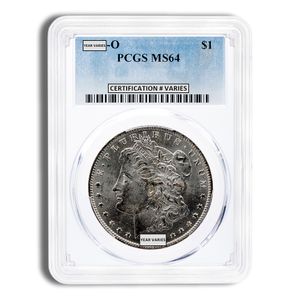
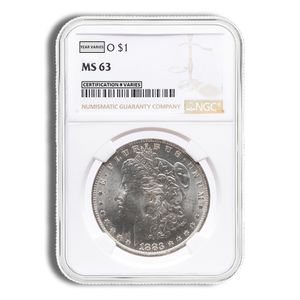
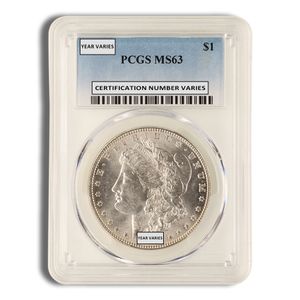
Pre-1921 Morgan Silver Dollars represent one of the most widely recognized series in American numismatic history, struck in .900 fine silver at a weight of 0.7734 troy ounces. The Morgan dollar served as standard circulating currency during the height of the American industrial era and continues to command strong interest from collectors and silver stackers alike. This PCGS-graded MS65 example reflects a gem uncirculated coin that exhibits superior eye appeal, sharp strike, and surfaces largely free of distracting marks or blemishes. We carry PCGS-certified examples of this series because graded Morgan dollars provide a higher level of transparency around condition, authenticity, and market positioning.
History and Background
The Morgan Silver Dollar takes its name from George T. Morgan, the assistant engraver at the United States Mint who designed the coin. Congress authorized the series under the Bland-Allison Act of 1878, which mandated the Treasury to purchase and coin significant quantities of domestic silver, reflecting the political pressure of western silver mining interests. The coin was struck continuously from 1878 through 19…
Overview of 1878-1904 Morgan Silver Dollar
Pre-1921 Morgan Silver Dollars represent one of the most widely recognized series in American numismatic history, struck in .900 fine silver at a weight of 0.7734 troy ounces. The Morgan dollar served as standard circulating currency during the height of the American industrial era and continues to command strong interest from collectors and silver stackers alike. This PCGS-graded MS65 example reflects a gem uncirculated coin that exhibits superior eye appeal, sharp strike, and surfaces largely free of distracting marks or blemishes. We carry PCGS-certified examples of this series because graded Morgan dollars provide a higher level of transparency around condition, authenticity, and market positioning.
History and Background
The Morgan Silver Dollar takes its name from George T. Morgan, the assistant engraver at the United States Mint who designed the coin. Congress authorized the series under the Bland-Allison Act of 1878, which mandated the Treasury to purchase and coin significant quantities of domestic silver, reflecting the political pressure of western silver mining interests. The coin was struck continuously from 1878 through 1904, at which point minting was suspended before a final issue in 1921.
During its original run, Morgan dollars were produced at multiple United States Mint facilities, including Philadelphia, San Francisco, Carson City, New Orleans, and Denver. Each mint produced coins with distinct characteristics tied to die quality, workforce, and available planchets, which is part of why date and mintmark combinations carry considerable variation in rarity and collector demand. The Morgan dollar era coincided with massive silver surpluses in the American West, and hundreds of millions of coins were struck, though many were later melted under the Pittman Act of 1918, permanently reducing the surviving population of certain dates.
Design and Aesthetics
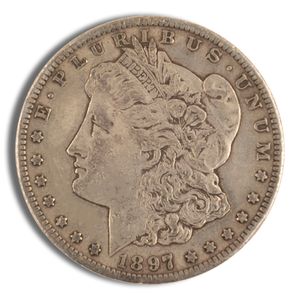
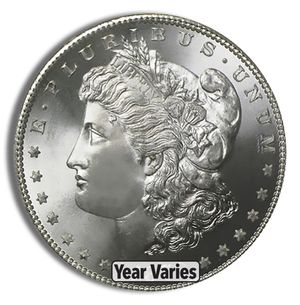
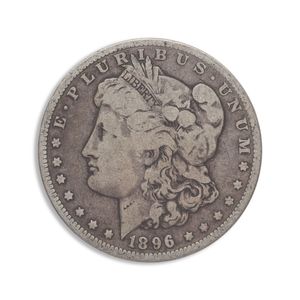
The obverse features a left-facing portrait of Lady Liberty designed by George T. Morgan, modeled in part after Anna Willess Williams, a Philadelphia schoolteacher. Liberty wears a coronet inscribed with the word "LIBERTY" and is surrounded by thirteen stars representing the original colonies, with the date positioned below the portrait. The overall rendering is unusually refined for American coinage of the period, reflecting Morgan's formal training in Britain under engraver William Wyon.
The reverse presents a heraldic eagle with wings spread, clutching arrows in one talon and an olive branch in the other. A wreath arcs beneath the eagle, and the inscriptions "UNITED STATES OF AMERICA" and "E PLURIBUS UNUM" appear prominently around the design. The reverse composition draws from classical American numismatic iconography while giving the design a degree of sculptural depth that holds up particularly well at the gem grade level.
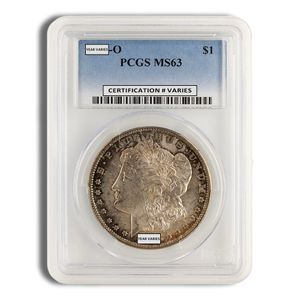
At the MS65 grade, toning on this coin is a defining characteristic rather than a detraction. Original toning on Morgan dollars is the result of decades of interaction between the silver surfaces and the ambient environment, producing colors ranging from golden halos and deep iridescent blues to rich purples and russets. Naturally toned gem Morgans are among the most visually compelling numismatic items in the American series, and no two examples are identical.
Authenticity and Product Integrity
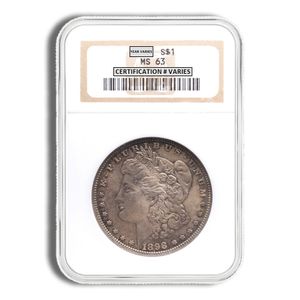
Every coin in this listing is graded MS65 by the Professional Coin Grading Service (PCGS), one of the two most respected third-party grading services in the numismatic industry. PCGS authentication involves physical examination by multiple trained numismatists, verification of weight and diameter, strike assessment, and surface analysis before a grade is assigned. The coin is then encapsulated in a tamper-evident PCGS slab with a unique certification number that can be verified through the PCGS database.
We are an authorized dealer for PCGS, which allows us to offer certified coins with full confidence in the grading process behind them. For a coin series as heavily counterfeited and artificially toned as the Morgan dollar, third-party certification is not optional for serious collectors. PCGS slabbing eliminates ambiguity around authenticity and grade, providing a standardized basis for evaluating condition and pricing across the market.
Condition and Packaging
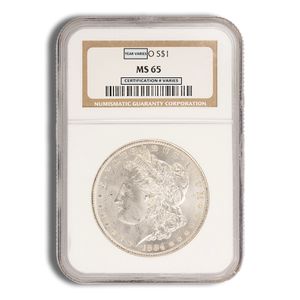
An MS65 designation from PCGS places this coin firmly in gem uncirculated territory. At this grade, the coin retains full luster with only minor, scattered contact marks that are not easily visible to the naked eye. Eye appeal is strong, and the toning attributed to this piece is considered original and consistent with natural aging rather than artificial enhancement. PCGS grades toned coins on the same numerical scale while also evaluating whether the toning adds to or detracts from overall appeal, and MS65 examples with attractive original toning represent a genuinely premium tier of the Morgan dollar market.
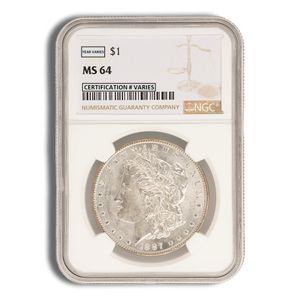
Each coin ships encapsulated in its PCGS holder, which protects both the coin and its certified attributes. The hard plastic slab prevents direct contact with the coin surfaces and provides clear visibility of both obverse and reverse without handling. Because this is a graded numismatic product, it does not follow the same tube and flip packaging conventions as raw bullion, and the encapsulation itself serves as the primary protective packaging for the item.
Pricing and Market Factors
Morgan dollar pricing operates differently from standard bullion because graded numismatic coins carry a premium that reflects both silver content and collector demand for a specific grade tier. The spot price of silver establishes a floor, but MS65 examples of pre-1921 Morgan dollars trade meaningfully above melt value based on condition scarcity, visual appeal, and PCGS certification status. For toned examples, the premium above a comparable untoned coin can be substantial depending on the depth, originality, and arrangement of the color.
Our pricing reflects current market conditions across the graded Morgan dollar segment and is structured to provide clarity. The bid/ask spread displayed on our product pages gives buyers a transparent view of both acquisition cost and expected resale value, which is particularly relevant for numismatic coins where premiums above spot can fluctuate more actively than they do for standard bullion products. Date and mintmark combinations within the 1878 to 1904 range also influence pricing, with some issues commanding considerably more than others based on known mintage figures and certified population data.
Selling and Liquidity
PCGS-graded Morgan dollars are among the most actively traded items in the numismatic secondary market. The combination of widespread collector familiarity, a well-established certified population tracked through the PCGS registry, and strong ongoing demand from type collectors makes this series one of the more liquid segments within American numismatics. MS65 is a grade that sits above the typical circulated range but remains attainable enough to attract both new and experienced collectors, which supports consistent buyer interest.
We operate a two-way market that allows customers to both purchase and sell precious metals and numismatic coins within the same ecosystem. Understanding the resale side of the transaction before making a purchase is part of how we approach the market, and our competitive buyback pricing is built to reflect current wholesale market conditions rather than arbitrary dealer discretion. Liquidity considerations are worth evaluating before any numismatic purchase, and we make that information accessible upfront.
Why Buy a Pre-1921 Morgan Silver Dollar PCGS MS65 Toned?
Pre-1921 Morgan dollars in gem condition occupy a unique position in American numismatics because they combine genuine historical significance, substantial silver content, and collector demand into a single standardized and certifiable asset. At the MS65 grade, the coin has survived over a century without meaningful wear or damage, which speaks directly to how selectively the market views original, high-grade survivors from this era. The presence of attractive original toning adds an additional layer of visual individuality that sets toned gems apart from their untoned counterparts and drives premium interest among advanced collectors.
PCGS certification removes the uncertainty that makes raw coin purchasing less suitable for buyers who want clear, verifiable information about what they are acquiring. The encapsulated slab provides a permanent, tamper-evident record of grade and authenticity that holds up in virtually any resale environment. For collectors building a type set, adding key-date examples, or seeking visually distinctive coins, a PCGS MS65 toned Morgan dollar represents a well-defined and documentable acquisition.
Why Buy from Bullion Standard?
We have been operating in the precious metals and numismatic space since 2010, and our approach has always centered on giving customers accurate information rather than high-pressure sales tactics. Our A rating with the Better Business Bureau, membership in both the American Numismatic Association (ANA) and the National Coin and Bullion Association (NCBA), and authorized dealer status with PCGS and NGC collectively reflect a commitment to operating at a professional standard within this industry. For graded numismatic coins specifically, authorized dealer status with PCGS matters because it means we work directly within established certification channels rather than operating at the margins of the secondary market.
Our pricing is structured around real-time market conditions and is displayed with the bid/ask spread so buyers can evaluate both the purchase price and the expected resale value before committing. We believe this level of transparency belongs at the start of a transaction, not only when it is time to sell. Every aspect of our buying and selling experience is designed to support informed decisions, and our customer service team is equipped to help buyers navigate the specifics of the graded coin market with straightforward, knowledgeable guidance.
Get Near-Spot Pricing with Bullion Standard Pro
Bullion Standard Pro provides members with access to live, executable wholesale bid and ask pricing across a broad range of precious metals and numismatic products, including graded Morgan dollars. For a segment of the market where premiums above spot can shift meaningfully based on collector demand and certified population changes, having direct visibility into real-time wholesale pricing gives buyers a more complete and accurate picture of what a fair transaction looks like. Portfolio valuation through Pro uses live executable wholesale bid pricing rather than estimated retail values, which provides a more grounded view of current liquidation value across a member's holdings.
Beyond live pricing, Bullion Standard Pro includes product research tools and proprietary analytics designed to help members evaluate premiums, bid/ask spreads, and market conditions across individual products over time. For numismatic coins, where pricing can diverge substantially from simple spot-based calculations, access to objective market data and historical premium analysis provides context that marketing descriptions alone cannot offer. The platform is built around the idea that better information supports better decisions, and that principle applies as directly to graded American coinage as it does to any other segment of the precious metals market.
Flexible and Secure Payment Options
We support a comprehensive range of payment methods to make purchasing straightforward and secure regardless of how a buyer prefers to transact. Accepted payment options include Visa, Mastercard, American Express, and Discover, as well as PayPal, bank-connected payments through Plaid, wire transfer, paper check, and cryptocurrency payments processed through BitPay. Every transaction is handled through a secure platform designed to protect buyer information and ensure reliable order processing from checkout through fulfillment.
Volume Discount Pricing
Orders paid by debit card, credit card, and PayPal are an item's full
list
price
and receive no discount. Orders paid by cryptocurrency receive a 3%
discount
from an item's full list price. Orders paid by eCheck (ACH), paper
check,
and
bank wire receive a 4% discount from an item's full list price.
In Stock
Ships within 1 business day of cleared payment
Select Your Quantity
For Non-Members:
Free shipping on orders
$497+
.
PRO
Pro Member Delivery:
$23.97 flat-rate, true
wholesale pricing. Free shipping on orders
$10,000+.
Product ID: BST-002132A68C
Specifications
Random Year Status
Random Year
Precious Metal Type
Silver
Bullion Coin Type
Morgan Dollar
Format
Coin
Country of Origin
United States
Brand/Mint
U.S. Mint
Mint Mark
Various
Purity
0.9
Weight
0.7734 oz
Thickness (mm)
2.4
mm
Diameter (mm)
38.1
mm
Inner Pack (Quantity)
20
Grade
MS65
Grading Service
PCGS
Product Details
Overview of 1878-1904 Morgan Silver Dollar
Pre-1921 Morgan Silver Dollars represent one of the most widely recognized series in American numismatic history, struck in .900 fine silver at a weight of 0.7734 troy ounces. The Morgan dollar served as standard circulating currency during the height of the American industrial era and continues to command strong interest from collectors and silver stackers alike. This PCGS-graded MS65 example reflects a gem uncirculated coin that exhibits superior eye appeal, sharp strike, and surfaces largely free of distracting marks or blemishes. We carry PCGS-certified examples of this series because graded Morgan dollars provide a higher level of transparency around condition, authenticity, and market positioning.
History and Background
The Morgan Silver Dollar takes its name from George T. Morgan, the assistant engraver at the United States Mint who designed the coin. Congress authorized the series under the Bland-Allison Act of 1878, which mandated the Treasury to purchase and coin significant quantities of domestic silver, reflecting the political pressure of western silver mining interests. The coin was struck continuously from 1878 through 19…
Overview of 1878-1904 Morgan Silver Dollar
Pre-1921 Morgan Silver Dollars represent one of the most widely recognized series in American numismatic history, struck in .900 fine silver at a weight of 0.7734 troy ounces. The Morgan dollar served as standard circulating currency during the height of the American industrial era and continues to command strong interest from collectors and silver stackers alike. This PCGS-graded MS65 example reflects a gem uncirculated coin that exhibits superior eye appeal, sharp strike, and surfaces largely free of distracting marks or blemishes. We carry PCGS-certified examples of this series because graded Morgan dollars provide a higher level of transparency around condition, authenticity, and market positioning.
History and Background
The Morgan Silver Dollar takes its name from George T. Morgan, the assistant engraver at the United States Mint who designed the coin. Congress authorized the series under the Bland-Allison Act of 1878, which mandated the Treasury to purchase and coin significant quantities of domestic silver, reflecting the political pressure of western silver mining interests. The coin was struck continuously from 1878 through 1904, at which point minting was suspended before a final issue in 1921.
During its original run, Morgan dollars were produced at multiple United States Mint facilities, including Philadelphia, San Francisco, Carson City, New Orleans, and Denver. Each mint produced coins with distinct characteristics tied to die quality, workforce, and available planchets, which is part of why date and mintmark combinations carry considerable variation in rarity and collector demand. The Morgan dollar era coincided with massive silver surpluses in the American West, and hundreds of millions of coins were struck, though many were later melted under the Pittman Act of 1918, permanently reducing the surviving population of certain dates.
Design and Aesthetics
The obverse features a left-facing portrait of Lady Liberty designed by George T. Morgan, modeled in part after Anna Willess Williams, a Philadelphia schoolteacher. Liberty wears a coronet inscribed with the word "LIBERTY" and is surrounded by thirteen stars representing the original colonies, with the date positioned below the portrait. The overall rendering is unusually refined for American coinage of the period, reflecting Morgan's formal training in Britain under engraver William Wyon.
The reverse presents a heraldic eagle with wings spread, clutching arrows in one talon and an olive branch in the other. A wreath arcs beneath the eagle, and the inscriptions "UNITED STATES OF AMERICA" and "E PLURIBUS UNUM" appear prominently around the design. The reverse composition draws from classical American numismatic iconography while giving the design a degree of sculptural depth that holds up particularly well at the gem grade level.
At the MS65 grade, toning on this coin is a defining characteristic rather than a detraction. Original toning on Morgan dollars is the result of decades of interaction between the silver surfaces and the ambient environment, producing colors ranging from golden halos and deep iridescent blues to rich purples and russets. Naturally toned gem Morgans are among the most visually compelling numismatic items in the American series, and no two examples are identical.
Authenticity and Product Integrity
Every coin in this listing is graded MS65 by the Professional Coin Grading Service (PCGS), one of the two most respected third-party grading services in the numismatic industry. PCGS authentication involves physical examination by multiple trained numismatists, verification of weight and diameter, strike assessment, and surface analysis before a grade is assigned. The coin is then encapsulated in a tamper-evident PCGS slab with a unique certification number that can be verified through the PCGS database.
We are an authorized dealer for PCGS, which allows us to offer certified coins with full confidence in the grading process behind them. For a coin series as heavily counterfeited and artificially toned as the Morgan dollar, third-party certification is not optional for serious collectors. PCGS slabbing eliminates ambiguity around authenticity and grade, providing a standardized basis for evaluating condition and pricing across the market.
Condition and Packaging
An MS65 designation from PCGS places this coin firmly in gem uncirculated territory. At this grade, the coin retains full luster with only minor, scattered contact marks that are not easily visible to the naked eye. Eye appeal is strong, and the toning attributed to this piece is considered original and consistent with natural aging rather than artificial enhancement. PCGS grades toned coins on the same numerical scale while also evaluating whether the toning adds to or detracts from overall appeal, and MS65 examples with attractive original toning represent a genuinely premium tier of the Morgan dollar market.
Each coin ships encapsulated in its PCGS holder, which protects both the coin and its certified attributes. The hard plastic slab prevents direct contact with the coin surfaces and provides clear visibility of both obverse and reverse without handling. Because this is a graded numismatic product, it does not follow the same tube and flip packaging conventions as raw bullion, and the encapsulation itself serves as the primary protective packaging for the item.
Pricing and Market Factors
Morgan dollar pricing operates differently from standard bullion because graded numismatic coins carry a premium that reflects both silver content and collector demand for a specific grade tier. The spot price of silver establishes a floor, but MS65 examples of pre-1921 Morgan dollars trade meaningfully above melt value based on condition scarcity, visual appeal, and PCGS certification status. For toned examples, the premium above a comparable untoned coin can be substantial depending on the depth, originality, and arrangement of the color.
Our pricing reflects current market conditions across the graded Morgan dollar segment and is structured to provide clarity. The bid/ask spread displayed on our product pages gives buyers a transparent view of both acquisition cost and expected resale value, which is particularly relevant for numismatic coins where premiums above spot can fluctuate more actively than they do for standard bullion products. Date and mintmark combinations within the 1878 to 1904 range also influence pricing, with some issues commanding considerably more than others based on known mintage figures and certified population data.
Selling and Liquidity
PCGS-graded Morgan dollars are among the most actively traded items in the numismatic secondary market. The combination of widespread collector familiarity, a well-established certified population tracked through the PCGS registry, and strong ongoing demand from type collectors makes this series one of the more liquid segments within American numismatics. MS65 is a grade that sits above the typical circulated range but remains attainable enough to attract both new and experienced collectors, which supports consistent buyer interest.
We operate a two-way market that allows customers to both purchase and sell precious metals and numismatic coins within the same ecosystem. Understanding the resale side of the transaction before making a purchase is part of how we approach the market, and our competitive buyback pricing is built to reflect current wholesale market conditions rather than arbitrary dealer discretion. Liquidity considerations are worth evaluating before any numismatic purchase, and we make that information accessible upfront.
Why Buy a Pre-1921 Morgan Silver Dollar PCGS MS65 Toned?
Pre-1921 Morgan dollars in gem condition occupy a unique position in American numismatics because they combine genuine historical significance, substantial silver content, and collector demand into a single standardized and certifiable asset. At the MS65 grade, the coin has survived over a century without meaningful wear or damage, which speaks directly to how selectively the market views original, high-grade survivors from this era. The presence of attractive original toning adds an additional layer of visual individuality that sets toned gems apart from their untoned counterparts and drives premium interest among advanced collectors.
PCGS certification removes the uncertainty that makes raw coin purchasing less suitable for buyers who want clear, verifiable information about what they are acquiring. The encapsulated slab provides a permanent, tamper-evident record of grade and authenticity that holds up in virtually any resale environment. For collectors building a type set, adding key-date examples, or seeking visually distinctive coins, a PCGS MS65 toned Morgan dollar represents a well-defined and documentable acquisition.
Why Buy from Bullion Standard?
We have been operating in the precious metals and numismatic space since 2010, and our approach has always centered on giving customers accurate information rather than high-pressure sales tactics. Our A rating with the Better Business Bureau, membership in both the American Numismatic Association (ANA) and the National Coin and Bullion Association (NCBA), and authorized dealer status with PCGS and NGC collectively reflect a commitment to operating at a professional standard within this industry. For graded numismatic coins specifically, authorized dealer status with PCGS matters because it means we work directly within established certification channels rather than operating at the margins of the secondary market.
Our pricing is structured around real-time market conditions and is displayed with the bid/ask spread so buyers can evaluate both the purchase price and the expected resale value before committing. We believe this level of transparency belongs at the start of a transaction, not only when it is time to sell. Every aspect of our buying and selling experience is designed to support informed decisions, and our customer service team is equipped to help buyers navigate the specifics of the graded coin market with straightforward, knowledgeable guidance.
Get Near-Spot Pricing with Bullion Standard Pro
Bullion Standard Pro provides members with access to live, executable wholesale bid and ask pricing across a broad range of precious metals and numismatic products, including graded Morgan dollars. For a segment of the market where premiums above spot can shift meaningfully based on collector demand and certified population changes, having direct visibility into real-time wholesale pricing gives buyers a more complete and accurate picture of what a fair transaction looks like. Portfolio valuation through Pro uses live executable wholesale bid pricing rather than estimated retail values, which provides a more grounded view of current liquidation value across a member's holdings.
Beyond live pricing, Bullion Standard Pro includes product research tools and proprietary analytics designed to help members evaluate premiums, bid/ask spreads, and market conditions across individual products over time. For numismatic coins, where pricing can diverge substantially from simple spot-based calculations, access to objective market data and historical premium analysis provides context that marketing descriptions alone cannot offer. The platform is built around the idea that better information supports better decisions, and that principle applies as directly to graded American coinage as it does to any other segment of the precious metals market.
Flexible and Secure Payment Options
We support a comprehensive range of payment methods to make purchasing straightforward and secure regardless of how a buyer prefers to transact. Accepted payment options include Visa, Mastercard, American Express, and Discover, as well as PayPal, bank-connected payments through Plaid, wire transfer, paper check, and cryptocurrency payments processed through BitPay. Every transaction is handled through a secure platform designed to protect buyer information and ensure reliable order processing from checkout through fulfillment.
This website uses cookies for analytics and to deliver personalized content. By continuing to
use our site, you acknowledge that you have read and agree to our Privacy Policy and Cookie
Policy.
Current Quantities Available
Unfortunately, we only have 0
of
this item in
stock.
Please call us at (833) 278-4653
or email us at support@bullionstandard.com
if you wish to purchase a larger quantity than what is available on our website.
We can often locate additional quantities.

 (833) 278-4653


.png)