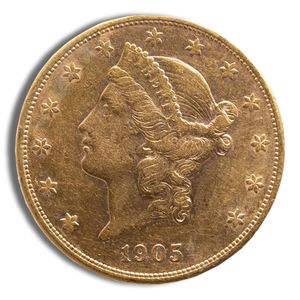
Buy $20 Gold Coins Online
Our catalog of $20 gold coins brings together two of the most historically significant American gold coin types ever struck: the Liberty Head Double Eagle and the Saint-Gaudens Double Eagle, both produced by the United States Mint. Each coin contains 0.9675 troy ounces of gold at .900 fineness, making them among the most recognizable and widely traded pre-1933 gold coins in the market today.
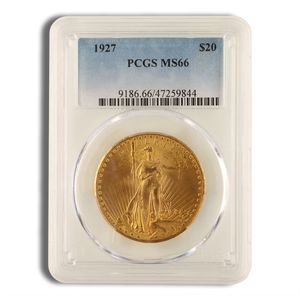
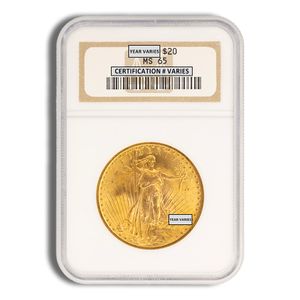
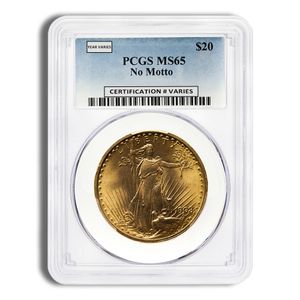
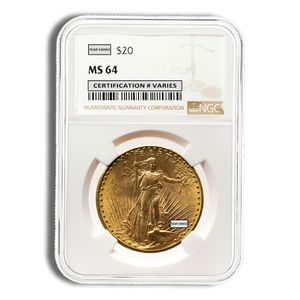
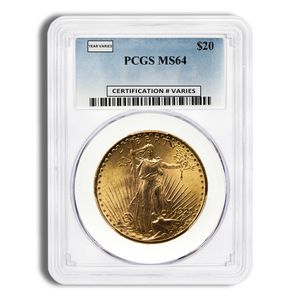
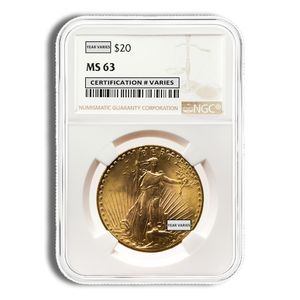
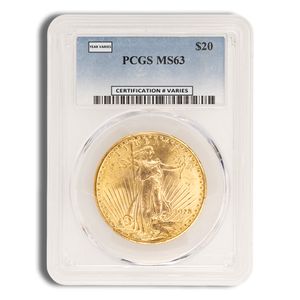
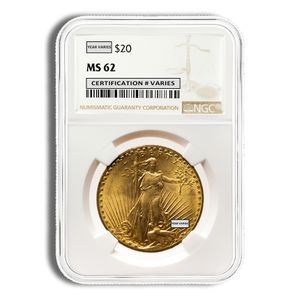
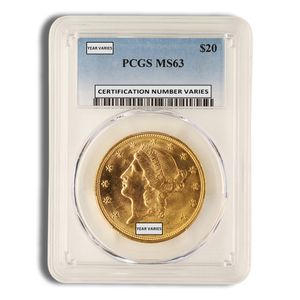
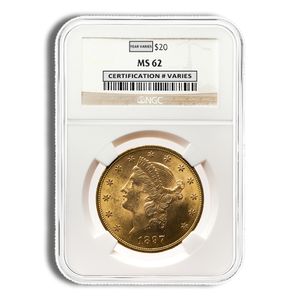
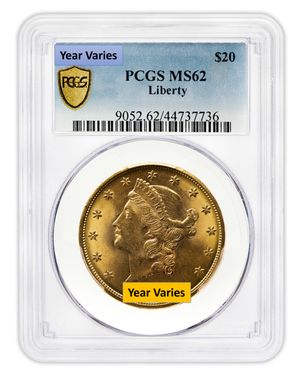
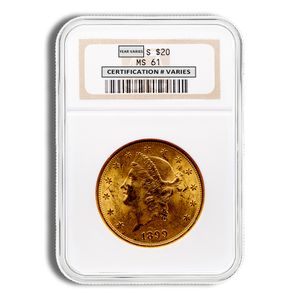
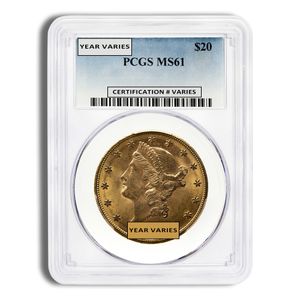
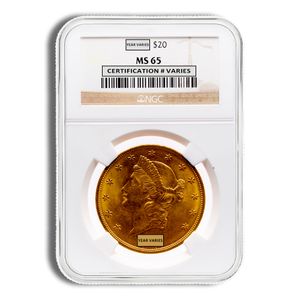
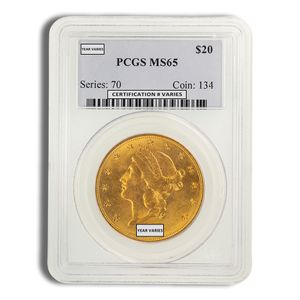
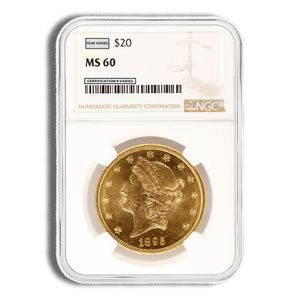
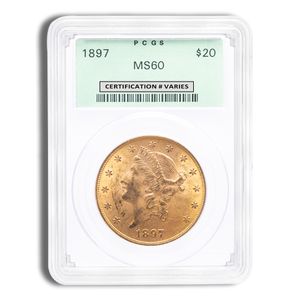
Buyers will find a range of grades and certifications across both series, from circulated examples in VF and XF condition to raw BU pieces and certified coins graded by NGC and PCGS from MS60 through MS66. Whether you're looking for a cleaned or low-grade example at a lower premium or a professionally slabbed gem coin, the selection reflects the full spectrum of how these coins actually trade in the marketplace.
Bullion Standard sources these coins through established wholesale channels and verified distributors, with pricing structured around real-time gold spot prices and transparent premium disclosure on every product page.
What Are $20 Gold Coins?
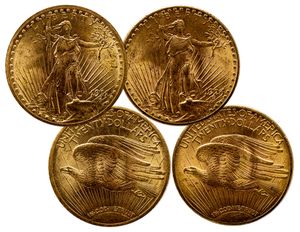
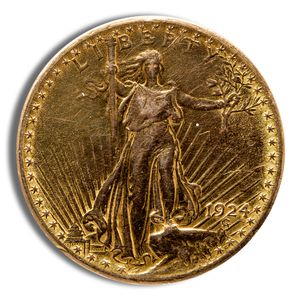
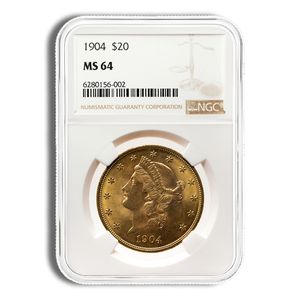
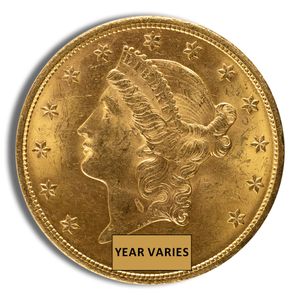
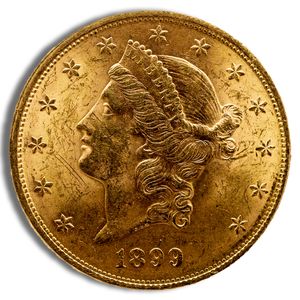
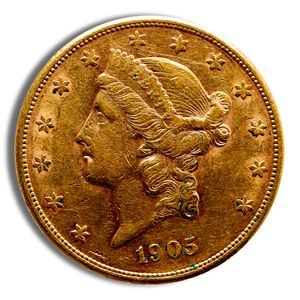
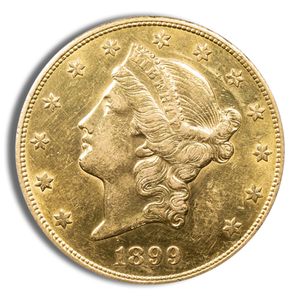
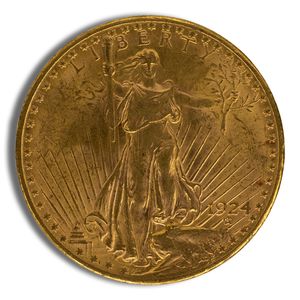
The term "$20 gold coin" refers specifically to the Double Eagle, a denomination authorized by the United States Congress and struck from 1849 through 1933. Two distinct designs were produced under this denomination: the Liberty Head type, designed by James Longacre and minted from 1849 to 1907, and the Saint-Gaudens type, designed by sculptor Augustus Saint-Gaudens and produced from 1907 to 1933. Both types share the same weight, diameter, and gold content.
Unlike modern bullion coins such as the American Gold Eagle, these are pre-1933 coins struck during active monetary circulation in the United States. They occupy a space that bridges numismatic collecting and bullion ownership, appealing to buyers who value historical significance alongside the underlying gold content. The grade assigned to a coin, whether circulated or mint state, has a meaningful effect on both its appearance and its price relative to spot.
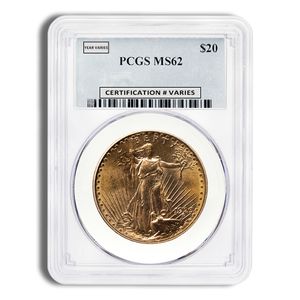
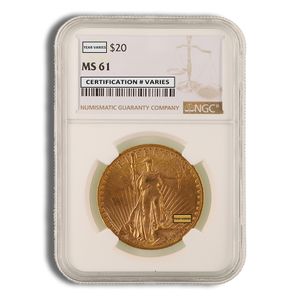
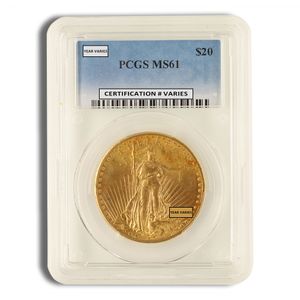
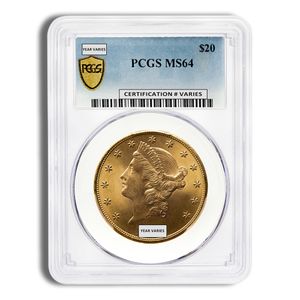
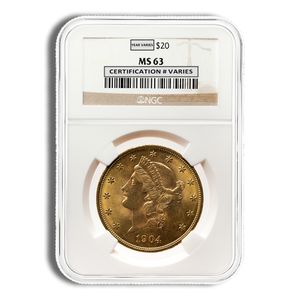
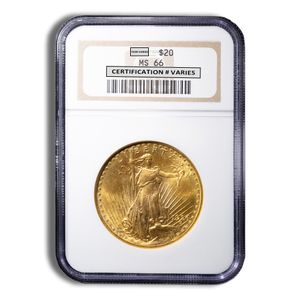
Certified examples in NGC or PCGS holders carry the added assurance of third-party grading and encapsulation, which increases buyer confidence and often improves resale liquidity. Raw or uncertified coins trade more directly on their gold content, with premiums varying based on condition, appearance, and market demand at the time of sale.
History and Background
The Double Eagle denomination came into existence following the California Gold Rush of 1848, which dramatically increased the supply of gold available to the United States Mint. Congress authorized the $20 denomination in 1849 to allow larger quantities of gold to be coined efficiently. The Liberty Head design by James Longacre served the nation through several decades, evolving through multiple minor design modifications across its nearly sixty-year production run at mints including Philadelphia, San Francisco, Carson City, New Orleans, and Denver.
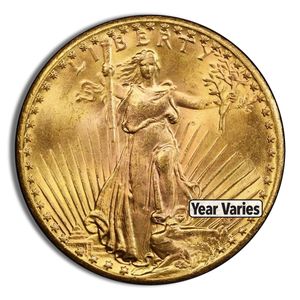
The Saint-Gaudens redesign emerged from President Theodore Roosevelt's desire to elevate the artistic quality of American coinage, which he considered embarrassingly plain compared to ancient Greek and Roman coins. Roosevelt personally commissioned sculptor Augustus Saint-Gaudens, whose high-relief design was adapted into a lower relief for mass production. The resulting coin is widely regarded as the most beautiful coin ever struck by the United States Mint and remains one of the most collected American gold coins of all time.
Production of both types ended in 1933 when President Franklin D. Roosevelt signed Executive Order 6102, which required most Americans to turn in their gold coins to the Federal Reserve. The vast majority were melted, making surviving examples from certain dates and mint marks significantly scarcer than their original mintages suggest. This combination of historical significance, gold content, and genuine scarcity has kept collector and buyer demand for Double Eagles consistent across generations.
Purity, Weight, and Specifications
Every $20 Double Eagle, regardless of design type or date, contains 0.9675 troy ounces of gold at .900 fineness, with the remaining 10% composed of copper alloy to improve durability. The coin's total gross weight is 33.436 grams, and its diameter measures 34 millimeters. These specifications were consistent across the full production run from 1849 through 1933 at all mint facilities.
The .900 gold standard was the standard for American gold coinage throughout this era and aligns with the gold content found in other pre-1933 U.S. gold denominations. Because these coins were struck for monetary circulation, they do not carry assay cards or modern mint packaging, and their purity is verified through the standards of the United States Mint and, for certified examples, confirmed by NGC or PCGS during the grading process.
For certified coins, the grade assigned by NGC or PCGS reflects the coin's surface preservation and strike quality on the standard 70-point Sheldon scale. Circulated grades such as VF (Very Fine) and XF (Extremely Fine) indicate coins that saw monetary use, while About Uncirculated (AU) coins show only light wear on the highest relief points. Mint State designations from MS60 through MS66 describe coins that never entered circulation, with higher numbers reflecting greater luster retention and fewer contact marks.
Available Brands, Mints, and Product Variations
All $20 gold coins in our catalog were produced by the United States Mint, which operated multiple branch facilities throughout the years of Double Eagle production. Our inventory is offered as random year, meaning the specific date and mint mark you receive will vary based on current stock. This is standard practice across the pre-1933 gold coin market, where common-date examples from various mint facilities are grouped together at similar premium levels.
The Liberty Head Double Eagle series is represented across a full range of grades, from cleaned or low-grade examples to circulated pieces in VF and XF, raw About Uncirculated and BU coins, and NGC or PCGS certified examples from MS60 through MS65. The Saint-Gaudens Double Eagle series follows a similar structure, with certified options extending through MS66 for both NGC and PCGS holders, reflecting the strong collector market that exists for gem-quality Saints.
The distinction between NGC and PCGS holders matters to many buyers. Both NGC (Numismatic Guaranty Company) and PCGS (Professional Coin Grading Service) are the two most respected third-party grading services in the industry, and Bullion Standard is an authorized dealer for both. Coins in PCGS holders tend to carry slightly different market premiums than their NGC counterparts at the same grade, a reflection of collector preferences and subtle population differences between the two services rather than any meaningful difference in underlying quality.
Pricing, Premiums, and Market Factors
The base price of any $20 gold coin moves with the spot price of gold, but the premium above spot varies considerably depending on grade, certification status, and current collector demand. Cleaned or low-grade examples carry the thinnest premiums, as they trade primarily on their gold melt value. Circulated coins in VF or XF command modest premiums reflecting their recognizable collector demand. Certified mint state coins in higher grades carry progressively larger premiums as the population of surviving examples in those grades becomes smaller.
Market premiums on pre-1933 gold coins can shift meaningfully based on broader collector market activity, wholesale supply availability, and seasonal demand patterns. The Saint-Gaudens series in gem condition (MS65 and MS66) is particularly sensitive to collector market trends, and premiums at those grade levels can diverge from the spot-driven pricing that governs common-date circulated pieces. Understanding the premium structure before purchasing allows buyers to make more informed decisions about what they're paying for beyond the raw gold content.
Bullion Standard displays transparent bid and ask pricing on each product page, reflecting real-time market conditions. The bid/ask spread shown on every listing represents the full cost structure of the transaction, rather than presenting a purchase price without context. This approach gives buyers a clearer picture of what they're paying and what the coin is likely to return under current market conditions when it comes time to sell.
Condition, Packaging, and What to Expect
Pre-1933 gold coins are not packaged in the same manner as modern bullion products. Circulated examples, including VF, XF, and AU grades, will arrive loose or in protective flips, without original mint packaging. These coins are typically over a century old and will show varying degrees of wear consistent with their assigned grade. Minor bag marks, contact marks, and light cleaning are common in circulated and lower mint state grades and are factored into the grade designation.
Raw BU coins offered as random year examples have not been submitted to a grading service and may exhibit varying luster, light surface marks, or minor handling consistent with coins that have been stored and traded over many decades. These are not sealed or encapsulated, and buyers should expect normal variation between individual pieces. Certified coins in NGC or PCGS holders are encapsulated in sonically sealed plastic slabs with tamper-evident construction, clearly displaying the assigned grade and certification number.
Because all offerings in this category are random year, specific dates, mint marks, or design sub-types cannot be requested or guaranteed. The coin you receive will reflect whatever is currently available within the grade and certification parameters you select. Buyers focused on specific dates or mint marks should refer to date-specific listings when available.
Authenticity and Verification
Counterfeit pre-1933 gold coins do exist in the broader market, and authenticity verification is a legitimate concern for buyers of any vintage American gold coinage. At Bullion Standard, every product is verified before fulfillment, and our sourcing relationships are limited to established wholesale bullion dealers, major distributors, and other reputable market participants.
For certified coins, the NGC or PCGS slab itself serves as the primary authentication guarantee. Both services encapsulate coins in tamper-evident holders with certification numbers that can be verified directly on the NGC or PCGS website. As an authorized dealer for both services, Bullion Standard works directly within their verified dealer networks. For raw coins, authentication relies on our internal verification processes, which include weight, diameter, and visual inspection consistent with industry standards.
Buyers who want additional peace of mind on raw coins after purchase have the option to submit them to NGC or PCGS for independent grading and authentication. This is a common step taken by buyers who plan to hold or resell certified coins, and the major grading services offer straightforward submission options through their authorized dealer networks.
Liquidity and Resale Considerations
$20 gold coins are among the most liquid pre-1933 American gold coins in the market. Common-date circulated examples trade freely across a wide network of dealers, coin shows, auction houses, and online platforms. Their recognizable design, well-documented history, and consistent gold content make them easy to quote and easy to sell in most market environments.
Certified coins in NGC or PCGS holders tend to command stronger resale positioning than raw examples of equivalent grade, particularly in the MS62 through MS65 range where population data plays a meaningful role in price discovery. Coins in PCGS or NGC holders are also accepted by a broader range of resale platforms, including major auction houses, without the need for re-verification. Cleaning or environmental damage can significantly reduce resale value below comparable undamaged pieces, which is why the cleaned or low-grade category is priced separately.
Understanding the relationship between grade, certification, and market liquidity before purchasing gives buyers a more realistic picture of the full transaction. Bullion Standard's two-way market structure allows customers to both purchase and sell within the same platform, with buyback pricing that reflects current wholesale market conditions rather than arbitrary dealer discretion.
Storage and Security
Certified coins in NGC or PCGS holders are best stored in rigid holders, boxes, or album pages designed for slabbed coins. The encapsulation itself provides meaningful protection from environmental exposure, but slabs are not indestructible and should not be stacked loosely or stored in humid conditions where condensation could affect the coin's surface over time.
Raw circulated or BU coins should be kept in individual protective flips, coin envelopes, or airtite capsules to minimize contact damage and surface contamination. Gold is resistant to oxidation but not immune to surface marks from improper handling. Holding coins by their edges and minimizing direct contact with bare hands preserves surface quality over time.
For meaningful accumulations, a home safe rated for fire and theft resistance offers a practical starting point. Bank safe deposit boxes provide a lower-cost alternative with physical security, though access is limited to banking hours. Third-party vault storage programs are available for buyers holding larger quantities and offer fully insured, professionally managed storage without the overhead of maintaining private storage infrastructure.
Selling and Buyback Options
Selling $20 gold coins follows a relatively straightforward process when working through established dealer channels. Bullion Standard maintains active buyback pricing on Double Eagles across both the Liberty and Saint-Gaudens series, with pricing tied to real-time gold spot prices and adjusted for grade, certification status, and current wholesale market demand.
Condition and certification significantly affect the buyback price. Certified coins in NGC or PCGS holders are easier to price objectively and tend to clear faster in the resale market than raw coins of uncertain grade. Cleaned or damaged coins will be evaluated at or near melt value regardless of their original grade designation. Coins with original, undisturbed surfaces in any grade retain better resale positioning than equivalent pieces with cleaning or artificial enhancement.
When selling through Bullion Standard, the process is designed to be operationally straightforward. Customers submit a sell request, receive a quote based on current market conditions, and ship the coins through an insured, tracked service. Payment is processed promptly after receipt and verification. Our two-way market model is built around the principle that liquidity should be considered before a purchase is made, and our buyback pricing reflects that commitment to both sides of the transaction.
Why Buy $20 Gold Coins?
The Double Eagle occupies a distinct position in the gold coin market that few other products can match. Unlike modern bullion coins, these pieces carry genuine historical significance as former legal tender that circulated during a formative period of American economic history. That history is embedded in the coins themselves, making them meaningful to buyers who want something with tangible substance beyond the spot price of gold.
The 0.9675 troy ounce gold content provides meaningful bullion weight, and common-date circulated examples often trade at premiums comparable to or lower than many modern government-issued bullion coins depending on market conditions. For buyers interested in certified coins, the grading scale creates a structured way to evaluate quality and pay accordingly, from lower-grade raw pieces to gem mint state examples that carry collector premium.
Both the Liberty and Saint-Gaudens types enjoy deep market recognition across coin dealers, auction houses, and institutional buyers worldwide. That recognition translates directly into consistent demand across resale channels, which is a practical consideration for buyers thinking about the full lifecycle of their purchase. The range of grades available within a single coin type also allows buyers to calibrate their entry point based on budget, goals, and preference for raw versus certified presentation.
Why Buy from Bullion Standard?
Bullion Standard has operated as a trusted precious metals dealer since 2010, building a nationally recognized platform on a foundation of pricing transparency, verified sourcing, and genuine customer support. Our A rating with the Better Business Bureau and active membership in both the American Numismatic Association and the National Coin and Bullion Association reflect a long-term commitment to industry standards and customer confidence.
As an authorized dealer for both NGC and PCGS, we operate within verified dealer networks for certified coins, giving buyers direct access to authenticated, professionally graded material without the uncertainty of secondary market sourcing. Every product we sell is verified for authenticity, weight, and purity before it ships, and our checkout process supports a wide range of payment options including major credit cards, PayPal, bank-connected payments through Plaid, wire transfer, check, and cryptocurrency through BitPay.
Our platform is built around making physical precious metals buying more transparent and less opaque than the traditional dealer model. Bid and ask prices are displayed directly on product pages, buyback pricing is structured and competitive, and our customer support team is accessible throughout the buying and selling process. We're not a high-pressure sales environment. We're designed to be the kind of marketplace that earns repeat business because it treats customers like informed buyers rather than sales targets.
Get Near-Spot Pricing with Bullion Standard Pro
Bullion Standard Pro is designed for buyers who want direct access to wholesale-level pricing across the precious metals market. Members transact at live, executable wholesale bid and ask prices rather than through a traditional retail pricing structure with fixed dealer markups layered on top. This creates a more efficient pricing environment, particularly for buyers purchasing across multiple transactions or building meaningful positions over time.
For $20 gold coins, where premiums above spot can range from modest on common-date circulated examples to substantial on gem certified pieces, having visibility into real-time wholesale market pricing provides meaningful context for evaluating what you're paying. Pro members also gain access to proprietary market intelligence tools including historical premium analysis, spread data, liquidity metrics, and market sentiment indicators, giving them a more complete picture of how individual products trade over time rather than relying on a single price point in isolation.
Portfolio valuation within Bullion Standard Pro uses live executable wholesale bid pricing rather than estimated retail values, reflecting what holdings would actually return in the current market rather than an optimistic approximation. For buyers who take a longer-term view of their precious metals ownership, having accurate, real-time portfolio data alongside efficient purchasing and selling execution represents a meaningfully different approach to how physical gold can be managed through a single platform.

 (833) 278-4653