The Morgan silver dollar is one of the most widely recognized coins in American numismatic history, and pre-1921 examples struck between 1878 and 1904 represent the original production run of the series. Each coin contains 0.7734 troy ounces of silver at .900 fineness, giving it a substantial metallic presence that matches its historical significance. These coins were produced by the United States Mint at several facilities, including Philadelphia, New Orleans, San Francisco, Carson City, and Denver, which means date and mint mark combinations can vary considerably from one example to the next.
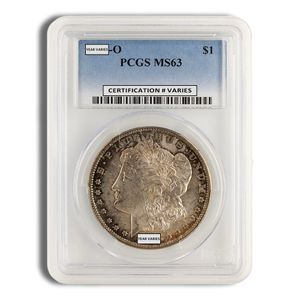
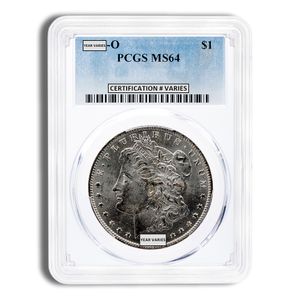
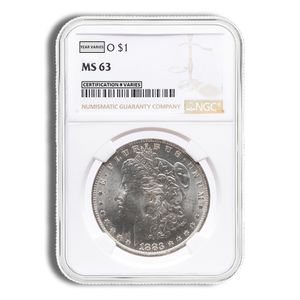
The pieces offered here have been independently graded by PCGS and carry grades of MS60, MS61, or MS62, placing them in the Mint State range. At these grades, coins show no wear on the high points but may display contact marks, weak luster, or blemishes consistent with the lower end of the uncirculated spectrum. We carry these graded examples for buyers who want the authentication and encapsulation of a third-party grading service without paying premiums associated with higher gem grades.
The Morgan do
…The Morgan silver dollar is one of the most widely recognized coins in American numismatic history, and pre-1921 examples struck between 1878 and 1904 represent the original production run of the series. Each coin contains 0.7734 troy ounces of silver at .900 fineness, giving it a substantial metallic presence that matches its historical significance. These coins were produced by the United States Mint at several facilities, including Philadelphia, New Orleans, San Francisco, Carson City, and Denver, which means date and mint mark combinations can vary considerably from one example to the next.
The pieces offered here have been independently graded by PCGS and carry grades of MS60, MS61, or MS62, placing them in the Mint State range. At these grades, coins show no wear on the high points but may display contact marks, weak luster, or blemishes consistent with the lower end of the uncirculated spectrum. We carry these graded examples for buyers who want the authentication and encapsulation of a third-party grading service without paying premiums associated with higher gem grades.
The Morgan dollar takes its name from George T. Morgan, a British-born engraver who joined the United States Mint in 1876 and was assigned the task of redesigning the silver dollar. The coin entered production in 1878 following the passage of the Bland-Allison Act, which required the Treasury to purchase and coin large quantities of silver on behalf of western mining interests. This political context shaped not just the coin's origin but its long production run, which continued through 1904 before being suspended entirely.
During these decades, the Morgan dollar circulated widely across the American West and played a central role in everyday commerce. The various mint facilities each brought their own production characteristics, and coins from Carson City in particular are often regarded with particular collector interest due to their lower mintages and frontier associations. After production ceased in 1904, millions of coins sat in Treasury vaults largely untouched, which accounts for why high-grade survivors exist in far greater numbers than would otherwise be expected for coins of this age.
The series was briefly revived in 1921 before being replaced by the Peace dollar, but the 1878-1904 coins are treated as a distinct group by collectors and the numismatic market. Their depth of history, range of dates and mint marks, and iconic design have made them staples of both type collections and date-specific sets for well over a century.
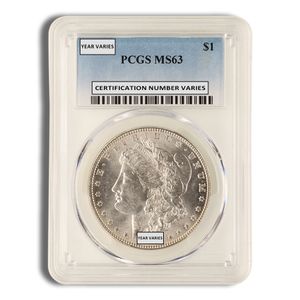
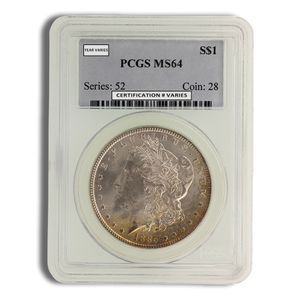
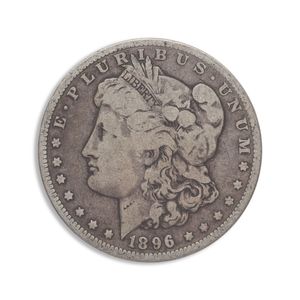
The obverse of the Morgan dollar features a left-facing portrait of Lady Liberty wearing a crown inscribed with the word LIBERTY. The design was modeled after Anna Willess Williams, a Philadelphia schoolteacher whose profile Morgan sketched during a series of sittings. The portrait is surrounded by thirteen stars representing the original colonies, with the date positioned at the bottom.
The reverse depicts a heraldic eagle with outstretched wings clutching arrows and an olive branch, the traditional symbols of war and peace. The eagle is centered beneath a ribbon inscribed E PLURIBUS UNUM, with UNITED STATES OF AMERICA arcing along the top and IN GOD WE TRUST appearing above the eagle. The denomination ONE DOLLAR is struck along the bottom rim. The overall composition is bold and detailed, with fine feather work and lettering that rewards close examination on well-struck examples.
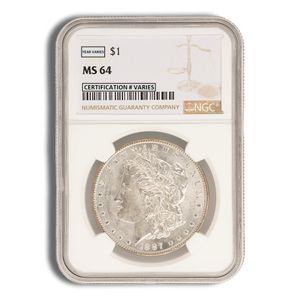
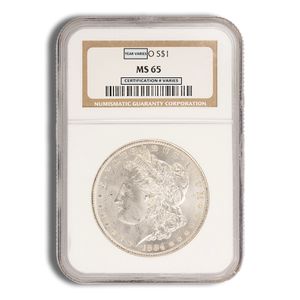
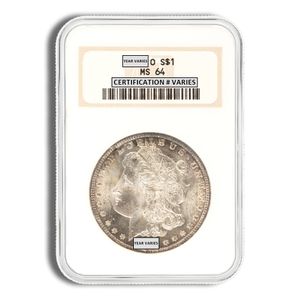
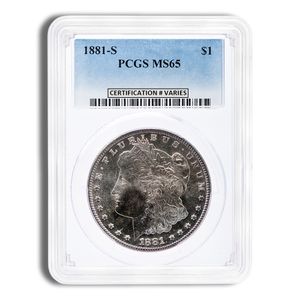
At MS60 through MS62, coins will generally retain full design detail with no wear, though the surfaces may show bag marks, minor abrasions, or slightly subdued luster reflecting typical handling during the Mint bag storage common to this era. The PCGS holder protects the coin from further contact and allows the design to be examined clearly through the clear plastic slab.
Each coin in this listing has been authenticated and graded by the Professional Coin Grading Service, one of the two most recognized third-party grading services in the numismatic industry. PCGS examination includes verification of authenticity, weight, metal composition, and strike characteristics before assigning a grade. Coins are then encapsulated in a tamper-evident, sonically sealed holder that displays the grade, certification number, and coin description.
We are an authorized dealer for PCGS, which means we work directly within their dealer network and handle certified coins according to their standards. The PCGS certification number on each holder can be independently verified through the PCGS registry, giving buyers an additional layer of confidence beyond our own authentication practices. For coins of this age and collectibility, third-party certification removes the uncertainty that accompanies raw examples and provides a standardized basis for pricing and resale.
MS60 through MS62 are the entry-level Mint State grades, meaning these coins show no evidence of wear on any surface but carry characteristics that prevent higher grading. MS60 coins typically display heavy contact marks and weak or uneven luster. MS61 examples show improvement in surface quality with moderate bag marks and somewhat better luster. MS62 coins present fewer and less severe marks with more consistent cartwheel luster across the fields. All three grades represent genuinely uncirculated coins with full design integrity.
Because these are PCGS-graded coins, each example ships in its original PCGS slab. The holder itself provides rigid plastic protection and clear visibility of both sides without requiring any additional handling. Single coins ship in a protective outer sleeve or small box appropriate for a slabbed coin. For buyers purchasing multiple examples, each coin remains individually slabbed, and we package them securely to prevent movement or contact damage during transit.
Pricing on these coins reflects a combination of the current silver spot price and a numismatic premium driven by collector demand, date and mint mark scarcity, third-party certification, and the broader market for early Morgan dollars. Unlike generic silver rounds or bullion bars, where premiums are driven primarily by production costs and dealer margins, graded Morgan dollars carry premiums shaped in part by numismatic market conditions that can differ from movements in spot silver itself.
The PCGS certification adds measurable value over raw coins at similar grades by providing authentication and a standardized condition designation that buyers and sellers can reference without further examination. Within the MS60-MS62 range, premium differences between individual grades are relatively modest compared to the jump from MS62 into gem territory at MS63 and above, where surface quality begins to command significantly higher prices. Our pricing reflects real-time market conditions and is structured to provide straightforward clarity on what you are paying and why.
Pre-1921 Morgan dollars graded by PCGS trade actively in both the numismatic and secondary bullion markets. The combination of a recognizable coin type, a trusted certification service, and underlying silver content gives these coins broad appeal across multiple buyer segments, including type collectors, date-set collectors, silver stackers, and secondary market dealers. That multi-segment demand tends to support more consistent liquidity compared to coins with narrower collector bases.
We operate a two-way market that allows customers to both purchase and sell precious metals through the same platform. Understanding the current bid side of the market before making a purchase is a practical approach to managing the full cost of ownership, and our platform is built around making that information accessible. Graded Morgan dollars at the MS60-MS62 level are commonly priced and traded based on published population data, PCGS price guides, and active wholesale dealer activity, all of which contribute to a reasonably transparent resale environment.
For buyers who want a historically significant American coin with the security of third-party certification, this is one of the most accessible entry points in the certified Morgan dollar market. The MS60-MS62 grade range offers genuine uncirculated coins without the premium escalation associated with gem grades, making it a practical choice for type collectors building a set or buyers who prioritize certification over surface perfection.
The Morgan dollar itself needs little introduction in American numismatics. Its combination of bold design, historical depth, and substantial silver content has sustained collector interest for generations. PCGS encapsulation adds a layer of protection and authentication that raw examples cannot match, and the certification number provides permanent traceability through the PCGS registry. For buyers who want a certified American silver classic without stepping into gem pricing territory, the MS60-MS62 range represents a straightforward and well-supported choice.
We have been building relationships in the precious metals and numismatic market since 2010, and our approach has remained consistent throughout: transparent pricing, genuine authentication, and honest communication about what you are buying. As an authorized PCGS dealer, we handle certified coins with a full understanding of grading standards and market conventions, and every product we carry is verified before it reaches our customers.
Our platform is designed to give buyers real-time pricing information, visible bid and ask spreads, and the context needed to evaluate what a fair price looks like on any given day. We hold an A rating with the Better Business Bureau and maintain active memberships in the American Numismatic Association and the National Coin and Bullion Association. Whether you are purchasing a single certified Morgan dollar or building a broader collection, our focus is on providing a straightforward, trustworthy buying experience backed by responsive support and reliable fulfillment.
Bullion Standard Pro gives members access to live, executable wholesale bid and ask pricing across a broad range of precious metals and numismatic products, including certified coins like these Morgan dollars. Rather than relying on indicative estimates, Pro members see pricing that reflects actual wholesale market conditions in real time, making it easier to evaluate whether current ask prices represent fair value relative to where the market is trading.
The platform also includes proprietary research tools that allow members to track historical premiums, analyze bid and ask spreads over time, and compare products based on liquidity and market activity. For certified coins where premiums above spot are influenced by numismatic demand rather than metal content alone, having access to historical premium data and spread analysis provides a more complete picture of how these coins trade and what market conditions look like at any given point.
We support a wide range of payment methods to accommodate buyers at every stage of the purchasing process. Accepted options include Visa, Mastercard, American Express, Discover, PayPal, bank-connected payments through Plaid, wire transfer, paper check, and cryptocurrency payments through BitPay. Each method is processed through secure channels designed to protect your transaction and personal information from start to finish.
Whether you prefer the speed of a wire transfer, the convenience of a major credit card, or the flexibility of cryptocurrency, the checkout process is designed to be straightforward and transparent with no hidden fees or complicated payment structures. Our goal is to make the purchase as simple and secure as the product decision itself.
Product ID: BST-0021263C17
| Random Year Status | Random Year |
|---|---|
| Precious Metal Type | Silver |
| Bullion Coin Type | Morgan Dollar |
| Format | Coin |
| Country of Origin | United States |
| Brand/Mint | U.S. Mint |
| Mint Mark | Various |
| Purity | 0.9 |
| Weight | 0.7734 oz |
| Thickness (mm) | 2.4 mm |
| Diameter (mm) | 38.1 mm |
| Inner Pack (Quantity) | 20 |
| Grade | MS60-MS62 |
| Grading Service | PCGS |
The Morgan silver dollar is one of the most widely recognized coins in American numismatic history, and pre-1921 examples struck between 1878 and 1904 represent the original production run of the series. Each coin contains 0.7734 troy ounces of silver at .900 fineness, giving it a substantial metallic presence that matches its historical significance. These coins were produced by the United States Mint at several facilities, including Philadelphia, New Orleans, San Francisco, Carson City, and Denver, which means date and mint mark combinations can vary considerably from one example to the next.
The pieces offered here have been independently graded by PCGS and carry grades of MS60, MS61, or MS62, placing them in the Mint State range. At these grades, coins show no wear on the high points but may display contact marks, weak luster, or blemishes consistent with the lower end of the uncirculated spectrum. We carry these graded examples for buyers who want the authentication and encapsulation of a third-party grading service without paying premiums associated with higher gem grades.
The Morgan do
…The Morgan silver dollar is one of the most widely recognized coins in American numismatic history, and pre-1921 examples struck between 1878 and 1904 represent the original production run of the series. Each coin contains 0.7734 troy ounces of silver at .900 fineness, giving it a substantial metallic presence that matches its historical significance. These coins were produced by the United States Mint at several facilities, including Philadelphia, New Orleans, San Francisco, Carson City, and Denver, which means date and mint mark combinations can vary considerably from one example to the next.
The pieces offered here have been independently graded by PCGS and carry grades of MS60, MS61, or MS62, placing them in the Mint State range. At these grades, coins show no wear on the high points but may display contact marks, weak luster, or blemishes consistent with the lower end of the uncirculated spectrum. We carry these graded examples for buyers who want the authentication and encapsulation of a third-party grading service without paying premiums associated with higher gem grades.
The Morgan dollar takes its name from George T. Morgan, a British-born engraver who joined the United States Mint in 1876 and was assigned the task of redesigning the silver dollar. The coin entered production in 1878 following the passage of the Bland-Allison Act, which required the Treasury to purchase and coin large quantities of silver on behalf of western mining interests. This political context shaped not just the coin's origin but its long production run, which continued through 1904 before being suspended entirely.
During these decades, the Morgan dollar circulated widely across the American West and played a central role in everyday commerce. The various mint facilities each brought their own production characteristics, and coins from Carson City in particular are often regarded with particular collector interest due to their lower mintages and frontier associations. After production ceased in 1904, millions of coins sat in Treasury vaults largely untouched, which accounts for why high-grade survivors exist in far greater numbers than would otherwise be expected for coins of this age.
The series was briefly revived in 1921 before being replaced by the Peace dollar, but the 1878-1904 coins are treated as a distinct group by collectors and the numismatic market. Their depth of history, range of dates and mint marks, and iconic design have made them staples of both type collections and date-specific sets for well over a century.
The obverse of the Morgan dollar features a left-facing portrait of Lady Liberty wearing a crown inscribed with the word LIBERTY. The design was modeled after Anna Willess Williams, a Philadelphia schoolteacher whose profile Morgan sketched during a series of sittings. The portrait is surrounded by thirteen stars representing the original colonies, with the date positioned at the bottom.
The reverse depicts a heraldic eagle with outstretched wings clutching arrows and an olive branch, the traditional symbols of war and peace. The eagle is centered beneath a ribbon inscribed E PLURIBUS UNUM, with UNITED STATES OF AMERICA arcing along the top and IN GOD WE TRUST appearing above the eagle. The denomination ONE DOLLAR is struck along the bottom rim. The overall composition is bold and detailed, with fine feather work and lettering that rewards close examination on well-struck examples.
At MS60 through MS62, coins will generally retain full design detail with no wear, though the surfaces may show bag marks, minor abrasions, or slightly subdued luster reflecting typical handling during the Mint bag storage common to this era. The PCGS holder protects the coin from further contact and allows the design to be examined clearly through the clear plastic slab.
Each coin in this listing has been authenticated and graded by the Professional Coin Grading Service, one of the two most recognized third-party grading services in the numismatic industry. PCGS examination includes verification of authenticity, weight, metal composition, and strike characteristics before assigning a grade. Coins are then encapsulated in a tamper-evident, sonically sealed holder that displays the grade, certification number, and coin description.
We are an authorized dealer for PCGS, which means we work directly within their dealer network and handle certified coins according to their standards. The PCGS certification number on each holder can be independently verified through the PCGS registry, giving buyers an additional layer of confidence beyond our own authentication practices. For coins of this age and collectibility, third-party certification removes the uncertainty that accompanies raw examples and provides a standardized basis for pricing and resale.
MS60 through MS62 are the entry-level Mint State grades, meaning these coins show no evidence of wear on any surface but carry characteristics that prevent higher grading. MS60 coins typically display heavy contact marks and weak or uneven luster. MS61 examples show improvement in surface quality with moderate bag marks and somewhat better luster. MS62 coins present fewer and less severe marks with more consistent cartwheel luster across the fields. All three grades represent genuinely uncirculated coins with full design integrity.
Because these are PCGS-graded coins, each example ships in its original PCGS slab. The holder itself provides rigid plastic protection and clear visibility of both sides without requiring any additional handling. Single coins ship in a protective outer sleeve or small box appropriate for a slabbed coin. For buyers purchasing multiple examples, each coin remains individually slabbed, and we package them securely to prevent movement or contact damage during transit.
Pricing on these coins reflects a combination of the current silver spot price and a numismatic premium driven by collector demand, date and mint mark scarcity, third-party certification, and the broader market for early Morgan dollars. Unlike generic silver rounds or bullion bars, where premiums are driven primarily by production costs and dealer margins, graded Morgan dollars carry premiums shaped in part by numismatic market conditions that can differ from movements in spot silver itself.
The PCGS certification adds measurable value over raw coins at similar grades by providing authentication and a standardized condition designation that buyers and sellers can reference without further examination. Within the MS60-MS62 range, premium differences between individual grades are relatively modest compared to the jump from MS62 into gem territory at MS63 and above, where surface quality begins to command significantly higher prices. Our pricing reflects real-time market conditions and is structured to provide straightforward clarity on what you are paying and why.
Pre-1921 Morgan dollars graded by PCGS trade actively in both the numismatic and secondary bullion markets. The combination of a recognizable coin type, a trusted certification service, and underlying silver content gives these coins broad appeal across multiple buyer segments, including type collectors, date-set collectors, silver stackers, and secondary market dealers. That multi-segment demand tends to support more consistent liquidity compared to coins with narrower collector bases.
We operate a two-way market that allows customers to both purchase and sell precious metals through the same platform. Understanding the current bid side of the market before making a purchase is a practical approach to managing the full cost of ownership, and our platform is built around making that information accessible. Graded Morgan dollars at the MS60-MS62 level are commonly priced and traded based on published population data, PCGS price guides, and active wholesale dealer activity, all of which contribute to a reasonably transparent resale environment.
For buyers who want a historically significant American coin with the security of third-party certification, this is one of the most accessible entry points in the certified Morgan dollar market. The MS60-MS62 grade range offers genuine uncirculated coins without the premium escalation associated with gem grades, making it a practical choice for type collectors building a set or buyers who prioritize certification over surface perfection.
The Morgan dollar itself needs little introduction in American numismatics. Its combination of bold design, historical depth, and substantial silver content has sustained collector interest for generations. PCGS encapsulation adds a layer of protection and authentication that raw examples cannot match, and the certification number provides permanent traceability through the PCGS registry. For buyers who want a certified American silver classic without stepping into gem pricing territory, the MS60-MS62 range represents a straightforward and well-supported choice.
We have been building relationships in the precious metals and numismatic market since 2010, and our approach has remained consistent throughout: transparent pricing, genuine authentication, and honest communication about what you are buying. As an authorized PCGS dealer, we handle certified coins with a full understanding of grading standards and market conventions, and every product we carry is verified before it reaches our customers.
Our platform is designed to give buyers real-time pricing information, visible bid and ask spreads, and the context needed to evaluate what a fair price looks like on any given day. We hold an A rating with the Better Business Bureau and maintain active memberships in the American Numismatic Association and the National Coin and Bullion Association. Whether you are purchasing a single certified Morgan dollar or building a broader collection, our focus is on providing a straightforward, trustworthy buying experience backed by responsive support and reliable fulfillment.
Bullion Standard Pro gives members access to live, executable wholesale bid and ask pricing across a broad range of precious metals and numismatic products, including certified coins like these Morgan dollars. Rather than relying on indicative estimates, Pro members see pricing that reflects actual wholesale market conditions in real time, making it easier to evaluate whether current ask prices represent fair value relative to where the market is trading.
The platform also includes proprietary research tools that allow members to track historical premiums, analyze bid and ask spreads over time, and compare products based on liquidity and market activity. For certified coins where premiums above spot are influenced by numismatic demand rather than metal content alone, having access to historical premium data and spread analysis provides a more complete picture of how these coins trade and what market conditions look like at any given point.
We support a wide range of payment methods to accommodate buyers at every stage of the purchasing process. Accepted options include Visa, Mastercard, American Express, Discover, PayPal, bank-connected payments through Plaid, wire transfer, paper check, and cryptocurrency payments through BitPay. Each method is processed through secure channels designed to protect your transaction and personal information from start to finish.
Whether you prefer the speed of a wire transfer, the convenience of a major credit card, or the flexibility of cryptocurrency, the checkout process is designed to be straightforward and transparent with no hidden fees or complicated payment structures. Our goal is to make the purchase as simple and secure as the product decision itself.