Buy World Gold Coins Online
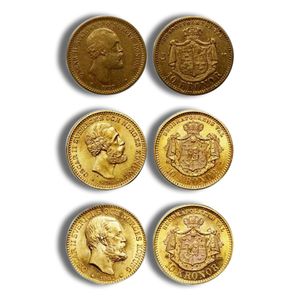
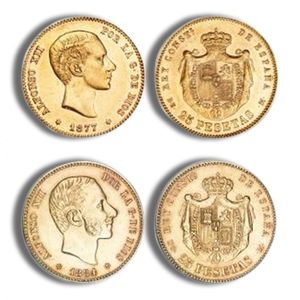
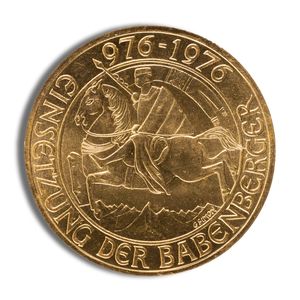
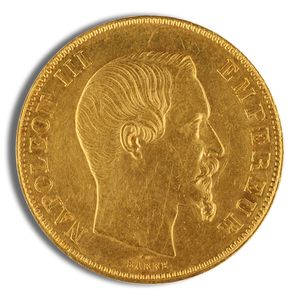
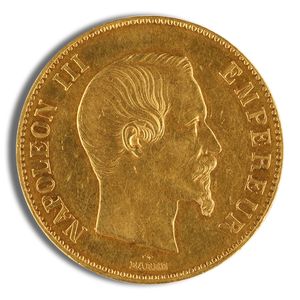
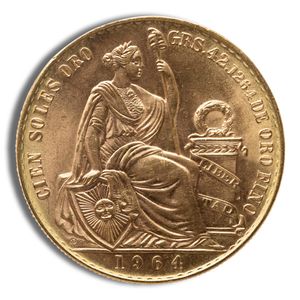
Our catalog of world gold coins spans centuries of minting history and dozens of sovereign nations, offering collectors and buyers an unusually broad selection under one roof. You'll find circulated classics from the Monnaie de Paris alongside brilliant uncirculated restrikes from the Austrian Mint, modern issues from the South African Mint, and everything from fractional pieces weighing under a tenth of an ounce to multi-ounce coins like the 1852 France Gold 100 Francs Napoleon III and the Peru 100 Soles. Whether you're focused on a specific country, a particular denomination, or a weight range that fits your purchasing goals, the depth of options here reflects a genuine commitment to variety.
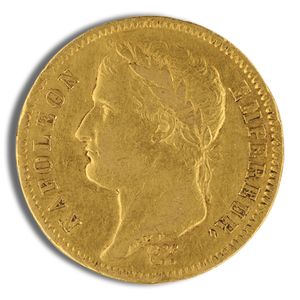
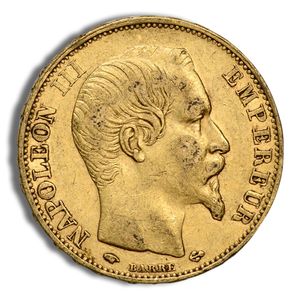
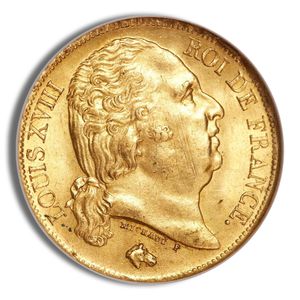
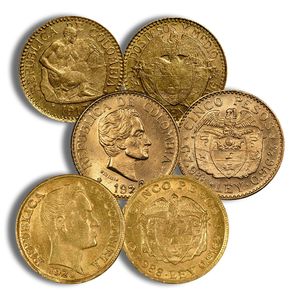
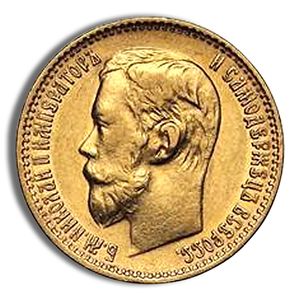
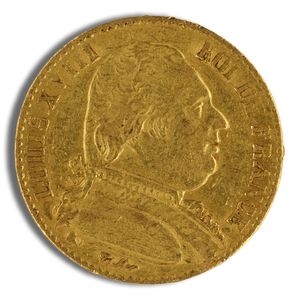
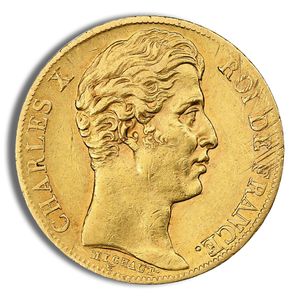
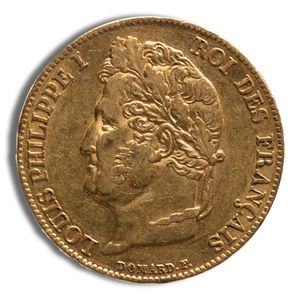
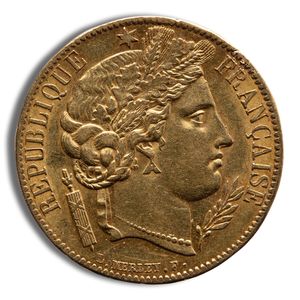
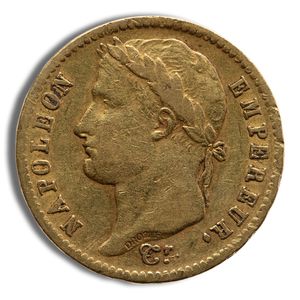
Products range from storied European issues, including French 20 Franc pieces spanning the reigns of Napoleon I through the Third Republic, to Latin American coins from Buenos Aires, Lima, and Bogota. Austrian Coronas, Swiss Helvetia 20 Francs, German Imperial Marks, Russian Roubles, and more recent issues like the 2022 South Africa Big 5 Elephant coin all appear in the same marketplace. This breadth reflects what Bullion Standard has built since 2010: a transparent, pricing-forward platform that treats every buyer as an informed participant rather than a captive customer.
Transparent pricing, real-time market data, and a two-way market structure that supports both buying and selling make this more than a simple storefront. Each listing reflects current wholesale market conditions and includes the bid/ask spread so you can evaluate the full cost of ownership before committing to a purchase.
What Are World Gold Coins?
World gold coins are government-issued or officially authorized gold coins produced outside the United States by sovereign mints or national minting authorities. They differ from bullion rounds, which are privately minted, and from American issues like the Gold Eagle or Gold Buffalo. World gold coins carry legal tender status in their country of origin, though most circulate in the numismatic and bullion markets rather than as everyday currency. Their gold content, purity, and mint origin are the primary factors that drive their market value.
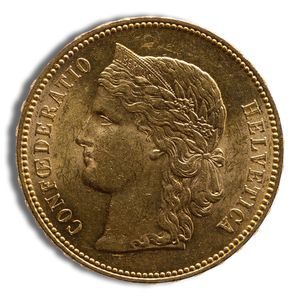
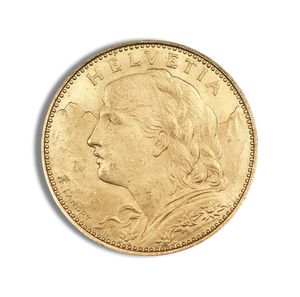
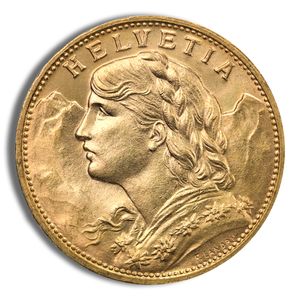
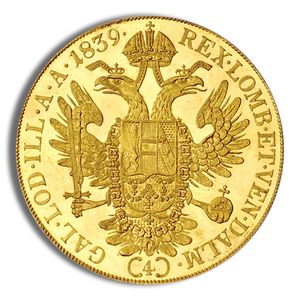
This segment of the gold coin market is exceptionally diverse in terms of denomination, purity, and design heritage. A Swiss 20 Franc Helvetia at .900 fine gold occupies a different niche than a 1915 Austrian 4 Ducat restrike at .9867 fine, even though both are world gold coins. Some products in this space are prized primarily for their melt value relative to spot gold, while others carry numismatic premiums tied to rarity, condition, or historical significance. Knowing which category a coin falls into is essential for making a well-informed purchase.
Many buyers are drawn to world gold coins because they offer access to historical coinage with recognizable sovereign backing, often at premiums that compare favorably to newer government-issued bullion programs. Others focus specifically on pre-1933 European issues as a way to hold fractional gold with lower per-unit costs than modern fractional coins typically carry.
History and Background
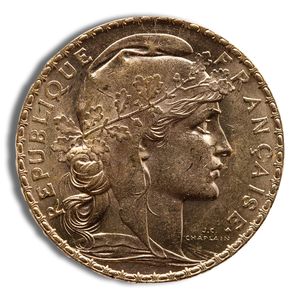
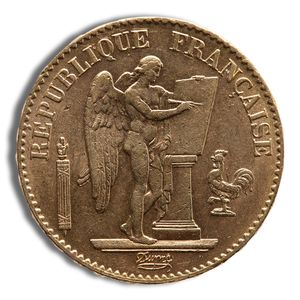
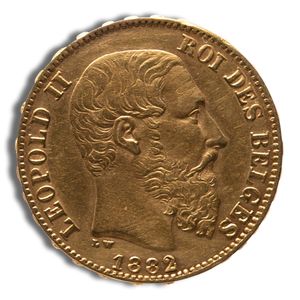
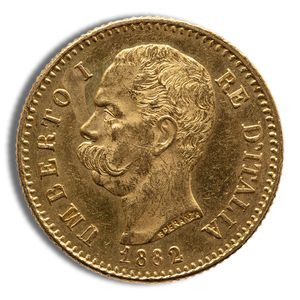
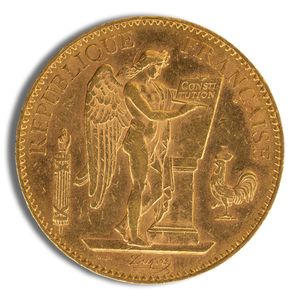
The modern landscape of world gold coinage traces its roots to the Latin Monetary Union, a 19th-century monetary agreement that standardized gold coin specifications across France, Belgium, Switzerland, Italy, and several other nations. The 20 Franc denomination, struck at .900 fine gold with approximately 0.1867 troy ounces of gold, became the standard unit of this system and gave rise to the French Rooster, Napoleon, Lucky Angel, and Ceres series, along with parallel issues from Switzerland, Belgium, Tunisia, and Italy that appear throughout our catalog. This period of standardization created a family of coins that remain among the most recognizable and widely traded world gold coins in today's market.
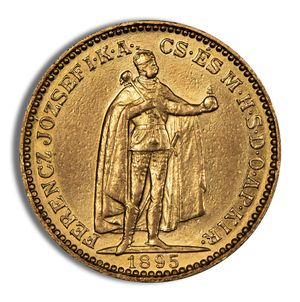
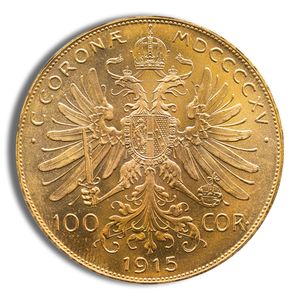
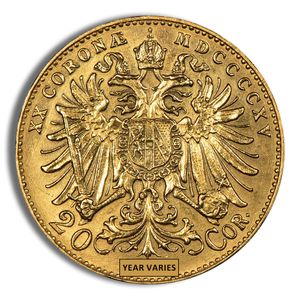
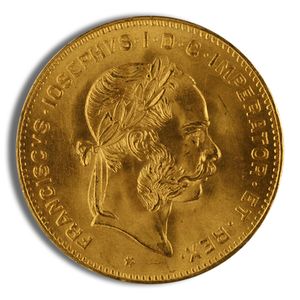
Austria contributed a parallel tradition through its Corona and Ducat coinage, with the 1915-dated 100 Corona and 1 Ducat restrikes eventually becoming official restrike programs produced by the Austrian Mint well into the 20th century. These restrikes bear the original 1915 date regardless of actual production year and were specifically designed for the bullion market, making them one of the earliest examples of a sovereign mint producing gold coins explicitly for non-circulating investment purposes. Germany's Imperial Mark series, Russia's Tsarist Roubles, and Hungary's Korona coins followed their own distinct paths before major political and monetary shifts brought most of these programs to an end following World War I and II.
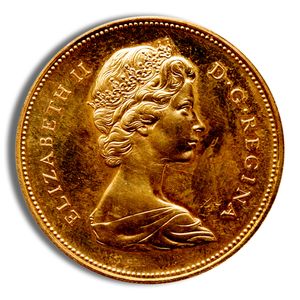
Post-war, several Latin American mints including those in Lima, Bogota, and Buenos Aires continued producing gold coinage into the mid-20th century, while Canada, Russia, and others launched dedicated bullion programs. The 1967 Canadian $20 Confederation gold coin marked a significant moment in Canadian numismatic history, commemorating the nation's centennial with a coin that has since become a recognized collectible. This long arc of sovereign gold coinage, spanning from Napoleonic France to post-war Canada and into the modern era, forms the historical backbone of the products available here.
Purity, Weight, and Specifications
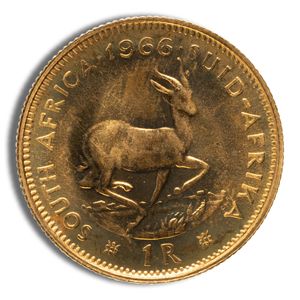
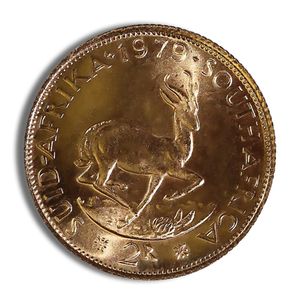
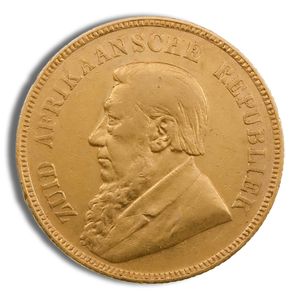
The vast majority of world gold coins in our catalog are struck at .900 fine gold, meaning 90% pure gold with the remaining 10% typically composed of copper or silver alloy. This fineness was the standard for the Latin Monetary Union and was adopted widely across Europe and Latin America through the 19th and early 20th centuries. Notable exceptions include Austrian Ducats at .9867 fine, South African Rand coins and Saudi Guinea pieces at .9167 fine, and select modern issues like the 2022 South Africa Big 5 Elephant and the 2021 Solomon Islands 9/11 Anniversary coin at .9999 fine.
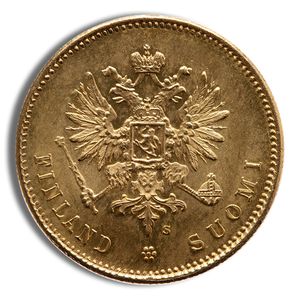
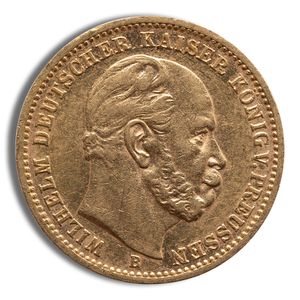
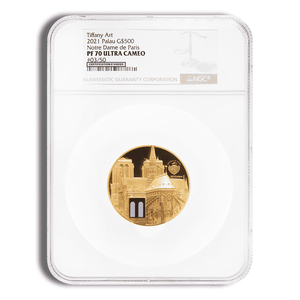
Weights vary significantly across this catalog, from the compact Germany 5 Mark at 0.0576 troy ounces to the Peru 100 Soles at 1.3544 troy ounces and the 2021 5 oz Palau Tiffany Art Notre Dame at 5 troy ounces. The 20 Franc standard common to French, Swiss, Belgian, Finnish, and Italian issues contains 0.1867 troy ounces of gold, making them a widely recognized fractional denomination. All gold weights are expressed in troy ounces, with one troy ounce equaling 31.1035 grams, a standard measurement used universally across the precious metals industry.
Mint marks, edge lettering, and die characteristics vary by issuing authority and year. For restrike issues, such as the 1915 Austrian Corona series, the mint mark and date on the coin reflect the original coinage design rather than the year of production. Buyers should treat stated purity figures and gold weights as the primary specifications, alongside the issuing mint and coin program, when evaluating any world gold coin purchase.
Available Brands, Mints, and Product Variations
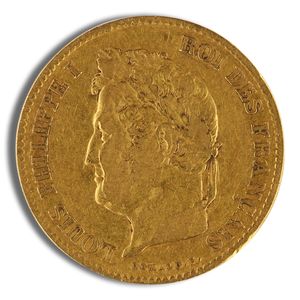
The Monnaie de Paris, France's national mint and one of the oldest continuously operating mints in the world, produced many of the French coins available here, including the Napoleon I 40 Franc pieces dating from 1806, the Second Republic Ceres 20 Francs, Napoleon III 100 Franc coins, and the Angel and Rooster series that defined French gold coinage through the Belle Epoque. These coins were struck across several French branch mints, which is why listings often note "Various" mint locations. The Paris mintmark (A) is the most common, though Strasbourg, Bordeaux, and Lyon marks appear as well.
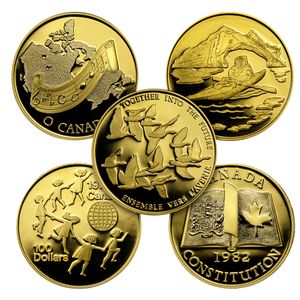
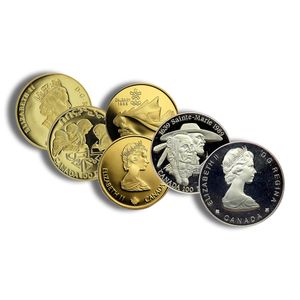
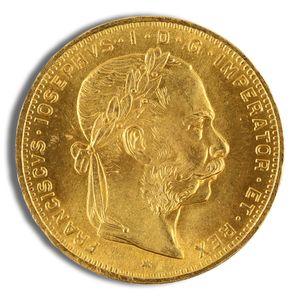
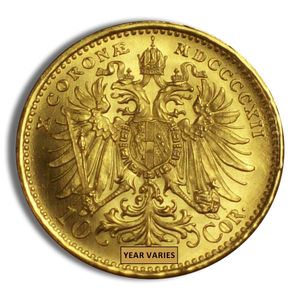
The Austrian Mint in Vienna is responsible for some of the most widely traded world gold coins in our catalog, including the 1915 100 Corona restrike, the 10 and 20 Corona circulation-era coins, the 1 and 4 Ducat restrikes, and the 8 Florin/20 Franc pieces. The Swiss Mint produced the Helvetica and Helvetia 20 Franc series, which are among the most recognized pre-1933 European gold coins globally. The Kremnica Mint in Slovakia struck Hungarian Korona coins, while the Royal Canadian Mint issued the 1967 Confederation coin and the later 22K and 14K $100 series. South American issues come from the Buenos Aires Mint, the Lima Mint (Casa Nacional de Moneda), and the Columbian Mint in Bogota.
Several listings are offered as "random year" products, meaning the specific date will vary based on current inventory. This is standard practice for circulated and semi-numismatic world gold coins, where a range of dates carry equivalent melt value and similar collector familiarity. Condition grades range from XF (Extremely Fine) and AU (About Uncirculated) for circulated historic coins to BU (Brilliant Uncirculated) for restrikes and modern issues. The 2021 5 oz Palau Tiffany Art coin is certified PF70 by NGC, representing the highest available designation for proof coinage.
Pricing, Premiums, and Market Factors
Every world gold coin is priced relative to the current spot price of gold, with a premium layered on top that reflects factors including the coin's gold content, mint of origin, condition, rarity, collector demand, and current market liquidity. Pre-1933 European coins at .900 fine gold generally carry modest premiums over melt value when in circulated grades, making them an accessible entry point for buyers focused primarily on gold content. Restrike coins like the 1915 Austrian 100 Corona or 1 Ducat tend to carry similarly efficient premiums because they were produced in large quantities specifically for the bullion market.
Premiums widen for coins with numismatic significance, those graded and certified by PCGS or NGC, coins from shorter-issue programs with limited surviving examples, or modern limited-edition pieces like the 2021 Palau Tiffany Art. Condition matters considerably in this space: an AU or BU French 20 Franc will typically command a higher premium than the same coin in VF or lower. Packaging also plays a role, as coins accompanied by original government packaging, certificates of authenticity, or third-party certification holders generally trade more efficiently than loose coins without documentation.
Bullion Standard displays the bid/ask spread on each product page, giving buyers direct visibility into the gap between the purchase price and the current buyback price. This transparency reflects our broader marketplace philosophy: understanding both sides of a transaction, not just the acquisition cost, leads to more informed purchasing decisions. Premium levels and spreads for individual world gold coins shift as wholesale market conditions evolve, and our pricing reflects those movements in real time rather than relying on fixed retail markups.
Condition, Packaging, and What to Expect
Many world gold coins in our catalog are historic circulated pieces, and buyers should approach them with corresponding expectations. XF (Extremely Fine) coins will show light wear on high points but retain sharp detail and most of their original surface. AU (About Uncirculated) coins display only the faintest traces of wear and frequently retain significant original luster. These grades are the standard for pre-1933 European and Latin American gold coinage trading in the bullion-adjacent market and represent normal quality for the products described.
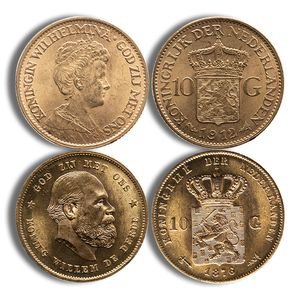
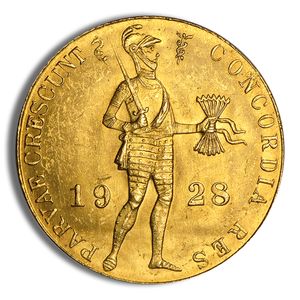
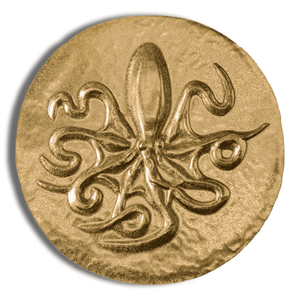
BU (Brilliant Uncirculated) coins, including the 1915 Austrian Ducat restrikes, the 1967 Canadian Confederation coin, and the Netherlands 10 Guilder, show no wear and are typically presented with full mint luster. Restrike issues are often sold in individual protective holders, plastic sleeves, or original government packaging depending on their origin and production era. Modern issues like the 2022 South Africa Big 5 Elephant are sealed in protective capsules by the issuing mint. The 2022 Cook Islands Octopus coin ships with box and certificate of authenticity as noted in the listing.
Random year listings mean Bullion Standard will fulfill orders from available inventory, and the specific date received may differ from example images shown. Cosmetic variations, including minor bag marks on BU coins, small contact marks, or toning consistent with age on historic pieces, are entirely normal and do not affect gold content or weight. If a specific date or a coin free of contact marks is a priority, that should be factored into your selection process before purchase.
Authenticity and Verification
Every world gold coin sold through Bullion Standard is verified for authenticity, gold content, and purity before it reaches a customer. Our sourcing network includes reputable wholesale distributors, established numismatic dealers, and authorized mint channels, and our purchasing team applies standard industry verification practices including weight checks, dimensional measurement, and visual authentication against known genuine specimens. Products that cannot be confirmed as authentic through our internal process are not listed for sale.
Third-party certification from NGC (Numismatic Guaranty Company) or PCGS (Professional Coin Grading Service) provides an additional layer of independent authentication for graded coins in our catalog. Bullion Standard is an authorized dealer for both services. Certified coins are encapsulated in tamper-evident holders with the certification number, grade, and coin details visible, allowing buyers to verify the coin's details directly through the grading service's online registry. The 2021 Palau Tiffany Art coin, graded NGC PF70, is an example of a certified product in our world gold coin catalog.
For uncertified coins, including the large majority of pre-1933 circulated European issues, authentication relies on the combined expertise of our sourcing team and the established market knowledge developed over more than a decade of operation. Buyers with concerns about specific coins are encouraged to contact our customer service team directly. We are also happy to discuss authentication resources such as professional coin grading service submissions for buyers who want independent verification of their purchase.
Liquidity and Resale Considerations
World gold coins vary meaningfully in their liquidity depending on how widely recognized they are within the global precious metals market. Pre-1933 European coins in the Latin Monetary Union standard, particularly French 20 Francs in their various series, Swiss Helvetia 20 Francs, and Austrian Corona restrikes, are among the most consistently traded world gold coins in the wholesale market. These coins trade actively across dealer networks in the United States and internationally, which generally supports tighter bid/ask spreads and more consistent buyback availability.
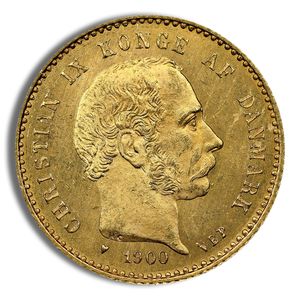
Less widely recognized coins, including some of the Latin American peso issues, older Russian Roubles, or national coins from smaller programs like the Danish Kroner or Finnish Markkaa, may trade with wider spreads due to smaller wholesale market depth. This doesn't necessarily diminish their gold value, but it does mean that resale may require more effort to find a counterparty offering competitive pricing. Coin condition and packaging also influence resale, as BU or certified pieces typically attract more buyer interest than heavily worn examples in the secondary market.
Understanding liquidity before making a purchase is part of the informed approach Bullion Standard encourages. The bid/ask spread shown on each product page reflects real-time wholesale market conditions and gives buyers a practical sense of the resale environment at the time of purchase. Spreads narrow and widen as market conditions, dealer inventory, and product-specific demand shift over time.
Storage and Security
World gold coins in circulated grades are typically loose or in basic protective flips, making proper storage especially important for preserving their condition and protecting their value. Individual coin holders, airtight capsules, and archival-quality flips are the most common options for storing single coins and are available from most numismatic supply retailers. Avoid storing gold coins in PVC-based plastic holders, which can chemically react with coin surfaces over time and cause discoloration or surface damage.
For larger collections or higher-value pieces, a quality home safe rated for both fire and theft resistance provides meaningful protection. Home safes should be bolted to a structural surface and kept in a discreet location. Bank safe deposit boxes offer an alternative for buyers who prefer off-site storage, though access is limited to bank hours and boxes are not FDIC-insured. Segregated vault storage through a reputable third-party provider is worth considering for larger holdings and offers allocated, insured storage with documented inventory.
Certified coins in NGC or PCGS slabs are already protected by their encapsulation and should be handled by the edges of the holder rather than the plastic face to avoid scratching. For bulk lots of circulated world gold coins, original mint tubes or hard plastic coin trays help organize and protect groups of the same denomination. Climate control matters more for longer storage periods; gold itself is chemically stable, but extreme humidity can affect packaging and coin holders over time.
Selling and Buyback Options
Bullion Standard operates a two-way market, which means we purchase world gold coins from customers as well as sell them. Our buyback pricing is based on current wholesale market conditions, the coin's gold content, its condition, mint of origin, and product-specific liquidity within the wholesale market at the time of sale. Widely recognized coins with established wholesale demand, such as French 20 Francs, Austrian Ducats, or Swiss Helvetia pieces, generally receive the most competitive buyback pricing because they can be readily redeployed into the market.
To initiate a sale, customers can contact our purchasing team directly for a current quote. Pricing reflects real-time spot gold values and the bid side of the wholesale market for the specific product, rather than a fixed flat rate applied across all products. Coins that are certified by NGC or PCGS, in original packaging, or accompanied by documentation typically attract the most straightforward buyback process. Heavily worn coins or those with significant damage may be evaluated strictly on melt value rather than as collectible or semi-numismatic pieces.
Because buyback pricing is tied to current market conditions, the price quoted on any given day will differ from quotes received at a later date. Bullion Standard Pro members have direct access to live executable wholesale bid pricing across our product range, which provides real-time visibility into current liquidation values without needing to call for a manual quote. This is one of the practical advantages of the Pro membership structure for buyers who hold or trade world gold coins regularly.
Why Buy World Gold Coins?
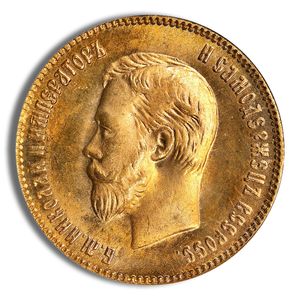
World gold coins offer something that modern bullion coins and bars generally do not: a tangible connection to the monetary and cultural history of the countries that issued them. A French 20 Franc Lucky Angel struck during the Third Republic, an Austrian 4 Ducat restrike of the Franz Joseph era, or a Russian 10 Roubles Nicholas II coin carries both a gold content and a historical identity that purely utilitarian bullion products don't replicate. For buyers who find that context meaningful, world gold coins occupy a distinctive place in a broader holdings strategy.
From a practical standpoint, many circulated world gold coins offer relatively efficient premiums over spot gold compared to modern government bullion programs, particularly in fractional weight ranges. A French or Swiss 20 Franc at 0.1867 troy ounces is often more cost-effective than a modern 1/5 oz bullion coin, and the coins' widespread recognition in the dealer market supports reasonable resale options. The range of available weights, from sub-0.1 oz pieces like the Germany 5 Mark to larger coins like the Peru 100 Soles or the 1852 France 100 Francs Napoleon III, provides meaningful flexibility for buyers at different price points.
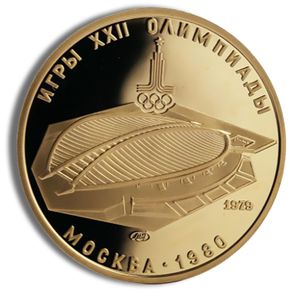
Collector interest adds another dimension. Some buyers focus on building date sets of a particular series, such as completing the range of French Napoleon 20 Franc dates or accumulating examples across different Soviet-era Russian designs. Others focus purely on gold weight and premium efficiency without concern for date or minor design variation. Our catalog supports both approaches, with listings structured to give buyers the information needed to make those distinctions clearly.
Why Buy from Bullion Standard?
Bullion Standard has been operating since 2010 and maintains an A rating with the Better Business Bureau alongside active memberships in the American Numismatic Association and the National Coin and Bullion Association. As an authorized dealer for both PCGS and NGC, we're positioned to source, authenticate, and service graded coin purchases with a level of institutional credibility that distinguishes us from less established dealers. Every product is verified for authenticity and specification accuracy before it reaches a customer.
Our pricing structure is built around transparency rather than complexity. Each product page displays the bid/ask spread in real time, giving buyers a clear picture of both the purchase price and the current buyback value. This reflects our broader philosophy: treating buyers as informed market participants who deserve access to the same pricing clarity that professional dealers take for granted. We don't rely on obscure pricing formulas or high-pressure sales tactics, and our customer service team is accessible and knowledgeable on product-specific questions.
Payment options include Visa, Mastercard, American Express, Discover, PayPal, bank-connected payments through Plaid, wire transfer, paper check, and cryptocurrency through BitPay. Fulfillment is handled with appropriate security and insurance, and purchases are packaged to arrive in the condition described. Our two-way market model means you're buying from a dealer that already has infrastructure in place for when you decide to sell, rather than having to seek out a new counterparty at that point in time.
Get Near-Spot Pricing with Bullion Standard Pro
Bullion Standard Pro is designed for buyers who prioritize pricing efficiency and want direct access to live wholesale market pricing across the precious metals market, including world gold coins. Rather than transacting at traditional retail price levels, Pro members access executable wholesale bid and ask pricing that reflects real-time supply and demand within the wholesale market. No additional dealer markups or fixed dealer spreads are applied on top of that pricing, which means premiums and spreads move naturally with market conditions rather than being held static by a retail pricing structure.
For world gold coins specifically, where premiums and liquidity can vary considerably from one series to another, having access to live wholesale pricing provides meaningful context. A member comparing the spread on a French 20 Franc Rooster against a Swiss Helvetia 20 Franc, or evaluating a Hungarian Korona against an Austrian 8 Florin, can do so using objective, current pricing data rather than estimates. Portfolio valuation within Pro is calculated using live executable wholesale bid prices, which provides a more realistic picture of current liquidation value than retail-based estimates typically allow.
Pro membership also unlocks access to Bullion Standard's broader suite of proprietary analytics, including historical premium analysis, premium percentile rankings, spread analysis, liquidity metrics, and wholesale market intelligence tools. For buyers who hold world gold coins as part of a larger precious metals portfolio, these tools make it easier to evaluate individual products in the context of the broader market and to identify changes in pricing, liquidity, and market conditions as they develop. The platform is built to reduce the information asymmetry that has traditionally disadvantaged buyers relative to professional dealers in the physical gold market.

 (833) 278-4653