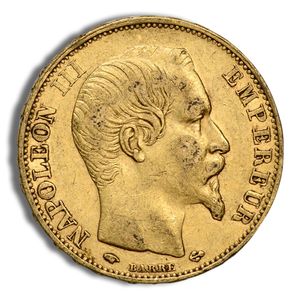
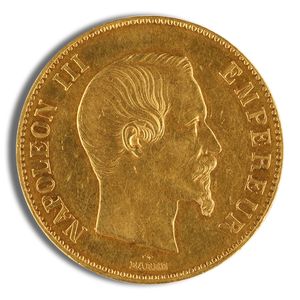
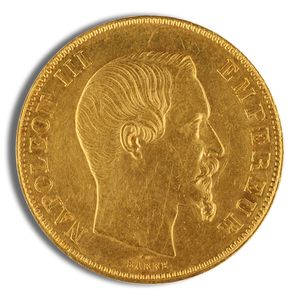
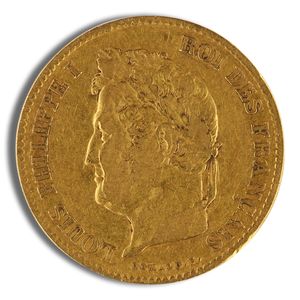
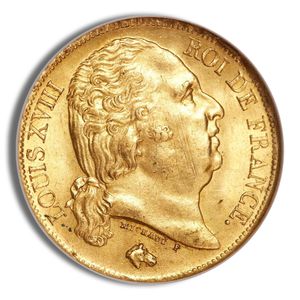
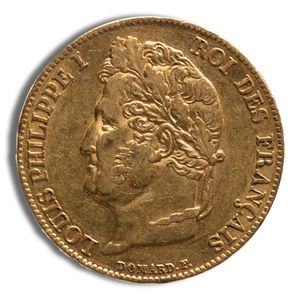
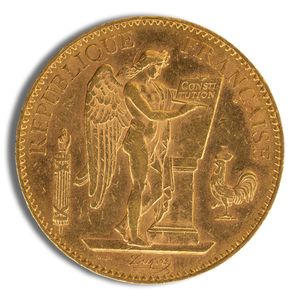
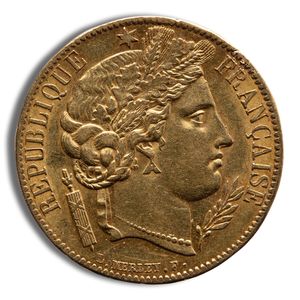
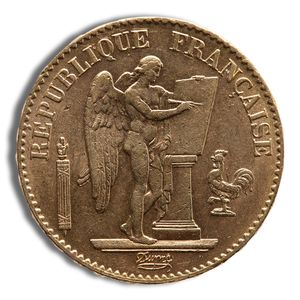
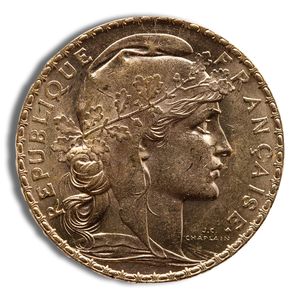
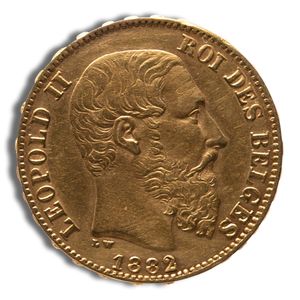
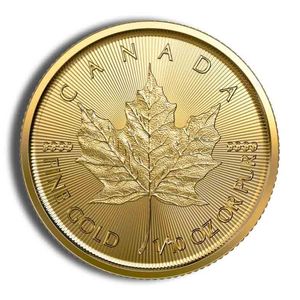
The France Gold 40 Francs struck during the Napoleonic era stands as one of the most historically significant European gold coins of the nineteenth century. Struck in .900 fine gold and weighing 0.3734 troy ounces, this coin was issued under the authority of the Monnaie de Paris across multiple mint facilities. It circulated as legal tender within the French Empire and served as a flagship denomination within France's decimal coinage system.
We carry examples graded Extremely Fine, a circulated grade that reflects a coin with sharp detail retention, light to moderate wear on the high points, and strong overall eye appeal. For a coin of this age and historical weight, XF represents a highly presentable example with clear design definition and genuine numismatic character.
The 40 Franc gold coin was introduced as part of the Napoleonic monetary reform that gave rise to the franc germinal system in 1803. This standardized coinage established fixed gold and silver ratios and brought consistency to French currency after the monetary disruption of the Revolutionary period. The 40 Franc denomination was the largest
…The France Gold 40 Francs struck during the Napoleonic era stands as one of the most historically significant European gold coins of the nineteenth century. Struck in .900 fine gold and weighing 0.3734 troy ounces, this coin was issued under the authority of the Monnaie de Paris across multiple mint facilities. It circulated as legal tender within the French Empire and served as a flagship denomination within France's decimal coinage system.
We carry examples graded Extremely Fine, a circulated grade that reflects a coin with sharp detail retention, light to moderate wear on the high points, and strong overall eye appeal. For a coin of this age and historical weight, XF represents a highly presentable example with clear design definition and genuine numismatic character.
The 40 Franc gold coin was introduced as part of the Napoleonic monetary reform that gave rise to the franc germinal system in 1803. This standardized coinage established fixed gold and silver ratios and brought consistency to French currency after the monetary disruption of the Revolutionary period. The 40 Franc denomination was the largest gold coin in regular production and was designed to facilitate large commercial transactions within the Empire.
Napoleon Bonaparte's portrait appeared on coinage beginning in 1802, first as First Consul and later as Emperor following the proclamation of the Empire in 1804. The coins struck between 1806 and 1813 reflect the height of Napoleonic power, with portrait styles evolving across this period to reflect changing conventions in imperial representation. Production took place at multiple French mints, each identified by a mint mark, with Paris serving as the primary facility under the direction of the Monnaie de Paris.
The Monnaie de Paris, founded in 864 AD, is one of the oldest continuously operating mints in the world. Its role in producing Napoleonic coinage placed it at the center of an imperial monetary system that influenced coinage standards across occupied Europe. The coins produced during this era remain among the most actively collected French gold issues in the numismatic market.
The obverse of the Napoleon I 40 Francs features a portrait of Napoleon Bonaparte facing right, typically laureate or bare-headed depending on the year of issue. The portrait is accompanied by the inscription naming Napoleon as Emperor, rendered in the formal Latin style consistent with imperial coinage of the period. The engraving reflects the neoclassical aesthetic favored by the Napoleonic court, with a strong, authoritative likeness that varied subtly across die engravers throughout the production run.
The reverse displays the French imperial eagle flanked by the denomination and the date of issue, with additional inscriptions identifying the issuing authority. The composition is balanced and formal, drawing from both Roman imperial coin traditions and the conventions of the French Ancien Régime. The mint mark and privy marks appear on the reverse and provide attribution to the specific striking facility, which adds another layer of detail for collectors evaluating individual examples.
At 0.3734 troy ounces, the Napoleon I 40 Francs occupies a fractional position relative to a full troy ounce, making it a more accessible entry point in terms of per-unit cost without sacrificing the historical and numismatic depth that defines this series. The denomination was the largest in the Napoleonic gold series, but it still falls well below one ounce, which positions it within reach of collectors and buyers who prefer fractional gold with genuine historical provenance.
The compact size also makes it straightforward to store and handle alongside other fractional gold pieces, and its standardized weight and purity have been well established in the numismatic market for over two centuries. Buyers looking to add pre-decimal European gold to a collection will find the 40 Francs to be a practical and historically substantive choice at this size.
Genuine Napoleon I 40 Franc gold coins carry a consistent specification of .900 fine gold and 0.3734 troy ounces, and these parameters have been extensively documented across the numismatic reference literature. The combination of weight, diameter, and alloy composition provides a reliable baseline for authentication, and reputable examples can be verified against established standards for Napoleonic coinage. As authorized dealers for both PCGS and NGC, we are equipped to facilitate third-party grading and certification for collectors who prefer that level of documentation.
We verify the authenticity, weight, and purity of every product before it reaches a customer. For a coin of this age and historical profile, provenance and physical consistency matter, and we take that responsibility seriously. Examples available through us reflect the XF grade as described, with the understanding that individual pieces will vary slightly in strike quality and surface characteristics given the multiple mint sources involved in production across this date range.
XF, or Extremely Fine, describes a circulated coin that retains the majority of its original design detail with only light to moderate wear on the highest relief areas. On the Napoleon I 40 Francs, this typically means the portrait remains sharp with clear facial features, the legends are fully legible, and the reverse design elements are well preserved. Some friction may be visible on the cheekbone, hair, and eagle's feathers, but the overall impression remains strong and collector-appropriate.
Individual coins ship in a protective plastic flip to prevent surface contact during transit. Because this is a numismatic product with individual grade and condition characteristics rather than a uniform bullion item, packaging is handled on a per-piece basis. If you are acquiring multiple examples, each will be individually protected, and we will communicate packaging details at the time of fulfillment based on quantity ordered.
The Napoleon I 40 Francs is priced based on the current spot price of gold, adjusted for the coin's .900 fine gold content and 0.3734-ounce weight, with a premium added to reflect numismatic demand, historical significance, age, and condition. XF examples command a more meaningful premium over melt value than lower-grade circulated examples, reflecting the added collector interest in coins that retain strong visual and structural integrity.
Premiums for Napoleonic gold tend to be more stable than those on modern bullion coins because demand is driven by both the metal content and the numismatic category, rather than spot price momentum alone. Scarcity, date and mint mark combinations, and the condition of available market supply all influence where individual examples price relative to melt. Our pricing reflects current gold market conditions in real time, and the bid/ask spread displayed on our product page gives buyers a transparent view of the full transaction picture.
Napoleonic gold coins occupy a well-established segment of the numismatic and bullion market, recognized by dealers, auction houses, and collectors across Europe and the United States. The standardized gold content and the historical profile of the series contribute to consistent demand in the secondary market, and XF examples tend to attract both metal-focused buyers and condition-sensitive collectors. This dual demand base supports liquidity in a way that purely numismatic issues sometimes do not.
We operate a two-way market where customers can both purchase and sell precious metals within the same platform. When you are ready to sell, you have access to our competitive buyback pricing without having to locate a separate buyer or navigate an outside marketplace. We encourage buyers to consider the full transaction before purchasing, and our bid/ask spread display is designed to support exactly that kind of informed decision-making.
Few gold coins combine genuine historical weight with strong metal content the way the Napoleon I 40 Francs does. This is a coin that circulated at the height of one of the most consequential periods in European history, struck in gold by one of the world's oldest operating mints, and it remains recognizable and actively sought by collectors across the globe. Unlike modern bullion coins, the 40 Francs carries a premium that is grounded in history and condition rather than just spot price mechanics, which gives it a distinct character within a diversified holding.
The XF grade is particularly well suited to buyers who want a coin that is visually impressive and historically legible without paying the significant premium that comes with uncirculated or Mint State Napoleonic examples. For collectors building a French or European gold type set, or for buyers seeking a historically significant fractional gold coin with an established market, the Napoleon I 40 Francs at this grade delivers a compelling combination of metal content, detail retention, and historical provenance.
We have been operating as a trusted precious metals dealer since 2010, and our approach has not changed: transparent pricing, verified products, and a buying experience that respects the intelligence of our customers. Our A rating with the Better Business Bureau, membership in the American Numismatic Association and the National Coin and Bullion Association, and authorized dealer status with both PCGS and NGC reflect the standards we hold ourselves to across every product category, including historical numismatic gold like the Napoleon I 40 Francs.
Our platform is built around a two-way market model that treats liquidity as a feature rather than an afterthought. You can see the bid/ask spread on this product before you purchase, which means you have a transparent view of both acquisition cost and expected resale value from the start. We source from reputable mints, refineries, wholesalers, and distributors, and every product is authenticated before it ships. Our goal is to make the process of buying and selling historical and bullion gold straightforward, honest, and grounded in real market data.
Bullion Standard Pro gives members access to live, executable wholesale bid and ask pricing across a wide range of precious metals products, including numismatic gold like the Napoleon I 40 Francs. Rather than relying on static retail pricing, Pro members transact directly at wholesale market prices that fluctuate in real time based on supply, demand, and liquidity conditions. For a coin with both bullion and numismatic premium components, the ability to see live wholesale pricing provides a more complete picture of where the market actually stands.
Pro also includes real-time portfolio valuation using current wholesale bid pricing, historical premium analysis, and proprietary market intelligence tools that help members understand how pricing on specific products has evolved over time. For buyers who want to evaluate the Napoleon I 40 Francs not just as a historical piece but as a real asset with observable market behavior, Pro provides the data infrastructure to do that with confidence.
We support a broad range of payment methods to make the purchasing process straightforward and secure. Customers can pay using Visa, Mastercard, American Express, Discover, PayPal, or bank-connected payments through Plaid. Wire transfer, paper check, and cryptocurrency payments through BitPay are also available for buyers who prefer those options.
Every transaction is handled with the same emphasis on security and transparency that defines how we operate across the platform. Whether you are completing a single purchase or transacting regularly, our payment infrastructure is built to support a reliable and friction-free experience from checkout through delivery.
Volume Discount Pricing Orders paid by debit card, credit card, and PayPal are an item's full list price and receive no discount. Orders paid by cryptocurrency receive a 3% discount from an item's full list price. Orders paid by eCheck (ACH), paper check, and bank wire receive a 4% discount from an item's full list price.
| Quantity | (e)Check/Wire | Crypto | CC/PayPal |
|---|---|---|---|
| 1 - 4 | $1,660.65 | $1,695.24 | $1,729.84 |
| 5 - 9 | $1,648.38 | $1,682.72 | $1,717.06 |
| 10+ | $1,636.11 | $1,670.19 | $1,704.28 |
1+
|
$1,621.53 | $1,655.31 | $1,689.09 |
Product ID: BST-0010528870
| Random Year Status | Random Year |
|---|---|
| Precious Metal Type | Gold |
| Bullion Coin Type | Franc |
| Format | Coin |
| Country of Origin | France |
| Brand/Mint | Monnaie de Paris |
| Mint Mark | Various |
| Purity | 0.9 |
| Weight | 0.3734 oz |
| Thickness (mm) | 1.6 mm |

| Diameter (mm) | 26 mm |
| Grade | XF |
The France Gold 40 Francs struck during the Napoleonic era stands as one of the most historically significant European gold coins of the nineteenth century. Struck in .900 fine gold and weighing 0.3734 troy ounces, this coin was issued under the authority of the Monnaie de Paris across multiple mint facilities. It circulated as legal tender within the French Empire and served as a flagship denomination within France's decimal coinage system.
We carry examples graded Extremely Fine, a circulated grade that reflects a coin with sharp detail retention, light to moderate wear on the high points, and strong overall eye appeal. For a coin of this age and historical weight, XF represents a highly presentable example with clear design definition and genuine numismatic character.
The 40 Franc gold coin was introduced as part of the Napoleonic monetary reform that gave rise to the franc germinal system in 1803. This standardized coinage established fixed gold and silver ratios and brought consistency to French currency after the monetary disruption of the Revolutionary period. The 40 Franc denomination was the largest
…The France Gold 40 Francs struck during the Napoleonic era stands as one of the most historically significant European gold coins of the nineteenth century. Struck in .900 fine gold and weighing 0.3734 troy ounces, this coin was issued under the authority of the Monnaie de Paris across multiple mint facilities. It circulated as legal tender within the French Empire and served as a flagship denomination within France's decimal coinage system.
We carry examples graded Extremely Fine, a circulated grade that reflects a coin with sharp detail retention, light to moderate wear on the high points, and strong overall eye appeal. For a coin of this age and historical weight, XF represents a highly presentable example with clear design definition and genuine numismatic character.
The 40 Franc gold coin was introduced as part of the Napoleonic monetary reform that gave rise to the franc germinal system in 1803. This standardized coinage established fixed gold and silver ratios and brought consistency to French currency after the monetary disruption of the Revolutionary period. The 40 Franc denomination was the largest gold coin in regular production and was designed to facilitate large commercial transactions within the Empire.
Napoleon Bonaparte's portrait appeared on coinage beginning in 1802, first as First Consul and later as Emperor following the proclamation of the Empire in 1804. The coins struck between 1806 and 1813 reflect the height of Napoleonic power, with portrait styles evolving across this period to reflect changing conventions in imperial representation. Production took place at multiple French mints, each identified by a mint mark, with Paris serving as the primary facility under the direction of the Monnaie de Paris.
The Monnaie de Paris, founded in 864 AD, is one of the oldest continuously operating mints in the world. Its role in producing Napoleonic coinage placed it at the center of an imperial monetary system that influenced coinage standards across occupied Europe. The coins produced during this era remain among the most actively collected French gold issues in the numismatic market.
The obverse of the Napoleon I 40 Francs features a portrait of Napoleon Bonaparte facing right, typically laureate or bare-headed depending on the year of issue. The portrait is accompanied by the inscription naming Napoleon as Emperor, rendered in the formal Latin style consistent with imperial coinage of the period. The engraving reflects the neoclassical aesthetic favored by the Napoleonic court, with a strong, authoritative likeness that varied subtly across die engravers throughout the production run.
The reverse displays the French imperial eagle flanked by the denomination and the date of issue, with additional inscriptions identifying the issuing authority. The composition is balanced and formal, drawing from both Roman imperial coin traditions and the conventions of the French Ancien Régime. The mint mark and privy marks appear on the reverse and provide attribution to the specific striking facility, which adds another layer of detail for collectors evaluating individual examples.
At 0.3734 troy ounces, the Napoleon I 40 Francs occupies a fractional position relative to a full troy ounce, making it a more accessible entry point in terms of per-unit cost without sacrificing the historical and numismatic depth that defines this series. The denomination was the largest in the Napoleonic gold series, but it still falls well below one ounce, which positions it within reach of collectors and buyers who prefer fractional gold with genuine historical provenance.
The compact size also makes it straightforward to store and handle alongside other fractional gold pieces, and its standardized weight and purity have been well established in the numismatic market for over two centuries. Buyers looking to add pre-decimal European gold to a collection will find the 40 Francs to be a practical and historically substantive choice at this size.
Genuine Napoleon I 40 Franc gold coins carry a consistent specification of .900 fine gold and 0.3734 troy ounces, and these parameters have been extensively documented across the numismatic reference literature. The combination of weight, diameter, and alloy composition provides a reliable baseline for authentication, and reputable examples can be verified against established standards for Napoleonic coinage. As authorized dealers for both PCGS and NGC, we are equipped to facilitate third-party grading and certification for collectors who prefer that level of documentation.
We verify the authenticity, weight, and purity of every product before it reaches a customer. For a coin of this age and historical profile, provenance and physical consistency matter, and we take that responsibility seriously. Examples available through us reflect the XF grade as described, with the understanding that individual pieces will vary slightly in strike quality and surface characteristics given the multiple mint sources involved in production across this date range.
XF, or Extremely Fine, describes a circulated coin that retains the majority of its original design detail with only light to moderate wear on the highest relief areas. On the Napoleon I 40 Francs, this typically means the portrait remains sharp with clear facial features, the legends are fully legible, and the reverse design elements are well preserved. Some friction may be visible on the cheekbone, hair, and eagle's feathers, but the overall impression remains strong and collector-appropriate.
Individual coins ship in a protective plastic flip to prevent surface contact during transit. Because this is a numismatic product with individual grade and condition characteristics rather than a uniform bullion item, packaging is handled on a per-piece basis. If you are acquiring multiple examples, each will be individually protected, and we will communicate packaging details at the time of fulfillment based on quantity ordered.
The Napoleon I 40 Francs is priced based on the current spot price of gold, adjusted for the coin's .900 fine gold content and 0.3734-ounce weight, with a premium added to reflect numismatic demand, historical significance, age, and condition. XF examples command a more meaningful premium over melt value than lower-grade circulated examples, reflecting the added collector interest in coins that retain strong visual and structural integrity.
Premiums for Napoleonic gold tend to be more stable than those on modern bullion coins because demand is driven by both the metal content and the numismatic category, rather than spot price momentum alone. Scarcity, date and mint mark combinations, and the condition of available market supply all influence where individual examples price relative to melt. Our pricing reflects current gold market conditions in real time, and the bid/ask spread displayed on our product page gives buyers a transparent view of the full transaction picture.
Napoleonic gold coins occupy a well-established segment of the numismatic and bullion market, recognized by dealers, auction houses, and collectors across Europe and the United States. The standardized gold content and the historical profile of the series contribute to consistent demand in the secondary market, and XF examples tend to attract both metal-focused buyers and condition-sensitive collectors. This dual demand base supports liquidity in a way that purely numismatic issues sometimes do not.
We operate a two-way market where customers can both purchase and sell precious metals within the same platform. When you are ready to sell, you have access to our competitive buyback pricing without having to locate a separate buyer or navigate an outside marketplace. We encourage buyers to consider the full transaction before purchasing, and our bid/ask spread display is designed to support exactly that kind of informed decision-making.
Few gold coins combine genuine historical weight with strong metal content the way the Napoleon I 40 Francs does. This is a coin that circulated at the height of one of the most consequential periods in European history, struck in gold by one of the world's oldest operating mints, and it remains recognizable and actively sought by collectors across the globe. Unlike modern bullion coins, the 40 Francs carries a premium that is grounded in history and condition rather than just spot price mechanics, which gives it a distinct character within a diversified holding.
The XF grade is particularly well suited to buyers who want a coin that is visually impressive and historically legible without paying the significant premium that comes with uncirculated or Mint State Napoleonic examples. For collectors building a French or European gold type set, or for buyers seeking a historically significant fractional gold coin with an established market, the Napoleon I 40 Francs at this grade delivers a compelling combination of metal content, detail retention, and historical provenance.
We have been operating as a trusted precious metals dealer since 2010, and our approach has not changed: transparent pricing, verified products, and a buying experience that respects the intelligence of our customers. Our A rating with the Better Business Bureau, membership in the American Numismatic Association and the National Coin and Bullion Association, and authorized dealer status with both PCGS and NGC reflect the standards we hold ourselves to across every product category, including historical numismatic gold like the Napoleon I 40 Francs.
Our platform is built around a two-way market model that treats liquidity as a feature rather than an afterthought. You can see the bid/ask spread on this product before you purchase, which means you have a transparent view of both acquisition cost and expected resale value from the start. We source from reputable mints, refineries, wholesalers, and distributors, and every product is authenticated before it ships. Our goal is to make the process of buying and selling historical and bullion gold straightforward, honest, and grounded in real market data.
Bullion Standard Pro gives members access to live, executable wholesale bid and ask pricing across a wide range of precious metals products, including numismatic gold like the Napoleon I 40 Francs. Rather than relying on static retail pricing, Pro members transact directly at wholesale market prices that fluctuate in real time based on supply, demand, and liquidity conditions. For a coin with both bullion and numismatic premium components, the ability to see live wholesale pricing provides a more complete picture of where the market actually stands.
Pro also includes real-time portfolio valuation using current wholesale bid pricing, historical premium analysis, and proprietary market intelligence tools that help members understand how pricing on specific products has evolved over time. For buyers who want to evaluate the Napoleon I 40 Francs not just as a historical piece but as a real asset with observable market behavior, Pro provides the data infrastructure to do that with confidence.
We support a broad range of payment methods to make the purchasing process straightforward and secure. Customers can pay using Visa, Mastercard, American Express, Discover, PayPal, or bank-connected payments through Plaid. Wire transfer, paper check, and cryptocurrency payments through BitPay are also available for buyers who prefer those options.
Every transaction is handled with the same emphasis on security and transparency that defines how we operate across the platform. Whether you are completing a single purchase or transacting regularly, our payment infrastructure is built to support a reliable and friction-free experience from checkout through delivery.