Buy $1 Gold Coins Online
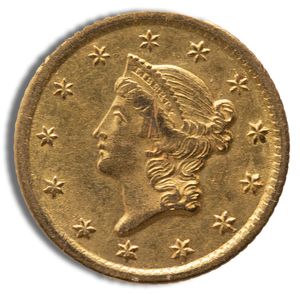
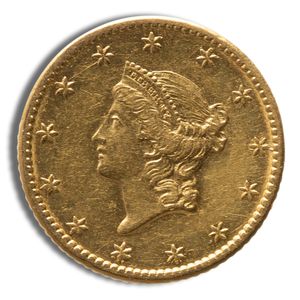
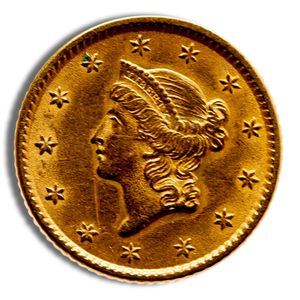
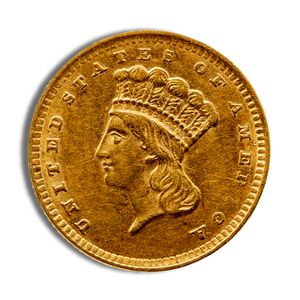
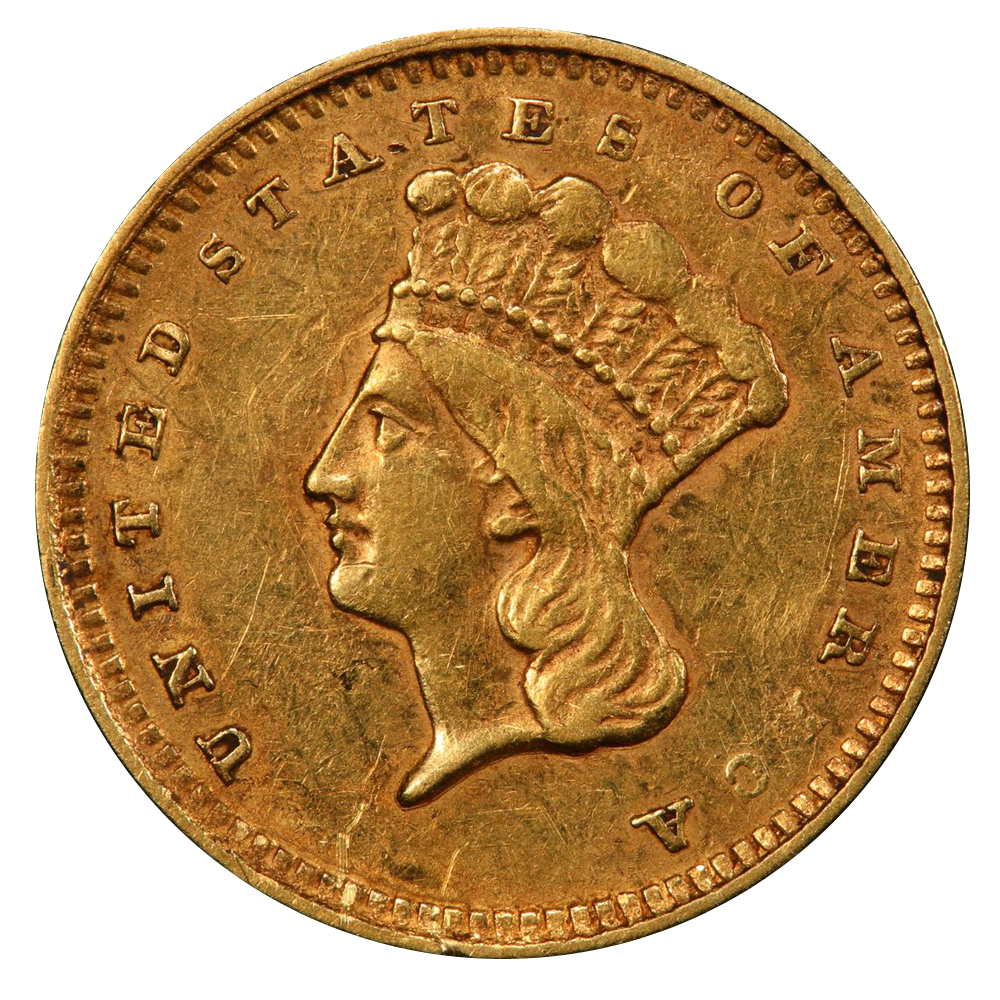
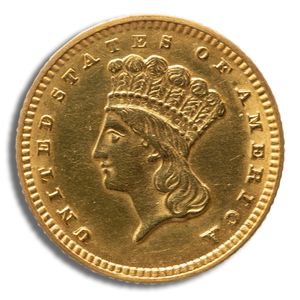
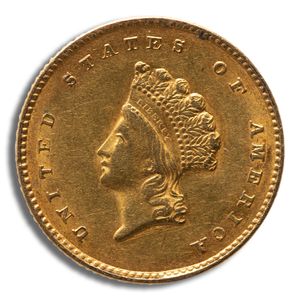
Our catalog of $1 gold coins covers three of the most historically significant nineteenth-century American coin types: the Liberty Head Type 1, the Indian Princess Type 2, and the Indian Head Type 3. Each series is available in multiple grades, from cleaned or low-grade circulated examples through professionally certified mint state coins graded by NGC and PCGS, giving buyers a range of options suited to different purposes and budgets.
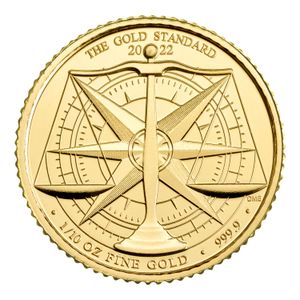
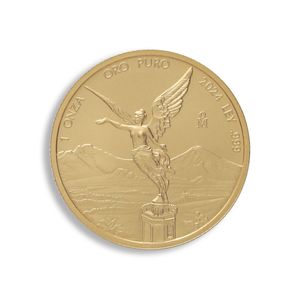
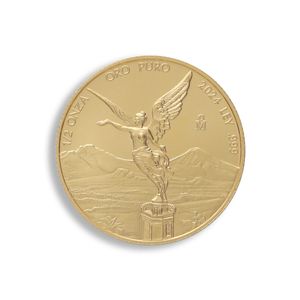
Alongside these classic U.S. type coins, the catalog also includes a selection of modern gold coins and bars spanning multiple mints and weights, from fractional pieces like the 1/10 oz Great Britain Gold Standard coin and the 2024 Mexico Gold Libertad series to full-ounce offerings including the Gold American Buffalo and the Austria Philharmonic. Whether you're sourcing a specific grade of a nineteenth-century gold dollar or a contemporary bullion piece from a recognized world mint, you'll find transparent pricing and detailed product specifications across the entire catalog.
Bullion Standard is headquartered in San Diego, California, and has operated as a nationally recognized precious metals marketplace since 2010. Our pricing reflects real-time market conditions, and every product is verified for authenticity, weight, and purity before fulfillment.
What Are $1 Gold Coins?
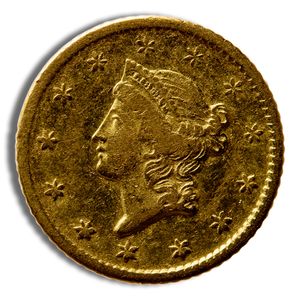
The $1 gold coin is the smallest gold denomination ever struck for circulation by the United States Mint. Minted continuously from 1849 through 1889, these coins contain 0.0483 troy ounces of gold at .900 fine purity, making them among the most compact government-issued gold coins in American history. Despite their modest gold content by modern standards, they remain widely collected and traded as type coins representing distinct design eras in U.S. numismatic history.
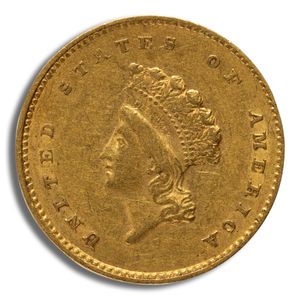
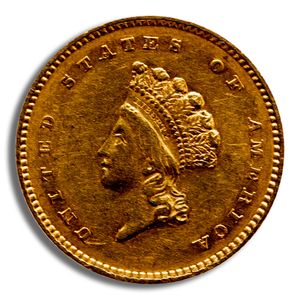
The three major design types each have their own collector identity. The Type 1 Liberty Head, struck from 1849 to 1854, features a small, flat design that proved difficult to strike cleanly and is the rarest of the three in higher grades. The Type 2 Indian Princess, produced only from 1854 to 1856, is the shortest-lived and scarcest design, with a larger portrait that still suffered from striking inconsistencies. The Type 3 Indian Head, struck from 1856 to 1889, carries a more refined and better-centered design and accounts for the largest share of surviving examples across all grade levels.
Buyers approach these coins from two main perspectives. Numismatists collect them as type coins representing distinct chapters in U.S. coinage history, often seeking certified examples in the finest attainable grades. Other buyers acquire circulated examples for their gold content at or near melt value, treating them as a low-premium way to hold small amounts of physical gold in a historically significant form.
History and Background
The $1 gold coin was authorized by the Coinage Act of 1849, a direct response to the California Gold Rush and the sudden availability of significant new domestic gold supplies. The United States Mint began striking the coin that same year at its Philadelphia, Charlotte, Dahlonega, New Orleans, and San Francisco facilities. The introduction of this denomination gave the Mint a practical outlet for the influx of raw gold while providing the public with a small, portable, and officially sanctioned gold coin for everyday commerce.
Despite its practical origins, the $1 gold piece struggled in circulation from the start. Its small diameter of roughly thirteen millimeters made it easy to lose and difficult to handle. The Type 1 design by James B. Longacre proved particularly prone to weak strikes, which explains why high-grade survivors are scarce today. The Type 2 redesign addressed some aesthetic concerns but was short-lived, replaced in 1856 by the more successful Type 3 design that would carry the series through the end of production in 1889.
By the time the series ended, changing monetary policy and the declining use of gold in everyday transactions had effectively rendered the denomination obsolete. The coins that survived into the modern era did so largely through collector and hoarder accumulation, and today the series is well-established within the classic U.S. type coin market. Certified examples graded by NGC and PCGS have brought greater pricing transparency and standardization to the segment, making it easier to compare and transact across grades.
Purity, Weight, and Specifications
All three types of $1 gold coins share the same core specifications. Each coin contains 0.0483 troy ounces of gold at a fineness of .900, meaning ninety percent gold and ten percent copper alloy. The copper content gives the coins their characteristic warm tone and contributes to their durability compared to higher-purity modern bullion issues. The gross weight is 1.672 grams, and the diameter is approximately 13 millimeters, making these among the smallest gold coins ever issued by the U.S. government for general circulation.
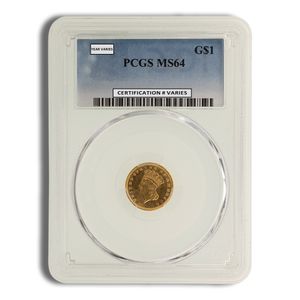
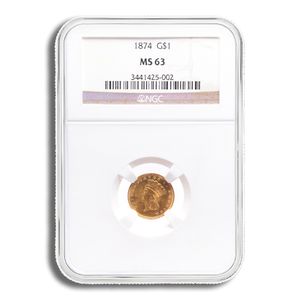
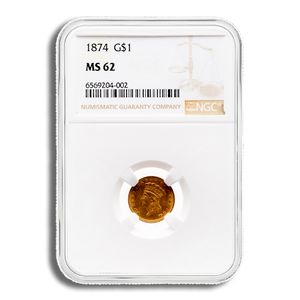
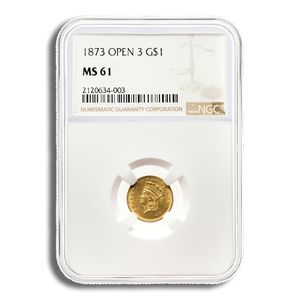
For certified examples in the catalog, grading follows the standard Sheldon numeric scale. Circulated grades like VF (Very Fine), XF (Extremely Fine), and AU (About Uncirculated) reflect degrees of wear, while mint state designations from MS61 through MS65 indicate uncirculated coins with progressively fewer contact marks and better surface quality. The "C" designation used for cleaned or low-grade examples indicates coins that have been polished, harshly cleaned, or exhibit significant impairment, which affects both collectible value and premium over melt.
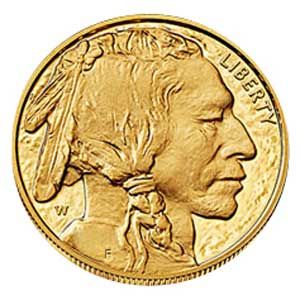
Modern bullion coins in the catalog, such as the 1 oz Gold American Buffalo and the 2024 Mexico Gold Libertad, operate under a different specification standard. The Buffalo is struck in .9999 fine gold, while the Libertad carries .999 fine gold. These coins are measured against their stated troy ounce weight, and any deviation from that standard affects both authenticity verification and buyback pricing.
Available Brands, Mints, and Product Variations
The nineteenth-century gold dollars in the catalog were produced by the United States Mint across multiple branch facilities, designated as "Various" for random year products since the specific mint mark can differ from coin to coin. Type 1 and Type 3 coins are available across a broad grade spectrum, from problem pieces through NGC and PCGS certified mint state examples ranging from MS61 through MS65. The Type 2 Princess is offered in circulated grades only, reflecting its relative scarcity in uncirculated condition.
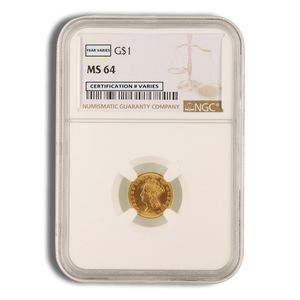
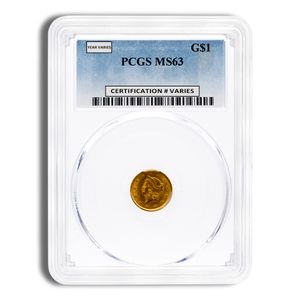
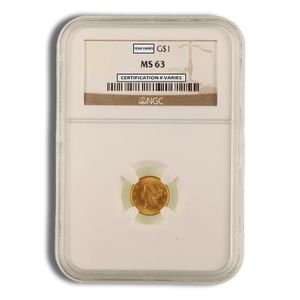
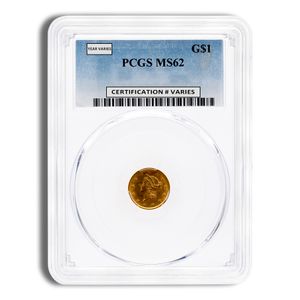
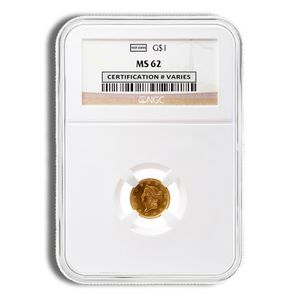
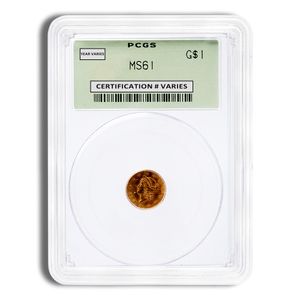
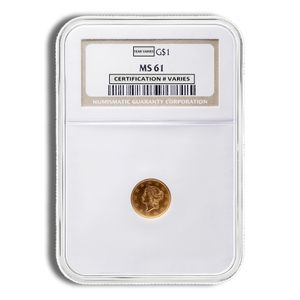
Certification by NGC or PCGS provides an additional layer of confidence for buyers seeking a standardized, independently verified grade. Both services encapsulate coins in tamper-evident holders with grade and authentication information, and they maintain publicly searchable registries for verification. PCGS and NGC certified $1 gold coins are available in parallel grade tiers throughout the catalog, allowing direct comparison between the two leading grading services.
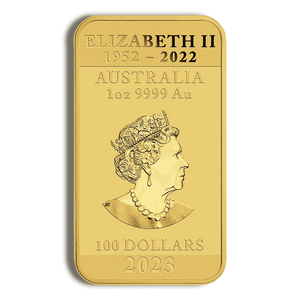
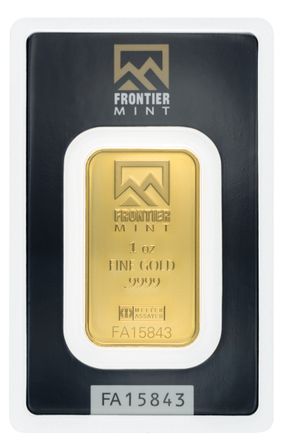
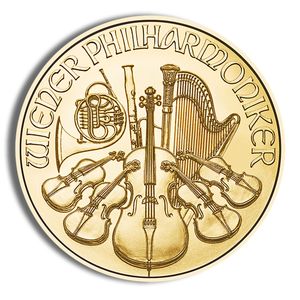
The modern offerings round out the catalog with products from several internationally recognized mints. The Austrian Mint's 1 oz Gold Philharmonic, the United States Mint's 1 oz Gold American Buffalo, and the Royal Mint's 1/10 oz Great Britain Gold Standard coin each represent distinct sovereign programs at .9999 fine purity. The Mexico City Mint's 2024 Libertad series spans three weights: 1/10 oz, 1/2 oz, and 1 oz, all at .999 fine gold. The Perth Mint's 2017 1/4 oz Australia Gold Saltwater Crocodile and the 2023 Perth Dragon rectangular coin add collectible-format options to the mix. A 1 oz Frontier Mint gold bar in assay card completes the broader product range.
Pricing, Premiums, and Market Factors
Pricing for any gold product begins with the spot price of gold, the real-time benchmark per troy ounce derived from global futures and over-the-counter trading. The premium above spot reflects the cost of minting, certification, dealer handling, and current supply and demand for that specific product. For $1 gold coins, the premium structure diverges significantly by grade: circulated examples in VF or XF trade closer to melt value, while NGC or PCGS certified MS64 or MS65 coins carry substantial numismatic premiums driven by scarcity and collector demand.
Cleaned or problem coins, designated "C" in the catalog, typically trade at or below melt value. Their premiums are structurally low because they are not accepted by most numismatic buyers at full grade value and are treated primarily as gold content plays. At the other end of the spectrum, Type 2 Princess coins carry a scarcity premium even in lower circulated grades due to their limited two-year mintage window.
For modern bullion products like the Gold American Buffalo or the Libertad series, premiums are driven more by mint reputation, production costs, and market liquidity than by numismatic scarcity. Bullion Standard's pricing reflects real-time market conditions across both categories, and the bid/ask spread displayed on each product page provides visibility into the full cost of ownership, not just the purchase premium. This two-sided pricing model allows buyers to evaluate acquisition cost alongside expected resale value before committing to a purchase.
Condition, Packaging, and What to Expect
Certified coins from NGC and PCGS arrive in hard plastic sonically sealed slabs with the grade, coin description, and certification number printed on the label. These holders protect the coin from handling damage and make it easy to store and resell without touching the coin itself. Slabbed coins in our catalog are genuine, verified third-party graded pieces, and the certification number on each holder can be confirmed through the respective grading service's online registry.
Raw circulated coins, including VF, XF, AU, and BU examples, are shipped in appropriate protective packaging but do not include certified holders. Minor surface variations, small contact marks, and natural toning are expected features of coins that have circulated or been stored over many decades. These characteristics are consistent with the stated grade and should not be interpreted as damage. Coins listed as "Random Year" are supplied from available inventory within the described grade parameters, and the specific year cannot be guaranteed.
Modern bullion coins such as the Libertad series and the Philharmonic are typically shipped in protective packaging consistent with their original mint presentation. The 1 oz Frontier Mint gold bar is packaged in its original assay card, which displays weight, purity, and serial identification. Specialty sets like the 1987 Two Coin Proof Gold American Eagle are shipped with their original box and Certificate of Authenticity where indicated in the product listing.
Authenticity and Verification
Every product sold through Bullion Standard is verified for authenticity, weight, and purity before shipment. For certified coins, the NGC or PCGS slab itself serves as the primary verification tool: the sonically sealed holder, the holographic label elements, and the searchable online registry all provide independent confirmation of the coin's grade and authenticity. Bullion Standard is an authorized dealer for both NGC and PCGS, which means our sourcing is held to the standards required by those services.
For raw bullion coins and bars, verification relies on a combination of source verification, physical inspection, and dimensional testing. Gold's density, malleability, and electromagnetic properties make it difficult to convincingly counterfeit in standard bullion form, and products sourced from reputable mints and distributors come with established chain-of-custody documentation. The Frontier Mint gold bar's assay card provides an independent third-party attestation of the bar's weight and purity.
Buyers who want additional assurance can request third-party grading submission for eligible raw coins before or after purchase. Industry-standard tools such as electronic verification devices, sigma metalytics testers, and X-ray fluorescence analyzers are widely available through professional coin dealers and grading services for independent testing of any raw bullion product.
Liquidity and Resale Considerations
Liquidity in the $1 gold coin market is directly tied to grade and type. Certified Type 3 Indian Head coins in MS61 through MS64 represent the most traded tier within the series because they are the most common surviving examples in mint state and have the broadest base of buyers across both numismatic and bullion-oriented markets. Type 1 and Type 2 coins in higher grades appeal to a more specialized collector audience, which can narrow the number of immediate buyers but does not eliminate resale options through dealer networks and auction platforms.
Circulated examples graded VF through AU trade on tighter margins relative to spot gold, and their resale is typically straightforward through any dealer buying circulated U.S. gold. The "C" category coins for cleaned or impaired examples are the least liquid tier within the series and are best approached as pure gold content acquisitions with resale expectations set accordingly.
Modern sovereign bullion coins from recognized programs, including the Gold American Buffalo, the Philharmonic, and the Libertad, carry strong market recognition globally and can be resold through a wide range of dealer and wholesale channels. Recognizable mint marks, standard weights, and established production histories all contribute to the ease of resale for these products. Understanding the expected bid/ask spread for any given product before purchase is a practical way to assess the realistic cost of ownership through the full cycle of buying and selling.
Storage and Security
Because $1 gold coins are physically small, secure containment is a priority. Raw coins are best stored in individual protective flips or airtite capsules that prevent contact damage and minimize exposure to moisture and airborne contaminants. Slabbed certified coins are already protected by their holders but should still be kept in a stable, dry environment away from temperature extremes that could affect the holder's integrity over time.
For home storage, a quality fireproof safe rated for both fire and theft resistance provides a practical first line of protection. Small gold coins and slabs are easy to conceal within a well-anchored safe, and a compact collection can be stored efficiently without requiring significant space. Those holding larger quantities may prefer the added security of a third-party vault service, which offers professional-grade storage with insurance coverage and regular auditing.
Bank safe deposit boxes offer an accessible intermediate option for collectors storing a modest number of certified coins. They provide physical security without the overhead of a dedicated vault account, though they come with limited accessibility and typically do not carry insurance coverage for the contents. Regardless of the storage method chosen, keeping a current inventory with photographs and certification numbers simplifies both insurance documentation and eventual resale.
Selling and Buyback Options
Selling $1 gold coins back into the market typically involves dealer buyback programs, coin shows, auction houses, or direct private sales. For certified examples in NGC or PCGS holders, condition is already independently established, which streamlines the valuation process and reduces friction in dealer-to-dealer or dealer-to-collector transactions. Uncertified circulated coins are evaluated on a combination of grade assessment, gold content, and current market demand.
Factors that influence buyback pricing include the specific coin type, the grade, whether it is certified or raw, current gold spot prices, the bid/ask spread for that product tier, and prevailing demand in the numismatic and bullion markets. Type 3 Indian Head coins in certified grades tend to see more consistent dealer interest than Type 2 coins, which require a more specialized buyer. Modern bullion coins from major sovereign programs are generally among the easiest to resell because of their global market recognition.
Bullion Standard operates a two-way market structure, meaning customers can sell precious metals back into the same marketplace where they purchased them. Our purchasing team evaluates products based on current wholesale bid pricing, product condition, packaging integrity, and market liquidity at the time of the transaction. This structure is designed to make the resale process straightforward and transparent, with pricing grounded in real-time market conditions rather than arbitrary assessments.
Why Buy $1 Gold Coins?
For collectors focused on U.S. type coin sets, the $1 gold series occupies an irreplaceable position. Acquiring one representative example of each of the three types in a consistent grade tier is a defined and achievable goal that drives consistent demand across all three designs. The Type 2 Princess, with its two-year production run, represents a genuine scarcity challenge that appeals to serious collectors building complete type sets.
For buyers less focused on numismatic completeness, circulated $1 gold coins offer a way to hold small increments of .900 fine gold in a historically significant domestic form. At 0.0483 troy ounces per coin, they allow buyers to acquire gold in very small fractional amounts without paying the higher premiums that typically accompany modern fractional bullion coins. Cleaned or low-grade examples priced near melt extend this accessibility further for buyers focused purely on gold content.
The modern bullion products in the catalog complement the type coin offerings by providing standardized .9999 fine gold in widely recognized sovereign formats. The Gold American Buffalo and the Austria Philharmonic are among the most traded one-ounce gold coins in the global wholesale market, offering strong liquidity and broad institutional recognition. Together, the catalog provides access to both the numismatic and bullion sides of the gold coin market in one place.
Why Buy from Bullion Standard?
Bullion Standard was founded in 2010 with a straightforward premise: the precious metals buying experience should be transparent, honest, and built around the customer's long-term confidence rather than short-term transaction pressure. That principle has guided how we price products, source inventory, verify authenticity, and support customers before and after every purchase. Our A rating with the Better Business Bureau and memberships in the American Numismatic Association and the National Coin and Bullion Association reflect a consistent track record built over more than a decade of operation.
Our status as an authorized dealer for both PCGS and NGC means we maintain direct access to certified product sourcing within the standards those organizations require. Every product in our catalog is verified for authenticity, weight, and purity before it reaches the customer. We source from reputable mints, distributors, and wholesalers, and our fulfillment process is structured to ensure accurate, secure delivery with full tracking on every order.
The bid/ask spread displayed on each product page reflects our commitment to pricing transparency. Rather than obscuring the cost of ownership behind promotional language, we provide the data buyers need to evaluate both acquisition cost and expected resale value in one place. Multiple payment methods are available, including major credit cards, PayPal, bank-connected payments through Plaid, wire transfer, paper check, and cryptocurrency through BitPay, giving customers genuine flexibility in how they transact.
Get Near-Spot Pricing with Bullion Standard Pro
Bullion Standard Pro is designed for buyers who want direct access to wholesale market pricing rather than standard retail premiums. Members transact at live, executable wholesale bid and ask prices, with no additional dealer markups or dealer spreads layered on top. Premiums and bid/ask spreads reflect real-time supply and demand within the wholesale precious metals market, not fixed retail pricing structures, which means pricing responds naturally to changing market conditions.
For buyers acquiring certified $1 gold coins, modern sovereign bullion, or any other product across the catalog on a recurring basis, the pricing efficiency available through Pro can meaningfully reduce the cumulative cost of ownership over time. Portfolio valuation through Pro uses live wholesale bid pricing to reflect current liquidation values rather than estimated retail figures, giving members a more accurate picture of what their holdings are actually worth in the current market.
Beyond pricing, Pro members gain access to proprietary market intelligence tools including historical premium analysis, spread analysis, liquidity metrics, and buy/sell ratio indicators. These tools aggregate activity across the wholesale bullion market to help members identify pricing trends, evaluate product-specific liquidity, and make more informed decisions based on objective data. The platform is built around the principle that better information leads to better decisions, and Pro is where that principle is most fully expressed.

 (833) 278-4653