Buy 1 Gram Platinum Bars Online
Our catalog of 1 gram platinum bars brings together some of the most respected Swiss refineries in the global bullion market, including Argor-Heraeus, PAMP Suisse, and Valcambi. Each bar contains exactly one gram of platinum at .9995 fine purity and is designed for buyers who want direct platinum exposure in one of the most compact and accessible formats available. Whether you're adding to an existing position or starting with a smaller purchase, these bars deliver genuine precious metal content at a manageable entry point.
The selection here spans individually packaged assay-certified bars from named refineries to random brand options both with and without assay cards, giving buyers meaningful flexibility depending on their priorities. Bullion Standard presents this range transparently, with pricing that reflects real-time platinum spot conditions and clear premium breakdowns so you can evaluate each option on its actual merits.
What Are 1 Gram Platinum Bars?
A 1 gram platinum bar is a minted bullion bar produced by a recognized refinery, containing one metric gram of platinum at a minimum purity of .9995. At roughly 0.03215 troy ounces of platinum per bar, these are among the smallest commercially produced platinum bullion products available, making them a practical way to acquire platinum in precise, manageable increments. They're minted rather than cast, which means they're produced by striking blanks under pressure to achieve clean edges, uniform surfaces, and consistent dimensions.
Buyers are often drawn to 1 gram bars for their accessibility. The low per-unit cost relative to larger platinum formats makes it easier to acquire platinum without committing to a full troy ounce or multi-ounce bar. This format also appeals to those who want to give a physical platinum product as a gift or who prefer to diversify holdings across multiple small units rather than concentrating them in fewer, heavier bars.
Compared to platinum coins, 1 gram bars typically carry less collector premium and trade more closely to their metal content. They don't carry legal tender status, but for buyers focused primarily on the platinum content itself, the bar format is a clean and straightforward choice.
History and Background
Platinum has been refined and traded commercially since the late eighteenth century, but the modern small-format minted bar industry is largely a product of the late twentieth century. As global demand for fractional precious metals grew among retail buyers, European refineries began producing smaller gram-weight bars designed for accessibility and gift-giving markets. Swiss refineries in particular drove much of this development, establishing the template for assay-sealed minted bars that remains the industry standard today.
Argor-Heraeus, PAMP Suisse, and Valcambi all emerged from Switzerland's long tradition of precision refining and gold assaying, eventually expanding into platinum and palladium products as demand from industrial and retail markets grew. The gram-weight bar became a recognized commercial format during the 1980s and 1990s as these refineries developed secure packaging systems, including the sealed assay card format that protects bars from handling while displaying verifiable hallmarks.
Platinum's profile in the bullion market differs from gold and silver. Its industrial applications, particularly in catalytic converters, petrochemical refining, and medical devices, have shaped supply dynamics in ways that influence the platinum bar market. The same refineries producing 1 gram bars for retail buyers are closely connected to the industrial supply chain that drives platinum's global market volume.
Purity, Weight, and Specifications
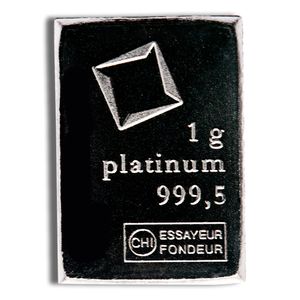
Every 1 gram platinum bar in our catalog carries a purity of .9995 fine platinum, which is the recognized standard for investment-grade platinum bullion. This purity level is marked directly on each bar along with the weight designation of one gram and the refinery's name or logo. The assay card, where included, serves as the manufacturer's certification of these specifications and typically displays additional hallmark information confirming authenticity.
Physical dimensions vary slightly across refineries. The Argor-Heraeus bar measures 10mm by 10mm with a thickness of 0.6mm, while the PAMP Suisse Lady Fortuna bar is 14.7mm by 8.9mm at 0.36mm thick, and the Valcambi bar runs 15mm by 8.5mm with a 0.55mm profile. These differences reflect each refinery's proprietary bar designs and tooling, but the platinum content across all three is identical at one gram and 0.03215 troy ounces.
Because platinum is considerably denser than gold and silver, 1 gram bars are extremely small physical objects. Buyers should be aware of this going in. The bars are best handled within their sealed assay packaging rather than loose, both to protect the surface and to preserve the condition that buyers and resellers expect.
Available Brands, Mints, and Product Variations
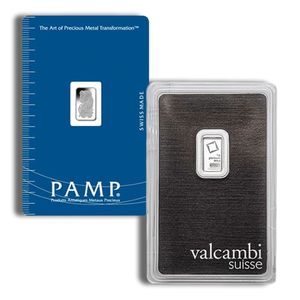
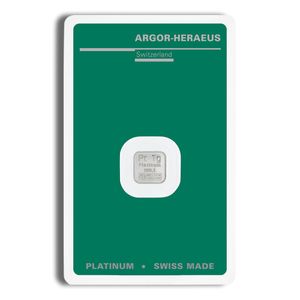
Argor-Heraeus is one of Switzerland's oldest and most technically sophisticated refineries, operating out of Mendrisio in the Canton of Ticino. Their 1 gram platinum bar features a compact square format sealed in a tamper-evident assay card bearing the Argor-Heraeus hallmark, purity stamp, and serial number. The bar's clean minted finish and precise dimensions reflect the refinery's reputation for consistent quality across both retail and institutional product lines.
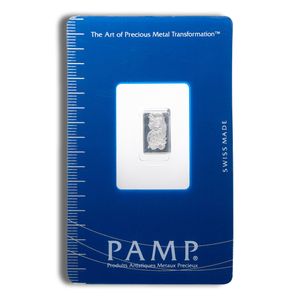
PAMP Suisse, headquartered in Castel San Pietro, is arguably the most internationally recognized name in minted precious metals. Their Lady Fortuna design, which depicts the Roman goddess of fortune in bas-relief, is one of the most widely collected motifs in the global bullion market. The 1 gram platinum version carries the same iconic design in a rectangular assay format, making it a natural choice for buyers who value design recognition alongside metal content.
Valcambi, also based in Switzerland, operates one of the largest precious metals refining facilities in the world by volume. Their 1 gram platinum bar is a clean, text-forward minted design sealed in an assay card with the Valcambi hallmark and purity certification. For buyers who prefer a more utilitarian bar from a high-volume, institutionally recognized refinery, Valcambi offers an excellent option at this weight. Random brand options are also available for buyers focused primarily on platinum content and less concerned with specific refinery provenance, with or without assay card packaging depending on preference and budget.
Pricing, Premiums, and Market Factors
Platinum spot price forms the base from which all 1 gram bar pricing is calculated. Because each bar contains only 0.03215 troy ounces of platinum, the actual spot value per unit is quite small in dollar terms, which means the per-gram premium relative to spot can appear proportionally higher than it would on a larger bar. This is a normal structural reality of fractional bullion pricing and applies across all small-format precious metals products regardless of metal type.
Several factors influence the premium on 1 gram platinum bars specifically. Refinery reputation plays a meaningful role, with PAMP Suisse and Argor-Heraeus typically commanding slightly higher premiums due to global brand recognition and collector demand. Assay card packaging adds a small cost but preserves the bar's verifiability and resale condition. Random brand bars, by comparison, typically carry tighter premiums but trade some brand recognition for that pricing efficiency.
Bullion Standard's pricing structure reflects live platinum market conditions and is presented transparently alongside the bid/ask spread on each product page. This allows buyers to evaluate not just the purchase price but the expected resale value before completing a transaction, a core part of how we think about informed buying at every price point.
Condition, Packaging, and What to Expect
Named-refinery 1 gram platinum bars from Argor-Heraeus, PAMP Suisse, and Valcambi ship sealed within their original assay cards. These cards are tamper-evident by design, meaning any attempt to open or remove the bar will be visible. Buyers should expect bars to arrive in new, sealed condition with the assay card intact and the hallmark information visible through the card's display window.
Random brand bars may arrive from any number of recognized refineries, subject to availability at the time of fulfillment. When sold with an assay card, the packaging format will be consistent with standard industry practice, though the specific refinery may vary. Bars sold without an assay card are loose and have typically been removed from their original packaging. These are still .9995 fine platinum and carry the same metal content, but buyers should expect minor surface marks or handling evidence consistent with bars that are no longer factory-sealed.
Given how small 1 gram platinum bars are physically, careful handling is important after receipt. If you open an assay card, the bar should be handled by its edges only and stored in a protective sleeve or capsule to prevent surface contact. For bars already outside their assay packaging, small contact marks are considered normal and do not affect melt or metal value.
Authenticity and Verification
Each named-refinery bar in our catalog is sourced directly from authorized channels and carries the hallmarks, purity stamps, and assay documentation issued by the producing refinery. Argor-Heraeus, PAMP Suisse, and Valcambi all maintain internationally recognized quality control systems that certify the metal content and purity of every bar before it leaves their facilities. The sealed assay card itself serves as a primary authenticity indicator, as breaking or tampering with the seal is immediately visible.
Bullion Standard verifies the authenticity, weight, and purity of every product before it reaches our customers. Our sourcing relationships are built with reputable mints, refineries, wholesalers, and distributors, ensuring that the products moving through our fulfillment process meet consistent standards. We maintain memberships with the American Numismatic Association and the National Coin and Bullion Association, and hold an A rating with the Better Business Bureau as part of an ongoing commitment to industry accountability.
For buyers who receive random brand bars, the standard verification process still applies. Every bar in our inventory is confirmed for metal content and physical characteristics consistent with .9995 fine platinum at the stated gram weight. If a bar arrives and something appears inconsistent with what was described, our customer service team is available to address concerns directly.
Liquidity and Resale Considerations
Small-format platinum bars occupy a particular position in the resale market. Named-refinery products from PAMP Suisse, Argor-Heraeus, and Valcambi benefit from broad international recognition, which matters when selling to dealers, other collectors, or platforms outside the original point of purchase. Bars with intact assay cards command stronger resale interest because the authenticity documentation removes friction from the verification process for the buyer on the other side of the transaction.
Random brand bars and bars sold without assay cards are still liquid in the sense that their platinum content is verifiable, but buyers should expect that resale premiums may be tighter on these products compared to their named-refinery counterparts. This is worth understanding before purchase, not as a deterrent but as a realistic framing of how the market treats different product tiers at the same gram weight.
Platinum as a metal trades in a smaller, more specialized market than gold or silver. This means liquidity at the individual bar level can be more variable depending on current market conditions, which makes purchasing from a dealer with a structured buyback program more meaningful than it might be for higher-volume metals.
Storage and Security
Because 1 gram platinum bars are extremely small, storage requires a bit more attention than larger bullion formats. Individual bars in assay cards are easy to store in a small safe, safety deposit box, or a dedicated bullion storage pouch. The compact format makes them ideal for organized storage within a secure container, and their sealed packaging means they don't require additional protective holders as long as the assay card remains intact.
For buyers accumulating multiple 1 gram bars over time, keeping them organized by refinery and condition from the start simplifies future inventory management and resale. A labeled storage sleeve or small binder system works well for assay-sealed bars. Loose bars should be stored in individual coin capsules or protective flips to prevent contact damage.
Home safe storage is appropriate for smaller quantities. Those building larger platinum positions may want to consider third-party vault storage through a bonded and insured precious metals custodian, which offers both physical security and insurance coverage without the risk associated with home storage of concentrated holdings.
Selling and Buyback Options
Selling 1 gram platinum bars back into the market works differently depending on where you sell. Dealers and platforms that actively bid on platinum bullion will typically evaluate condition, packaging, and refinery before quoting a price. Bars with intact assay cards from named refineries generally receive more favorable bids than loose or unbranded product, reflecting the reduced verification burden for the buying party.
Bullion Standard operates as a two-way market, meaning customers can sell platinum bars back to us through the same platform where they made their purchase. Our purchasing team evaluates buyback pricing based on current platinum spot conditions, product type, packaging status, and wholesale market liquidity at the time of the transaction. This structure gives sellers a reliable exit point without having to navigate the broader secondary market independently.
Before selling any platinum bar, it's worth understanding the bid/ask spread on the specific product. Bullion Standard displays this information on individual product pages, allowing buyers to assess the relationship between purchase price and expected resale value before committing. We think this kind of upfront transparency leads to better decisions on both sides of the transaction.
Why Buy 1 Gram Platinum Bars?
The appeal of 1 gram platinum bars comes down to accessibility and flexibility. Platinum is one of the rarer industrial and precious metals in commercial production, with meaningful demand from the automotive sector, medical device manufacturing, petroleum refining, and electronics. Owning physical platinum at the gram level provides direct exposure to that metal without requiring the capital outlay of a larger bar or coin.
For buyers who want to accumulate platinum gradually, 1 gram bars offer a natural incremental format. Each bar is a complete, certified unit of .9995 platinum that can be purchased, held, and eventually sold as an individual item. The bar format also avoids the collector premiums associated with platinum coins, making it a more straightforward way to acquire the metal itself rather than a numismatic or commemorative product.
The variety in our catalog adds practical value here. Buyers can choose between premium Swiss refinery products with full assay documentation and more economically priced random brand options depending on their priorities. That range of choice, presented transparently and priced off real-time market data, is what makes 1 gram platinum bars a genuinely useful option rather than just a novelty format.
Why Buy from Bullion Standard?
Bullion Standard has been operating as a physical precious metals dealer since 2010, built around a philosophy that transparency and trust are not optional features but structural requirements. Every product we sell is sourced from reputable mints, refineries, and distributors, verified for authenticity and specifications, and priced against live market data rather than static markups. Our A BBB rating and active memberships with the ANA and NCBA reflect the standards we hold ourselves to across every transaction.
Our two-way market model means that when you buy 1 gram platinum bars from Bullion Standard, you're not just completing a purchase. You're entering a marketplace that considers the full lifecycle of your metal, from initial acquisition through potential resale. Competitive buyback pricing, live bid/ask spread transparency, and a dedicated customer service team are built into the platform so that every part of the experience is designed around your long-term confidence rather than a single transaction.
Payment flexibility is part of that approach. We accept Visa, Mastercard, American Express, Discover, PayPal, bank-connected payments via Plaid, wire transfer, paper check, and cryptocurrency through BitPay, giving buyers meaningful options regardless of how they prefer to transact. Secure fulfillment and reliable shipping complete an experience designed to feel straightforward from checkout to delivery.
Get Near-Spot Pricing with Bullion Standard Pro
Bullion Standard Pro is our membership platform built around executable wholesale bid and ask pricing across a broad range of precious metals products, including platinum. Members transact at live wholesale market prices without the additional dealer markups or fixed retail spreads typical of the traditional dealer model. For buyers purchasing 1 gram platinum bars regularly or building a position over time, the pricing efficiency available through Pro can represent a meaningful difference in total acquisition cost.
Beyond pricing, Pro members gain access to live portfolio valuation based on executable wholesale bid prices rather than estimated retail values, historical premium analysis, spread tightness metrics, and proprietary analytics designed to help members evaluate products and market conditions with greater precision. For platinum specifically, where market liquidity can be more concentrated than in gold or silver, having visibility into wholesale pricing dynamics provides useful context that retail listings alone don't convey.
The platform is designed to bring the kind of pricing transparency and market intelligence typically found in institutional financial markets to the physical precious metals space. If you're purchasing platinum bars with any regularity, Bullion Standard Pro is worth understanding as part of a more informed and cost-efficient approach to the market.


 (833) 278-4653