Buy 100 oz Silver Bars Online
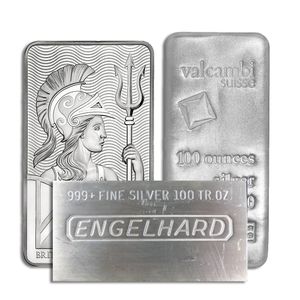
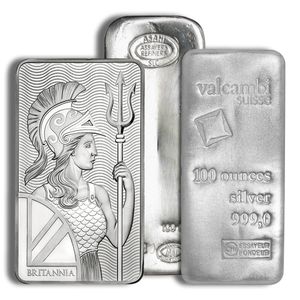
Our catalog of 100 oz silver bars brings together some of the most recognized names in the global bullion market, including Asahi Refining, Engelhard, Johnson Matthey, the Royal Canadian Mint, Valcambi, Geiger Edelmetalle, Frontier Mint, and The Royal Mint. Whether you're looking for a classic cast bar from a legacy American refiner or a minted Britannia bar from Great Britain, you'll find a range of formats, purities, and production styles to choose from.
Most of the bars in this catalog carry a purity of .999 fine silver, with select options from the Royal Canadian Mint and Frontier Mint reaching .9999 fineness. Formats include both cast and minted production styles, with origins spanning the United States, Canada, Germany, Switzerland, Great Britain, and Turkey. Random brand options are also available for buyers prioritizing metal content over mint-specific preference.
Bullion Standard is a San Diego-based precious metals marketplace founded on the principle that buyers deserve clear pricing, transparent product information, and straightforward access to both sides of the market. Every 100 oz silver bar listed here is sourced from reputable mints, refineries, and wholesalers and verified for authenticity and purity before fulfillment.
What Are 100 oz Silver Bars?
A 100 oz silver bar contains one hundred troy ounces of refined silver, making it one of the largest standardized bar weights commonly traded in the retail and institutional bullion market. Unlike smaller fractional bars or silver coins, 100 oz bars are designed for buyers who prioritize metal quantity per transaction and want to minimize the premium paid per ounce relative to spot.
These bars are produced in two primary formats. Cast bars are formed by pouring molten silver into a mold, resulting in a rougher, more utilitarian appearance with visible flow lines or surface texture. Minted bars are cut from rolled silver sheet and struck under pressure, producing sharper edges, cleaner surfaces, and more refined design detail. Both formats carry identical silver content; the distinction is largely aesthetic and, in some cases, affects secondary market desirability.
Buyers drawn to 100 oz bars typically value the combination of meaningful silver quantity, manageable physical size, and relatively efficient premiums per ounce compared to smaller denominations. They're common among buyers who want direct, tangible exposure to silver in a format that is universally recognized across dealer networks worldwide.
History and Background
The 100 troy ounce bar standard emerged as the bullion market matured through the mid-twentieth century, alongside growing institutional interest in silver as a tradable commodity. Refiners like Engelhard and Johnson Matthey played a significant role in establishing standardized bar weights during this era, producing bars that became recognizable benchmarks in both industrial procurement and the secondary bullion market. Their bars from the 1970s and 1980s remain among the most actively traded vintage silver products today.
The expansion of silver's industrial role accelerated demand for standardized, verifiable bar formats that could move efficiently between industrial users, refiners, and investors. As the bullion market became more accessible to retail buyers through the 1990s and 2000s, 100 oz bars transitioned from being primarily a commercial product into a widely held retail format. New producers including Asahi Refining, Valcambi, and the Royal Canadian Mint expanded the market further, introducing tighter tolerances, improved assay standards, and stronger anti-counterfeiting measures.
Today's 100 oz silver bar market reflects a mix of legacy production from established American and European refiners alongside newer offerings from globally recognized mints. The continued participation of refiners like Geiger Edelmetalle from Germany and The Royal Mint from Great Britain illustrates how the format has been adopted internationally, each producer bringing its own production standards and security features to the same fundamental weight class.
Purity, Weight, and Specifications
The vast majority of 100 oz silver bars are produced to a minimum fineness of .999, meaning 999 parts per thousand are pure silver. Select bars, including those from the Royal Canadian Mint and Frontier Mint, are refined to .9999 fineness, a higher purity standard that appeals to buyers who prioritize maximum silver content. Both standards are universally accepted across dealer networks and conform to LBMA-recognized refinery practices.
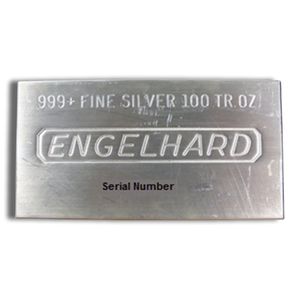
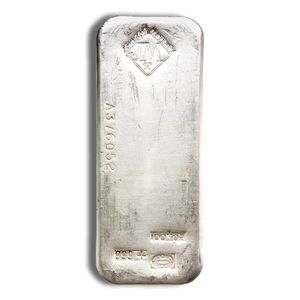
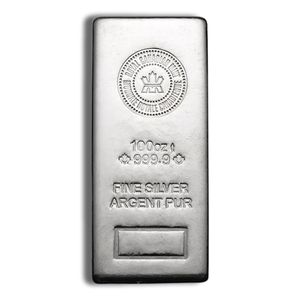
Weight is expressed in troy ounces, which differ from avoirdupois ounces commonly used in everyday measurement. One troy ounce equals approximately 31.1 grams, meaning a 100 oz silver bar weighs roughly 3,110 grams or approximately 6.86 pounds. Physical dimensions vary by manufacturer. The Engelhard bar measures approximately 146mm by 64mm, the Johnson Matthey bar runs 163mm by 65.1mm with a 33mm thickness, and the Royal Canadian Mint bar extends to 182.4mm by 81.2mm with a more compact 21.2mm profile. These dimensional differences reflect distinct casting or minting processes rather than variation in metal content.
Each bar is stamped with the producer's name or hallmark, fineness marking, and serial number where applicable. Assay certification from the producing refinery confirms that the bar meets its stated weight and purity specifications. Some producers, such as Geiger Edelmetalle, incorporate additional security features into their packaging, which are discussed further in the authenticity section below.
Available Brands, Mints, and Product Variations
Engelhard and Johnson Matthey represent the legacy tier of American silver bar production. Both refiners operated major domestic silver refining operations through the latter half of the twentieth century, and their bars have maintained strong recognition in the secondary market long after both companies exited retail bullion production. Engelhard's cast 100 oz bars are among the most identifiable silver products in existence, and Johnson Matthey's bars carry comparable recognition among experienced buyers.
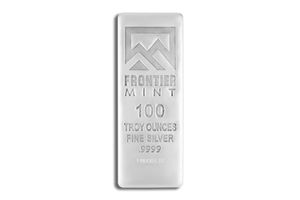
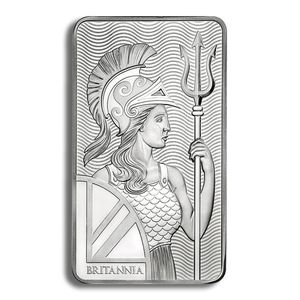
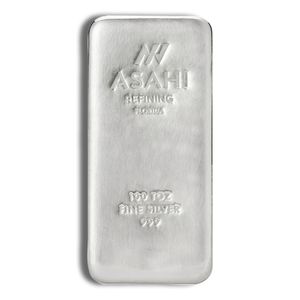
Asahi Refining, which acquired the former Johnson Matthey North American refining assets, continues to produce 100 oz cast silver bars that carry the credibility of an established domestic refining operation. Frontier Mint offers a sandblast finish variant at .9999 purity, providing a visually distinct option for buyers drawn to higher-purity production. The Royal Canadian Mint's 100 oz bar, also produced to .9999 fineness, reflects that institution's reputation for precise tolerances and quality assurance standards. The Royal Mint's Britannia bar, a minted format from Great Britain, offers design detail and collectible appeal alongside its silver content.
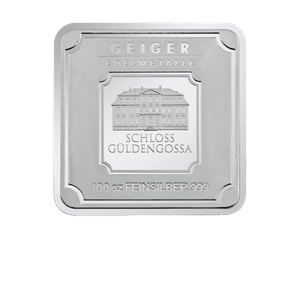
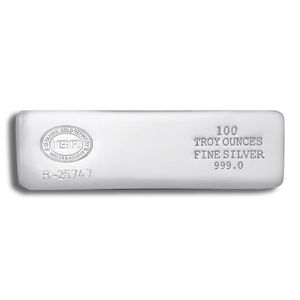
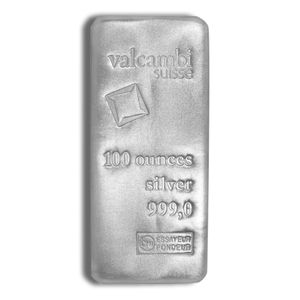
Geiger Edelmetalle from Germany produces a minted 100 oz bar that ships in sealed assay packaging, incorporating security features designed to confirm authenticity and protect condition. Istanbul Gold Refinery, also known as IGR, represents Turkish refinery production and provides an internationally recognized bar at standard .999 fineness. Valcambi, a Swiss refinery with one of the strongest global reputations for precision, rounds out the geographic diversity of this catalog. Random brand bars are available for buyers focused solely on metal content, representing a practical choice for those building silver positions without preference for a specific producer.
Pricing, Premiums, and Market Factors
The price of a 100 oz silver bar is determined by the current spot price of silver combined with a premium that reflects production costs, refinery reputation, packaging, and market demand. Because 100 oz bars represent a relatively large per-unit purchase, the percentage premium above spot is typically lower than what buyers would pay for smaller denominations such as 1 oz bars or silver rounds. This makes them efficient for buyers focused on acquiring silver content at a competitive cost per ounce.
Premiums are not uniform across all bars in this weight class. Bars from well-known producers like Engelhard, Johnson Matthey, and the Royal Canadian Mint tend to carry higher premiums due to strong secondary market recognition and collector familiarity. Sealed or minted formats, such as the Geiger Edelmetalle bar in assay packaging, also command modest premium differences relative to standard cast bars from less recognized sources. Random brand bars typically offer the tightest premiums but require buyers to accept varying producers.
Bullion Standard displays real-time pricing on every product page, reflecting live spot market conditions. The bid and ask spread visible on each listing represents the full cost of ownership in a single, transparent figure rather than burying the transaction cost in separate fees. This pricing structure reflects our commitment to clarity throughout the buying and selling process, allowing buyers to evaluate the true economics of each bar rather than comparing nominal prices in isolation.
Condition, Packaging, and What to Expect
Cast silver bars, which make up the majority of the products in this catalog, are not manufactured to cosmetic precision standards. Surface marks, flow lines, minor scratches, and oxidation are normal characteristics of the casting process and do not affect weight, purity, or market acceptability. Buyers should expect variability in appearance, particularly with vintage bars from Engelhard and Johnson Matthey that have circulated through the secondary market.
Minted bars, such as the Geiger Edelmetalle sealed bar and The Royal Mint's Britannia bar, arrive in protective packaging that preserves their finish. The Geiger bar ships in a sealed assay card that should remain intact to maintain the full premium associated with that product. Removing bars from their assay packaging can affect resale value, so storage in the original packaging is generally advisable for sealed formats.
Random brand bars are sourced from various refineries and producers, meaning the specific brand or appearance will vary. Buyers selecting random brand options should expect a bar that meets stated weight and purity specifications but may arrive from any number of recognized secondary market producers. These bars are appropriate for buyers whose primary objective is silver content rather than producer preference or specific presentation.
Authenticity and Verification
Every 100 oz silver bar sold through Bullion Standard is verified for authenticity, weight, and purity before it reaches a customer. Products are sourced from authorized refiners, established mints, and vetted wholesale distributors that operate within recognized industry supply chains. This sourcing discipline reduces the risk of counterfeit product entering the fulfillment process at any point.
Physical verification methods for 100 oz bars include weight measurement using calibrated scales, dimensional comparison against known specifications, and ultrasonic testing where applicable. Bars carrying assay certification from their producing refinery provide an additional layer of documented verification. Sealed products from manufacturers like Geiger Edelmetalle incorporate tamper-evident packaging with embedded security elements that confirm the bar has not been altered since leaving the refinery.
Bullion Standard is a member of the American Numismatic Association and the National Coin and Bullion Association, and maintains an A rating with the Better Business Bureau. These affiliations reflect a commitment to operating within established industry standards and ethical sourcing practices. Buyers can purchase with confidence knowing that the products they receive have passed through a structured verification process before shipment.
Liquidity and Resale Considerations
The 100 oz silver bar format is one of the most widely recognized and actively traded bar weights in the precious metals market. Products from established producers like Engelhard, Johnson Matthey, the Royal Canadian Mint, and Asahi Refining enjoy strong recognition across dealer networks, pawn markets, and private secondary markets. This recognition translates into straightforward resale across a broad range of buyers without requiring extensive documentation or negotiation.
Bars with strong refinery or mint credentials and intact original packaging tend to transact most efficiently. A sealed Geiger assay bar in original packaging, for example, presents a simpler verification pathway for a purchasing dealer than an unmarked or lesser-known cast bar. Random brand bars, while universally accepted on the basis of weight and purity, may require more scrutiny during the resale process depending on the purchasing party.
Understanding resale dynamics before purchasing is part of making an informed decision. The bid and ask spread displayed on each product page at Bullion Standard reflects real market conditions and provides a starting point for evaluating the liquidity profile of any given bar. Products with tighter spreads generally indicate stronger market demand and easier price discovery on both sides of the transaction.
Storage and Security
At roughly 6.86 pounds per bar, 100 oz silver bars are substantial physical objects that require purposeful storage planning. A single bar is manageable, but accumulating multiple bars adds meaningful weight that standard household furniture or generic safes may not accommodate safely. A heavy-duty floor safe bolted to a structural surface is the most practical home storage solution for multiple large bars.
Allocated vault storage through a third-party precious metals storage facility offers an alternative for buyers who prefer not to store significant quantities at home. Professional vault facilities typically provide insurance, segregated storage, and regular auditing, making them a sound option for buyers holding multiple bars or building positions over time. Bank safe deposit boxes are a less ideal option for 100 oz bars due to size constraints and limited insurance coverage, but can work for one or two bars in a pinch.
Environmental conditions matter for long-term silver preservation. Silver is susceptible to tarnishing and surface oxidation when exposed to humidity, sulfur compounds, and airborne contaminants. Storing bars in sealed plastic capsules, anti-tarnish pouches, or moisture-controlled containers extends the cosmetic life of the metal. While tarnish does not affect purity or weight, surface appearance can influence buyer perception during resale, particularly for minted bars where surface condition carries more visible significance.
Selling and Buyback Options
Bullion Standard operates as a two-way market, meaning customers can sell silver bars back through the same platform they use to purchase. This structure simplifies the resale process and eliminates the need to seek out separate dealers or auction platforms when it's time to liquidate. Buyback pricing is based on live wholesale bid levels and reflects real market conditions rather than arbitrary dealer valuations.
Products that are in original, verified condition with intact assay packaging command the most straightforward buyback pricing. Bars from recognized producers such as Engelhard, Johnson Matthey, Royal Canadian Mint, and Asahi Refining move efficiently through the purchasing process due to their strong market recognition. Bars in damaged condition, with removed assay packaging, or from unrecognized producers may be subject to additional verification steps that can influence the speed and pricing of the buyback.
Bullion Standard Pro members have access to live executable wholesale bid pricing, which allows them to view real-time liquidation values across their holdings before initiating a sale. This transparency allows sellers to time transactions with a clear understanding of current market levels rather than relying on opaque estimates. Our purchasing team handles the intake process efficiently and communicates clearly on pricing, condition assessments, and settlement timelines.
Why Buy 100 oz Silver Bars?
The primary appeal of the 100 oz silver bar format comes down to premium efficiency. Relative to smaller denominations, 100 oz bars typically carry a lower per-ounce premium above spot, making them one of the more cost-effective ways to acquire physical silver in meaningful quantity. For buyers focused on building a position in silver content rather than collector premiums, this format offers a direct path to doing so.
Silver's substantial industrial demand adds another dimension to the format's relevance. Silver is used extensively in solar panel manufacturing, electronics, medical equipment, and electrical applications. This underlying industrial consumption creates persistent physical demand for refined silver in standard bar formats, which supports market liquidity and dealer interest across economic cycles. Bars produced to recognized refinery standards participate directly in this broader supply chain.
The 100 oz bar also offers practical storage advantages over equivalent silver holdings spread across smaller denominations. Consolidating one hundred ounces into a single bar simplifies inventory, reduces handling, and lowers the complexity of vault storage compared to managing large quantities of coins or fractional bars. For buyers prioritizing organization and storage efficiency alongside metal content, this format strikes an effective balance.
Why Buy from Bullion Standard?
Bullion Standard was built around the belief that the physical precious metals market deserves the same level of pricing transparency and market intelligence that buyers expect in other financial markets. Our platform displays real-time bid and ask pricing on every product, making the true cost of ownership visible before any purchase decision is made. There are no hidden fees layered into the checkout process or opaque spread structures obscuring the economics of a transaction.
Every product we sell is sourced through verified supply chains and authenticated before fulfillment. Our A Better Business Bureau rating, ANA membership, NCBA affiliation, and authorized dealer status with PCGS and NGC reflect a consistent standard of operational integrity that has been maintained since our founding in 2010. Customers across the country have relied on Bullion Standard for a buying experience that prioritizes accuracy, reliability, and clear communication from order placement through delivery.
Our two-way market structure means that the relationship doesn't end at purchase. Customers can return to the same platform to sell, access portfolio valuation tools, and evaluate market conditions using the same transparent data framework available at the time of buying. Secure checkout supports a wide range of payment methods, including major credit cards, PayPal, bank-connected payments through Plaid, wire transfer, paper check, and cryptocurrency via BitPay, ensuring that buyers can transact in the way that works best for them.
Get Near-Spot Pricing with Bullion Standard Pro
Bullion Standard Pro is designed for buyers who want direct access to wholesale market pricing without the markups typical of traditional retail dealer models. Members transact at live executable wholesale bid and ask prices, which means premiums and spreads fluctuate naturally based on real supply and demand conditions rather than fixed retail pricing structures. For buyers regularly purchasing 100 oz silver bars, the pricing efficiency available through Pro can represent a meaningful difference over time.
Beyond pricing, Pro members gain access to a suite of proprietary market intelligence tools including historical premium analysis, premium percentile rankings, bid/ask spread metrics, liquidity indicators, and portfolio valuation based on live wholesale bid pricing. These tools are designed to bring the kind of analytical depth commonly available in traditional financial markets to the physical bullion space, allowing members to evaluate products like 100 oz silver bars using objective data rather than anecdotal pricing.
Portfolio valuation through Bullion Standard Pro reflects live wholesale liquidation values rather than estimated retail prices, giving members a more accurate picture of what their holdings are worth under current market conditions. For buyers holding multiple 100 oz bars or building silver positions incrementally, this real-time visibility adds a level of market awareness that standard retail platforms simply don't provide. Bullion Standard Pro is built for buyers who take their purchasing decisions seriously and want the information to match.


 (833) 278-4653