Buy Gold Buffalo Coins Online
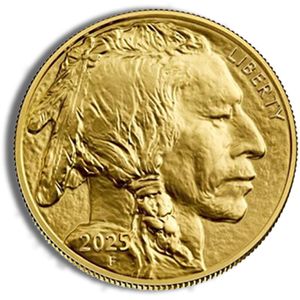
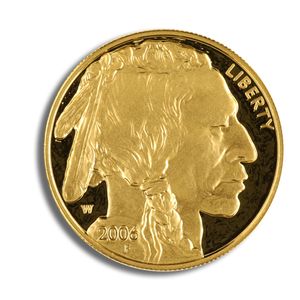
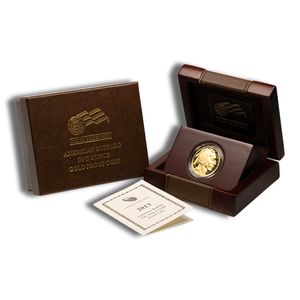
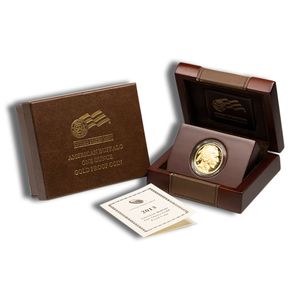
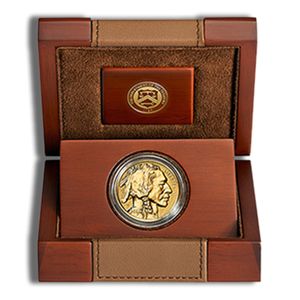
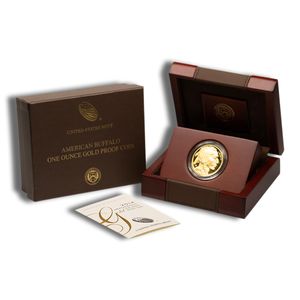
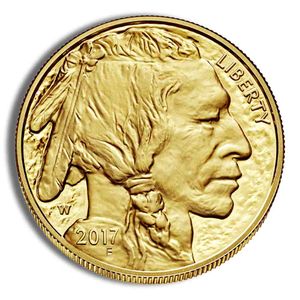
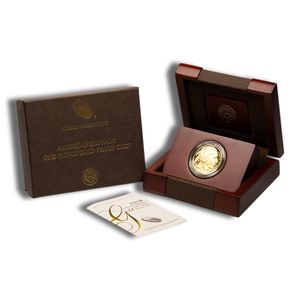
This page is dedicated to the American Gold Buffalo, the U.S. Mint's 24 karat gold coin and the first .9999 fine gold coin issued by the United States government. Most of the selection is made up of 1 oz proof Gold Buffalos struck at West Point, offered year by year from the 2006 debut onward in their original U.S. Mint box with a certificate of authenticity. Alongside them you'll find current 1 oz bullion Buffalos from 2024, 2025 and 2026, random year coins for buyers focused on gold content, and NGC PF70 and PCGS PR70 certified examples.
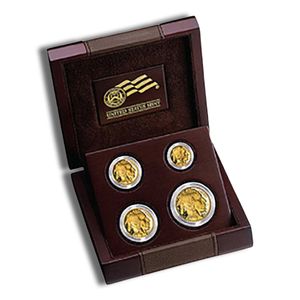
The selection also covers the coins that make 2008 a standout year in the series: burnished and proof Buffalos in 1/2 oz, 1/4 oz and 1/10 oz sizes, the 2008-W proof four coin set, and the Double Prosperity set that pairs a Gold Buffalo with an American Gold Eagle. The 2013-W reverse proof, struck to mark a century since James Earle Fraser's original design, rounds out the special issues.
Every listing is priced against the live gold spot market, and each product page shows its current bid/ask spread. Because we buy back what we sell, that spread gives you a working picture of both sides of the transaction before you decide which Gold Buffalo suits you.
What Are Gold Buffalo Coins?
Gold Buffalo coins are legal tender gold coins produced by the United States Mint, each containing gold refined to .9999 fineness. The 1 oz coin carries a $50 face value, and the fractional sizes struck in 2008 carry face values of $25 for the 1/2 oz, $10 for the 1/4 oz and $5 for the 1/10 oz. Those face values are symbolic, since the coins are priced on their gold content and finish rather than their denomination.
The closest comparison is the American Gold Eagle, which shares the Buffalo's 1 oz size and $50 face value but is struck in 22 karat gold alloyed for hardness. Buyers who prefer pure gold, or who simply favor Fraser's design, tend to choose the Buffalo, while the Eagle has the deeper run of fractional sizes. Many collectors hold both, which is exactly what the 2008 Double Prosperity set was designed around.
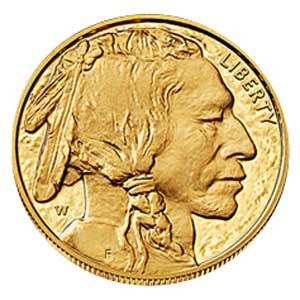
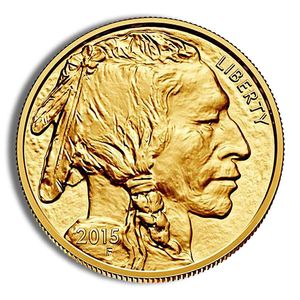
Within the series, finish is the main distinction. Bullion Buffalos carry no mint mark and are made for buyers who want an ounce of 24 karat U.S. gold at a modest premium. Proof coins are struck at West Point with a W mint mark, mirrored fields and frosted devices, while burnished coins have a soft satin finish and reverse proofs flip the proof contrast. Certified coins add an NGC or PCGS grade and a sealed holder on top of whichever finish they carry.
History and Background
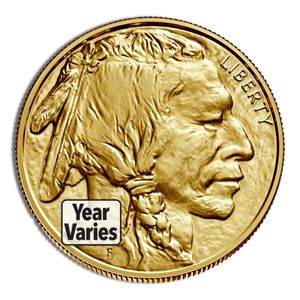
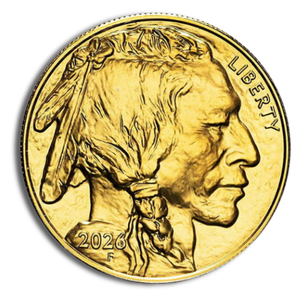
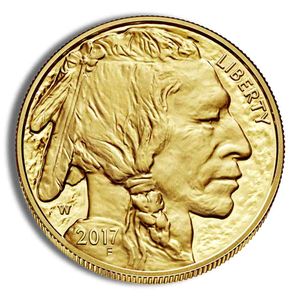
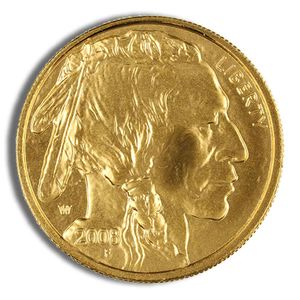
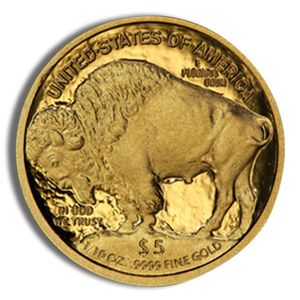
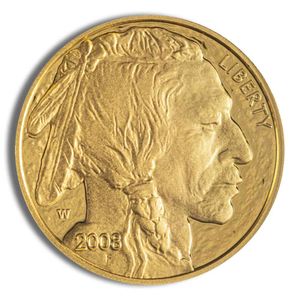
The Buffalo design dates to 1913, when sculptor James Earle Fraser created it for the five cent piece now known as the Buffalo nickel. Its obverse shows the profile of a Native American man and its reverse an American bison standing on a raised mound, an image widely regarded as one of the finest designs in U.S. coinage. The nickel was struck until 1938, and the design remained a favorite with collectors long after it left production.
Nearly a century later, the Presidential $1 Coin Act of 2005 authorized the Mint to produce a .9999 fine gold bullion coin, and Fraser's design was adapted for it. The American Gold Buffalo debuted in 2006 in both bullion and proof versions, giving the United States its first 24 karat gold coin and a direct answer to the .9999 coins already issued by other national mints.
The series expanded quickly. In 2008 the Mint struck fractional Buffalos in 1/2 oz, 1/4 oz and 1/10 oz sizes, introduced a burnished finish and issued proof sets, but it did not continue the fractionals in later years. In 2013 it marked the centennial of Fraser's design with a reverse proof, and the 1 oz proof and bullion coins have continued as annual staples of the Mint's gold program.
Purity, Weight, and Specifications
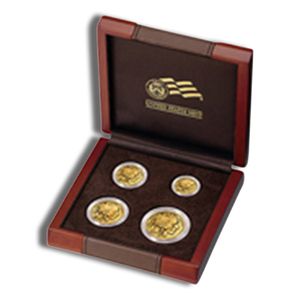
Every Gold Buffalo is struck from .9999 fine gold, which means 24 karat metal with essentially no alloy. The 1 oz coin contains one full troy ounce of gold, or 31.1035 grams, and its reverse states its weight and fineness directly. The 2008 fractionals follow the same purity at 1/2 oz, 1/4 oz and 1/10 oz, and together the four sizes add up to the 1.85 oz of gold in the 2008-W proof four coin set.
Pure gold is softer than the 22 karat alloy used for Gold Eagles, so Buffalos show handling marks more readily. That's one reason proofs are sealed in capsules at the Mint and why careful handling matters more with this series than with most gold coins. The coins have a reeded edge and are struck to tightly controlled weight and dimension standards.
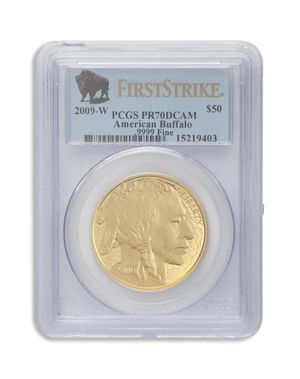
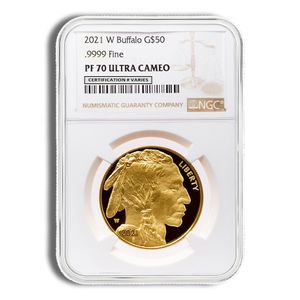
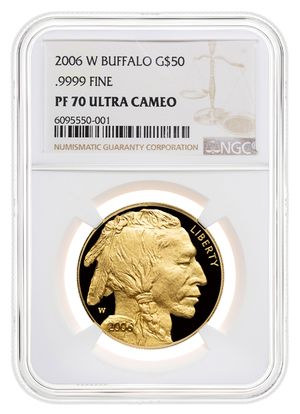
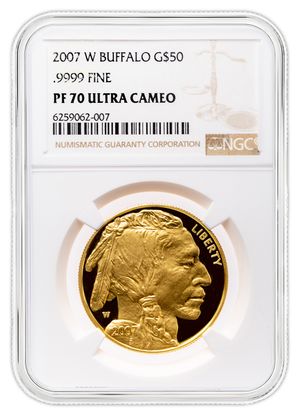
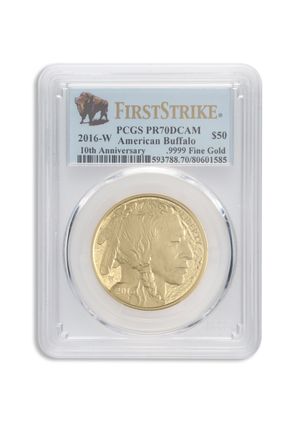
Mint marks help identify finish. Proof, burnished and reverse proof Buffalos carry a W for the West Point Mint, while bullion issues have no mint mark. On certified coins, the grading label adds the date, finish, grade and a unique certification number, which makes each slabbed coin traceable.
Available Brands, Mints, and Product Variations
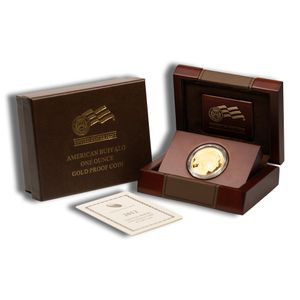
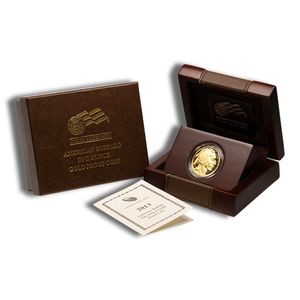
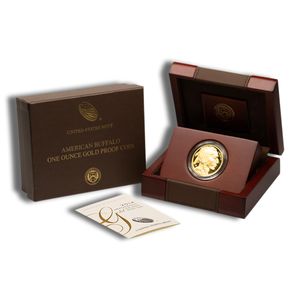
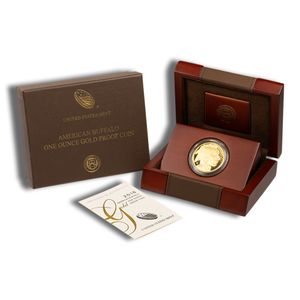
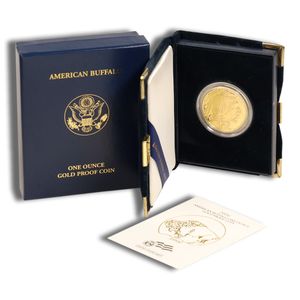
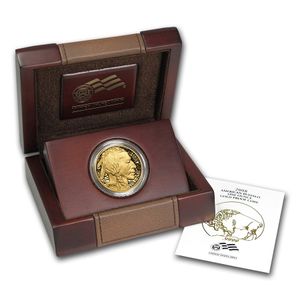
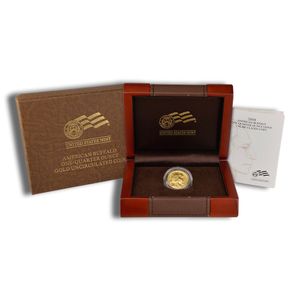
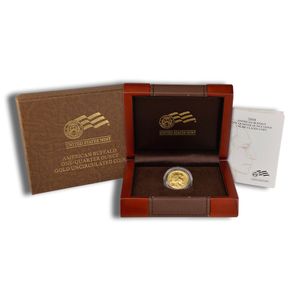
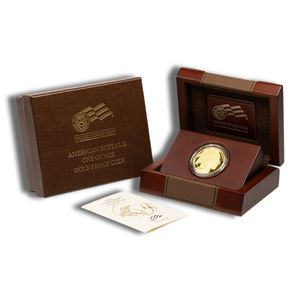
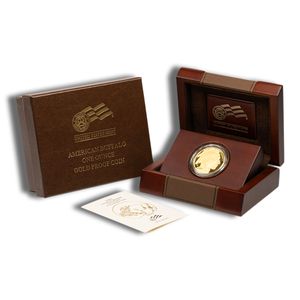
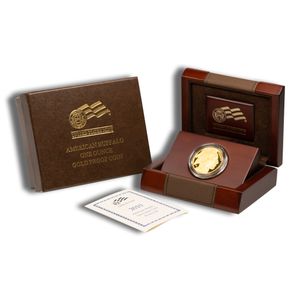
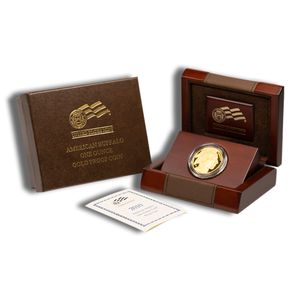
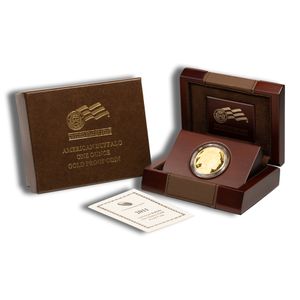
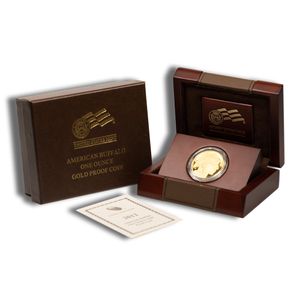
Every coin on this page comes from the United States Mint, with proofs and other collector finishes struck at West Point. The core of our catalog is the annual 1 oz proof, offered in every date from 2006 through 2023 plus the recent 2024-W and 2025-W issues, each in the Mint's original presentation box with its certificate of authenticity. For bullion buyers, we carry 2024, 2025 and 2026 1 oz BU Buffalos along with random year BU coins.
The 2008 issues deserve their own mention. You'll find 2008-W burnished Buffalos in all four sizes, 2008-W proofs in 1 oz, 1/2 oz, 1/4 oz and 1/10 oz, the complete 2008-W proof four coin set and the 2008-W Double Prosperity set with its Gold Buffalo and Gold Eagle. The 2013-W reverse proof is offered as well, with its mirrored design elements set against frosted fields.
Certified options include 2006-W, 2007-W, 2009-W, 2010-W and 2021-W proofs graded PF70 by NGC, and 2009-W, 2016-W and 2022-W proofs graded PR70 by PCGS with the First Strike designation. For buyers less concerned with date, we also list random year proofs with box and certificate, random year proofs in a capsule or grading holder, and random year 1 oz Buffalos in impaired condition.
Pricing, Premiums, and Market Factors
Every Gold Buffalo is priced from the live spot price of gold plus a premium that reflects how the coin was made and packaged. Bullion strikes carry the lowest premium in the series because they're produced in volume for distribution through the Mint's authorized purchasers. Impaired and random year coins also sit near the bottom of the range, since you're paying for gold content rather than a specific date or finish.
Proof coins cost more because they're struck with specially prepared dies, receive multiple strikes and are sold in presentation packaging. The 2008 burnished and fractional issues, the 2013-W reverse proof and the multi-coin sets carry further premiums tied to their single-year production. Certified coins add the cost of grading, and a perfect 70 grade or a First Strike label is priced higher than a raw coin of the same date.
Because the premiums in this series range so widely, we show the bid/ask spread on every product page. Our research tools let you compare premiums and spread tightness across Buffalos and other gold coins, so you can see how each option is priced relative to the rest of the market before you buy.
Condition, Packaging, and What to Expect
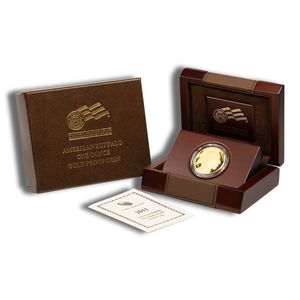
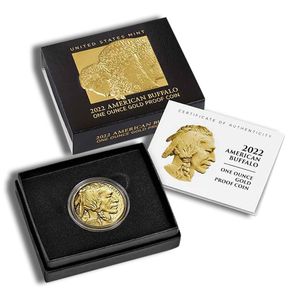
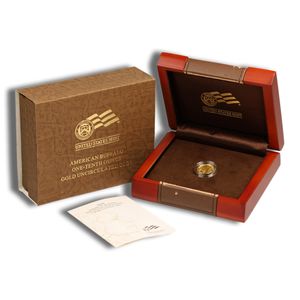
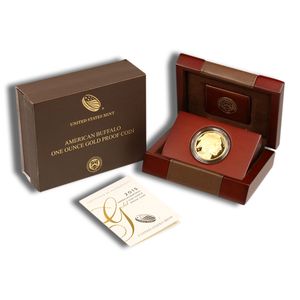
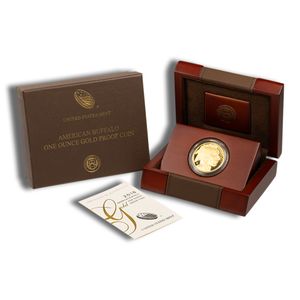
Most proof Buffalos in our catalog ship in their original U.S. Mint packaging: the coin sealed in a capsule, set in a presentation box, with the Mint's certificate of authenticity. Listings marked "with Box and COA" include both, and that packaging is part of what you're paying for. Certified coins arrive in their sealed NGC or PCGS holders with the grade and certification number on the label.
Bullion Buffalos are struck for gold content rather than presentation, so small contact marks or minor spotting are normal. Random year listings mean we choose the date from available inventory, and the coin you receive may not match the year shown in the photo.
Impaired condition coins are clearly labeled and may show scratches, cleaning, rim marks or other wear that affects appearance but not the gold content. They're a practical option for buyers who want 24 karat U.S. gold at a lower premium. Every order is packed so capsules, boxes and holders don't shift in transit.
Authenticity and Verification
We source Gold Buffalos through the U.S. Mint's distribution channels, established wholesalers and trusted distributors, and every coin is checked for authenticity, weight and purity before it ships. With a series this valuable, that step is never skipped.
Verification relies on the Buffalo's tightly controlled specifications. Weight, diameter and thickness are measured against published standards, and nondestructive electronic testing confirms the metal without marking the coin. Gold's combination of density and electrical conductivity is difficult to imitate, so a coin that fails on size, weight or conductivity stands out quickly, and the sharpness of Fraser's design details offers further visual confirmation.
Certified coins carry an extra layer of protection. NGC and PCGS holders are sonically sealed and include certification numbers you can look up on each service's website, and Bullion Standard is an authorized dealer for both. We're also members of the American Numismatic Association and the National Coin and Bullion Association, with an A+ rating from the Better Business Bureau.
Liquidity and Resale Considerations
The American Gold Buffalo is one of the most familiar gold coins in the U.S. market, and its government backing, .9999 purity and standard 1 oz size make it easy for dealers to identify and price. Bullion and random year 1 oz Buffalos trade closest to gold content and are among the most straightforward pieces to sell.
Proofs, burnished coins and sets follow the collector market as well as gold. Keeping the original box, capsule and certificate generally supports a stronger bid, while separated or damaged packaging can move a proof closer to bullion pricing. Certified coins are valued on their grade, designation and the holder's condition.
The 2008 fractionals and the 2013-W reverse proof have their own following among series collectors, so they're typically priced on that demand rather than on melt value alone. Reviewing a coin's bid/ask spread before you buy is the clearest way to understand how it trades today.
Storage and Security
Because 24 karat gold scratches easily, storage for Gold Buffalos is as much about protecting the surface as protecting the coin. Leave proofs in their Mint capsules and boxes, keep certified coins in their holders and store bullion coins in capsules or tubes rather than loose.
A fire-rated home safe that's bolted down works well for modest holdings, and it's worth confirming whether your homeowner's policy covers coins or needs a rider. For larger collections, a bank safe deposit box or private depository adds security, though safe deposit box contents aren't covered by the FDIC and should be insured separately.
Keep coins in a dry, stable environment and away from PVC flips or materials that can off-gas. Handle any loose coin by its edge, ideally with cotton gloves, since fingerprints on a proof surface can leave lasting marks.
Selling and Buyback Options
We run a two-way market, so the dealer you buy Gold Buffalos from is also ready to buy them back. Our purchasing team quotes against live market pricing, and every coin we receive goes through the same verification we apply to our own inventory before payment is issued.
Buyback pricing depends on the specific coin. A 1 oz bullion Buffalo is quoted mainly on gold content, while proofs, burnished issues and sets also reflect demand for the date and the completeness of the original packaging. Certified coins are priced on grade and designation, and impaired coins are quoted closer to melt value.
Bullion Standard Pro members can view their Buffalos valued at live executable wholesale bid prices, a realistic picture of what their holdings would bring today. That makes it easier to plan a sale with clear expectations rather than retail estimates.
Why Buy Gold Buffalo Coins?
Gold Buffalo coins combine two things buyers often have to choose between: the recognizability of a U.S. government legal tender coin and the 24 karat purity of the best-known world bullion coins. For anyone who wants pure gold with the backing of the United States Mint, the Buffalo is the natural choice.
Design is the other draw. Fraser's Native American portrait and bison are among the most admired images in American coinage, and the Buffalo is one of the few modern bullion coins carrying a design with more than a century of history. That collector familiarity gives the series appeal beyond its gold content.
The series also offers range in a single program. You can buy bullion coins at a lower premium, build a date run of West Point proofs, add the one-year 2008 issues or the 2013-W reverse proof, or choose certified PF70 and PR70 coins, all within the same design.
Why Buy from Bullion Standard?
Bullion Standard is a United States-based precious metals dealer founded in 2010 and headquartered in San Diego, California. We've grown from a local operation into a national online marketplace by holding to one principle: you only get one chance to earn someone's trust in this industry.
That principle shows up in our pricing, with live quotes, visible bid/ask spreads and research tools that let you compare coins on objective data. Checkout is secure and flexible, accepting Visa, Mastercard, American Express, Discover, PayPal, bank-connected payments through Plaid, wire transfer, paper check and cryptocurrency through BitPay.
Every coin is verified before shipment, and our customer-first support team stays with you after the sale. Because we also buy back what we sell, the relationship continues long after your Gold Buffalos arrive.
Get Near-Spot Pricing with Bullion Standard Pro
Bullion Standard Pro gives members live, executable wholesale bid and ask pricing across a broad range of precious metals, including gold coins like the American Gold Buffalo. Members transact at those wholesale prices without additional dealer markups or dealer spreads, so premiums move with real supply and demand.
For a series where a bullion coin, a proof with box and certificate and a PCGS PR70 First Strike can sit at very different premiums, that visibility matters. Members also get proprietary tools including historical premium analysis, premium percentile rankings, spread and liquidity metrics, and wholesale market activity indicators.
Pro also values member portfolios at live wholesale bid prices rather than estimated retail values. For repeat and price-sensitive buyers, it's a more efficient, data-driven way to buy, hold and eventually sell Gold Buffalos.


 (833) 278-4653