Buy 10 Gram Gold Bars Online
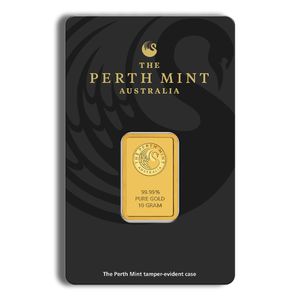
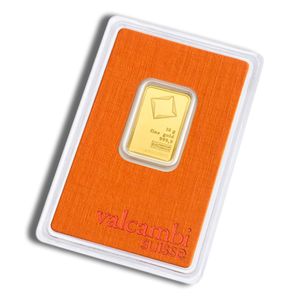
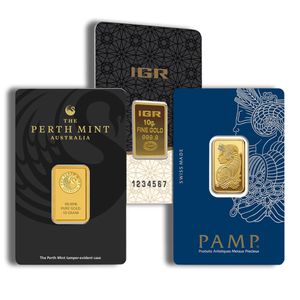
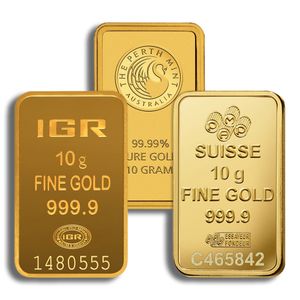
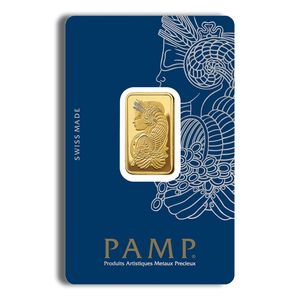
Our catalog of 10 gram gold bars brings together some of the most respected names in the global bullion market, including PAMP Suisse, Valcambi, Perth Mint, Geiger Edelmetalle, Istanbul Gold Refinery, and Argor-Heraeus. Each bar carries 0.3215 troy ounces of .9999 fine gold and arrives in an individual assay card, providing both authentication and a tamper-evident presentation that buyers and resellers recognize worldwide.
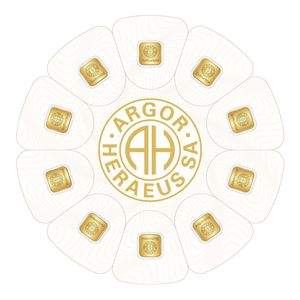
Beyond the branded options, our catalog also includes random brand 10 gram gold bars available both with and without assay cards, offering a practical entry point for buyers who prioritize gold content over a specific mint's packaging. The Argor-Heraeus Goldseed multi-bar rounds out the selection with a unique format: ten individually perforated 1 gram bars housed within a single assay card, combining divisibility with the convenience of a single purchase.
Bullion Standard sources every product through verified supply chains, and each item is authenticated before it reaches a customer. Our platform displays transparent, real-time pricing alongside bid and ask spreads on every product page, so you can evaluate the full cost of ownership before committing to a purchase.
What Are 10 Gram Gold Bars?
A 10 gram gold bar is a minted bullion product containing exactly 10 grams, or approximately 0.3215 troy ounces, of fine gold. The bar format distinguishes itself from coins and rounds primarily through its production method and purpose: bars are refined and fabricated specifically to deliver gold content efficiently, with minimal decorative overhead and a straightforward physical footprint.
Within the broader spectrum of gold bar sizes, the 10 gram format sits between fractional bars under 5 grams and the more commonly discussed 1 oz format. It appeals to buyers who want meaningful gold content in a compact, affordable format without committing to the full outlay of a 1 oz or larger bar. The 10 gram size is widely recognized internationally, which supports consistent liquidity across both domestic and global markets.
Most 10 gram bars in this weight class are minted rather than cast, meaning they are struck from pre-rolled gold blanks under high pressure to produce clean edges, crisp engravings, and a consistent finish. Minted bars typically carry a more refined appearance than cast bars and are generally packaged in protective assay cards that preserve condition and confirm authenticity at the point of manufacture.
History and Background
The modern gold bar as a standardized commercial product traces its roots to the expansion of European refining infrastructure in the 19th and early 20th centuries. Swiss refineries played an outsized role in establishing the production and quality standards that still define the industry today. PAMP Suisse, founded in 1977 in Castel San Pietro, Switzerland, helped popularize the individually sealed, assay-certified minted bar as a retail bullion product, a format that has since become the global standard for smaller denominations like the 10 gram weight class.
Over the following decades, refineries across Germany, Turkey, Australia, and Switzerland expanded their own branded bar programs to meet growing international demand. Valcambi Suisse, one of the world's largest gold refineries by output, developed its own assay-certified bar line that is now distributed through dealers globally. Geiger Edelmetalle brought German precision manufacturing to the retail bar market, while the Perth Mint leveraged its government backing and established refining reputation to produce bars recognized in markets from Asia to North America.
The 10 gram format specifically gained traction as precious metals ownership expanded into broader retail markets, particularly in Asia and the Middle East, where smaller denominations have long been culturally significant. Today, the 10 gram bar represents one of the most internationally traded retail gold formats, supported by a robust network of refineries, assayers, and global distribution channels.
Purity, Weight, and Specifications
Every 10 gram gold bar in our catalog is refined to a purity of .9999 fine gold, which corresponds to 99.99% pure gold content. This purity level is the standard for modern investment-grade gold bars and exceeds the .999 fineness that was once common among older bullion products. The .9999 designation is typically stamped directly onto the bar's surface alongside the weight in grams, the gold content in troy ounces, and the refinery's hallmark or logo.
While the gold content across all products in this weight class is identical at 0.3215 troy ounces, physical dimensions vary by manufacturer. The Valcambi bar, for example, measures 31 x 18 mm with a 1 mm thickness, while the Geiger bar takes a more square format at 22.9 x 22.9 mm. The Perth Mint bar measures 26 x 16 mm with a 2.5 mm thickness. These dimensional differences are entirely cosmetic and do not affect gold content or purity.
Assay cards serve as both packaging and certification documents. Each card is heat-sealed at the refinery, enclosing the bar and a certificate that confirms the product's weight, purity, and manufacturer. Serial numbers are included on select products, providing an additional layer of traceability. Bars purchased in assay card packaging should remain sealed to preserve both their presentation value and resale appeal.
Available Brands, Mints, and Product Variations
PAMP Suisse's Lady Fortuna design is among the most globally recognized images in the bullion bar market. The reverse features the Roman goddess of fortune rendered in intricate relief detail, making this bar as visually distinctive as it is functionally sound. PAMP bars are produced at the Produits Artistiques Métaux Précieux facility in Ticino, Switzerland, and are distributed through authorized dealer networks worldwide.
Valcambi Suisse, also headquartered in Switzerland, offers a clean, minimalist minted bar that prioritizes refinement efficiency and consistent presentation. The Istanbul Gold Refinery, commonly known as IGR, is one of Turkey's leading precious metals producers and holds LBMA Good Delivery status, a globally recognized accreditation that confirms the refinery meets the London Bullion Market Association's exacting standards for gold bar production. The Geiger Edelmetalle bar, produced in Saxony, Germany, reflects that refinery's reputation for precision fabrication and security-conscious design.
The Perth Mint, a government-owned entity of Western Australia with a refining history stretching back to 1899, produces bars that carry implicit sovereign credibility. Argor-Heraeus, a joint-venture Swiss refinery with ties to Heraeus and the South African Reserve Bank, offers the Goldseed multi-bar format, which allows buyers to hold ten separable 1 gram bars within a single sealed assay card. Random brand options are also available for buyers who prioritize gold content and cost efficiency above a specific manufacturer's provenance.
Pricing, Premiums, and Market Factors
Gold bar pricing is derived from the live spot price of gold, expressed in troy ounces, combined with a premium that reflects fabrication costs, refinery branding, packaging, distribution, and dealer margin. For 10 gram bars, premiums tend to run higher on a per-ounce basis than those found on 1 oz or larger bars, primarily because the fixed costs of manufacturing and assay packaging are spread across a smaller gold content base.
The premium differential between branded and random brand options reflects real market dynamics. PAMP Suisse and Perth Mint bars typically carry slightly higher premiums than lesser-known refineries due to their global distribution networks and the strong secondary market demand their names generate. Random brand bars offer the same .9999 gold content at a reduced premium, making them practical for buyers who are less focused on a specific mint's pedigree.
Bullion Standard displays live pricing alongside bid and ask spreads on every product page, giving buyers full visibility into both acquisition cost and expected resale value before completing a purchase. Tighter bid and ask spreads generally indicate stronger liquidity and lower round-trip transaction costs. Understanding this relationship, rather than focusing solely on the purchase premium, provides a clearer picture of what ownership actually costs over time.
Condition, Packaging, and What to Expect
New 10 gram gold bars shipped from Bullion Standard arrive factory-sealed in their original assay card packaging. The assay card is heat-sealed at the refinery and should remain intact upon delivery. Minor surface imperfections such as small hairlines or handling marks are common on minted bars and do not indicate a defect or compromise the bar's gold content, purity, or authenticity.
Random brand bars in assay card packaging will arrive from a recognized refinery, though the specific brand is not guaranteed and may vary based on current inventory. Buyers selecting the no-assay option should expect bars in good bullion condition, potentially without original packaging, but still verified for weight and purity before shipment. These products are intended for buyers prioritizing gold content over presentation.
The Argor-Heraeus Goldseed multi-bar ships as a sealed 10 gram assay card containing ten individually perforated 1 gram bars. The card should remain sealed if you intend to preserve the full resale presentation of the product. Separating individual gram bars from the card is possible but may affect the packaging premium associated with the intact multi-bar format.
Authenticity and Verification
Every product sold through Bullion Standard is sourced from authorized mints, refineries, wholesalers, and distributors and verified for authenticity, weight, and purity before fulfillment. Our sourcing network is limited to suppliers with established reputations and documented supply chains, consistent with the standards expected of a dealer operating within the broader bullion market.
Assay-certified bars carry the strongest built-in authentication structure. The assay card is sealed at the refinery and includes the manufacturer's hallmark, purity designation, weight, and in many cases a unique serial number. LBMA Good Delivery accreditation, held by refineries such as IGR, PAMP Suisse, Valcambi, and Argor-Heraeus, provides additional third-party confirmation that production meets internationally accepted gold bar standards.
For buyers who want additional verification, physical testing methods such as ultrasonic thickness testing, XRF spectrometry, and density measurement can be used by qualified assayers to confirm gold content without altering the bar. Keeping bars in their original sealed assay card packaging eliminates most authenticity concerns in the resale market, as intact packaging from reputable refineries is difficult to counterfeit without obvious signs of tampering.
Liquidity and Resale Considerations
The 10 gram gold bar format is broadly recognized across domestic and international bullion markets, which supports consistent resale access. Bars from globally distributed refineries such as PAMP Suisse, Valcambi, and Perth Mint tend to trade with the most confidence in secondary markets because dealers worldwide are familiar with their hallmarks, assay card formats, and authenticity indicators.
Bars from refineries with LBMA Good Delivery status carry additional credibility in wholesale and institutional markets, where sourcing verification matters. Random brand bars, while carrying identical gold content, may attract slightly lower bid prices in some resale channels due to reduced familiarity or the absence of a recognized assay card. This is worth considering when selecting between branded and unbranded options.
Liquidity in the 10 gram segment is generally healthy given the format's international appeal, but it is narrower than the 1 oz gold bar market, which benefits from deeper wholesale trading volume and more standardized dealer quoting. Buyers who anticipate frequent transactions or near-term resale may find the 1 oz format marginally more liquid, though the 10 gram size remains a well-traded denomination across most major dealer networks.
Storage and Security
The compact dimensions of 10 gram gold bars make them well-suited to efficient, low-profile storage. A small quantity can be stored in a quality home safe without significant space requirements, though any safe used for bullion storage should be fireproof, heavy enough to resist removal, or anchored to a fixed structure to meaningfully deter theft.
For larger accumulations or for buyers who prefer not to manage physical custody, allocated vault storage through a third-party precious metals custodian offers a professional alternative. These services typically provide segregated storage in insured, audited facilities and allow for straightforward retrieval or direct liquidation without the buyer needing to transport product. Bank safe deposit boxes are another practical option for smaller holdings, though they generally do not carry insurance coverage for contents.
Assay-sealed bars in their original packaging require no additional handling precautions beyond keeping them away from moisture and extreme temperature fluctuations. Bare bars stored outside their assay card should be handled with cotton gloves to minimize surface contact and kept in individual protective sleeves or hard capsules to prevent abrasion. Maintaining original presentation packaging also supports resale value when the time comes to sell.
Selling and Buyback Options
Selling 10 gram gold bars back into the market is a straightforward process when working with a dealer that maintains an active two-way market. Bullion Standard operates as a buyer as well as a seller, maintaining competitive buyback pricing that reflects live market conditions, current wholesale demand, and product-specific liquidity factors. Our platform displays bid pricing alongside ask pricing on every product page, so customers can evaluate the sell-side of a transaction with the same transparency as the buy side.
Buyback pricing is influenced by several variables, including the specific refinery, condition, and whether the original assay card is intact. Branded bars from globally recognized refineries such as PAMP Suisse, Valcambi, and Perth Mint typically attract stronger bids due to their broad dealer recognition and ease of downstream resale. Bars in sealed original assay card packaging are preferred for buyback and may be valued slightly higher than equivalent bars without intact packaging, since the assay card reduces verification requirements and maintains the product's market-ready presentation.
Initiating a sale through Bullion Standard involves a straightforward product submission and verification process. Our purchasing team evaluates each item against current market pricing and confirms weight, purity, and condition. Payment is processed efficiently once verification is complete. Customers considering a future sale are encouraged to review buyback pricing before purchasing, since understanding the full transaction economics at the outset leads to more informed decisions about which products to hold.
Why Buy 10 Gram Gold Bars?
The 10 gram format occupies a practical middle ground in the gold bar market. It offers a more accessible price point than 1 oz bars while providing a larger gold content per unit than the fractional 1 gram or 2.5 gram sizes. For buyers assembling a position in physical gold incrementally, the 10 gram size allows for meaningful accumulation without the higher outlay required by larger formats.
International recognizability is a genuine advantage for this weight class. The 10 gram bar is a standard denomination in many Asian and Middle Eastern markets where retail gold demand is particularly active. This cross-border familiarity contributes to a reasonably liquid resale market and ensures that bars from well-known refineries can find buyers across a wide range of channels.
The format also benefits from storage efficiency. Ten 10 gram bars contain the equivalent gold content of approximately one 3.215 troy ounce bar, but can be distributed across multiple storage locations or liquidated in smaller increments as needed. For buyers who value divisibility without sacrificing the bar format's typical premium efficiency over coins, the 10 gram size delivers a sensible balance.
Why Buy from Bullion Standard?
Bullion Standard was founded in 2010 in San Diego, California, with a straightforward premise: that buying and selling physical precious metals should be a transparent, information-rich experience rather than a high-pressure sales environment. Over more than a decade of operation, we have built our reputation on pricing integrity, reliable fulfillment, and post-purchase support that treats customers as long-term relationships rather than single transactions.
Every product we sell is sourced through verified supply channels and authenticated for weight, purity, and condition before it ships. We maintain an A rating with the Better Business Bureau and hold active memberships in both the American Numismatic Association and the National Coin and Bullion Association. Our status as an authorized dealer for PCGS and NGC reflects the seriousness with which we approach product integrity across every segment of our catalog.
Our platform is designed to make the full transaction visible, not just the purchase price. Live bid and ask spreads on every product page, real-time market pricing, and a two-way market model that supports both buying and selling within the same ecosystem reflect our commitment to operating more like a transparent marketplace than a traditional dealer. Customers can pay using a wide range of methods including major credit cards, PayPal, bank-connected payments through Plaid, wire transfer, check, and cryptocurrency through BitPay, and every transaction is backed by responsive customer service and a fulfillment process designed around reliability.
Get Near-Spot Pricing with Bullion Standard Pro
Bullion Standard Pro is designed for buyers who want access to the pricing efficiency typically reserved for wholesale market participants. Members transact at live executable wholesale bid and ask prices rather than through standard retail pricing structures, meaning premiums and spreads fluctuate naturally based on actual supply and demand within the wholesale bullion market rather than fixed dealer markups.
For buyers accumulating 10 gram gold bars on a regular basis, the pricing efficiency available through Bullion Standard Pro can reduce the round-trip cost of ownership meaningfully over time. Because the platform applies no additional dealer markups or dealer spreads to member pricing, the economics of each transaction more closely reflect real wholesale market conditions. Tighter spreads translate directly into lower costs when buying and better returns when selling.
Pro members also gain access to live portfolio valuation based on wholesale bid pricing, historical premium analysis, spread and liquidity metrics, and a suite of proprietary research tools designed to help investors compare products objectively across our full catalog. Rather than relying on marketing claims or static product descriptions, Pro members can evaluate 10 gram bars from different refineries using measurable data: historical premiums, bid and ask spread tightness, liquidity trends, and real-time wholesale market activity. The goal is to make information that has traditionally been available only to institutional participants accessible to individual buyers at every level of experience.


 (833) 278-4653