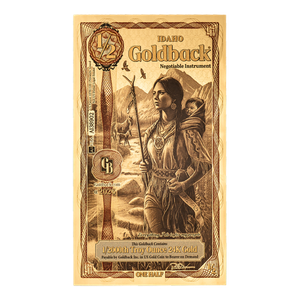
Buy Goldbacks Online
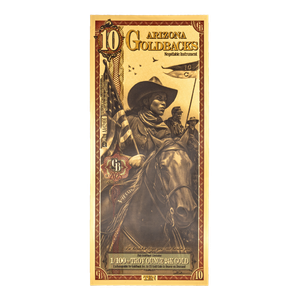
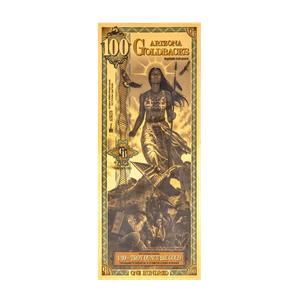
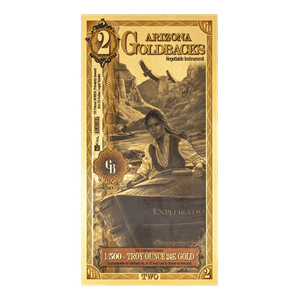
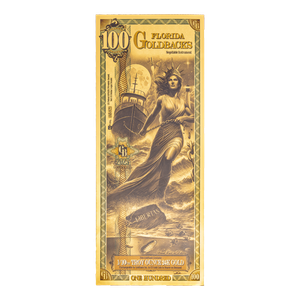
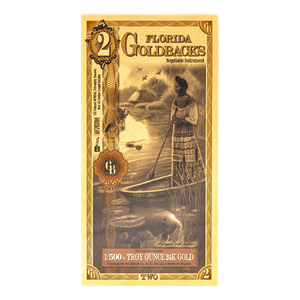
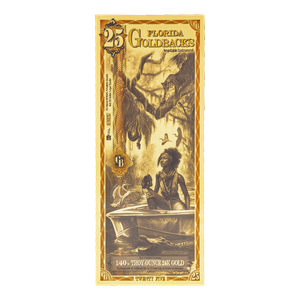
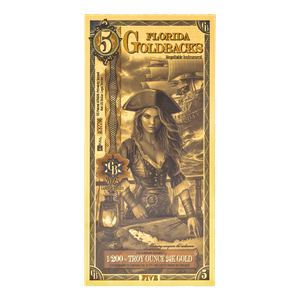
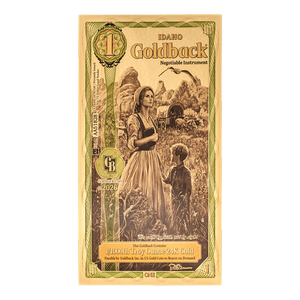
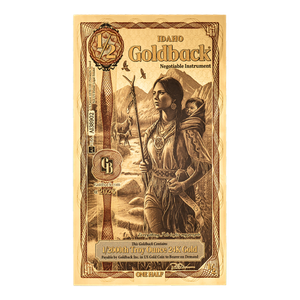
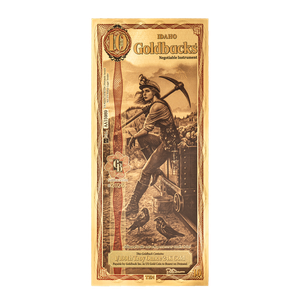
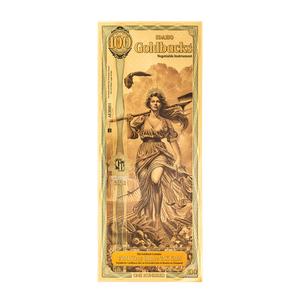
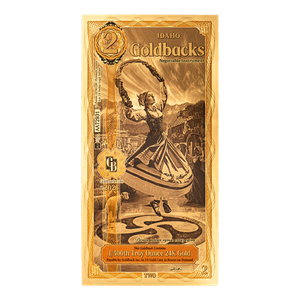
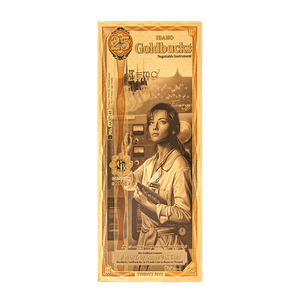
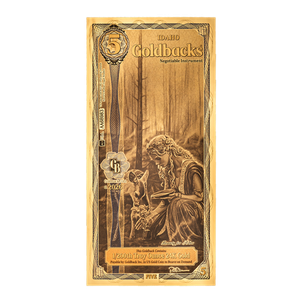
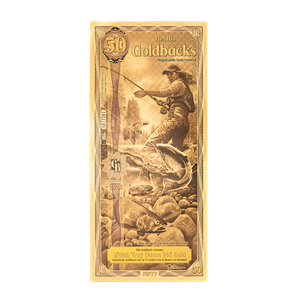
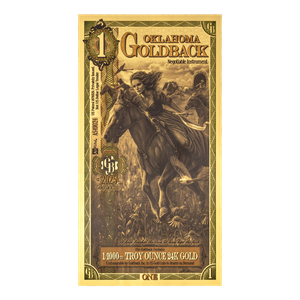
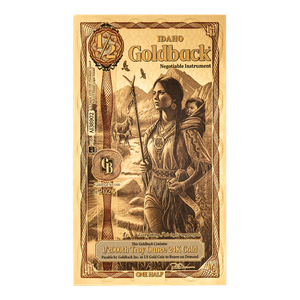
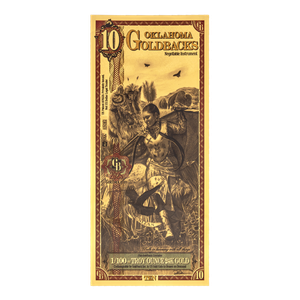
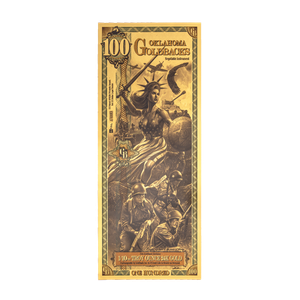
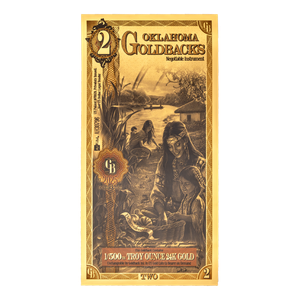
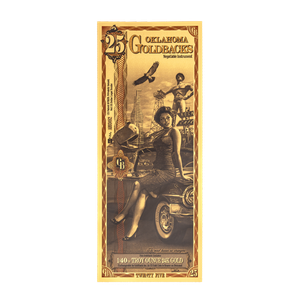
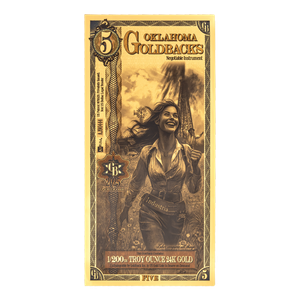
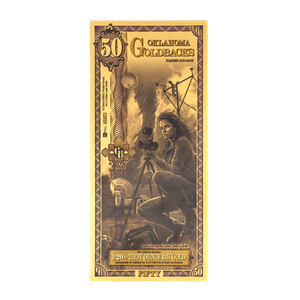
Our catalog features a broad selection of goldbacks spanning multiple American states, denomination sizes, and gold content weights. Buyers will find goldbacks representing Arizona, Florida, Idaho, Oklahoma, Nevada, Utah, Wyoming, South Dakota, and Dallas, with denominations ranging from 1/4 and 1/2 goldback fractionals up through the 100 goldback. Every note in the lineup is produced by Valaurum and contains verified quantities of 24-karat gold layered within a durable, flexible substrate that makes this format unlike anything else in the physical precious metals space.
Whether you're looking for a single 1 goldback to experience the format for the first time or a higher-denomination 50 or 100 goldback for more concentrated gold content, the options here are specific and varied. Denominations of 1, 2, 5, 10, 25, 50, and 100 are available across multiple state series, with select series also offering 1/2 and 1/4 goldback fractionals for those seeking the smallest available increments of gold in note form.
Bullion Standard's pricing reflects real-time market conditions, and each product page displays both buy and sell pricing so you can evaluate the full cost of ownership before committing. Our marketplace is structured around transparency, not pressure, and that applies equally to goldbacks as it does to bars, coins, or rounds.
What Are Goldbacks?
Goldbacks are a privately produced, voluntary local currency format that embeds actual gold into a flexible polymer note using a proprietary thin-film deposition process. Unlike gold coins or bars, which carry their gold in a solid metallic form, a goldback holds its gold as an ultra-thin layer sandwiched between protective polymer sheets. The result is a note that functions as both a physical gold product and a spendable currency where accepted, primarily across select American states that have passed legal tender legislation for gold and silver.
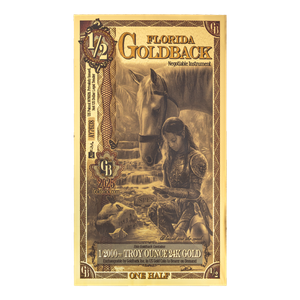
Each goldback denomination corresponds directly to a defined quantity of gold. A 1 goldback contains 1/1000 of a troy ounce of gold, which equals 0.001 oz. A 10 goldback contains 0.01 oz, a 25 goldback holds 0.025 oz, and so on up the denomination scale. The fractional notes, such as the 1/2 and 1/4 goldback, contain 0.0005 oz and 0.00025 oz respectively, making them among the smallest physical gold products commercially available anywhere in the market.
Buyers choose goldbacks for several distinct reasons. The note format allows gold to be held and exchanged in very small denominations without the fabrication and handling overhead that typically makes ultra-fractional gold impractical. For those who want physical gold in a format that can be passed hand to hand, gifted, or used within voluntary exchange networks in states like Idaho, Utah, Nevada, Arizona, Wyoming, Oklahoma, South Dakota, and Florida, goldbacks offer a format that no traditional coin or bar can replicate.
History and Background
The goldback was introduced by Valaurum, a Utah-based company specializing in thin-film gold technology, in response to interest in practical, small-denomination physical gold. The first series, the Utah Goldback, launched around 2019 and was designed to complement Utah's existing recognition of gold and silver as legal tender under state law. The concept resonated quickly, and the program expanded into Nevada, New Hampshire, Wyoming, Idaho, South Dakota, Arizona, Oklahoma, Florida, and beyond over the years that followed.
Valaurum's manufacturing process draws from advanced thin-film deposition techniques originally developed in industrial and aerospace contexts. Applying gold in layers thin enough to be embedded within a flexible substrate while maintaining precise weight and purity tolerances requires equipment and quality control far beyond what traditional mints or refineries employ. Each note is printed with original artwork commissioned specifically for its state series, making goldbacks simultaneously a gold product, a collectible, and a cultural artifact tied to American state identity.
The broader market for goldbacks grew steadily as awareness expanded through the precious metals community. Collectors, gold enthusiasts, liberty-oriented buyers, and small business owners in participating states all contributed to demand growth. Limited and early-release editions, such as the California 3 goldback in our catalog, have further developed the collector appeal of the format, while the consistent state series denominations serve the practical gold-holding market.
Purity, Weight, and Specifications
Gold content in goldbacks is precisely defined by denomination. The smallest standard note, the 1/4 goldback, contains 0.00025 troy ounces of gold. The 1/2 goldback holds 0.0005 oz, the 1 goldback contains 0.001 oz, and denominations continue scaling at consistent multiples through 2, 5, 10, 25, 50, and 100. The 100 goldback is the largest standard denomination and contains 0.1 troy ounces of gold, equivalent to 1/10 oz of pure gold embedded in note form.
Purity across the goldback lineup is primarily 0.9999 fine gold on the more recent and higher-specification series, though some state series carry 0.999 fine gold. Both are considered investment-grade purity. The polymer substrate itself does not add to the gold weight; only the deposited gold layer counts toward the metal content. Thickness is typically listed at 0.1 mm for most denominations, and the physical note dimensions mirror familiar currency proportions.
Unlike gold coins or bars, goldbacks do not carry traditional mint stamps, serial numbers, or assay cards. Authenticity is established through Valaurum's proprietary manufacturing process and the visual characteristics of the gold layer itself, which is difficult to replicate without the specialized industrial equipment used in production. The denomination and state designation are incorporated into the printed design and can be confirmed visually on any genuine note.
Available Brands, Mints, and Product Variations
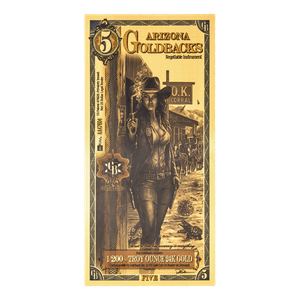
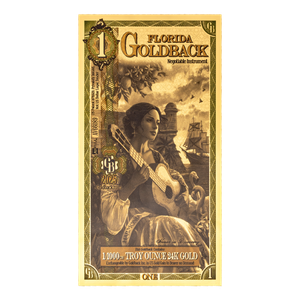
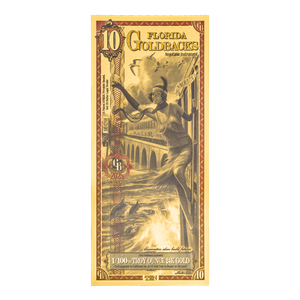
Every goldback in our catalog is produced by Valaurum, the sole manufacturer of the goldback format. While multiple state-branded series exist, all share the same manufacturing standards, materials, and gold deposition process. The Arizona series, Florida series, Idaho series, Oklahoma series, Nevada, Utah, South Dakota, Wyoming, and Dallas goldbacks each feature distinct original artwork while adhering to the same denomination and gold content specifications. Valaurum commissions original illustrations for each state series, which contributes to both the visual appeal and the collectible character of the notes.
Denomination availability varies by state series. The Idaho and Florida series in our catalog offer the broadest range, covering 1/4, 1/2, 1, 2, 5, 10, 25, 50, and 100 denominations. The Arizona and Oklahoma series span from 1 through 100, while individual state releases like Nevada, Utah, South Dakota, and Wyoming are currently represented in the 1 goldback denomination. The Dallas goldback represents a regional-themed release rather than a state-specific series tied to legal tender legislation. The Limited Early Release California 3 goldback adds a unique denomination that falls outside the standard denomination structure, reflecting the collector-oriented side of the goldback market.
Within the Wyoming series, product attributes include inner pack and outer pack quantity information, which indicates that some goldback products are available in bundle formats. Wyoming 1 goldbacks list an inner pack of 10 and outer pack of 100, making it practical to acquire larger quantities in a structured format. Buyers interested in accumulating specific state series in volume should review individual product pages for current packaging and quantity availability.
Pricing, Premiums, and Market Factors
Goldback premiums are structurally higher than most traditional bullion formats, and for good reason. The manufacturing process requires industrial thin-film deposition equipment, specialized polymer substrates, commissioned artwork, and precise quality control at the microgram scale. These production costs are spread across very small amounts of gold per note, which means the premium per ounce of gold is naturally elevated compared to standard coins or bars. A 1 goldback containing 0.001 oz of gold will carry a substantially higher proportional premium than, say, a 1 oz gold coin containing the same purity gold in a more conventional form.
Higher-denomination goldbacks tend to carry relatively lower premiums per ounce of gold than lower denominations, since the fixed production cost per note is distributed across more gold content. The 100 goldback, containing 0.1 troy ounces of gold, represents the most gold-content-efficient denomination in the standard lineup. Lower denominations like the 1/2 or 1/4 goldback are primarily driven by collector appeal and the novelty of holding an extraordinarily small amount of gold in a tangible note format, rather than by premium efficiency alone.
Bullion Standard displays both buy and sell pricing on each product page, including current bid/ask spreads. This allows buyers to understand the full relationship between acquisition cost and resale value before making a purchase. Goldbacks trade in a specialized segment of the precious metals market, and pricing reflects the unique dynamics of that segment, including Valaurum's production costs, collector demand, state legal tender recognition, and the availability of notes across active resale markets.
Condition, Packaging, and What to Expect
Goldbacks are delivered in pristine, uncirculated condition. Because they are note-format products rather than struck metal coins or minted bars, their condition is defined differently than traditional bullion. There are no mint state grades or certified slabs associated with standard goldback purchases. Notes are typically delivered in crisp, flat condition, consistent with the way currency-format products are handled by Valaurum and authorized distributors.
Individual goldbacks may arrive loose or in clear protective sleeves depending on denomination and packaging configuration. Multi-note packs, such as the Wyoming 1 goldback inner packs of 10, are consolidated for convenient handling. Buyers should expect the notes to be visually sharp, with gold visible across the design field and original artwork intact. Minor cosmetic variation in the gold film appearance is a natural result of the deposition process and does not indicate a defect.
Because goldbacks are flexible polymer notes rather than rigid metal products, storage differs from traditional bullion handling. Notes should be kept flat, away from excessive heat or sharp bending, and stored in protective sleeves or folders to maintain condition over time. Our product pages list dimensions, thickness, and gold content for each denomination so buyers can plan accordingly before their order arrives.
Authenticity and Verification
Valaurum's manufacturing process is one of the most difficult to replicate of any product in the physical precious metals market. The thin-film gold deposition used in goldback production requires multi-million dollar industrial equipment operating at exacting tolerances. The resulting gold layer in a genuine goldback reflects light in a way that is visually distinctive and nearly impossible to replicate through conventional printing, coating, or plating methods.
Visual inspection is the primary authentication method for goldbacks. Genuine notes display a consistent gold film across the design area, and the overall appearance of the artwork combined with the gold layer has a character that counterfeit attempts generally cannot match. Valaurum has also publicly shared guidance on identifying authentic notes, and the collector community has developed familiarity with the distinguishing characteristics of genuine goldbacks over time.
Every product sold through Bullion Standard is sourced from reputable distributors and verified for authenticity before it reaches a customer. Our sourcing and verification standards apply across all product categories including goldbacks. Bullion Standard maintains an A rating with the Better Business Bureau and operates as a member of the American Numismatic Association and the National Coin and Bullion Association, reflecting our ongoing commitment to professional standards across every product we handle.
Liquidity and Resale Considerations
Goldbacks occupy a specialized segment of the secondary precious metals market. Unlike government-issued gold coins from major sovereign mints, which trade globally across a deep and liquid dealer network, goldbacks are primarily resold through the goldback-specific community, precious metals dealers active in that segment, and online marketplaces where collector demand intersects with bullion interest. Liquidity exists, but it reflects a narrower and more specialized buyer pool than mainstream bullion formats.
Higher-denomination goldbacks, such as the 50 and 100, tend to be more straightforward to resell on a gold-content basis, since their gold content is large enough to register meaningfully in a typical bullion transaction. Lower denominations, particularly 1/2 and 1/4 goldbacks, are bought and sold more on collector and novelty demand than on gold content value alone. State series recognition matters in resale contexts, with widely issued and longer-established series like Idaho, Utah, and Nevada generally carrying stronger secondary market familiarity than newer or more limited regional releases.
Understanding resale expectations before purchasing any goldback is important. Buyers should evaluate the bid/ask spread displayed on our product pages as part of their overall purchase assessment, recognizing that goldbacks carry higher premiums and spreads than mainstream bullion formats as a reflection of their specialized production and niche market positioning. Bullion Standard's two-way market structure means you can request a buyback quote directly through our platform, which provides a concrete reference point for current resale value rather than leaving you to estimate it independently.
Storage and Security
Goldbacks are thin, flexible polymer notes, which makes them more compact and easier to store than most precious metals formats of comparable gold content. A complete collection across multiple denominations and state series can be stored flat in a standard binder, protective currency sleeve system, or a dedicated goldback storage album. The flexible substrate does not require the same rigid housing that coins or bars demand, but protection from heat, moisture, and bending is still important for maintaining long-term condition and appearance.
For buyers accumulating goldbacks as part of a broader precious metals portfolio, home fireproof safes rated for document and currency protection are a practical starting point. Because goldbacks are paper-format products as much as metal products, safes with better temperature and humidity control are preferable to those designed only for metal items. Bank safe deposit boxes offer another secure option for notes held long-term without frequent access.
Larger denomination goldbacks, such as the 50 and 100, represent enough gold value to warrant more deliberate storage consideration. Keeping higher-value notes in tamper-evident protective holders and cataloging them as part of a documented holdings inventory is a reasonable practice. Bundle formats, where available, can simplify storage organization for buyers holding multiple notes of the same denomination and state series.
Selling and Buyback Options
Selling goldbacks back into the market involves a different process than selling mainstream bullion. Because the format is specialized, dealer buyback interest varies depending on state series, denomination, condition, and current secondary market demand. Bullion Standard offers buyback pricing for goldbacks through our two-way market structure, and current sell pricing is visible directly on each product page, giving you a real-time reference before initiating a sale.
Condition matters in goldback resale more than it does for standard bullion bars or coins. Notes that show significant creasing, tearing, or surface contamination may attract lower buyback offers than notes maintained in clean, flat, uncirculated condition. Keeping original packaging or protective sleeves intact also supports a cleaner transaction. While goldbacks do not carry graded certification like numismatic coins, the visual condition of the note and the integrity of the gold film layer are both assessed during the buyback process.
Buyers considering a future sale should evaluate both the buy and sell prices shown on product pages before purchase, rather than focusing exclusively on the acquisition side of the transaction. Bullion Standard's buyback process is designed to be straightforward, with responsive pricing and a streamlined submission process. Our purchasing team is familiar with the goldback format across all available state series and denominations, which supports a more efficient and consistent resale experience than relying on general-market listings alone.
Why Buy Goldbacks?
The appeal of goldbacks is genuinely unlike any other format in the precious metals space. For buyers who want to hold physical gold in a denomination small enough to be transacted, gifted, or distributed in everyday exchanges, there is simply no comparable alternative. A 1 goldback containing 0.001 oz of gold is the functional equivalent of a one-unit gold note, and the ability to accumulate them across state-specific designs adds both a geographical and artistic dimension that coin and bar formats cannot offer.
Collectors are drawn to goldbacks for the artwork, the state-by-state series structure, and the limited and early release editions that introduce non-standard denominations like the California 3 goldback. The commissioned original artwork on each series makes goldbacks aesthetically distinct from stamped coins and pressed bars, and the connection to state legal tender recognition gives the format a cultural significance that resonates with buyers interested in the intersection of precious metals and American economic sovereignty.
For buyers in states that recognize goldbacks as a voluntary medium of exchange, including Utah, Nevada, Idaho, Wyoming, Arizona, Oklahoma, South Dakota, and others, goldbacks offer a practical format for day-to-day use cases that traditional bullion cannot easily support. The note format is self-descriptive, denomination-labeled, and easily handled without requiring weight scales, purity testing equipment, or assay cards to confirm value. That combination of practicality, collectibility, and gold content makes goldbacks a genuinely unique addition to any physical precious metals holding.
Why Buy from Bullion Standard?
Bullion Standard has operated as a United States-based precious metals dealer since 2010, headquartered in San Diego, California. Our platform is built around transparency, verified sourcing, and a customer-first purchasing experience that prioritizes informed decision-making over high-pressure sales tactics. Every goldback we sell is sourced through reputable distribution channels and verified for authenticity before fulfillment. Our A BBB rating and membership in both the ANA and NCBA reflect the professional standards we maintain across every product category, including the specialized goldback segment.
Pricing at Bullion Standard is driven by real-time market conditions rather than arbitrary markups. Each product page displays both acquisition and resale pricing, along with the bid/ask spread, so you can evaluate the complete cost picture before deciding to buy. This level of transparency is central to how we operate and reflects our belief that buyers deserve objective information rather than incomplete pricing displays that obscure the full transaction.
Our two-way market model means you can both purchase and sell goldbacks through the same platform, with competitive buyback pricing that reflects current market conditions. Payment options include Visa, Mastercard, American Express, Discover, PayPal, bank-connected payments through Plaid, wire transfer, paper check, and cryptocurrency through BitPay. Secure checkout, reliable fulfillment, and accessible customer support are consistent parts of the experience regardless of order size or product type.
Get Near-Spot Pricing with Bullion Standard Pro
Bullion Standard Pro is designed for buyers who want direct access to executable wholesale bid and ask pricing rather than standard retail pricing structures. Members transact at live wholesale market prices without additional dealer markups layered on top, which means premiums and spreads fluctuate based on actual supply and demand conditions rather than fixed retail tiers. For buyers accumulating goldbacks in larger quantities or building positions across multiple state series and denominations, this pricing structure can meaningfully reduce the total cost of ownership over time.
Beyond pricing efficiency, Bullion Standard Pro provides access to proprietary market intelligence tools including historical premium analysis, bid/ask spread tracking, liquidity metrics, and premium percentile rankings. For goldbacks, which trade in a more specialized segment than mainstream bullion, these tools offer context that is difficult to obtain elsewhere. Understanding how premiums have moved over time, where current spreads stand relative to historical norms, and how buying and selling pressure is shifting can all inform more deliberate purchasing decisions.
Portfolio valuation within Bullion Standard Pro uses live executable wholesale bid pricing rather than estimated retail values, providing a more accurate picture of current liquidation value across your holdings. For buyers who hold goldbacks alongside other precious metals formats, the ability to view the entire portfolio under a unified, wholesale-referenced valuation framework adds meaningful analytical clarity. Membership is designed to be practical for price-conscious buyers at any level, not only high-volume traders, and the platform continues to expand its tools and data coverage over time.


 (833) 278-4653