Buy Pre-1933 US Gold Coins Online
This page gathers U.S. gold coins struck before the 1933 gold recall, across the six denominations the U.S. Mint issued for circulation: the $1 gold dollar, the $2.50 quarter eagle, the $3 piece, the $5 half eagle, the $10 eagle and the $20 double eagle. Types include the Classic Head, Liberty Head, Indian Princess Head, Indian Head and Saint-Gaudens designs, all struck in .900 fine gold.
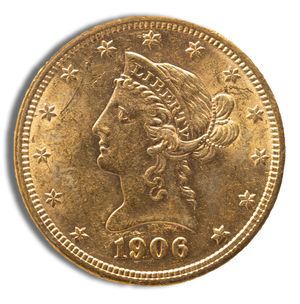
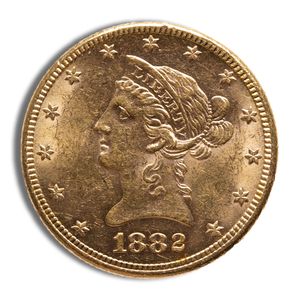
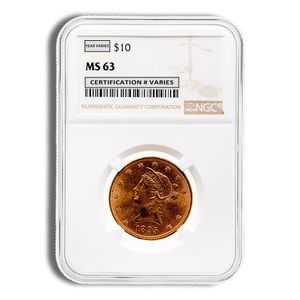
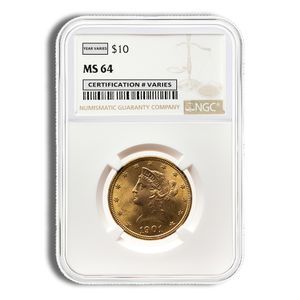
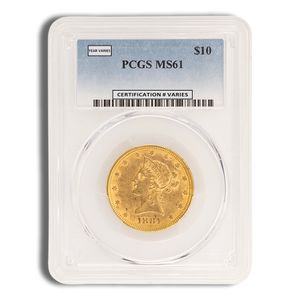
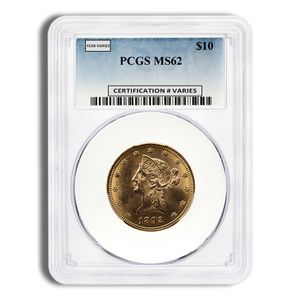
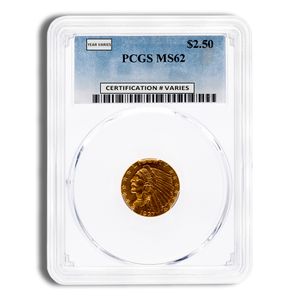
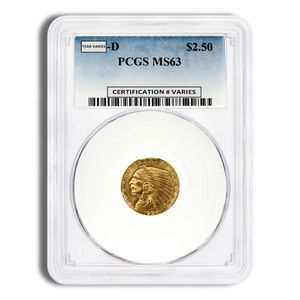
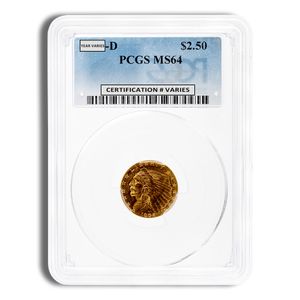
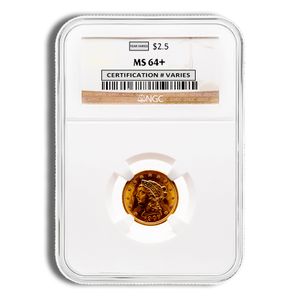
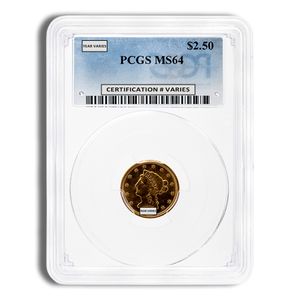
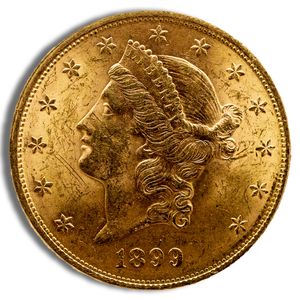
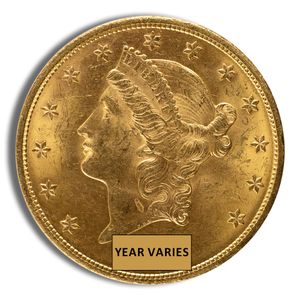
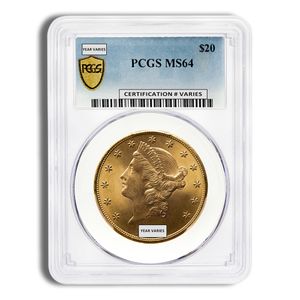
Nearly all of our pre-1933 U.S. gold coins are random year listings, so you choose the type and grade and we select the date from available inventory. Raw coins are offered in VF, XF, AU and BU, NGC and PCGS certified coins run from MS60 to MS66, and economical cleaned or low grade pieces are available for buyers focused mainly on gold content.
Every listing is priced live against the gold spot price, and each product page shows our bid/ask spread, so you can see what we'd pay for the same coin today. With classic gold, where premiums vary by denomination, type and grade, that kind of visibility makes comparing options far easier.
What Are Pre-1933 US Gold Coins?
Pre-1933 U.S. gold coins are the gold pieces the United States struck as everyday money before gold was withdrawn from domestic circulation in 1933. Unlike modern American Gold Eagles or Gold Buffalos, which are bullion coins made for buyers of metal, these coins were spent, saved and carried in pockets. Most surviving examples show at least some of that history in their wear.
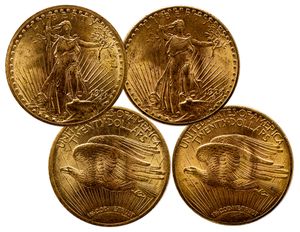
They sit between bullion and numismatics. A common date Saint-Gaudens double eagle in circulated or lower mint state grades trades mainly on its 0.9675 oz of gold plus a premium, while scarce dates and high grades are priced as collector coins. Our random year listings focus on the first group, where type, denomination and grade are the main choices.
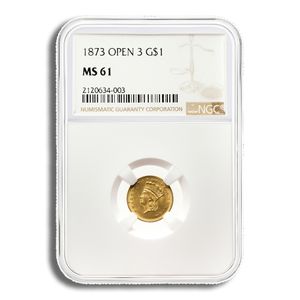
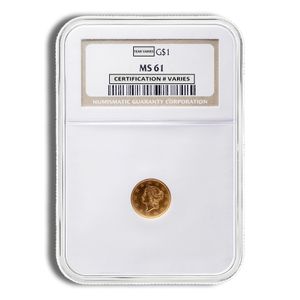
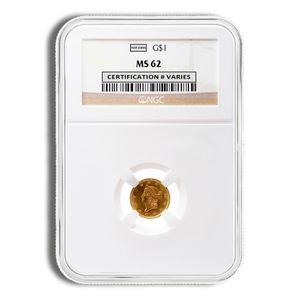
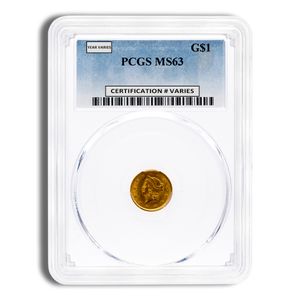
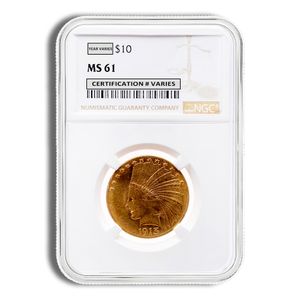
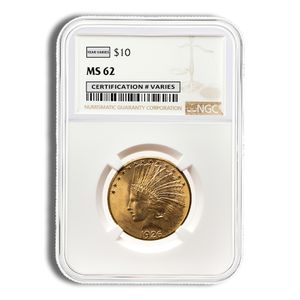
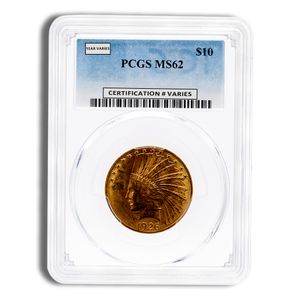
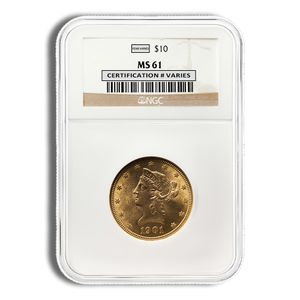
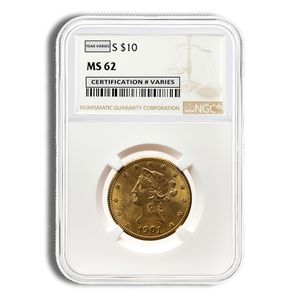
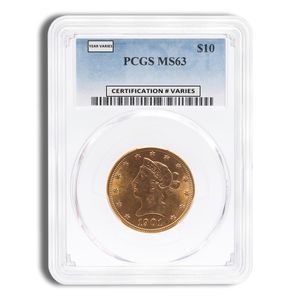
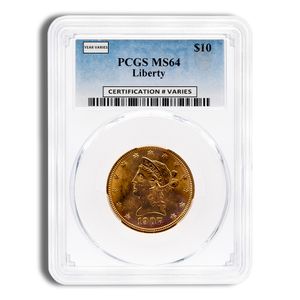
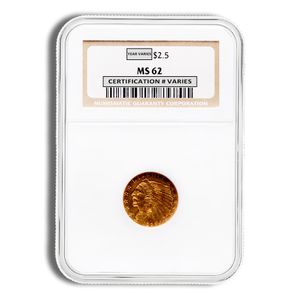
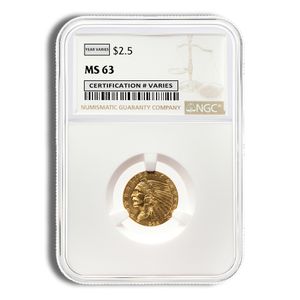
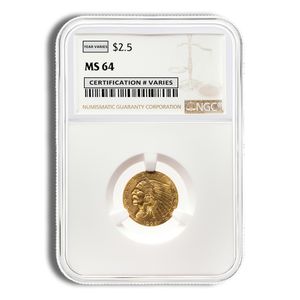
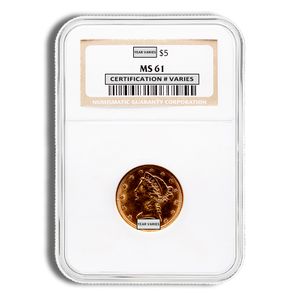
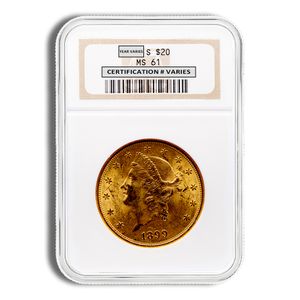
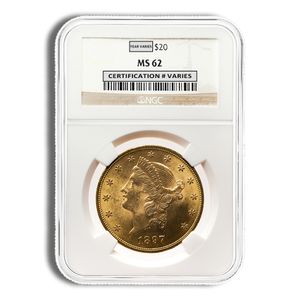
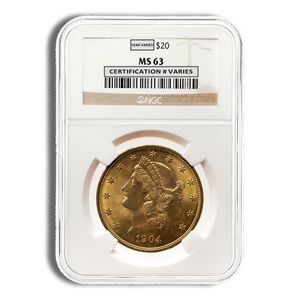
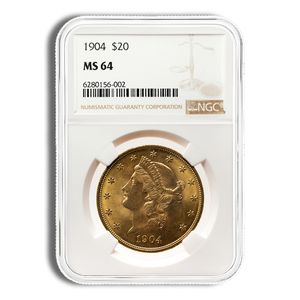
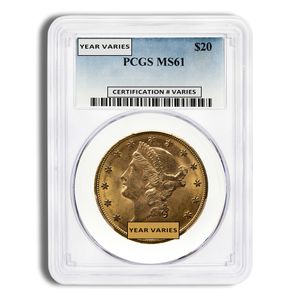
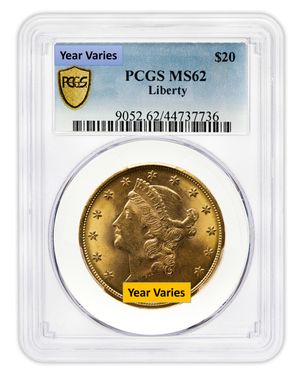
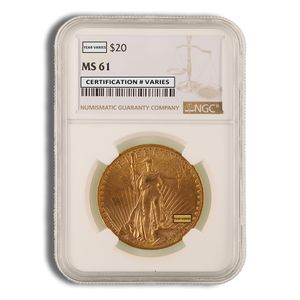
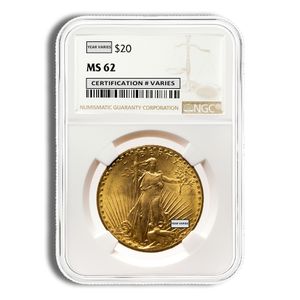
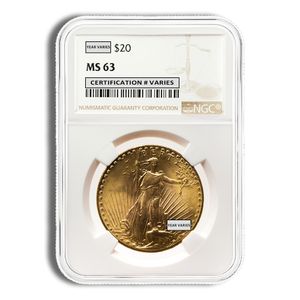
The other key decision is raw versus certified. Raw coins are sold by a grade description such as XF or AU, while NGC and PCGS certified coins carry a numeric grade on the 70-point scale and are sealed in a holder that confirms authenticity. Certified coins on this page mostly fall between MS61 and MS65. Raw coins usually put more gold in your hands for the money, while certified coins remove the guesswork about grade and authenticity.
History and Background
The Coinage Act of 1792 authorized the first U.S. gold coins: the $10 eagle, the $5 half eagle and the $2.50 quarter eagle. Early gold was often worth more as metal than its face value and was widely melted, until the Coinage Act of 1834 reduced the gold content of U.S. coins and introduced the Classic Head designs. The California Gold Rush then brought a flood of new metal, and Congress authorized the $1 gold dollar and the $20 double eagle in 1849, followed by the $3 piece first struck in 1854.
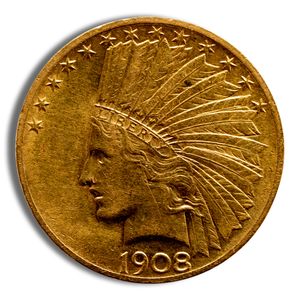
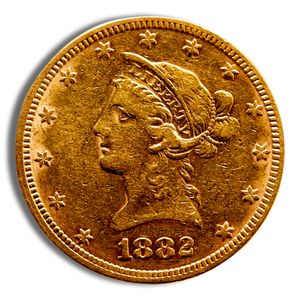
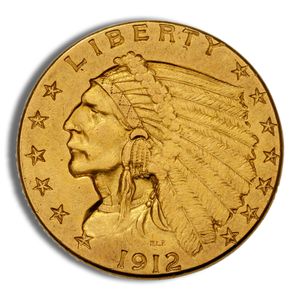
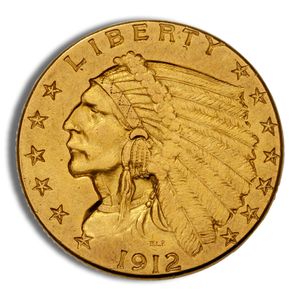
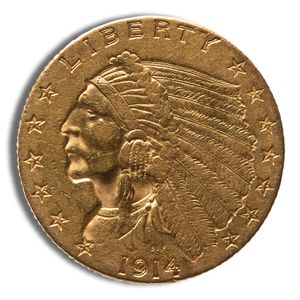
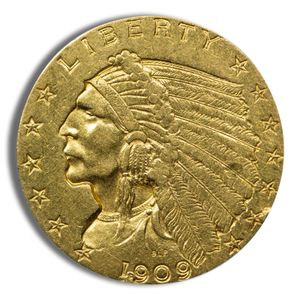
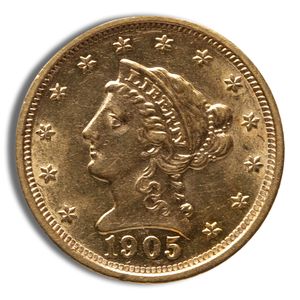
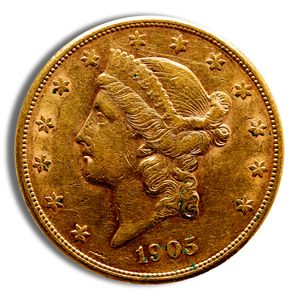
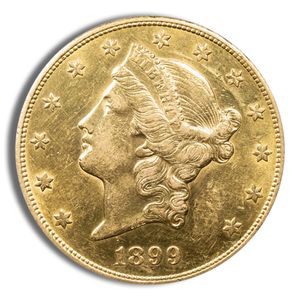
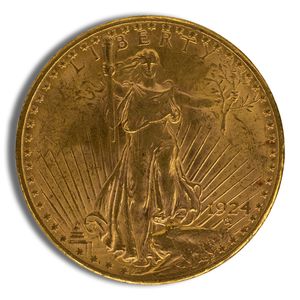
Designs changed over the following decades. Christian Gobrecht's Liberty Head, often called the Coronet, appeared on the eagle in 1838 and soon spread to the half eagle and quarter eagle, while James B. Longacre designed the Liberty Head double eagle and the Indian Princess Head used on the gold dollar and $3 piece. In 1907, Theodore Roosevelt's push for more artistic coinage produced Augustus Saint-Gaudens' double eagle and Indian Head eagle, and Bela Lyon Pratt's Indian Head quarter eagle and half eagle followed in 1908 with an unusual incuse design. The $1 and $3 pieces had already ended in 1889 and the quarter eagle and half eagle last appeared in 1929, leaving the eagle and double eagle as the final U.S. gold coins struck for circulation.
On April 5, 1933, Executive Order 6102 required Americans to deliver most gold coin, bullion and gold certificates to the Federal Reserve, and the Gold Reserve Act of 1934 followed. Millions of coins were melted, but many survived in private hands and in overseas bank reserves. Coins returned from those foreign holdings supply much of today's market for common date pre-1933 gold.
Purity, Weight, and Specifications
From 1837 onward, U.S. gold coins were struck at .900 fine, an alloy of 90% gold with the balance mostly copper, which held up well in circulation. The Classic Head coins of 1834 to 1836 were struck a fraction below that standard, a difference too small to matter in everyday pricing.
Each denomination carries a fixed gold content set by law. The $20 double eagle contains 0.9675 troy oz of pure gold, the $10 eagle 0.4837 oz, the $5 half eagle 0.2419 oz, the $3 piece 0.1451 oz, the $2.50 quarter eagle 0.1209 oz and the $1 gold dollar 0.0484 oz, just under 1/20 oz. Because of the alloy, each coin weighs more than its gold content, with a double eagle coming in at about 1.075 troy oz in total.
These coins carry no fineness or weight stamp the way modern bullion does. The denomination, date and mint mark identify each coin, with no mint mark used at Philadelphia and letters such as D, S, O and CC used for branch mints including Denver, San Francisco, New Orleans and Carson City. Certified coins add a certification number on the holder label that ties the coin to its grading record.
Available Brands, Mints, and Product Variations
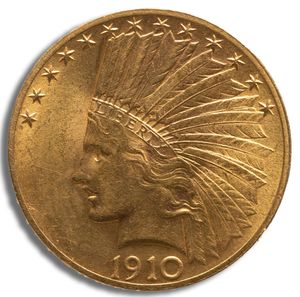
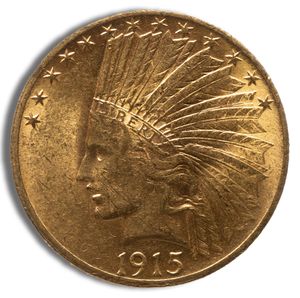
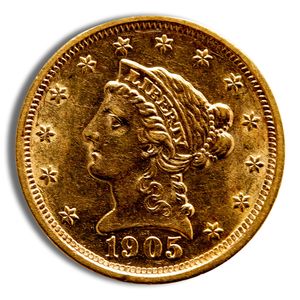
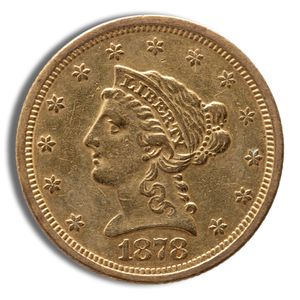
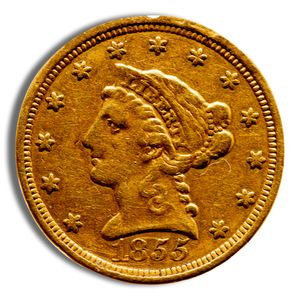
Every coin on this page is a U.S. Mint issue. Double eagles are offered in both the Liberty Head and Saint-Gaudens types, while eagles and half eagles are available in Liberty Head and Indian Head designs. The Classic Head half eagle represents the earliest coins here, and quarter eagles include the long-running Liberty Head type.
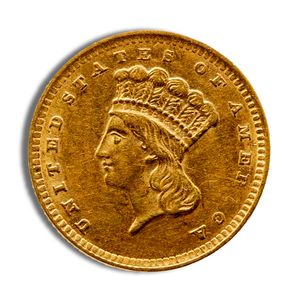
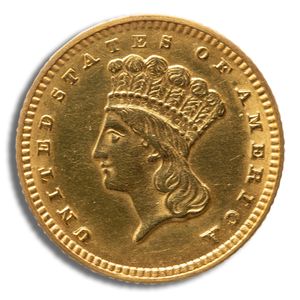
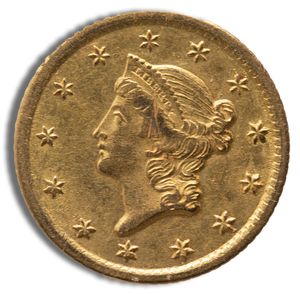
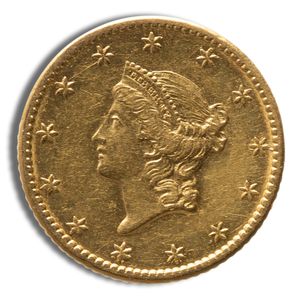
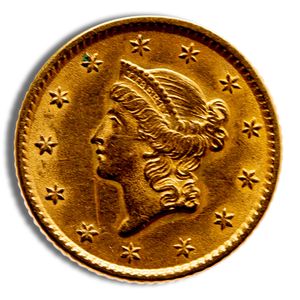
Small denomination gold is well represented. The gold dollar was struck in three types between 1849 and 1889, and our listings include the Type 1 Liberty Head and the larger Type 3 Indian Princess Head. The $3 piece, struck from 1854 to 1889 with its own Indian Princess design, is offered as well and is one of the more unusual denominations in American coinage.
Within each type, listings are organized by grade. Raw options run from cleaned or low grade through VF, XF, AU and BU, and certified options include NGC and PCGS coins graded MS60 through MS66, with the widest choice between MS61 and MS65. Random year listings make it easy to buy a specific type and grade without paying extra for a chosen date or mint mark.
Pricing, Premiums, and Market Factors
The starting point for any pre-1933 coin is its melt value, the gold content multiplied by the current spot price. A double eagle's 0.9675 oz of gold anchors its price, and the premium above that reflects type, grade, certification and how readily coins are available at wholesale. Raw circulated double eagles tend to sit closest to melt, with certified mint state examples priced progressively higher by grade.
Double eagles usually carry the lowest premium per ounce among classic U.S. gold, since they hold the most gold per coin and survived in large numbers. Smaller denominations, especially the $1 and $3 pieces, carry higher premiums relative to their gold content because collector demand weighs more heavily against a small amount of metal, and the $3 piece was struck in far smaller numbers than the other denominations.
Grade has a large effect, and the step between certified grades such as MS63 and MS65 can be significant. Supply also shifts as overseas holdings come to market or demand rises, so premiums can move independently of spot. Because we show the bid/ask spread on every product page, you can compare a raw XF coin against a certified MS62 on both sides of the trade.
Condition, Packaging, and What to Expect
Raw pre-1933 gold coins are circulated survivors, so expect wear consistent with the grade listed. VF coins show moderate wear across the high points, XF coins keep most of their detail with light wear, and AU coins show only slight friction. BU coins have no wear but may show bag marks from decades of bulk storage.
Cleaned or low grade listings cover coins with past cleaning, scratches, rim problems or heavy wear. They're priced close to melt and suit buyers who care more about gold content than eye appeal. Their gold content matches any other coin of the same denomination, which makes them a practical way to add classic gold by weight.
Random year means we choose the date and mint mark, so the coin you receive may differ from the photo. Certified coins arrive in their original NGC or PCGS holder with the grade and certification number on the label, and raw coins are packed so they don't contact each other in transit.
Authenticity and Verification
Classic U.S. gold has been counterfeited for many decades, particularly double eagles and gold dollars. Some counterfeits even contain real gold but miss on fineness, weight or design detail, which makes careful verification essential for raw coins. Common warning signs include an incorrect weight, soft or mushy details, irregular edge reeding and a color that doesn't match genuine .900 gold.
We verify every coin for authenticity, weight and purity before it ships, checking weight and dimensions against U.S. Mint standards and examining design details, edges and surfaces. Coins that don't meet those standards don't reach our inventory.
Certified coins add independent assurance. NGC and PCGS authenticate each coin, assign a grade on the 70-point Sheldon scale and seal it in a tamper-evident holder with a certification number you can look up online. As an authorized dealer for both services, we work with certified classic gold every day.
Liquidity and Resale Considerations
Common date pre-1933 gold has an established wholesale market, and the major types, especially Saint-Gaudens and Liberty Head double eagles, are priced daily by dealers across the country. That standardization by type and grade is what makes these coins straightforward to sell.
Certified coins are generally the easiest to price, because the NGC or PCGS grade is accepted without re-examination. Raw coins sell readily too, though a buyer will inspect them to confirm grade and authenticity, and problem coins are bid closer to melt.
Smaller denominations trade in a thinner market than double eagles, so their spreads can be wider. Checking the bid on a product page before you buy gives you a realistic picture of how each type trades. The $3 piece in particular is valued as much for its type and history as for its gold.
Storage and Security
Raw gold coins belong in inert holders, such as hard capsules or flips made without PVC, which can leave residue on coin surfaces over time. Never clean a classic gold coin, since cleaning permanently lowers its grade and what a buyer will pay for it. Handle raw coins by the edges, since skin oils can leave marks that show on gold surfaces.
Certified slabs protect the coin and its grade, and they store well upright in slab boxes inside a home safe, a bank safe deposit box or a depository vault. Avoid dropping or stacking slabs under heavy weight, which can crack the plastic.
Because pre-1933 coins are small and dense, a meaningful holding takes up very little space, but it should still be insured and inventoried, with purchase records kept alongside it. A dry, stable environment protects both raw coin surfaces and holder labels.
Selling and Buyback Options
We buy pre-1933 U.S. gold coins through the same two-way marketplace where you buy them. Our purchasing team quotes against live gold prices, and coins are verified for authenticity, weight and grade once they arrive. Payment is issued as soon as verification is complete.
Buyback pricing depends on type, denomination, grade and whether a coin is certified, along with current wholesale demand. Common double eagles in circulated grades are typically bid at their gold content plus a premium that reflects the wholesale market, while certified mint state coins are bid by grade and cleaned or low grade coins sit closer to melt.
Leaving coins in their original holders and never cleaning them helps you receive the full price their grade supports. Reviewing the bid shown on each product page before purchase sets realistic resale expectations from the start.
Why Buy Pre-1933 US Gold Coins?
These coins combine U.S. government issue with genuine history. Each one was struck by the U.S. Mint as legal tender, still carries its face value today and once circulated in an economy that ran on gold. Those face values are a small fraction of the gold inside, but they tie each coin to a specific chapter of American monetary history.
Collector familiarity is another draw. The Saint-Gaudens double eagle is widely regarded as one of the most beautiful American coins, the Liberty Head series is recognized by dealers everywhere, and assembling a type set across all six denominations is a classic collecting path.
They also offer a range of entry points. A random year gold dollar or quarter eagle costs a fraction of a double eagle, while certified MS65 examples offer top condition, so buyers can match a coin to their budget and interests.
Why Buy from Bullion Standard?
Founded in 2010 and based in San Diego, California, Bullion Standard is an authorized dealer for both PCGS and NGC and a member of the American Numismatic Association and the National Coin and Bullion Association. We also maintain an A+ rating with the Better Business Bureau.
Classic gold rewards a careful dealer, and we verify every coin for authenticity, weight and purity before it ships. Our prices update with the market, and every product page displays both our ask and our bid, so you can see the full cost of owning a coin rather than just the purchase price.
We accept Visa, Mastercard, American Express, Discover, PayPal, bank payments through Plaid, wire transfer, paper check and cryptocurrency through BitPay. Our research tools let you compare products by premium, spread and liquidity, and our customer service team can help with questions about types, grades and certification.
Get Near-Spot Pricing with Bullion Standard Pro
Bullion Standard Pro gives members live, executable wholesale bid and ask pricing across a broad range of precious metals products. Member pricing carries no additional dealer markups or dealer spreads, so premiums and spreads move with real wholesale supply and demand.
That structure suits repeat and price-sensitive buyers who want to see how products are actually trading at the wholesale level. Pro also values member holdings at live wholesale bid prices, giving a realistic view of what a collection would bring today instead of an estimated retail figure.
Members can also use market intelligence tools such as historical premium analysis, spread analysis, liquidity metrics and wholesale market activity. For buyers adding classic gold alongside modern bullion, those tools help put each premium in context before you commit.


 (833) 278-4653