Buy 1 oz Palladium Bars Online
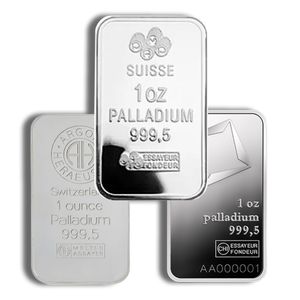
Our catalog of 1 oz palladium bars brings together some of the most recognized names in precious metals refining, including Argor-Heraeus, Credit Suisse, PAMP Suisse, Valcambi, Johnson Matthey, and Engelhard. Each bar weighs exactly one troy ounce and is produced by established refineries known for consistent purity, clear mint markings, and broad market acceptance.
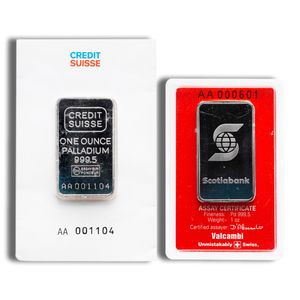
Most bars in our catalog ship in protective assay cards that seal the bar alongside a certificate confirming weight and purity. We also carry random brand options for buyers prioritizing metal content over a specific refinery name, as well as a no-assay version for those who simply need the metal without the encapsulation. Across every listing, pricing is tied to live palladium spot rates and presented with full transparency.
Bullion Standard sources these bars from reputable refineries, wholesalers, and distributors and verifies each product for authenticity, weight, and purity before shipment. Whether you're focused on a specific mint or looking for the most cost-efficient entry point into the palladium market, the options here are designed to give you a clear, informed choice.
What Are 1 oz Palladium Bars?
A 1 oz palladium bar is a minted rectangular piece of refined palladium weighing one troy ounce, the standard unit of measurement used across the precious metals industry. Unlike cast bars, which are poured from molten metal and tend to have a rougher, more industrial appearance, minted bars are struck from pre-rolled palladium blanks and finished with precise dimensions, clean edges, and detailed surface designs. Every bar in this catalog falls under the minted format.
The one-troy-ounce size sits at the center of the palladium bar market. It's large enough to carry meaningful metal content while remaining compact and easy to handle, store, and eventually resell. Compared to fractional sizes, the 1 oz bar typically carries a lower premium per ounce, making it a practical choice for buyers who want direct exposure to palladium spot pricing without significant markup.
Palladium bars at this weight are produced exclusively by private refineries rather than government mints, which distinguishes them from legal tender coinage. Their value is derived entirely from metal content and refinery reputation, not from collectibility or numismatic interest. That straightforward structure makes them one of the more direct ways to hold physical palladium.
History and Background
Palladium was discovered in 1803 by English chemist William Hyde Wollaston and named after the asteroid Pallas. For much of the 19th and early 20th centuries, it remained a scientific curiosity with limited commercial application. That changed significantly with the rise of the automotive industry and the development of catalytic converter technology in the 1970s, which identified palladium as an effective catalyst for reducing harmful vehicle emissions.
The modern palladium bar market developed alongside increasing industrial demand and a growing recognition among certain buyers that physical palladium offered a tangible way to hold a metal with constrained supply and meaningful end-use demand. Established refineries like Johnson Matthey and Engelhard, which were already processing platinum-group metals for industrial customers, began producing 1 oz minted bars for the commercial bullion market during this period. Swiss refineries including PAMP Suisse, Valcambi, and Credit Suisse followed with their own programs as global demand expanded.
Palladium's supply base remains highly concentrated. The majority of global production comes from Russia and South Africa, with smaller contributions from Canada and Zimbabwe. That geographic concentration has contributed to periods of significant price volatility throughout palladium's history as a traded commodity, reinforcing the relevance of understanding supply dynamics when holding physical metal. The refineries represented in our catalog have maintained consistent production standards across decades of market activity, which explains their continued prominence in the wholesale bullion market today.
Purity, Weight, and Specifications
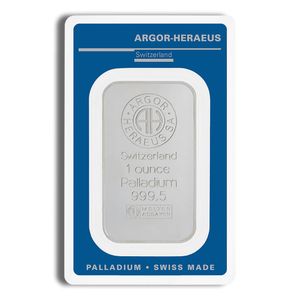
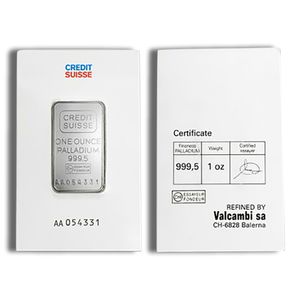
The bars in this catalog carry purity levels of either 0.9995 or 0.9999 fine palladium. The 0.9995 standard is the more common benchmark across the industry and is used by manufacturers including Credit Suisse, Engelhard, Johnson Matthey, PAMP Suisse, and Valcambi. Argor-Heraeus produces its 1 oz palladium bar to the slightly higher 0.9999 standard. Both purities are widely accepted in the wholesale bullion market and present no meaningful difference in practical terms for most buyers.
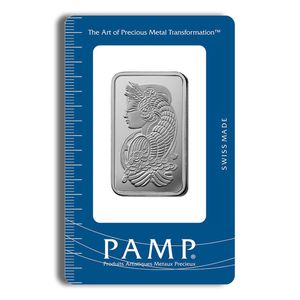
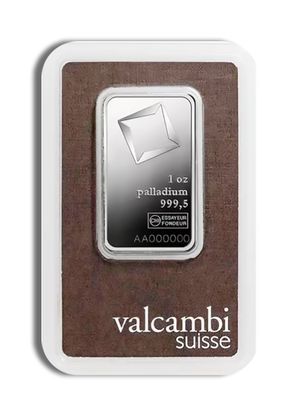
Each bar weighs one troy ounce, equivalent to approximately 31.1 grams. Physical dimensions vary by manufacturer. The PAMP Suisse bar measures approximately 41 x 24 x 2.63mm. The Valcambi bar is slightly more compact at 38 x 22 x 3.45mm. Credit Suisse produces a thicker bar at 40 x 23 x 4mm, while the Johnson Matthey bar runs 42 x 25mm. The Argor-Heraeus bar is notably larger in surface area at 85 x 54 x 2mm, reflecting its distinctly flat profile. These dimensional differences are purely a function of each refinery's production process and have no effect on metal content.
Most minted bars carry stamped or engraved text indicating the manufacturer's name, metal type, weight, and purity. Assay-packaged bars include a corresponding certificate within the sealed card that corroborates these details. Serial numbers are present on some bars, particularly from Swiss refineries, and provide an additional layer of traceability and documentation.
Available Brands, Mints, and Product Variations
The catalog includes bars from seven distinct refineries, each with its own manufacturing heritage and market positioning. PAMP Suisse, based in Castel San Pietro, Switzerland, is one of the most globally recognized names in minted bullion. Its Lady Fortuna design, featuring the Roman goddess of fortune in relief, appears on the reverse of the palladium bar and is immediately identifiable to buyers and dealers worldwide. PAMP bars also feature the Veriscan authentication system on select products, allowing verification without breaking the original seal.
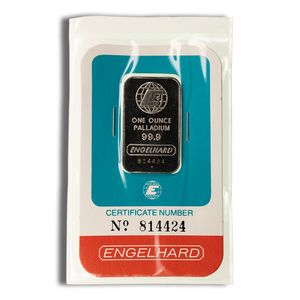
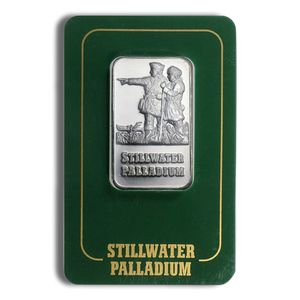
Valcambi and Argor-Heraeus, also Swiss, maintain similar reputations for precision manufacturing and clean assay documentation. Credit Suisse bars, produced under the name of the Swiss banking institution, carry strong brand recognition in North American and European markets. Johnson Matthey's JM Stillwater bar references the Montana-based palladium mining operation and reflects the company's deep connection to platinum-group metal sourcing and processing in the United States. Engelhard, though no longer in active production, holds significant collector and dealer recognition as one of the most storied names in American precious metals refining.
Beyond named refineries, we carry two random brand options. The assay-packaged random brand bar comes sealed in an assay card from one of several reputable manufacturers and is a practical choice for buyers whose primary focus is metal content and purity rather than a specific name. The no-assay version ships without packaging and typically appeals to buyers adding to existing holdings or looking for the lowest possible acquisition cost per troy ounce.
Pricing, Premiums, and Market Factors
Palladium bar prices are built from the current spot price of palladium, denominated in US dollars per troy ounce, plus a premium that reflects manufacturing costs, dealer margins, and market supply and demand conditions. Because palladium is less widely traded at the retail level than gold or silver, premiums on physical palladium bars tend to be proportionally higher relative to spot. The specific premium you pay will depend on the brand, packaging, and market conditions at the time of purchase.
Bars from prominent Swiss refineries like PAMP Suisse, Valcambi, and Argor-Heraeus generally carry slightly higher premiums than random brand alternatives, largely because of their brand recognition, assay packaging, and the tighter bid/ask spreads they typically maintain in the secondary market. Engelhard bars, despite being out of production, can carry collector-adjacent premiums in certain market conditions due to their scarcity. The no-assay random brand bar offers the most direct path to spot-adjacent pricing for buyers unconcerned with specific brand provenance.
Bullion Standard prices all palladium bars in real time against live spot data. Each product page displays the current bid/ask spread, giving you a clear picture of both the acquisition cost and the estimated resale value before you commit to a purchase. That two-sided pricing structure reflects our commitment to transparency and helps buyers understand the full cost of ownership rather than focusing only on what they pay at checkout.
Condition, Packaging, and What to Expect
Most bars in this catalog are encapsulated in assay cards, which are sealed plastic holders that protect the bar's surfaces and include a certificate of authenticity printed directly on the card or inserted within it. These cards are intended to remain sealed during storage and resale, as an intact assay provides both documentation and surface protection. Breaking the seal does not affect the metal's intrinsic value but may affect how certain buyers or dealers evaluate the piece at resale.
The Engelhard bar and the no-assay random brand bar ship without assay packaging. These bars may show minor handling marks, contact abrasions, or surface variations consistent with their loose format. Cosmetic imperfections of this type are normal for unpackaged bullion and do not indicate an authenticity concern or reduction in metal content. Buyers accustomed to collector-grade numismatic standards should understand that bullion bars are evaluated on metal content, not surface perfection.
Random brand bars are sourced from a rotating pool of reputable refineries and may arrive from any manufacturer that meets standard purity requirements. The specific brand you receive is not guaranteed and will vary based on current inventory. All random brand products are verified for authenticity and purity regardless of which manufacturer's bar is shipped.
Authenticity and Verification
Every palladium bar sold through Bullion Standard is sourced from established refineries, licensed wholesalers, and reputable distributors and undergoes verification for authenticity, weight, and purity before reaching a customer. We are an authorized dealer for both PCGS and NGC and maintain memberships with the American Numismatic Association and the National Coin and Bullion Association, reflecting our commitment to sourcing and verification standards consistent with industry best practices.
Assay-packaged bars provide a built-in layer of documentation. The sealed assay card confirms the bar's weight, purity, and manufacturer and is generally considered the most reliable packaging format for verifying a bar's specifications without requiring additional testing. Some manufacturers, including PAMP Suisse, incorporate proprietary authentication technologies that allow the bar to be verified against a registered database while still sealed.
For unpackaged bars, standard industry verification methods include precise weight measurement, dimensional inspection, and density testing. Palladium's physical density, approximately 12 grams per cubic centimeter, is distinct from common base metals and from the other platinum-group metals, which makes dimensional and gravimetric testing a reliable primary verification method. Professional XRF testing equipment, available through reputable dealers and assay offices, provides elemental analysis and purity confirmation without damaging the bar.
Liquidity and Resale Considerations
Palladium bars from globally recognized refineries like PAMP Suisse, Valcambi, Argor-Heraeus, and Credit Suisse tend to be the most straightforward to resell because dealers and wholesale buyers are already familiar with their specifications and authentication features. The presence of an intact assay card further simplifies the resale process by providing documentation that reduces the need for independent verification at the point of sale.
Engelhard palladium bars occupy an interesting position in the secondary market. Because Engelhard ceased active bar production years ago, genuine examples are no longer entering the market through primary channels. Depending on current market conditions, this scarcity can influence how these bars are priced and sought in dealer-to-dealer transactions, though buyers should not assume any guaranteed premium above standard melt value.
Random brand bars, particularly those without assay packaging, are generally the most straightforward to resell at metal content value but may not command the same premium as named-brand assay-sealed products. When planning a future sale, understanding the liquidity profile of each product before buying is a meaningful part of the overall cost evaluation. Bullion Standard's product pages display bid pricing alongside ask pricing so buyers can assess the bid/ask spread as part of their pre-purchase research.
Storage and Security
One troy ounce of palladium occupies roughly the same physical footprint as a similar bar of gold, making 1 oz palladium bars among the most space-efficient physical metal formats available. A meaningful quantity can be stored in a compact, high-quality home safe without requiring significant dedicated space. For buyers holding larger quantities or concerned about home security risks, professional vault storage through a licensed depository provides an institutionally monitored alternative with full insurance coverage.
Assay-sealed bars should be stored in their original packaging whenever possible. The sealed card protects the bar's surfaces from contact abrasion, humidity, and fingerprints, all of which can affect surface appearance over time even if metal content is unaffected. Loose bars should be stored individually or separated by soft materials to prevent contact marking. Palladium is relatively resistant to oxidation compared to silver but can develop surface discoloration under certain environmental conditions, so low-humidity storage is advisable.
Bank safe deposit boxes offer a simple and low-cost storage option for small quantities, though they typically do not carry insurance coverage for the contents. Buyers relying on safe deposit boxes should confirm their homeowner's or renter's insurance policy includes off-premises precious metals coverage, or arrange a separate rider. For professionally managed storage, reputable depositories such as Brinks, Delaware Depository, and similar providers offer allocated storage options with direct metal ownership documentation.
Selling and Buyback Options
When you're ready to sell, Bullion Standard operates as a two-way market, meaning you can sell your palladium bars directly back through the same platform where you purchased them. Our purchasing team evaluates palladium bars based on current spot pricing, product type, mint recognition, packaging condition, and overall market liquidity at the time of the transaction. Bars in sealed assay cards from recognized refineries typically move through the buyback process most efficiently.
Named-brand bars from refineries like PAMP Suisse, Argor-Heraeus, and Valcambi generally attract competitive buyback pricing because of their established market recognition and straightforward verification process. Bars without assay packaging may go through a brief additional verification step before a final buyback price is confirmed. The condition of the assay card matters as well, as a clearly intact, undamaged seal provides documentation that supports a smooth transaction.
Bullion Standard Pro members have access to live wholesale bid pricing, which provides direct visibility into current buyback rates across the palladium bar catalog. This allows members to evaluate their existing holdings against real-time market conditions and make resale decisions based on executable pricing rather than estimated values. Understanding the buyback side of the transaction before making a purchase is part of how Bullion Standard approaches the idea of true marketplace transparency.
Why Buy 1 oz Palladium Bars?
Palladium sits within the platinum-group metals alongside platinum, rhodium, iridium, osmium, and ruthenium. Unlike gold and silver, which have broad markets and deep retail liquidity, palladium's physical market is considerably narrower, making the choice of bar format and refinery more meaningful from a liquidity standpoint. The 1 oz minted bar is the most standardized and widely recognized format for physical palladium ownership, which makes it the practical default for buyers entering this market.
From a supply perspective, palladium is among the rarest of the traded precious metals. Annual global mine production is measured in millions of troy ounces compared to gold's tens of millions and silver's hundreds of millions. The majority of that production is consumed by the automotive industry for catalytic converter manufacturing, with electronics and chemical processing industries accounting for most of the remainder. Physical bar buyers represent a comparatively small slice of total demand, which contributes to the market's distinct pricing dynamics.
The 1 oz size specifically offers a balance of premium efficiency and resale practicality that smaller fractional formats can't match. Buyers holding palladium in one-ounce increments can add or liquidate positions in manageable amounts without the disproportionate premiums that often accompany fractional weights. For those interested in direct physical ownership of a platinum-group metal at a recognized, standardized weight, 1 oz palladium bars represent the clearest available option.
Why Buy from Bullion Standard?
Founded in 2010 and headquartered in San Diego, California, Bullion Standard has spent over a decade building a reputation on transparent pricing, reliable sourcing, and straightforward customer experiences. We hold an A rating with the Better Business Bureau and maintain active memberships with the American Numismatic Association and the National Coin and Bullion Association. Every product we sell is verified for authenticity, weight, and purity before shipment, and we source exclusively from reputable mints, refineries, wholesalers, and licensed distributors.
Our pricing is connected to live spot data and displayed with full transparency, including the bid/ask spread on each product page. That structure allows buyers to evaluate both the cost to acquire and the estimated current resale value before completing a purchase. Rather than obscuring the economics of a transaction, we believe presenting that information upfront leads to better-informed decisions and longer-term customer confidence.
Checkout is supported by a wide range of payment methods, including Visa, Mastercard, American Express, Discover, PayPal, bank-connected payments through Plaid, wire transfer, paper check, and cryptocurrency through BitPay. Fulfillment is handled with attention to secure packaging and reliable delivery timelines, and our customer service team is accessible for pre-purchase questions and post-purchase support alike. The experience is designed around trust and clarity rather than pressure or complexity.
Get Near-Spot Pricing with Bullion Standard Pro
Bullion Standard Pro is designed for buyers who want access to the kind of pricing transparency and market intelligence that has traditionally been available only at the wholesale level. Members transact at live, executable wholesale bid and ask prices without additional dealer markups or fixed retail spreads applied on top. As a result, the premium you pay reflects actual market conditions rather than a predetermined retail pricing structure, and both sides of the spread, buying and selling, narrow to reflect wholesale market efficiency.
For palladium specifically, where the retail market is thinner and premiums can fluctuate more noticeably than in gold or silver, access to wholesale-level pricing and real-time spread data provides a meaningful informational advantage. Pro members can view live bid pricing across the palladium bar catalog, assess current spread conditions, and evaluate their holdings using executable wholesale valuations rather than estimated retail prices. Historical premium data and proprietary analytics tools further support decisions around timing and product selection.
Beyond pricing, Bullion Standard Pro provides access to market intelligence tools that aggregate activity across the broader wholesale precious metals market. These include premium percentile rankings, spread analysis, liquidity metrics, and buy/sell ratio indicators that can help members identify shifts in supply and demand conditions before those changes are fully reflected in retail pricing. For buyers who take physical palladium ownership seriously, the combination of executable wholesale pricing and data-driven market visibility represents a fundamentally different kind of purchasing experience.


 (833) 278-4653