Buy Mercury Dimes Online
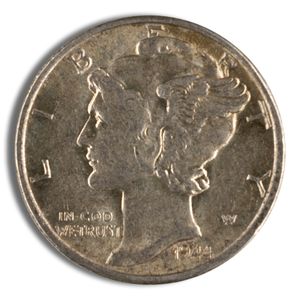
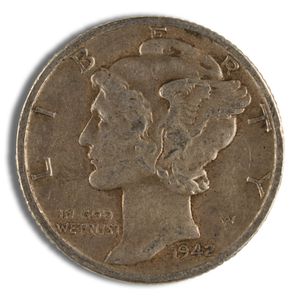
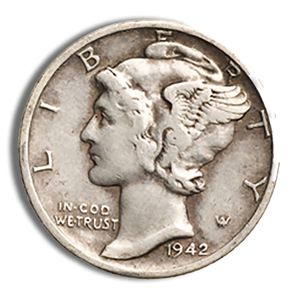
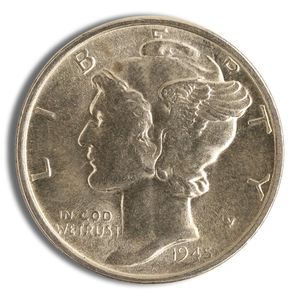
Our mercury dime catalog features 90% silver dimes issued by the United States Mint, available in four distinct grade tiers: average circulated, XF (Extremely Fine), AU (About Uncirculated), and BU (Brilliant Uncirculated). Each listing represents $1 face value, containing 0.715 troy ounces of silver across ten coins, and all are sold as random year selections sourced from various mint marks. Whether you're looking for an affordable circulated option or a higher-grade BU roll, you'll find a grade level that fits your priorities.
At Bullion Standard, every product in our catalog is priced against real-time spot market conditions with full transparency on premiums and buyback pricing. Our mercury dime listings reflect genuine wholesale market dynamics rather than fixed retail markups, so you can evaluate what you're paying and what you'd receive on resale before committing to a purchase.
These coins are among the most widely recognized 90% silver junk silver coins in the United States market, carrying strong dealer familiarity and consistent liquidity. The combination of recognized silver content, historical provenance, and accessible $1 face value increments makes them a practical format for buyers across a broad range of experience levels.
What Are Mercury Dimes?
Mercury dimes are 10-cent coins produced by the United States Mint between 1916 and 1945. Despite the common nickname, the obverse portrait depicts Liberty wearing a winged cap, not the Roman god Mercury, though the resemblance led to the colloquial name that has persisted for over a century. They are composed of 90% silver and 10% copper, with each individual coin containing approximately 0.0723 troy ounces of pure silver.
Within the broader 90% silver coin market, mercury dimes are grouped alongside Roosevelt dimes, Washington quarters, Walking Liberty half dollars, and Franklin half dollars under the general category of "junk silver." The term refers to coins valued primarily for their silver content rather than numismatic premiums, and it carries no negative connotation among dealers and buyers. Mercury dimes stand out within this group due to their smaller denomination, which allows buyers to transact in smaller silver increments without breaking larger holdings.
Buyers typically choose mercury dimes for a combination of silver content accessibility, historical appeal, and strong market recognition. They trade in standardized $1 face value lots, which simplifies pricing calculations and makes them easy to buy, sell, and portion for resale without custom assay verification.
History and Background
The Winged Liberty Head dime, designed by sculptor Adolph A. Weinman, entered circulation in 1916, replacing the Barber dime series that had been produced since 1892. Weinman's design was selected through a competitive process and is widely regarded as one of the finest examples of American coin design from the early twentieth century. The reverse features a fasces bound with an olive branch, symbolizing military readiness and national unity, flanked by design elements consistent with the aesthetic conventions of that era.
Production ran continuously through 1945 across the Philadelphia, Denver, and San Francisco mints, resulting in mint marks of no mark, "D," and "S" respectively. The series includes several key dates and semi-key dates that carry substantial numismatic premiums, though the coins available through our catalog are sold as random year lots intended for silver content rather than collector-grade specific dates. The 1945-S micro S variety and the 1942/41-P and 1942/41-D overdates are among the most recognized rarities within the series.
By the late 1950s and into the 1960s, rising silver prices relative to face value prompted the U.S. government to transition away from 90% silver coinage, culminating in the Coinage Act of 1965. This legislation eliminated silver from dimes and quarters entirely and reduced the silver content in half dollars. Mercury dimes had already exited circulation by that point, but the transition reinforced their status as a fixed and finite silver supply, a characteristic that continues to define their market behavior today.
Purity, Weight, and Specifications
Each mercury dime is struck in a 90% silver, 10% copper alloy, consistent across all years and mint facilities that produced the series. The individual coin weight is 2.5 grams, with a diameter of 17.9 millimeters and a thickness of approximately 1.35 millimeters. These specifications are standardized across the series and have remained a fixed reference point for dealers and buyers calculating silver melt value.
In $1 face value lots of ten coins, the total silver content is 0.715 troy ounces. This figure is the industry-standard calculation used across the junk silver market and is reflected directly in our product listings. The 0.715 figure accounts for average wear across a circulated population, representing a slight reduction from the theoretical pure silver weight of a full set of uncirculated coins.
Because these coins were produced as currency rather than bullion, they carry no assay card or mint-sealed packaging in the traditional bullion sense. Their authenticity is established through physical characteristics: correct weight, diameter, thickness, design details, and the distinctive reeded edge that all genuine mercury dimes share. Experienced dealers verify these parameters against established Mint specifications when sourcing and verifying lots.
Available Brands, Mints, and Product Variations
All mercury dimes in our catalog were struck by the United States Mint across its Philadelphia, Denver, and San Francisco facilities during the 1916 to 1945 production run. Because these are sold as random year lots with various mint marks, the specific year and mint mark on any given coin will vary. This is standard practice across the junk silver market and is clearly communicated in each listing.
The four grade tiers available reflect meaningfully different coin conditions. Average circulated coins show visible wear consistent with decades of commercial use, while XF (Extremely Fine) examples retain sharper design details with only light surface wear. AU (About Uncirculated) coins carry nearly full design detail with minimal friction, and BU (Brilliant Uncirculated) coins show no wear, retaining original mint luster. Higher grade tiers typically carry modestly higher premiums relative to spot silver.
For buyers focused purely on silver content, the average circulated grade offers the most cost-efficient entry point. Those interested in coins with stronger visual appeal or closer to original condition will find the XF, AU, and BU tiers more appropriate, though all four options deliver the same 0.715 troy ounces of silver per $1 face value lot.
Pricing, Premiums, and Market Factors
Mercury dime pricing is driven primarily by the spot price of silver, with premiums added above melt value to cover dealer operating costs, sourcing, and market liquidity. Because junk silver coins are traded in large volume across the wholesale market, their premiums tend to be relatively tight compared to many modern bullion coins, though grade tier influences where a specific lot sits within that range. BU coins naturally command a higher premium than average circulated examples given the added cost of sourcing and grading higher-condition material.
Supply dynamics within the junk silver market can shift premiums meaningfully during periods of elevated retail demand. Unlike modern mint products where new supply can theoretically be produced on demand, the total population of mercury dimes is fixed. This finite supply creates occasional tightness in the wholesale market when buyer demand spikes, which can translate into temporarily wider spreads or reduced availability in specific grade tiers.
At Bullion Standard, pricing is updated in real time against live silver spot prices and reflects current wholesale market conditions. Our product pages display both the ask price and the buyback bid price, giving buyers a complete view of the spread before any transaction is made. This approach to pricing transparency is central to how we operate, ensuring that buyers understand the true cost of ownership rather than discovering resale realities after the fact.
Condition, Packaging, and What to Expect
Mercury dimes sold through our catalog arrive as loose coins rather than mint-sealed bullion packaging. This is standard for all junk silver coinage and should be expected when purchasing any 90% silver coins that originally circulated as U.S. currency. Coins will show wear and handling consistent with their grade designation, and some surface toning or discoloration from age is normal and does not affect silver content.
Average circulated coins may display significant wear on high relief design areas, including Liberty's portrait, the fasces reverse, and date numerals, though all coins are verified to be genuine and within acceptable weight tolerances for the grade. XF and AU examples will retain considerably more design sharpness and surface detail, while BU coins should exhibit full original luster with no evidence of circulation wear.
Because lots are sold as random year selections, buyers will not receive specific date requests, and coin selection within each lot is not individually controlled beyond the grade tier designation. Mixed years and mint marks across a $1 face value lot are standard and consistent with how junk silver is sourced and sold across the industry. If receiving a specific year or mint mark is important to you, collector-grade numismatic sources with individually attributed coins would be more appropriate than bulk junk silver lots.
Authenticity and Verification
Every mercury dime sold through Bullion Standard has been verified for authenticity prior to listing. Our sourcing process draws from reputable wholesale distributors, established dealers, and institutional-grade junk silver suppliers. All incoming inventory is reviewed against known specifications for weight, diameter, and design characteristics before being made available for purchase.
Unlike modern bullion bars or rounds, mercury dimes don't carry assay cards or holographic anti-counterfeiting features. Verification relies on physical measurement and design detail examination against United States Mint standards. Weight testing with a precision scale, diameter verification, and visual inspection of design elements are the primary authentication methods used by professional dealers. Known counterfeits of mercury dimes exist but are identifiable through weight discrepancies and detail quality under magnification.
Bullion Standard maintains membership in the American Numismatic Association (ANA) and the National Coin and Bullion Association (NCBA) and holds an A rating with the Better Business Bureau. These affiliations reflect our commitment to sourcing standards and professional conduct within the industry, not just as marketing credentials but as operational commitments that influence how we source, verify, and ship every product we sell.
Liquidity and Resale Considerations
Mercury dimes are among the most liquid 90% silver coins in the United States market. Their long production history, widespread collector familiarity, and deep dealer network mean they are recognized and accepted by virtually every bullion dealer, coin shop, and junk silver buyer operating in the domestic market. This broad recognition translates to predictable resale access compared to obscure or regionally distributed silver products.
Liquidity within the junk silver segment is generally strong, though individual grade tiers behave differently in the resale market. Average circulated lots trade most actively due to the largest buyer base and lowest premium threshold, while BU examples may take longer to place with buyers willing to pay the additional grade premium. The XF and AU tiers sit in between, offering a balance of condition appeal and reasonable resale accessibility.
Condition and original packaging, where applicable, influence resale pricing in the numismatic segment but matter somewhat less in the pure junk silver market where melt value is the dominant pricing reference. Buyers who prioritize resale efficiency should consider how each grade tier performs relative to the spread they pay at acquisition, a comparison that Bullion Standard's bid/ask display makes straightforward before any purchase is finalized.
Storage and Security
Mercury dimes, like all 90% silver coinage, are relatively compact and easy to store in meaningful quantities. A $1 face value lot of ten coins occupies minimal space, and larger accumulations can be organized in coin tubes, flips, or resealable holders without specialized storage equipment. For buyers holding multiple face value lots, labeled tubes or coin bags provide an efficient way to organize holdings by grade tier.
Silver is susceptible to toning and surface oxidation over time, particularly in environments with elevated humidity or exposure to sulfur compounds. Storing coins in airtight containers or coin capsules reduces exposure to atmospheric contaminants. Silica gel packets placed within storage containers help manage moisture in enclosed spaces, particularly in climates with seasonal humidity variation.
Home safes rated for fire and theft resistance are a practical starting point for buyers holding moderate quantities. For larger accumulations, allocated vault storage through a professional depository provides a more secure and insured alternative. Bank safe deposit boxes are another common option, though they generally don't carry FDIC insurance coverage for precious metals contents, so confirming coverage specifics with your financial institution is worth doing before relying on that solution.
Selling and Buyback Options
Selling mercury dimes back into the market is straightforward relative to many other bullion formats. Because they're a standardized 90% silver product with widely understood silver content and a deep buyer base, dealer buyback quotes are typically accessible and competitive. Most bullion dealers and coin shops that purchase junk silver will readily accept mercury dimes in any grade tier, with pricing tied to current silver spot and grade condition.
Buyback pricing is influenced by several factors: the silver spot price at time of sale, the grade tier of the coins, overall market liquidity conditions, and the specific dealer's current inventory position. During periods of strong retail demand, buyback premiums for junk silver can tighten toward spot. In slower market environments, spreads may widen modestly. Understanding these dynamics before purchasing helps buyers calibrate realistic resale expectations.
Bullion Standard operates a two-way market, meaning customers can sell back mercury dimes directly through the same platform where they purchased them. Our buyback pricing is displayed in real time on each product page, giving sellers immediate visibility into current bid levels before initiating a sale. This eliminates the uncertainty of approaching multiple dealers to find a fair price and keeps the entire transaction process within a single, transparent ecosystem.
Why Buy Mercury Dimes?
Mercury dimes offer one of the most recognizable and accessible formats for acquiring 90% silver at or near melt value. Their $1 face value denomination allows buyers to accumulate silver in small, granular increments without committing to larger one-ounce or multi-ounce formats. This divisibility is a practical advantage for buyers who want flexibility in how they portion and transact their silver holdings.
The coins carry strong market recognition across the dealer network, which contributes to consistent liquidity and straightforward resale access. Unlike private mint rounds or regionally produced silver products, mercury dimes are immediately identifiable by virtually any dealer operating in the United States silver market, and their silver content is universally understood without requiring additional verification or documentation at point of sale.
For buyers drawn to historically significant U.S. coinage alongside silver content, mercury dimes offer a combination that purely utilitarian bullion formats don't provide. Weinman's design remains one of the most admired in American numismatic history, and holding physical coins from the 1916 to 1945 era carries a degree of historical tangibility that modern bullion products simply can't replicate.
Why Buy from Bullion Standard?
Bullion Standard was founded in 2010 and operates as a San Diego-based online precious metals marketplace built around pricing transparency, verified sourcing, and a two-way market structure that supports both buyers and sellers. Our mercury dime listings are priced against live silver spot with real-time bid and ask pricing displayed on each product page, so buyers understand exactly what they're paying and what they'd receive on resale before any transaction is completed.
Every product we sell is verified for authenticity and sourced from reputable wholesale distributors and institutional suppliers. Our A BBB rating, ANA membership, NCBA membership, and authorized dealer status with PCGS and NGC reflect commitments that carry operational weight, not just marketing value. These affiliations influence how we source, verify, and fulfill every order that leaves our facility.
Our checkout process supports a wide range of payment methods including Visa, Mastercard, American Express, Discover, PayPal, bank-connected payments through Plaid, wire transfer, paper check, and cryptocurrency through BitPay. Orders are fulfilled with reliable shipping and packaging practices, and our customer support team is accessible for questions before, during, and after purchase. The goal is a buying experience that feels transparent and straightforward, not pressured or opaque.
Get Near-Spot Pricing with Bullion Standard Pro
Bullion Standard Pro is designed for buyers who want to transact closer to wholesale market prices. Members gain access to live, executable wholesale bid and ask pricing across our catalog, including mercury dimes and other 90% silver products, without additional dealer markups layered on top of market pricing. Premiums and spreads fluctuate naturally based on real-time supply and demand rather than fixed retail pricing structures.
For buyers accumulating silver across multiple purchases, the pricing efficiency of Bullion Standard Pro can be meaningful over time. The platform also includes live portfolio valuation using executable wholesale bid pricing, which provides a more accurate picture of current liquidation value than retail-based estimates. Members can evaluate holdings using real market data rather than approximations.
Beyond pricing, Bullion Standard Pro provides access to proprietary market intelligence tools including historical premium analysis, spread analysis, liquidity metrics, and buy/sell ratio indicators that reflect conditions across the broader wholesale silver market. For buyers who want to understand how mercury dime premiums have moved historically or how current market conditions compare to prior periods, these tools provide objective data to support more informed purchasing decisions.


 (833) 278-4653