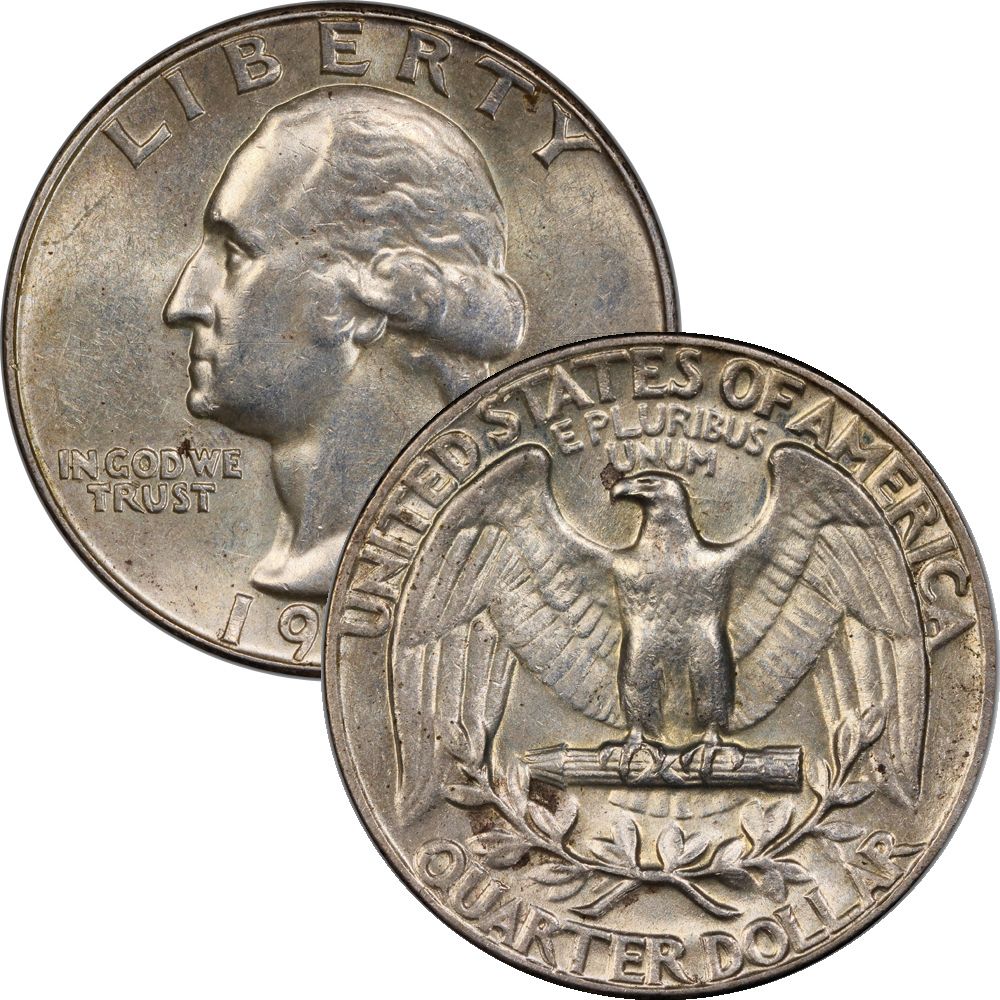
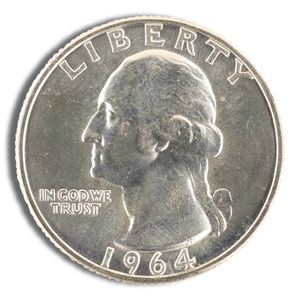
Buy 90% Silver Washington Quarters Online
Our catalog of 90% silver Washington quarters brings together some of the most recognizable junk silver coins in the American bullion market, offered here in $1 face value lots representing four quarters per pack. Whether you're looking for circulated Washington quarters in average condition or brilliant uncirculated examples, the selection spans multiple grades and coin types to match your specific needs.
Alongside the classic Washington quarter, you'll also find 90% silver Standing Liberty quarters available in several grade categories, including fully worn date, partially worn date, full date circulated, XF (Extremely Fine), and AU (About Uncirculated). Each product ships from the United States Mint's original production and carries the same .900 fine silver purity standard, regardless of design type or grade designation.
Bullion Standard structures this catalog around pricing transparency and straightforward product descriptions. Every listing clearly identifies the grade, date status, and silver content so buyers can evaluate what they're purchasing before placing an order.
What Are 90% Silver Washington Quarters?
The term "90% silver quarters" refers to United States quarters struck before 1965 using a composition of 90% silver and 10% copper. Each coin contains approximately 0.1808 troy ounces of pure silver, and a $1 face value lot of four coins carries roughly 0.715 troy ounces of silver content in total. These coins are widely known in the bullion market as "junk silver," a term that reflects their lack of numismatic premium rather than any deficiency in silver content or utility.
Two quarter designs fall under this standard: the Washington quarter, minted from 1932 through 1964, and the Standing Liberty quarter, minted from 1916 through 1930. Both designs share the same silver purity, face value denomination, and approximate silver weight, though the Standing Liberty series is older and often shows more significant wear due to its age. Grade variations within each design affect both the appearance and, in some cases, the pricing premium above silver spot.
Buyers typically choose 90% silver quarters for their divisibility, wide market recognition, and relatively modest acquisition cost compared to larger silver formats. The $1 face value packaging also provides a convenient reference point for buyers building a position in pre-1965 U.S. silver coinage.
History and Background
The Washington quarter made its debut in 1932, replacing the Standing Liberty quarter that had been in production since 1916. The original Washington design was created by sculptor John Flanagan and was intended as a commemorative issue for the bicentennial of George Washington's birth. It proved popular enough to become a regular circulation coin, and it continued largely unchanged through 1964 when the Coinage Act of 1965 eliminated silver from most U.S. circulating coinage.
The Standing Liberty quarter, designed by Hermon Atkins MacNeil, preceded the Washington series and is notable for several design revisions made during its production run. Early issues minted in 1916 and part of 1917 featured an exposed torso on Liberty, which was later modified to a draped version. The date placement on Standing Liberty quarters made the design susceptible to rapid wear, which is why so many surviving examples display partially or fully worn dates, creating the distinct grade categories you'll find in our catalog today.
When silver was removed from U.S. coinage in 1965, the pre-1965 90% silver coins that remained in circulation were gradually hoarded and eventually disappeared from everyday use. Over the following decades, they became a staple of the secondary bullion market, traded primarily on their silver melt value rather than numismatic worth. The junk silver market has remained active and liquid ever since, with $1 face value lots becoming a widely recognized standard unit across dealers, wholesalers, and private sellers alike.
Purity, Weight, and Specifications
All 90% silver Washington quarters and Standing Liberty quarters in our catalog share a standard purity of .900 fine silver, equivalent to 90% silver content by composition. Each individual coin weighs approximately 6.25 grams, with a diameter of roughly 24.3 millimeters and a thickness of 1.75 millimeters. These physical specifications are consistent across both designs and across all circulation-strike years.
A $1 face value lot contains four quarters and delivers approximately 0.715 troy ounces of silver. This figure reflects the actual silver content typically present in average circulated coins, accounting for minor weight loss due to normal wear. Coins graded BU (Brilliant Uncirculated) or in proof condition may carry the full theoretical silver weight more precisely, as unworn coins retain their original minted mass.
Unlike modern bullion coins or bars, pre-1965 U.S. silver quarters do not carry individual assay markings or mint stamps indicating purity on the coin face. Their silver content is verified through the established composition standard set by U.S. law during their production years, and their authenticity is confirmed by recognizable design elements, die characteristics, and the magnetic and density properties consistent with a 90/10 silver-copper alloy.
Available Brands, Mints, and Product Variations
Every coin in this catalog was struck by the United States Mint, which operated production facilities in Philadelphia, Denver, and San Francisco during the years these coins were minted. Products are listed as "Various" mint marks, meaning individual coins within each lot may originate from any of these facilities. Mint mark designations, where still legible on worn coins, can identify the source facility, though mint mark does not significantly affect bullion value for most junk silver transactions.
Washington quarters are available in two grade categories: average circulated and BU (Brilliant Uncirculated). The circulated version represents the most commonly traded form of junk silver, with coins showing visible wear consistent with years of commercial use. The BU option offers coins that retain their original luster and surface detail, appealing to buyers who prefer higher-condition examples within the same silver content standard. A proof version spanning the 1932 to 1964 production window is also available for buyers seeking specially struck collector-quality examples with mirror-like fields.
Standing Liberty quarters extend the grade range further, with listings covering fully worn date, partially worn date, full date circulated, XF (Extremely Fine), and AU (About Uncirculated) categories. The date legibility designations are especially relevant for this design, since the date on Standing Liberty quarters was positioned in a recessed area of the die that made it particularly susceptible to wear. Each grade tier reflects a meaningfully different level of coin preservation, and pricing across these tiers varies accordingly.
Pricing, Premiums, and Market Factors
The price of 90% silver quarters moves in close relationship with the spot price of silver. Because these coins carry no significant numismatic premium in most circulated grades, their market value is primarily derived from silver melt value, calculated by multiplying the current spot price of silver by the approximate silver content per lot. The premium above spot for average circulated junk silver tends to be modest relative to government-issued modern bullion coins, which makes this format an efficient way to acquire silver content at lower acquisition costs.
Grade and condition do influence pricing at the margins. BU and AU examples command higher premiums than heavily worn circulated coins, reflecting the additional scarcity of well-preserved specimens. Proof issues represent a further premium tier due to their limited original mintage and distinct visual finish. The fully worn date category for Standing Liberty quarters may price below full-date circulated examples, reflecting the practical difference in collector and secondary market appeal between the two date conditions.
Bullion Standard displays real-time pricing on each product page, updated to reflect current spot market conditions. Our bid/ask spread is also visible on product pages, giving buyers a transparent view of both acquisition cost and current buyback pricing before placing an order. This structure reflects our broader commitment to pricing clarity rather than obscuring the true cost of a transaction behind fixed retail markups.
Condition, Packaging, and What to Expect
Each $1 face value lot contains four quarters, consistent with the standard packaging unit used throughout the junk silver market. Products arrive in lot quantities, and the specific coins included will vary by production year, mint mark, and individual surface appearance within the designated grade tier. Random year delivery is standard across all listings, meaning specific dates and mint marks are not guaranteed unless otherwise noted.
Circulated coins will show wear appropriate to their grade. Average circulated examples may display significant surface abrasion, bag marks, light scratches, and toning consistent with decades of handling. XF and AU grades will retain more original design detail and surface luster, while BU examples should exhibit full mint luster with minimal contact marks. Minor variation within each grade tier is normal and expected for coins of this age and market history.
Proof Washington quarters arrive in a separate category and will exhibit the distinctive mirrored fields and frosted devices characteristic of proof production. These coins are not intended to be confused with regular business-strike BU coins, and buyers should expect the visual difference between proof and BU finishes to be immediately apparent upon receipt. Coins shipped in lot quantities are not encapsulated or individually packaged unless otherwise specified in the product listing.
Authenticity and Verification
Pre-1965 U.S. silver quarters are among the most straightforward bullion products to verify for authenticity. Their design characteristics, die details, and physical dimensions are thoroughly documented and widely understood across the numismatic and bullion communities. Genuine 90% silver coins are non-magnetic, produce a distinct ring tone when dropped on a hard surface, and exhibit weight and dimensional properties consistent with their known specifications.
Bullion Standard sources all products from reputable domestic distributors and wholesale suppliers with established track records in the secondary silver market. Every product is reviewed for authenticity before fulfillment. Our status as an authorized dealer for both PCGS and NGC further reflects our commitment to operating within recognized authentication and grading standards across all product categories.
For buyers seeking an additional layer of verification on higher-grade or proof examples, third-party grading services such as PCGS and NGC offer encapsulation and certification that permanently documents a coin's authenticity, grade, and surface details. While most junk silver buyers do not pursue certification for standard circulated lots, the option remains available through our platform for coins that warrant it.
Liquidity and Resale Considerations
Few silver products enjoy the secondary market recognition that pre-1965 U.S. 90% silver coins have earned over decades of active trading. Dealers, coin shops, pawn operators, private collectors, and online marketplaces all participate in the junk silver market, which means buyers have access to a broad range of resale channels when they decide to liquidate. The $1 face value lot structure is one of the most universally understood trading units in domestic silver markets.
Washington quarters specifically tend to trade at tighter spreads than many other junk silver formats due to their high production volumes, wide distribution, and consistent quality across the 1932 to 1964 production window. Standing Liberty quarters occupy a slightly more specialized niche given their age and variable date legibility, which can affect resale flexibility depending on the buyer and channel involved.
Proof issues and BU examples may require more targeted resale channels to realize premiums above melt, since their value depends partly on buyers who specifically seek those conditions rather than simply the silver content itself. Understanding the likely resale environment before purchasing is an important part of evaluating any bullion product, and Bullion Standard's pricing tools are designed to help buyers make that assessment with current market data rather than assumptions.
Storage and Security
Junk silver lots in $1 face value increments are compact and easy to store, making them practical for home safes, fireproof lockboxes, and bank safe deposit boxes. Because these coins are not encapsulated or individually packaged, they should be stored in a manner that minimizes direct contact with dissimilar metals and reduces exposure to humidity, which can accelerate toning and surface oxidation over time.
Cloth or felt coin bags, small plastic flips, or dedicated coin storage tubes offer reasonable protection for circulated junk silver without adding unnecessary bulk. BU and proof examples benefit from more careful individual handling and storage to preserve surface quality, particularly since fingerprints and abrasive contact can permanently damage the surfaces of uncirculated coins.
Buyers accumulating larger positions in 90% silver quarters should consider the physical space requirements associated with storing silver at volume. At standard lot sizes, the weight and density of silver makes it heavier per unit of value than most buyers anticipate, and proper shelving, storage containers, and weight-rated safe capacity should be factored into any larger-scale storage plan.
Selling and Buyback Options
Bullion Standard operates as a two-way market, meaning customers can both purchase and sell 90% silver Washington quarters and Standing Liberty quarters within the same platform. Our purchasing team evaluates buyback requests based on current silver spot prices, the specific coin type and grade, lot quantity, and prevailing market conditions at the time of the transaction. Sellers should expect buyback pricing to reflect bid-side market rates rather than retail ask prices.
Condition and completeness matter in the buyback process. Average circulated lots are evaluated on silver content and general grade consistency, while BU, AU, and proof examples may qualify for premiums above standard junk silver melt rates depending on current demand. Fully worn date Standing Liberty quarters may receive pricing adjustments relative to full-date examples, consistent with how these grade distinctions are treated across the broader wholesale market.
The streamlined nature of our buyback process reflects the same transparency principles that govern our purchasing side. Sellers receive a clear offer based on observable market inputs, and the bid pricing displayed on each product page provides a useful reference point for understanding the current buyback environment before initiating a sale. Our goal is to make the sell-side of a transaction as straightforward and well-documented as the purchase itself.
Why Buy 90% Silver Washington Quarters?
The enduring appeal of 90% silver quarters within the bullion market comes down to a combination of divisibility, low premiums, and near-universal market recognition. Unlike larger silver formats, junk silver lots can be broken into smaller face value units, making them practical for buyers who want to acquire silver content in incremental amounts without committing to higher-premium modern issues or larger bar formats.
Silver also carries meaningful industrial relevance beyond its role as a monetary metal. The metal is used extensively in electronics manufacturing, solar energy production, medical applications, and industrial processes. This underlying industrial demand contributes to a broadly active global silver market, which in turn supports liquidity for physical silver products across all formats, including pre-1965 coinage.
The historical character of these coins adds a dimension that purely modern bullion lacks. Handling coins that circulated through American commerce during the early-to-mid twentieth century resonates with many buyers beyond the silver content alone. That said, their primary appeal in this catalog remains their role as an efficient, recognizable, and liquid form of physical silver accessible at modest premium levels.
Why Buy from Bullion Standard?
Bullion Standard was founded in 2010 and has built its reputation around one core principle: buyers deserve to understand exactly what they're paying and what they're getting. Our pricing reflects real-time market conditions, and the bid/ask spread is displayed openly on every product page so there are no surprises at checkout or when it's time to sell. That level of transparency is not universal in this industry, and it's something we've prioritized from the beginning.
Every product we ship has been verified for authenticity, weight, and purity before leaving our facility. We source from established domestic distributors and maintain memberships with the American Numismatic Association (ANA) and the National Coin and Bullion Association (NCBA), and we hold an A rating with the Better Business Bureau. These affiliations reflect a commitment to operating within recognized professional and ethical standards across all product categories and transactions.
Our platform supports a wide range of payment methods, including Visa, Mastercard, American Express, Discover, PayPal, bank-connected payments through Plaid, wire transfer, paper check, and cryptocurrency via BitPay, so buyers can choose the option that works best for their situation. Reliable fulfillment and responsive customer support round out an experience that's designed to feel like a transparent marketplace rather than a high-pressure retail environment.
Get Near-Spot Pricing with Bullion Standard Pro
Bullion Standard Pro gives members access to live, executable wholesale bid and ask pricing across a broad range of silver products, including 90% silver quarters. Unlike standard retail pricing structures that apply fixed dealer markups, Pro members transact at wholesale market prices that fluctuate naturally with supply, demand, and prevailing liquidity conditions. For buyers who are price-sensitive or accumulating silver in meaningful quantities, the pricing efficiency available through Pro can represent a meaningful difference in acquisition cost over time.
The Pro platform also includes real-time portfolio valuation based on current wholesale bid pricing rather than estimated retail values, giving members a more accurate picture of liquidation value at any given moment. Proprietary analytics tools allow members to evaluate premiums, bid/ask spreads, and historical pricing trends across individual products, so purchasing decisions can be grounded in objective data rather than marketing claims or surface-level price comparisons.
For buyers who want to understand how 90% silver quarters are priced and traded at the wholesale level, how their spread characteristics have evolved over time, and how they compare to other silver formats on a cost and liquidity basis, Bullion Standard Pro provides the market intelligence to make those evaluations with confidence. The platform is designed to make the physical silver market more transparent, not just more convenient.


 (833) 278-4653