Buy Franklin Half Dollars (90% Silver) Online
Our catalog of 90% silver Franklin half dollars covers a range of grades, formats, and product types suited to buyers with different priorities and budgets. You'll find circulated examples graded Average Circulated and AU (About Uncirculated), along with BU (Brilliant Uncirculated) specimens, all available in $1 face value lots containing two coins per pack. For collectors and numismatists, we also carry the 2006-P Benjamin Franklin Scientist Silver Commemorative dollar in BU, Proof, NGC MS70, and NGC PF70 grades, all struck by the United States Mint in Philadelphia.
Every product in this section is sourced through reputable wholesale channels and verified for authenticity before it ships. Our pricing reflects real-time silver spot prices, and our two-way market structure means you can both buy and sell these coins within the same ecosystem. Whether you're focused on acquiring circulated 90% silver at a modest premium or adding a certified commemorative to a collection, this section offers clearly organized options across multiple grades and finishes.
What Are Franklin Half Dollars (90% Silver)?
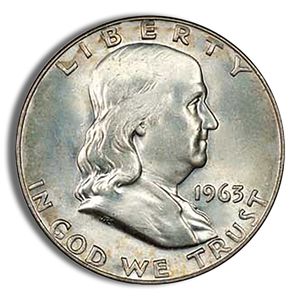
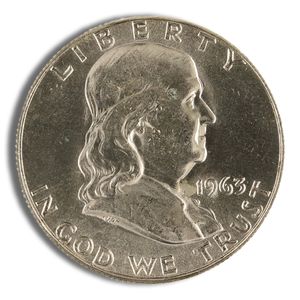
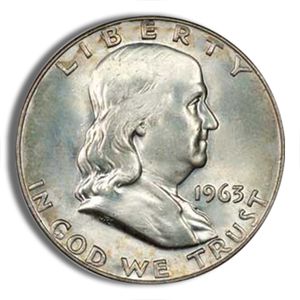
Franklin half dollars are 90% silver coins issued by the United States Mint from 1948 through 1963. Each coin contains approximately 0.3617 troy ounces of pure silver, making a $1 face value lot of two coins approximately 0.715 troy ounces of combined silver content. They were produced at the Philadelphia, Denver, and San Francisco mints, and coins from each facility carry distinct mint marks, with Philadelphia-struck pieces often bearing no mint mark at all under the conventions of the era.
These coins appeal to two distinct groups of buyers. The first group focuses on the silver content, treating them as a cost-effective way to accumulate 90% silver in a familiar, widely recognized format. The second group collects them for their numismatic qualities, including eye appeal, strike sharpness, and the presence of full bell lines on the reverse, a detail that significantly influences certified grades and collector premiums. The two groups aren't mutually exclusive, and many buyers appreciate both dimensions of the coin.
The 2006-P Benjamin Franklin Scientist Silver Commemorative is a distinct product in its own right. It is a modern one-dollar commemorative coin struck in 90% silver with a diameter of 38.1 mm and a weight of 0.7734 troy ounces of silver. It was issued as part of the United States Mint's commemorative program rather than for general circulation, and it differs substantially in size, design, and purpose from the classic circulation-era half dollar series.
History and Background
The Franklin half dollar series was introduced in 1948 following the death of John R. Sinnock, the designer of the preceding Walking Liberty half dollar. Chief Engraver Gilroy Roberts completed the design based on a life medal of Benjamin Franklin by John R. Sinnock, and the coins entered circulation with the Franklin portrait on the obverse and the Liberty Bell flanked by a small eagle on the reverse. The eagle's inclusion was required by law at the time for half dollar coins, and its diminutive size relative to the bell became one of the series' distinguishing visual characteristics.
Production continued through 1963, when the series was replaced by the Kennedy half dollar following the assassination of President John F. Kennedy. In total, the Franklin series spanned sixteen years and was struck at all three active United States Mint facilities of the period. The series is notable for the relative scarcity of coins with fully struck bell lines, which created a tiered market among certified examples and helped establish numismatic grading as a meaningful differentiator within the series.
The 2006 Benjamin Franklin Commemorative program was authorized by Congress to celebrate the 300th anniversary of Franklin's birth. The United States Mint issued two collector coins in silver as part of this program, one depicting Franklin as a scientist and one as a Founding Father. The scientific theme references his famous experiments with electricity and was struck exclusively at the Philadelphia Mint in both standard and proof finishes.
Purity, Weight, and Specifications
Circulation-era Franklin half dollars are composed of 90% silver and 10% copper, a standard alloy used across United States coinage from the mid-19th century through 1964. Each half dollar has a nominal face value of fifty cents and a silver content of approximately 0.3617 troy ounces. The coins measure 30.6 mm in diameter and 2.15 mm in thickness, consistent with standard half dollar specifications of the era.
The 2006-P Franklin Scientist Silver Commemorative dollar uses the same 90% silver alloy but in a larger format. It carries a face value of one dollar, weighs 26.73 grams, contains 0.7734 troy ounces of silver, and measures 38.1 mm in diameter and 2.77 mm in thickness. Both the BU and Proof versions share these physical specifications, while the NGC-certified MS70 and PF70 examples carry additional encapsulation and documentation from the Numismatic Guaranty Company.
When buying circulated 90% silver Franklin half dollars in $1 face value lots, you're receiving two coins with a combined silver content of approximately 0.715 troy ounces. This standardized face value structure is a common convention in the 90% silver market and makes it straightforward to calculate silver content based on face value.
Available Brands, Mints, and Product Variations
All products in this section originate from the United States Mint, the sole authorized producer of these coins. Circulation-era Franklin half dollars were struck at Philadelphia (P), Denver (D), and San Francisco (S), and random-year lots in our catalog will contain a mix of mint marks at no specified ratio. Buyers seeking a specific year or mint mark combination should review certified single-coin listings rather than bulk face-value lots.
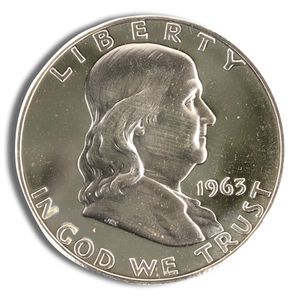
The grade variations within the circulated Franklin half dollar lots reflect meaningful differences in coin condition. Average Circulated examples show typical wear from decades in commerce, while AU-graded pieces retain most of their original mint luster with only light friction on the high points. BU-graded examples have not been used in commerce and display full or near-full original luster. A separate BU Proof lot is also available, containing proof-struck Franklin half dollars that were originally produced with polished dies and intended for collectors rather than circulation.
The 2006-P commemorative section offers four distinct product formats: a standard BU business strike, a BU Proof, an NGC-certified MS70, and an NGC-certified PF70. The MS70 and PF70 designations represent perfect grades on the Sheldon 70-point scale, indicating coins free from post-mint blemishes under magnification. NGC certification includes encapsulation in a tamper-evident holder with a label identifying the grade and coin details, providing both protection and third-party authentication.
Pricing, Premiums, and Market Factors
Pricing for 90% silver Franklin half dollars is closely tied to the spot price of silver. The silver melt value of a $1 face value lot is calculated by multiplying 0.715 troy ounces by the current spot price, and premiums above that melt value vary based on condition and market demand. Circulated examples in average condition typically carry the tightest premiums within this section, while AU and BU grades command progressively more above melt due to their superior eye appeal and collector crossover demand.
The 2006-P commemorative dollar carries premiums that reflect both its silver content and its status as a limited commemorative issue. NGC-certified MS70 and PF70 examples trade at substantially higher premiums than raw or uncertified equivalents because third-party certification reduces uncertainty around grade and authenticity. The proof finish examples also tend to carry a modest premium over standard BU strikes due to their specialized production process and collector orientation.
At Bullion Standard, our pricing is updated in real time to reflect current market conditions. Our two-way market model allows you to evaluate both the ask and the bid for these products before committing to a purchase, giving you a clearer picture of the full cost of ownership rather than just the acquisition price. Buyers focused on price efficiency should compare premiums across grades and lot sizes to find the entry point that best fits their objectives.
Condition, Packaging, and What to Expect
Circulated Franklin half dollar lots are sold by face value and contain two coins per $1 face value pack. These coins are sourced from circulated inventory and will show varying degrees of wear appropriate to their grade designation. Average Circulated examples may display worn high points and reduced design detail, while AU examples will retain most of their original surface with only slight friction evident. Exact dates, mint marks, and individual coin selection are not guaranteed in random-year lots.
BU and BU Proof lots contain coins in uncirculated condition but are not certified by a third-party grading service. They may arrive in coin flips, plastic sleeves, or similar basic packaging consistent with bulk bullion handling. Minor bag marks, light contact marks, or handling blemishes are considered normal and acceptable for uncertified BU coins and should be anticipated.
NGC-certified 2006-P commemorative examples ship in their original NGC holders, which are sonically sealed plastic slabs with a barcode label tied to the NGC registry. These holders protect the coins from environmental exposure and handling. Raw BU and Proof commemorative examples may be presented in original mint packaging, capsules, or comparable collector-grade packaging depending on available inventory.
Authenticity and Verification
Circulation-era United States 90% silver coins are among the most straightforward to authenticate because of their well-documented weight, diameter, and silver content standards. Counterfeit examples do exist, particularly for key dates and high-grade specimens, but the bulk circulated 90% silver market operates primarily on weight-based verification and the characteristic ring and color of genuine silver coinage. Every lot we ship is sourced from reputable channels and verified internally before fulfillment.
NGC-certified products carry the authentication guarantee of the Numismatic Guaranty Company, one of the two leading third-party coin grading services in the United States. Each certified coin is encapsulated in a tamper-evident holder with a unique barcode that can be verified directly through NGC's online registry. Bullion Standard is an authorized NGC dealer, and all certified products in our catalog have been sourced through channels that preserve the integrity of the certification.
For buyers who want additional confidence, NGC's online verification tool allows you to confirm the grade, designation, and certification number of any slabbed coin before or after purchase. This level of transparency is particularly relevant for the commemorative MS70 and PF70 examples, where the certified grade has a direct influence on market value.
Liquidity and Resale Considerations
90% silver coinage is one of the most liquid segments of the physical silver market in the United States. The face value lot structure is universally understood by dealers, collectors, and buyers across the country, and there is consistent wholesale demand for circulated 90% silver at premiums close to melt value. This broad recognition makes it relatively easy to sell Franklin half dollars in circulated condition through multiple channels including dealer buyback programs, coin shows, and peer-to-peer markets.
Grade plays a meaningful role in determining resale options. Average circulated examples are primarily valued for their silver content and trade close to the 90% silver melt value. AU and BU examples may command premium pricing above melt from buyers who care about condition, but that market is somewhat narrower. Certified examples, particularly NGC MS70 and PF70 commemoratives, trade within specialized numismatic channels where grade confirmation is a prerequisite for premium pricing.
The 2006-P commemorative dollars are less liquid than standard 90% silver junk coins because they trade in a more specialized market. Demand is driven by collectors and commemorative coin buyers rather than bulk silver buyers, so resale timing and channel selection have a more meaningful impact on the price realized. Understanding this distinction before purchasing is an important part of evaluating the full cost of ownership.
Storage and Security
Circulated 90% silver half dollars are durable coins that have already survived decades in circulation, making them relatively tolerant of standard storage conditions. They can be stored in coin rolls, plastic tubes, mylar flips, or sealable plastic bags without significant risk of surface degradation. A cool, dry environment is preferable, and avoiding exposure to humidity and chlorine-containing materials will prevent toning and surface spotting over time.
NGC-certified commemoratives in slabs should be stored upright or flat in a stable environment away from direct sunlight and temperature extremes. The plastic slab provides meaningful protection against handling and environmental exposure, but it's worth protecting the holder itself from scratches and cracks. Individual slab boxes or padded storage inserts work well for small collections of certified coins.
For larger quantities of 90% silver by face value, a home safe rated for fire and burglary resistance offers a practical baseline. Buyers accumulating more substantial holdings may want to evaluate third-party vault storage or segregated storage programs, which offer both security and insurance coverage at scale. Whatever storage method you choose, keeping a documented inventory that includes coin descriptions, grades, and quantities will simplify both insurance claims and eventual resale.
Selling and Buyback Options
Bullion Standard operates a two-way market that allows customers to sell Franklin half dollars and related 90% silver products back into our platform. Our purchasing team evaluates buyback pricing based on current silver spot prices, the grade and condition of the coins, lot size, and prevailing market demand. Circulated 90% silver in face value lots tends to have the most consistent and competitive buyback pricing because it maps directly to a well-established wholesale market.
Condition affects buyback terms in meaningful ways. AU and BU examples may qualify for grade-adjusted pricing if the coins meet our evaluation standards, while average circulated material is typically priced based on silver melt content and current 90% silver wholesale premiums. NGC-certified commemoratives follow a different evaluation path that considers certified grade, current collector demand, and market comparables rather than silver melt value alone.
Initiating a sale with Bullion Standard is designed to be straightforward. Customers can request a buyback quote through our platform, and our team will provide pricing based on the product details and current market conditions. Payments are processed promptly after receipt and verification of the coins. For those who want live visibility into current wholesale bid pricing before initiating a transaction, Bullion Standard Pro provides real-time executable bid data that removes guesswork from the selling process.
Why Buy Franklin Half Dollars (90% Silver)?
Franklin half dollars occupy a distinctive position in the silver market because they combine recognizable silver content with genuine numismatic history. The 90% silver alloy and standardized face value structure give them consistent market recognition among both coin dealers and bullion buyers, which simplifies buying and selling across a wide range of channels. Unlike generic silver rounds or bars, they carry the backing of the United States government and a documented history that resonates with both new and experienced buyers.
For buyers focused on silver content per dollar, circulated Franklin half dollars can be one of the more premium-efficient ways to acquire 90% silver, particularly in the average circulated grade. The coins require no assay or specialized verification beyond their physical characteristics, and their familiar format makes them easy to handle, organize, and store. The $1 face value lot structure also makes it straightforward to scale purchases or sales in increments that align with a specific silver content target.
The 2006-P commemorative appeals to a different motivation. It offers a modern 90% silver coin with a direct connection to one of America's most iconic historical figures, struck by the United States Mint in a limited commemorative program. The availability of certified MS70 and PF70 grades makes it appealing to collectors who want the highest-grade examples, while raw BU and Proof options provide more accessible entry points for buyers who want the design without the certified premium.
Why Buy from Bullion Standard?
Bullion Standard has been operating as a United States-based precious metals dealer since 2010, with our headquarters in San Diego, California. Our platform is built around transparent pricing, honest sourcing, and a buying experience that doesn't rely on pressure or inflated premiums to generate margins. We maintain an A rating with the Better Business Bureau and hold membership in both the American Numismatic Association and the National Coin and Bullion Association. As an authorized NGC dealer, we can offer certified products with full confidence in their authenticity and grading integrity.
Every product we ship has been verified for authenticity, weight, and purity through our internal sourcing and fulfillment processes. We offer a wide range of secure payment options including major credit cards, PayPal, bank-connected payments through Plaid, wire transfer, paper check, and cryptocurrency through BitPay. Our fulfillment process is designed to be reliable and transparent, and our customer service team is accessible when questions or concerns arise before, during, or after a transaction.
What distinguishes Bullion Standard from a conventional dealer is our two-way market model and commitment to pricing transparency. We display bid and ask prices on product pages so buyers can evaluate the full cost of ownership rather than just the purchase price. Our goal is to create a marketplace where informed buyers can transact with confidence and where the relationship extends beyond a single purchase.
Get Near-Spot Pricing with Bullion Standard Pro
Bullion Standard Pro is designed for buyers who want to transact closer to wholesale market pricing. Members gain access to live, executable wholesale bid and ask prices across a broad range of products, including 90% silver coinage. Rather than publishing fixed retail premiums, the Pro platform reflects real-time supply and demand conditions in the wholesale market, allowing premiums and bid/ask spreads to move naturally based on actual market activity.
Unlike the traditional dealer model, Bullion Standard Pro does not layer additional dealer markups on top of wholesale market pricing. Members transact directly at executable wholesale prices, which typically results in tighter spreads and more efficient pricing than standard retail channels. For buyers accumulating 90% silver in meaningful quantities, or for those who transact regularly, this pricing structure can translate into a meaningfully lower cost basis over time.
Pro members also gain access to proprietary market intelligence tools including historical premium analysis, spread analytics, liquidity metrics, and portfolio valuation using live wholesale bid pricing. These tools are particularly useful when evaluating products like 90% silver Franklin half dollars, where premium levels, grade differentials, and lot structure all influence the actual cost and eventual resale value of a position. Better data supports better decisions, and that principle is central to what Bullion Standard Pro is designed to deliver.


 (833) 278-4653