IRA-Eligible Gold | Bullion Standard
Buy IRA-Eligible Gold Online
Our catalog of IRA-eligible gold covers a wide range of formats, weights, mints, and refineries that meet the fineness standards required for inclusion in a self-directed precious metals IRA. Whether you're looking at fractional coins from well-known government mints, full ounce bars from established refineries, or kilo-weight gold for more concentrated positions, you'll find products spanning 1 gram through 1 kilogram with purity levels from 0.9167 to 0.9999 fine.
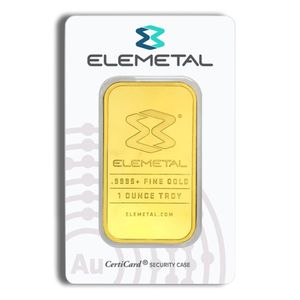
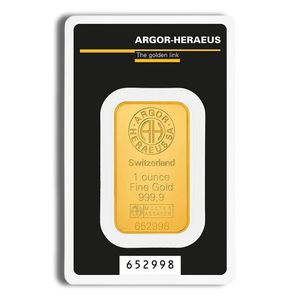
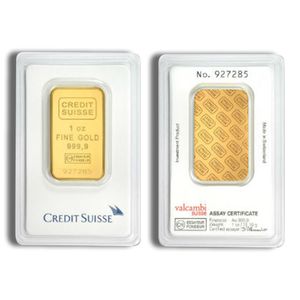
Brands represented here include the U.S. Mint, Royal Canadian Mint, Perth Mint, Austrian Mint, The Royal Mint of Great Britain, PAMP Suisse, Argor-Heraeus, Valcambi, Engelhard, Geiger Edelmetalle, and many others. Format options range from minted bars in assay cards to BU (Brilliant Uncirculated) coins in sealed mint packaging, giving buyers broad flexibility depending on their storage preference and acquisition strategy.
Bullion Standard is a San Diego-based precious metals marketplace with a transparent, data-driven approach to pricing and product sourcing. Every product listed here has been verified for authenticity, weight, and purity before reaching our platform, and our two-way market structure means you can both buy and sell within the same ecosystem using competitive, real-time pricing.
What Are IRA-Eligible Gold Products?
IRA-eligible gold refers to physical gold bullion products that meet the minimum fineness standards established by the IRS for inclusion in a self-directed individual retirement account. For gold, the general requirement is a minimum purity of 0.995 fine, with one notable exception: the Gold American Eagle, which carries a purity of 0.9167 but is explicitly authorized under IRS code due to its status as legal tender issued by the U.S. government.
Qualifying products fall into two broad categories: coins minted by sovereign government mints and bars or rounds produced by accredited refineries or national mints. Not all gold products qualify regardless of purity, so understanding which mints and formats are approved matters when selecting products for IRA purposes. The products in our catalog that carry the IRA-eligible designation have been verified to meet applicable standards, but buyers should always confirm specifics with their IRA custodian before directing purchases into a retirement account.
Practically speaking, IRA-eligible gold functions the same as any other physical gold bullion. The distinction is administrative, applying to how the product can be classified and held within a custodial arrangement. These products are widely traded in the open bullion market, recognized by dealers globally, and carry the same liquidity and market recognition as their non-IRA counterparts.
History and Background
The ability to hold physical gold inside an individual retirement account became available to American investors following the Taxpayer Relief Act of 1997, which expanded the types of assets permissible within self-directed IRAs to include certain physical precious metals. Before that legislative change, IRAs were generally limited to paper-based financial assets such as stocks, bonds, and mutual funds. The 1997 expansion created new demand for a specific class of gold products, and the bullion industry responded by aligning production standards with IRS eligibility requirements.
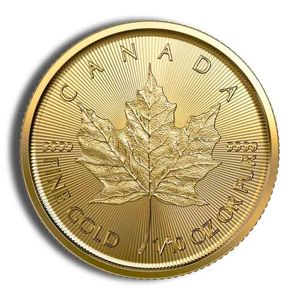
Government mints had already been producing high-purity bullion coins well before the 1997 act. The Gold American Eagle launched in 1986, the Canadian Gold Maple Leaf debuted in 1979, and the Austrian Philharmonic followed in 1989. When IRA eligibility became possible, many of these coins were already trading at significant volume, making them natural fits for the newly created eligibility framework. Bars from established Swiss refineries like PAMP Suisse, Argor-Heraeus, and Valcambi similarly met the purity thresholds without modification.
Over the following decades, demand for IRA-eligible gold grew alongside the broader self-directed IRA market. Specialty custodians emerged to facilitate the purchase, storage, and administration of physical metals held in these accounts, and the universe of qualifying products expanded as more mints and refineries achieved recognized accreditation. Today, IRA-eligible gold represents one of the most actively traded segments of the physical bullion market.
Purity, Weight, and Specifications
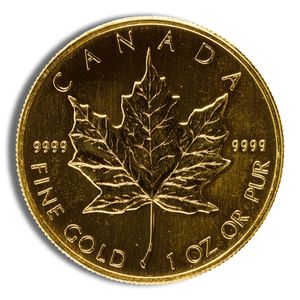
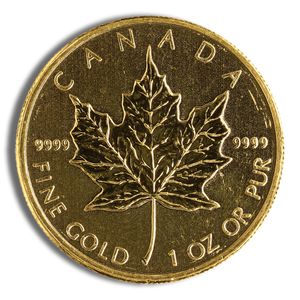
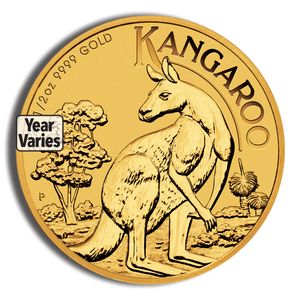
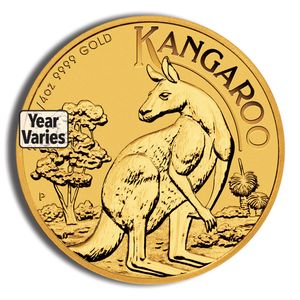
Most IRA-eligible gold products carry a purity of 0.9999 fine, which represents 24-karat gold with a fineness of 99.99 percent. This standard is common across major minted bars from PAMP Suisse, Argor-Heraeus, Valcambi, and the Perth Mint, as well as coins like the Canadian Gold Maple Leaf, Austrian Gold Philharmonic, and Australian Gold Kangaroo. Products from the China Gold Panda program are minted to 0.999 fine, which also meets IRA eligibility thresholds.
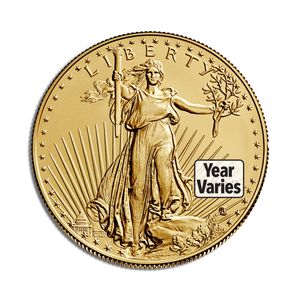
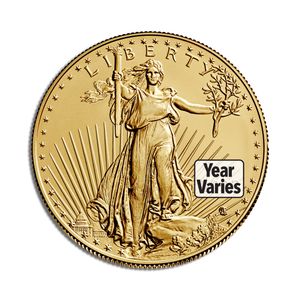
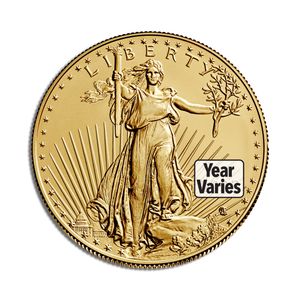
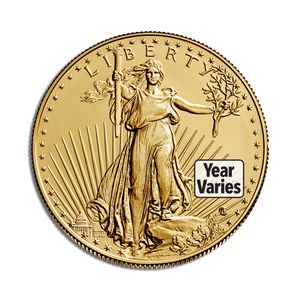
The Gold American Eagle is a meaningful exception. Its alloy composition includes silver and copper for durability, producing a coin with 0.9167 fine gold content while maintaining exactly 1 troy ounce of actual gold metal content. The IRS explicitly authorizes American Eagles for IRA inclusion despite falling below the 0.995 threshold because they are coins issued by the U.S. Mint as legal tender. The same applies to fractional American Eagles in 1/2 oz, 1/4 oz, and 1/10 oz denominations.
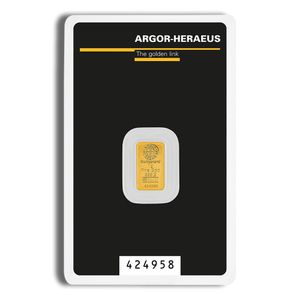
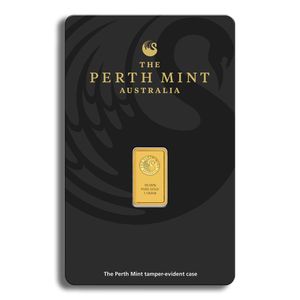
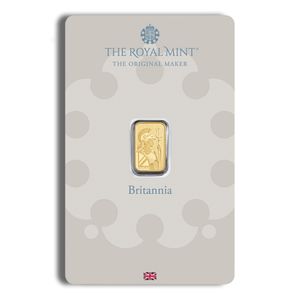
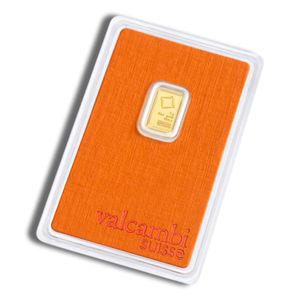
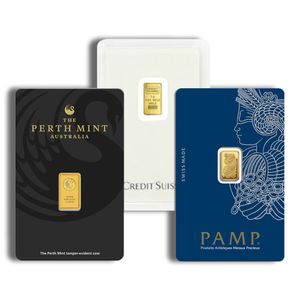
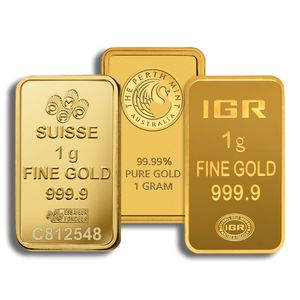
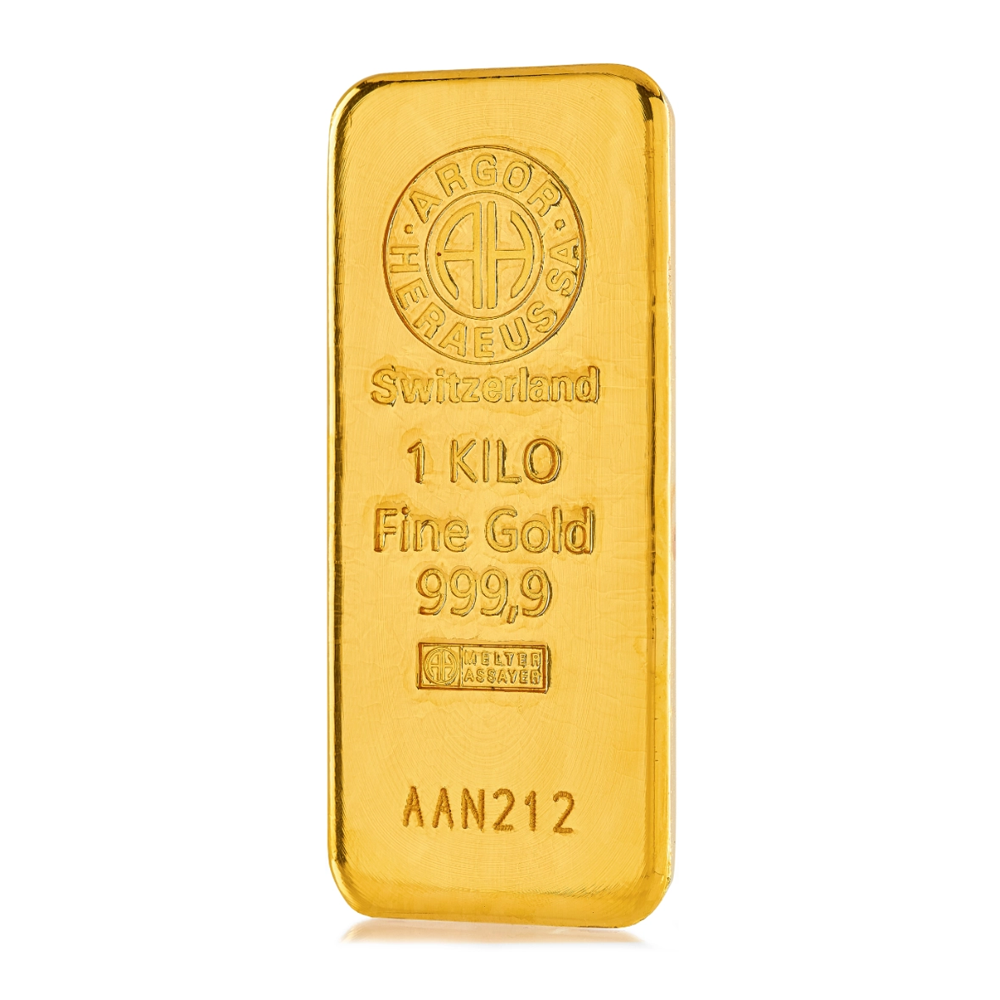
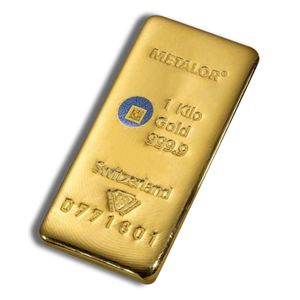
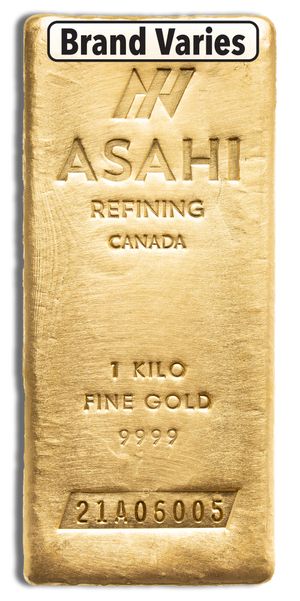
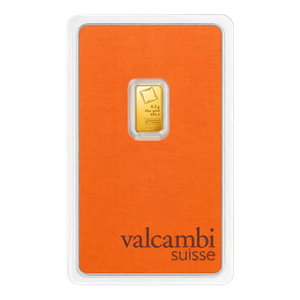
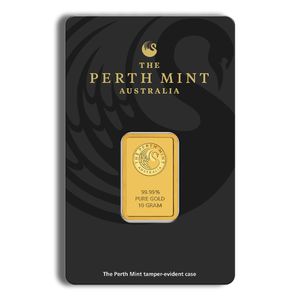
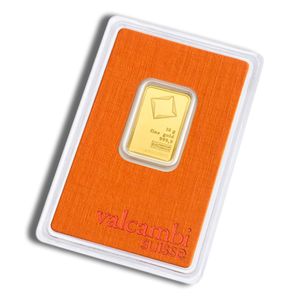
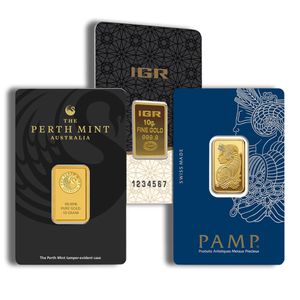
Weight options across our catalog span from 1/2 gram and 1 gram bars through 1/20 oz, 1/10 oz, 1/4 oz, and 1/2 oz fractional coins, up to full 1 oz products in both bar and coin formats, and extending to 1 kilo bars for large-format acquisitions. Minted bars are typically accompanied by an assay card stamped with the bar's weight, purity, refinery brand, and in some cases a unique serial number. Cast bars, such as the 1 kilo bar from Argor-Heraeus, carry stampings directly on the bar surface.
Available Brands, Mints, and Product Variations
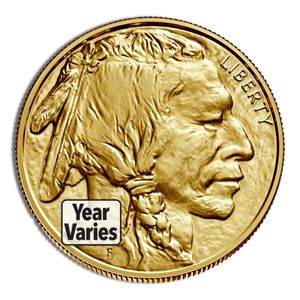
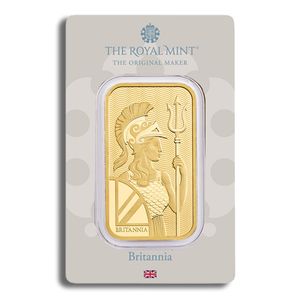
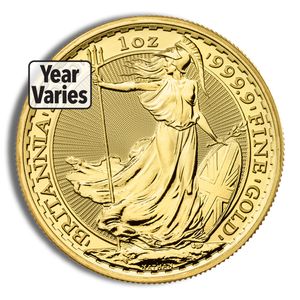
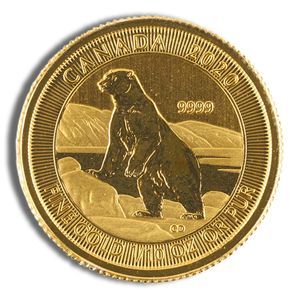
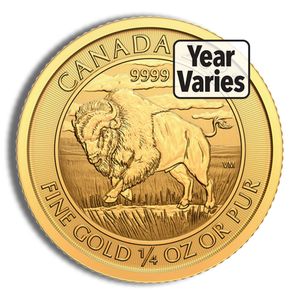
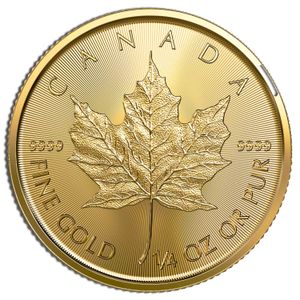
Our IRA-eligible gold catalog spans a substantial range of sovereign mint coins and private refinery bars. On the coin side, government-issued programs include the U.S. Mint's Gold American Eagle and Gold American Buffalo, the Royal Canadian Mint's Gold Maple Leaf, the Perth Mint's Gold Kangaroo and Gold Nugget, the Austrian Mint's Gold Philharmonic, The Royal Mint of Great Britain's Gold Britannia, the Central Mint of China's Gold Panda, and the Mexican Mint's Gold Libertad. Each of these programs has its own design tradition, mint mark conventions, and packaging standards.
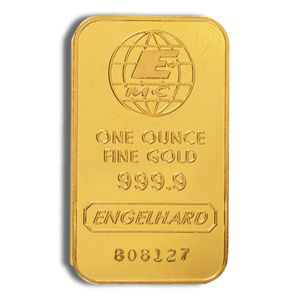
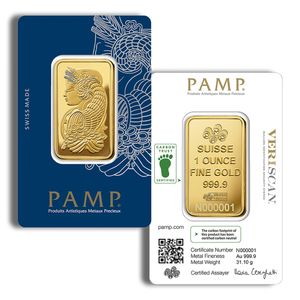
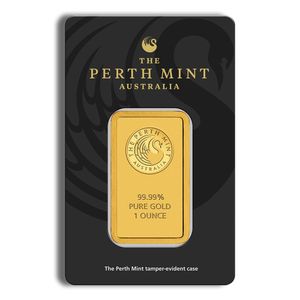
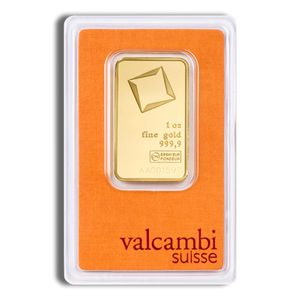
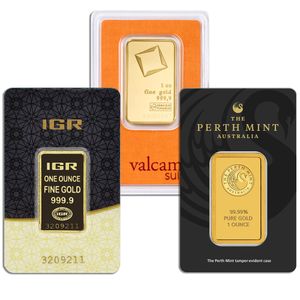
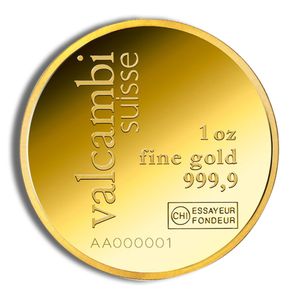
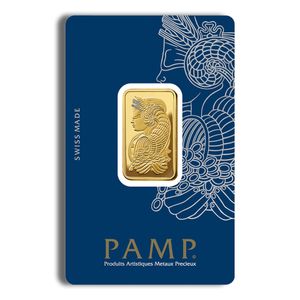
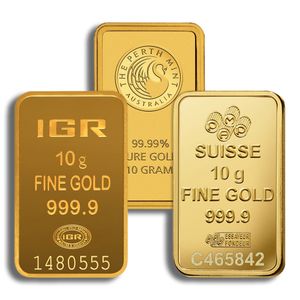
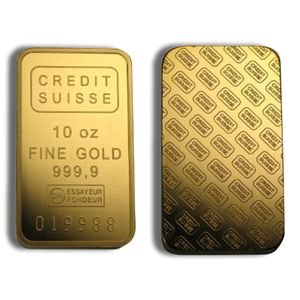
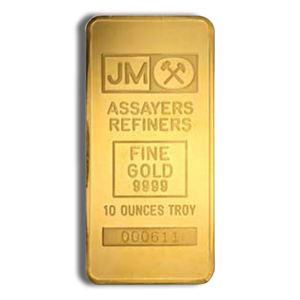
Bar products are available from a wide group of refineries with distinct reputations in the wholesale market. PAMP Suisse offers multiple design series including the classic Lady Fortuna and the Carbon Neutral variant. Argor-Heraeus produces both standard minted bars and the holographic Kinebar series. Valcambi, Credit Suisse, Geiger Edelmetalle, Rand Refinery, Istanbul Gold Refinery (IGR), the Royal Canadian Mint, and the Perth Mint all produce bars carried in our catalog across multiple weight denominations. Historic American bars from Engelhard and Johnson Matthey are also available and remain recognizable within the secondary market.
Product variation within individual brands is worth understanding before purchasing. The same weight from the same refinery may be available sealed in an assay card, loose without packaging, or as a random year coin in either a mint-sealed tube or as an individual unsealed piece. These distinctions affect both handling expectations and resale conditions. Random brand options are also available for buyers where the specific producer matters less than the weight and purity.
Pricing, Premiums, and Market Factors
Gold bullion products are priced relative to the spot price of gold, which reflects the current market rate for one troy ounce of gold on the open market. The premium above spot represents the cost of fabrication, distribution, dealer margins, and any additional factors tied to a specific product's demand or scarcity. Premiums vary meaningfully across format types. Kilo bars from major refineries typically carry narrower premiums than fractional coins, while products like the 1/10 oz Gold American Eagle or 1/20 oz Gold Panda carry proportionally higher fabrication costs relative to their metal content.
Several factors influence where any given product lands relative to spot. Assay card packaging adds a premium compared to loose or random year products. Mint and refinery reputation affects demand at both the retail and wholesale levels. Coins from programs like the Canadian Gold Maple Leaf or Austrian Gold Philharmonic trade at tighter spreads in the secondary market due to their global recognition and consistent production volumes. Less common formats or niche designs may carry wider spreads as a result of lower secondary market depth.
Bullion Standard's pricing reflects real-time market conditions and is structured to offer clarity rather than unnecessary complexity. Our platform displays the bid/ask spread on individual product pages so buyers can evaluate both the cost to acquire and the current wholesale bid price before making a decision. This transparency is central to how we approach pricing, and it reflects a broader philosophy that the full transaction, including the eventual resale side, deserves equal consideration at the time of purchase.
Condition, Packaging, and What to Expect
Brilliant Uncirculated (BU) is the standard condition grade for bullion coins in our catalog. BU coins are struck for bullion purposes rather than collector display, so minor contact marks, bag marks, or surface variations from handling during production or packaging are normal and expected. These cosmetic characteristics do not affect the metal content, purity, or IRA eligibility of the coin. Buyers seeking visually pristine specimens may want to consider certified options, but standard BU bullion is the norm for IRA purposes.
Many coins in our catalog are offered as random year products, meaning the specific mint year will vary based on current inventory. Random year coins carry the same metal content and purity regardless of the year shown on the coin. Some listings specify sealed packaging, which means the coins arrive in their original mint-issued tube or assay packaging. Unsealed listings indicate that the product is sold as an individual piece outside of original packaging, which is common in the secondary market and generally has no effect on IRA eligibility.
Bars in assay cards arrive in sealed plastic card packaging bearing the refinery's branding, the bar's weight, purity designation, and in many cases a unique serial number or holographic security feature. Kilo-weight cast bars ship without assay card packaging due to their size and format. Buyers should expect standard shipping presentation appropriate to the product type, and all orders are packaged securely to protect the metal during transit.
Authenticity and Verification
Every product in our catalog is sourced from reputable mints, refineries, authorized wholesalers, and established distributors, and each piece is verified for authenticity, weight, and purity before being made available on our platform. Bullion Standard maintains an A rating with the Better Business Bureau and is a member of both the American Numismatic Association (ANA) and the National Coin and Bullion Association (NCBA), reflecting our commitment to industry standards and ethical sourcing practices.
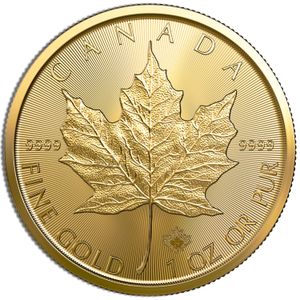
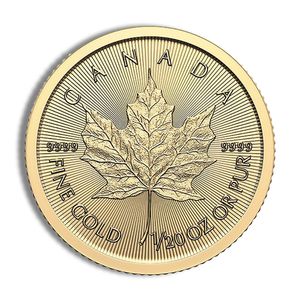
Anti-counterfeiting technology has become increasingly sophisticated across major bullion programs. The Canadian Gold Maple Leaf features laser-engraved radial lines and a micro-engraved maple leaf security mark visible under magnification. PAMP Suisse bars include proprietary Veriscan technology and, on select products, holographic assay cards. Argor-Heraeus employs laser-engraved kinebar holographic markings on certain bar series. The Austrian Gold Philharmonic and U.S. Mint products carry design details that are difficult to replicate without access to government-grade minting equipment.
For buyers interested in additional third-party authentication, Bullion Standard is an authorized dealer for both PCGS (Professional Coin Grading Service) and NGC (Numismatic Guaranty Company). Certified products encapsulated by either grading service carry an independent verification of authenticity and condition, which can be meaningful for certain coin types and IRA custodians that require or prefer certified submissions.
Liquidity and Resale Considerations
Liquidity in physical gold bullion is closely tied to product recognition and standardization. Products issued by major sovereign mints, including the Gold American Eagle, Gold American Buffalo, Canadian Gold Maple Leaf, Austrian Gold Philharmonic, and Australian Gold Kangaroo, are recognized by dealers, wholesalers, and IRA custodians globally. This familiarity supports tighter bid/ask spreads and more consistent resale conditions regardless of where you eventually decide to sell.
Bar products from internationally recognized refineries, particularly those accredited by the London Bullion Market Association (LBMA), also carry strong secondary market recognition. PAMP Suisse, Argor-Heraeus, Valcambi, and the Perth Mint are all well established in the wholesale market, and their bars are routinely traded at both the dealer and institutional level. Lesser-known brands or random brand products without assay card documentation may be accepted by most dealers but could trade at wider discounts depending on the buyer.
Format matters when considering resale. Assay card packaging, original mint tubes, and sealed products tend to command better resale conditions than loose pieces where provenance is less clearly established. Understanding these dynamics before purchasing, rather than only at the point of sale, provides a clearer picture of the actual cost of ownership from acquisition through eventual liquidation.
Storage and Security
IRA-eligible gold held inside a self-directed IRA must be stored with an approved custodian at a qualified depository, as IRS regulations prohibit account holders from taking personal possession of IRA-held metals. Selecting a custodian and an IRS-approved storage facility is a foundational step in the process, and buyers should coordinate with their custodian before directing any purchase into their retirement account.
For gold held outside of an IRA, storage options include home safes, private vault services, and bank safe deposit boxes. A quality home safe rated for both burglary and fire resistance is a practical solution for moderate quantities. For larger holdings, professionally managed vault storage through a third-party depository provides segregated or allocated storage with insurance coverage that exceeds what most home policies would offer for precious metals.
Assay-carded bars and mint-sealed coins should be kept in their original packaging whenever possible. Removing a bar from its assay card or breaking a mint-sealed tube does not affect the metal's purity, but it can reduce resale convenience and, in some cases, affect the accepted bid pricing. Fractional products in particular, where individual coins are small and handling risk is higher, benefit from being maintained in their original sealed packaging through the storage period.
Selling and Buyback Options
Selling IRA-eligible gold follows a straightforward process when working with a dealer that maintains a structured buyback program. Bullion Standard operates a two-way market, meaning we actively purchase products from our own catalog using competitive wholesale bid pricing. This structure allows sellers to transact at published, real-time prices rather than negotiated over-the-counter terms that can be difficult to benchmark independently.
Buyback pricing is influenced by several factors, including the specific product, its mint or refinery of origin, condition, packaging integrity, and current market demand. Products with strong secondary market recognition, original assay card or mint packaging, and verifiable provenance typically receive more favorable bid pricing. Widely traded coins from sovereign mints and bars from LBMA-accredited refineries tend to clear at tighter spreads than niche or random brand products.
For IRA-held gold, the liquidation process runs through the custodian rather than directly through the account holder. Sales initiated through an IRA account are coordinated with the custodian, who manages the transfer of funds in accordance with IRS distribution rules. Outside of IRA accounts, the process is more direct. Sellers can request a quote through our platform, ship product using our insured shipping instructions, and receive payment through their selected method after verification.
Why Buy IRA-Eligible Gold?
The appeal of IRA-eligible gold comes down to its combination of physical substance and administrative compatibility with established retirement account structures. Unlike paper-based financial products, physical gold bullion is a tangible asset that exists independent of counterparty obligations. For buyers who prefer holding something concrete within their retirement structure, IRA-eligible products offer that option within a regulated custodial framework.
The breadth of qualifying products also provides meaningful flexibility. Buyers who prefer government-issued coins for their recognizability and legal tender backing can choose from programs like the Gold American Eagle or Gold Maple Leaf. Those prioritizing premium efficiency relative to metal content may gravitate toward kilo bars or larger minted bars from PAMP Suisse or Argor-Heraeus. Fractional options from 1/10 oz through 1/2 oz allow for more precise position sizing within an account.
Standardization matters in this segment. Because IRA-eligible products must meet defined purity thresholds and come from approved sources, buyers and their custodians operate within a reasonably clear framework. This reduces the ambiguity that can exist with collectible coins or numismatic pieces, where valuation is more subjective and IRA suitability is far less certain.
Why Buy from Bullion Standard?
Bullion Standard was founded in San Diego in 2010 on a straightforward principle: transparency should define every part of the precious metals buying experience. Over fifteen years, that philosophy has shaped how we price products, source inventory, present market data, and support customers before and after a purchase. Our A BBB rating and membership in the ANA and NCBA reflect a consistent commitment to operating with integrity at every level of the business.
Our platform is designed to provide more than a transactional interface. Pricing is connected to real-time market conditions, and our product pages display bid/ask spread data so buyers can evaluate the full transaction context, not just the ask price. Every product in our catalog is authenticated before listing, and our sourcing draws from reputable mints, refineries, and established wholesale channels. The result is a catalog you can trust without having to independently verify every piece.
Customer support is accessible and operationally focused. Whether you're navigating your first precious metals purchase, working through an IRA transfer, or managing a larger position across multiple products, our team is structured to provide responsive, knowledgeable assistance. Payment flexibility is built into the platform, with options including Visa, Mastercard, American Express, Discover, PayPal, Plaid bank-connected payments, wire transfer, paper check, and cryptocurrency through BitPay. Secure, insured fulfillment is standard across every order.
Get Near-Spot Pricing with Bullion Standard Pro
Bullion Standard Pro is designed for buyers who want direct access to wholesale market pricing without the markups typical of traditional retail dealer models. Members transact at live, executable wholesale bid and ask prices that reflect real-time supply and demand within the broader precious metals market. Rather than pricing through fixed retail structures, the platform allows premiums and spreads to move naturally as market conditions evolve.
For IRA-eligible gold, where buyers are often managing meaningful positions and may transact with some regularity, the pricing efficiency available through Pro membership can have a cumulative impact. Access to live wholesale pricing means tighter spreads on acquisition, more accurate portfolio valuation using executable bid prices rather than estimated retail values, and a clearer picture of what current market conditions look like at the institutional level.
Pro members also gain access to proprietary analytics tools, including historical premium data, spread analysis, liquidity metrics, and buy/sell ratio indicators that aggregate activity across the wholesale market. These tools are designed to help buyers evaluate individual products using objective, data-driven information rather than relying solely on marketing claims or static product listings. For buyers who want to approach IRA-eligible gold purchases with the same analytical rigor applied to other financial decisions, Bullion Standard Pro provides the infrastructure to do exactly that.


 (833) 278-4653