Buy 10 Gram Platinum Bars Online
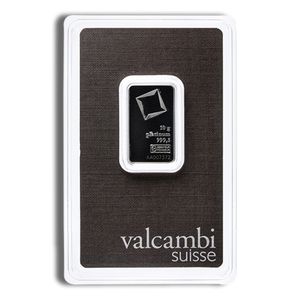
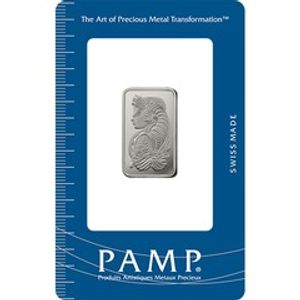
Our catalog of 10 gram platinum bars brings together a focused selection of minted bars from two of the most respected refineries in the world, alongside a flexible random-brand option for buyers prioritizing metal content over mint preference. Available offerings include the PAMP Fortuna in a carded format, the Valcambi Suisse bar presented in a sealed assay card, and a random-brand bar also delivered in assay packaging. Each product contains 10 grams of platinum at 0.9995 purity, equivalent to approximately 0.3215 troy ounces.
Bullion Standard presents these products through a transparent pricing structure built around real-time market conditions. Premiums, bid/ask spreads, and buyback pricing are displayed clearly on each product page, giving you a more complete picture of the true cost of ownership before a purchase is made.
Whether you're expanding a portfolio of platinum bullion or purchasing a specific refinery product for its packaging quality and secondary market recognition, this selection offers meaningful options at the 10 gram weight. The format is compact, globally recognized, and widely traded across the wholesale platinum market.
What Are 10 Gram Platinum Bars?
A 10 gram platinum bar is a minted bullion bar produced by an accredited refinery and verified to contain exactly 10 grams of platinum at a defined purity level, typically 0.9995 fine. Minted bars are produced by precision machinery that stamps refined platinum into smooth, uniform blanks with crisp edges and polished faces, distinguishing them from the rougher surface texture of cast bars.
At this weight, platinum bars occupy a practical middle ground. They're lighter and more affordable per unit than one-troy-ounce bars while carrying a lower premium-per-gram than fractional sizes under five grams. Buyers who want exposure to platinum metal without committing to larger bars often find the 10 gram format to be a sensible entry point.
Assay packaging is standard across this weight category. Most 10 gram platinum bars are sealed in a tamper-evident assay card or blister pack that includes the refinery's certification of weight and purity. This packaging protects the bar from handling damage and provides an added layer of verification that supports resale value and buyer confidence in the secondary market.
History and Background
Platinum's role as a refined bullion metal is relatively modern compared to gold and silver, but its emergence in the investment market over the past four decades has followed a clear trajectory tied to industrial demand and refinery development. Unlike gold, which has served as monetary metal for millennia, platinum entered the bullion market seriously in the late twentieth century as industrial applications in automotive catalytic converters and chemical processing created consistent global demand for refined platinum in standardized form.
Swiss refineries played a central role in standardizing platinum bar production for the investment market. PAMP, established in 1977 in Ticino, Switzerland, and Valcambi Suisse, founded in 1961 in Balerna, Switzerland, both emerged as dominant forces in refining and minting precious metals for the wholesale and retail bullion trade. Their platinum bars became widely accepted across international markets, in part because their production standards, assay certifications, and refinery branding were recognized by traders, institutions, and individual buyers alike.
The 10 gram format specifically developed as refineries responded to demand for fractional platinum products accessible at lower entry prices. As platinum spot prices rose significantly during the 2000s, smaller denominations allowed a broader range of buyers to participate in the platinum market without the capital commitment required for one-ounce or larger bars. Today the 10 gram format remains one of the most practical weight categories for minted platinum bullion.
Purity, Weight, and Specifications
All 10 gram platinum bars in our catalog carry a fineness of 0.9995, meaning 9,995 parts out of 10,000 are pure platinum. This is the standard purity level for investment-grade platinum bullion bars and meets the requirements for inclusion in platinum-eligible precious metals accounts. The remaining 0.05% consists of trace alloying elements inherent to the refining process.
Ten grams of platinum converts to approximately 0.3215 troy ounces, using the standard conversion rate of 31.1035 grams per troy ounce. The troy ounce is the unit of measure universally used in precious metals pricing, and spot prices quoted on commodities exchanges are always denominated in troy ounces. Understanding this conversion is practical when comparing per-gram pricing across bar sizes or evaluating spot-relative premiums.
Minted platinum bars at this weight typically carry stamped markings that include the refinery name or logo, the weight in grams, the metal symbol or name, and the fineness. Valcambi bars produced at this size measure approximately 25.3 mm in length, 15.2 mm in width, and 1.6 mm in thickness. Serial numbers are not universal at this weight level but may appear on specific refinery products or premium assay packaged editions.
Available Brands, Mints, and Product Variations
PAMP is one of the most recognizable names in the global bullion market. Their Fortuna design features the Roman goddess of fortune and has been produced in platinum, gold, silver, and palladium versions across multiple weight denominations. The PAMP Fortuna 10 gram platinum bar is presented in carded format and carries the refinery's hallmark stamp, weight, and purity certification. PAMP products are accepted by dealers and institutions worldwide, which contributes to their liquidity across the secondary market.
Valcambi Suisse produces bars known for their clean minted finish and consistent quality standards. The 10 gram Valcambi platinum bar is sealed in an assay card and is produced at the Valcambi refinery in Balerna, Switzerland, one of the largest and most technically advanced precious metals processing facilities in the world. The assay card certifies authenticity and provides dimensions and purity details printed on the packaging itself.
The random-brand option available in our catalog is packaged in an assay card and carries the same 0.9995 purity and 10 gram weight standard as the named-brand offerings. The specific refinery may vary depending on current inventory and sourcing. This option suits buyers who prioritize the platinum content and assay certification over a specific refinery's branding, and it typically carries a tighter premium relative to the named-brand alternatives.
Pricing, Premiums, and Market Factors
Platinum bar pricing is derived from the spot price of platinum, which reflects real-time trading on international commodities exchanges. The premium above spot represents the cost of refining, fabrication, assay packaging, distribution, and dealer margin. At the 10 gram weight, premiums tend to run higher on a per-ounce basis than larger bars because the fixed costs of producing and packaging a bar are spread across a smaller quantity of metal.
Refinery branding influences premium levels. PAMP and Valcambi bars consistently command slightly higher premiums than random-brand products because of their global recognition and the confidence that comes with purchasing from an established, accredited refinery. Assay packaging also contributes to premium, as it adds a layer of authentication and handling protection that supports resale. A bar in an intact, sealed assay card will typically attract stronger buyback pricing than a loose bar of the same weight and purity.
Bullion Standard displays premiums, bid prices, and ask prices openly on each product page. The bid/ask spread shown reflects real-time market conditions and evolves as wholesale pricing, supply availability, and demand shift. Rather than applying fixed retail markups, our pricing structure is designed to reflect actual market dynamics, giving you a transparent view of both the acquisition cost and the likely resale value before you commit to a purchase.
Condition, Packaging, and What to Expect
Minted platinum bars at the 10 gram weight are typically delivered sealed within an assay card or blister pack. The assay packaging is produced by the refinery and is tamper-evident by design. As long as the seal is intact, the bar inside is protected from handling and environmental exposure. Breaking the seal to handle the bar is not recommended, as an opened assay card can reduce the bar's secondary market appeal.
Minor surface variations, such as light handling marks or small scratches within the assay packaging, are considered cosmetically normal and do not affect the metal's weight or purity. Platinum is a dense, durable metal, but its surface can show contact marks from production handling. These are not defects and should be expected on any bullion product sold in uncirculated but raw condition.
For random-brand products, the specific refinery brand received will depend on current inventory. Bullion Standard sources these bars from reputable refineries and distributors, and each bar will carry proper weight and purity markings along with assay certification. If you require a specific brand, the named-brand listings for PAMP or Valcambi are the appropriate selections.
Authenticity and Verification
Every 10 gram platinum bar sold through Bullion Standard is verified for authenticity, weight, and purity before it reaches a customer. Products sourced from PAMP and Valcambi carry the full backing of their respective refineries, whose production standards are internationally accredited and regularly audited. Assay cards produced by these refineries include printed certification data that corresponds to the bar inside, providing a documented chain of authenticity from the refinery to the end buyer.
Platinum's physical properties, including its density of approximately 21.45 grams per cubic centimeter and its non-magnetic nature, allow for straightforward verification using calibrated scales and basic density testing. These characteristics make it difficult to fabricate convincing counterfeits, particularly for small-format minted bars where precision tolerances are tight and refinery markings are detailed.
Bullion Standard maintains memberships with the American Numismatic Association and the National Coin and Bullion Association, and holds an A rating with the Better Business Bureau. Our sourcing practices involve established mints, refineries, wholesalers, and distributors, and all products pass internal verification before fulfillment. Buyers can purchase with confidence that what arrives matches both the product listing and the documented specifications on the assay card.
Liquidity and Resale Considerations
Ten gram platinum bars from globally recognized refineries like PAMP and Valcambi are broadly accepted across the secondary market, including by dealers, private buyers, and online bullion platforms. The combination of standardized weight, documented purity, and established refinery branding makes these bars straightforward to resell without requiring additional verification steps that might slow a transaction.
Random-brand bars in assay cards are also resalable, though they may attract slightly more scrutiny from buyers unfamiliar with the specific refinery name. Intact assay packaging helps in either case, as it reduces the need for third-party authentication at the point of resale. A bar removed from its assay card is generally treated as a loose bar, which can affect the price a buyer is willing to pay.
Platinum's liquidity in the secondary market is narrower than gold's, reflecting its smaller market size and lower trading volume. This is a practical consideration when evaluating any platinum product. Recognized brands and intact packaging both support faster resale and more competitive buyback pricing. Bullion Standard's two-way market model is designed with this in mind, allowing customers to evaluate buyback pricing before a purchase is ever made.
Storage and Security
Ten gram platinum bars are compact and easy to store securely. Their small footprint makes them practical for home safes, bank deposit boxes, or allocated vault storage, and their sealed assay packaging provides a degree of surface protection that loose bars do not have. Keeping bars in their original assay cards is strongly recommended, both for preservation and for maintaining secondary market appeal.
Platinum is chemically stable and does not oxidize or tarnish under normal storage conditions, making it less demanding to store than silver. Humidity, extreme temperature swings, and direct contact with reactive materials are the primary environmental concerns. Storing bars in a cool, dry environment within their original packaging is sufficient for most buyers.
For buyers accumulating multiple bars over time, a quality home safe with fire and theft resistance provides accessible storage without recurring fees. Those holding larger quantities of platinum may prefer third-party vault storage through an insured depository, which provides professional security infrastructure and simplifies insurance coverage. The right choice depends on the quantity held and the priority placed on immediate physical access versus institutional-grade security.
Selling and Buyback Options
Selling 10 gram platinum bars back into the market follows a relatively straightforward process when the bars are in good condition and remain in their original assay packaging. Dealers and online platforms evaluate buyback pricing based on the current platinum spot price, the refinery brand, the bar's condition, the integrity of the assay card, and overall market liquidity conditions at the time of the transaction.
Named-brand products from PAMP and Valcambi generally receive competitive buyback pricing due to their global recognition and the confidence buyers place in their assay certification. Random-brand bars with intact assay cards are also buyable, though the specific brand and condition will influence the offered price. Bars removed from their assay packaging or showing significant handling damage may receive lower offers than comparable bars in original sealed condition.
Bullion Standard operates a two-way market that allows customers to sell as well as buy within the same platform. Our purchasing team evaluates products using current wholesale market pricing, and our bid pricing is displayed openly on product pages so customers can assess liquidity before purchasing. The process is designed to be operationally straightforward, with clear communication about pricing expectations and no obligation to complete a transaction at the initial offered price.
Why Buy 10 Gram Platinum Bars?
Platinum is one of the rarest naturally occurring elements, with annual mine supply significantly smaller than gold or silver. The majority of global platinum production originates from South Africa, with secondary production from Russia and Zimbabwe. This concentrated supply profile means that changes in mining output, labor conditions, or refining capacity can have meaningful effects on the availability of refined platinum bars in the wholesale market.
The industrial demand picture for platinum is substantial and spans multiple sectors. Platinum serves as a critical catalyst in automotive catalytic converters, particularly for diesel vehicles. It is also used in chemical processing, petroleum refining, glass manufacturing, and medical devices. Hydrogen fuel cell technology represents a growing application, with platinum functioning as a catalyst in proton exchange membrane fuel cells used in transportation and stationary power systems.
At the 10 gram weight, the format allows buyers to acquire platinum in smaller increments with less capital per transaction than one-ounce bars require. Assay-packaged minted bars at this size carry strong secondary market recognition and are easy to transport, store, and verify. For buyers who want to hold physical platinum in a manageable, well-documented format from established refineries, 10 gram bars represent a practical and widely accepted option.
Why Buy from Bullion Standard?
Bullion Standard was founded in San Diego in 2010 with a focus on building long-term customer relationships through pricing transparency and reliable fulfillment. That approach has shaped every aspect of how the platform operates, from how products are sourced and verified to how pricing is displayed and how buyback offers are structured. We believe in showing you the full picture of a transaction rather than focusing narrowly on the acquisition price.
Every product sold through Bullion Standard is verified for authenticity, weight, and purity before it ships. Our sourcing relationships include established refineries, authorized distributors, and vetted wholesalers. We hold an A rating with the Better Business Bureau, maintain memberships with the ANA and NCBA, and are authorized dealers for both PCGS and NGC. These credentials reflect a consistent commitment to operating with integrity across both the retail and professional sides of the market.
Our platform supports a wide range of payment options including Visa, Mastercard, American Express, Discover, PayPal, bank-connected payments through Plaid, wire transfer, paper check, and cryptocurrency through BitPay. Checkout is secure, fulfillment is reliable, and customer support is accessible throughout the buying and selling process. The experience is designed to feel like a transparent marketplace, not a high-pressure sales environment.
Get Near-Spot Pricing with Bullion Standard Pro
Bullion Standard Pro is designed for buyers who want direct access to executable wholesale bid and ask pricing across the precious metals catalog. Members transact at live wholesale market prices without additional dealer markups or fixed retail spreads applied on top. This means premiums and bid/ask spreads move naturally with underlying market conditions rather than being set at static retail margins.
For platinum buyers, tighter spreads at the 10 gram weight level can meaningfully reduce the effective cost of ownership over multiple transactions. Because 10 gram bars carry higher per-ounce premiums than larger formats, the pricing efficiency available through Pro membership can be particularly relevant for buyers accumulating platinum in smaller increments over time.
Beyond pricing, Bullion Standard Pro provides access to real-time portfolio valuation using live wholesale bid pricing, historical premium analytics, spread analysis, liquidity metrics, and other proprietary market intelligence tools. Rather than relying on marketing claims or static product descriptions, Pro members can evaluate platinum bars using objective, data-driven metrics that reflect actual wholesale market conditions. The platform is built around the principle that better information consistently leads to better decisions.


 (833) 278-4653