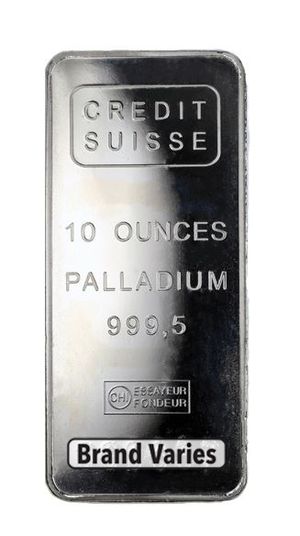
Buy 10 oz Palladium Bars Online
Our catalog includes a 10 oz palladium bar sourced from various reputable refineries and presented in an assay card for authenticity verification and tamper-evident protection. These bars carry a purity of 0.9995 fine palladium and contain 9.995 troy ounces of actual metal content. At this weight tier, buyers get meaningful palladium exposure within a single, manageable format that's easy to verify, store, and resell.
Bullion Standard approaches this market as a transparent two-way marketplace, not a high-pressure retail environment. Pricing is updated in real time to reflect current spot conditions, and our product pages display the bid/ask spread so you can evaluate the full cost of ownership before making a purchase decision. What you see is what you pay, with no hidden complexity built into the structure.
Because palladium trades in a much thinner market than gold or silver, product availability at this weight can shift quickly. The 10 oz format occupies a practical middle ground between smaller fractional bars and larger industrial-grade formats, making it a logical option for buyers who want concentrated palladium exposure without moving into the most illiquid size tiers.
What Are 10 oz Palladium Bars?
A 10 oz palladium bar is a refined palladium product cast or minted to weigh ten troy ounces, with purity levels typically reaching 0.9995 fine. These bars are produced by private refineries rather than sovereign mints, which means they carry refinery branding rather than government backing. The assay card enclosure confirms the bar's weight, purity, and origin, serving as a form of third-party certification embedded directly into the packaging.
The minted format found in this weight class features smooth, flat surfaces and stamped engravings that typically include the refinery name, weight, purity designation, and in some cases a serial number. This distinguishes minted bars from cast bars, which are poured and have a more textured, industrial appearance. Minted bars are generally considered more uniform in presentation and easier to sell through secondary market channels that prioritize visual consistency.
Buyers who choose the 10 oz tier are often looking to minimize the number of individual pieces in their holdings while maintaining meaningful flexibility. Compared to a 1 oz bar, a 10 oz bar typically carries a lower per-ounce premium, though liquidity considerations are more relevant at this size. Compared to a 1 kg or 100 oz format, the 10 oz bar is substantially more accessible and easier to transact in a retail or dealer buyback environment.
History and Background
Palladium was isolated as a distinct element in 1803 by the English chemist William Hyde Wollaston, who named it after the asteroid Pallas, discovered around the same time. For much of the nineteenth and early twentieth centuries, palladium remained a relatively obscure platinum-group metal with limited commercial application. Its physical and chemical characteristics, including its ability to absorb hydrogen and its catalytic properties, were known but not yet commercially significant at scale.
The modern palladium market began taking shape in the second half of the twentieth century as automotive manufacturing expanded globally and emissions regulations tightened. Palladium became a critical component in catalytic converters used in gasoline-powered vehicles, a role that fundamentally changed its market dynamics. Unlike gold and silver, which have deeply established histories as monetary metals, palladium's identity in the bullion market developed later, shaped more by industrial demand than monetary tradition.
Refined palladium bars entered the investment market in earnest during the 1990s and early 2000s as pricing visibility improved and institutional interest grew. Swiss and North American refineries, including Valcambi, PAMP, and the Stillwater Mining Company in Montana, helped establish standardized formats that made palladium accessible to non-industrial buyers. The 10 oz bar format emerged alongside these developments as a practical unit for buyers seeking more than fractional exposure without committing to the volumes typical of industrial procurement.
Purity, Weight, and Specifications
The industry standard purity for investment-grade palladium bars is 0.9995 fine, meaning the bar is 99.95 percent pure palladium. This purity level is consistent across most reputable refineries producing bars for the bullion market and is the standard recognized by the London Platinum and Palladium Market (LPPM), which sets the benchmark for good delivery specifications in the global wholesale palladium trade.
A 10 oz palladium bar contains 10 troy ounces of gross weight but 9.995 troy ounces of actual palladium content after accounting for the small allowance associated with the 0.9995 purity designation. Troy ounces are the standard unit of measure in the precious metals industry and are slightly heavier than avoirdupois ounces used in everyday commerce. Buyers should always reference troy ounce specifications when comparing palladium products across formats and suppliers.
Assay cards accompanying these bars typically display the refinery's name and logo, the bar's weight in troy ounces, the fineness expressed as a decimal, and in many cases a serial number that can be traced back to the specific production run. The tamper-evident card itself serves as the primary verification mechanism for end buyers, making the integrity of the original sealed packaging an important factor in downstream resale.
Available Brands, Mints, and Product Variations
The 10 oz palladium bar in our catalog is listed as a random brand product, meaning the specific refinery may vary depending on current inventory and sourcing availability. Refineries that commonly produce palladium bars in this format include Valcambi Suisse, PAMP Suisse, Heraeus, Credit Suisse, and various North American refiners. Each of these facilities operates under rigorous quality controls, and their products are widely recognized within the wholesale palladium market.
Random brand bars are produced to the same purity and weight specifications as branded alternatives and arrive sealed in assay cards regardless of the specific refinery. The assay card functions the same way across producers, and the 0.9995 fine standard does not change between refiners. For buyers primarily focused on palladium content rather than collector appeal, a random brand bar typically offers a practical entry point without sacrificing verification standards.
It's worth noting that palladium bars are not produced with the variety of designs or year-dated editions common to silver and gold coins. The format is standardized by function, and most variations between brands are limited to engraving layout, logo placement, and whether the bar carries a serial number. For buyers who prefer a specific refinery, it's best to contact us directly regarding current inventory, as availability in this metal and weight class is more constrained than in gold or silver.
Pricing, Premiums, and Market Factors
Palladium pricing is derived from the spot price of the metal, which is quoted per troy ounce and updated continuously during market hours. The premium above spot reflects the cost of refining, fabrication, packaging, and distribution, as well as any supply constraints specific to the current market environment. Because the palladium market is considerably smaller in terms of trading volume than gold or silver, premiums can be more sensitive to short-term shifts in supply and demand.
At the 10 oz bar level, premiums are generally more efficient on a per-ounce basis than fractional or 1 oz formats, since fixed fabrication and packaging costs are distributed across a larger quantity of metal. However, the overall dollar commitment is substantially higher, which means the bid/ask spread in real dollar terms deserves careful consideration. Bullion Standard displays the spread on each product page so buyers can evaluate the full picture rather than focusing solely on the quoted premium at the time of purchase.
Industrial demand for palladium, particularly from the automotive sector, continues to exert meaningful influence on the spot market. Supply is geographically concentrated, with Russia and South Africa accounting for the majority of global primary production, which introduces supply-side variables that don't apply to the same degree in other metals. These structural dynamics can create premium volatility that's worth understanding before committing to a purchase at any given price level.
Condition, Packaging, and What to Expect
10 oz palladium bars in our catalog are delivered sealed in assay cards, which consist of a rigid or semi-rigid enclosure with a tamper-evident seal, typically accompanied by a certificate or printed verification details. The bar itself is not removed from the packaging during our fulfillment process. Arriving in its original sealed assay card is important because breaking the seal can affect resale value, particularly through dealer buyback channels that apply stricter condition standards to opened packaging.
Because this is a random brand product, the specific refinery, assay card design, and bar appearance will vary. The metal content, purity, and weight standards are consistent, but buyers should not expect a specific logo, engraving style, or packaging format. If you receive a bar from a well-known refinery, that's a bonus, but the product is priced and sold on the basis of its palladium content and assay verification rather than brand identity.
Minor surface marks or handling variations on the bar itself are considered cosmetically normal for this product type and do not affect the weight or purity. The assay card is what protects the bar from significant surface exposure during transit and storage, which is part of why maintaining the sealed packaging is practical from both a preservation and resale standpoint.
Authenticity and Verification
Each 10 oz palladium bar in our catalog arrives in a sealed assay card, which is the primary mechanism of authenticity verification for bars of this type. The assay card, issued by the producing refinery, attests to the bar's weight and purity and provides a tamper-evident layer that makes post-production alteration visually detectable. Refineries that produce LPPM-recognized bars operate under strict quality and documentation standards, adding an additional layer of market credibility.
Bullion Standard sources products from verified wholesale channels, and every item is checked against product specifications before being listed in our catalog. Our team does not list products without confirming they meet the authenticity and purity standards expected for each metal and format. This sourcing process is designed to give buyers confidence that what they're purchasing matches what is described, not just at the marketing level, but in the physical product itself.
For buyers who want additional third-party verification beyond the assay card, independent testing services such as XRF (X-ray fluorescence) analysis can confirm palladium content without damaging the bar. However, conducting this test typically requires removing the bar from its assay packaging, which has resale implications. For most buyers, the original sealed assay card provides adequate verification and should be preserved in its intact state throughout ownership.
Liquidity and Resale Considerations
Palladium has a smaller and more specialized resale market than gold or silver, which is a meaningful consideration at any weight. The 10 oz format is recognized within the wholesale and dealer trade but is not as broadly traded as 1 oz bars or gold products. Most buyers looking to sell a 10 oz palladium bar will do so through a metals dealer rather than a peer-to-peer marketplace, where demand for this specific format is more limited.
Bars carrying the assay card intact and in original sealed condition consistently resell at tighter spreads than bars that have been removed from their packaging. The assay card functions as proof of provenance in the secondary market, and most professional buyers factor its condition into their pricing. Random brand bars from recognized refineries generally trade at similar rates to branded alternatives when the assay card is present, since the documentation itself carries the weight that branding alone might otherwise provide.
Understanding liquidity before purchasing is part of how Bullion Standard approaches the buying process. Our product pages display the current bid/ask spread, giving you visibility into what the resale environment looks like relative to the purchase price at the time of your decision. This transparency is central to how we operate as a two-way market, not just a selling platform.
Storage and Security
Palladium is a relatively stable metal and does not tarnish, oxidize, or react with most environmental conditions under normal storage circumstances. However, physical protection of the assay card and the bar itself is still important, particularly for a product where the sealed packaging carries independent resale value. Storing the bar in its original assay card, protected from physical impact and moisture, is the most straightforward approach for most buyers.
For buyers holding multiple bars or combining palladium with other metals in a single portfolio, a quality home safe rated for fire and theft resistance provides a practical baseline for security. Bank safe deposit boxes offer an off-site alternative with lower ongoing cost than professional vault services, though access is limited to banking hours. For buyers accumulating substantial holdings, professional vault storage through a third-party depository may offer better insurance coverage and more structured access protocols.
Because 10 oz bars are a relatively compact format, they stack and store efficiently without requiring large amounts of space. Keeping each bar in its original assay card rather than loose storage is the best practice for preserving both the physical bar and the documentation that supports its resale value over time.
Selling and Buyback Options
Selling a 10 oz palladium bar back into the market involves the same fundamental considerations as any dealer transaction: the condition of the product, the integrity of the assay card, the current spot price, and the spread between the bid price and current market pricing. Bars arriving in sealed original assay cards will typically receive the most straightforward buyback pricing from a dealer, while bars with opened or damaged packaging may be evaluated differently depending on the buyer's internal standards.
Bullion Standard operates as a two-way marketplace, meaning we actively purchase palladium bars and maintain competitive buyback pricing on the products we sell. Our purchasing team evaluates products based on current market conditions, and pricing is updated to reflect live spot prices rather than lagging fixed schedules. This structure means buyers know from the outset that resale through Bullion Standard is a genuine option, not an afterthought.
When initiating a buyback, you'll submit product details through our platform and receive a current bid price based on the market at that moment. Palladium buyback pricing is naturally more variable than gold given the thinner market, so timing and market conditions play a more meaningful role. Keeping the bar in its original sealed packaging throughout your ownership period is one of the most straightforward ways to ensure the best possible outcome when you decide to sell.
Why Buy 10 oz Palladium Bars?
Palladium's supply picture is distinctively tight compared to the more broadly mined precious metals. Primary production is dominated by a small number of facilities concentrated in Russia and South Africa, which means the global supply chain is inherently less diversified than gold or silver. For buyers specifically interested in exposure to a physically rare and industrially essential metal, the 10 oz bar format offers a direct and well-documented way to hold actual palladium rather than a financial proxy for it.
From a format standpoint, the 10 oz bar represents a meaningful quantity of palladium in a compact, verifiable, and efficiently priced package. The per-ounce premium at this weight tier is generally more favorable than smaller fractional bars, and the format is recognized across the professional dealer and wholesale markets. Buyers seeking to consolidate palladium exposure into fewer pieces while maintaining practical transactability often find this weight tier hits the right balance.
The assay card presentation is also a practical advantage. It provides immediate, built-in verification without requiring additional testing or documentation, which simplifies both the initial purchase and any future resale process. For a metal that requires more specialized market knowledge than gold or silver, having a clearly documented, standardized product with a tamper-evident certificate reduces friction throughout the ownership experience.
Why Buy from Bullion Standard?
Bullion Standard was founded in San Diego in 2010 with a straightforward principle: that earning trust in the precious metals industry requires consistent transparency, honest pricing, and reliable execution every time. Over more than a decade of operation, that philosophy has shaped how we source products, structure pricing, and support customers before and after a purchase. We hold an A rating with the Better Business Bureau and maintain active memberships with the American Numismatic Association and the National Coin and Bullion Association.
Our pricing reflects real-time market conditions and is structured for clarity rather than complexity. Every product page displays the current bid/ask spread, giving you a complete view of what the market looks like on both sides of the transaction. This isn't a cosmetic feature; it reflects our view that a serious buyer deserves to see the full cost and liquidity picture before making a decision, not after.
Our fulfillment process is built around secure packaging, reliable delivery timelines, and responsive support if something doesn't go as expected. We accept a wide range of payment methods, including major credit cards, PayPal, bank-connected payments through Plaid, wire transfer, paper check, and cryptocurrency through BitPay. Every product we ship has been verified for authenticity and purity, and our sourcing operates exclusively through reputable mints, refineries, wholesalers, and distributors. That's the standard we've held since day one.
Get Near-Spot Pricing with Bullion Standard Pro
Bullion Standard Pro is built for buyers who want to transact closer to where the wholesale market actually clears. Members gain access to live executable wholesale bid and ask pricing across a broad range of precious metals products, including palladium bars. Rather than displaying indicative or retail-adjusted prices, Pro pricing reflects real-time supply and demand within the wholesale market, which matters especially in a thinner, more spread-sensitive metal like palladium.
Pro members transact directly at wholesale market prices without the additional dealer markups applied in a standard retail structure. This means premiums and bid/ask spreads fluctuate naturally based on underlying market conditions rather than fixed pricing tiers. For buyers making meaningful purchases in a metal with tighter global liquidity, the difference between retail and wholesale pricing can be worth examining carefully.
Beyond pricing, Pro members have access to live portfolio valuation using executable wholesale bid prices, which provides a more accurate read on current liquidation value than estimated retail figures. Historical premium data, spread analysis, and liquidity metrics are also available, giving members the analytical tools to evaluate palladium products using objective market information rather than marketing-driven comparisons. For buyers who take their palladium holdings seriously, Pro is designed to provide the kind of market transparency that's been historically difficult to access outside institutional channels.


 (833) 278-4653