

 (833) 278-4653



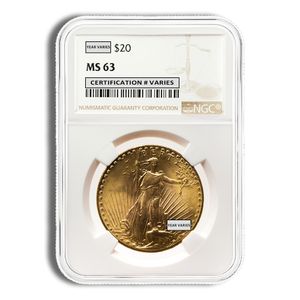
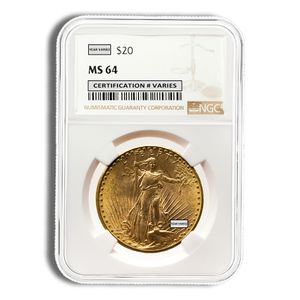
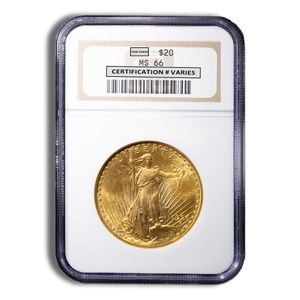
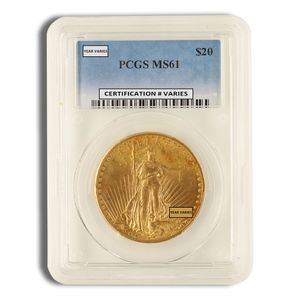
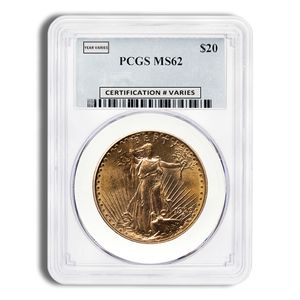
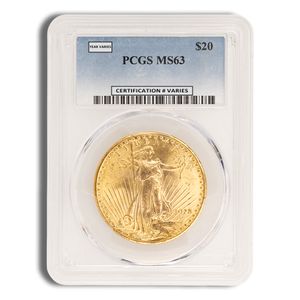
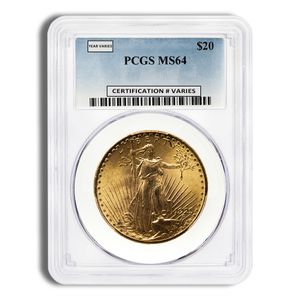
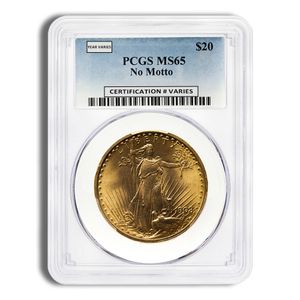


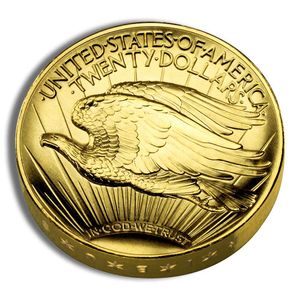
Buy Saint-Gaudens Double Eagles Online
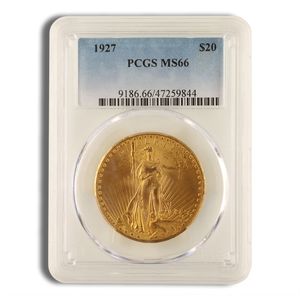
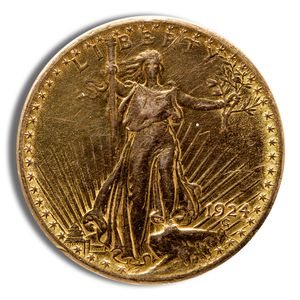
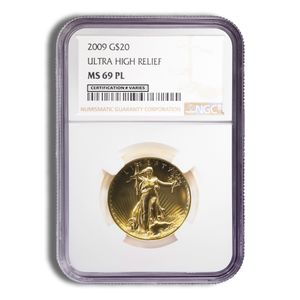
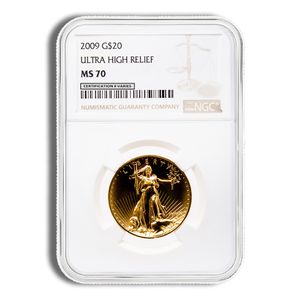
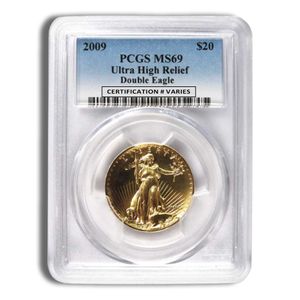
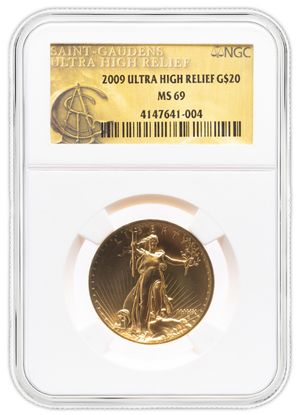
Our catalog of saint-gaudens double eagles brings together one of the most historically significant gold coin series ever produced by the United States Mint. Whether you're looking for a circulated example in VF or XF condition, an NGC or PCGS certified coin graded from MS61 through MS66, or the modern 2009 Ultra High Relief $20 Double Eagle in MS69 or MS70, you'll find a full range of options here. Products span both the classic Liberty Head double eagle series and the saint-gaudens design, graded by the industry's most trusted third-party certification services.
Bullion Standard sources these coins from reputable wholesalers and distributors with full verification of authenticity, weight, and purity before any product reaches a customer. Pricing is structured around real-time market conditions, and each product page displays a live bid/ask spread so you can evaluate the full cost of ownership before committing to a purchase.
The depth of this catalog reflects the genuine breadth of the double eagle market, from raw circulated coins priced closer to melt value to highly graded certified pieces where numismatic premiums reflect condition scarcity rather than marketing claims. Both sides of that market are represented here, with consistent transparency applied across every listing.
What Are Saint-Gaudens Double Eagles?
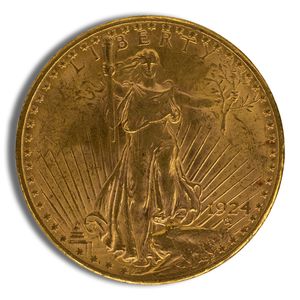
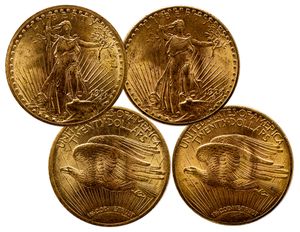
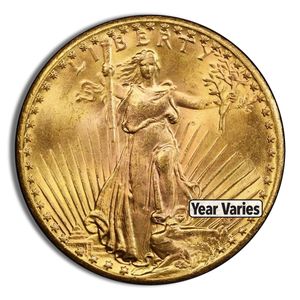
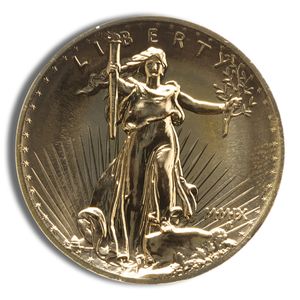
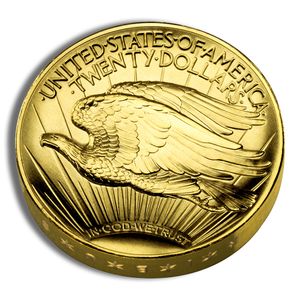
The saint-gaudens double eagle is a $20 gold coin struck by the United States Mint that carries 0.9675 troy ounces of gold at a fineness of 90 percent. Designed by sculptor Augustus Saint-Gaudens at the request of President Theodore Roosevelt, the coin was produced from 1907 through 1933 and is widely considered the most artistically accomplished coin in American numismatic history. The design features a striding Liberty on the obverse and a flying eagle on the reverse, with later dates incorporating the IN GOD WE TRUST motto.
The Liberty Head double eagle, sometimes called the Coronet double eagle, predates the saint-gaudens design and runs from 1849 through 1907. Both series share the same gold content, diameter of approximately 34.1mm, and face value of twenty dollars, making them functionally identical from a bullion standpoint. Buyers who are focused primarily on gold content may find circulated examples of either type appealing at similar price points, while collectors and graded-coin buyers tend to focus specifically on the saint-gaudens type for its artistic distinction.
The 2009 Ultra High Relief $20 Double Eagle represents a modern reinterpretation of the original saint-gaudens design and is struck in 24-karat gold at 0.9999 fineness with a weight of one troy ounce. It is a distinct product from the pre-1933 coins and is minted at the West Point Mint rather than from historical dies, but it carries forward the same design legacy and commands its own premium structure based on condition and certification.
History and Background
Augustus Saint-Gaudens was commissioned in 1905 to redesign the American gold coinage, a project Roosevelt championed to restore artistic dignity to United States currency. The original 1907 Ultra High Relief version was so deeply struck it proved impractical for commercial circulation, requiring as many as eleven blows from the press. The design was adapted into a more practical high-relief format and then a standard relief, which became the circulation type produced through 1933. Despite these adjustments, the saint-gaudens double eagle retained a sculptural quality rarely matched in American coinage.
Production of the pre-1933 double eagle spanned multiple mint facilities, including Philadelphia, Denver, San Francisco, Carson City, and New Orleans, resulting in a wide range of mintmarks and date-mintmark combinations with varying levels of rarity and surviving populations. The series was abruptly ended in 1933 when President Franklin Roosevelt's executive order halted gold coin production as part of broader monetary policy changes. This cutoff gave the series a hard historical boundary that has since shaped its collectibility and numismatic significance.
The 2009 Ultra High Relief coin returned to the original Saint-Gaudens vision by using modern minting technology to achieve the deep relief that was impossible in 1907. Struck at the West Point Mint with four presses required to fully render the design, it quickly became one of the most significant modern gold coins issued by the U.S. Mint and remains actively traded in both certified and raw format across the wholesale market.
Purity, Weight, and Specifications
Pre-1933 saint-gaudens double eagles and Liberty Head double eagles contain 0.9675 troy ounces of gold at a stated purity of 90 percent, with the remaining 10 percent composed of copper for durability. Each coin has a diameter of approximately 34.1 millimeters and a thickness of 2.41 millimeters. These specifications are consistent across both the saint-gaudens and Liberty Head series, meaning both types carry identical gold content regardless of design type.
The 2009 Ultra High Relief $20 Double Eagle is struck in 24-karat gold at 0.9999 fineness, making it a pure gold coin by modern bullion standards. It weighs one troy ounce, has a diameter of 27 millimeters, and a thickness of 4 millimeters, reflecting the deeply sculpted relief that defines the design. The West Point Mint mark appears on the coin, and original government packaging included a custom mahogany box and certificate of authenticity.
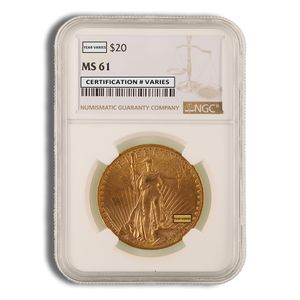
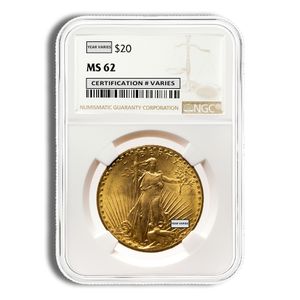
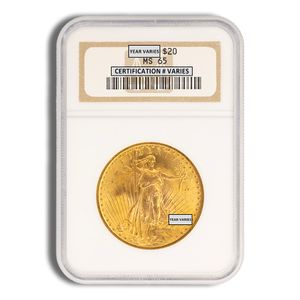
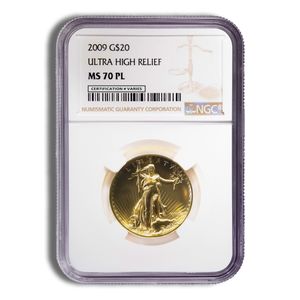
For certified coins, the grade assigned by NGC or PCGS is encapsulated on the coin's label alongside the coin's description and certification number. Grades for pre-1933 circulated coins in this catalog range from Cull and VF through XF and AU, with uncirculated examples graded from MS60 through MS66. The 2009 Ultra High Relief pieces are graded MS69 and MS70, with certain examples carrying prooflike or deep prooflike designations that reflect mirror-like surface characteristics.
Available Brands, Mints, and Product Variations
All coins in this section were originally produced by the United States Mint, either at historical branch facilities for the pre-1933 series or at the West Point Mint for the 2009 Ultra High Relief issue. Third-party certification is provided by NGC and PCGS, the two most widely recognized grading services in the numismatic industry. Each grading service encapsulates the coin in a tamper-evident holder that displays the assigned grade, coin description, and a unique certification number that can be verified through the respective service's online registry.
Within the pre-1933 category, products are labeled as random year, meaning the specific date and mintmark received may vary based on available inventory. This structure is standard across the double eagle market for buyers whose primary interest is condition grade or gold content rather than a specific date. Coins graded MS61 through MS65 under both NGC and PCGS labels are available for both the Liberty Head and saint-gaudens types, and grades are assigned based on the Sheldon 70-point scale using standardized criteria for strike quality, surface preservation, luster, and eye appeal.
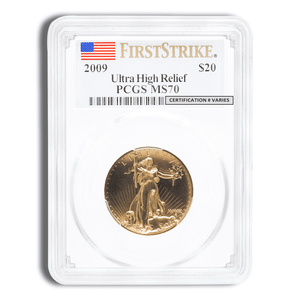
The 2009 Ultra High Relief series is available in several certified variants, including NGC MS69PL, NGC MS70, NGC MS70DPL, NGC MS70PL, PCGS MS69, PCGS MS70, PCGS MS70 First Strike, and PCGS MS70PL. The prooflike and deep prooflike designations indicate coins with exceptionally reflective fields, while the First Strike label from PCGS denotes coins submitted within a specified window of the issue date. Raw BU examples with original government box and certificate of authenticity are also available for buyers who prefer ungraded presentation.
Pricing, Premiums, and Market Factors
Pricing for saint-gaudens double eagles is driven by two distinct forces: the gold content of the coin and the numismatic premium associated with its condition, certification, and market demand. Circulated examples in VF, XF, and AU grades are priced with premiums that are relatively modest above melt value, reflecting their availability in the wholesale market and their appeal as gold-content purchases rather than collector pieces. As grade increases into the MS60 through MS66 range, premiums expand based on condition scarcity and the documented population of surviving examples at that grade level.
The bid/ask spread on each product page reflects real-time market conditions and provides a direct measure of how efficiently a given coin trades between acquisition and resale. Tighter spreads are generally associated with more liquid, widely recognized products. Certified coins from NGC and PCGS tend to trade with more predictable spread behavior because third-party grading eliminates condition uncertainty, while raw circulated pieces may carry slightly wider spreads that reflect the variability inherent in ungraded material.
The 2009 Ultra High Relief coins carry a separate premium structure driven by their modern issue status, limited original mintage, and the appeal of the deep-relief design. Prooflike and deep prooflike designations from NGC and PCGS can further influence pricing by identifying surface quality that goes beyond the base numerical grade. Market conditions, wholesale demand, and the relative availability of specific certified populations all contribute to how these premiums move over time.
Condition, Packaging, and What to Expect
Certified coins are delivered in NGC or PCGS tamper-evident encapsulation, often referred to as a slab, which protects the coin from environmental damage and handling. The slab displays the grade, coin description, and certification number, and should not be removed. Attempting to crack open a slab voids the grading service's guarantee and significantly reduces the coin's market value. Raw coins purchased in AU or BU grade are not encapsulated and may show minor contact marks or luster breaks consistent with their respective grades.
Random year designations mean that the specific date, mintmark, and design type, whether Liberty Head or saint-gaudens, may vary based on current inventory. For circulated grades such as VF and XF, coins may show wear on high points consistent with genuine circulation use. This is expected and consistent with the stated grade, not a defect. Cull or low-grade examples may include coins that have been cleaned, polished, or otherwise altered in ways that preclude formal grading, but they still contain the full gold content of the series.
The 2009 Ultra High Relief BU products may or may not include the original U.S. Mint mahogany box and certificate of authenticity depending on the specific listing, so it's worth confirming packaging details before purchase. Certified 2009 Ultra High Relief pieces arrive in NGC or PCGS holders regardless of whether the original government packaging is included. All products are shipped securely through insured carriers with packaging designed to protect against transit damage.
Authenticity and Verification
Every coin sold through Bullion Standard is verified for authenticity, weight, and purity before being made available in the catalog. Pre-1933 double eagles are well-documented in terms of known weights, diameters, and metallic compositions, making counterfeit detection straightforward for experienced professionals using standard testing methods. Certified examples carry an additional layer of protection through the NGC or PCGS encapsulation process, during which coins are examined by trained numismatists using physical inspection and imaging technology before being graded and sealed.
NGC and PCGS maintain online verification registries where any encapsulated coin's certification number can be checked against the grading service's records. This allows buyers to confirm that a slab is genuine and that the grade assigned matches what the service documented at the time of grading. Bullion Standard is an authorized dealer for both PCGS and NGC, which supports consistent access to certified inventory and a direct relationship with each grading service's standards and processes.
For raw coins, authentication relies on physical measurement, weight verification, and visual inspection by experienced personnel. The pre-1933 double eagle's specifications, including the precise gold content, diameter, and relief characteristics, are well established in the numismatic literature and serve as reliable benchmarks during the verification process. Our sourcing relationships with established wholesalers and distributors provide an additional layer of supply-chain confidence for every product we carry.
Liquidity and Resale Considerations
The saint-gaudens double eagle is one of the most widely recognized and actively traded gold coin types in the American numismatic market. Circulated examples in VF through AU grades are familiar to dealers, auction houses, and private buyers across the country, which contributes to a relatively active resale environment for raw material at or near gold melt value. Certified examples, particularly those graded MS63 and above by NGC or PCGS, trade within a more defined market where price transparency is supported by documented auction records and population reports.
The 2009 Ultra High Relief coins trade somewhat differently from the pre-1933 series. As a modern issue with a known mintage and active certified populations on both the NGC and PCGS registries, pricing for specific certified grades tends to be more trackable across market participants. Prooflike and deep prooflike designations, as well as designator labels like First Strike, can influence resale appeal within the certified coin community and may affect liquidity depending on buyer demand for those specific attributes at any given time.
Products with wider market recognition, consistent specifications, and third-party certification generally move more efficiently through resale channels than niche or obscure items. The double eagle, in both its pre-1933 and modern forms, benefits from decades of established market familiarity, which supports ongoing dealer interest and a functional secondary market across a range of conditions and grades.
Storage and Security
Certified coins in NGC or PCGS holders are already protected against environmental contact and minor physical handling, but they still benefit from controlled storage conditions. Humidity and temperature fluctuations can affect the holder material over time, so storing slabs in a climate-controlled environment helps maintain the integrity of the encapsulation. A quality home safe with a moisture-controlled interior or a third-party vault service provides effective protection for certified double eagles held in quantity.
Raw circulated coins should be handled by the edges to avoid adding fingerprints or contact marks that could affect their appearance or, in the case of AU examples, their gradability if certification is pursued later. Individual coin flips, non-PVC coin envelopes, or rigid coin holders provide basic protection for raw material in storage. Long-term storage in soft PVC flips can transfer plasticizers to coin surfaces over time and should be avoided.
For buyers accumulating multiple coins, a dedicated numismatic storage box or safe deposit box provides an organized and secure option that keeps certified and raw coins separated. Third-party vault storage services are also available for larger holdings and offer insurance and professional handling that home storage typically cannot replicate. Whichever option is chosen, keeping a documented inventory with photos and certification numbers on hand provides a practical record for insurance and resale purposes.
Selling and Buyback Options
Bullion Standard operates as a two-way market, meaning we actively purchase saint-gaudens double eagles and Liberty Head double eagles in addition to selling them. When you're ready to sell, buyback pricing is driven by current wholesale market conditions, the specific product type, its condition or certified grade, and the demand dynamics present at that moment. Certified coins with recognized NGC or PCGS grades tend to move through the buyback process with greater efficiency because condition has already been objectively established, reducing the time required for evaluation.
Raw circulated coins, including VF, XF, AU, and cull-grade pieces, are evaluated based on physical condition and gold content. Coins that have been cleaned or otherwise altered may receive different buyback treatment than original-surface examples, which is consistent with how these products are treated throughout the wholesale market. Packaging, including original government boxes for the 2009 Ultra High Relief, can factor into buyback pricing depending on current buyer demand for complete presentation sets.
Our purchasing team processes buyback requests with the same transparency applied to our selling side. Buyback pricing is available directly through the platform, allowing sellers to evaluate terms before committing. This structure is designed to make the decision to sell as straightforward as the decision to buy, with pricing that reflects real market conditions rather than arbitrary dealer margins.
Why Buy Saint-Gaudens Double Eagles?
The saint-gaudens double eagle occupies a unique position in the American gold market because it combines a meaningful gold content of 0.9675 troy ounces with deep historical significance and genuine numismatic collector demand. Few gold coin types carry the same level of cultural recognition, artistic reputation, and established market presence. For buyers interested in pre-1933 American gold, the double eagle is typically the first point of reference because of its size, familiarity, and breadth of certified examples available at various price points.
The certified segment of this market offers buyers a well-structured way to evaluate condition differences through third-party grading, with PCGS and NGC population reports providing objective data on how many examples have been graded at each level. This transparency makes it easier to assess relative scarcity and market availability compared to raw coin purchases, where condition is a matter of individual judgment. Buyers who value objective documentation will find the certified double eagle market particularly well suited to their approach.
The 2009 Ultra High Relief adds a modern dimension to the series by offering the same iconic design executed in pure 24-karat gold with contemporary minting precision. Its availability in certified MS70 format at multiple grading service levels gives buyers a way to participate in the saint-gaudens legacy through a modern production that does not require navigating the complexities of the pre-1933 date-and-mintmark market.
Why Buy from Bullion Standard?
Bullion Standard was founded in 2010 in San Diego, California, and has built its reputation on a straightforward premise: transparency should define every part of the buying and selling experience. Our platform displays live bid and ask pricing on each product page, giving buyers a clear view of both what they'll pay and what a product would fetch if sold back through our system. This two-way pricing structure is designed to help buyers think about the complete transaction rather than focusing only on the acquisition side.
We maintain an A rating with the Better Business Bureau and hold active memberships in the American Numismatic Association and the National Coin and Bullion Association. As authorized dealers for both PCGS and NGC, we have direct access to certified inventory and a consistent relationship with each grading service's standards. Every product in our catalog is verified for authenticity, weight, and purity before being made available, and our sourcing relationships with established wholesalers and distributors support consistent supply across both the bullion and numismatic segments of the market.
Our checkout process supports a wide range of payment methods, including Visa, Mastercard, American Express, Discover, PayPal, bank-connected payments through Plaid, wire transfer, paper check, and cryptocurrency through BitPay. Orders are fulfilled with insured shipping and professional packaging, and our customer service team is available to support both pre-purchase questions and post-purchase needs. The goal is a marketplace that feels informed, efficient, and trustworthy from the first search through the final delivery.
Get Near-Spot Pricing with Bullion Standard Pro
Bullion Standard Pro is designed for buyers who want to transact as close to the wholesale market as possible. Members gain access to live, executable wholesale bid and ask pricing across a broad range of precious metals products, including certified and raw saint-gaudens double eagles. Rather than applying fixed retail markups, Pro pricing reflects real-time supply and demand at the wholesale level, allowing spreads to move naturally as market conditions change rather than being anchored to static dealer pricing structures.
In addition to pricing efficiency, Pro members receive access to proprietary market intelligence tools, including historical premium analysis, premium percentile rankings, spread analysis, liquidity metrics, and wholesale market activity data. For buyers evaluating certified double eagles, these tools provide a more objective framework for assessing relative value across grades and certification services than marketing claims or static price lists can offer.
Portfolio valuation through Bullion Standard Pro uses live executable wholesale bid pricing rather than estimated retail values, giving members a more accurate picture of what their holdings would actually yield in the current market. For anyone accumulating multiple double eagles over time, that kind of real-time visibility into portfolio liquidation value is a practical tool for making informed decisions about when and what to buy or sell. The platform is built around the principle that better data leads to better decisions, and Pro is where that principle is most directly applied.
















