Buy $50 Goldback Notes Online
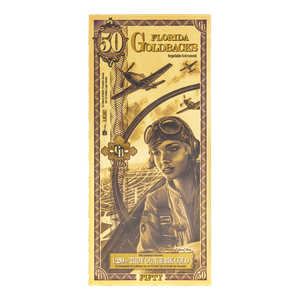
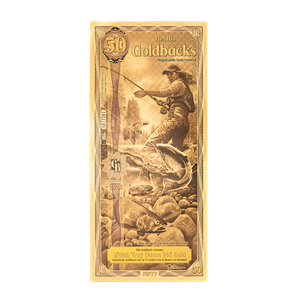
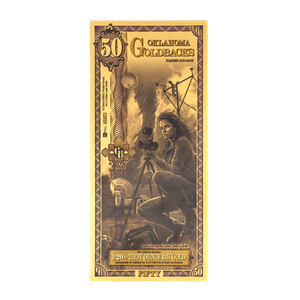
Our catalog of $50 Goldback notes brings together state-specific aurum notes from the Goldback series, each containing 1/20 troy ounce (0.05 oz) of 24-karat gold in a durable, spendable format. The current lineup includes the Arizona 50 Goldback, Florida 50 Goldback, Idaho 50 Goldback, and Oklahoma 50 Goldback, all produced by Valaurum using their proprietary aurum manufacturing process.
These notes occupy an unusual and genuinely interesting corner of the physical gold market. They're designed to function as a transactable denomination of physical gold rather than a collectible coin or a standard bar. Each state-themed design is distinct, making this format appealing both to those who want to hold fractional gold and to those interested in the broader Goldback series as a collecting pursuit.
Bullion Standard lists these products with transparent, real-time pricing so buyers can evaluate each note clearly against current gold spot prices. Our marketplace is structured to make the acquisition cost, premium, and spread visible rather than buried in the transaction.
What Are $50 Goldback Notes?
A Goldback note is a physical gold product manufactured using Valaurum's aurum process, in which a microscopic layer of pure gold is deposited between two protective polymer films. The result is a thin, flexible, banknote-sized piece of gold that can be handled, exchanged, and stored much like paper currency, while containing a precisely measured quantity of actual gold.
The $50 denomination within the Goldback series corresponds to 1/20 of a troy ounce, or 0.05 oz of gold. Each note carries state-themed artwork that varies by region, giving the series a visual character unlike standard bars or rounds. The format sits firmly in the fractional gold category, offering a lower unit price than a full-ounce product while still representing real, verified gold content.
Buyers typically choose this format when they want fractional physical gold in a highly portable and visually distinct form. The note-style format also appeals to those interested in alternative currency concepts and the broader movement toward gold-denominated transactional instruments at the community level.
History and Background
The Goldback series was developed by Valaurum, an Oregon-based technology and manufacturing company that holds patents on the aurum gold-layering process. Valaurum's approach emerged from a genuine engineering problem: how to create a physical gold product small enough to represent fractional denominations without sacrificing durability or verifiability. The solution was a vacuum deposition process that bonds gold at the atomic level between polymer layers, producing a stable and consistent note-format product.
The first Goldback series launched in Utah in 2019, timed partly around the state's recognition of gold and silver coins as legal tender. Additional state series followed, including Nevada, New Hampshire, Wyoming, South Dakota, and others, with each series featuring original artwork tied to the history, geography, or symbolism of the issuing state. Arizona, Florida, Idaho, and Oklahoma represent more recent additions to the broader series, each developed with independent artwork commissions.
The broader context for Goldback notes is a growing interest in community-scale, gold-backed transactional media that exists outside of digital payment rails. While the notes aren't government-issued legal tender in most states, they represent a recognized and growing segment of the physical gold market with a producer, a defined denomination structure, and an expanding user base.
Purity, Weight, and Specifications
Each $50 Goldback note contains 0.05 troy ounces of gold, representing one-twentieth of a troy ounce. The gold used in Valaurum's aurum process is highly pure, with most notes in this catalog listed at 0.999 fine gold purity. The Florida 50 Goldback is produced to 0.9999 fineness, reflecting a slightly higher purity standard comparable to what many government mints use for their flagship bullion coins.
The physical dimensions of Goldback notes are similar to a standard banknote but thinner, measuring approximately 0.1 millimeters in thickness as noted in the Oklahoma variant's specifications. The gold layer itself is measured in microns, deposited with precision equipment to ensure consistency across each note's stated gold content. Every note is intended to meet its specified denomination weight within tight tolerances.
There are no assay cards or mint certificates issued with individual Goldback notes in the traditional sense, as the format is designed around transactional use rather than collectible presentation. The polymer lamination serves as both a protective layer and an inherent authentication feature, since the gold deposition is visible and consistent throughout the note's surface when examined correctly.
Available Brands, Mints, and Product Variations
All $50 Goldback notes in this catalog are manufactured by Valaurum under the Goldback brand. Valaurum is the sole licensed producer of aurum-format gold notes and controls the manufacturing process, artwork commissioning, and quality standards for every denomination and state series. This single-source production model means that buyers evaluating any Goldback product are dealing with one manufacturer regardless of which state series they choose.
The four state series currently available here, Arizona, Florida, Idaho, and Oklahoma, each feature entirely distinct artwork. The Arizona series draws on the state's desert iconography and historical themes, while the Florida series reflects coastal and natural imagery. Idaho and Oklahoma each have their own commissioned artwork tied to their respective regional identities. These design differences make cross-series collecting a natural extension of purchasing within this format.
Purity does vary slightly across the series. Arizona, Idaho, and Oklahoma notes are listed at 0.999 fine gold, while the Florida note carries a 0.9999 purity designation. Both purity levels are well within accepted standards for investment-grade gold products, and the difference has minimal practical impact on gold value at this denomination size. Buyers assembling a complete state collection may want to note this variation for documentation purposes.
Pricing, Premiums, and Market Factors
The pricing of $50 Goldback notes reflects both the current gold spot price and the premium associated with the aurum manufacturing process. Valaurum's production method is more technically complex than standard bar or coin minting, involving specialized vacuum deposition equipment and multi-layer construction. That process cost is embedded in the premium buyers pay above the gold's raw spot value, making Goldback notes a higher-premium product compared to standard fractional rounds or bars of equivalent gold weight.
State series popularity also influences premiums. Series that have been available longer or that have developed stronger collector followings can carry tighter or wider premiums depending on secondary market demand and current inventory conditions. Newer state series may carry slightly different premiums as the market establishes pricing norms for those specific releases.
At Bullion Standard, pricing on each Goldback note reflects real-time market conditions. The bid/ask spread for each product is visible on the individual product pages, giving buyers a clear picture of both acquisition cost and the current resale value in our marketplace. This structure is consistent with how we approach all bullion pricing: the full transaction should be visible, not just the ask price.
Condition, Packaging, and What to Expect
Goldback notes are typically sold in individual protective sleeves that ship inside a rigid cardboard backer. This packaging keeps the note flat and protects the polymer surface during transit. Because these notes are designed for transactional handling, they are more durable than unprotected gold leaf products, but the surface can still show handling marks if removed from packaging repeatedly.
Buyers should expect notes to arrive in new, uncirculated condition. The polymer lamination is designed to resist moisture and normal handling, but like any thin-format product, sustained pressure, sharp creases, or exposure to solvents can damage the surface over time. Notes that have been handled or circulated may show minor surface wear, which is considered normal for the format.
Each note features the Goldback denomination and state identification printed as part of the artwork. There is no secondary assay card or mint packaging box accompanying individual notes, which is consistent with how this format is positioned across the Goldback product line. Buyers familiar with traditional bar or coin packaging should adjust expectations accordingly, as the format prioritizes practicality over presentation-style packaging.
Authenticity and Verification
Verifying the authenticity of a Goldback note involves examining several characteristics specific to the aurum process. The gold layer, when held to light, should display an even, consistent sheen throughout the note's surface. The polymer lamination should be smooth and uniform, with no bubbling, delamination, or inconsistency along the edges. The printed artwork and denomination should be sharp and precisely registered.
Because Valaurum is the sole licensed manufacturer of aurum-format notes, the market for counterfeits is relatively constrained compared to more widely produced bullion formats. That said, as the Goldback series has expanded, buyers purchasing from secondary sources should exercise appropriate diligence. Purchasing through a vetted dealer with a verified supply chain remains the most reliable way to ensure authenticity.
Bullion Standard sources all Goldback products through authorized distribution channels. Every product in our catalog is verified before it reaches a customer, consistent with our approach to authenticity across the broader catalog. Our A rating with the Better Business Bureau and membership in organizations including the American Numismatic Association and the National Coin and Bullion Association reflect a sourcing and verification standard that applies to every product we carry, including specialty formats like Goldback notes.
Liquidity and Resale Considerations
Goldback notes occupy a more specialized segment of the physical gold market compared to products like American Gold Eagles or standard 1 oz gold bars. Liquidity is present but narrower, meaning that resale options are generally limited to dealers who specifically trade in the Goldback series or to collectors and users within the broader Goldback community. This is worth understanding before purchasing, particularly for buyers who prioritize the ability to sell quickly at tight spreads.
State series popularity affects resale dynamics. Some series have developed stronger secondary markets than others based on collector demand and regional familiarity. The Arizona, Florida, Idaho, and Oklahoma series each have their own market footprints, and resale pricing will reflect whichever conditions prevail at the time of sale.
Buyers considering resale should also account for the premium structure unique to this format. Because premiums on Goldback notes are relatively high compared to standard bullion, the gap between purchase price and buyback price may be wider than what a buyer would experience with a mainstream coin or bar product. Understanding that spread before purchasing is a core part of evaluating any fractional or specialty bullion product honestly.
Storage and Security
The thin, flexible format of Goldback notes makes storage relatively straightforward compared to heavier bars or tubed coin rolls. Individual notes should be kept flat, away from direct sunlight, and in a stable temperature environment to preserve the polymer lamination and printed artwork. Stacking notes vertically without adequate support can cause warping over time.
For small quantities, a rigid storage sleeve, binder page, or flat box is sufficient. Buyers accumulating a larger collection may want to consider a fireproof home safe or a bank safety deposit box. Because Goldback notes are lightweight and compact, they're among the more practical formats for discrete home storage, though they should still be treated with the same care given to any physical gold product.
Avoid storing Goldback notes in plastic sleeves that contain PVC, as certain plastics can react with the polymer lamination over long periods. Archival-quality sleeves designed for currency or similar document formats are generally appropriate for long-term storage without risk of surface degradation.
Selling and Buyback Options
Selling Goldback notes back into the market involves the same general process as selling other physical gold products: the buyer identifies a dealer or platform willing to quote a buyback price, confirms the product's authenticity and condition, and completes the transaction at the prevailing bid. The key difference with Goldback notes is that the pool of active dealers quoting buybacks is smaller than for mainstream products, which can affect pricing efficiency at the moment of sale.
Bullion Standard operates a two-way market that includes buyback pricing for Goldback products. Our purchasing team evaluates products based on current market conditions, the specific state series, condition, and packaging status. Notes presented in their original protective sleeves, with no visible damage to the polymer surface, will generally receive better pricing than those showing handling wear or packaging issues.
Buyers who want to understand resale conditions before purchasing can review the bid pricing displayed on each product page within our marketplace. Seeing both the ask and the bid at the time of purchase provides a realistic picture of the spread and helps buyers make decisions grounded in actual market data rather than assumptions about future liquidity.
Why Buy $50 Goldback Notes?
The 50 Goldback denomination represents a practical midpoint within the Goldback series. At 0.05 oz of gold, it's large enough to hold meaningful gold content relative to the cost of entry, while remaining accessible enough to purchase as a single note rather than committing to a higher denomination. Buyers who want to accumulate fractional gold across multiple states will find the $50 note a natural unit for building out a collection incrementally.
The state-themed artwork adds a dimension that standard bars and rounds simply don't offer. For buyers who are equally interested in the visual and cultural identity of the notes as in their gold content, the Goldback series provides a format that rewards both motivations. Arizona, Florida, Idaho, and Oklahoma each carry regional artwork that makes the notes immediately identifiable and distinct from one another.
The portability and durability of the format also stands apart. A $50 Goldback note can be transported, gifted, or exchanged in ways that a coin in a protective capsule or a bar in an assay card cannot match with the same ease. For buyers exploring the concept of gold as a transactable medium rather than purely a stored asset, the Goldback format is one of the few products currently on the market designed from the ground up for that use case.
Why Buy from Bullion Standard?
Bullion Standard was founded in San Diego in 2010, and our approach to the precious metals market has always centered on transparency rather than pressure. We display real-time pricing, show the bid/ask spread on every product page, and provide customers with the information they need to evaluate a purchase on its actual terms, not on marketing claims about potential upside.
Every product in our catalog, including specialty formats like the Goldback note series, is sourced through verified distribution channels and authenticated before it ships. Our A BBB rating, ANA membership, NCBA membership, and status as an authorized dealer for PCGS and NGC reflect standards that apply across the entire catalog. Customers buying a $50 Goldback note receive the same sourcing and verification commitment as those purchasing a standard gold coin or bar.
Our payment infrastructure supports a wide range of methods, including Visa, Mastercard, American Express, Discover, PayPal, bank-connected payments through Plaid, wire transfer, paper check, and cryptocurrency through BitPay. Fulfillment is handled with the same care applied to any physical precious metals order, and customer support is available for questions that arise before, during, or after the purchase.
Get Near-Spot Pricing with Bullion Standard Pro
Bullion Standard Pro is designed for buyers who want to engage with the physical gold market at a level closer to wholesale conditions. Members gain access to live, executable wholesale bid and ask pricing across the catalog, which means the pricing they see reflects real-time supply and demand within the wholesale market rather than a fixed retail markup structure. For products like Goldback notes, where premiums are already meaningfully above spot, accessing tighter spreads through the Pro platform can represent a material difference in acquisition cost over time.
Unlike a traditional dealer model that applies fixed markups regardless of market conditions, Bullion Standard Pro allows premiums and spreads to move naturally with underlying market activity. Members can observe how pricing shifts in response to wholesale supply, demand, and order flow, giving them a more accurate picture of what a given product is actually worth at any given moment.
Pro members also have access to proprietary analytics tools that go beyond price alone, including historical premium data, spread analysis, and liquidity metrics that help evaluate any product across the broader catalog. For buyers building a position in the Goldback series or comparing notes across state offerings, having access to objective, data-driven comparisons across the marketplace is a meaningful advantage over relying on static product listings or dealer representations alone.


 (833) 278-4653