Buy Barber Silver Dimes Online
Our catalog of barber silver dimes offers buyers a direct path to acquiring pre-1916 90% silver coinage from the United States Mint across multiple grade levels. Whether you're looking for average circulated examples, good-to-fine condition pieces, or higher-grade VF and XF specimens, each listing represents a $1 face value lot containing 10 coins and 0.715 troy ounces of actual silver content.
These coins carry a long-established presence in the junk silver market and remain among the most actively traded 90% silver coin types in the United States. At Bullion Standard, each offering is priced against real-time silver spot prices, and our transparent bid/ask spread structure gives buyers a clear view of the full cost of ownership before completing a purchase.
Because barber dimes are sold by face value rather than by individual coin, buyers can efficiently scale their silver holdings in convenient, standardized increments. Our listings reflect genuine market pricing without the opaque markups that are common at traditional dealerships.
What Are Barber Silver Dimes?
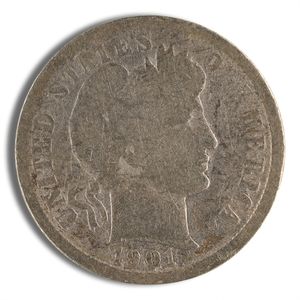
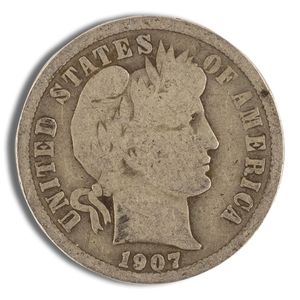
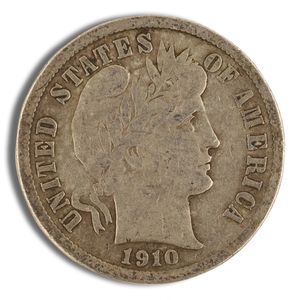
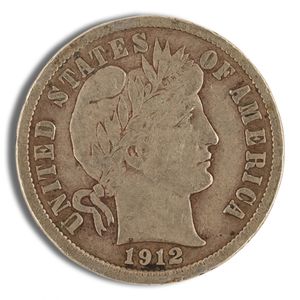
Barber dimes are 10-cent silver coins struck by the United States Mint from 1892 through 1916. They take their name from Charles E. Barber, the Mint's Chief Engraver who designed the coin's obverse portrait of Liberty wearing a laurel wreath, a fasces, and a cap. The reverse features a wreath encircling the denomination, a design that remained largely consistent throughout the series' production run.
Within the bullion market, barber dimes are categorized as junk silver, meaning they are traded primarily for their silver content rather than any numismatic premium. This distinguishes them from certified or key-date collector coins, which command additional premiums based on rarity and grade. For buyers focused on silver content at competitive acquisition costs, the bullion-grade barber dime is a practical format.
The 90% silver composition means each coin contains approximately 0.07234 troy ounces of silver, which makes the per-coin math straightforward. A $1 face value lot of 10 dimes carries 0.715 troy ounces of silver, and buyers can scale from there using simple multiples.
History and Background
Charles Barber's dime design debuted in 1892 alongside matching quarter and half dollar designs, all produced under the same engraver. The Barber coinage series replaced the Liberty Seated designs that had been in circulation since the 1830s. Production of barber dimes continued at mints in Philadelphia, New Orleans, San Francisco, and Denver across a 24-year run before the Mercury dime replaced the design in 1916.
For most of the early 20th century, these coins circulated widely as everyday commerce. By the time silver coinage was phased out following the Coinage Act of 1965, surviving barber dimes had already spent decades in wallets and cash drawers, leaving the majority in worn, heavily circulated condition. That's a key reason why most barber dimes encountered today fall into good through fine grades rather than uncirculated condition.
The modern junk silver market grew substantially during the silver boom of the late 1970s and has remained a consistent segment of the physical silver market ever since. Pre-1965 90% silver coins, including barber dimes, became a standardized unit of silver bullion trading, recognized across dealer networks, coin shows, and online marketplaces for their consistent composition and straightforward valuation.
Purity, Weight, and Specifications
Barber dimes were struck to a standard 90% silver, 10% copper composition, which was the United States Mint's standard for circulating silver coinage throughout the late 19th and early 20th centuries. Each coin has a nominal weight of 2.5 grams, a diameter of 17.9 millimeters, and a thickness of approximately 1.35 millimeters. These specifications remained consistent across the full production run from 1892 to 1916.
For bullion calculation purposes, the accepted silver content per $1 face value in 90% silver dimes is 0.715 troy ounces, which accounts for typical metal loss from decades of circulation. The theoretical pure silver content for a full $1 face value of uncirculated coins would be approximately 0.7234 troy ounces, but the 0.715 figure is the industry standard applied to circulated 90% silver in all dealer and wholesale transactions.
No mint marks or assay certifications accompany junk silver transactions. The coins' composition and weight are their primary verification points, and the United States Mint's production standards have made these specifications consistent and reliable throughout the bullion market for over a century.
Available Brands, Mints, and Product Variations
All barber silver dimes in our catalog were originally produced by the United States Mint, with Philadelphia, New Orleans, San Francisco, and Denver each contributing to the total mintage across the series. Because these are sold as random-year lots, specific dates and mint marks are not guaranteed, and the mix of coins in any given lot will reflect standard market availability at the time of fulfillment.
Our catalog offers four distinct grade options, which allows buyers to select a condition tier that fits their priorities. The average circulated option covers the broadest range of grades and typically represents the most accessible price point. The good-to-fine condition listing narrows the range to coins with clearly readable designs and moderate-to-heavy wear. The VF (Very Fine) option targets coins with sharper detail retention, while the XF (Extremely Fine) listing represents the highest-grade offering, with coins showing only light wear on the highest design points.
Higher-grade lots carry a premium above the average circulated market because the coin supply in those condition tiers is narrower and requires additional sorting. Buyers who prioritize presentation or plan to hold individual coins alongside their bullion will find the VF and XF options worth the premium differential, while those focused purely on silver content at the lowest acquisition cost typically gravitate toward the average circulated or good-to-fine listings.
Pricing, Premiums, and Market Factors
Barber dime pricing is driven primarily by the spot price of silver, with premiums layered above spot based on the condition grade, current market demand, and dealer acquisition costs. Average circulated junk silver typically trades at the tightest spreads within the 90% silver coin market, as the supply is broader and the coins are widely recognized across the wholesale network. Higher-grade lots such as VF and XF carry incrementally larger premiums because sourcing and sorting costs are higher.
The junk silver segment in general tends to carry lower premiums than government-issued modern bullion coins such as American Silver Eagles or Silver Maple Leafs. This reflects the secondary-market origin of the coins and the lack of collector premium attached to circulated barber coinage in bullion-grade condition. For buyers prioritizing silver content per dollar spent, 90% silver junk coins are consistently among the most premium-efficient formats available in the physical silver market.
At Bullion Standard, each product page displays a live bid/ask spread so buyers can evaluate both the purchase price and the current buyback value before committing. This reflects our broader philosophy that the cost of ownership includes not just the acquisition premium but also the expected resale spread. Understanding both sides of that equation before buying is something most traditional dealers don't make easy.
Condition, Packaging, and What to Expect
Barber silver dimes are sold by the $1 face value lot, with each lot containing 10 coins. Because these are pre-owned circulated coins sourced through the secondary market and wholesale channels, they arrive loose rather than in sealed mint packaging. Cosmetic variation within a lot is expected and entirely normal, including toning, surface marks, and varying degrees of wear consistent with the declared grade range.
Random-year status means specific dates are not selected or guaranteed. The coins you receive will reflect the available inventory mix at the time your order ships, and requesting particular dates or mint marks is not possible within these listings. If a specific date is important to you, our numismatic catalog may include individually listed coins with identifiable dates and mint marks.
Shipping presentation for junk silver lots typically involves secure coin envelopes, tubes, or similarly protective packaging appropriate for the quantity ordered. Larger orders may ship in multiple protective containers. Our fulfillment team packs orders to minimize movement during transit and protect surface condition as much as reasonably possible given the circulated nature of the coins.
Authenticity and Verification
All barber silver dimes sold through Bullion Standard are sourced through established wholesale bullion networks, reputable coin dealers, and institutional suppliers. The 90% silver composition of United States Mint coinage from this era is one of the most thoroughly documented and recognized standards in the numismatic and bullion industries, which simplifies the verification process considerably compared to more obscure sovereign or private-issue products.
Authentication for junk silver coins relies on weight, dimension, and composition testing rather than individual coin certification. Our purchasing team applies standard industry verification practices, including weight testing against known mint specifications and physical examination for signs of alteration or debasement. Coins that don't meet specification standards are not passed into our inventory.
Bullion Standard is an authorized dealer for both PCGS and NGC and maintains memberships in the American Numismatic Association (ANA) and the National Coin and Bullion Association (NCBA). Our A rating with the Better Business Bureau reflects a consistent operational standard that prioritizes product integrity across every transaction.
Liquidity and Resale Considerations
Pre-1965 90% silver United States coinage is among the most liquid formats in the physical silver market. Barber dimes, quarters, half dollars, and dollars are all recognized and actively quoted across dealer networks, coin shows, online platforms, and private transactions throughout the country. The standardized face value and composition make pricing straightforward in any secondary-market environment.
Within the broader 90% silver category, dimes are the smallest denomination unit, which creates practical resale flexibility. Sellers can liquidate partial lots more granularly than with quarters or half dollars. This makes the format convenient for buyers who may want to sell incrementally over time rather than in large blocks.
Condition grade does affect resale expectations. Average circulated lots trade most easily as a commodity, while VF and XF lots may command a modest premium depending on buyer demand at the time of resale. Both grades are broadly recognized and accepted by dealers and wholesale buyers operating in the 90% silver market.
Storage and Security
Barber silver dimes require straightforward storage compared to larger-format bullion products. Their small size means a meaningful quantity of silver can be stored in a compact space, which is part of their appeal for buyers working with limited storage capacity. A standard home safe with fire and theft protection is sufficient for most buyers holding modest quantities.
For larger holdings, third-party vault storage through a registered depository provides additional security without requiring personal storage infrastructure. Many buyers also use safe deposit boxes at financial institutions for secondary-market silver coins, though this option limits access outside of banking hours and typically does not include insurance coverage without a separate policy.
Because circulated junk silver arrives without original mint packaging, protecting coins from excessive humidity and physical abrasion is worth attention. Coin tubes, airtight containers, or cloth-lined coin bags all offer reasonable protection. Prolonged exposure to moisture can accelerate toning and surface deterioration, so climate-controlled storage is preferable when available.
Selling and Buyback Options
Bullion Standard operates as a two-way market, which means we actively purchase barber silver dimes alongside selling them. Our buyback pricing reflects live silver spot prices adjusted for current market conditions, condition grade, and wholesale demand for 90% silver coinage. Sellers can submit a quote request through our platform and receive a price based on the actual wholesale bid at the time of the transaction.
Condition matters in the buyback process. Average circulated lots are priced at the standard 90% silver market rate, while VF and XF lots may command a modest incremental premium depending on active wholesale demand for graded junk silver at the time of sale. Packaging condition is generally not a factor for circulated junk silver since these coins are sold without original mint packaging to begin with.
Our platform displays the current bid price for each product alongside the ask price, so sellers can evaluate resale value before acquiring. This transparency is a deliberate part of our market structure. We believe buyers should understand what a product is likely to fetch before the purchase is made, not only when they're ready to exit a position.
Why Buy Barber Silver Dimes?
Barber dimes occupy a practical niche in the physical silver market. They offer real silver content in a widely recognized, government-issued format at premiums that are generally among the lowest available within the broader silver coin market. For buyers focused on acquiring silver efficiently, circulated junk silver is consistently among the most cost-effective entry points compared to modern bullion coins, certified issues, or numismatic collector coins.
The small denomination also creates flexibility in how holdings can be managed over time. Unlike larger silver bars or high-face-value coins, dimes can be divided and transacted in small increments without breaking a larger unit. That granularity appeals to buyers who value practical handling flexibility alongside their silver exposure.
There is also a historical dimension that attracts a segment of buyers. Barber dimes circulated during a distinct period of American commerce and carry tangible physical history alongside their silver content. For buyers who appreciate that combination of intrinsic metal value and historical character, the barber dime series offers something that modern bullion rounds and bars simply cannot replicate.
Why Buy from Bullion Standard?
Bullion Standard was founded in 2010 in San Diego, California, and has grown into a nationally recognized precious metals marketplace by prioritizing transparency over traditional sales pressure. Our platform is built around the principle that informed buyers make better decisions, and our pricing structure reflects that. Every product page displays real-time spot-based pricing alongside the current bid/ask spread, so buyers understand their full cost of ownership before completing any transaction.
We source products from reputable mints, established wholesalers, and institutional distributors, and every product is verified for authenticity, weight, and purity before entering our inventory. Our team maintains memberships in the ANA and NCBA, holds authorized dealer status with PCGS and NGC, and carries an A rating with the Better Business Bureau. These credentials reflect a consistent operational standard that has been built over more than a decade of customer-first business practices.
Checkout is straightforward and supported by a wide range of payment methods, including Visa, Mastercard, American Express, Discover, PayPal, Plaid-connected bank payments, wire transfer, paper check, and cryptocurrency payments through BitPay. Our fulfillment process is designed for reliability, and our customer service team is accessible to support buyers at every stage of the transaction, from initial purchase through post-delivery questions.
Get Near-Spot Pricing with Bullion Standard Pro
Bullion Standard Pro provides members with access to live, executable wholesale bid and ask pricing across a broad range of silver products, including 90% silver junk coins like barber dimes. Unlike standard retail pricing structures that apply fixed dealer markups, Pro members transact directly at wholesale market prices that move naturally with underlying supply and demand conditions. For buyers who purchase silver regularly or in meaningful quantities, this pricing efficiency can make a measurable difference in acquisition costs over time.
Pro members also gain access to real-time portfolio valuation using live wholesale bid pricing, which provides a more accurate picture of liquidation value than retail-based estimates. Historical premium data, spread analysis, and proprietary liquidity metrics are available to help members evaluate products using objective market data rather than marketing narratives. These tools are particularly useful when comparing junk silver formats against each other or against modern bullion alternatives.
The platform is designed to bring the kind of market transparency and analytical depth that sophisticated financial markets offer to the physical precious metals space. For buyers who want to move beyond surface-level pricing and understand how products like barber silver dimes actually trade at the wholesale level, Bullion Standard Pro provides the data infrastructure to do that in a single, integrated marketplace.


 (833) 278-4653